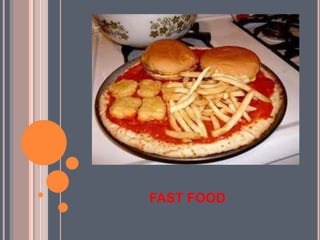
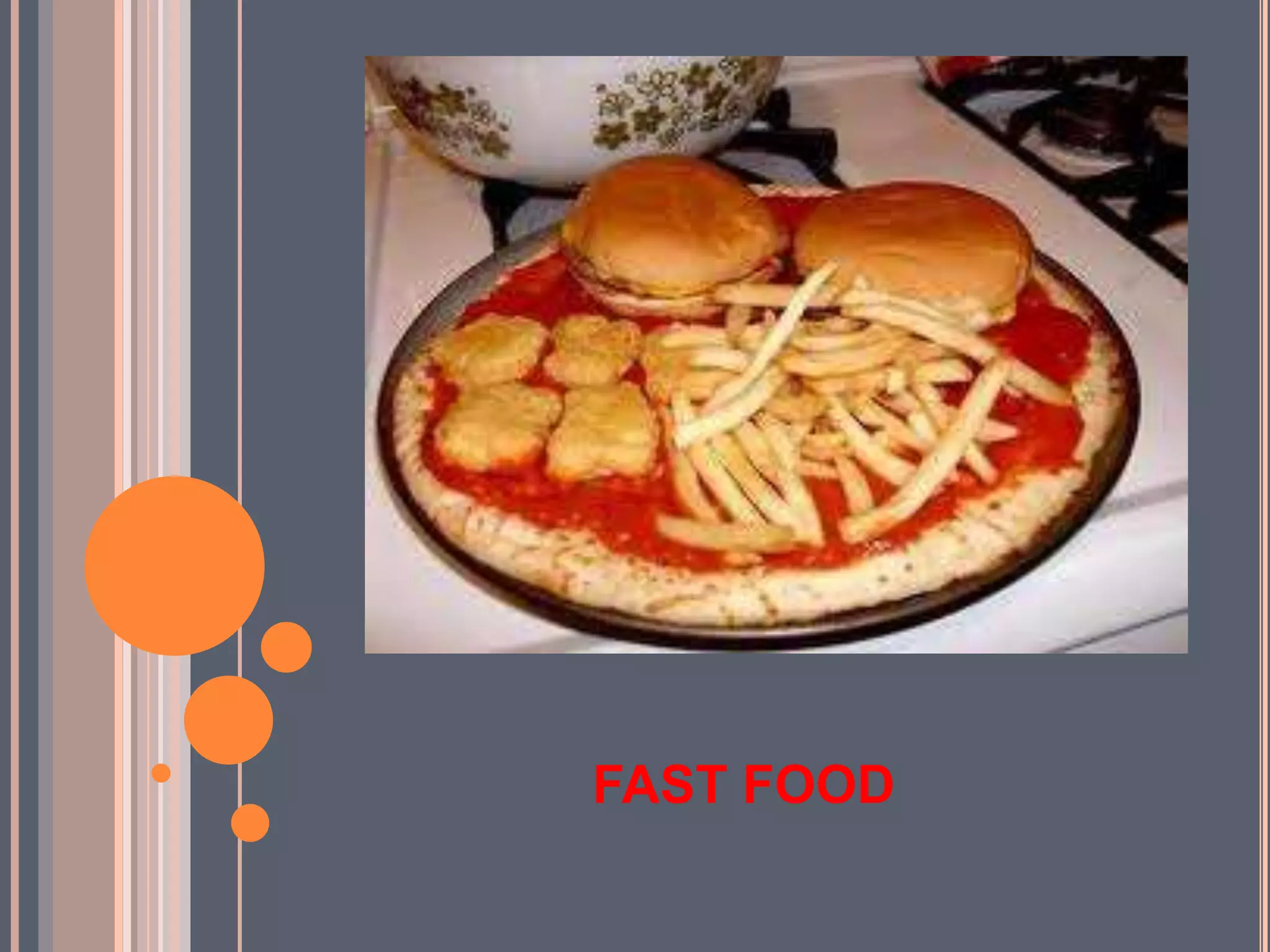
FAST FOOD
INTRODUCTION
   The consumption of fast food has increased
    dramatically in the last decade in developed
    countries, and has even underdeveloped countries.
WHAY IS IT SO POPULAR?
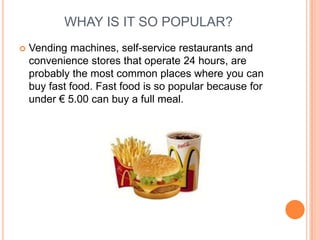
   Vending machines, self-service restaurants and
    convenience stores that operate 24 hours, are
    probably the most common places where you can
    buy fast food. Fast food is so popular because for
    under € 5.00 can buy a full meal.
IS FAST FOOD BAD?
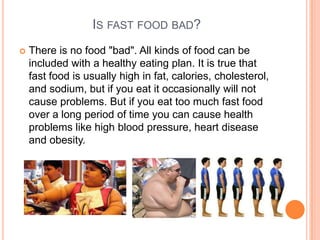
   There is no food "bad". All kinds of food can be
    included with a healthy eating plan. It is true that
    fast food is usually high in fat, calories, cholesterol,
    and sodium, but if you eat it occasionally will not
    cause problems. But if you eat too much fast food
    over a long period of time you can cause health
    problems like high blood pressure, heart disease
    and obesity.
CAUSES
 There is not just one cause which have caused that
  the consuption of junk food, low in nutrients and
  high in calories and fat, is frecuently consumed in
  the western society. Still, there are certain facts
  which it´s proving that they help to contribute the
  consuption.
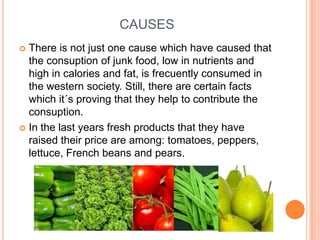
 In the last years fresh products that they have
  raised their price are among: tomatoes, peppers,
  lettuce, French beans and pears.
 In adittion, it´s cheaper to stay at
  home watching TV that doing sport.
 On the other hand, television´s role is
  important because of messages
  broadcasted.
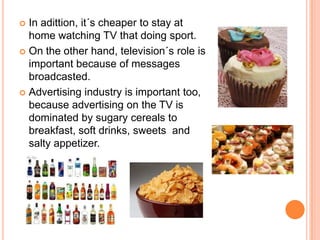
 Advertising industry is important too,
  because advertising on the TV is
  dominated by sugary cereals to
  breakfast, soft drinks, sweets and
  salty appetizer.
 This advertising through television decides the
  preferences of children.
 One study found that if the amount of ads they saw
  the children was increasing. This is one of main
  fators which have duplicated the fat among English
  children of 6 years and it was triplicated among
  children 15 years.
 Apart from this, all experts are agreed in one thing:

  United States is guilty because this country isn´t
propose solutions. The power of the food industry
about American Government policy is very big.
EFFECTS
 The effects of the so-called fast food are:
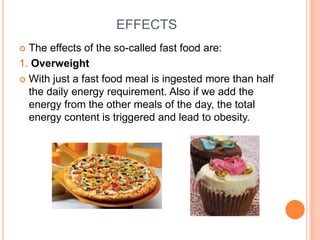
1. Overweight
 With just a fast food meal is ingested more than half
  the daily energy requirement. Also if we add the
  energy from the other meals of the day, the total
  energy content is triggered and lead to obesity.
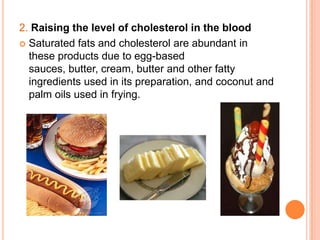
2. Raising the level of cholesterol in the blood
 Saturated fats and cholesterol are abundant in
  these products due to egg-based
  sauces, butter, cream, butter and other fatty
  ingredients used in its preparation, and coconut and
  palm oils used in frying.
3. Difficult digestion
 In most cases are fried foods, breaded or batter, as
  are enriched in fat, which is further heated
  indigestible.


4. Alteration of taste
 In general, these products contain more salt than
  those prepared at home. In addition, to achieve the
  desired effect with the smell, color, flavor and
  texture have preservatives, dyes etc.
 These dishes often include strong spices or
  additives that enhance the taste and stimulate the
  appetite and, over time, alter the perception of taste
  and habit-forming.
5. Addiction
 Researchers say that food with high fat and sugar
  can cause biochemical changes in the brain similar
  to those that cause some drugs such as
  snuff, heroin and cocaine. Once hooked on junk
  food, scientists say, many people are unable to
  return to a balanced diet and, in many cases, suffer
  from obesity problems.
 A survey of neurologists Ann Kelley and Matthew
  Hill, University of Wisconsin, explains the changes
  that occur in different diets brains. Their
  conclusions are that a diet that includes high
  amounts of fat causes neurological symptoms
  similar to those that are addicted to hard drugs.
HEALTHY TIPS
1. BREAKFAST
 Make a strong and varied breakfast is essential to
  our health and our physical and intellectual
  performance along all morning. After overnight
  fasting, many hours without eating, you have to eat
  varied and plentiful.
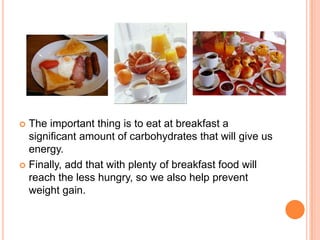
 We breakfast at our pleasure: from the Anglo-
  Saxon style breakfast
  (eggs, beans, bacon, butter, milk or tea, juice) but
  the bacon would be better without it, the most
  common in Spain and very complete
  (juice, milk, toast , olive oil, cereals).
 The important thing is to eat at breakfast a
  significant amount of carbohydrates that will give us
  energy.
 Finally, add that with plenty of breakfast food will
  reach the less hungry, so we also help prevent
  weight gain.
2. DINNER
 Starting at 7 pm our metabolism slows down. Our
  bodies are governed by an internal clock, in which
  there are moments of peak performance and
  activity, and other rest of its energy.
 In traditional Chinese medicine, is 7:00 to 21:00,
  the time zone in which the stomach is at a minimum
  energy, this is the reason why you may feel the
  need to eat some food, and this is the time most
  balanced and healthy for dinner, because the
  digestive system needs to receive food for balance.
 In addition to dinner moderately early dinner
  ensures better digestion and assimilation of food,
  avoiding overloading the liver, bloating and
  flatulence and suffer sleep disorders.
EXERCISE
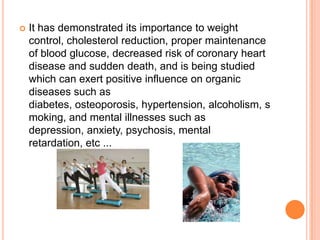
   Physical exercise regularly and moderately is very
    beneficial for our body and our mind.
   It has demonstrated its importance to weight
    control, cholesterol reduction, proper maintenance
    of blood glucose, decreased risk of coronary heart
    disease and sudden death, and is being studied
    which can exert positive influence on organic
    diseases such as
    diabetes, osteoporosis, hypertension, alcoholism, s
    moking, and mental illnesses such as
    depression, anxiety, psychosis, mental
    retardation, etc ...
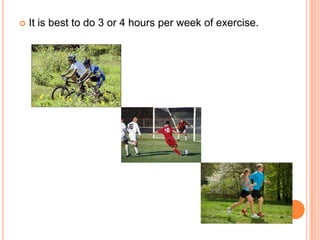
   It is best to do 3 or 4 hours per week of exercise.
TIPS ON HEALTHY EATING AND EXERCISE

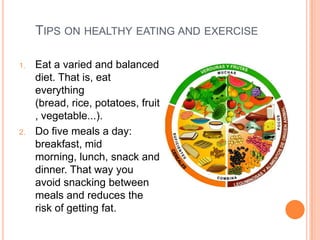
1.   Eat a varied and balanced
     diet. That is, eat
     everything
     (bread, rice, potatoes, fruit
     , vegetable...).
2.   Do five meals a day:
     breakfast, mid
     morning, lunch, snack and
     dinner. That way you
     avoid snacking between
     meals and reduces the
     risk of getting fat.
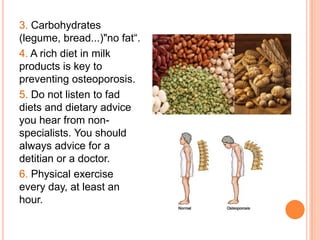
3. Carbohydrates
(legume, bread...)"no fat“.
4. A rich diet in milk
products is key to
preventing osteoporosis.
5. Do not listen to fad
diets and dietary advice
you hear from non-
specialists. You should
always advice for a
detitian or a doctor.
6. Physical exercise
every day, at least an
hour.
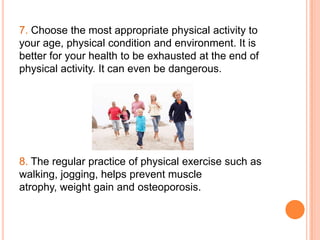
7. Choose the most appropriate physical activity to
your age, physical condition and environment. It is
better for your health to be exhausted at the end of
physical activity. It can even be dangerous.


8. The regular practice of physical exercise such as
walking, jogging, helps prevent muscle
atrophy, weight gain and osteoporosis.
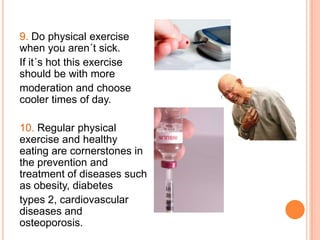
9. Do physical exercise
when you aren´t sick.
If it´s hot this exercise
should be with more
moderation and choose
cooler times of day.

10. Regular physical
exercise and healthy
eating are cornerstones in
the prevention and
treatment of diseases such
as obesity, diabetes
types 2, cardiovascular
diseases and
osteoporosis.
CONCLUSION

 Regular consumption of foods rich in saturated fats
  such as fast food causes a greater tendency
  towards overweight and even to obesity, causing
  serious damage to our health.
 Obesity is not only a disease but affects the
  appearance of many others: diabetes,
  hypertension, gout, cardiovascular disorders,
  arthritis, etc…
MOVIE
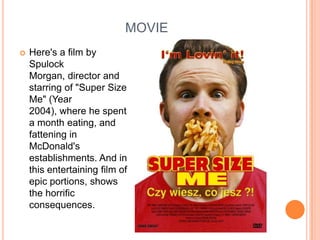
   Here's a film by
    Spulock
    Morgan, director and
    starring of "Super Size
    Me" (Year
    2004), where he spent
    a month eating, and
    fattening in
    McDonald's
    establishments. And in
    this entertaining film of
    epic portions, shows
    the horrific
    consequences.
`SUPER ZISE ME´

 Spurlock hit the road and interviewed experts in
  twenty U.S. cities, Houston is also the most obese
  city in America (now Detroit). Directors of public
  health, gym teachers, cooks, children, governors,
  legislators, presented their research, opinions and
  gut reactions aroused in them a steady increase in
  body volume of the American people.
 Finally, Spurlock embarked on an experiment of
  exceptional characteristics: tested firsthand the
  effects of fast food on the human body. For thirty
  consecutive days, Spurlock was fed based on
  Cheeseburgers, Bic Macs and McNuggets,
  subsisting exclusively on McDonald's menu items.
 Due to consumption of fried and high-sodium foods
  increased their levels of cholesterol and
  sodium, and what began as a fun experiment and
  casual became a serious problem for the hitherto
  enviable health status of Morgan Spurlock.
 In this maelstrom food one month accompanied by
  a series of insightful and candid interviews with top
  doctors and health professionals with advertising
  and marketing executives with American teenagers.

Fast food

  • 1.
  • 2.
    INTRODUCTION  The consumption of fast food has increased dramatically in the last decade in developed countries, and has even underdeveloped countries.
  • 3.
    WHAY IS ITSO POPULAR?  Vending machines, self-service restaurants and convenience stores that operate 24 hours, are probably the most common places where you can buy fast food. Fast food is so popular because for under € 5.00 can buy a full meal.
  • 4.
    IS FAST FOODBAD?  There is no food "bad". All kinds of food can be included with a healthy eating plan. It is true that fast food is usually high in fat, calories, cholesterol, and sodium, but if you eat it occasionally will not cause problems. But if you eat too much fast food over a long period of time you can cause health problems like high blood pressure, heart disease and obesity.
  • 5.
    CAUSES  There isnot just one cause which have caused that the consuption of junk food, low in nutrients and high in calories and fat, is frecuently consumed in the western society. Still, there are certain facts which it´s proving that they help to contribute the consuption.  In the last years fresh products that they have raised their price are among: tomatoes, peppers, lettuce, French beans and pears.
  • 6.
     In adittion,it´s cheaper to stay at home watching TV that doing sport.  On the other hand, television´s role is important because of messages broadcasted.  Advertising industry is important too, because advertising on the TV is dominated by sugary cereals to breakfast, soft drinks, sweets and salty appetizer.
  • 7.
     This advertisingthrough television decides the preferences of children.  One study found that if the amount of ads they saw the children was increasing. This is one of main fators which have duplicated the fat among English children of 6 years and it was triplicated among children 15 years.  Apart from this, all experts are agreed in one thing: United States is guilty because this country isn´t propose solutions. The power of the food industry about American Government policy is very big.
  • 8.
    EFFECTS  The effectsof the so-called fast food are: 1. Overweight  With just a fast food meal is ingested more than half the daily energy requirement. Also if we add the energy from the other meals of the day, the total energy content is triggered and lead to obesity.
  • 9.
    2. Raising thelevel of cholesterol in the blood  Saturated fats and cholesterol are abundant in these products due to egg-based sauces, butter, cream, butter and other fatty ingredients used in its preparation, and coconut and palm oils used in frying.
  • 10.
    3. Difficult digestion In most cases are fried foods, breaded or batter, as are enriched in fat, which is further heated indigestible. 4. Alteration of taste  In general, these products contain more salt than those prepared at home. In addition, to achieve the desired effect with the smell, color, flavor and texture have preservatives, dyes etc.  These dishes often include strong spices or additives that enhance the taste and stimulate the appetite and, over time, alter the perception of taste and habit-forming.
  • 11.
    5. Addiction  Researcherssay that food with high fat and sugar can cause biochemical changes in the brain similar to those that cause some drugs such as snuff, heroin and cocaine. Once hooked on junk food, scientists say, many people are unable to return to a balanced diet and, in many cases, suffer from obesity problems.  A survey of neurologists Ann Kelley and Matthew Hill, University of Wisconsin, explains the changes that occur in different diets brains. Their conclusions are that a diet that includes high amounts of fat causes neurological symptoms similar to those that are addicted to hard drugs.
  • 12.
    HEALTHY TIPS 1. BREAKFAST Make a strong and varied breakfast is essential to our health and our physical and intellectual performance along all morning. After overnight fasting, many hours without eating, you have to eat varied and plentiful.  We breakfast at our pleasure: from the Anglo- Saxon style breakfast (eggs, beans, bacon, butter, milk or tea, juice) but the bacon would be better without it, the most common in Spain and very complete (juice, milk, toast , olive oil, cereals).
  • 13.
     The importantthing is to eat at breakfast a significant amount of carbohydrates that will give us energy.  Finally, add that with plenty of breakfast food will reach the less hungry, so we also help prevent weight gain.
  • 14.
    2. DINNER  Startingat 7 pm our metabolism slows down. Our bodies are governed by an internal clock, in which there are moments of peak performance and activity, and other rest of its energy.  In traditional Chinese medicine, is 7:00 to 21:00, the time zone in which the stomach is at a minimum energy, this is the reason why you may feel the need to eat some food, and this is the time most balanced and healthy for dinner, because the digestive system needs to receive food for balance.  In addition to dinner moderately early dinner ensures better digestion and assimilation of food, avoiding overloading the liver, bloating and flatulence and suffer sleep disorders.
  • 15.
    EXERCISE  Physical exercise regularly and moderately is very beneficial for our body and our mind.
  • 16.
    It has demonstrated its importance to weight control, cholesterol reduction, proper maintenance of blood glucose, decreased risk of coronary heart disease and sudden death, and is being studied which can exert positive influence on organic diseases such as diabetes, osteoporosis, hypertension, alcoholism, s moking, and mental illnesses such as depression, anxiety, psychosis, mental retardation, etc ...
  • 17.
    It is best to do 3 or 4 hours per week of exercise.
  • 18.
    TIPS ON HEALTHYEATING AND EXERCISE 1. Eat a varied and balanced diet. That is, eat everything (bread, rice, potatoes, fruit , vegetable...). 2. Do five meals a day: breakfast, mid morning, lunch, snack and dinner. That way you avoid snacking between meals and reduces the risk of getting fat.
  • 19.
    3. Carbohydrates (legume, bread...)"nofat“. 4. A rich diet in milk products is key to preventing osteoporosis. 5. Do not listen to fad diets and dietary advice you hear from non- specialists. You should always advice for a detitian or a doctor. 6. Physical exercise every day, at least an hour.
  • 20.
    7. Choose themost appropriate physical activity to your age, physical condition and environment. It is better for your health to be exhausted at the end of physical activity. It can even be dangerous. 8. The regular practice of physical exercise such as walking, jogging, helps prevent muscle atrophy, weight gain and osteoporosis.
  • 21.
    9. Do physicalexercise when you aren´t sick. If it´s hot this exercise should be with more moderation and choose cooler times of day. 10. Regular physical exercise and healthy eating are cornerstones in the prevention and treatment of diseases such as obesity, diabetes types 2, cardiovascular diseases and osteoporosis.
  • 22.
    CONCLUSION  Regular consumptionof foods rich in saturated fats such as fast food causes a greater tendency towards overweight and even to obesity, causing serious damage to our health.  Obesity is not only a disease but affects the appearance of many others: diabetes, hypertension, gout, cardiovascular disorders, arthritis, etc…
  • 23.
    MOVIE  Here's a film by Spulock Morgan, director and starring of "Super Size Me" (Year 2004), where he spent a month eating, and fattening in McDonald's establishments. And in this entertaining film of epic portions, shows the horrific consequences.
  • 24.
    `SUPER ZISE ME´ Spurlock hit the road and interviewed experts in twenty U.S. cities, Houston is also the most obese city in America (now Detroit). Directors of public health, gym teachers, cooks, children, governors, legislators, presented their research, opinions and gut reactions aroused in them a steady increase in body volume of the American people.  Finally, Spurlock embarked on an experiment of exceptional characteristics: tested firsthand the effects of fast food on the human body. For thirty consecutive days, Spurlock was fed based on Cheeseburgers, Bic Macs and McNuggets, subsisting exclusively on McDonald's menu items.
  • 25.
     Due toconsumption of fried and high-sodium foods increased their levels of cholesterol and sodium, and what began as a fun experiment and casual became a serious problem for the hitherto enviable health status of Morgan Spurlock.  In this maelstrom food one month accompanied by a series of insightful and candid interviews with top doctors and health professionals with advertising and marketing executives with American teenagers.