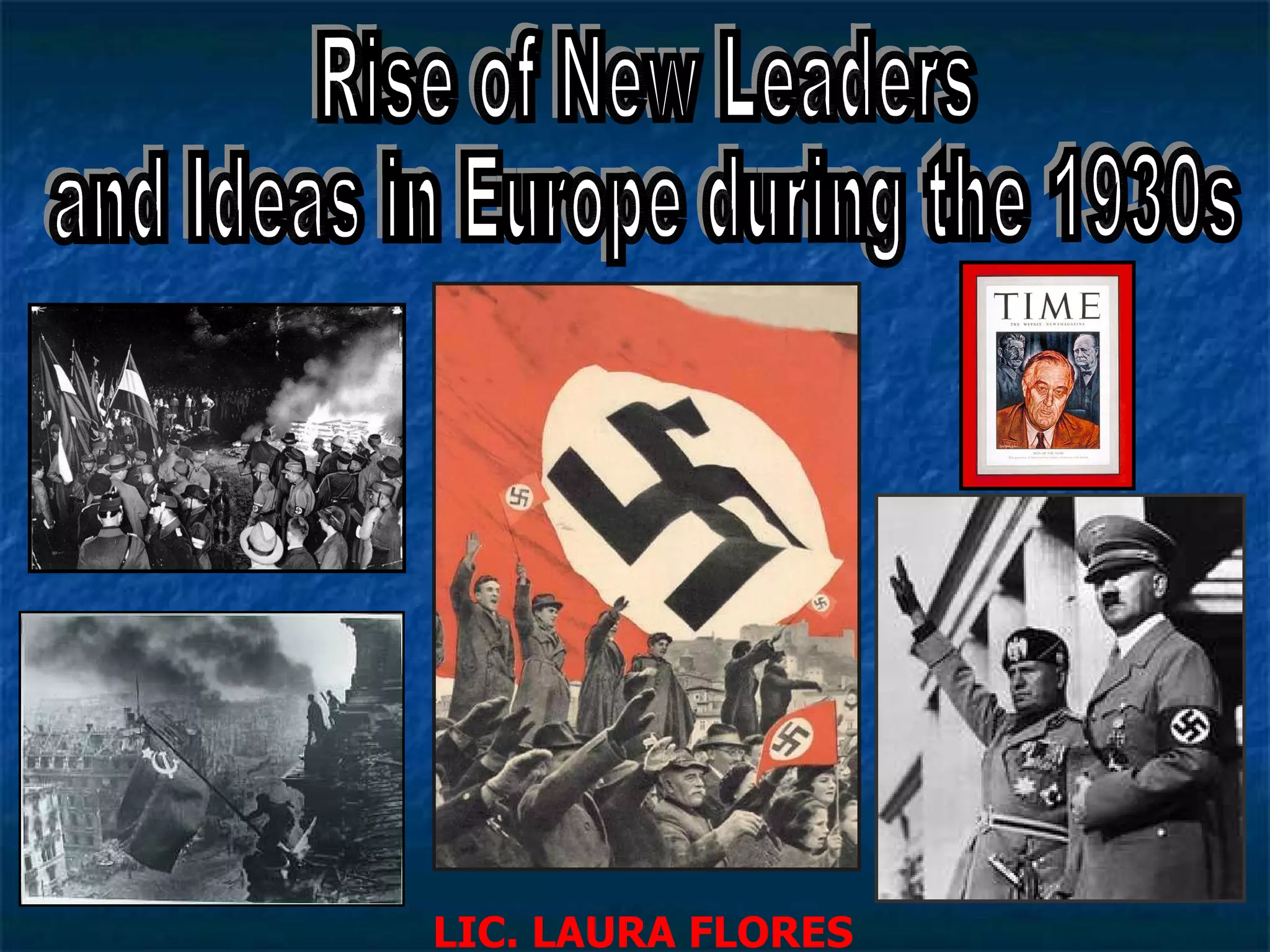
Rise of New Leaders  and Ideas in Europe during the 1930s LIC. LAURA FLORES
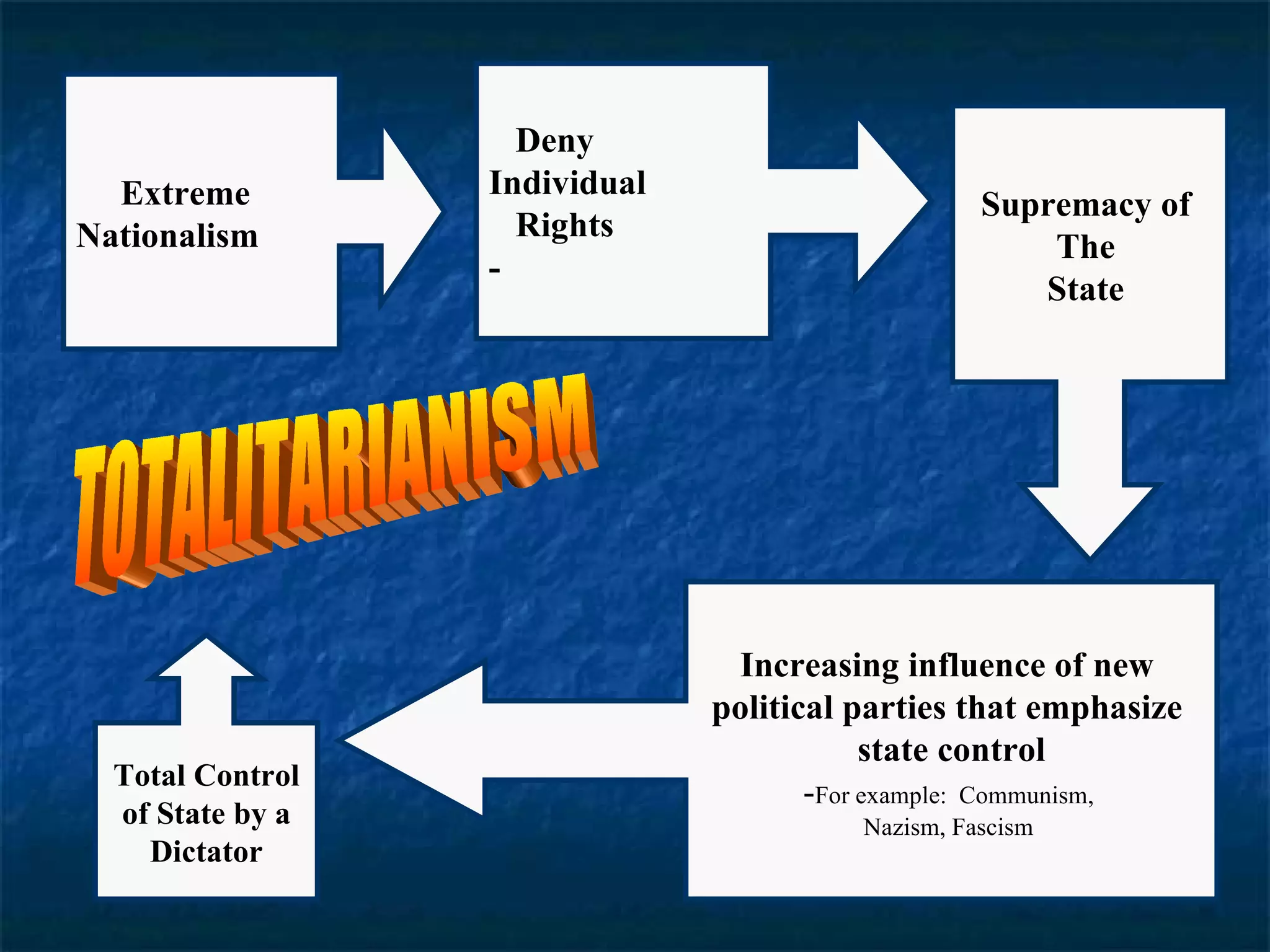
  Extreme  Nationalism  Deny  Individual Rights  -  Supremacy of  The  State  Increasing influence of new  political parties that emphasize  state control - For example:  Communism,  Nazism, Fascism  Total Control of State by a Dictator TOTALITARIANISM
What is it? Describe its characteristics… Totalitarianism
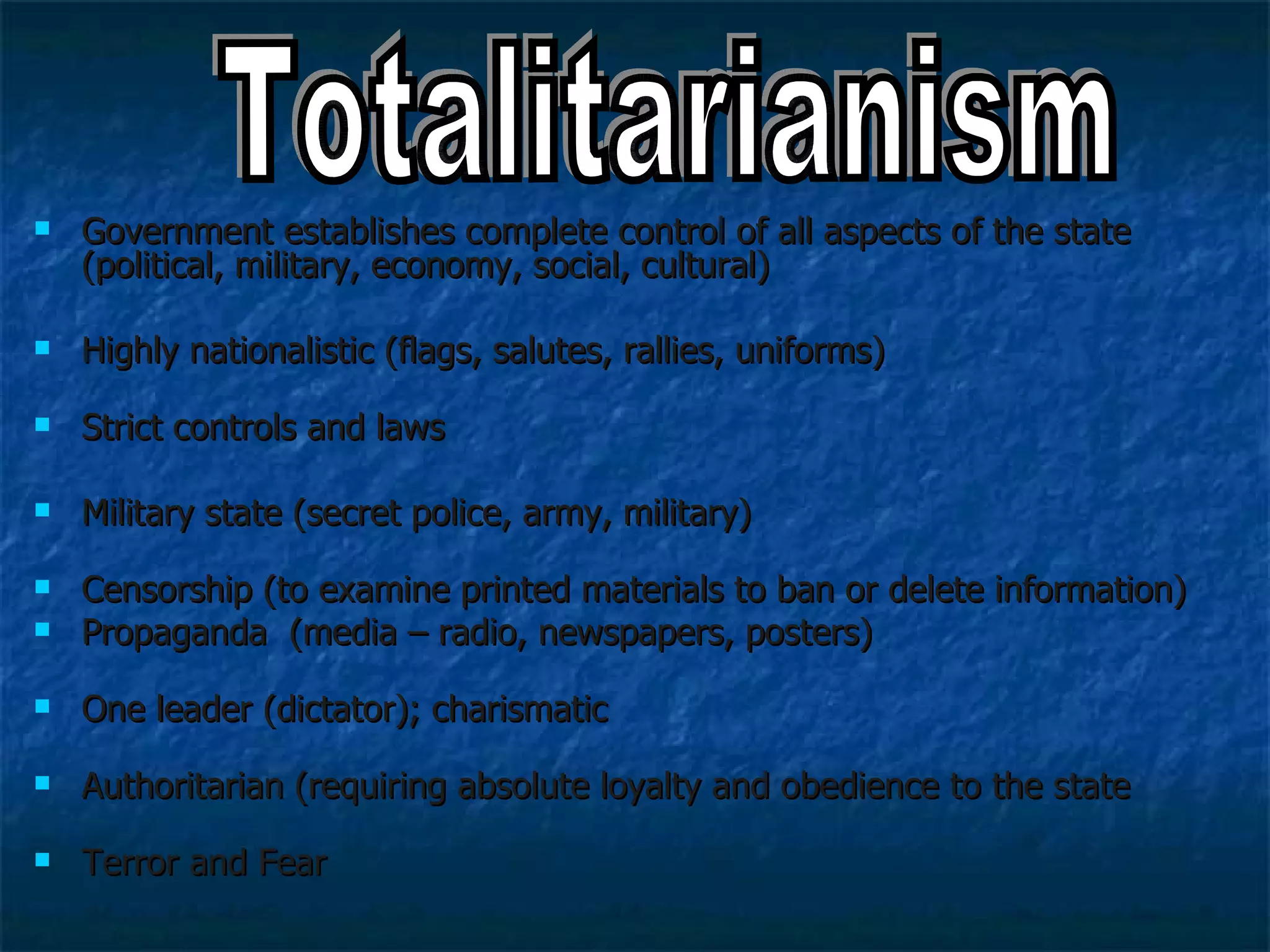
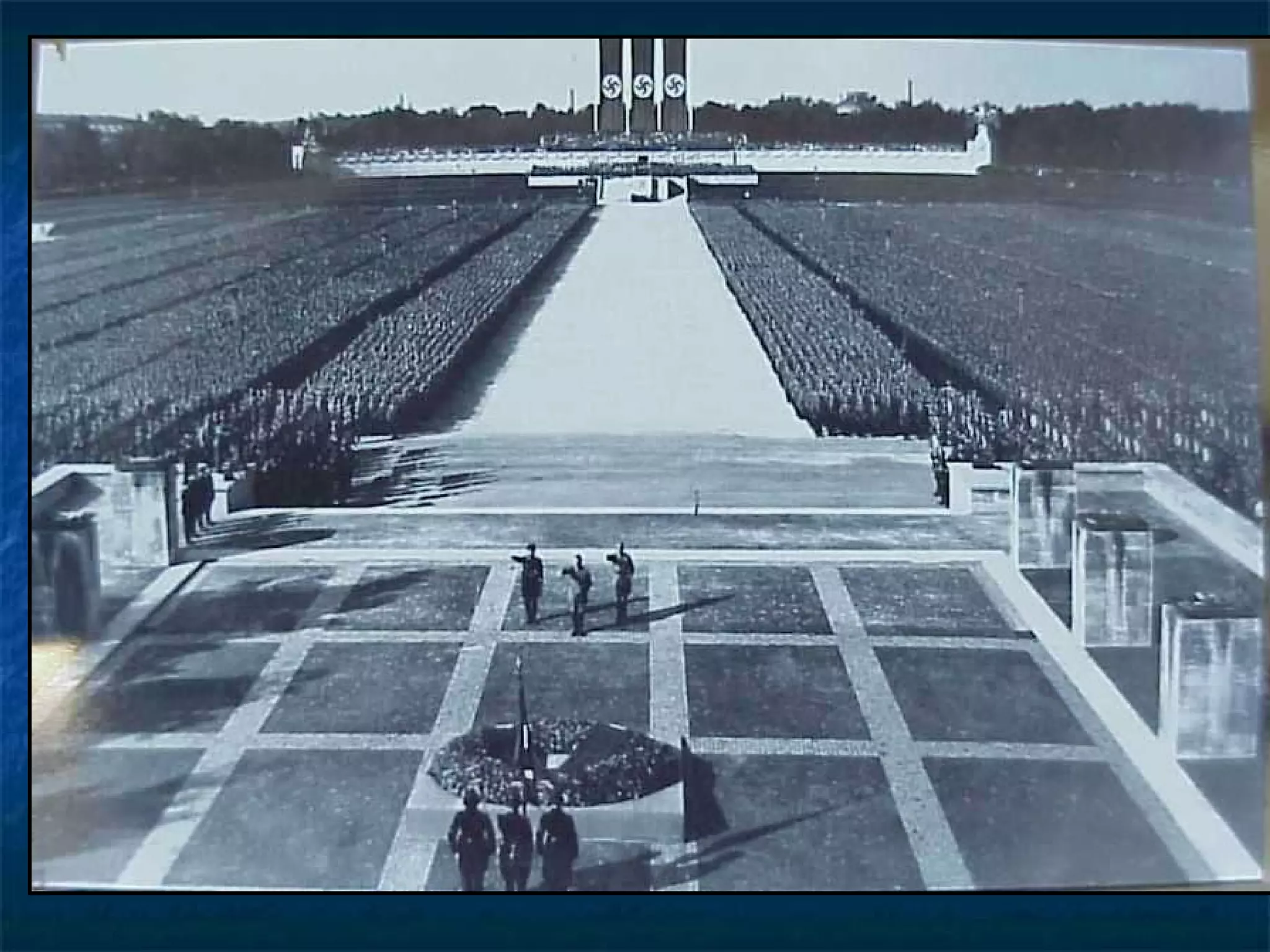
Government establishes complete control of all aspects of the state (political, military, economy, social, cultural) Highly nationalistic (flags, salutes, rallies, uniforms) Strict controls and laws  Military state (secret police, army, military) Censorship (to examine printed materials to ban or delete information) Propaganda  (media – radio, newspapers, posters) One leader (dictator); charismatic  Authoritarian (requiring absolute loyalty and obedience to the state  Terror and Fear  Totalitarianism
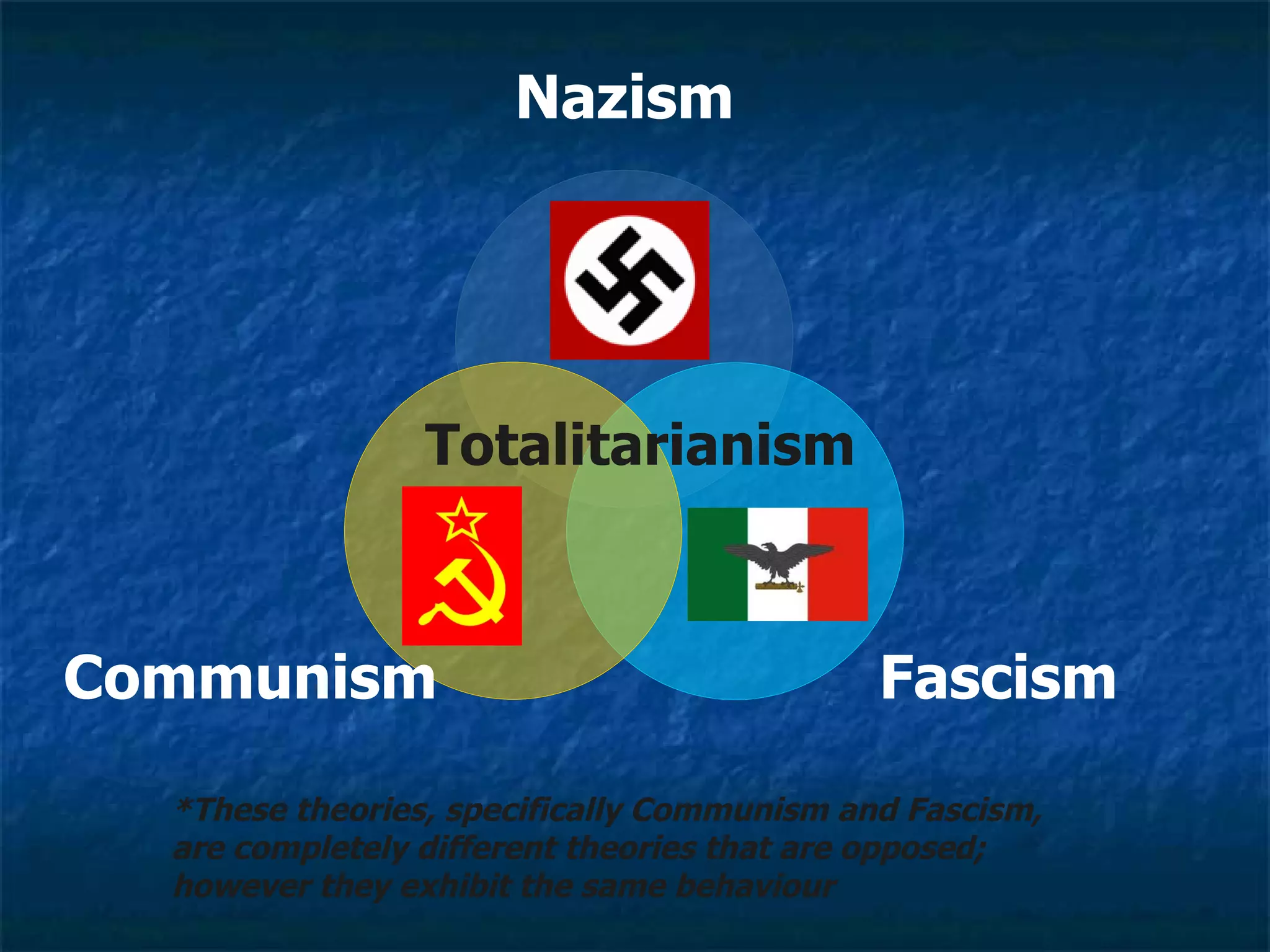
*These theories, specifically Communism and Fascism,  are completely different theories that are opposed; however they exhibit the same behaviour Totalitarianism Nazism Fascism Communism
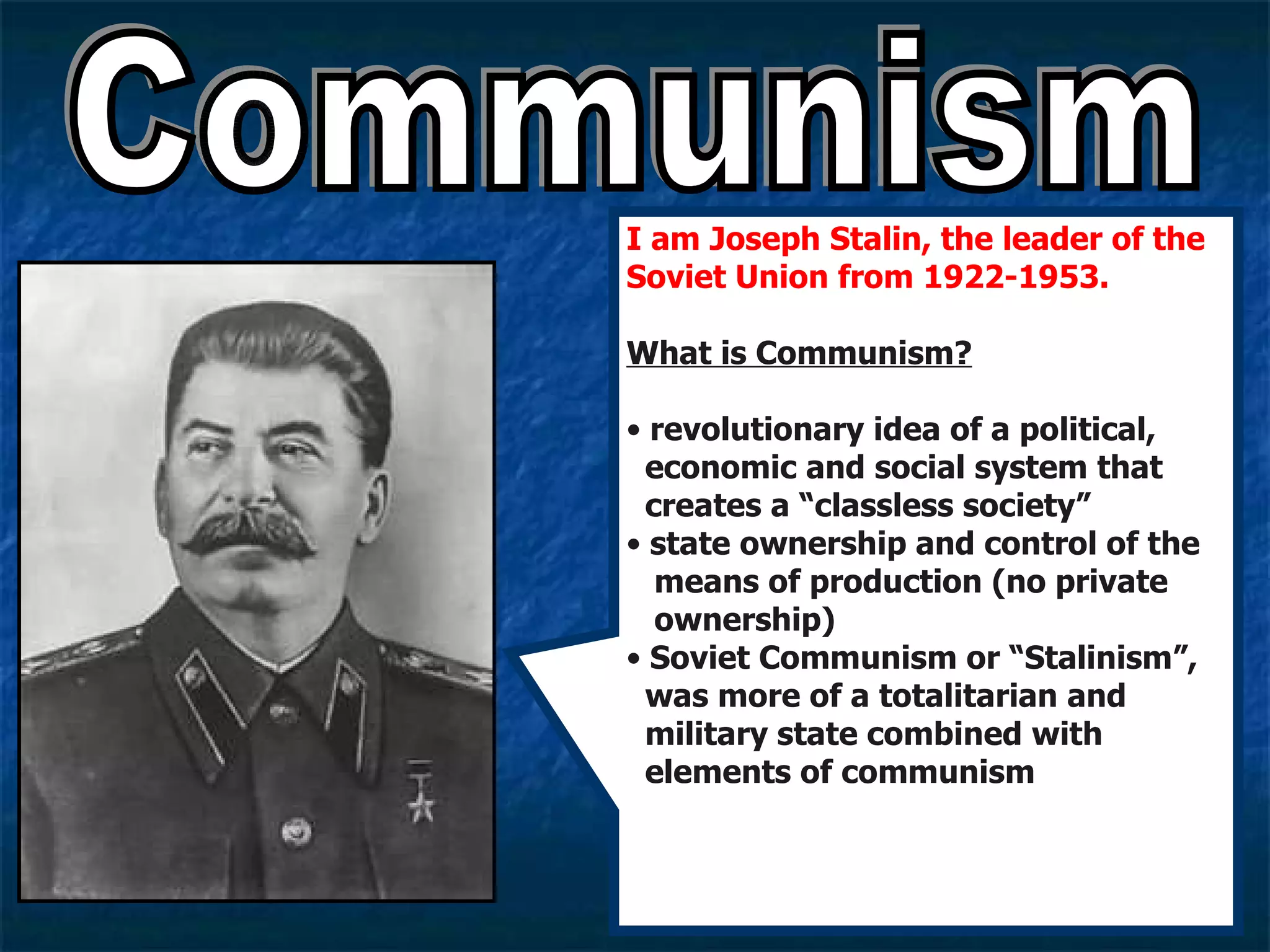
Communism I am Joseph Stalin, the leader of the Soviet Union from 1922-1953. What is Communism? revolutionary idea of a political,    economic and social system that    creates a “classless society” state ownership and control of the    means of production (no private    ownership) Soviet Communism or “Stalinism”,    was more of a totalitarian and    military state combined with    elements of communism
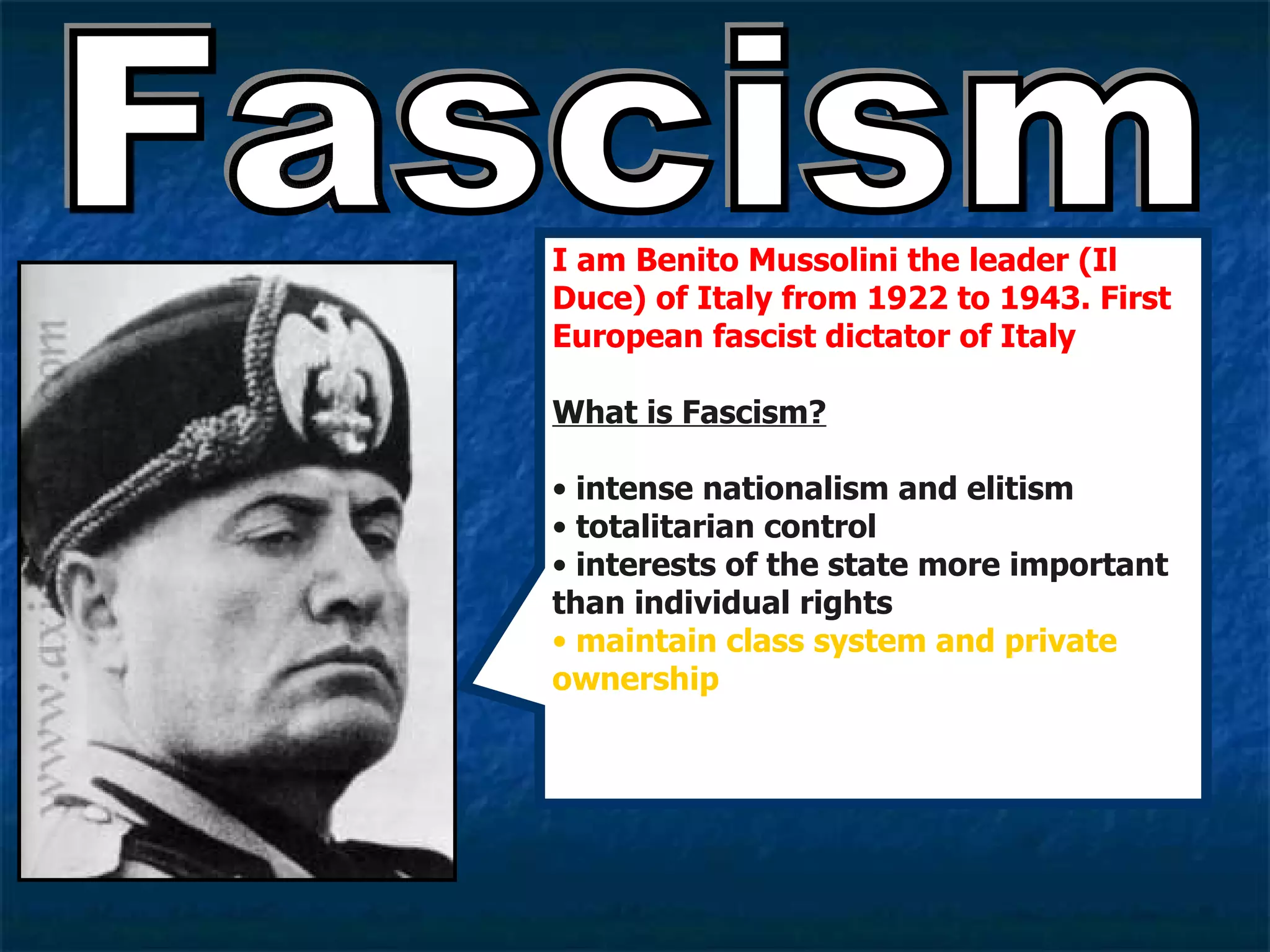
Fascism I am Benito Mussolini the leader (Il Duce) of Italy from 1922 to 1943. First  European fascist dictator of Italy What is Fascism? intense nationalism and elitism totalitarian control  interests of the state more important than individual rights maintain class system and private ownership
Ideas of Mussolini Mussolini argued that citizens were  empowered   when they were subordinated to the state.  By blindly obeying the state, they helped the state thrive, which benefited them.  To Mussolini, this distinguished the fascist state from repressive authoritarian governments, which sought to crush people, & not empower them.
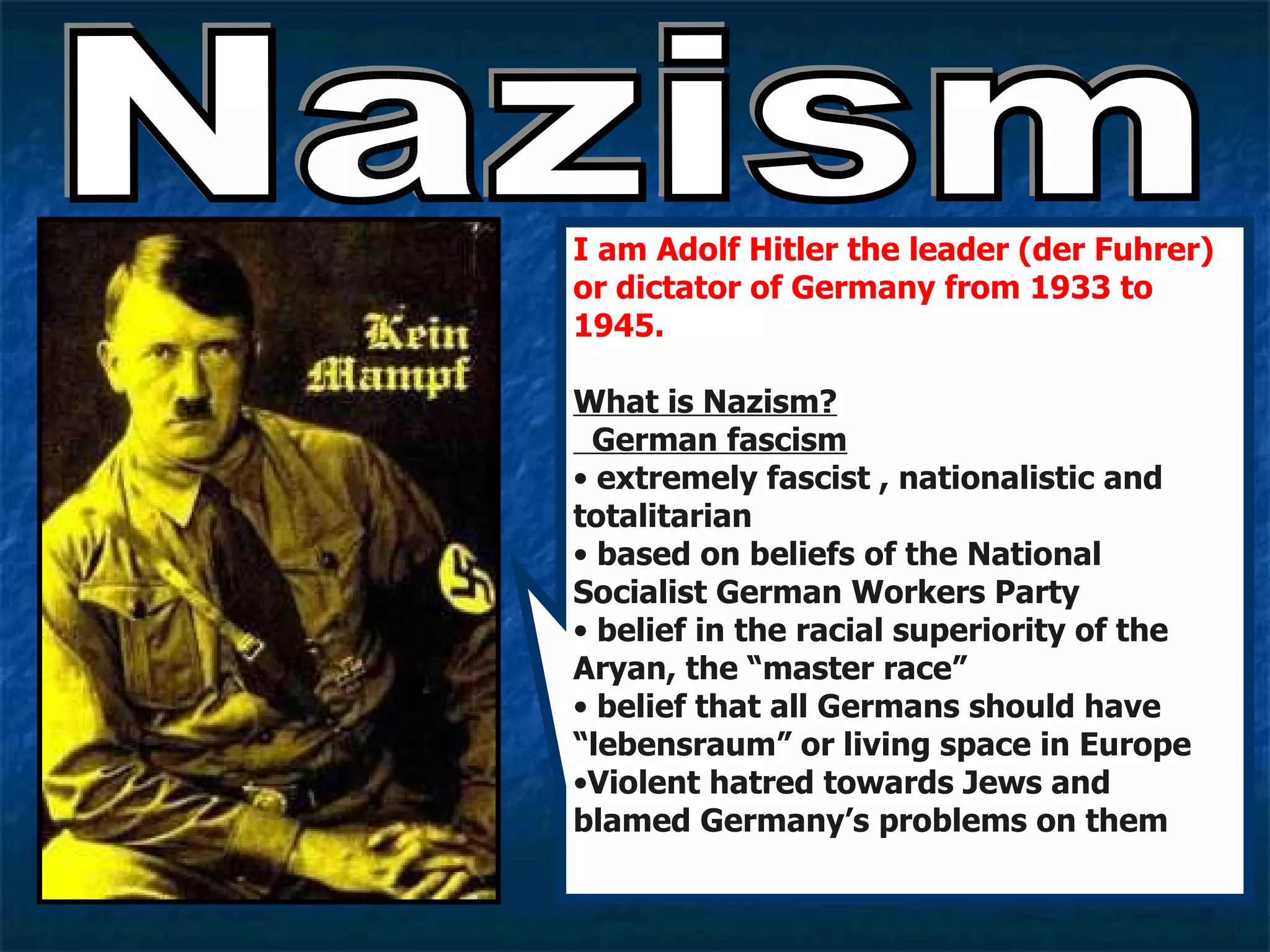
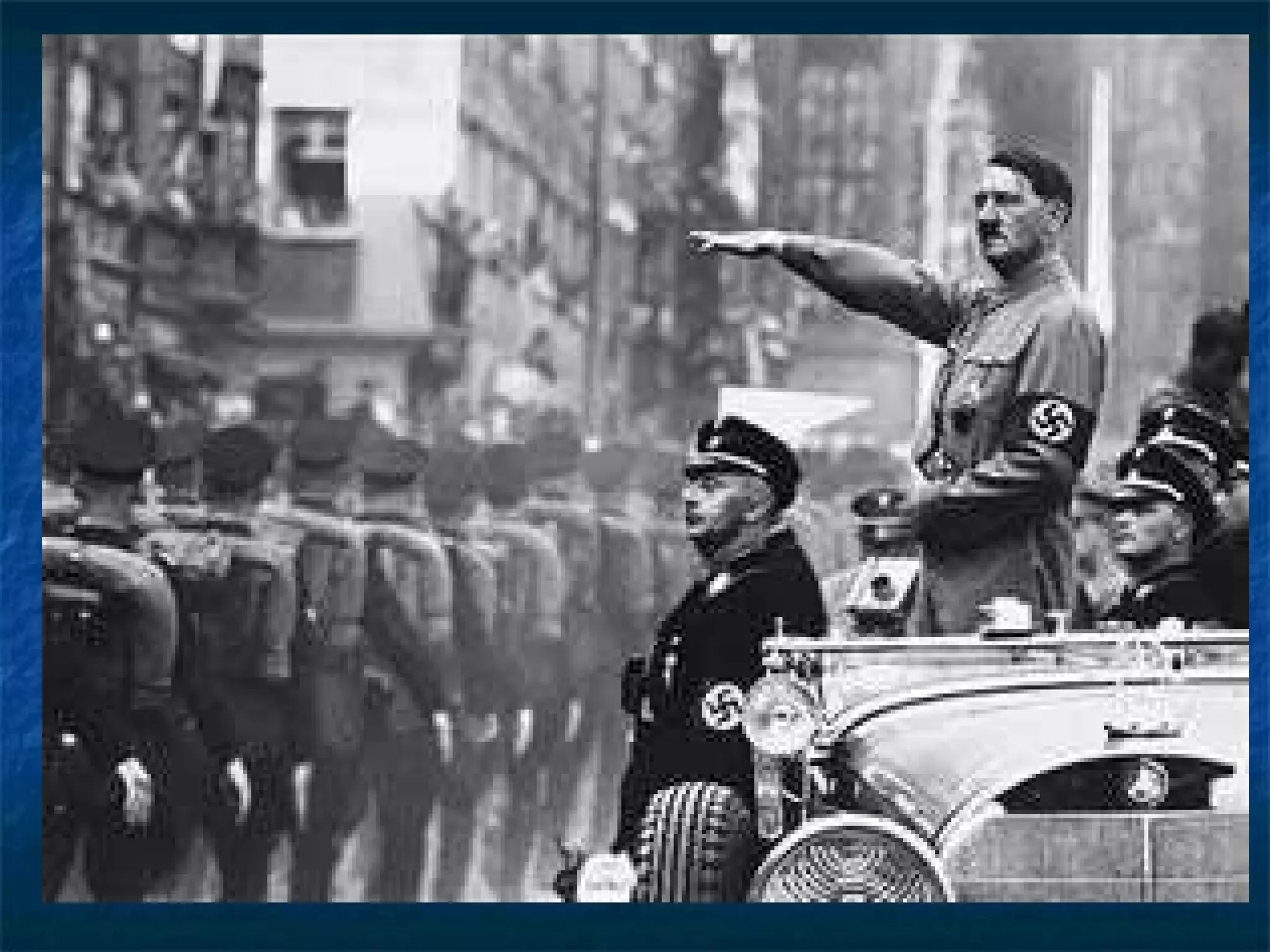
Nazism I am Adolf Hitler the leader (der Fuhrer) or dictator of Germany from 1933 to 1945.   What is Nazism?   German fascism extremely fascist , nationalistic and totalitarian  based on beliefs of the National Socialist German Workers Party belief in the racial superiority of the Aryan, the “master race” belief that all Germans should have “lebensraum” or living space in Europe Violent hatred towards Jews and blamed Germany’s problems on them
Adolph Hitler Hitler considered himself superior, eventhough he was a drifter & failed artist during his youth. A corporal during WWI, he was devastated by Germany’s loss & blamed it on the Jews. He started his political career at age 30, joining the German Workers Party.  He had exceptional speaking skills & came to be revered by others in the party.  He was chosen its leader in 1921, and renamed it the National Socialist German Workers Party.
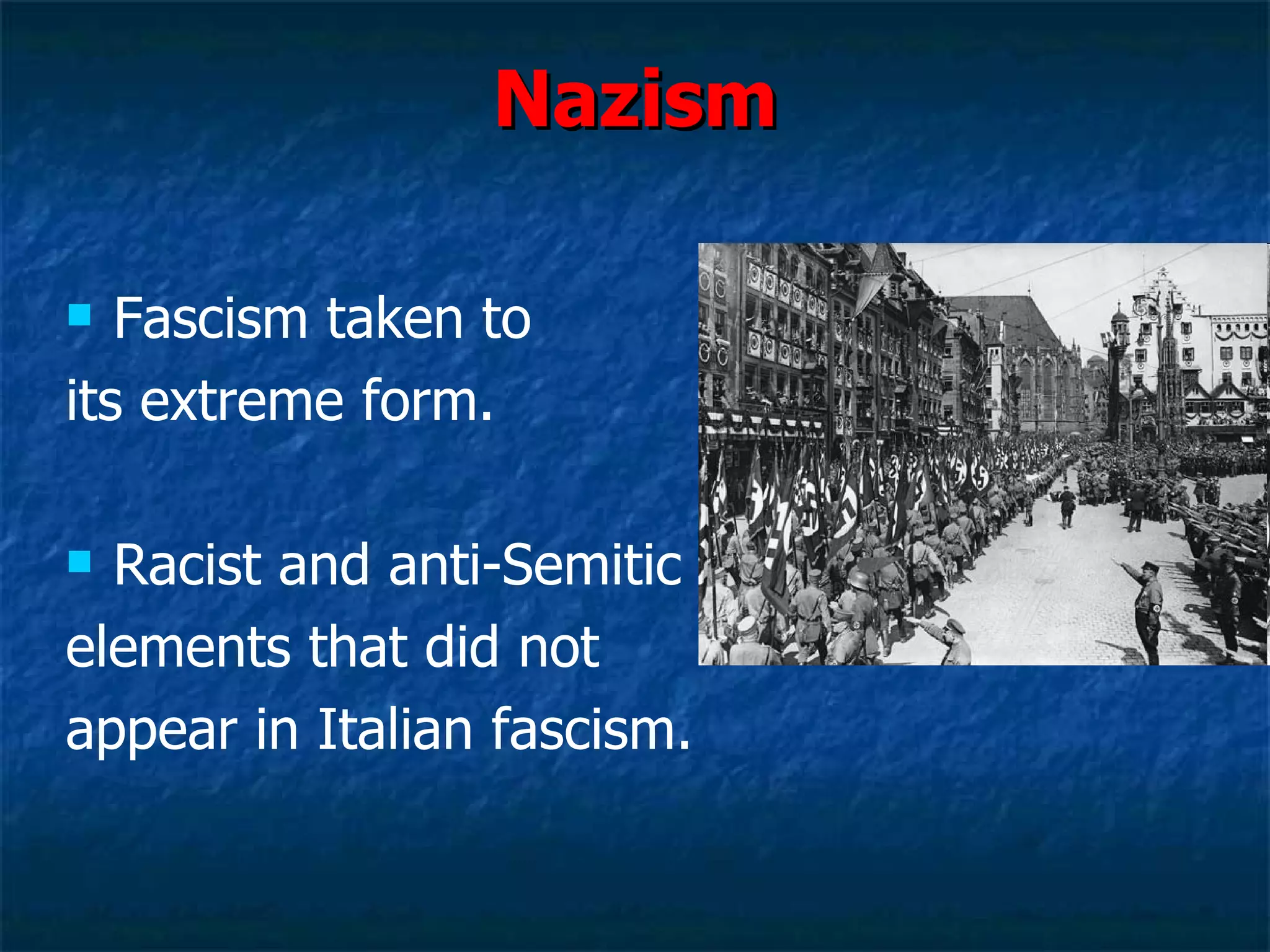
Nazism Fascism taken to  its extreme form. Racist and anti-Semitic  elements that did not  appear in Italian fascism.
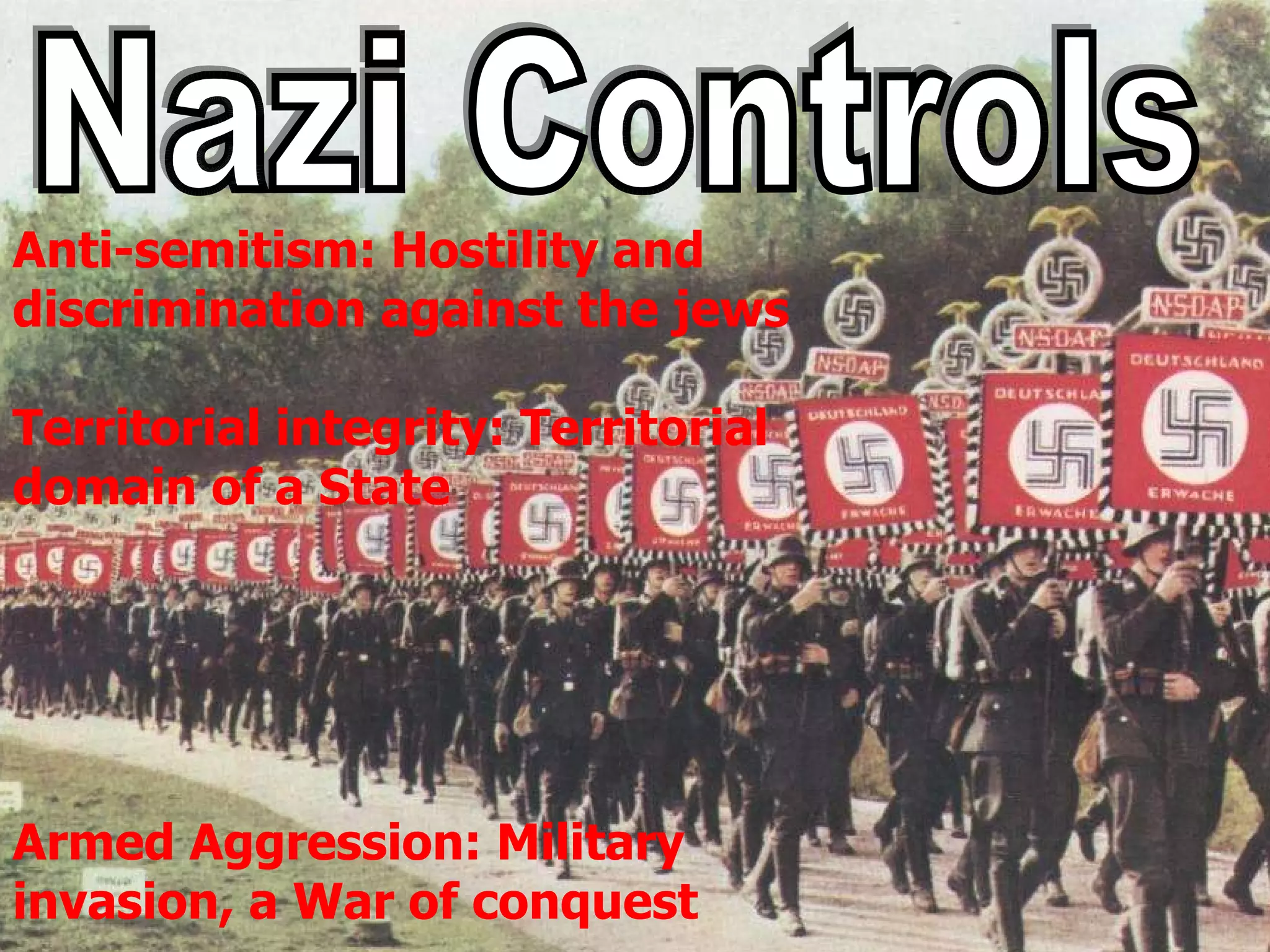
Nazi Controls Anti-semitism: Hostility and  discrimination against the jews  Territorial integrity: Territorial domain of a State  Armed Aggression: Military invasion, a War of conquest
GESTAPO :  the Secret State Police   SS   (Schutzstaffel):  Defense Corps “black shirts”, an elite guard unit formed out of the SA SA (Sturmabteilung):  Stormtroopers "brown-shirts" early private Nazi army that protected leaders and opposed rival political parties Lebensraum (living space):   concept that emphasized need for territorial expansion of Germany into east Wehrmacht:  German army Einstazgruppen:  Nazi Death Squad; mobile killing  units Nazi Military State
 
 
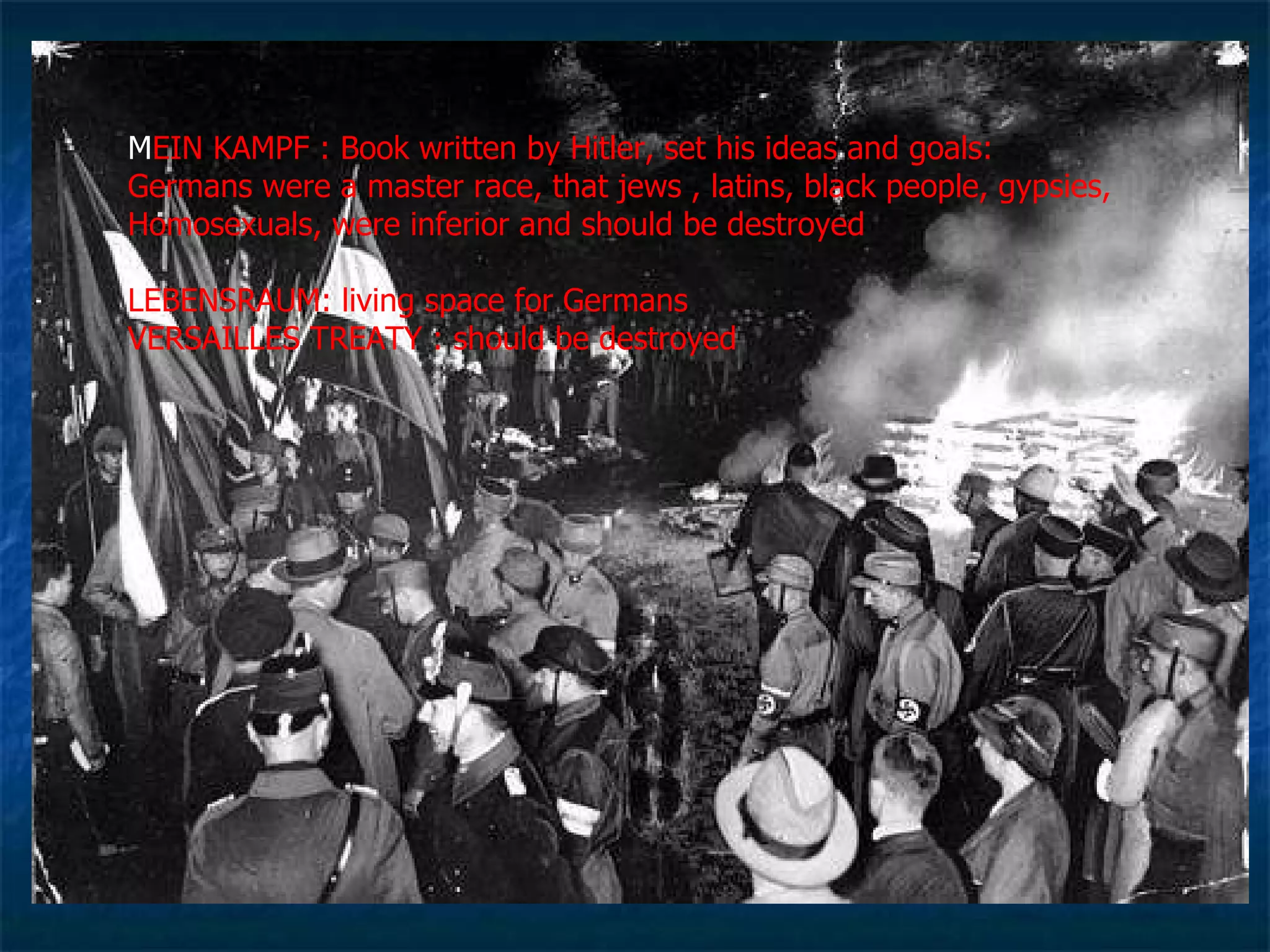
M EIN KAMPF : Book written by Hitler, set his ideas and goals:  Germans were a master race, that jews , latins, black people, gypsies, Homosexuals, were inferior and should be destroyed  LEBENSRAUM: living space for Germans  VERSAILLES TREATY : should be destroyed
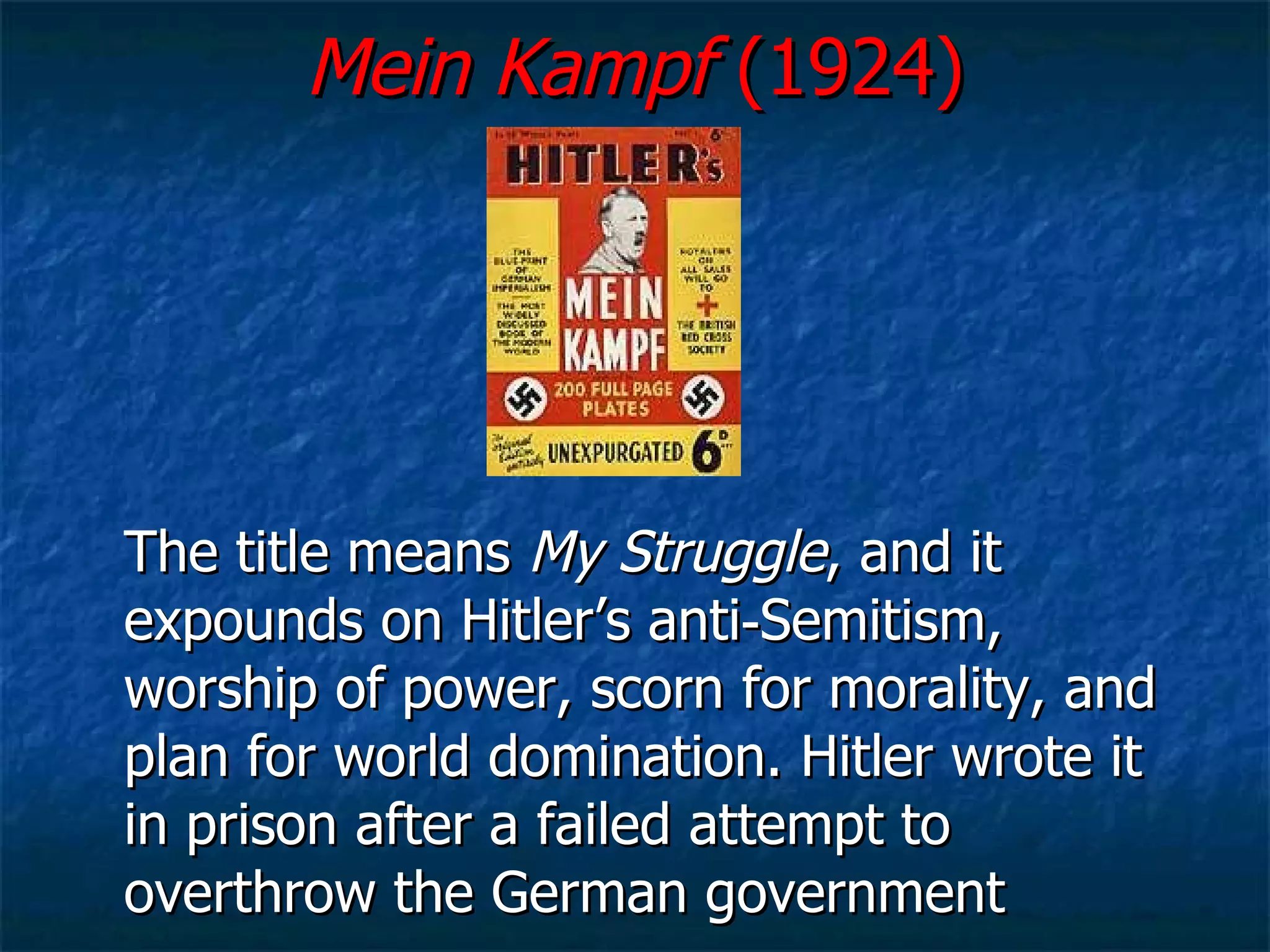
Mein Kampf  (1924) The title means  My Struggle , and it expounds on Hitler’s anti‑Semitism, worship of power, scorn for morality, and plan for world domination. Hitler wrote it in prison after a failed attempt to overthrow the German government
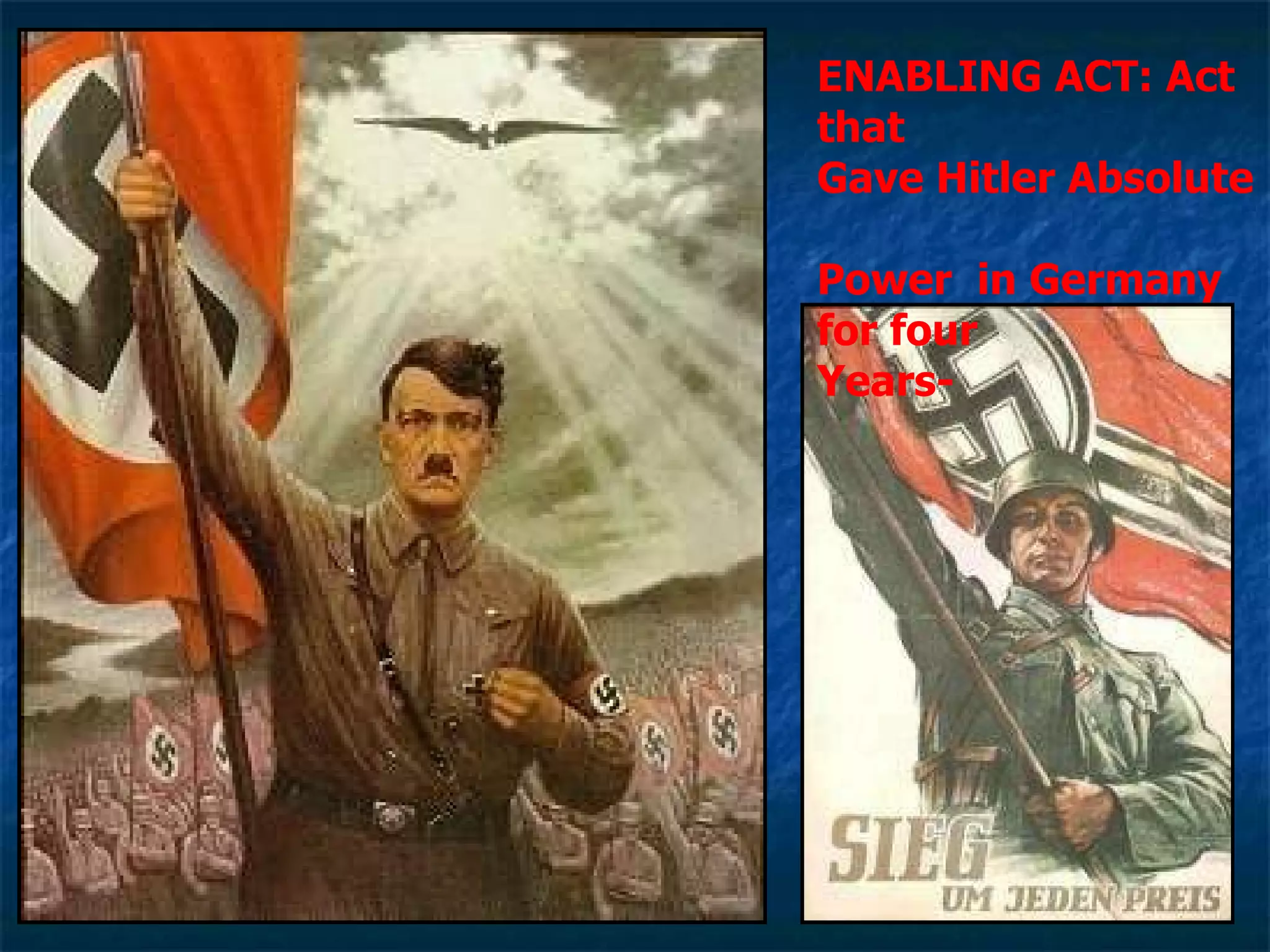
ENABLING ACT: Act that  Gave Hitler Absolute  Power  in Germany for four  Years-
 
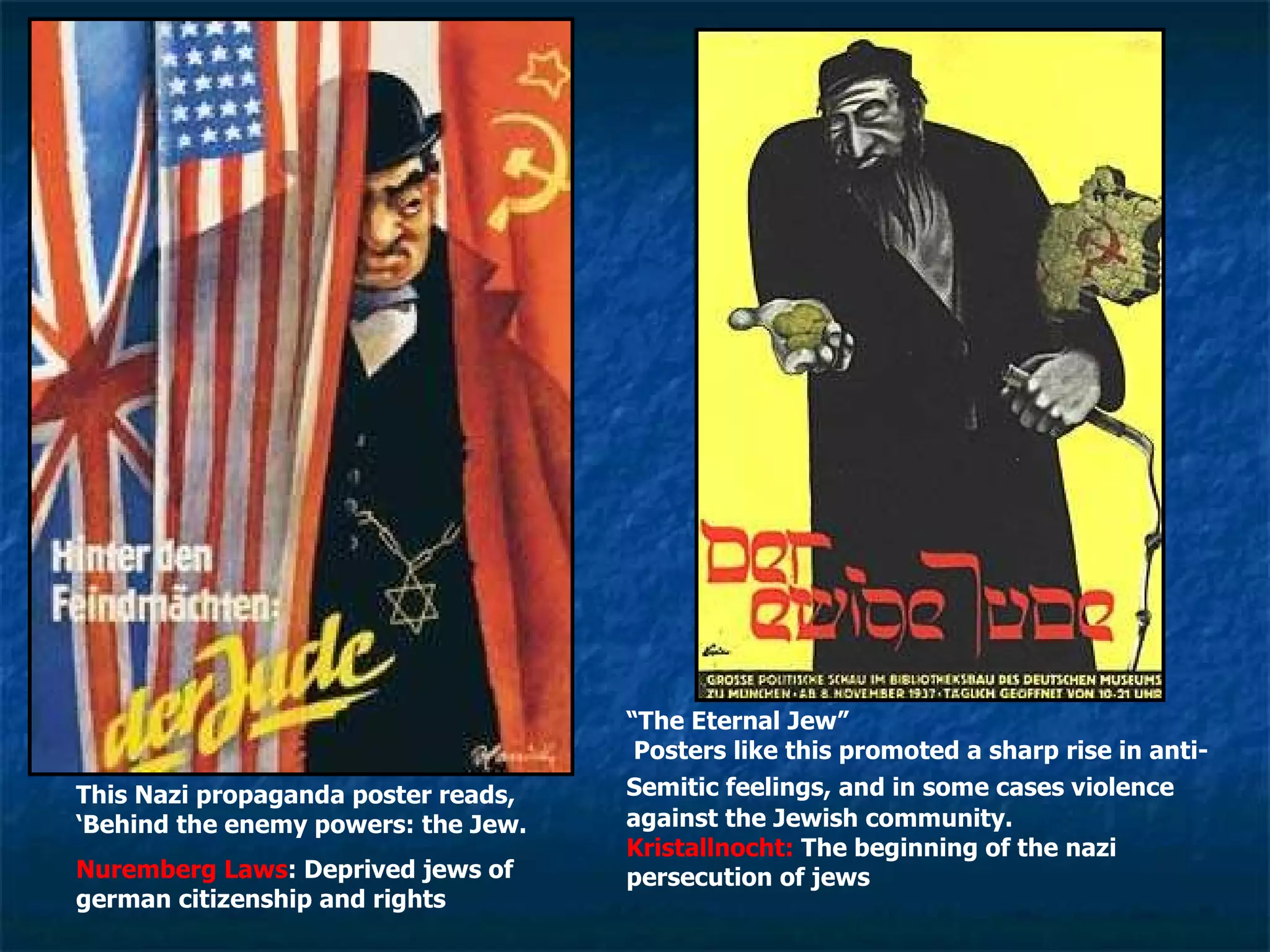
This Nazi propaganda poster reads, ‘Behind the enemy powers: the Jew. Nuremberg Laws : Deprived jews of german citizenship and rights   “ The Eternal Jew”  Posters like this promoted a sharp rise in anti-Semitic feelings, and in some cases violence   against the Jewish community. Kristallnocht:  The beginning of the nazi persecution of jews
kristallnacht   Kristallnacht—November 9, 1938—”Night of Broken Glass”—Jewish shops, synagogues, homes violently attacked—after a Jewish teenager from Germany shot a German diplomat in Paris—beginning of mass emigration of Jews and the forced removal to Jewish ghettos

Fascism B

  • 1.
    Rise of NewLeaders and Ideas in Europe during the 1930s LIC. LAURA FLORES
  • 2.
    Extreme Nationalism Deny Individual Rights - Supremacy of The State Increasing influence of new political parties that emphasize state control - For example: Communism, Nazism, Fascism Total Control of State by a Dictator TOTALITARIANISM
  • 3.
    What is it?Describe its characteristics… Totalitarianism
  • 4.
    Government establishes completecontrol of all aspects of the state (political, military, economy, social, cultural) Highly nationalistic (flags, salutes, rallies, uniforms) Strict controls and laws Military state (secret police, army, military) Censorship (to examine printed materials to ban or delete information) Propaganda (media – radio, newspapers, posters) One leader (dictator); charismatic Authoritarian (requiring absolute loyalty and obedience to the state Terror and Fear Totalitarianism
  • 5.
    *These theories, specificallyCommunism and Fascism, are completely different theories that are opposed; however they exhibit the same behaviour Totalitarianism Nazism Fascism Communism
  • 6.
    Communism I amJoseph Stalin, the leader of the Soviet Union from 1922-1953. What is Communism? revolutionary idea of a political, economic and social system that creates a “classless society” state ownership and control of the means of production (no private ownership) Soviet Communism or “Stalinism”, was more of a totalitarian and military state combined with elements of communism
  • 7.
    Fascism I amBenito Mussolini the leader (Il Duce) of Italy from 1922 to 1943. First European fascist dictator of Italy What is Fascism? intense nationalism and elitism totalitarian control interests of the state more important than individual rights maintain class system and private ownership
  • 8.
    Ideas of MussoliniMussolini argued that citizens were empowered when they were subordinated to the state. By blindly obeying the state, they helped the state thrive, which benefited them. To Mussolini, this distinguished the fascist state from repressive authoritarian governments, which sought to crush people, & not empower them.
  • 9.
    Nazism I amAdolf Hitler the leader (der Fuhrer) or dictator of Germany from 1933 to 1945. What is Nazism? German fascism extremely fascist , nationalistic and totalitarian based on beliefs of the National Socialist German Workers Party belief in the racial superiority of the Aryan, the “master race” belief that all Germans should have “lebensraum” or living space in Europe Violent hatred towards Jews and blamed Germany’s problems on them
  • 10.
    Adolph Hitler Hitlerconsidered himself superior, eventhough he was a drifter & failed artist during his youth. A corporal during WWI, he was devastated by Germany’s loss & blamed it on the Jews. He started his political career at age 30, joining the German Workers Party. He had exceptional speaking skills & came to be revered by others in the party. He was chosen its leader in 1921, and renamed it the National Socialist German Workers Party.
  • 11.
    Nazism Fascism takento its extreme form. Racist and anti-Semitic elements that did not appear in Italian fascism.
  • 12.
    Nazi Controls Anti-semitism:Hostility and discrimination against the jews Territorial integrity: Territorial domain of a State Armed Aggression: Military invasion, a War of conquest
  • 13.
    GESTAPO : the Secret State Police SS (Schutzstaffel): Defense Corps “black shirts”, an elite guard unit formed out of the SA SA (Sturmabteilung): Stormtroopers "brown-shirts" early private Nazi army that protected leaders and opposed rival political parties Lebensraum (living space): concept that emphasized need for territorial expansion of Germany into east Wehrmacht: German army Einstazgruppen: Nazi Death Squad; mobile killing units Nazi Military State
  • 14.
  • 15.
  • 16.
    M EIN KAMPF: Book written by Hitler, set his ideas and goals: Germans were a master race, that jews , latins, black people, gypsies, Homosexuals, were inferior and should be destroyed LEBENSRAUM: living space for Germans VERSAILLES TREATY : should be destroyed
  • 17.
    Mein Kampf (1924) The title means My Struggle , and it expounds on Hitler’s anti‑Semitism, worship of power, scorn for morality, and plan for world domination. Hitler wrote it in prison after a failed attempt to overthrow the German government
  • 18.
    ENABLING ACT: Actthat Gave Hitler Absolute Power in Germany for four Years-
  • 19.
  • 20.
    This Nazi propagandaposter reads, ‘Behind the enemy powers: the Jew. Nuremberg Laws : Deprived jews of german citizenship and rights “ The Eternal Jew” Posters like this promoted a sharp rise in anti-Semitic feelings, and in some cases violence against the Jewish community. Kristallnocht: The beginning of the nazi persecution of jews
  • 21.
    kristallnacht Kristallnacht—November 9, 1938—”Night of Broken Glass”—Jewish shops, synagogues, homes violently attacked—after a Jewish teenager from Germany shot a German diplomat in Paris—beginning of mass emigration of Jews and the forced removal to Jewish ghettos