General
Information :
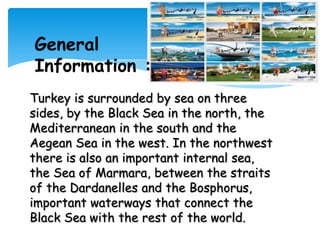
Turkey is surrounded by sea on three
sides, by the Black Sea in the north, the
Mediterranean in the south and the
Aegean Sea in the west. In the northwest
there is also an important internal sea,
the Sea of Marmara, between the straits
of the Dardanelles and the Bosphorus,
important waterways that connect the
Black Sea with the rest of the world.
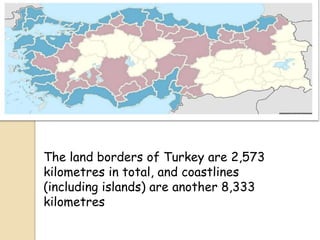
The land borders of Turkey are 2,573
kilometres in total, and coastlines
(including islands) are another 8,333
kilometres
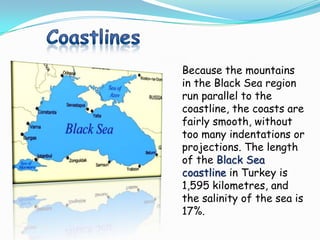
Because the mountains
in the Black Sea region
run parallel to the
coastline, the coasts are
fairly smooth, without
too many indentations or
projections. The length
of the Black Sea
coastline in Turkey is
1,595 kilometres, and
the salinity of the sea is
17%.
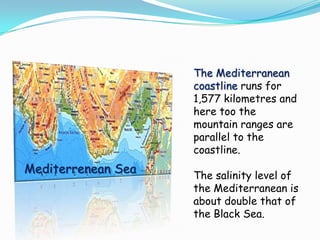
The Mediterranean
                    coastline runs for
                    1,577 kilometres and
                    here too the
                    mountain ranges are
                    parallel to the
                    coastline.
Mediterrenean Sea   The salinity level of
                    the Mediterranean is
                    about double that of
                    the Black Sea.
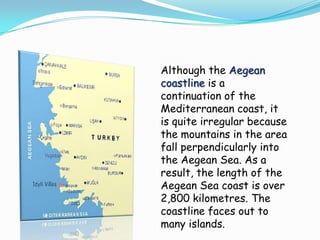
Although the Aegean
coastline is a
continuation of the
Mediterranean coast, it
is quite irregular because
the mountains in the area
fall perpendicularly into
the Aegean Sea. As a
result, the length of the
Aegean Sea coast is over
2,800 kilometres. The
coastline faces out to
many islands.
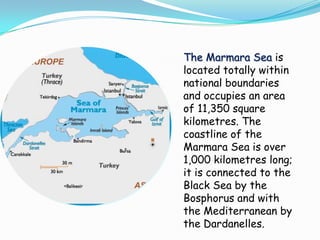
The Marmara Sea is
located totally within
national boundaries
and occupies an area
of 11,350 square
kilometres. The
coastline of the
Marmara Sea is over
1,000 kilometres long;
it is connected to the
Black Sea by the
Bosphorus and with
the Mediterranean by
the Dardanelles.
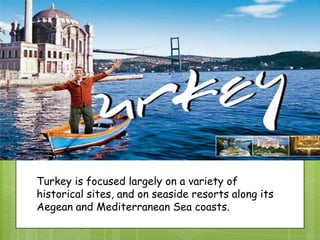
Turkey is focused largely on a variety of
historical sites, and on seaside resorts along its
Aegean and Mediterranean Sea coasts.
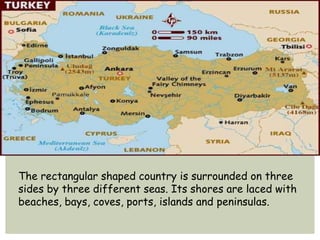
The rectangular shaped country is surrounded on three
sides by three different seas. Its shores are laced with
beaches, bays, coves, ports, islands and peninsulas.
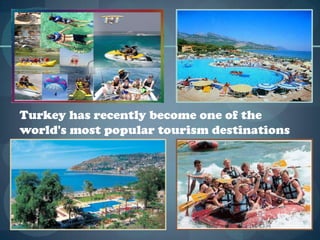
Turkey has recently become one of the
world's most popular tourism destinations
COASTAL
PROBLEMS
Coastal Erosion

Eutrophication

Pollution
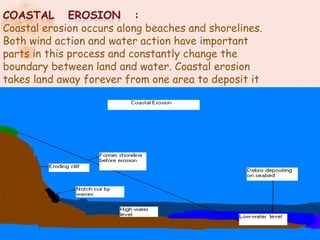
Coastal erosion occurs along beaches and shorelines.
Both wind action and water action have important
parts in this process and constantly change the
boundary between land and water. Coastal erosion
takes land away forever from one area to deposit it
someplace else.
Things that can Effect
         Coastal Erosion
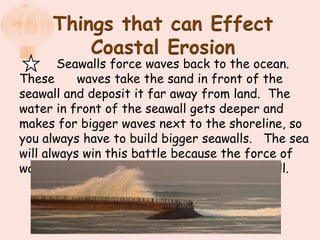
        Seawalls force waves back to the ocean.
These      waves take the sand in front of the
seawall and deposit it far away from land. The
water in front of the seawall gets deeper and
makes for bigger waves next to the shoreline, so
you always have to build bigger seawalls. The sea
will always win this battle because the force of
water will always be stronger than any seawall.
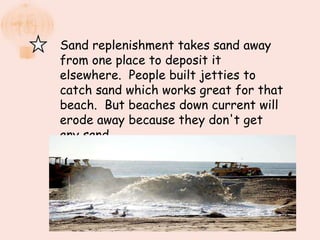
Sand replenishment takes sand away
from one place to deposit it
elsewhere. People built jetties to
catch sand which works great for that
beach. But beaches down current will
erode away because they don't get
any sand.
Eastern Black Sea Region,
located in the north east of
Turkey, has been exposed to
severe coastal erosion and
shoreline recession for the
last 30 years.
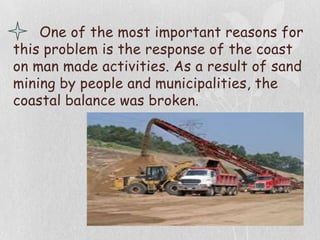
One of the most important reasons for
this problem is the response of the coast
on man made activities. As a result of sand
mining by people and municipalities, the
coastal balance was broken.
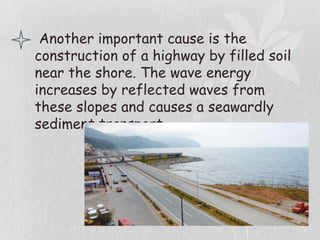
Another important cause is the
construction of a highway by filled soil
near the shore. The wave energy
increases by reflected waves from
these slopes and causes a seawardly
sediment transport.
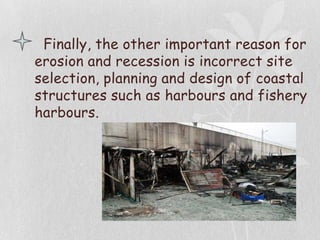
Finally, the other important reason for
erosion and recession is incorrect site
selection, planning and design of coastal
structures such as harbours and fishery
harbours.
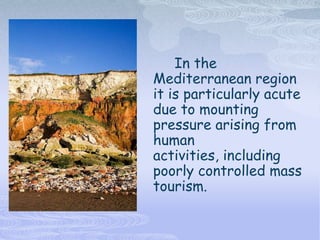
In the
Mediterranean region
it is particularly acute
due to mounting
pressure arising from
human
activities, including
poorly controlled mass
tourism.
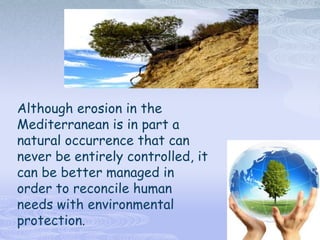
Although erosion in the
Mediterranean is in part a
natural occurrence that can
never be entirely controlled, it
can be better managed in
order to reconcile human
needs with environmental
protection.
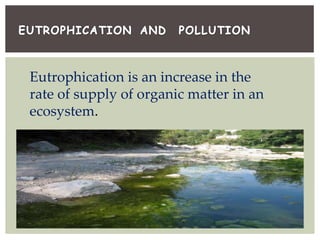
Eutrophication is an increase in the
rate of supply of organic matter in an
ecosystem.
Eutrophication is a major
problem in most of the
European regional seas
including the Mediterranean
and the Black Sea
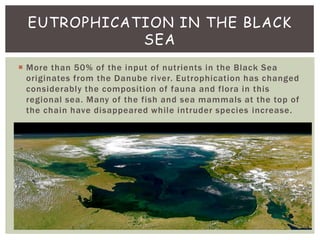
EUTROPHICATION IN THE BLACK
             SEA
 More than 50% of the input of nutrients in the Black Sea
  originates from the Danube river. Eutrophication has changed
  considerably the composition of fauna and flora in this
  regional sea. Many of the fish and sea mammals at the top of
  the chain have disappeared while intruder species increase.
EUTROPHICATION              IN    THE
MEDITERRANEAN
Eutrophication in the Mediterranean appears to
be limited along coastal areas.Enclosed bays and
river estuaries receive nutrient loads from
domestic and industrial wastewaters. Although
eutrophication phenomena have been more
intense in the northern part of
Mediterranean, special attention has to be paid
in the southern part as population
grows, agricultural and industrial activities
develop and national legislation does not seem to
be efficient in controlling nutrient enrichment of
the marine environment.
SOURCES OF EUTROPHICATION IN THE
        MEDITERRANEAN

•   Urbanization


•   Tourism


•   Agriculture
RECOMMENDATIONS
 Many issues should be addressed, concerning
 research on climatic changes, study and
 conservation policy on marine biodiversity,
 treatment of sewage especially near big urban
 areas, application of good agriculture practices
 even in countries outside EU and careful
 selection of sites for marine aquaculture units.
 Due to conflicts in the use of the coastal zone,
 integrated coastal zone management should be
 applied. Thus successful physical planning can
 be better organized so as to combine
 environmental protection and economic
 development
prepared by : Ebru
Özaydın

Turkish coasts beauties and challenges

  • 2.
    General Information : Turkey issurrounded by sea on three sides, by the Black Sea in the north, the Mediterranean in the south and the Aegean Sea in the west. In the northwest there is also an important internal sea, the Sea of Marmara, between the straits of the Dardanelles and the Bosphorus, important waterways that connect the Black Sea with the rest of the world.
  • 3.
    The land bordersof Turkey are 2,573 kilometres in total, and coastlines (including islands) are another 8,333 kilometres
  • 4.
    Because the mountains inthe Black Sea region run parallel to the coastline, the coasts are fairly smooth, without too many indentations or projections. The length of the Black Sea coastline in Turkey is 1,595 kilometres, and the salinity of the sea is 17%.
  • 5.
    The Mediterranean coastline runs for 1,577 kilometres and here too the mountain ranges are parallel to the coastline. Mediterrenean Sea The salinity level of the Mediterranean is about double that of the Black Sea.
  • 6.
    Although the Aegean coastlineis a continuation of the Mediterranean coast, it is quite irregular because the mountains in the area fall perpendicularly into the Aegean Sea. As a result, the length of the Aegean Sea coast is over 2,800 kilometres. The coastline faces out to many islands.
  • 7.
    The Marmara Seais located totally within national boundaries and occupies an area of 11,350 square kilometres. The coastline of the Marmara Sea is over 1,000 kilometres long; it is connected to the Black Sea by the Bosphorus and with the Mediterranean by the Dardanelles.
  • 8.
    Turkey is focusedlargely on a variety of historical sites, and on seaside resorts along its Aegean and Mediterranean Sea coasts.
  • 9.
    The rectangular shapedcountry is surrounded on three sides by three different seas. Its shores are laced with beaches, bays, coves, ports, islands and peninsulas.
  • 10.
    Turkey has recentlybecome one of the world's most popular tourism destinations
  • 11.
  • 12.
    Coastal erosion occursalong beaches and shorelines. Both wind action and water action have important parts in this process and constantly change the boundary between land and water. Coastal erosion takes land away forever from one area to deposit it someplace else.
  • 13.
    Things that canEffect Coastal Erosion Seawalls force waves back to the ocean. These waves take the sand in front of the seawall and deposit it far away from land. The water in front of the seawall gets deeper and makes for bigger waves next to the shoreline, so you always have to build bigger seawalls. The sea will always win this battle because the force of water will always be stronger than any seawall.
  • 14.
    Sand replenishment takessand away from one place to deposit it elsewhere. People built jetties to catch sand which works great for that beach. But beaches down current will erode away because they don't get any sand.
  • 16.
    Eastern Black SeaRegion, located in the north east of Turkey, has been exposed to severe coastal erosion and shoreline recession for the last 30 years.
  • 17.
    One of themost important reasons for this problem is the response of the coast on man made activities. As a result of sand mining by people and municipalities, the coastal balance was broken.
  • 18.
    Another important causeis the construction of a highway by filled soil near the shore. The wave energy increases by reflected waves from these slopes and causes a seawardly sediment transport.
  • 19.
    Finally, the otherimportant reason for erosion and recession is incorrect site selection, planning and design of coastal structures such as harbours and fishery harbours.
  • 22.
    In the Mediterranean region itis particularly acute due to mounting pressure arising from human activities, including poorly controlled mass tourism.
  • 23.
    Although erosion inthe Mediterranean is in part a natural occurrence that can never be entirely controlled, it can be better managed in order to reconcile human needs with environmental protection.
  • 24.
    Eutrophication is anincrease in the rate of supply of organic matter in an ecosystem.
  • 27.
    Eutrophication is amajor problem in most of the European regional seas including the Mediterranean and the Black Sea
  • 28.
    EUTROPHICATION IN THEBLACK SEA  More than 50% of the input of nutrients in the Black Sea originates from the Danube river. Eutrophication has changed considerably the composition of fauna and flora in this regional sea. Many of the fish and sea mammals at the top of the chain have disappeared while intruder species increase.
  • 29.
    EUTROPHICATION IN THE MEDITERRANEAN Eutrophication in the Mediterranean appears to be limited along coastal areas.Enclosed bays and river estuaries receive nutrient loads from domestic and industrial wastewaters. Although eutrophication phenomena have been more intense in the northern part of Mediterranean, special attention has to be paid in the southern part as population grows, agricultural and industrial activities develop and national legislation does not seem to be efficient in controlling nutrient enrichment of the marine environment.
  • 30.
    SOURCES OF EUTROPHICATIONIN THE MEDITERRANEAN • Urbanization • Tourism • Agriculture
  • 31.
    RECOMMENDATIONS  Many issuesshould be addressed, concerning research on climatic changes, study and conservation policy on marine biodiversity, treatment of sewage especially near big urban areas, application of good agriculture practices even in countries outside EU and careful selection of sites for marine aquaculture units. Due to conflicts in the use of the coastal zone, integrated coastal zone management should be applied. Thus successful physical planning can be better organized so as to combine environmental protection and economic development
  • 33.
    prepared by :Ebru Özaydın