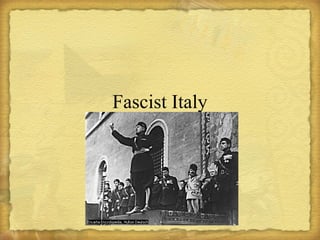
Fascist Italy
A Definition of Fascism 
FFaasscciissmm is the totalitarian philosophy of 
government that glorifies the state and nation 
and assigns to the state control over every aspect 
of national life. 
The State not only is authority which governs and 
molds individual will with laws and values of spiritual 
life, but it is also power which makes its will prevail 
abroad….For the Fascist, everything is within the 
State and…neither individuals nor groups are outside 
the State...For Fascism, the State is an absolute, 
before which individuals or groups are only 
relative….Liberalism denied the State in the name of 
the individual; Fascism reasserts the rights of the 
State as expressing the real essence of the individual. 
-- Enciclopedia Italiana, 1932
The Birth of Fascism 
 Introduction 
 Background 
 WWI 
 Social Cost of War
Mercury Dimes Discontinued 1945
Benito Mussolini 
(1883-1945) 
 Early Life 
 Socialist Activities 
 Political Activates 
after 1919 
 Fascio de 
Combattimento 
 Unclear Ideology-difficulties 
 Nationalist 
Rhetoric 
 Fascist Find their 
Niche
Squadristi
Squadristi 
 Bands of Fascists 
 Mussolini gains respectability 
 Prime Minister Giovanni Giolitti 
 Gaines a hold of parliament
Violence and Fascism 
 Blackshirts number 200,000 
 Gains Middle Class support through fear 
 Brute force vs Elections 
 Victory through Chaos 
 March on Rome 
 Abdication of Emmanuel III Oct. 1922
Mussolini and the Fascist State 
 Mousillini as Prime Minister 
 Abreco Law 
 Elections of 1924 
 Fraud and Coercion 
 Fascist Dictatorship 
 Head of Government 
 OVRA
The fascists were taught: 
 Credere! [to believe] 
 Obbedire! [to obey] 
 Combattere! [to fight]
Mussolini's Totalitarian Regime 
 State Run 
 Ineffective 
 “Mussolini is always right” 
 New Fascist Man 
 Young Fascists 
 Women 
 Ideas 
 Law
Education 
 The first sentence 
pronounced by children 
at school was Let us 
salute the flag in the 
Roman fashion; hail to 
Italy; hail to Mussolini. 
 Textbooks emphasized: 
 The glorious pat of the 
ancient Romans. 
 The limitations imposed 
upon the present 
inhabitants by geography 
and the West. 
 The imperial destiny that 
awaited Italy’s future 
development.
Rampant Sexism 
 Almost exclusively 
male-dominated. 
 Traditional gender 
roles are made more 
rigid. 
 Divorce, abortion  
homosexuality are 
suppressed. 
 The state is 
represented as the 
ultimate guardian of 
the family institution.
Conclusions 
 Lacked effectiveness of Nazi State or Stalinists Russia 
 Never Eradicated Old Regime 
 Compromised With Church 
 Lateran Accords 
 Showed Mussolini's Desire/Need for Legitimization 
 Dichotomy of Fascism 
 Promised Much, Delivered Little
Facism

Facism

  • 1.
  • 2.
    A Definition ofFascism FFaasscciissmm is the totalitarian philosophy of government that glorifies the state and nation and assigns to the state control over every aspect of national life. The State not only is authority which governs and molds individual will with laws and values of spiritual life, but it is also power which makes its will prevail abroad….For the Fascist, everything is within the State and…neither individuals nor groups are outside the State...For Fascism, the State is an absolute, before which individuals or groups are only relative….Liberalism denied the State in the name of the individual; Fascism reasserts the rights of the State as expressing the real essence of the individual. -- Enciclopedia Italiana, 1932
  • 3.
    The Birth ofFascism Introduction Background WWI Social Cost of War
  • 6.
  • 7.
    Benito Mussolini (1883-1945) Early Life Socialist Activities Political Activates after 1919 Fascio de Combattimento Unclear Ideology-difficulties Nationalist Rhetoric Fascist Find their Niche
  • 8.
  • 9.
    Squadristi Bandsof Fascists Mussolini gains respectability Prime Minister Giovanni Giolitti Gaines a hold of parliament
  • 11.
    Violence and Fascism Blackshirts number 200,000 Gains Middle Class support through fear Brute force vs Elections Victory through Chaos March on Rome Abdication of Emmanuel III Oct. 1922
  • 13.
    Mussolini and theFascist State Mousillini as Prime Minister Abreco Law Elections of 1924 Fraud and Coercion Fascist Dictatorship Head of Government OVRA
  • 14.
    The fascists weretaught: Credere! [to believe] Obbedire! [to obey] Combattere! [to fight]
  • 15.
    Mussolini's Totalitarian Regime State Run Ineffective “Mussolini is always right” New Fascist Man Young Fascists Women Ideas Law
  • 16.
    Education Thefirst sentence pronounced by children at school was Let us salute the flag in the Roman fashion; hail to Italy; hail to Mussolini. Textbooks emphasized: The glorious pat of the ancient Romans. The limitations imposed upon the present inhabitants by geography and the West. The imperial destiny that awaited Italy’s future development.
  • 17.
    Rampant Sexism Almost exclusively male-dominated. Traditional gender roles are made more rigid. Divorce, abortion homosexuality are suppressed. The state is represented as the ultimate guardian of the family institution.
  • 20.
    Conclusions Lackedeffectiveness of Nazi State or Stalinists Russia Never Eradicated Old Regime Compromised With Church Lateran Accords Showed Mussolini's Desire/Need for Legitimization Dichotomy of Fascism Promised Much, Delivered Little