FMEA
Introduction to FMEA
• Failure Mode and Effects Analysis, FMEA is:
• A systematic method of identifying and
investigating potential design or process
weaknesses.
• A means to evaluate and manage product risks.
• A means of evolving organizational knowledge.
• Developed in the aerospace industry in the mid
1960’s
• Also sometimes referred to as Failure Mode Effect
and Criticality Analysis, FMECA
Purpose
• Recognise and evaluate the potential failure
modes and causes associated with the design
andmanufacture of a product or design and
operation of any process.
• Identify actions which could eliminate or
reduce the chance of the potential failure
occurring.
• Document the analysis and changes made.
Application of FMEA in Six Sigma
In Design for Six Sigma - (Design FMEA) :
• to identify potential failure modes
• to identify potential causes of failure
• to eliminate/minimise the potential failure
modes within the Design process
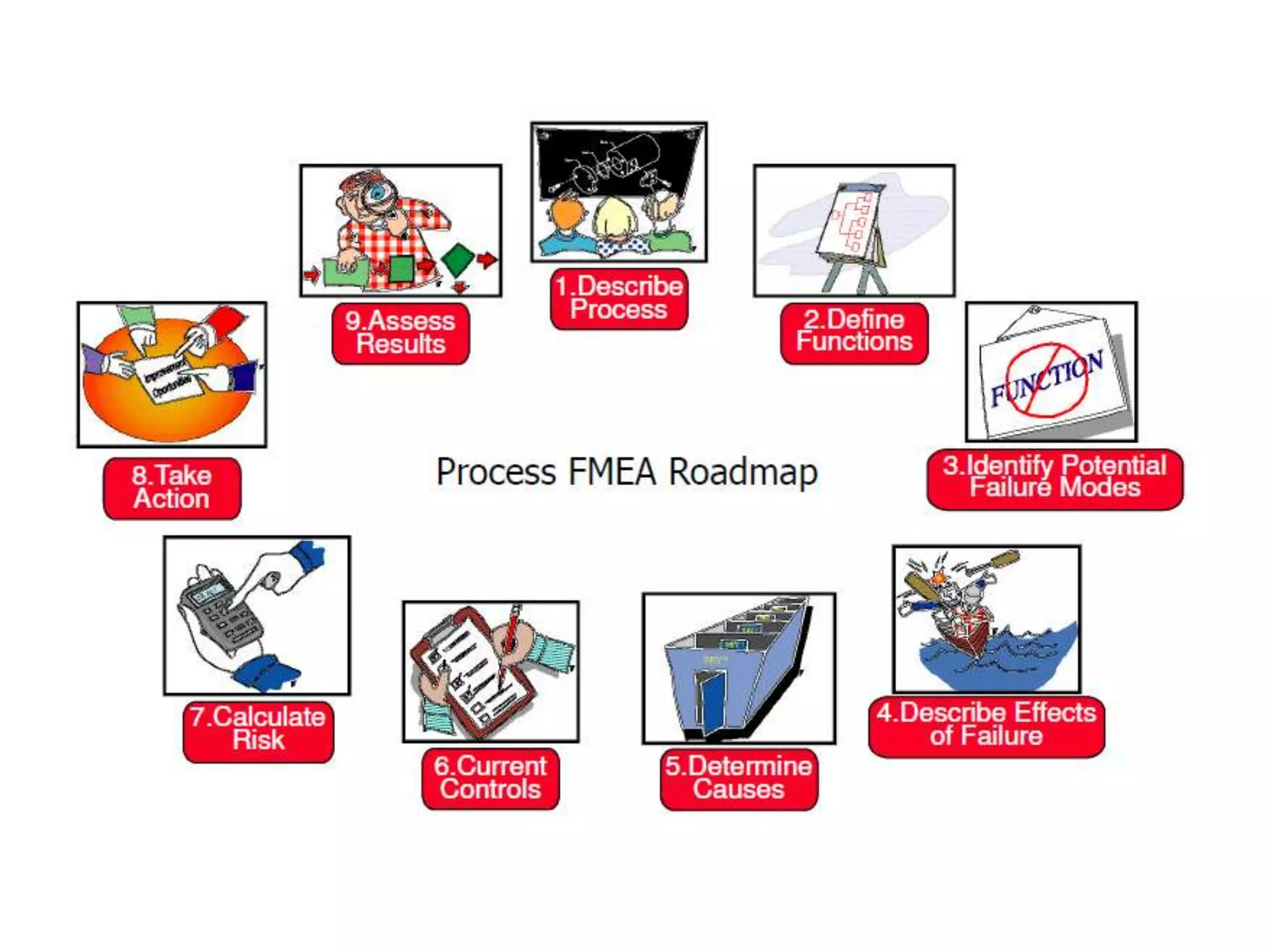
In Transactional/Operational Six Sigma (Process
FMEA) :
• to analyse the existing processes (identify
possible x’s)
• to improve the process (elimination/reduction
of failure modes)
• to select new process alternatives
• to develop control plans
10 Keys To FMEA Success
• Support by top & middle management
• Motivated team members
• Cross functional representation on the team
• Treat as “before the event” not “after the fact”
• Generate company specific rating scales
• Treat as a living document-reflect latest revisions
• Execute recommended actions
• Integration into your development process
• Generate & use a library of generic FMEA’s
• Follow the spirit, not the form
Common Mistakes
• Applied too late
• Poor team working, wrong team members or
no team
• Over dependence upon the numbers
• Inconsistency in numbers
• Solving all problems in meetings
Application of FMEA in DMAIC
• Analyse: To analyse the existing processes and
identify possible x’s (causes of failure)
• Improve: To improve the process
(elimination/reduction of failure modes)
To select new process alternatives
• Control: To develop control plans
It is only necessary to conduct PFMEA on the
modified/changed areas of the process
Failure mode effect analysis

Failure mode effect analysis

  • 1.
  • 2.
    Introduction to FMEA •Failure Mode and Effects Analysis, FMEA is: • A systematic method of identifying and investigating potential design or process weaknesses. • A means to evaluate and manage product risks. • A means of evolving organizational knowledge. • Developed in the aerospace industry in the mid 1960’s • Also sometimes referred to as Failure Mode Effect and Criticality Analysis, FMECA
  • 3.
    Purpose • Recognise andevaluate the potential failure modes and causes associated with the design andmanufacture of a product or design and operation of any process. • Identify actions which could eliminate or reduce the chance of the potential failure occurring. • Document the analysis and changes made.
  • 4.
    Application of FMEAin Six Sigma In Design for Six Sigma - (Design FMEA) : • to identify potential failure modes • to identify potential causes of failure • to eliminate/minimise the potential failure modes within the Design process
  • 5.
    In Transactional/Operational SixSigma (Process FMEA) : • to analyse the existing processes (identify possible x’s) • to improve the process (elimination/reduction of failure modes) • to select new process alternatives • to develop control plans
  • 7.
    10 Keys ToFMEA Success • Support by top & middle management • Motivated team members • Cross functional representation on the team • Treat as “before the event” not “after the fact” • Generate company specific rating scales • Treat as a living document-reflect latest revisions • Execute recommended actions • Integration into your development process • Generate & use a library of generic FMEA’s • Follow the spirit, not the form
  • 8.
    Common Mistakes • Appliedtoo late • Poor team working, wrong team members or no team • Over dependence upon the numbers • Inconsistency in numbers • Solving all problems in meetings
  • 9.
    Application of FMEAin DMAIC • Analyse: To analyse the existing processes and identify possible x’s (causes of failure) • Improve: To improve the process (elimination/reduction of failure modes) To select new process alternatives • Control: To develop control plans It is only necessary to conduct PFMEA on the modified/changed areas of the process