Long term factors
“Class is the basis of British
     politics, all else is
 embellishment and detail”
                     Pulzer (1967)
Class voting
• In post war Britain, voting behaviour was predictable
• 90%+ of the electorate voting for the main two
  parties
• 90%+ saying they had strong attachment to a
  political party
• So there was little swing between elections
• Over 2/3 of the working class supported Labour and
  4/5 of Middle class supported the Tories
• There were always deviant voters though: without
  the support of 30% working class voters, the
  Conservatives would never have won an election in
  the 50s-60s
Class dealignment
• From the 1970s onwards voting
  patterns began to become
  more unpredictable, the
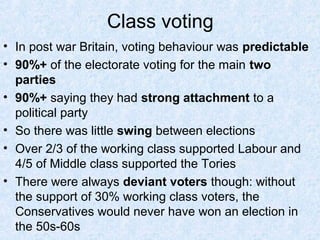
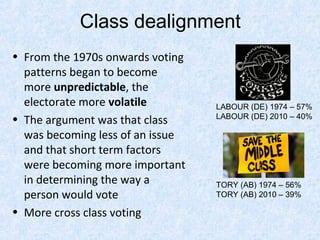
  electorate more volatile        LABOUR (DE) 1974 – 57%
• The argument was that class     LABOUR (DE) 2010 – 40%

  was becoming less of an issue
  and that short term factors
  were becoming more important
  in determining the way a        TORY (AB) 1974 – 56%
  person would vote               TORY (AB) 2010 – 39%

• More cross class voting
Class today
• Class is still a factor today: most
  middle class still vote Tory, most
  working class still vote Labour.
• However, there are more floating
  voters than ever before – with
  less than 40% of voters saying
  they have a strong attachment to
  any party
• The rise of the Lib Dems saw them
  take almost ¼ of the vote in 2010
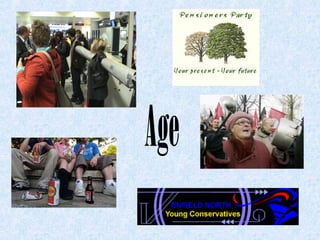
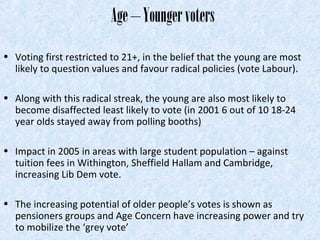
Age – Younger voters
• Voting first restricted to 21+, in the belief that the young are most
  likely to question values and favour radical policies (vote Labour).

• Along with this radical streak, the young are also most likely to
  become disaffected least likely to vote (in 2001 6 out of 10 18-24
  year olds stayed away from polling booths)

• Impact in 2005 in areas with large student population – against
  tuition fees in Withington, Sheffield Hallam and Cambridge,
  increasing Lib Dem vote.

• The increasing potential of older people’s votes is shown as
  pensioners groups and Age Concern have increasing power and try
  to mobilize the ‘grey vote’
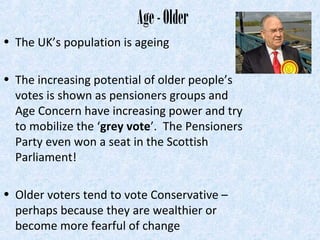
Age - Older
• The UK’s population is ageing

• The increasing potential of older people’s
  votes is shown as pensioners groups and
  Age Concern have increasing power and try
  to mobilize the ‘grey vote’. The Pensioners
  Party even won a seat in the Scottish
  Parliament!

• Older voters tend to vote Conservative –
  perhaps because they are wealthier or
  become more fearful of change
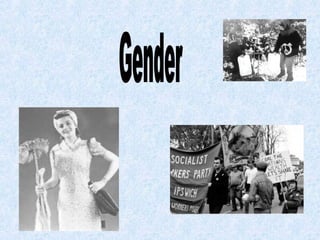
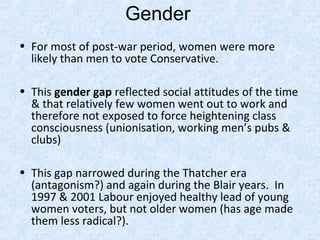
Gender
• For most of post-war period, women were more
  likely than men to vote Conservative.

• This gender gap reflected social attitudes of the time
  & that relatively few women went out to work and
  therefore not exposed to force heightening class
  consciousness (unionisation, working men’s pubs &
  clubs)

• This gap narrowed during the Thatcher era
  (antagonism?) and again during the Blair years. In
  1997 & 2001 Labour enjoyed healthy lead of young
  women voters, but not older women (has age made
  them less radical?).
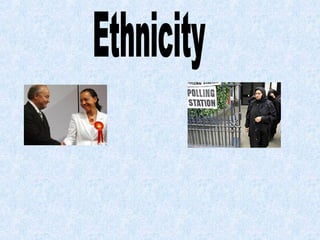
Ethnicity
• The ethnic vote in the UK has tended to heavily favour
  the Labour Party (average 80% of black & Asian vote
  since 1974).

• This part of electorate becomes more important to
  parties as the immigrant population increases

• Linked to social class – many immigrants live in working
  class urban environments

• Labour Party has generally been more pro-immigration &
  welfare

• 2005 – decrease in vote for Labour, especially amongst
  Muslims because of Iraq war – impact inner city areas
  e.g. Bethnel Green & Bow elected Respect Party
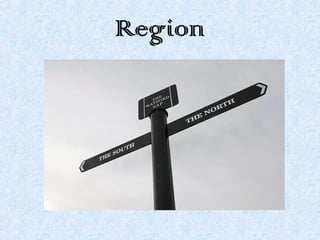
Region
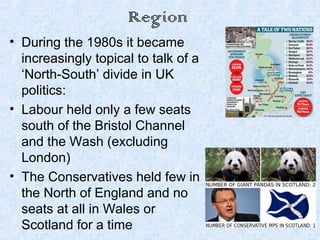
• During the 1980s it became
  increasingly topical to talk of a
  ‘North-South’ divide in UK
  politics:
• Labour held only a few seats
  south of the Bristol Channel
  and the Wash (excluding
  London)
• The Conservatives held few in
  the North of England and no
  seats at all in Wales or
  Scotland for a time
Region
• Though New Labour had some
  success in the South after
  rebranding in 1997 & 2001 the
  broad trend persists

• Liberal Democrat support also has a
  regional dimension – being strongest
  in the ‘Celtic Fringe’

• Theses are generalisations, and
  arguably largely a reflections of class
  factors and the rural/urban divide
Short term factors
Are these headlines ‘facts’ or opinions? Do they
use emotive images & words? Would they
influence you at all…be honest!
• Does
Factors affecting voting behaviour

Factors affecting voting behaviour

  • 2.
  • 4.
    “Class is thebasis of British politics, all else is embellishment and detail” Pulzer (1967)
  • 5.
    Class voting • Inpost war Britain, voting behaviour was predictable • 90%+ of the electorate voting for the main two parties • 90%+ saying they had strong attachment to a political party • So there was little swing between elections • Over 2/3 of the working class supported Labour and 4/5 of Middle class supported the Tories • There were always deviant voters though: without the support of 30% working class voters, the Conservatives would never have won an election in the 50s-60s
  • 6.
    Class dealignment • Fromthe 1970s onwards voting patterns began to become more unpredictable, the electorate more volatile LABOUR (DE) 1974 – 57% • The argument was that class LABOUR (DE) 2010 – 40% was becoming less of an issue and that short term factors were becoming more important in determining the way a TORY (AB) 1974 – 56% person would vote TORY (AB) 2010 – 39% • More cross class voting
  • 7.
    Class today • Classis still a factor today: most middle class still vote Tory, most working class still vote Labour. • However, there are more floating voters than ever before – with less than 40% of voters saying they have a strong attachment to any party • The rise of the Lib Dems saw them take almost ¼ of the vote in 2010
  • 9.
    Age – Youngervoters • Voting first restricted to 21+, in the belief that the young are most likely to question values and favour radical policies (vote Labour). • Along with this radical streak, the young are also most likely to become disaffected least likely to vote (in 2001 6 out of 10 18-24 year olds stayed away from polling booths) • Impact in 2005 in areas with large student population – against tuition fees in Withington, Sheffield Hallam and Cambridge, increasing Lib Dem vote. • The increasing potential of older people’s votes is shown as pensioners groups and Age Concern have increasing power and try to mobilize the ‘grey vote’
  • 10.
    Age - Older •The UK’s population is ageing • The increasing potential of older people’s votes is shown as pensioners groups and Age Concern have increasing power and try to mobilize the ‘grey vote’. The Pensioners Party even won a seat in the Scottish Parliament! • Older voters tend to vote Conservative – perhaps because they are wealthier or become more fearful of change
  • 12.
    Gender • For mostof post-war period, women were more likely than men to vote Conservative. • This gender gap reflected social attitudes of the time & that relatively few women went out to work and therefore not exposed to force heightening class consciousness (unionisation, working men’s pubs & clubs) • This gap narrowed during the Thatcher era (antagonism?) and again during the Blair years. In 1997 & 2001 Labour enjoyed healthy lead of young women voters, but not older women (has age made them less radical?).
  • 14.
    Ethnicity • The ethnicvote in the UK has tended to heavily favour the Labour Party (average 80% of black & Asian vote since 1974). • This part of electorate becomes more important to parties as the immigrant population increases • Linked to social class – many immigrants live in working class urban environments • Labour Party has generally been more pro-immigration & welfare • 2005 – decrease in vote for Labour, especially amongst Muslims because of Iraq war – impact inner city areas e.g. Bethnel Green & Bow elected Respect Party
  • 16.
    Region • During the1980s it became increasingly topical to talk of a ‘North-South’ divide in UK politics: • Labour held only a few seats south of the Bristol Channel and the Wash (excluding London) • The Conservatives held few in the North of England and no seats at all in Wales or Scotland for a time
  • 17.
    Region • Though NewLabour had some success in the South after rebranding in 1997 & 2001 the broad trend persists • Liberal Democrat support also has a regional dimension – being strongest in the ‘Celtic Fringe’ • Theses are generalisations, and arguably largely a reflections of class factors and the rural/urban divide
  • 18.
  • 19.
    Are these headlines‘facts’ or opinions? Do they use emotive images & words? Would they influence you at all…be honest!
  • 20.