K.VANANGAMUDI
Formerly Dean (Agri.), TNAU
Dean, Adhiparasakthi Agricultural College, Kalavai
Professor & Head, Seed Science & Technology
Tamil Nadu Agricultural University,
Coimbatore, Tamil Nadu
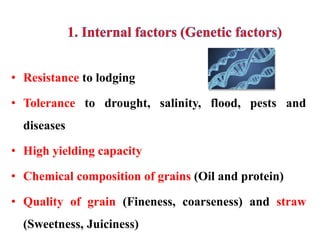
• Resistance to lodging
• Tolerance to drought, salinity, flood, pests and
diseases
• High yielding capacity
• Chemical composition of grains (Oil and protein)
• Quality of grain (Fineness, coarseness) and straw
(Sweetness, Juiciness)
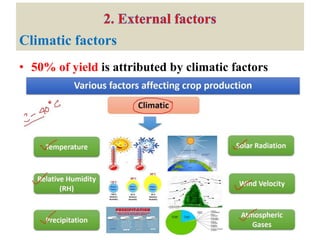
Climatic factors
• 50% of yield is attributed by climatic factors
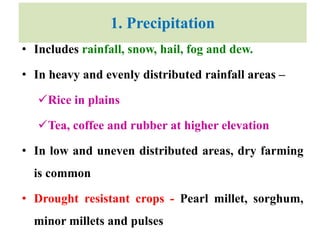
1. Precipitation
• Includes rainfall, snow, hail, fog and dew.
• In heavy and evenly distributed rainfall areas –
Rice in plains
Tea, coffee and rubber at higher elevation
• In low and uneven distributed areas, dry farming
is common
• Drought resistant crops - Pearl millet, sorghum,
minor millets and pulses
2. Temperature
• Measure of intensity of heat
• Crops need range of temperature:15-40˚C
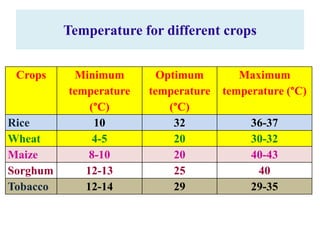
Temperature for different crops
Crops Minimum
temperature
(°C)
Optimum
temperature
(°C)
Maximum
temperature (°C)
Rice 10 32 36-37
Wheat 4-5 20 30-32
Maize 8-10 20 40-43
Sorghum 12-13 25 40
Tobacco 12-14 29 29-35
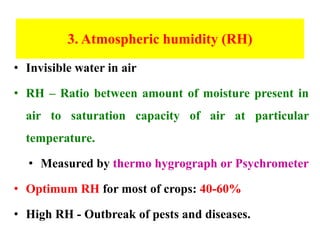
3. Atmospheric humidity (RH)
• Invisible water in air
• RH – Ratio between amount of moisture present in
air to saturation capacity of air at particular
temperature.
• Measured by thermo hygrograph or Psychrometer
• Optimum RH for most of crops: 40-60%
• High RH - Outbreak of pests and diseases.
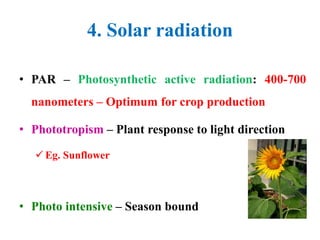
4. Solar radiation
• PAR – Photosynthetic active radiation: 400-700
nanometers – Optimum for crop production
• Phototropism – Plant response to light direction
 Eg. Sunflower
• Photo intensive – Season bound
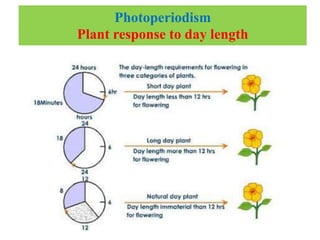
Photoperiodism
Plant response to day length
Photoperiodism
• Examples
• Short day
Eg. Rice, sunflower, cotton
• Long day
Eg. Barley, oats, carrot, cabbage.
• Day neutral
Eg. Tomato, maize
5. Wind velocity
• To carry moisture, precipitation and heat
• Suitable wind movement: 4-6 km/ hr
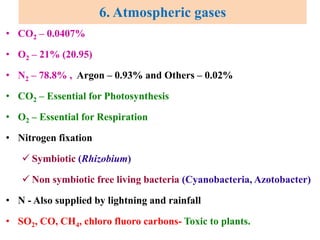
6. Atmospheric gases
• CO2 – 0.0407%
• O2 – 21% (20.95)
• N2 – 78.8% , Argon – 0.93% and Others – 0.02%
• CO2 – Essential for Photosynthesis
• O2 – Essential for Respiration
• Nitrogen fixation
 Symbiotic (Rhizobium)
 Non symbiotic free living bacteria (Cyanobacteria, Azotobacter)
• N - Also supplied by lightning and rainfall
• SO2, CO, CH4, chloro fluoro carbons- Toxic to plants.
Q & A
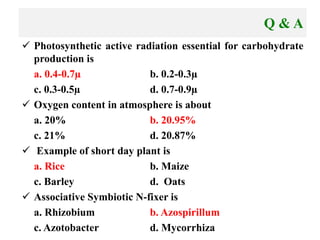
 Photosynthetic active radiation essential for carbohydrate
production is
a. 0.4-0.7µ b. 0.2-0.3µ
c. 0.3-0.5µ d. 0.7-0.9µ
 Oxygen content in atmosphere is about
a. 20% b. 20.95%
c. 21% d. 20.87%
 Example of short day plant is
a. Rice b. Maize
c. Barley d. Oats
 Associative Symbiotic N-fixer is
a. Rhizobium b. Azospirillum
c. Azotobacter d. Mycorrhiza
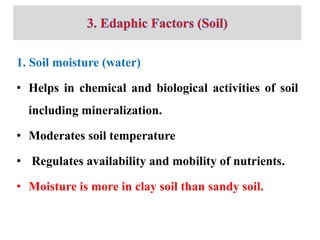
1. Soil moisture (water)
• Helps in chemical and biological activities of soil
including mineralization.
• Moderates soil temperature
• Regulates availability and mobility of nutrients.
• Moisture is more in clay soil than sandy soil.
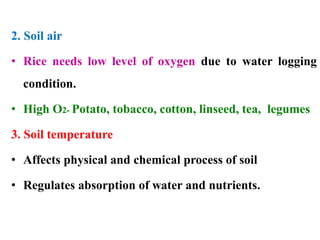
2. Soil air
• Rice needs low level of oxygen due to water logging
condition.
• High O2- Potato, tobacco, cotton, linseed, tea, legumes
3. Soil temperature
• Affects physical and chemical process of soil
• Regulates absorption of water and nutrients.
4. Soil mineral
• Sources of plant nutrients like Ca, Mg, S, Mn, Fe,
K
5. Soil organic matter
• Supplies major and micro nutrients.
• Improves soil texture.
• Increases water holding capacity.
• Source of food for microorganism
6. Soil organisms
• Helps in decomposition of raw organic matter
• N2 fixation by microbes
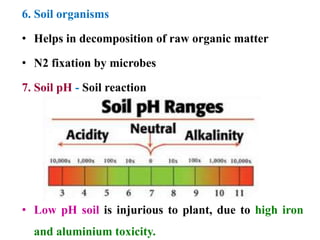
7. Soil pH - Soil reaction
• Low pH soil is injurious to plant, due to high iron
and aluminium toxicity.
1. Plants
• Competition for moisture, nutrients, sunlight.
• Complementary effect or synergistic effect.
Eg. Cereals and legumes.
• Competitive crops
Striga in sorghum and sugarcane
Orobranche in tobacco
Cuscutta in lucerne
2. Animals
• Soil fauna: Protozoa, nematodes, snails, insects.
• Insects and nematodes causes crop damage
• Honey bees and wasp helps in pollination
• Borrowing of earth worms helps
 Aeration
 Drainage
 Organic matter decomposition
• Large animal cause damage to crops.
• Eg. Animal grazing
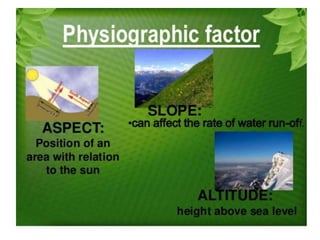
• Topography - nature of the surface earth (Leveled
and slope)
• Increase in latitude decreases the temperature and
precipitation.
• Steep slope - Favours run off and loss of top soil
(Nutrients)
• Slope exposed to low intensity of light and strong
wind results in poor yield.
• Inclination towards farming
• Land holders choose only food and fodder crops
• Non availability of resistance varieties drought,
pest and disease
• Economic condition of farmers: Marginal,
medium and small farmers find inability in
resource mobilization.
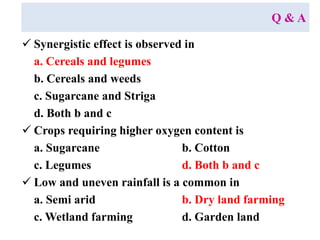
Q & A
 Synergistic effect is observed in
a. Cereals and legumes
b. Cereals and weeds
c. Sugarcane and Striga
d. Both b and c
 Crops requiring higher oxygen content is
a. Sugarcane b. Cotton
c. Legumes d. Both b and c
 Low and uneven rainfall is a common in
a. Semi arid b. Dry land farming
c. Wetland farming d. Garden land
FACTORS AFFECTING CROP PRODUCTION.ppt

FACTORS AFFECTING CROP PRODUCTION.ppt

  • 1.
    K.VANANGAMUDI Formerly Dean (Agri.),TNAU Dean, Adhiparasakthi Agricultural College, Kalavai Professor & Head, Seed Science & Technology Tamil Nadu Agricultural University, Coimbatore, Tamil Nadu
  • 3.
    • Resistance tolodging • Tolerance to drought, salinity, flood, pests and diseases • High yielding capacity • Chemical composition of grains (Oil and protein) • Quality of grain (Fineness, coarseness) and straw (Sweetness, Juiciness)
  • 4.
    Climatic factors • 50%of yield is attributed by climatic factors
  • 5.
    1. Precipitation • Includesrainfall, snow, hail, fog and dew. • In heavy and evenly distributed rainfall areas – Rice in plains Tea, coffee and rubber at higher elevation • In low and uneven distributed areas, dry farming is common • Drought resistant crops - Pearl millet, sorghum, minor millets and pulses
  • 6.
    2. Temperature • Measureof intensity of heat • Crops need range of temperature:15-40˚C
  • 7.
    Temperature for differentcrops Crops Minimum temperature (°C) Optimum temperature (°C) Maximum temperature (°C) Rice 10 32 36-37 Wheat 4-5 20 30-32 Maize 8-10 20 40-43 Sorghum 12-13 25 40 Tobacco 12-14 29 29-35
  • 8.
    3. Atmospheric humidity(RH) • Invisible water in air • RH – Ratio between amount of moisture present in air to saturation capacity of air at particular temperature. • Measured by thermo hygrograph or Psychrometer • Optimum RH for most of crops: 40-60% • High RH - Outbreak of pests and diseases.
  • 9.
    4. Solar radiation •PAR – Photosynthetic active radiation: 400-700 nanometers – Optimum for crop production • Phototropism – Plant response to light direction  Eg. Sunflower • Photo intensive – Season bound
  • 10.
  • 11.
    Photoperiodism • Examples • Shortday Eg. Rice, sunflower, cotton • Long day Eg. Barley, oats, carrot, cabbage. • Day neutral Eg. Tomato, maize
  • 12.
    5. Wind velocity •To carry moisture, precipitation and heat • Suitable wind movement: 4-6 km/ hr
  • 13.
    6. Atmospheric gases •CO2 – 0.0407% • O2 – 21% (20.95) • N2 – 78.8% , Argon – 0.93% and Others – 0.02% • CO2 – Essential for Photosynthesis • O2 – Essential for Respiration • Nitrogen fixation  Symbiotic (Rhizobium)  Non symbiotic free living bacteria (Cyanobacteria, Azotobacter) • N - Also supplied by lightning and rainfall • SO2, CO, CH4, chloro fluoro carbons- Toxic to plants.
  • 14.
    Q & A Photosynthetic active radiation essential for carbohydrate production is a. 0.4-0.7µ b. 0.2-0.3µ c. 0.3-0.5µ d. 0.7-0.9µ  Oxygen content in atmosphere is about a. 20% b. 20.95% c. 21% d. 20.87%  Example of short day plant is a. Rice b. Maize c. Barley d. Oats  Associative Symbiotic N-fixer is a. Rhizobium b. Azospirillum c. Azotobacter d. Mycorrhiza
  • 15.
    1. Soil moisture(water) • Helps in chemical and biological activities of soil including mineralization. • Moderates soil temperature • Regulates availability and mobility of nutrients. • Moisture is more in clay soil than sandy soil.
  • 16.
    2. Soil air •Rice needs low level of oxygen due to water logging condition. • High O2- Potato, tobacco, cotton, linseed, tea, legumes 3. Soil temperature • Affects physical and chemical process of soil • Regulates absorption of water and nutrients.
  • 17.
    4. Soil mineral •Sources of plant nutrients like Ca, Mg, S, Mn, Fe, K 5. Soil organic matter • Supplies major and micro nutrients. • Improves soil texture. • Increases water holding capacity. • Source of food for microorganism
  • 18.
    6. Soil organisms •Helps in decomposition of raw organic matter • N2 fixation by microbes 7. Soil pH - Soil reaction • Low pH soil is injurious to plant, due to high iron and aluminium toxicity.
  • 20.
    1. Plants • Competitionfor moisture, nutrients, sunlight. • Complementary effect or synergistic effect. Eg. Cereals and legumes. • Competitive crops Striga in sorghum and sugarcane Orobranche in tobacco Cuscutta in lucerne
  • 21.
    2. Animals • Soilfauna: Protozoa, nematodes, snails, insects. • Insects and nematodes causes crop damage • Honey bees and wasp helps in pollination • Borrowing of earth worms helps  Aeration  Drainage  Organic matter decomposition • Large animal cause damage to crops. • Eg. Animal grazing
  • 23.
    • Topography -nature of the surface earth (Leveled and slope) • Increase in latitude decreases the temperature and precipitation. • Steep slope - Favours run off and loss of top soil (Nutrients) • Slope exposed to low intensity of light and strong wind results in poor yield.
  • 24.
    • Inclination towardsfarming • Land holders choose only food and fodder crops • Non availability of resistance varieties drought, pest and disease • Economic condition of farmers: Marginal, medium and small farmers find inability in resource mobilization.
  • 25.
    Q & A Synergistic effect is observed in a. Cereals and legumes b. Cereals and weeds c. Sugarcane and Striga d. Both b and c  Crops requiring higher oxygen content is a. Sugarcane b. Cotton c. Legumes d. Both b and c  Low and uneven rainfall is a common in a. Semi arid b. Dry land farming c. Wetland farming d. Garden land