SCHOOL OF STUDIES IN ZOOLOGY
JIWAJI UNIVERSITY, GWALIOR
Dr. Ramkumar Lodhi
Conservation Biology Lab
School of Studies in Zoology
Jiwaji University, Gwalior
SYNOPSIS
• INTRODUCTION
• WILDLIFE HABITAT
• FACTORS AFFECTING WILDLIFE HABITAT
• CONSERVATION
• CONCLUSION
• REFERENCES
INTRODUCTION
• Wildlife :- wildlife refers to living organisms (flora and fauna)
in their natural habitats.
• wildlife is a term that refers to animals that are not normally
domesticated.
• They are living resource that will die or replaced by others of
their kind.
• Individual animals cannot be kept beyond their life span. But
if managed carefully, populations of wildlife can be conserved
practically forever.
• Wildlife is renewable source of a large variety of commercial
products like food, honey, herbal medicines etc.
Wildlife Habitat
HABITAT:- The natural home or environment of a plant, animal
and other organism.
WILDLIFE HABITAT:- Wildlife habitat are areas distributed
horizontally and vertically across the landscape that fulfill the
needs of a specific wildlife species for the basic requirements of
food, water, reproduction and protection against predators and
competitors.
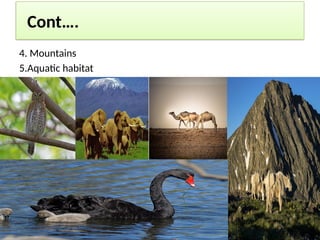
The five major habitats are:-
1. forests
2.Grasslands
3.deserts
Cont….
4. Mountains
5.Aquatic habitat
FACTORS AFFECTING WILDLIFE HABITAT
HABITAT LOSS:- Due to destruction, fragmentation, and
degradation of habitat is the primary threat to the survival of
wildlife.
• When an ecosystem has been dramatically changed by human
activites- such as agriculture, oil and gas exploration,
commercial development and water diversion.
• It may no longer be able to provide the food, water, and
places to raise young that wildlife need to survive.
• Everyday there are fewer places left that wildlife can call
home.
Cont….
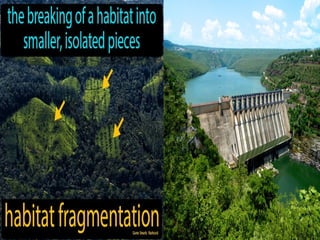
1. Habitat fragmentation:
 Much of the terrestrial wildlife habitat has been cut up into
fragments by roads and development.
 Aquatic species habitats have been fregmented by dams and
water diversions.
 These fragments of habitat may not be large or connected
enough to support species that need a large territory where
they can find mates and food.
 The loss and fragmentation of habitats makes it difficult for
migratory species to find places to rest and feed along their
migration roots.
Cont….
2. Habitat degradation: -
 Pollution, invasive species, and disruption of ecosystem
process (such as changing the intensity of fires in an
ecosystem) are some of the ways habitats can become so
degraded, they no longer support native wildlife.
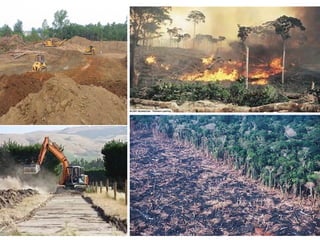
3. Habitat destruction: -
 A bulldozer pushing down trees is the iconic image of habitat
destruction.
 Other way people directly destroy habitat include filling in
wetlands, cuttind down trees.
POLLUTION
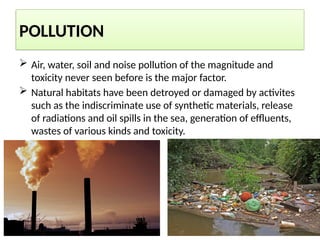
 Air, water, soil and noise pollution of the magnitude and
toxicity never seen before is the major factor.
 Natural habitats have been detroyed or damaged by activites
such as the indiscriminate use of synthetic materials, release
of radiations and oil spills in the sea, generation of effluents,
wastes of various kinds and toxicity.
CLIMATE CHANGE
 Climate change is quickly becoming the biggest factor to the
long term survival of wildlife.
 Global warming and climate change has also played a major
role in posing threat to wildlife.
 This is also due to human induced activites which is done by
the burning of fossile fules etc.
 Which resulted in the changing of the climate globally.
OVER EXPLOITATION OF RESOURCES
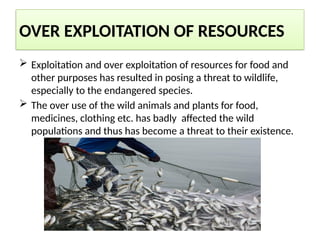
 Exploitation and over exploitation of resources for food and
other purposes has resulted in posing a threat to wildlife,
especially to the endangered species.
 The over use of the wild animals and plants for food,
medicines, clothing etc. has badly affected the wild
populations and thus has become a threat to their existence.
DEFORESTATION
 Deforestation can lead to a direct loss of wildlife habitat, as
well as a general degradation of their habitat.
 Wildlife habitats can become fregmented, where native species
must live on remaining habitats island that are surrounded by
disturbed land is being used for agriculture and other uses.
 Animals may also encounter dangerous situations when they
attempt to migrate between habitat fregments, such as human
wildlife conllicts and beinh hit by vehicles.
 Some animal species are entirely dependent upon old growth
forest habitat, such as the Northern spotted Owl in the
Western United States and cannot survive in secondary forest
habitat.
Cont….
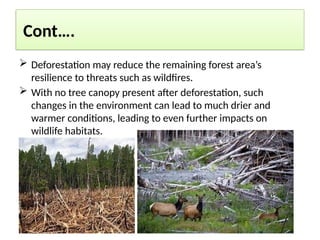
 Deforestation may reduce the remaining forest area’s
resilience to threats such as wildfires.
 With no tree canopy present after deforestation, such
changes in the environment can lead to much drier and
warmer conditions, leading to even further impacts on
wildlife habitats.
CONSERVE WILDLIFE HABITAT
 Love towards nature and animals.
 Limit industrial activites.
 Reserve forests.
 Study their habitat, if we know what they need to survive it
will be easier to protect their habitat.
 Avoid throwing plastics into rivers.
 Habitat destruction is the main threat to 85% of all
threatened and endangered species, we can help reduce this
threat by planting trees .
CONCLUSION
Forests and wildlife are renewable natural resources and if all
programs are effectively executed, in a few dacades flora and
fauna will start nourshing it calls for be very individual to take the
responsibility to do the best he or she to restore the natural
creation.
So we can better participate by taking good care of our
environment as we consider the generations to come.
By doing providing a healthy environment.
REFERENCES
• Ecology P.D Sharma
• Wildlife of India
• Rastogi Book
THANKYOU

Factor affecting wildlife habitat in India

  • 1.
    SCHOOL OF STUDIESIN ZOOLOGY JIWAJI UNIVERSITY, GWALIOR Dr. Ramkumar Lodhi Conservation Biology Lab School of Studies in Zoology Jiwaji University, Gwalior
  • 2.
    SYNOPSIS • INTRODUCTION • WILDLIFEHABITAT • FACTORS AFFECTING WILDLIFE HABITAT • CONSERVATION • CONCLUSION • REFERENCES
  • 3.
    INTRODUCTION • Wildlife :-wildlife refers to living organisms (flora and fauna) in their natural habitats. • wildlife is a term that refers to animals that are not normally domesticated. • They are living resource that will die or replaced by others of their kind. • Individual animals cannot be kept beyond their life span. But if managed carefully, populations of wildlife can be conserved practically forever. • Wildlife is renewable source of a large variety of commercial products like food, honey, herbal medicines etc.
  • 4.
    Wildlife Habitat HABITAT:- Thenatural home or environment of a plant, animal and other organism. WILDLIFE HABITAT:- Wildlife habitat are areas distributed horizontally and vertically across the landscape that fulfill the needs of a specific wildlife species for the basic requirements of food, water, reproduction and protection against predators and competitors. The five major habitats are:- 1. forests 2.Grasslands 3.deserts
  • 5.
  • 6.
    FACTORS AFFECTING WILDLIFEHABITAT HABITAT LOSS:- Due to destruction, fragmentation, and degradation of habitat is the primary threat to the survival of wildlife. • When an ecosystem has been dramatically changed by human activites- such as agriculture, oil and gas exploration, commercial development and water diversion. • It may no longer be able to provide the food, water, and places to raise young that wildlife need to survive. • Everyday there are fewer places left that wildlife can call home.
  • 7.
    Cont…. 1. Habitat fragmentation: Much of the terrestrial wildlife habitat has been cut up into fragments by roads and development.  Aquatic species habitats have been fregmented by dams and water diversions.  These fragments of habitat may not be large or connected enough to support species that need a large territory where they can find mates and food.  The loss and fragmentation of habitats makes it difficult for migratory species to find places to rest and feed along their migration roots.
  • 9.
    Cont…. 2. Habitat degradation:-  Pollution, invasive species, and disruption of ecosystem process (such as changing the intensity of fires in an ecosystem) are some of the ways habitats can become so degraded, they no longer support native wildlife. 3. Habitat destruction: -  A bulldozer pushing down trees is the iconic image of habitat destruction.  Other way people directly destroy habitat include filling in wetlands, cuttind down trees.
  • 11.
    POLLUTION  Air, water,soil and noise pollution of the magnitude and toxicity never seen before is the major factor.  Natural habitats have been detroyed or damaged by activites such as the indiscriminate use of synthetic materials, release of radiations and oil spills in the sea, generation of effluents, wastes of various kinds and toxicity.
  • 12.
    CLIMATE CHANGE  Climatechange is quickly becoming the biggest factor to the long term survival of wildlife.  Global warming and climate change has also played a major role in posing threat to wildlife.  This is also due to human induced activites which is done by the burning of fossile fules etc.  Which resulted in the changing of the climate globally.
  • 13.
    OVER EXPLOITATION OFRESOURCES  Exploitation and over exploitation of resources for food and other purposes has resulted in posing a threat to wildlife, especially to the endangered species.  The over use of the wild animals and plants for food, medicines, clothing etc. has badly affected the wild populations and thus has become a threat to their existence.
  • 14.
    DEFORESTATION  Deforestation canlead to a direct loss of wildlife habitat, as well as a general degradation of their habitat.  Wildlife habitats can become fregmented, where native species must live on remaining habitats island that are surrounded by disturbed land is being used for agriculture and other uses.  Animals may also encounter dangerous situations when they attempt to migrate between habitat fregments, such as human wildlife conllicts and beinh hit by vehicles.  Some animal species are entirely dependent upon old growth forest habitat, such as the Northern spotted Owl in the Western United States and cannot survive in secondary forest habitat.
  • 15.
    Cont….  Deforestation mayreduce the remaining forest area’s resilience to threats such as wildfires.  With no tree canopy present after deforestation, such changes in the environment can lead to much drier and warmer conditions, leading to even further impacts on wildlife habitats.
  • 16.
    CONSERVE WILDLIFE HABITAT Love towards nature and animals.  Limit industrial activites.  Reserve forests.  Study their habitat, if we know what they need to survive it will be easier to protect their habitat.  Avoid throwing plastics into rivers.  Habitat destruction is the main threat to 85% of all threatened and endangered species, we can help reduce this threat by planting trees .
  • 17.
    CONCLUSION Forests and wildlifeare renewable natural resources and if all programs are effectively executed, in a few dacades flora and fauna will start nourshing it calls for be very individual to take the responsibility to do the best he or she to restore the natural creation. So we can better participate by taking good care of our environment as we consider the generations to come. By doing providing a healthy environment.
  • 18.
    REFERENCES • Ecology P.DSharma • Wildlife of India • Rastogi Book
  • 19.