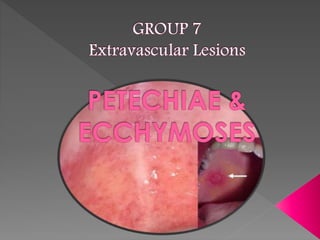
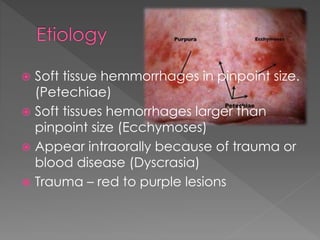
 Soft tissue hemmorrhages in pinpoint size. 
(Petechiae) 
 Soft tissues hemorrhages larger than 
pinpoint size (Ecchymoses) 
 Appear intraorally because of trauma or 
blood disease (Dyscrasia) 
 Trauma – red to purple lesions
TYPES OF INJURY: 
 Cheek biting 
 Coughing 
 Fellario 
 Trauma from prosthetic appliances 
 Injudicious hygiene procedures 
 Iatrogenic dental procedures
 Blood Dyscrasia 
 Red to purple macules 
 Minor trauma
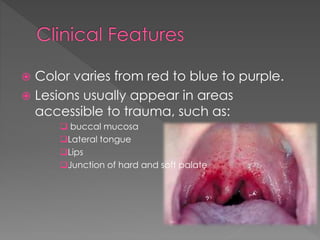
 Color varies from red to blue to purple. 
 Lesions usually appear in areas 
accessible to trauma, such as: 
 buccal mucosa 
Lateral tongue 
Lips 
Junction of hard and soft palate
 Lesion secondary to blood dyscrasia 
may follow on insignificant trauma 
 Other clinical oral signs of blood 
dyscrasia: 
Gingival enlargement 
Gingivitis 
“Spontaneous” gingival hemorrhage 
Prolonged bleeding after oral surgery 
Loose teeth 
Mucosal ulcers
 Blood disorders 
 Dyscrasia 
 Lupus 
 Pemphigus Vulgaris 
 Lichen Planus 
 Lichenois Reactions
 Removing devices that are causing 
trauma & rechecking the px to make 
sure the lesions have resolved is 
necessary 
 Ice packs/ cold compresses, direct 
pressure 
 Steroids & antibiotic
 Excellent for bruises and hematomas 
 Good to guarded for immune-mediated 
vasculitis conditions 
 Depending upon whether the lesion is 
induced through trauma or wheter it is 
systemic, the prognosis will vary.
By: 
GROUP 7 
 SALMORIN 
 SUGUITAN 
 TALAM 
 UY

Extravascular lesions (PETECHIAE & ECCHYMOSES)

  • 2.
     Soft tissuehemmorrhages in pinpoint size. (Petechiae)  Soft tissues hemorrhages larger than pinpoint size (Ecchymoses)  Appear intraorally because of trauma or blood disease (Dyscrasia)  Trauma – red to purple lesions
  • 3.
    TYPES OF INJURY:  Cheek biting  Coughing  Fellario  Trauma from prosthetic appliances  Injudicious hygiene procedures  Iatrogenic dental procedures
  • 4.
     Blood Dyscrasia  Red to purple macules  Minor trauma
  • 5.
     Color variesfrom red to blue to purple.  Lesions usually appear in areas accessible to trauma, such as:  buccal mucosa Lateral tongue Lips Junction of hard and soft palate
  • 6.
     Lesion secondaryto blood dyscrasia may follow on insignificant trauma  Other clinical oral signs of blood dyscrasia: Gingival enlargement Gingivitis “Spontaneous” gingival hemorrhage Prolonged bleeding after oral surgery Loose teeth Mucosal ulcers
  • 7.
     Blood disorders  Dyscrasia  Lupus  Pemphigus Vulgaris  Lichen Planus  Lichenois Reactions
  • 8.
     Removing devicesthat are causing trauma & rechecking the px to make sure the lesions have resolved is necessary  Ice packs/ cold compresses, direct pressure  Steroids & antibiotic
  • 9.
     Excellent forbruises and hematomas  Good to guarded for immune-mediated vasculitis conditions  Depending upon whether the lesion is induced through trauma or wheter it is systemic, the prognosis will vary.
  • 10.
    By: GROUP 7  SALMORIN  SUGUITAN  TALAM  UY