I wish…
Expressing wishes
Something is missing, we wish for it.
Something didn’t go the way we wanted. We
wish it had.
We can wish for something to
happen now, even if it is
improbable:
• I wish I had more luck.
• I wish I fewer problems.
• I wish I had better skin.
• I wish I had a boyfriend.
In the phrase, I wish I had ... 'had'
is the past simple form of the
verb 'to have'. You can use other
verbs with 'I wish ...'.
• I wish I spoke Mandarin.
• I wish I played the piano.
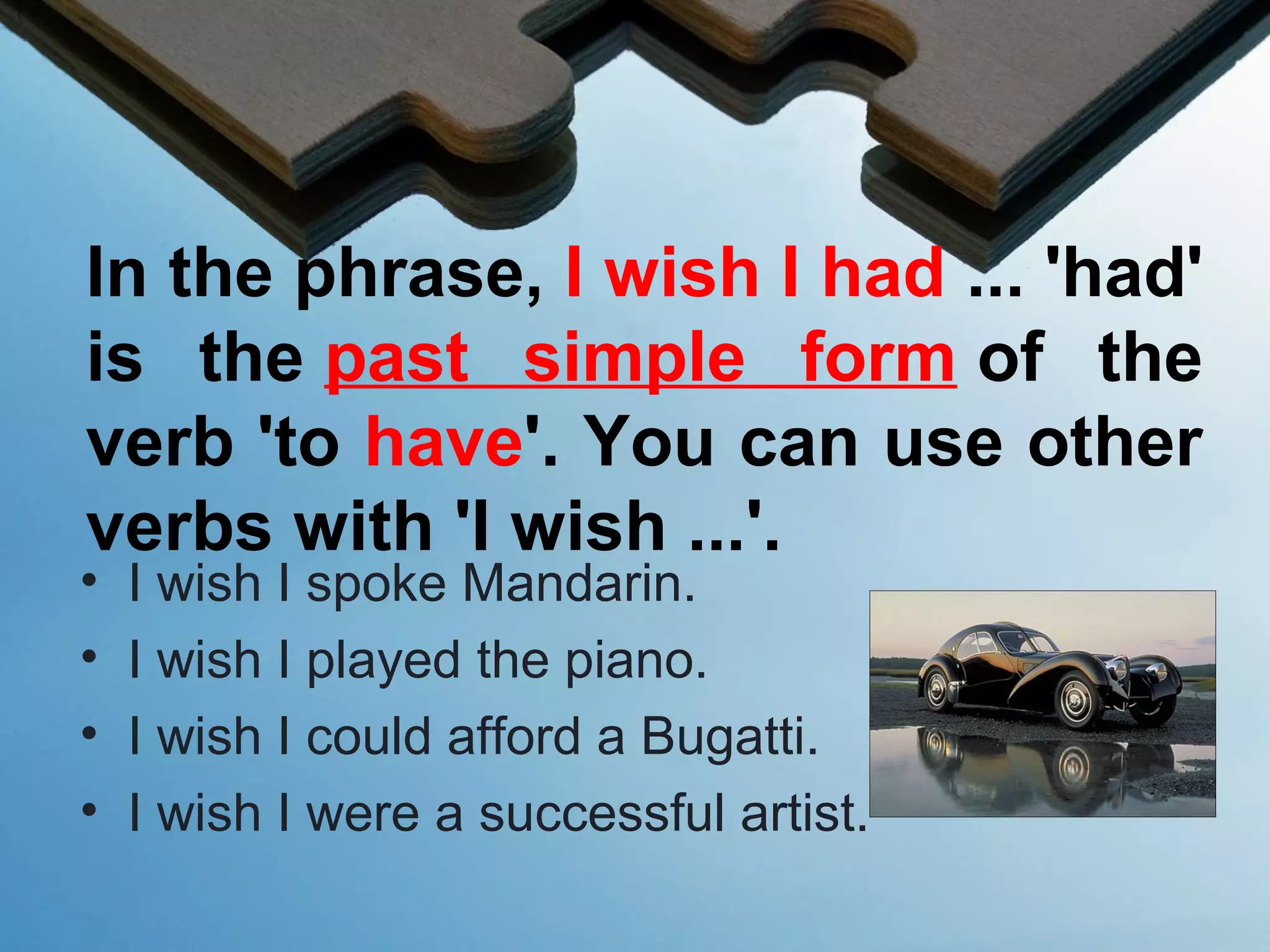
• I wish I could afford a Bugatti.
• I wish I were a successful artist.
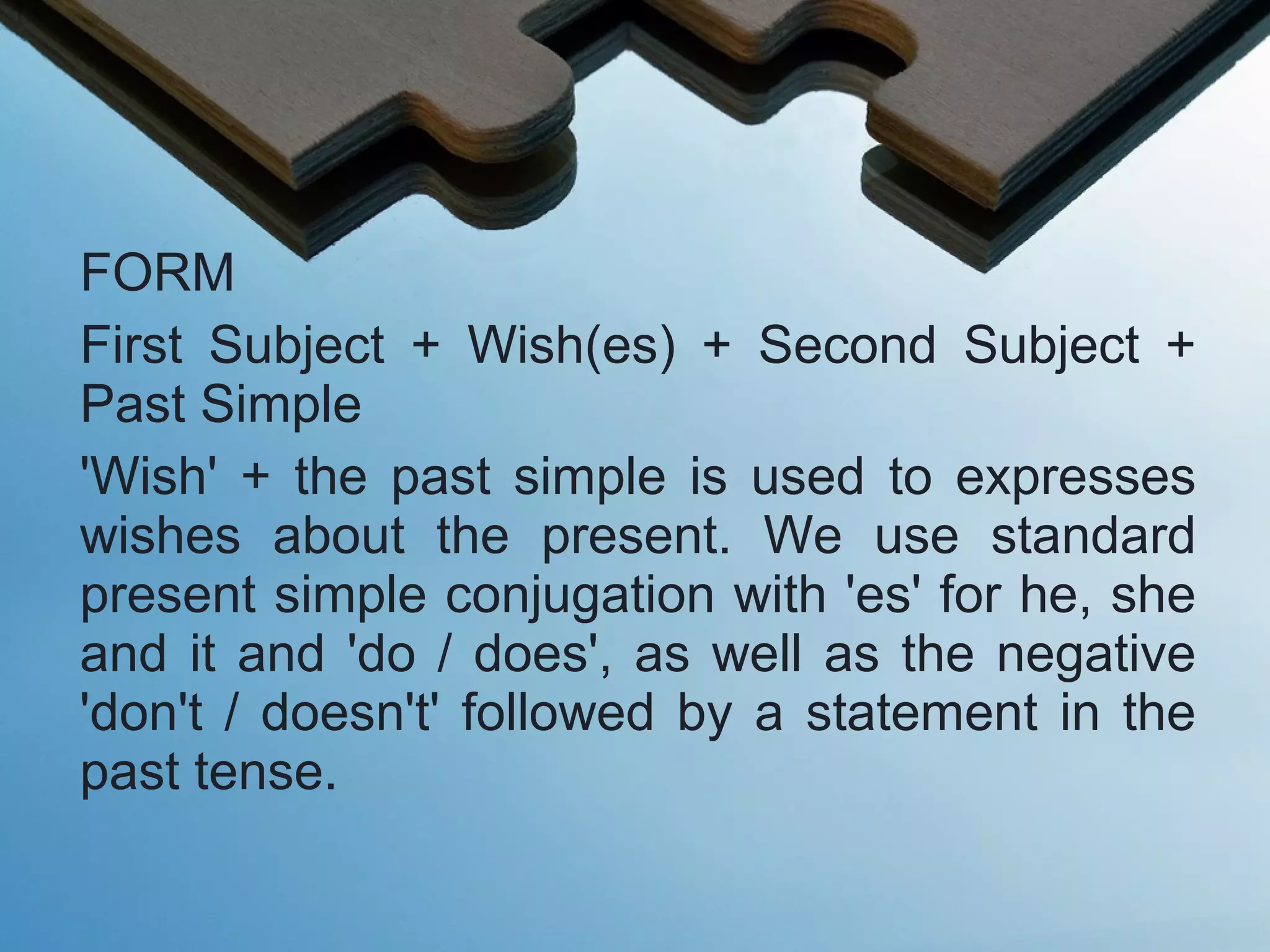
FORM
First Subject + Wish(es) + Second Subject +
Past Simple
'Wish' + the past simple is used to expresses
wishes about the present. We use standard
present simple conjugation with 'es' for he, she
and it and 'do / does', as well as the negative
'don't / doesn't' followed by a statement in the
past tense.
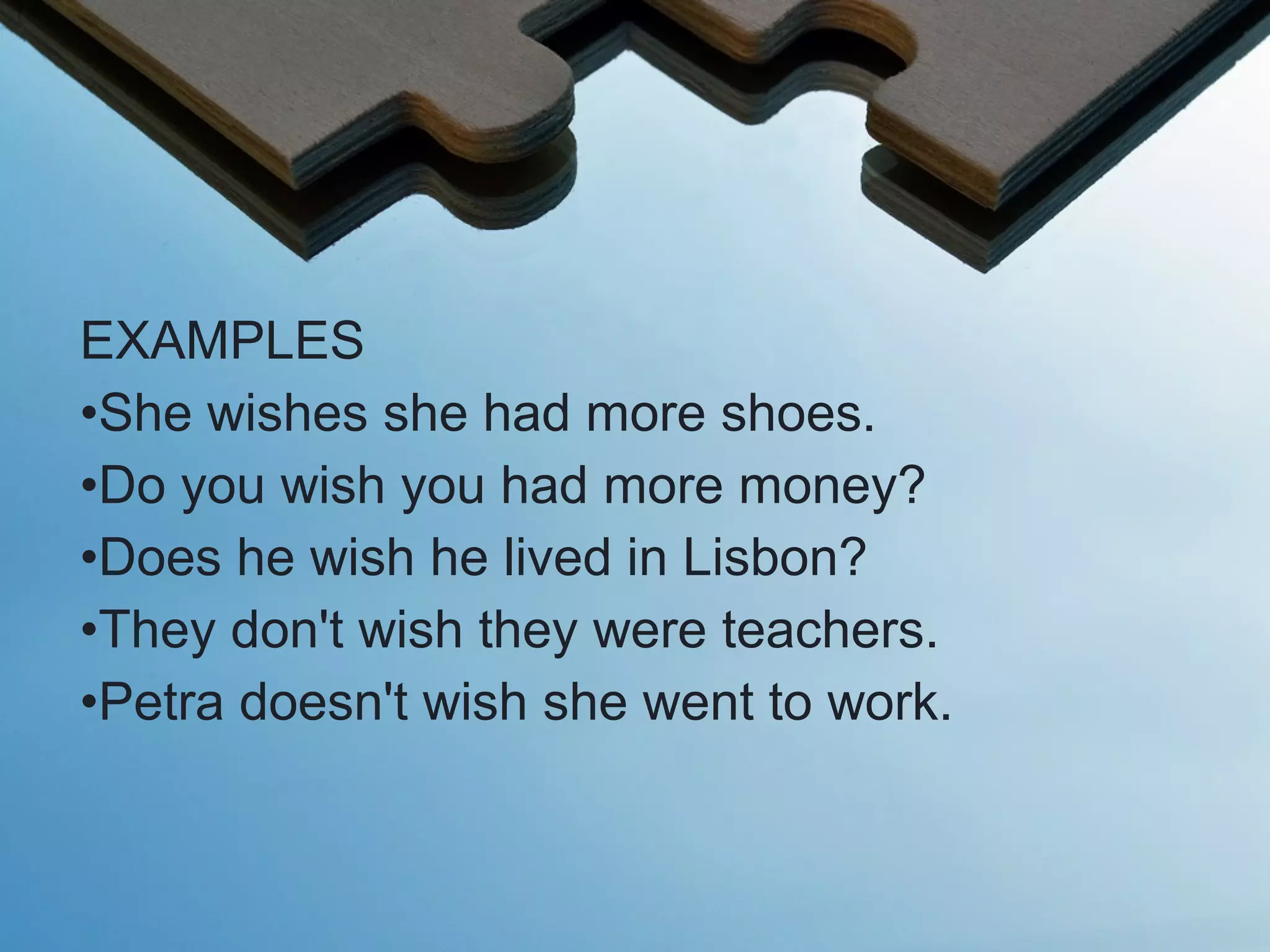
EXAMPLES
•She wishes she had more shoes.
•Do you wish you had more money?
•Does he wish he lived in Lisbon?
•They don't wish they were teachers.
•Petra doesn't wish she went to work.
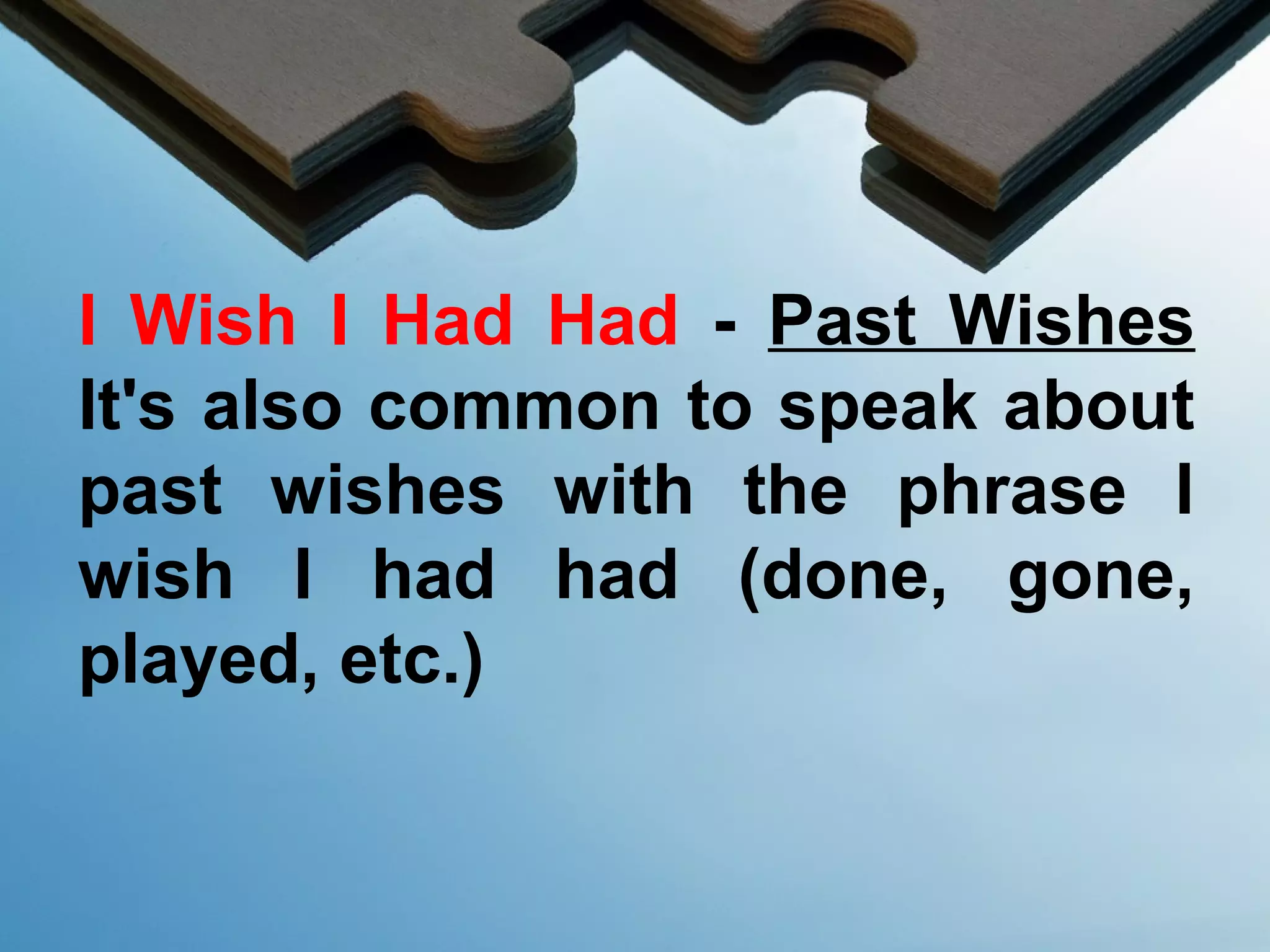
I Wish I Had Had - Past Wishes
It's also common to speak about
past wishes with the phrase I
wish I had had (done, gone,
played, etc.)
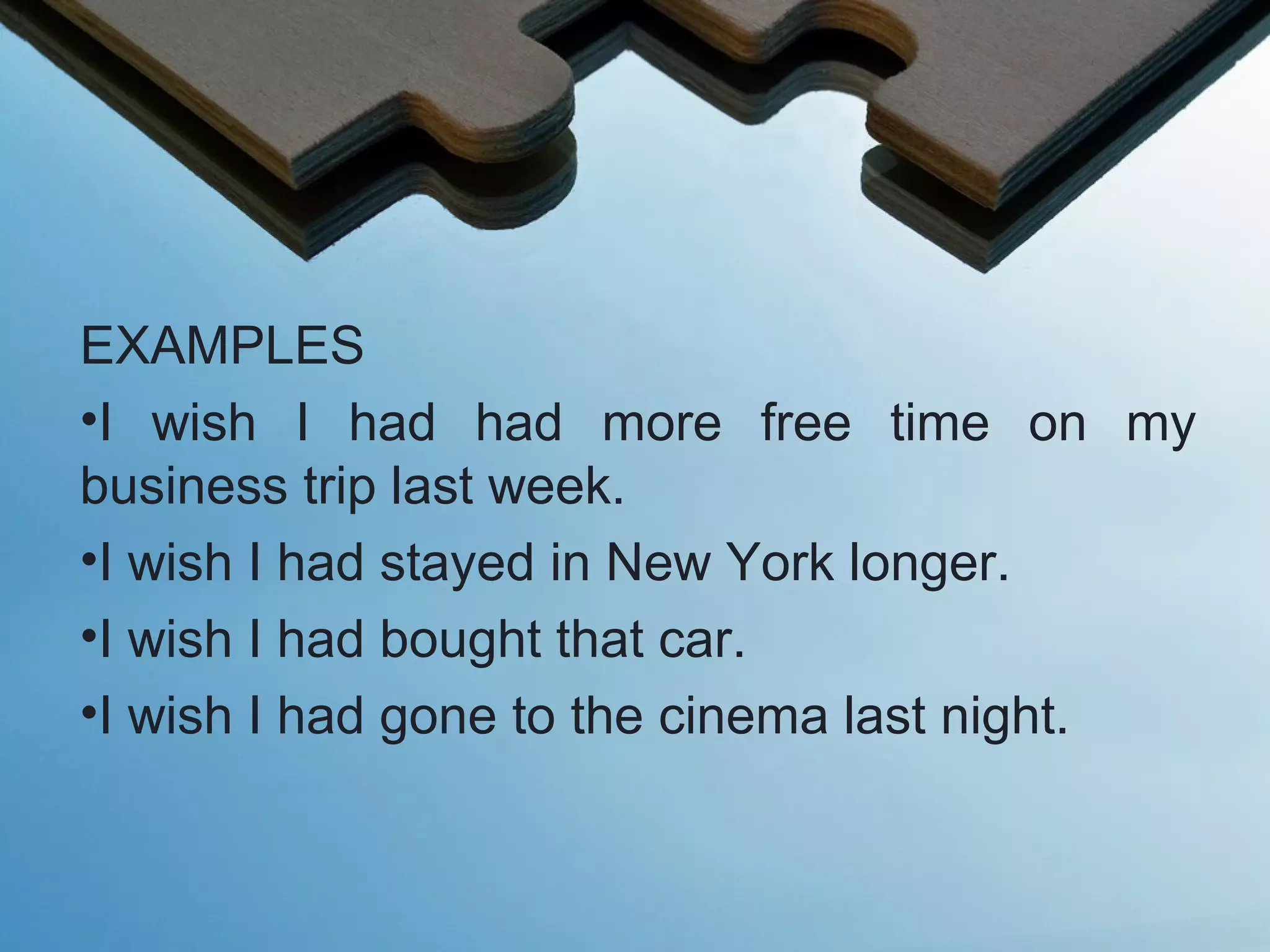
EXAMPLES
•I wish I had had more free time on my
business trip last week.
•I wish I had stayed in New York longer.
•I wish I had bought that car.
•I wish I had gone to the cinema last night.
FORM
First Subject + Wish(es) + Second Subject +
Past Perfect
Notice that the first part of the sentence is conjugated in the
present because a person now wishes that something
different had happened in the past. As with the present
form, we use standard present simple conjugation with 'es'
for he, she and it and 'do / does', as well as the negative
'don't / doesn't' followed by a statement in the past tense.
EXAMPLES
•Jane wishes she had gone to that restaurant in
Tokyo.
•Does she wish she had spent more time with
her children?
•They don't wish they had gone to the ballet.
•Jerry doesn't wish he had bought a present for
his wife.
FORM AND MEANING
Wishes about the present and future
1.We use wish + past simple to express that we
want a situation in the present (or future) to be
different.
•I wish I spoke Italian. -I don't speak Italian.
•I wish I had a big car. -I don't have a big car.
• I wish I was on a beach. - I'm in the office.
• I wish it was the weekend tomorrow. (future) -
It's only Thursday tomorrow.
2. We use wish + past continuous to express
that we want to be doing a different action in
the present (or future).
•I wish I was having a picnic now. - I'm sitting in
the dentist’s chair.
•I wish it wasn't snowing. - It is snowing.
•I wish you weren't leaving now. - You are
leaving now.
Wishes about the past
We use wish + past perfect to express a regret,
or that we want a situation in the past to be
different.
•I wish I hadn't drunk so much. - I drank a lot.
•I wish they'd come to school with us. - They
didn't come to school with us.
•I wish I had worked harder. - I was lazy.
Wish + would
We use wish + would + bare infinitive to
express impatience, annoyance or
dissatisfaction with a present action.
•I wish you would stop smoking. -You are
smoking at the moment and it is annoying me.
•I wish she kept quiet. I'm impatient because
she doesn’t stop talking
Wish + hope
To simply express that you want something to
happen in the future (not talking about wanting
an action or situation to be different, and not
talking about impatience or annoyance) we use
hope, not wish.
•I hope it's sunny tomorrow. - NOT I wish it was
sunny tomorrow.
Wish + hope
•I hope she passes her exam next week.
•I hope it doesn't rain tomorrow.
•I hope he comes to visit tomorrow.
Wish and want
We can use wish + infinitive or wish + object +
infinitive to mean want in a formal situation.
•I wish to go now. (+ infinitive)
•I wish to speak to the foreman please. (+
infinitive)
•I do not wish my name to appear on the list.
(+ object + infinitive)
Wish in fixed expressions
We can use I / We wish you in fixed
expressions.
• I wish you a happy birthday.
• We wish you good luck in your new job.
•I wish you the best of luck.
Template adapted from: www.presentationmagazine.com

Expressing wishes again

  • 1.
  • 2.
    Something is missing,we wish for it. Something didn’t go the way we wanted. We wish it had.
  • 3.
    We can wishfor something to happen now, even if it is improbable: • I wish I had more luck. • I wish I fewer problems. • I wish I had better skin. • I wish I had a boyfriend.
  • 4.
    In the phrase,I wish I had ... 'had' is the past simple form of the verb 'to have'. You can use other verbs with 'I wish ...'. • I wish I spoke Mandarin. • I wish I played the piano. • I wish I could afford a Bugatti. • I wish I were a successful artist.
  • 5.
    FORM First Subject +Wish(es) + Second Subject + Past Simple 'Wish' + the past simple is used to expresses wishes about the present. We use standard present simple conjugation with 'es' for he, she and it and 'do / does', as well as the negative 'don't / doesn't' followed by a statement in the past tense.
  • 6.
    EXAMPLES •She wishes shehad more shoes. •Do you wish you had more money? •Does he wish he lived in Lisbon? •They don't wish they were teachers. •Petra doesn't wish she went to work.
  • 7.
    I Wish IHad Had - Past Wishes It's also common to speak about past wishes with the phrase I wish I had had (done, gone, played, etc.)
  • 8.
    EXAMPLES •I wish Ihad had more free time on my business trip last week. •I wish I had stayed in New York longer. •I wish I had bought that car. •I wish I had gone to the cinema last night.
  • 9.
    FORM First Subject +Wish(es) + Second Subject + Past Perfect Notice that the first part of the sentence is conjugated in the present because a person now wishes that something different had happened in the past. As with the present form, we use standard present simple conjugation with 'es' for he, she and it and 'do / does', as well as the negative 'don't / doesn't' followed by a statement in the past tense. 'don't / doesn't' followed by a statement in the past tense.
  • 10.
    EXAMPLES •Jane wishes shehad gone to that restaurant in Tokyo. •Does she wish she had spent more time with her children? •They don't wish they had gone to the ballet. •Jerry doesn't wish he had bought a present for his wife.
  • 11.
    FORM AND MEANING Wishesabout the present and future 1.We use wish + past simple to express that we want a situation in the present (or future) to be different. •I wish I spoke Italian. -I don't speak Italian. •I wish I had a big car. -I don't have a big car.
  • 12.
    • I wishI was on a beach. - I'm in the office. • I wish it was the weekend tomorrow. (future) - It's only Thursday tomorrow.
  • 13.
    2. We usewish + past continuous to express that we want to be doing a different action in the present (or future). •I wish I was having a picnic now. - I'm sitting in the dentist’s chair. •I wish it wasn't snowing. - It is snowing. •I wish you weren't leaving now. - You are leaving now.
  • 14.
    Wishes about thepast We use wish + past perfect to express a regret, or that we want a situation in the past to be different. •I wish I hadn't drunk so much. - I drank a lot. •I wish they'd come to school with us. - They didn't come to school with us. •I wish I had worked harder. - I was lazy.
  • 15.
    Wish + would Weuse wish + would + bare infinitive to express impatience, annoyance or dissatisfaction with a present action. •I wish you would stop smoking. -You are smoking at the moment and it is annoying me. •I wish she kept quiet. I'm impatient because she doesn’t stop talking
  • 16.
    Wish + hope Tosimply express that you want something to happen in the future (not talking about wanting an action or situation to be different, and not talking about impatience or annoyance) we use hope, not wish. •I hope it's sunny tomorrow. - NOT I wish it was sunny tomorrow.
  • 17.
    Wish + hope •Ihope she passes her exam next week. •I hope it doesn't rain tomorrow. •I hope he comes to visit tomorrow.
  • 18.
    Wish and want Wecan use wish + infinitive or wish + object + infinitive to mean want in a formal situation. •I wish to go now. (+ infinitive) •I wish to speak to the foreman please. (+ infinitive) •I do not wish my name to appear on the list. (+ object + infinitive)
  • 19.
    Wish in fixedexpressions We can use I / We wish you in fixed expressions. • I wish you a happy birthday. • We wish you good luck in your new job. •I wish you the best of luck. Template adapted from: www.presentationmagazine.com