Exploring Universal Design for
Learning: A Path to Inclusive
Education
S
H
A
R
E
Universal Design for Learning (UDL) has emerged as a transformative approach in education, breaking
down barriers and creating inclusive environments for diverse learners. In this article, we delve into the
principles, benefits, challenges, and successful implementations of UDL, shedding light on its vital role in
shaping the future of education.
Here are 15 Key Principles of Universal Design for Learning:
1. Providing multiple means of representation
It emphasizes presenting information in various ways, recognizing that learners have different preferences
and strengths. Incorporating visual aids, auditory resources, and tactile materials ensures that students can
access information in a way that suits their learning styles.
2. Offering multiple means of action and expression
In a universal design for learning framework, students are provided with diverse options for demonstrating
their understanding. This may involve varied assessment formats, such as written assignments, oral
presentations, or multimedia projects. Allowing students to choose the mode that aligns with their
strengths fosters a sense of autonomy and creativity.
3. Supplying multiple means of engagement
Engagement is at the core of effective learning. It encourages educators to create lessons that captivate
students’ interests and motivations. By offering choices in content and activities, teachers can cater to
different preferences, ensuring that every learner feels invested and connected to the material.
4. Understanding UDL in the Classroom
Implementing it in the classroom requires a shift in mindset and instructional practices. Educators can
embrace flexible learning materials, ensuring that resources are accessible to students with diverse needs.
Adapting assessments is equally crucial, allowing for varied methods of evaluation that accommodate
individual strengths and challenges.
5. Benefits of Implementing UDL
The adoption of a universal design for learning practices yields numerous advantages. Students experience
heightened engagement, leading to improved academic performance. Moreover, it fosters an inclusive
learning environment where every student feels valued and supported in their educational journey.
6. Addressing Common Misconceptions about UDL
While Universal Design for Learning has proven to be a powerful educational framework, there are
common misconceptions that need clarification. Dispelling myths, such as the belief that UDL is solely for
students with disabilities, is essential to promoting widespread understanding and adoption of this
inclusive approach.
7. Examples of Successful UDL Implementation
Real-life examples showcase the transformative impact of UDL in diverse educational settings. From
improved student outcomes to increased teacher satisfaction, these cases serve as inspiring models for
schools considering integration.
8. Challenges in Implementing UDL
Despite its many merits, universal design for learning implementation may face challenges. Identifying
potential obstacles, such as resistance to change or limited resources, allows educators to develop
strategies for overcoming these hurdles.
9. UDL and Technology Integration
Leveraging technology is a key aspect of effective UDL strategies. From accessible e-learning platforms to
interactive multimedia resources, technology plays a pivotal role in creating inclusive educational
experiences.
10. Training Educators on UDL Practices
The successful implementation of universal learning design relies on adequately preparing educators.
Professional development opportunities that focus on its principles, instructional strategies, and technology
integration are crucial for fostering a knowledgeable and capable teaching community.
11. Case Studies: Schools Embracing UDL
Highlighting schools that have successfully embraced UDL provides real-world examples of its positive
impact. These case studies serve as inspirations for other educational institutions seeking to adopt inclusive
practices.
12. Parental Involvement in UDL
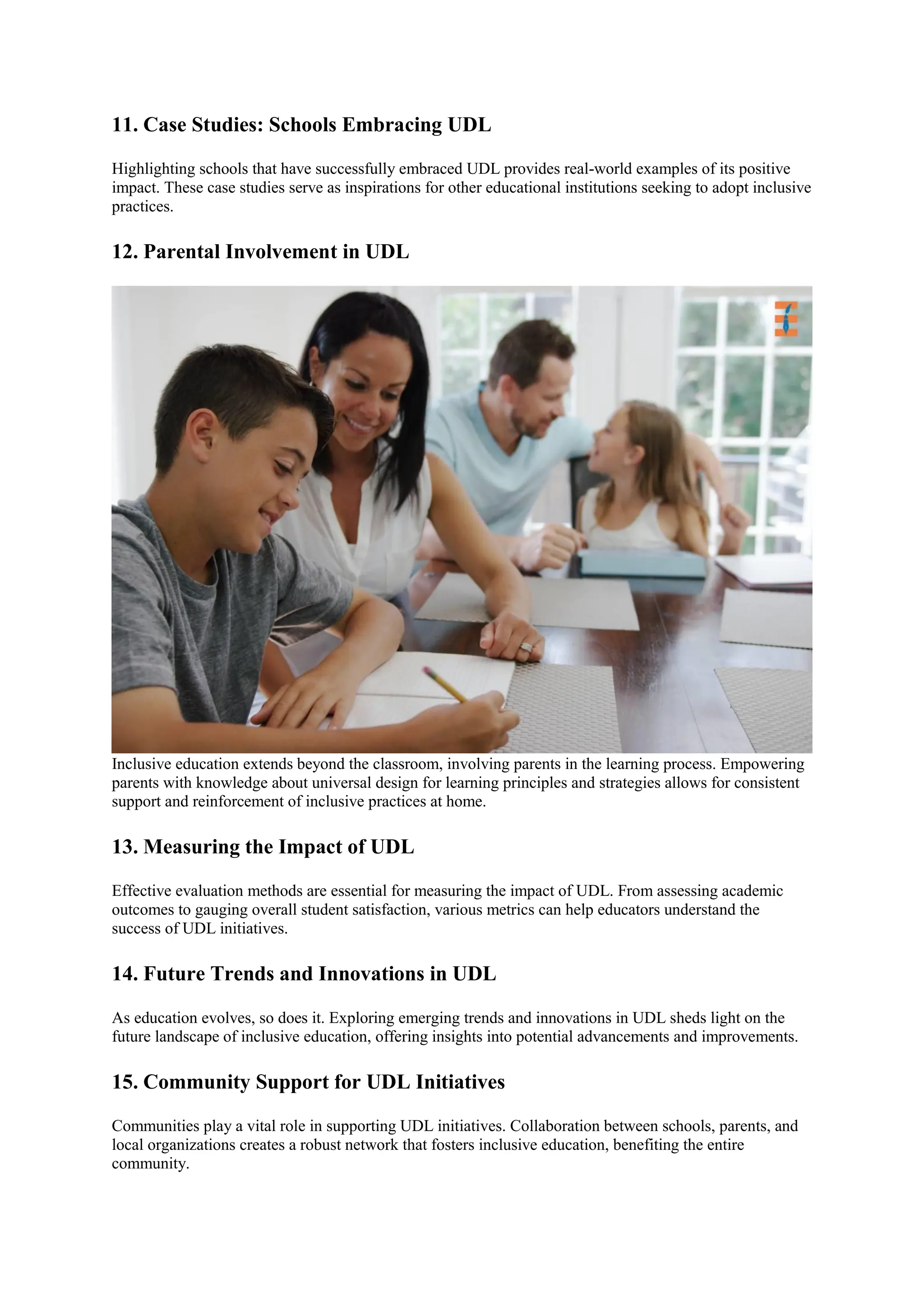
Inclusive education extends beyond the classroom, involving parents in the learning process. Empowering
parents with knowledge about universal design for learning principles and strategies allows for consistent
support and reinforcement of inclusive practices at home.
13. Measuring the Impact of UDL
Effective evaluation methods are essential for measuring the impact of UDL. From assessing academic
outcomes to gauging overall student satisfaction, various metrics can help educators understand the
success of UDL initiatives.
14. Future Trends and Innovations in UDL
As education evolves, so does it. Exploring emerging trends and innovations in UDL sheds light on the
future landscape of inclusive education, offering insights into potential advancements and improvements.
15. Community Support for UDL Initiatives
Communities play a vital role in supporting UDL initiatives. Collaboration between schools, parents, and
local organizations creates a robust network that fosters inclusive education, benefiting the entire
community.
Conclusion
In conclusion, embracing Universal Design for Learning is not just an educational choice; it is a
commitment to creating a future where every learner, regardless of their abilities or differences, can thrive.
By incorporating the principles of UDL, we pave the way for a more inclusive, diverse, and enriching
educational experience for all.
FAQs
1. How can UDL benefit students with different learning styles?
Ans: it provides multiple ways for students to access information and demonstrate their understanding,
catering to diverse learning styles.
2. What challenges do educators commonly face when implementing UDL?
Ans: Common challenges include resistance to change, limited resources, and the need for ongoing
professional development.
3. Is UDL only applicable to students with disabilities?
Ans: No, it is designed to benefit all students by creating inclusive and flexible learning environments.
4. How can parents support Universal Design for Learning initiatives at
home?
Ans: Parents can support it by staying informed about its principles and encouraging inclusive practices in
their homes.
5. What future trends can we expect in the field of UDL?
Ans: Future trends may include advancements in technology integration, personalized learning
approaches, and increased global collaboration in UDL initiatives.
Also Read: The Dynamics and Impact of Advanced Learning Programs

Exploring Universal Design for Learning: A Path to Inclusive Education

  • 1.
    Exploring Universal Designfor Learning: A Path to Inclusive Education S H A R E Universal Design for Learning (UDL) has emerged as a transformative approach in education, breaking down barriers and creating inclusive environments for diverse learners. In this article, we delve into the principles, benefits, challenges, and successful implementations of UDL, shedding light on its vital role in shaping the future of education. Here are 15 Key Principles of Universal Design for Learning: 1. Providing multiple means of representation
  • 2.
    It emphasizes presentinginformation in various ways, recognizing that learners have different preferences and strengths. Incorporating visual aids, auditory resources, and tactile materials ensures that students can access information in a way that suits their learning styles. 2. Offering multiple means of action and expression In a universal design for learning framework, students are provided with diverse options for demonstrating their understanding. This may involve varied assessment formats, such as written assignments, oral presentations, or multimedia projects. Allowing students to choose the mode that aligns with their strengths fosters a sense of autonomy and creativity. 3. Supplying multiple means of engagement Engagement is at the core of effective learning. It encourages educators to create lessons that captivate students’ interests and motivations. By offering choices in content and activities, teachers can cater to different preferences, ensuring that every learner feels invested and connected to the material. 4. Understanding UDL in the Classroom Implementing it in the classroom requires a shift in mindset and instructional practices. Educators can embrace flexible learning materials, ensuring that resources are accessible to students with diverse needs. Adapting assessments is equally crucial, allowing for varied methods of evaluation that accommodate individual strengths and challenges. 5. Benefits of Implementing UDL The adoption of a universal design for learning practices yields numerous advantages. Students experience heightened engagement, leading to improved academic performance. Moreover, it fosters an inclusive learning environment where every student feels valued and supported in their educational journey.
  • 3.
    6. Addressing CommonMisconceptions about UDL While Universal Design for Learning has proven to be a powerful educational framework, there are common misconceptions that need clarification. Dispelling myths, such as the belief that UDL is solely for students with disabilities, is essential to promoting widespread understanding and adoption of this inclusive approach. 7. Examples of Successful UDL Implementation Real-life examples showcase the transformative impact of UDL in diverse educational settings. From improved student outcomes to increased teacher satisfaction, these cases serve as inspiring models for schools considering integration. 8. Challenges in Implementing UDL Despite its many merits, universal design for learning implementation may face challenges. Identifying potential obstacles, such as resistance to change or limited resources, allows educators to develop strategies for overcoming these hurdles. 9. UDL and Technology Integration Leveraging technology is a key aspect of effective UDL strategies. From accessible e-learning platforms to interactive multimedia resources, technology plays a pivotal role in creating inclusive educational experiences. 10. Training Educators on UDL Practices The successful implementation of universal learning design relies on adequately preparing educators. Professional development opportunities that focus on its principles, instructional strategies, and technology integration are crucial for fostering a knowledgeable and capable teaching community.
  • 4.
    11. Case Studies:Schools Embracing UDL Highlighting schools that have successfully embraced UDL provides real-world examples of its positive impact. These case studies serve as inspirations for other educational institutions seeking to adopt inclusive practices. 12. Parental Involvement in UDL Inclusive education extends beyond the classroom, involving parents in the learning process. Empowering parents with knowledge about universal design for learning principles and strategies allows for consistent support and reinforcement of inclusive practices at home. 13. Measuring the Impact of UDL Effective evaluation methods are essential for measuring the impact of UDL. From assessing academic outcomes to gauging overall student satisfaction, various metrics can help educators understand the success of UDL initiatives. 14. Future Trends and Innovations in UDL As education evolves, so does it. Exploring emerging trends and innovations in UDL sheds light on the future landscape of inclusive education, offering insights into potential advancements and improvements. 15. Community Support for UDL Initiatives Communities play a vital role in supporting UDL initiatives. Collaboration between schools, parents, and local organizations creates a robust network that fosters inclusive education, benefiting the entire community.
  • 5.
    Conclusion In conclusion, embracingUniversal Design for Learning is not just an educational choice; it is a commitment to creating a future where every learner, regardless of their abilities or differences, can thrive. By incorporating the principles of UDL, we pave the way for a more inclusive, diverse, and enriching educational experience for all. FAQs 1. How can UDL benefit students with different learning styles? Ans: it provides multiple ways for students to access information and demonstrate their understanding, catering to diverse learning styles. 2. What challenges do educators commonly face when implementing UDL? Ans: Common challenges include resistance to change, limited resources, and the need for ongoing professional development. 3. Is UDL only applicable to students with disabilities? Ans: No, it is designed to benefit all students by creating inclusive and flexible learning environments. 4. How can parents support Universal Design for Learning initiatives at home? Ans: Parents can support it by staying informed about its principles and encouraging inclusive practices in their homes. 5. What future trends can we expect in the field of UDL? Ans: Future trends may include advancements in technology integration, personalized learning approaches, and increased global collaboration in UDL initiatives. Also Read: The Dynamics and Impact of Advanced Learning Programs