Exploring the potential role of unstructured
processes and content in BPM
Michélle Booysen & Marietjie Lancaster
Pétanque Business Specialists & SAPO
What we are talking about

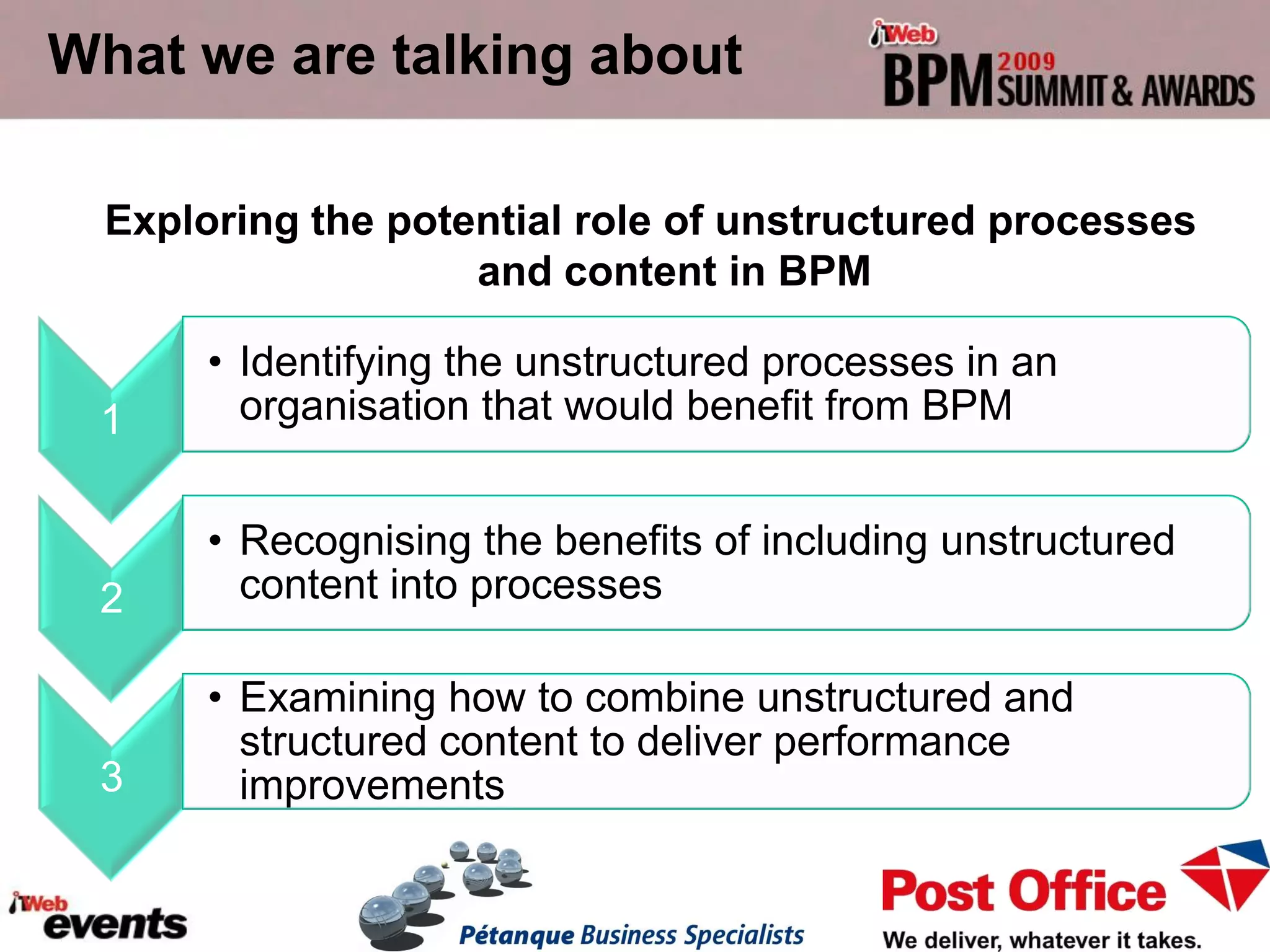
  Exploring the potential role of unstructured processes
                    and content in BPM

       • Identifying the unstructured processes in an
 1       organisation that would benefit from BPM


       • Recognising the benefits of including unstructured
 2       content into processes

       • Examining how to combine unstructured and
         structured content to deliver performance
 3       improvements
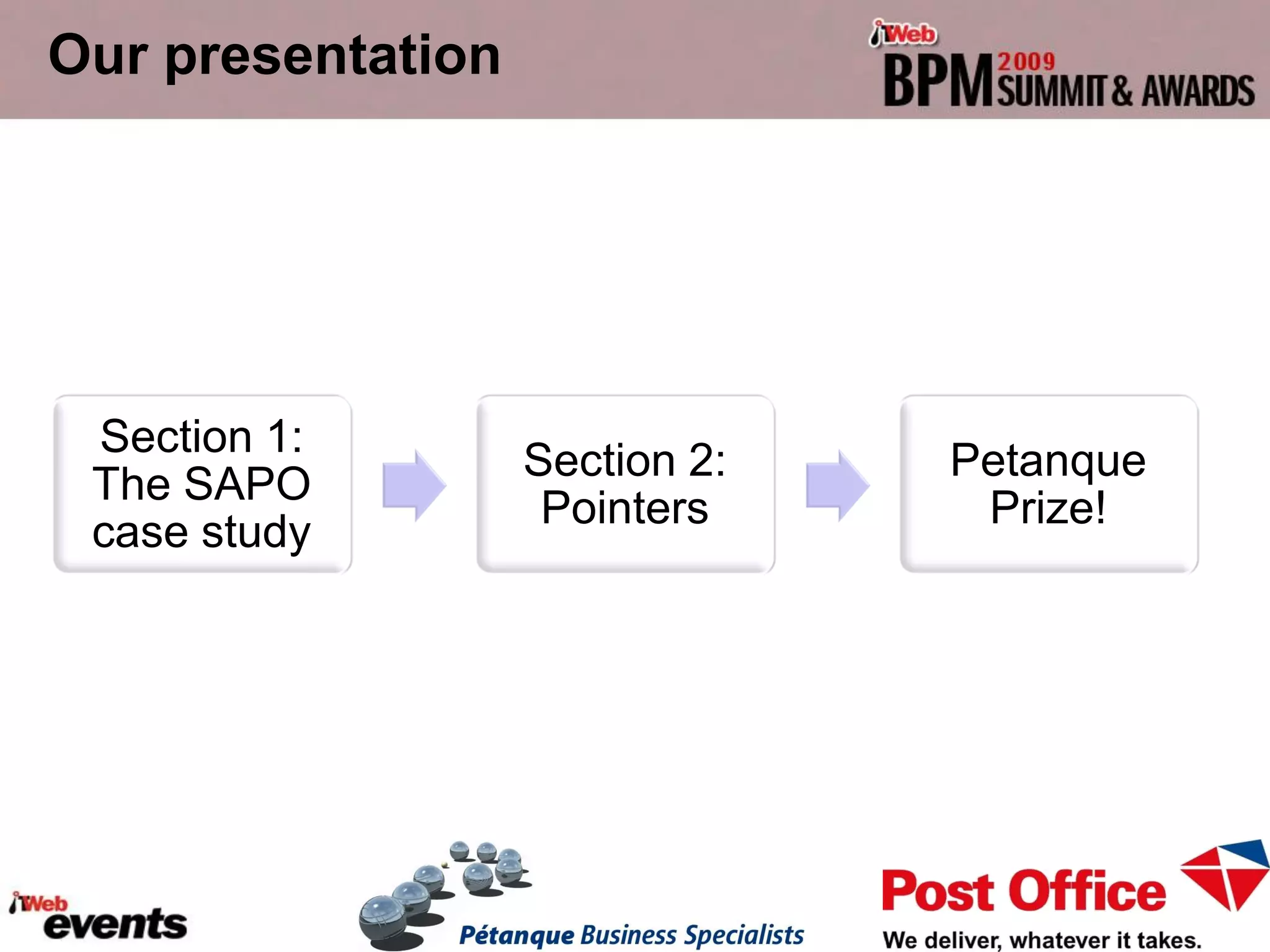
Our presentation


 Section 1:
                   Section 2:   Petanque
 The SAPO
                    Pointers     Prize!
 case study
Section 1:
SAPO Case Study
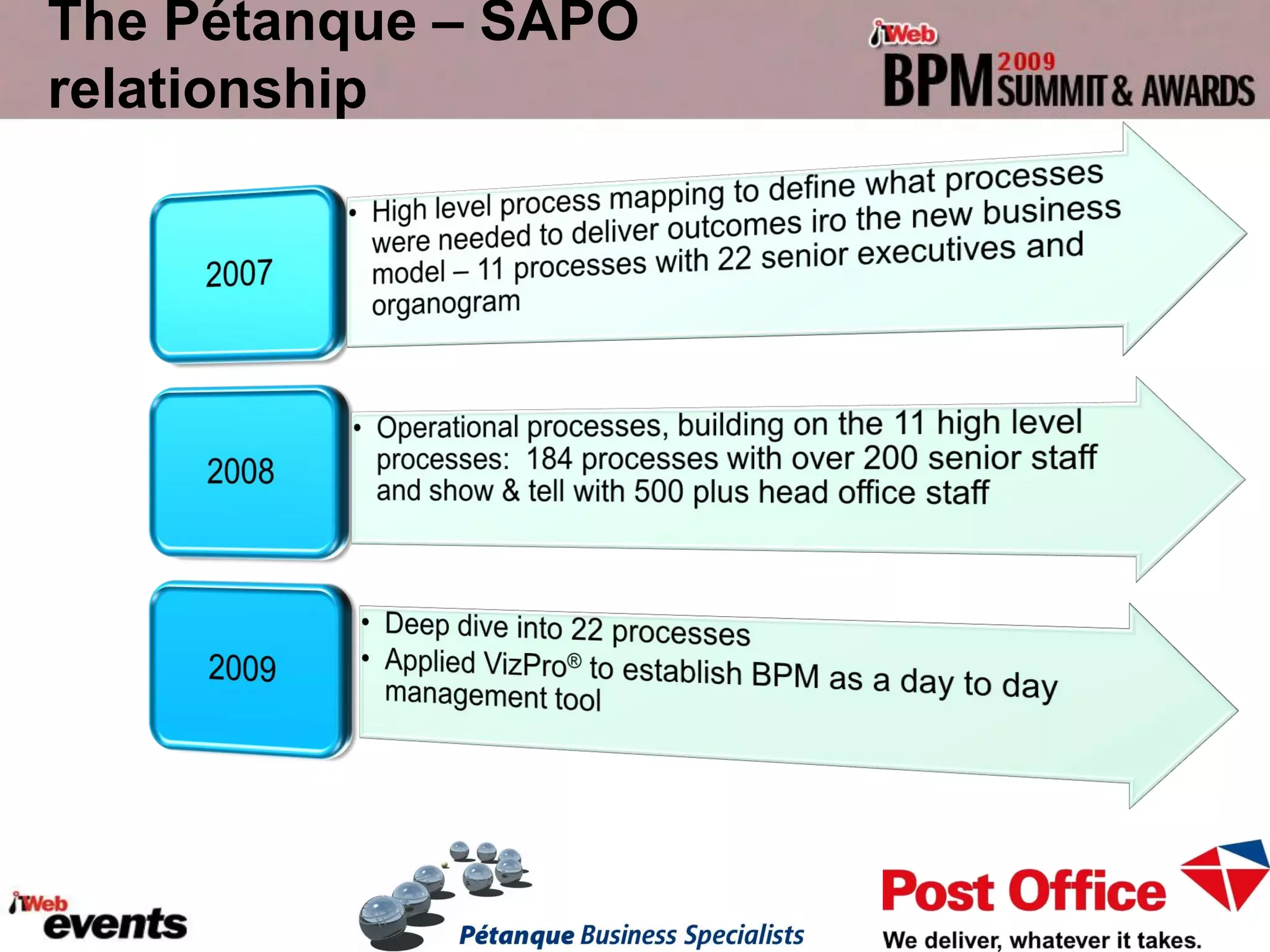
The Pétanque – SAPO
relationship
Building on results
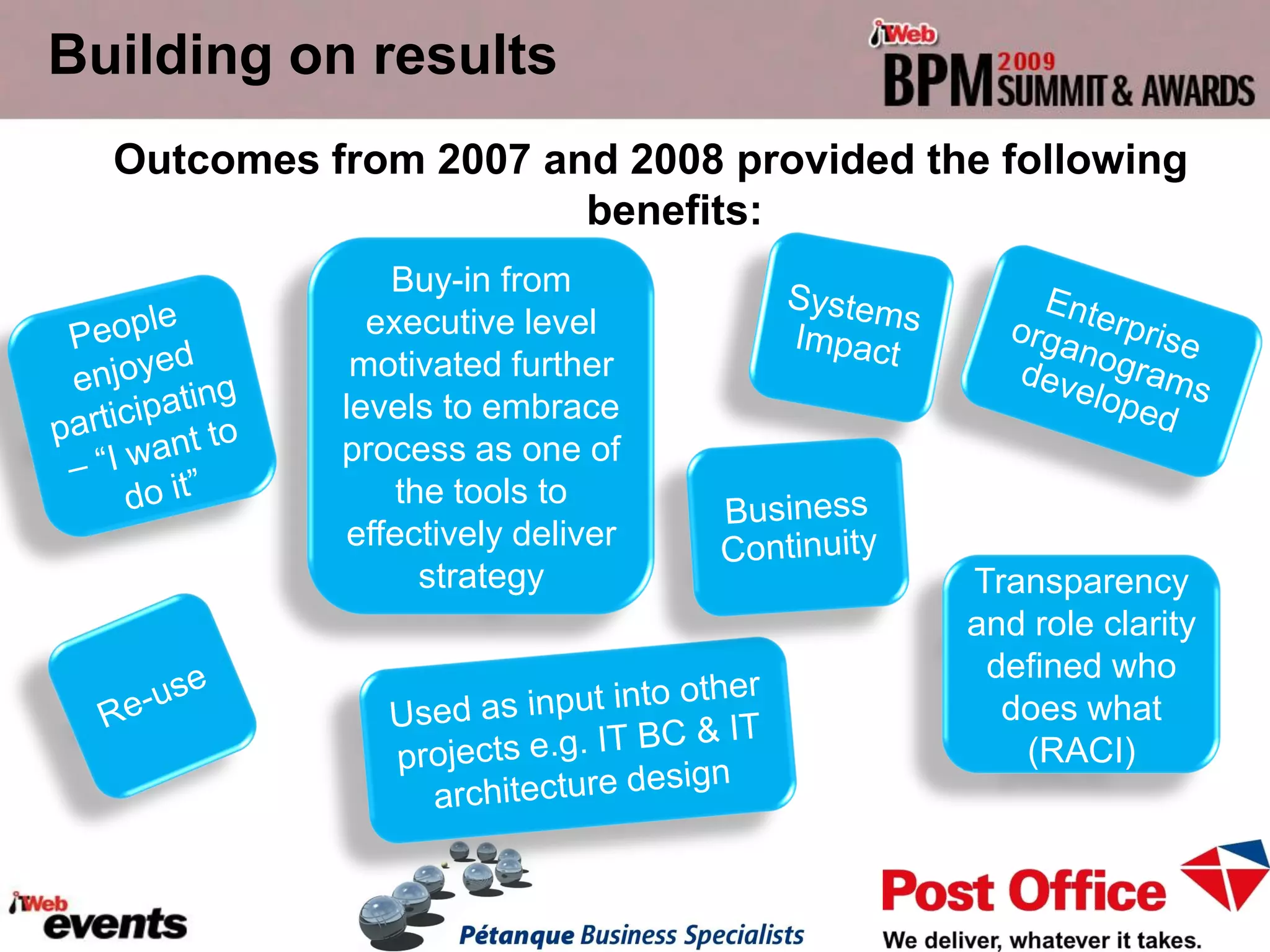
  Outcomes from 2007 and 2008 provided the following
                       benefits:
               Buy-in from
              executive level
             motivated further
            levels to embrace
            process as one of
                the tools to
            effectively deliver
                  strategy               Transparency
                                         and role clarity
                                          defined who
                                           does what
                                            (RACI)
Building on results
Building on results

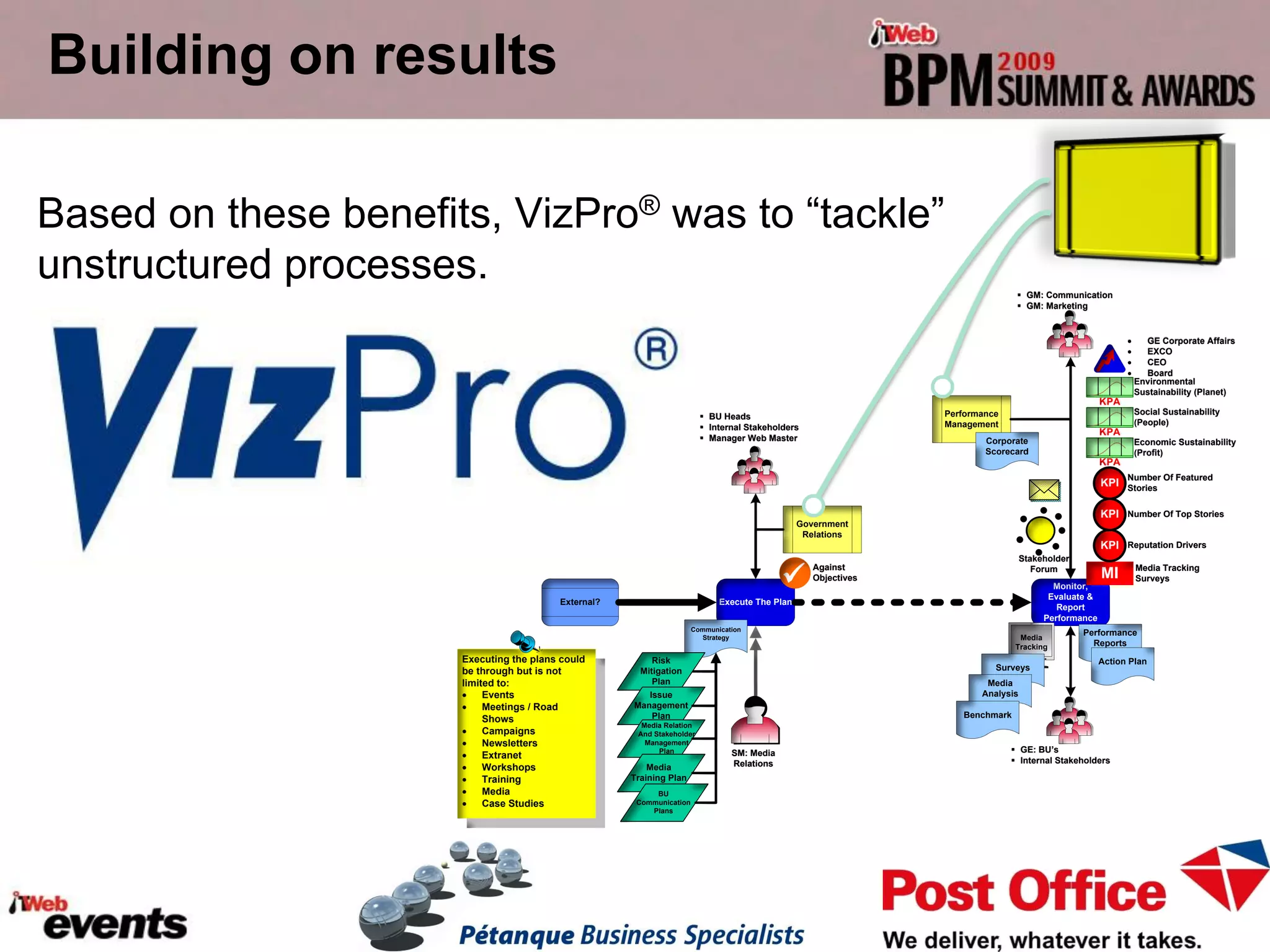
Based on these benefits, VizPro® was to “tackle”
unstructured processes.                                                                                                        § GM: Communication
                                                                                                                               § GM: Marketing


                                                                                                                                                           ·     GE Corporate Affairs
                                                                                                                                                           ·     EXCO
                                                                                                                                                           ·     CEO
                                                                                                                                                           ·     Board
                                                                                                                                                               Environmental
                                                                                                                                                               Sustainability (Planet)
                                                                                                                                                     KPA
                                                                                                                Performance                                    Social Sustainability
                                                                        § BU Heads
                                                                                                                Management                                     (People)
                                                                        § Internal Stakeholders
                                                                                                                                                     KPA
                                                                        § Manager Web Master                            Corporate                              Economic Sustainability
                                                                                                                        Scorecard                              (Profit)
                                                                                                                                                     KPA
                                                                                                                                                           Number Of Featured
                                                                                                                                                     KPI   Stories


                                                                                                                                                     KPI   Number Of Top Stories
                                                                                                Government
                                                                                                 Relations
                                                                                                                                                     KPI   Reputation Drivers
                                                                                                                                  Stakeholder

                                                                                            
                                                                                                   Against                           Forum                     Media Tracking
                                                                                                   Objectives                                        MI        Surveys
                                                                                                                                         Monitor,
                                                                                                                                        Evaluate &
                                         External?                           Execute The Plan
                                                                                                                                          Report
                                                                                                                                       Performance
                                                                      Communication
                                                                                                                                                Performance
                                                                        Strategy                                                Media
                                                                                                                               Tracking           Reports
                      Executing the plans could          Risk                                                                                        Action Plan
                      be through but is not           Mitigation                                                          Surveys
                      limited to:                        Plan                                                           Media
                      ·    Events                       Issue                                                          Analysis
                      ·    Meetings / Road           Management
                                                         Plan                                                      Benchmark
                           Shows
                                                       Media Relation
                      ·    Campaigns                  And Stakeholder
                      ·    Newsletters                  Management
                                                                                                                              § GE: BU’s
                      ·    Extranet                        Plan                 SM: Media
                                                                                                                              § Internal Stakeholders
                      ·    Workshops                     Media                  Relations
                      ·    Training                  Training Plan
                      ·    Media                          BU
                      ·    Case Studies               Communication
                                                         Plans
The SAPO Case Study
BPM for SAPO...


 … is defining and linking and managing processes
to achieve strategic goals, agreeing on what needs
to be done by whom throughout the enterprise within
  governance, risk and performance management
                    structures.


      10
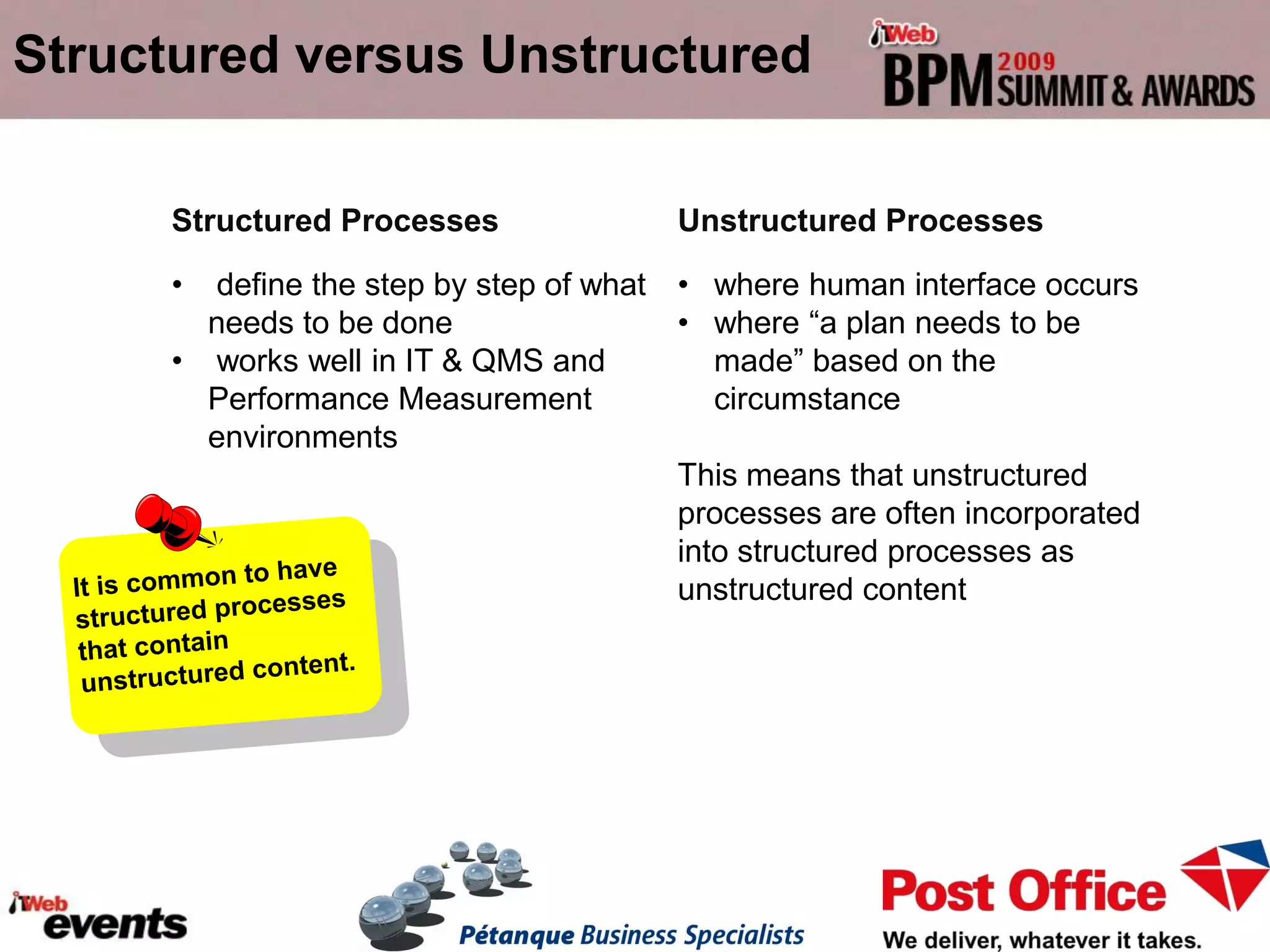
Structured versus Unstructured


         Structured Processes               Unstructured Processes

         •   define the step by step of what • where human interface occurs
             needs to be done                • where “a plan needs to be
           • works well in IT & QMS and         made” based on the
             Performance Measurement            circumstance
             environments
                                             This means that unstructured
                                             processes are often incorporated
                                             into structured processes as
  It is commo n to have
                 cesses
                                             unstructured content
  structured pro
  that contain
                content.
  unstructured
Unstructured Processes
in an enterprise

  – Why they are important?
      • They deal with all sorts of realities which cannot be pre-defined
        effectively due to infrequent occurrence for example


  – Because they depend on the people who execute them, it is
    important to know where these processes are in the enterprise and
    how to resource them

  – What are their characteristics?
      •   They link directly to the people who execute them
      •   They change when people leave the position
      •   They change when the environment changes
      •   They link directly to customers
SAPO Structured versus
Unstructured Processes


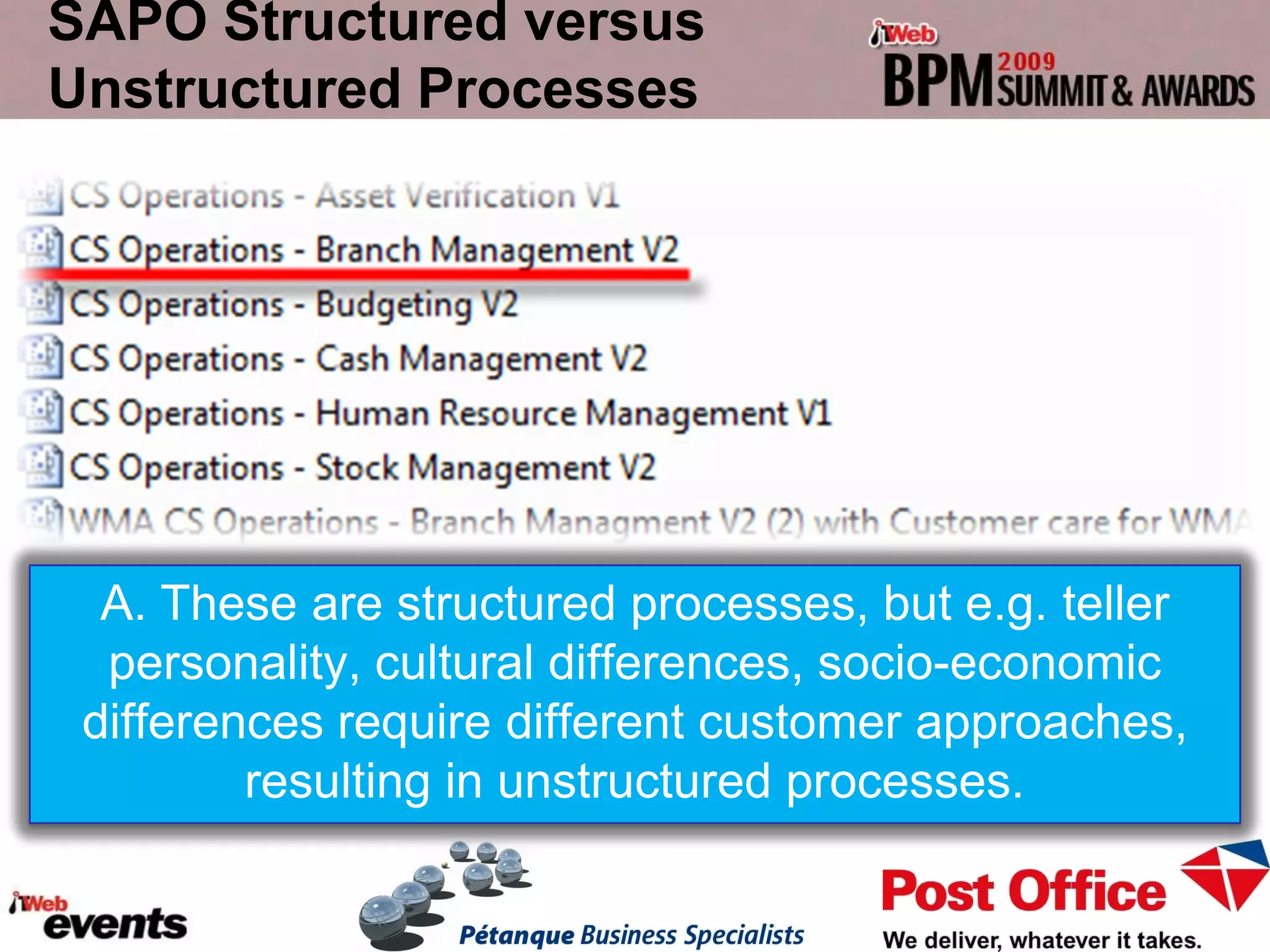
  A. These are structured processes, but e.g. teller
  personality, cultural differences, socio-economic
 differences require different customer approaches,
         resulting in unstructured processes.
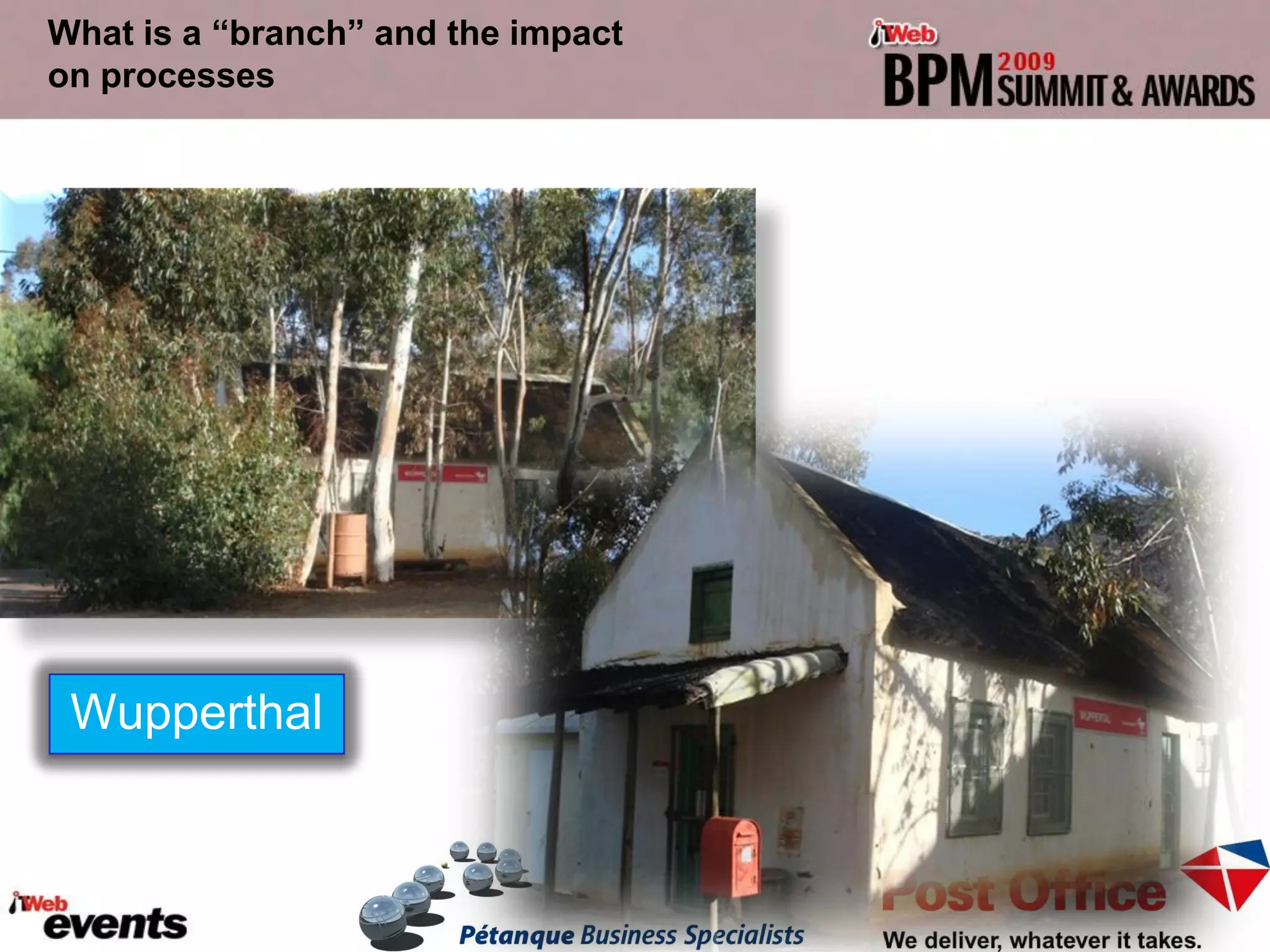
What is a “branch” and the impact
on processes


 Wupperthal
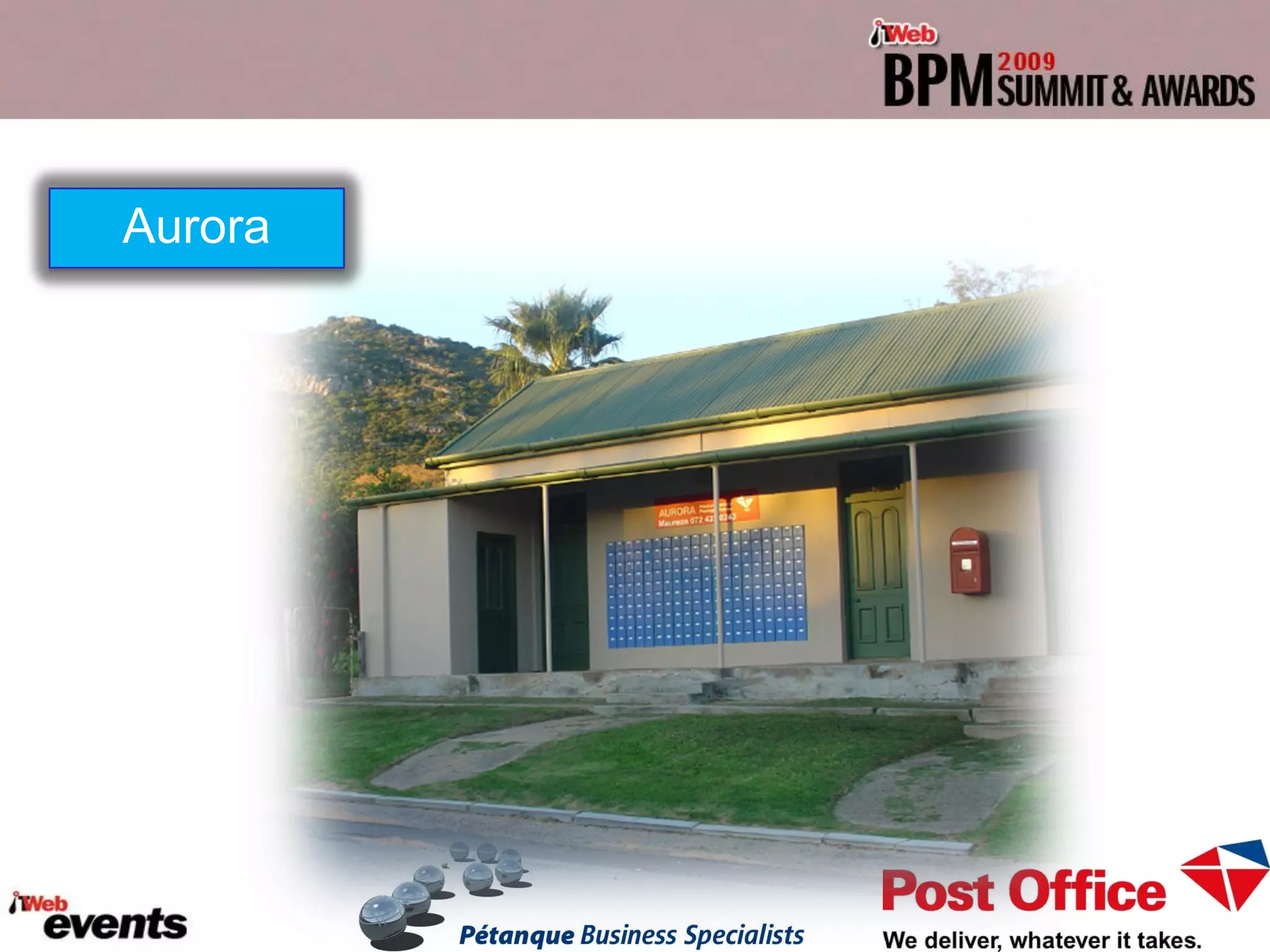
Aurora
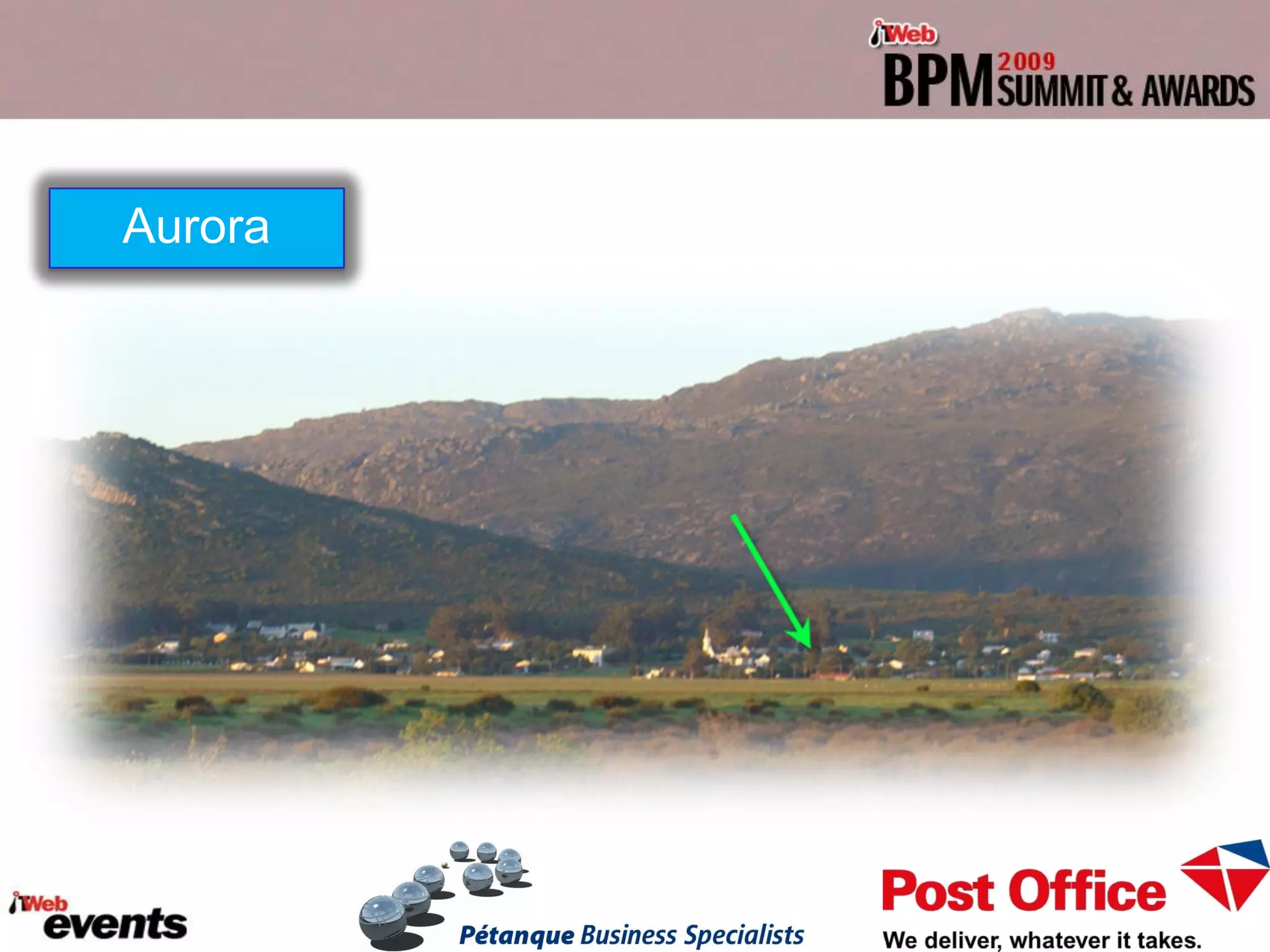
Aurora
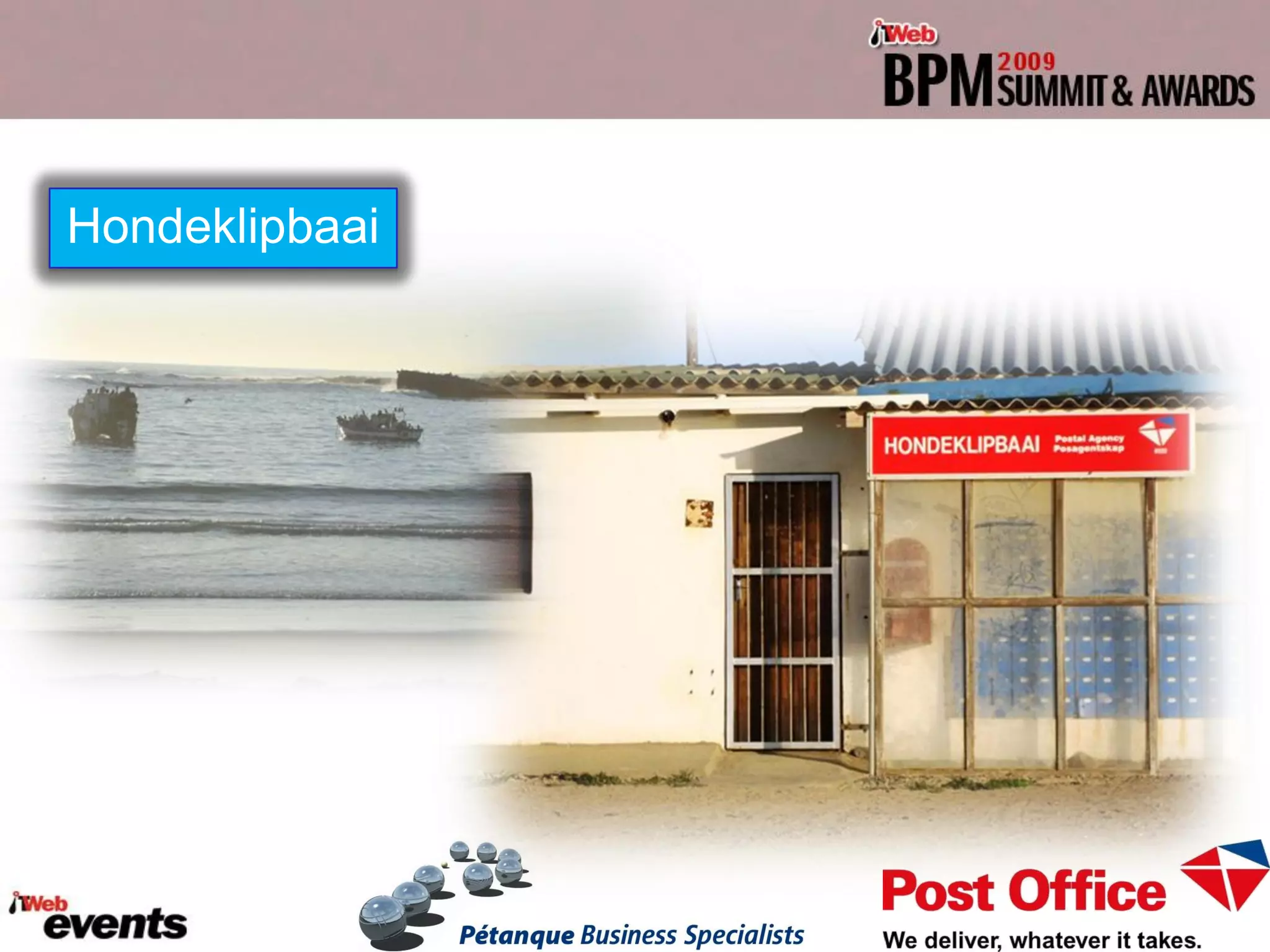
Hondeklipbaai
Nieuwoudtville
Canal Walk Cape Town
SAPO Structured versus
Unstructured Processes


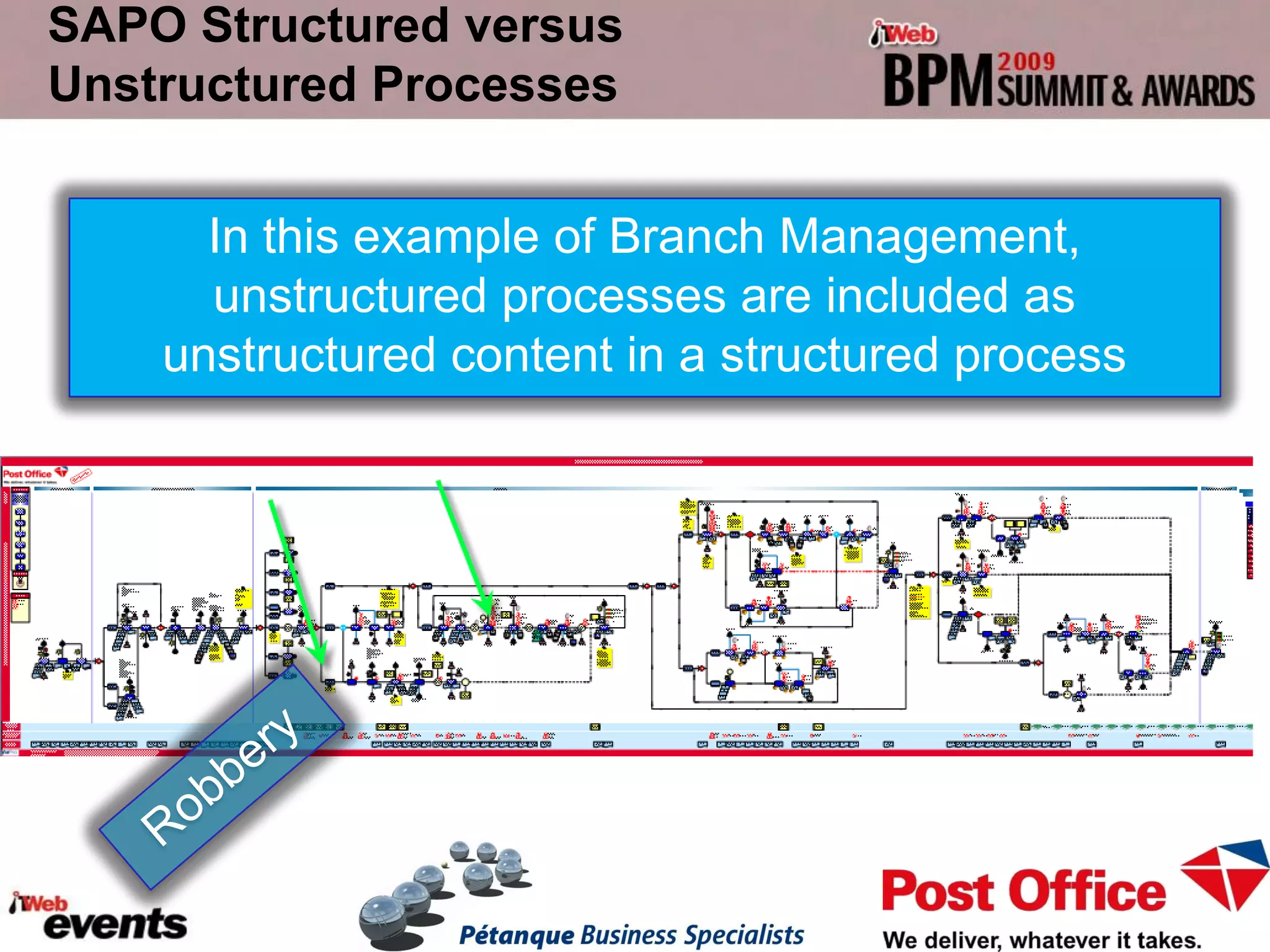
      In this example of Branch Management,
      unstructured processes are included as
    unstructured content in a structured process
SAPO Structured versus
Unstructured Processes


         For armed robberies SOP:
            • Hospitalise the injured person
            • Refer affected people to trauma counseling /
              medical practitioners
            • Clean the branch
            • Request Authority to close branch
            • Arrange for employee/s substitute

            This however NEVER comes in a standard &
                          structured way
                      = Unstructured content
When the crooks enter you do NOT adhere to the
 process ….. you dodge the bullets ….it is NOT as if
 you can ask the crook if you can get up to press the
 panic button?!?!?!? Nor is there a policy on whom
 to shoot, what they may steal etc…..

So SAPO has rather worked on risk managing the
 occurrence of such unstructured processes by
 mapping and implementing effective interfacing
              security processes!
SAPO Structured versus
Unstructured Processes


B. Some structured processes remain unstructured:

  • Has been applied over a long period of time, e.g. in
    Retail, which are executed in a non-consistent, non
    uniform, unstructured manner.

  • Behavioural change and compliance enforcement are
    needed.

  • Through VizPro® behavioural change has been
    addressed to an extent.
When unstructured cannot become
structured


  1. Customer interface and service that deals with emotions
     and capacity;
  2. Trauma, e.g. armed robbery;
  3. There is a need for individual interpretation of a situation.

This must be supported by effective processes that provide the
  framework within which to execute, e.g. situation training.

For example: provide the framework for roll-out through “bullet”
               notes that link to process steps.
Changing unstructured to structured
processes

 An example: Investment Management

   – Was fragmented and not holistic with many functional areas
     involved and each did their own “thing”

   – Reasons why it needed to become structured:
           – time and resource usage improvement
           – tight risk management needed to comply to governance
   – There is now transparency, it is clear who does what, time frames
     are agreed to in SLA format, risk is known and managed

   – Approval reduced from 6 months to 1 month. Now complies to
     governance structures e.g. FPMA act.
Section 2:
 Pointers
Pointer 1


     Identifying the unstructured processes in your
        organisation that would benefit from BPM

 Identify those processes where human intervention play a
  bigger role than what the defined process and IT direct, i.e.
   those processes where the people element determine the
                           outcome.
Pointer 2
   Recognising the benefits of including unstructured
              content into your processes

• Provides end to end accountability;
• Frees resources up;
• Deep dives into previously identified, but non-defined
  processes with the benefits derived from going into the
  details;
• Where the mapping team is diverse in background and
  experience – more structured process steps might be ID
  and buy in secured;
• Processes are constantly reviewed i.t.o process
  enhancements;
• The process map now SHOWS duplication between
  structured and self proclaimed unstructured processes;
• Where unstructured was changed to structured, it is the IT
  system that carries the transaction forward NOT the paper
  trail;
• Benefit: cost savings and better use of resources;
• Some processes will always be inefficient i.e. armed
  robberies, burglaries, losses, damages etc.
Pointer 3
 How to combine unstructured and structured content to
           deliver performance improvements

• Unstructured processes are best managed if the structured
  interfacing processes are defined and executed within a
  performance framework;
• Structure what can be structured;
• Define the rules within which unstructured operate;
• Dismantle silo mentality and ensure that there is a clear
  understanding of the bigger picture;
• Take lessons from unstructured process execution and
  communicate them.
Wrap up
  So, what is the potential role of unstructured processes
                      and content in BPM?
• Increasingly important due to greater human interface
  (customer care/satisfaction/outside-in processes) in how
  business will be conducted.
   – e.g. Bank accounts for SASSA people, which has a number of social
     elements attached. This causes for community interaction.
• Enterprising as a business approach NEEDS unstructured
  processes to succeed.
• The current and future economic environment: unique
  challenges causes employees to have to think
  entrepreneurial, which needs unstructured processes within
  frameworks of structure and compliance.
Section 3:
 Prize!
Questions?
Thank You

Exploring The Potential Role Of Unstructured Processes V4

  • 1.
    Exploring the potentialrole of unstructured processes and content in BPM Michélle Booysen & Marietjie Lancaster Pétanque Business Specialists & SAPO
  • 2.
    What we aretalking about Exploring the potential role of unstructured processes and content in BPM • Identifying the unstructured processes in an 1 organisation that would benefit from BPM • Recognising the benefits of including unstructured 2 content into processes • Examining how to combine unstructured and structured content to deliver performance 3 improvements
  • 3.
    Our presentation Section1: Section 2: Petanque The SAPO Pointers Prize! case study
  • 4.
  • 5.
    The Pétanque –SAPO relationship
  • 6.
    Building on results Outcomes from 2007 and 2008 provided the following benefits: Buy-in from executive level motivated further levels to embrace process as one of the tools to effectively deliver strategy Transparency and role clarity defined who does what (RACI)
  • 7.
  • 8.
    Building on results Basedon these benefits, VizPro® was to “tackle” unstructured processes. § GM: Communication § GM: Marketing · GE Corporate Affairs · EXCO · CEO · Board Environmental Sustainability (Planet) KPA Performance Social Sustainability § BU Heads Management (People) § Internal Stakeholders KPA § Manager Web Master Corporate Economic Sustainability Scorecard (Profit) KPA Number Of Featured KPI Stories KPI Number Of Top Stories Government Relations KPI Reputation Drivers Stakeholder  Against Forum Media Tracking Objectives MI Surveys Monitor, Evaluate & External? Execute The Plan Report Performance Communication Performance Strategy Media Tracking Reports Executing the plans could Risk Action Plan be through but is not Mitigation Surveys limited to: Plan Media · Events Issue Analysis · Meetings / Road Management Plan Benchmark Shows Media Relation · Campaigns And Stakeholder · Newsletters Management § GE: BU’s · Extranet Plan SM: Media § Internal Stakeholders · Workshops Media Relations · Training Training Plan · Media BU · Case Studies Communication Plans
  • 9.
  • 10.
    BPM for SAPO... … is defining and linking and managing processes to achieve strategic goals, agreeing on what needs to be done by whom throughout the enterprise within governance, risk and performance management structures. 10
  • 11.
    Structured versus Unstructured Structured Processes Unstructured Processes • define the step by step of what • where human interface occurs needs to be done • where “a plan needs to be • works well in IT & QMS and made” based on the Performance Measurement circumstance environments This means that unstructured processes are often incorporated into structured processes as It is commo n to have cesses unstructured content structured pro that contain content. unstructured
  • 12.
    Unstructured Processes in anenterprise – Why they are important? • They deal with all sorts of realities which cannot be pre-defined effectively due to infrequent occurrence for example – Because they depend on the people who execute them, it is important to know where these processes are in the enterprise and how to resource them – What are their characteristics? • They link directly to the people who execute them • They change when people leave the position • They change when the environment changes • They link directly to customers
  • 13.
    SAPO Structured versus UnstructuredProcesses A. These are structured processes, but e.g. teller personality, cultural differences, socio-economic differences require different customer approaches, resulting in unstructured processes.
  • 14.
    What is a“branch” and the impact on processes Wupperthal
  • 15.
  • 16.
  • 17.
  • 18.
  • 19.
  • 20.
    SAPO Structured versus UnstructuredProcesses In this example of Branch Management, unstructured processes are included as unstructured content in a structured process
  • 21.
    SAPO Structured versus UnstructuredProcesses For armed robberies SOP: • Hospitalise the injured person • Refer affected people to trauma counseling / medical practitioners • Clean the branch • Request Authority to close branch • Arrange for employee/s substitute This however NEVER comes in a standard & structured way = Unstructured content
  • 22.
    When the crooksenter you do NOT adhere to the process ….. you dodge the bullets ….it is NOT as if you can ask the crook if you can get up to press the panic button?!?!?!? Nor is there a policy on whom to shoot, what they may steal etc….. So SAPO has rather worked on risk managing the occurrence of such unstructured processes by mapping and implementing effective interfacing security processes!
  • 23.
    SAPO Structured versus UnstructuredProcesses B. Some structured processes remain unstructured: • Has been applied over a long period of time, e.g. in Retail, which are executed in a non-consistent, non uniform, unstructured manner. • Behavioural change and compliance enforcement are needed. • Through VizPro® behavioural change has been addressed to an extent.
  • 24.
    When unstructured cannotbecome structured 1. Customer interface and service that deals with emotions and capacity; 2. Trauma, e.g. armed robbery; 3. There is a need for individual interpretation of a situation. This must be supported by effective processes that provide the framework within which to execute, e.g. situation training. For example: provide the framework for roll-out through “bullet” notes that link to process steps.
  • 25.
    Changing unstructured tostructured processes An example: Investment Management – Was fragmented and not holistic with many functional areas involved and each did their own “thing” – Reasons why it needed to become structured: – time and resource usage improvement – tight risk management needed to comply to governance – There is now transparency, it is clear who does what, time frames are agreed to in SLA format, risk is known and managed – Approval reduced from 6 months to 1 month. Now complies to governance structures e.g. FPMA act.
  • 26.
  • 27.
    Pointer 1 Identifying the unstructured processes in your organisation that would benefit from BPM Identify those processes where human intervention play a bigger role than what the defined process and IT direct, i.e. those processes where the people element determine the outcome.
  • 28.
    Pointer 2 Recognising the benefits of including unstructured content into your processes • Provides end to end accountability; • Frees resources up; • Deep dives into previously identified, but non-defined processes with the benefits derived from going into the details; • Where the mapping team is diverse in background and experience – more structured process steps might be ID and buy in secured; • Processes are constantly reviewed i.t.o process enhancements;
  • 29.
    • The processmap now SHOWS duplication between structured and self proclaimed unstructured processes; • Where unstructured was changed to structured, it is the IT system that carries the transaction forward NOT the paper trail; • Benefit: cost savings and better use of resources; • Some processes will always be inefficient i.e. armed robberies, burglaries, losses, damages etc.
  • 30.
    Pointer 3 Howto combine unstructured and structured content to deliver performance improvements • Unstructured processes are best managed if the structured interfacing processes are defined and executed within a performance framework; • Structure what can be structured; • Define the rules within which unstructured operate; • Dismantle silo mentality and ensure that there is a clear understanding of the bigger picture; • Take lessons from unstructured process execution and communicate them.
  • 31.
    Wrap up So, what is the potential role of unstructured processes and content in BPM? • Increasingly important due to greater human interface (customer care/satisfaction/outside-in processes) in how business will be conducted. – e.g. Bank accounts for SASSA people, which has a number of social elements attached. This causes for community interaction. • Enterprising as a business approach NEEDS unstructured processes to succeed. • The current and future economic environment: unique challenges causes employees to have to think entrepreneurial, which needs unstructured processes within frameworks of structure and compliance.
  • 32.
  • 33.