“Tell me and I'll forget;
  show me and I may
  remember;
  involve me and I'll
  understand.”


Experiential Marketing
Jackie King, Melissa Stivale, Katie Tomaino
What is Experiential
Marketing?
“Experiential Marketing”
aka…
 Live marketing

 Engagement marketing

 Event marketing

 Participation marketing
Active, not Passive
 At first glance, might get confused with Guerilla
  marketing, but experiential marketing is more
  about the consumer engaging (usually
  physically) with the brand through the marketing
  tactic

 Its not just about the exposure, but about the
  experience
Growing Importance
 75% of marketers surveyed said they would be
  increasing spending on experiential marketing in
  2009


 70% of consumers say experiential marketing
  would be most likely to increase purchase
  consideration
The Five E‟s Of Experiential
   According to 361 degrees


    Experience
    Engagement
    Economize
    Evangelize
    Evaluate
Experience
 Live involvement marketing

 What the brand represents should be delivered

 Allows your brand into the heart‟s of customers
Engagement
 Break out of the norm and be different; moments
  of meaning and relevance for the consumer

 Use senses to get to the emotions of the
  consumer, tell a story
Economize
 Look to get the biggest bang for your buck
Evangelize
 By giving the people a unique experience, they
  will want to tell others about it

 Results in word of mouth

 Fuels loyalty
Evaluate
 ROI: Return on Investment Idea
The Importance
of Congruence
 Consistency is important throughout a brand‟s
  communications plan.

 Establish direct correlations between the brand
  and the experience.

 Can‟t say and not do
Lee Jeans
 Ex: Lee Jeans
  Lee jeans wants to re-market as sexy
  Created an exciting, new campaign but did not
   change the product to maintain congruence
   between product and message
  Consumers are drawn in, but reject the same not-
   sexy jeans
Challenges
 Complicated marketing metrics
  “lag” effect
  Customers move slowly through the purchase cycle

 Maintaining congruency with the brand
  Creative for creative sake is ineffective, creative can
   be innovative but must have some congruence with
   the brand/message
  Remember: the goal is to help clients increase sales,
   not win creativity awards
Metrics
 Two ways to measure: effectiveness and
  efficiency

 Effectiveness: How well is the initiative meeting
  the example?
  Surveys to test recall analyzes the success of filling
   the awareness gap
  Personal customized surveys and one-on-one
   interviews are preferred to focus groups or mass
   surveys
  Deeper insight into the sub-conscious, which drives
   purchasing

 Efficiency: cost per viewer or participant
Experiential Marketing and
the Five Senses
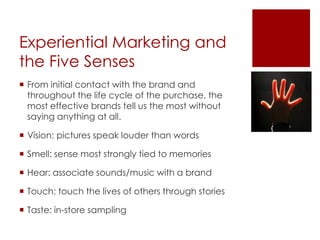
 From initial contact with the brand and
  throughout the life cycle of the purchase, the
  most effective brands tell us the most without
  saying anything at all.

 Vision: pictures speak louder than words

 Smell: sense most strongly tied to memories

 Hear: associate sounds/music with a brand

 Touch: touch the lives of others through stories

 Taste: in-store sampling
How to Use
Experiential
Marketing
When to use it:
 Launching a new brand or product line

 Rebranding

 Building/rebuild customer relationships
Types of
Experiential Marketing
 Mobile tours (bus)

 Pop-up stores

 In-store experiences

 Special events

 Guerilla sampling
Mobile Tour- ACUVUE2
converges with Walmart
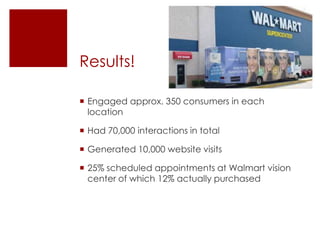
 Transportable locations that spread awareness
  linked with an educational value about
  products/companies.

 Johnson & Johnson wanted to partner with a
  retail channel for selling their color contacts

 Launched educational tour hitting 175 cities to
  introduce them to product line

 Year long

 Made a mobile educational center (bus) staffed
  with licensed professionals to increase
  confidence and quality in product
Results!

 Engaged approx. 350 consumers in each
  location

 Had 70,000 interactions in total

 Generated 10,000 website visits

 25% scheduled appointments at Walmart vision
  center of which 12% actually purchased
Pop-up Store: Target
 “Retailers use temporary stores to sell limited-
  edition items and holiday fare or to reach
  shoppers in cities where they don‟t have
  permanent outlets.”

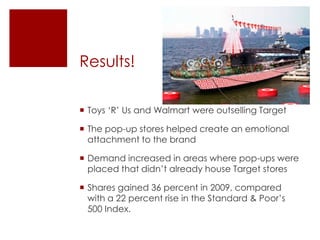
 Target To-Gos in New York, San Francisco and
  Washington for a holiday rush weekend (Dec. 11-
  13 of 2009)

 Temporary stores offer 50 products and items not
  yet sold nationwide
Results!

 Toys „R‟ Us and Walmart were outselling Target

 The pop-up stores helped create an emotional
  attachment to the brand

 Demand increased in areas where pop-ups were
  placed that didn‟t already house Target stores

 Shares gained 36 percent in 2009, compared
  with a 22 percent rise in the Standard & Poor‟s
  500 Index.
In-store: Apple
 What customers experience while in brick and
  mortar businesses.

 Apple prides itself on having a store where
  customers can try and experience products
  before they buy.

 Their staff contributes to the experience because
  they are put through rigorous training and are
  considered a convenience (knowledgeable and
  point of sale is everywhere in the store).

 Congruent with brand values: expertise and
  simplicity
Special Events: Guitar Hero
 An event celebrating something the brand wants
  to promote. Events draw in consumers to interact
  with brand and its products.

 Wanted to create buzz Guitar Hero World Tour

 Private launch party (attended by 230 targeted
  gamers) in NYC that had:
  gaming stations for a battle of the bands contest
  demo stations
  green screen photo opportunities
  cash prizes
Guerilla Sampling:
 Giving out samples to promote products via
  unconventional approaches to marketing.
  Creates a memorable brand experience that
  engages customers.

 “Guerilla sampling allows brands with smaller
  budgets to interact with their consumers face to
  face and larger brands have the opportunity to
  create unique experiences and generate buzz.”
Honey Monsters Cereal
 Wanted to reinforce fun elements of the brand
  and create awareness and acquisition because
  it was a new product (get people to try product)

 Set up in front of super markets in 4 key regions of
  UK- lasted 48 days

 Sales rose for 4 weeks after sampling occurred

 Had a halo effect on the sales

 Nominated for Institute of Sales Promotion Award
  in the UK
How Rainy Daze could use
experiential marketing
 Mobile tours (bus) & Pop up Stores- create
  demand in cities where there aren‟t already
  brick and mortar Rainy Daze

 In-store experiences- customization stations and
  wind tunnels

 Special events- launching company into weather
  gear market as a competitor

 Guerilla sampling- giving out ponchos at water
  parks

 All- allows interactivity with product, try without
  the buy
Trends
 Integrating social media with experiential
  marketing- Sun Glass Hut (creating buzz through
  viral word of mouse)

 “The future for experiential marketing looks bright;
  with 62% agreeing that it will be "one of the big
  growth areas in marketing over the next five
  years.”
THE END

Experientialmarketing(1)

  • 1.
    “Tell me andI'll forget; show me and I may remember; involve me and I'll understand.” Experiential Marketing Jackie King, Melissa Stivale, Katie Tomaino
  • 2.
  • 3.
    “Experiential Marketing” aka…  Livemarketing  Engagement marketing  Event marketing  Participation marketing
  • 4.
    Active, not Passive At first glance, might get confused with Guerilla marketing, but experiential marketing is more about the consumer engaging (usually physically) with the brand through the marketing tactic  Its not just about the exposure, but about the experience
  • 5.
    Growing Importance  75%of marketers surveyed said they would be increasing spending on experiential marketing in 2009  70% of consumers say experiential marketing would be most likely to increase purchase consideration
  • 6.
    The Five E‟sOf Experiential According to 361 degrees Experience Engagement Economize Evangelize Evaluate
  • 7.
    Experience  Live involvementmarketing  What the brand represents should be delivered  Allows your brand into the heart‟s of customers
  • 8.
    Engagement  Break outof the norm and be different; moments of meaning and relevance for the consumer  Use senses to get to the emotions of the consumer, tell a story
  • 9.
    Economize  Look toget the biggest bang for your buck
  • 10.
    Evangelize  By givingthe people a unique experience, they will want to tell others about it  Results in word of mouth  Fuels loyalty
  • 11.
    Evaluate  ROI: Returnon Investment Idea
  • 12.
    The Importance of Congruence Consistency is important throughout a brand‟s communications plan.  Establish direct correlations between the brand and the experience.  Can‟t say and not do
  • 13.
    Lee Jeans  Ex:Lee Jeans  Lee jeans wants to re-market as sexy  Created an exciting, new campaign but did not change the product to maintain congruence between product and message  Consumers are drawn in, but reject the same not- sexy jeans
  • 14.
    Challenges  Complicated marketingmetrics  “lag” effect  Customers move slowly through the purchase cycle  Maintaining congruency with the brand  Creative for creative sake is ineffective, creative can be innovative but must have some congruence with the brand/message  Remember: the goal is to help clients increase sales, not win creativity awards
  • 15.
    Metrics  Two waysto measure: effectiveness and efficiency  Effectiveness: How well is the initiative meeting the example?  Surveys to test recall analyzes the success of filling the awareness gap  Personal customized surveys and one-on-one interviews are preferred to focus groups or mass surveys  Deeper insight into the sub-conscious, which drives purchasing  Efficiency: cost per viewer or participant
  • 16.
    Experiential Marketing and theFive Senses  From initial contact with the brand and throughout the life cycle of the purchase, the most effective brands tell us the most without saying anything at all.  Vision: pictures speak louder than words  Smell: sense most strongly tied to memories  Hear: associate sounds/music with a brand  Touch: touch the lives of others through stories  Taste: in-store sampling
  • 17.
  • 18.
    When to useit:  Launching a new brand or product line  Rebranding  Building/rebuild customer relationships
  • 19.
    Types of Experiential Marketing Mobile tours (bus)  Pop-up stores  In-store experiences  Special events  Guerilla sampling
  • 20.
    Mobile Tour- ACUVUE2 convergeswith Walmart  Transportable locations that spread awareness linked with an educational value about products/companies.  Johnson & Johnson wanted to partner with a retail channel for selling their color contacts  Launched educational tour hitting 175 cities to introduce them to product line  Year long  Made a mobile educational center (bus) staffed with licensed professionals to increase confidence and quality in product
  • 21.
    Results!  Engaged approx.350 consumers in each location  Had 70,000 interactions in total  Generated 10,000 website visits  25% scheduled appointments at Walmart vision center of which 12% actually purchased
  • 22.
    Pop-up Store: Target “Retailers use temporary stores to sell limited- edition items and holiday fare or to reach shoppers in cities where they don‟t have permanent outlets.”  Target To-Gos in New York, San Francisco and Washington for a holiday rush weekend (Dec. 11- 13 of 2009)  Temporary stores offer 50 products and items not yet sold nationwide
  • 23.
    Results!  Toys „R‟Us and Walmart were outselling Target  The pop-up stores helped create an emotional attachment to the brand  Demand increased in areas where pop-ups were placed that didn‟t already house Target stores  Shares gained 36 percent in 2009, compared with a 22 percent rise in the Standard & Poor‟s 500 Index.
  • 24.
    In-store: Apple  Whatcustomers experience while in brick and mortar businesses.  Apple prides itself on having a store where customers can try and experience products before they buy.  Their staff contributes to the experience because they are put through rigorous training and are considered a convenience (knowledgeable and point of sale is everywhere in the store).  Congruent with brand values: expertise and simplicity
  • 25.
    Special Events: GuitarHero  An event celebrating something the brand wants to promote. Events draw in consumers to interact with brand and its products.  Wanted to create buzz Guitar Hero World Tour  Private launch party (attended by 230 targeted gamers) in NYC that had:  gaming stations for a battle of the bands contest  demo stations  green screen photo opportunities  cash prizes
  • 26.
    Guerilla Sampling:  Givingout samples to promote products via unconventional approaches to marketing. Creates a memorable brand experience that engages customers.  “Guerilla sampling allows brands with smaller budgets to interact with their consumers face to face and larger brands have the opportunity to create unique experiences and generate buzz.”
  • 27.
    Honey Monsters Cereal Wanted to reinforce fun elements of the brand and create awareness and acquisition because it was a new product (get people to try product)  Set up in front of super markets in 4 key regions of UK- lasted 48 days  Sales rose for 4 weeks after sampling occurred  Had a halo effect on the sales  Nominated for Institute of Sales Promotion Award in the UK
  • 28.
    How Rainy Dazecould use experiential marketing  Mobile tours (bus) & Pop up Stores- create demand in cities where there aren‟t already brick and mortar Rainy Daze  In-store experiences- customization stations and wind tunnels  Special events- launching company into weather gear market as a competitor  Guerilla sampling- giving out ponchos at water parks  All- allows interactivity with product, try without the buy
  • 29.
    Trends  Integrating socialmedia with experiential marketing- Sun Glass Hut (creating buzz through viral word of mouse)  “The future for experiential marketing looks bright; with 62% agreeing that it will be "one of the big growth areas in marketing over the next five years.”
  • 30.