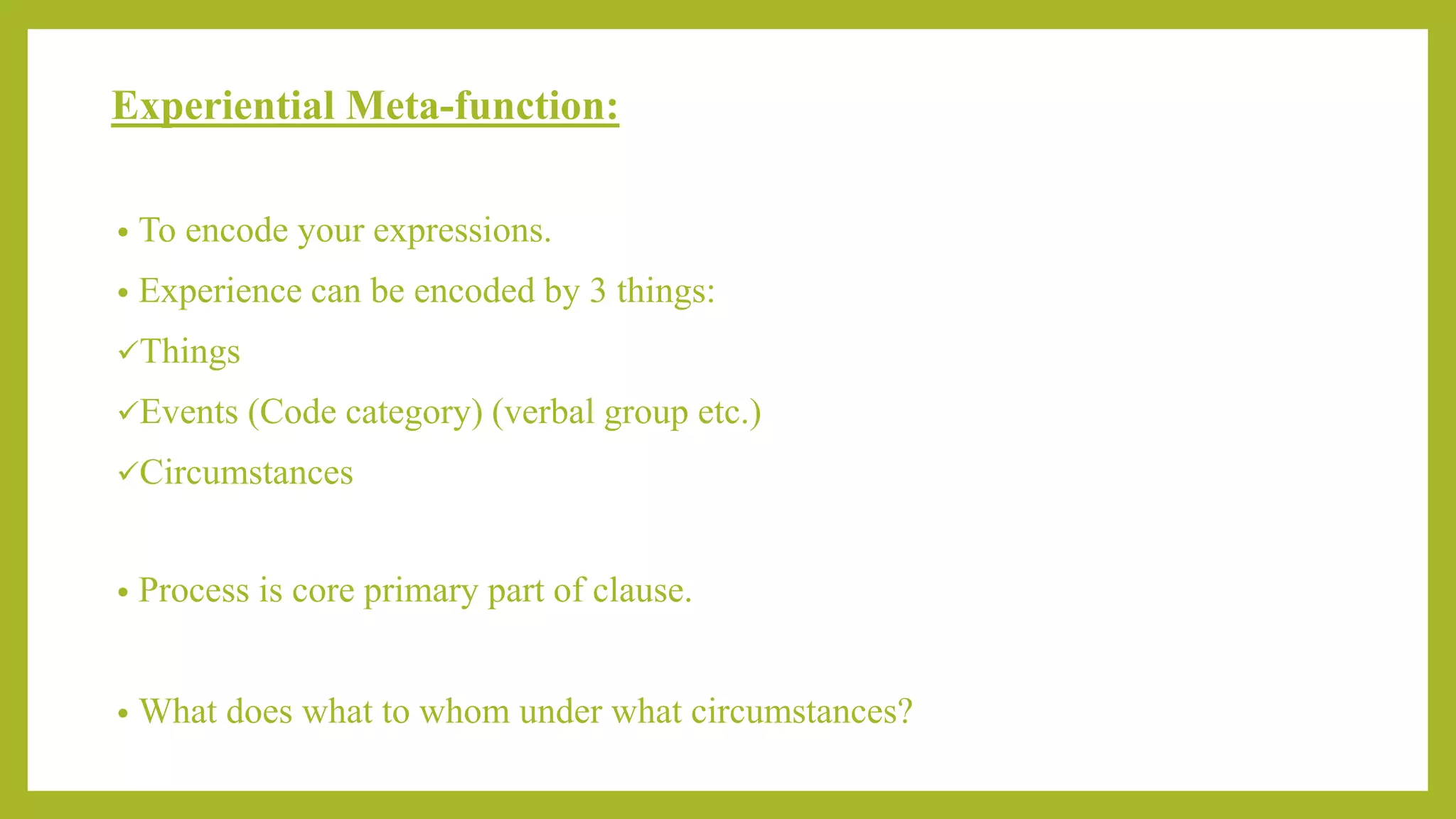
Experiential Meta-function:
• To encode your expressions.
• Experience can be encoded by 3 things:
Things
Events (Code category) (verbal group etc.)
Circumstances
• Process is core primary part of clause.
• What does what to whom under what circumstances?
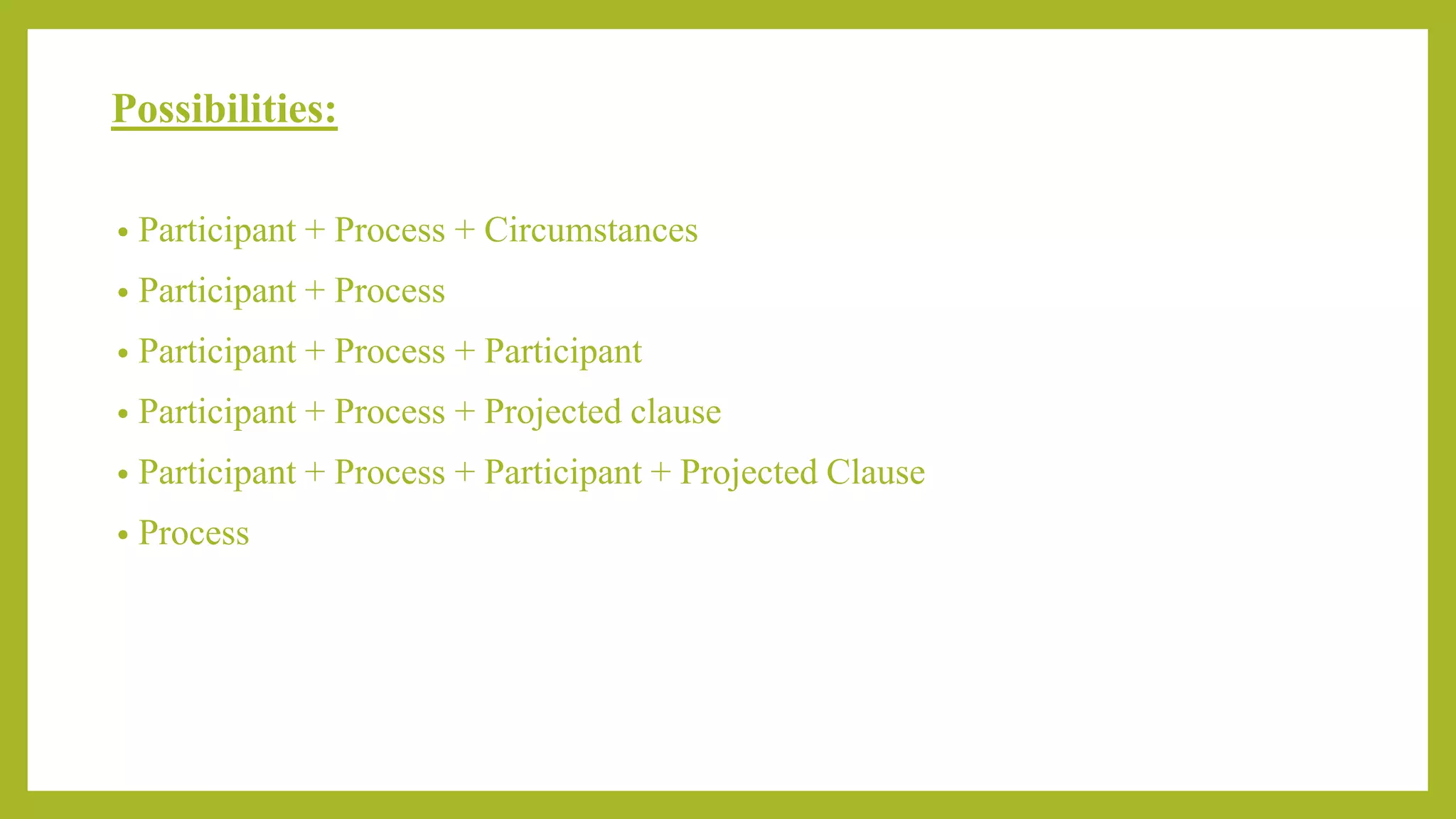
Possibilities:
• Participant + Process + Circumstances
• Participant + Process
• Participant + Process + Participant
• Participant + Process + Projected clause
• Participant + Process + Participant + Projected Clause
• Process
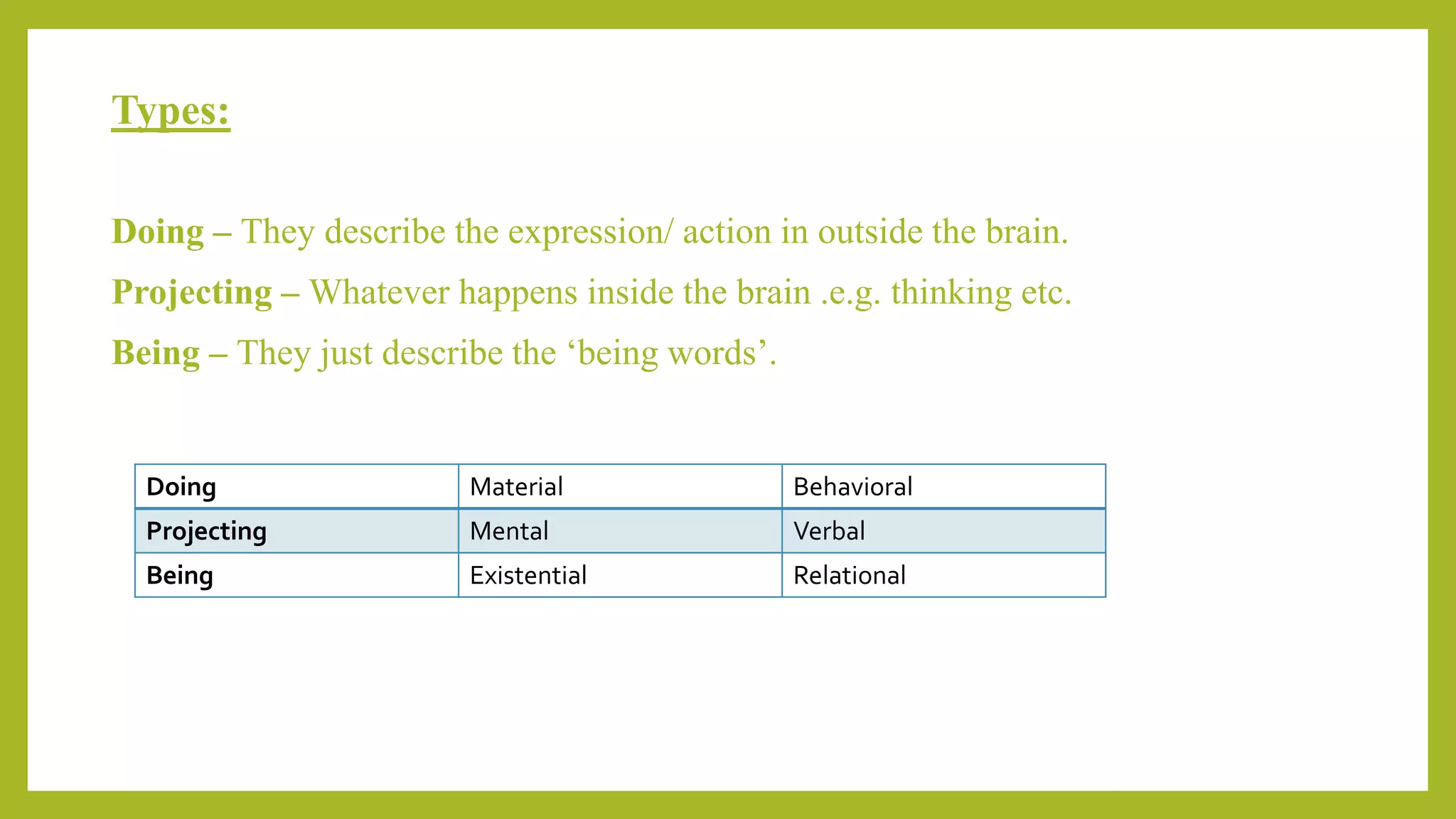
Types:
Doing – They describe the expression/ action in outside the brain.
Projecting – Whatever happens inside the brain .e.g. thinking etc.
Being – They just describe the ‘being words’.
Doing Material Behavioral
Projecting Mental Verbal
Being Existential Relational
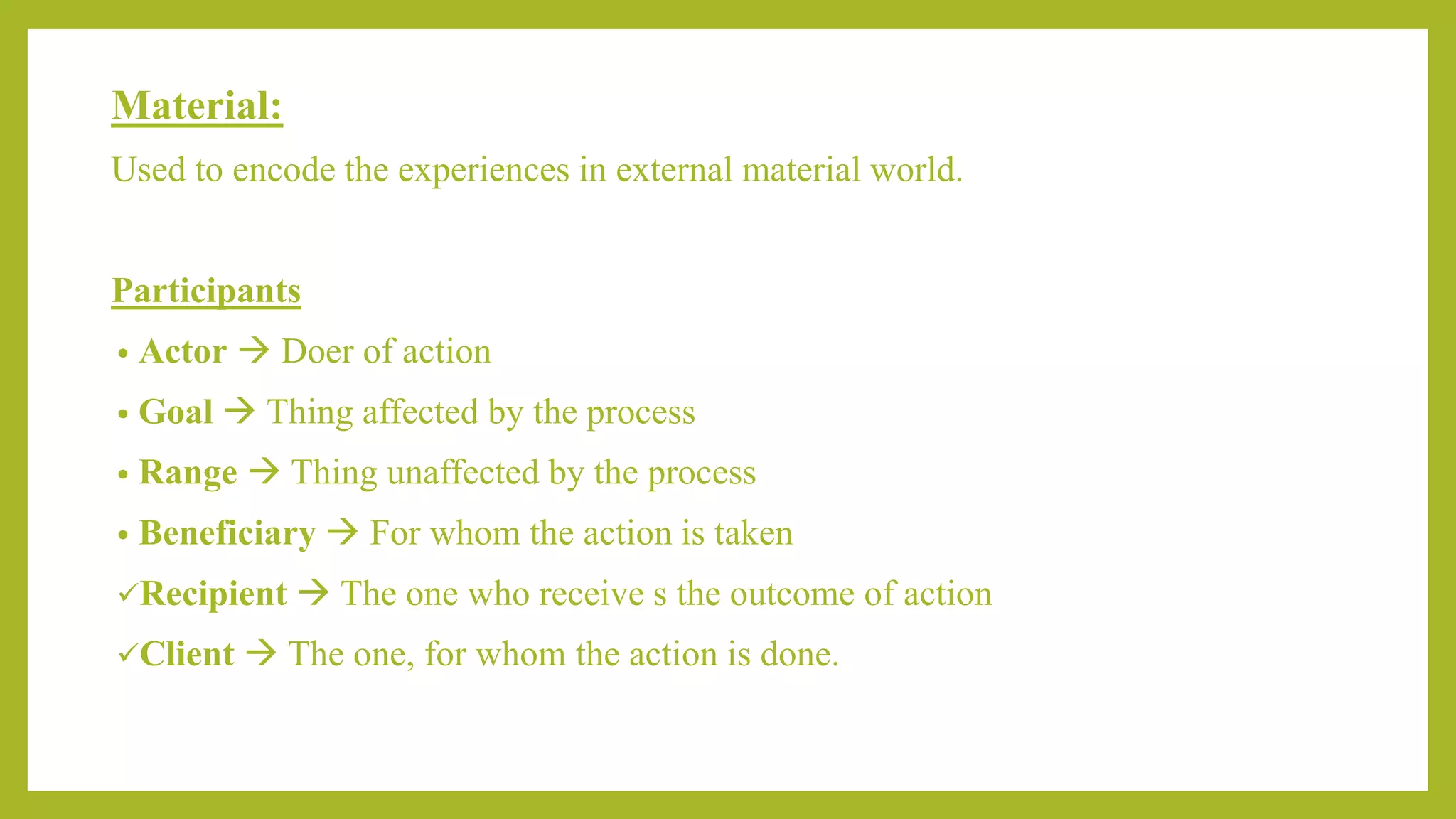
Material:
Used to encode the experiences in external material world.
Participants
• Actor  Doer of action
• Goal  Thing affected by the process
• Range  Thing unaffected by the process
• Beneficiary  For whom the action is taken
Recipient  The one who receive s the outcome of action
Client  The one, for whom the action is done.
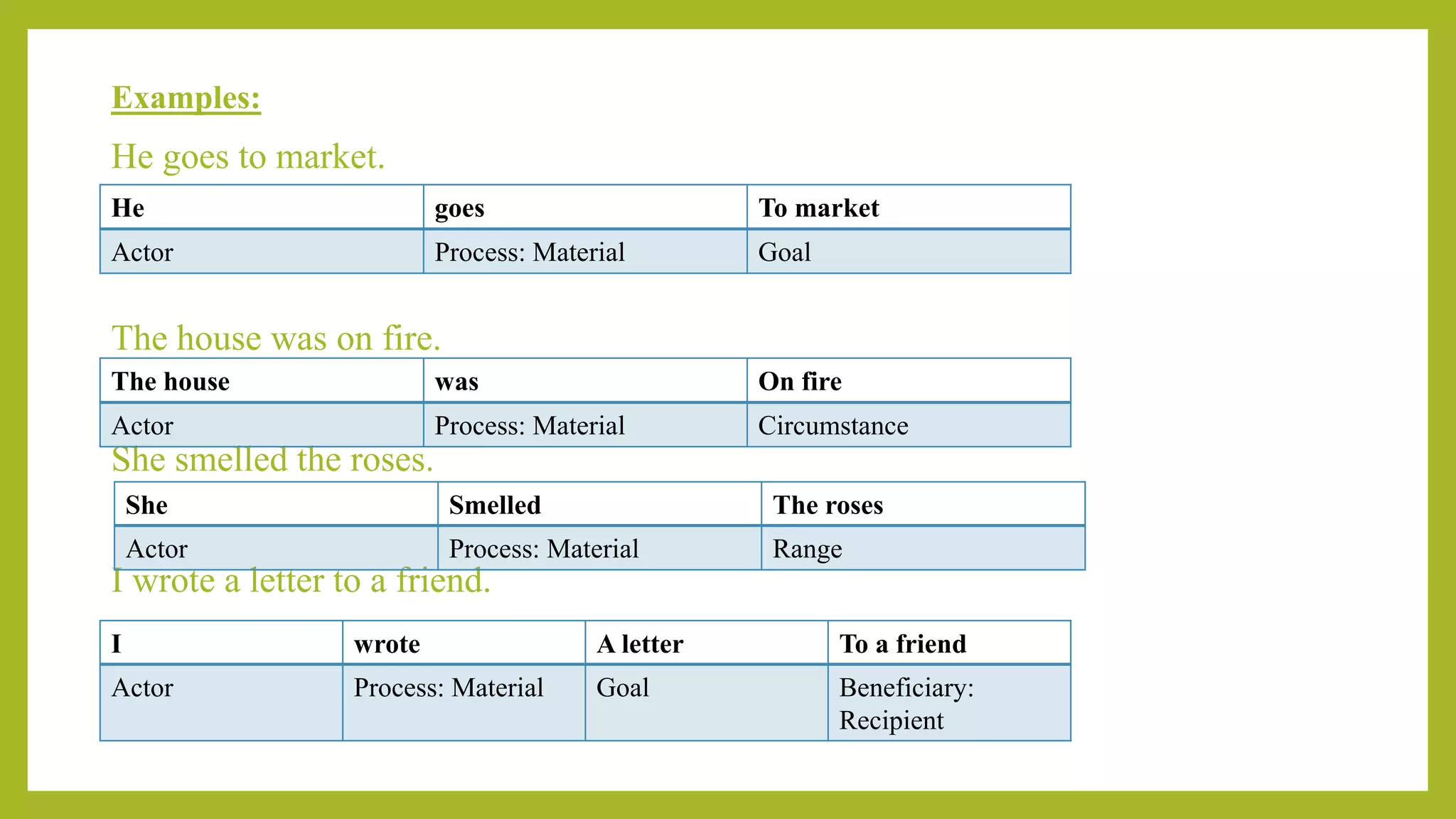
Examples:
He goes to market.
The house was on fire.
She smelled the roses.
I wrote a letter to a friend.
He goes To market
Actor Process: Material Goal
The house was On fire
Actor Process: Material Circumstance
She Smelled The roses
Actor Process: Material Range
I wrote A letter To a friend
Actor Process: Material Goal Beneficiary:
Recipient
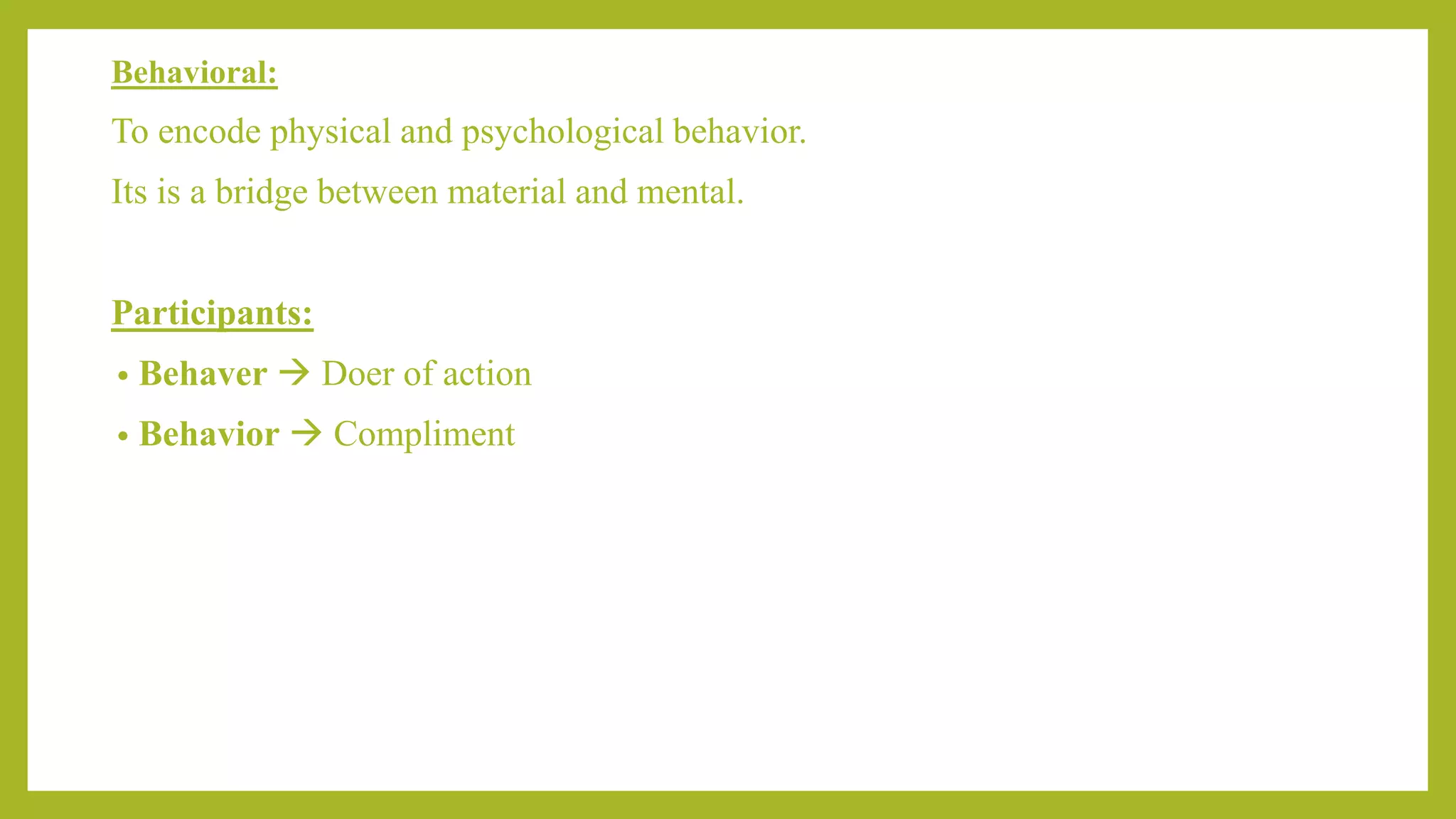
Behavioral:
To encode physical and psychological behavior.
Its is a bridge between material and mental.
Participants:
• Behaver  Doer of action
• Behavior  Compliment
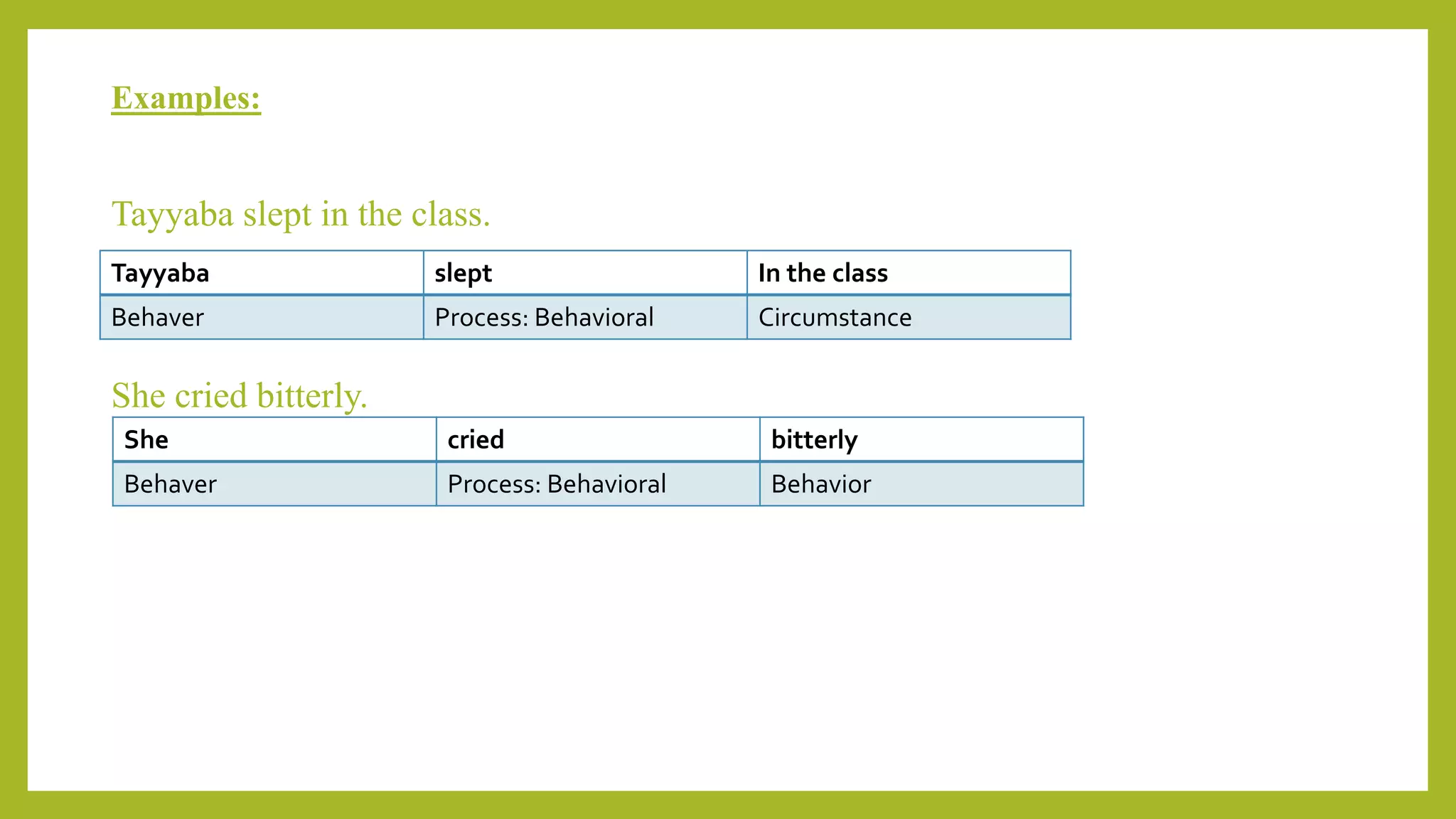
Examples:
Tayyaba slept in the class.
She cried bitterly.
Tayyaba slept In the class
Behaver Process: Behavioral Circumstance
She cried bitterly
Behaver Process: Behavioral Behavior
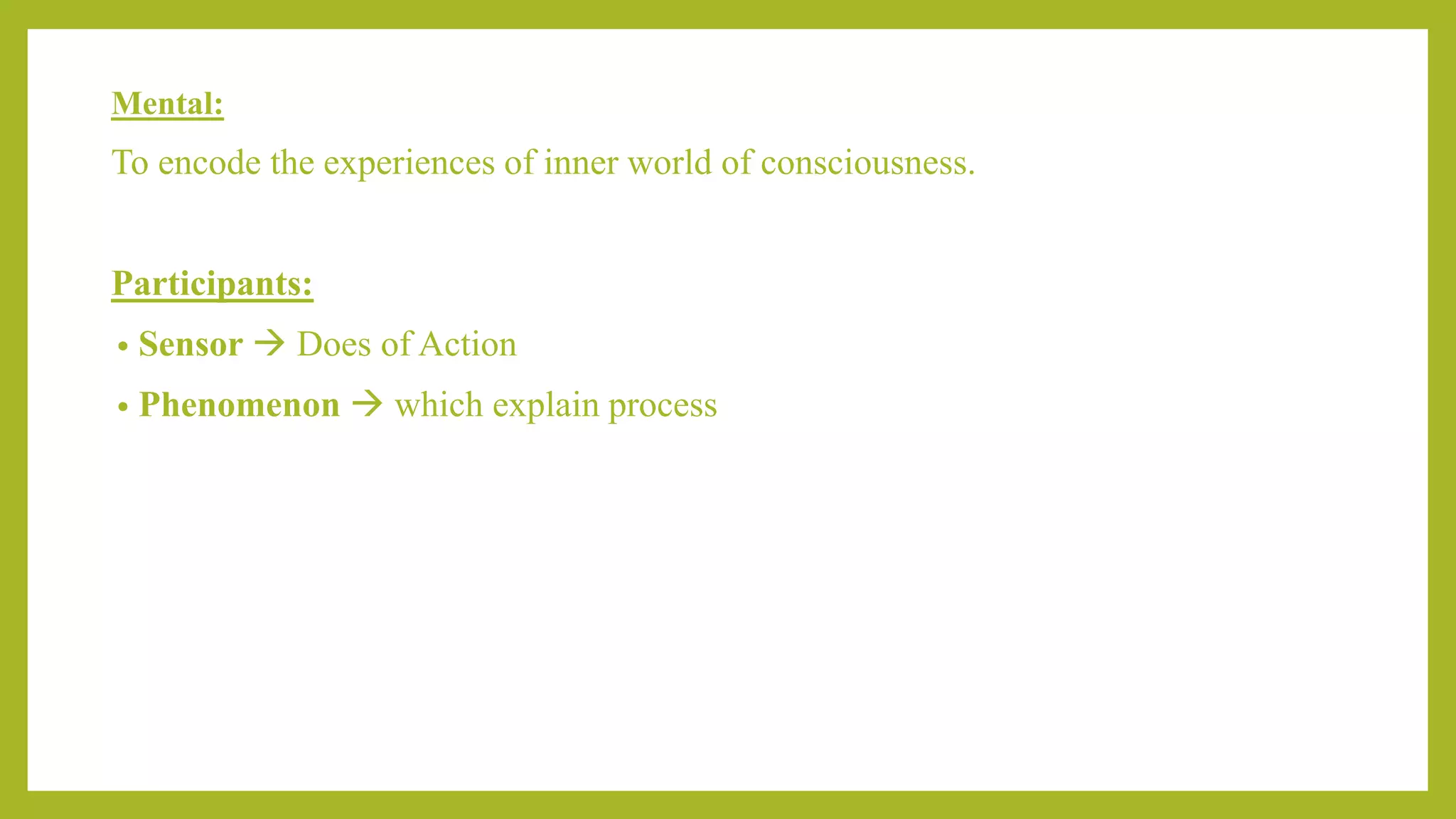
Mental:
To encode the experiences of inner world of consciousness.
Participants:
• Sensor  Does of Action
• Phenomenon  which explain process
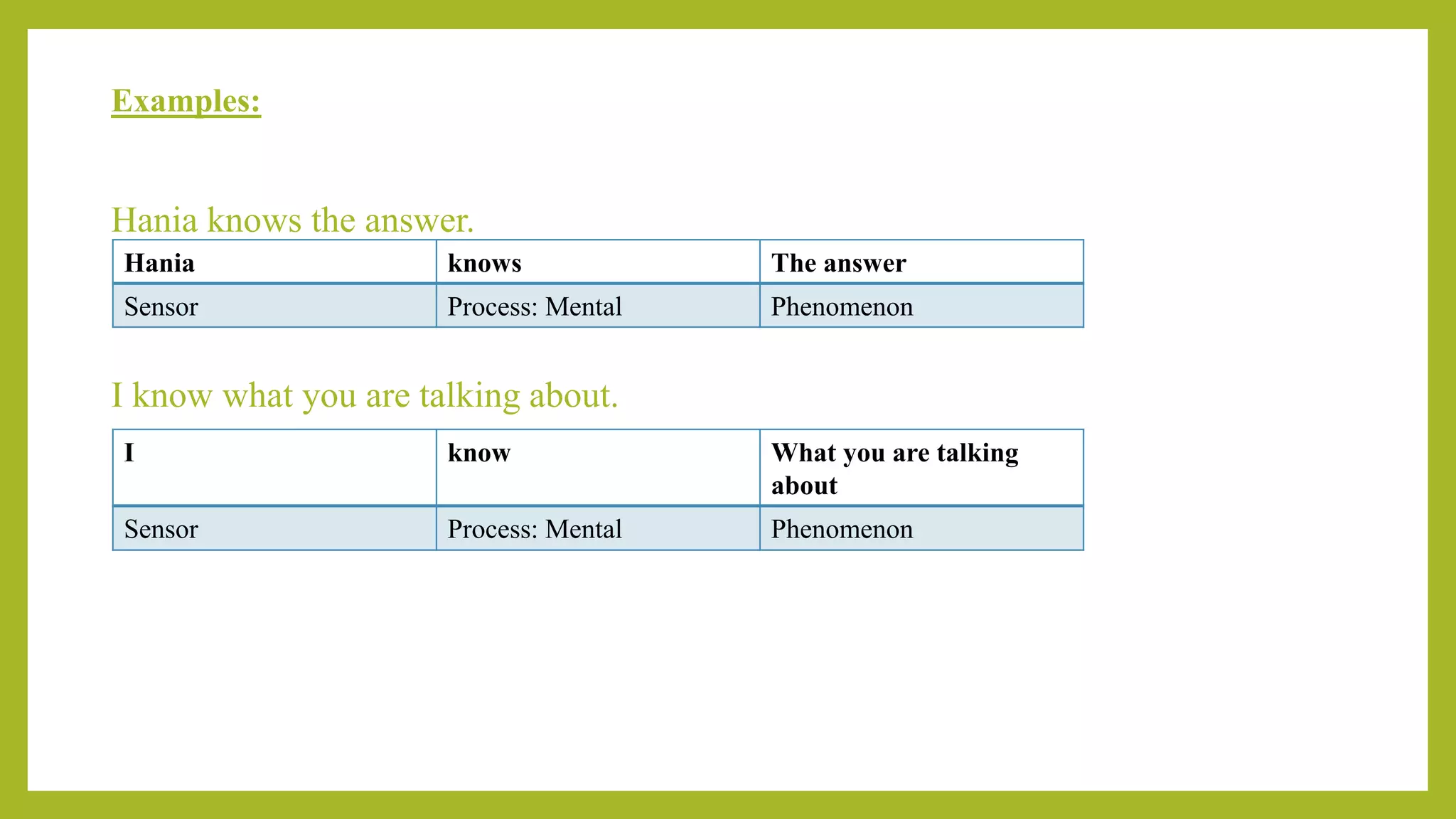
Examples:
Hania knows the answer.
I know what you are talking about.
Hania knows The answer
Sensor Process: Mental Phenomenon
I know What you are talking
about
Sensor Process: Mental Phenomenon
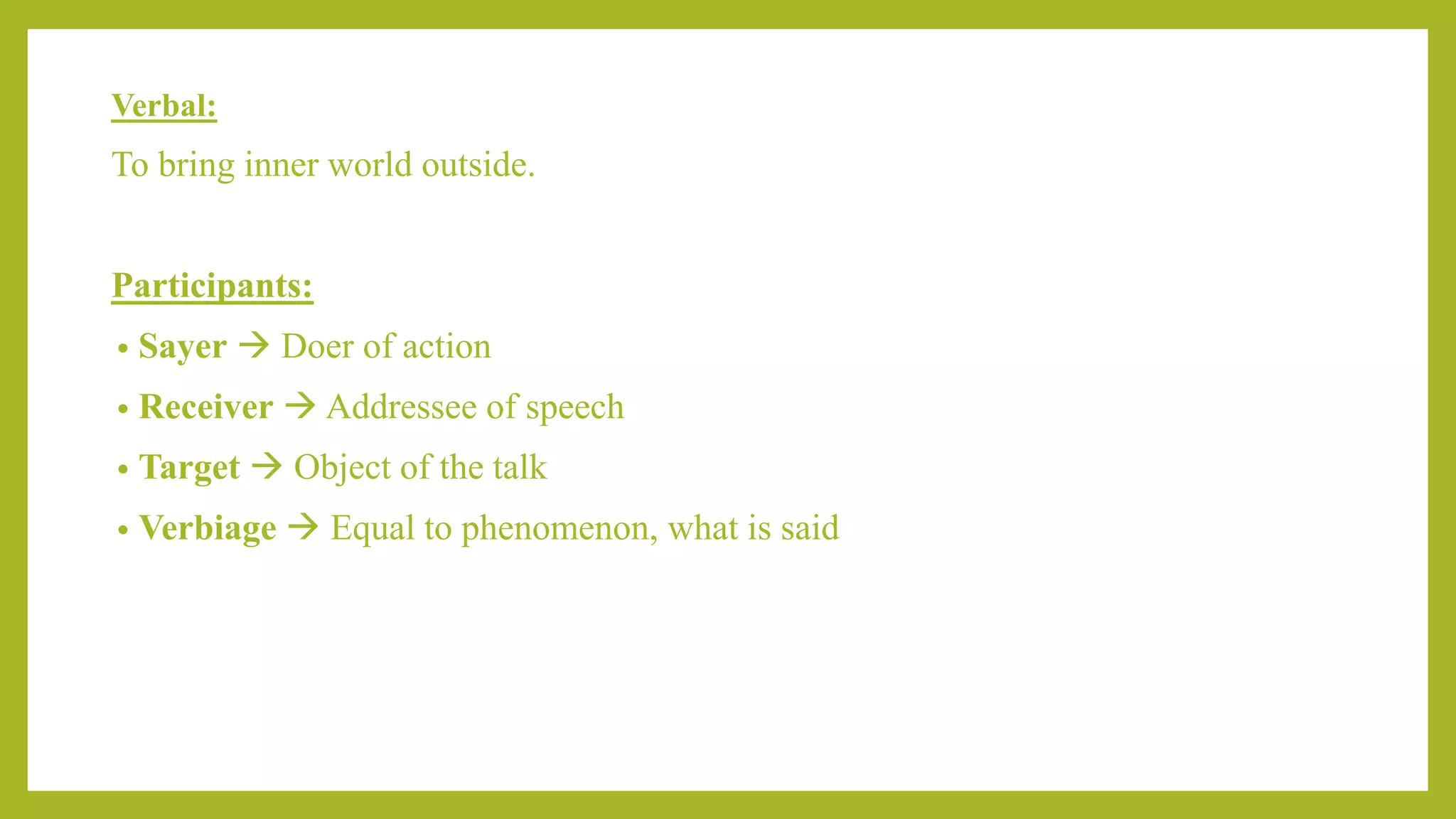
Verbal:
To bring inner world outside.
Participants:
• Sayer  Doer of action
• Receiver  Addressee of speech
• Target  Object of the talk
• Verbiage  Equal to phenomenon, what is said
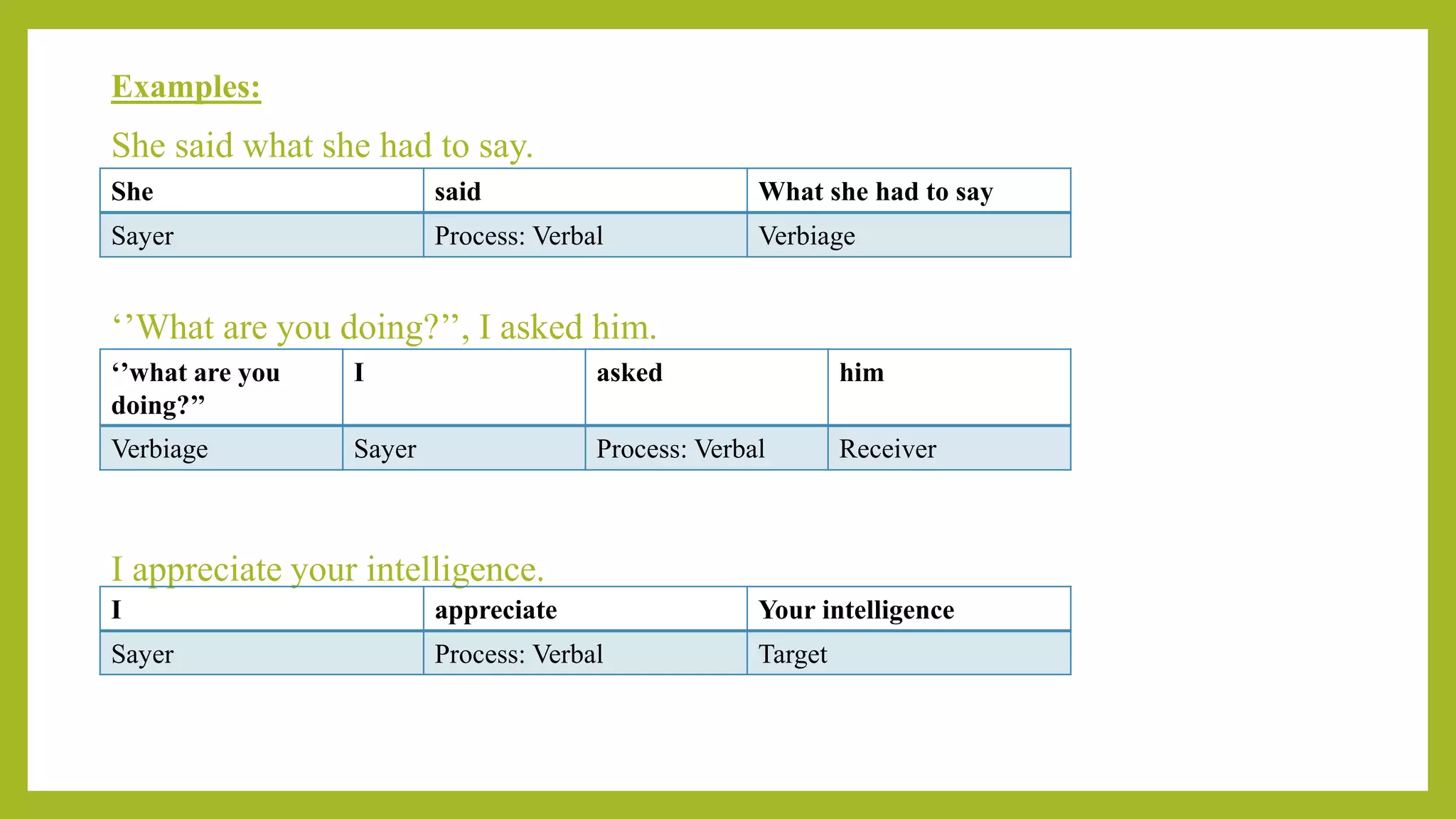
Examples:
She said what she had to say.
‘’What are you doing?’’, I asked him.
I appreciate your intelligence.
She said What she had to say
Sayer Process: Verbal Verbiage
‘’what are you
doing?’’
I asked him
Verbiage Sayer Process: Verbal Receiver
I appreciate Your intelligence
Sayer Process: Verbal Target
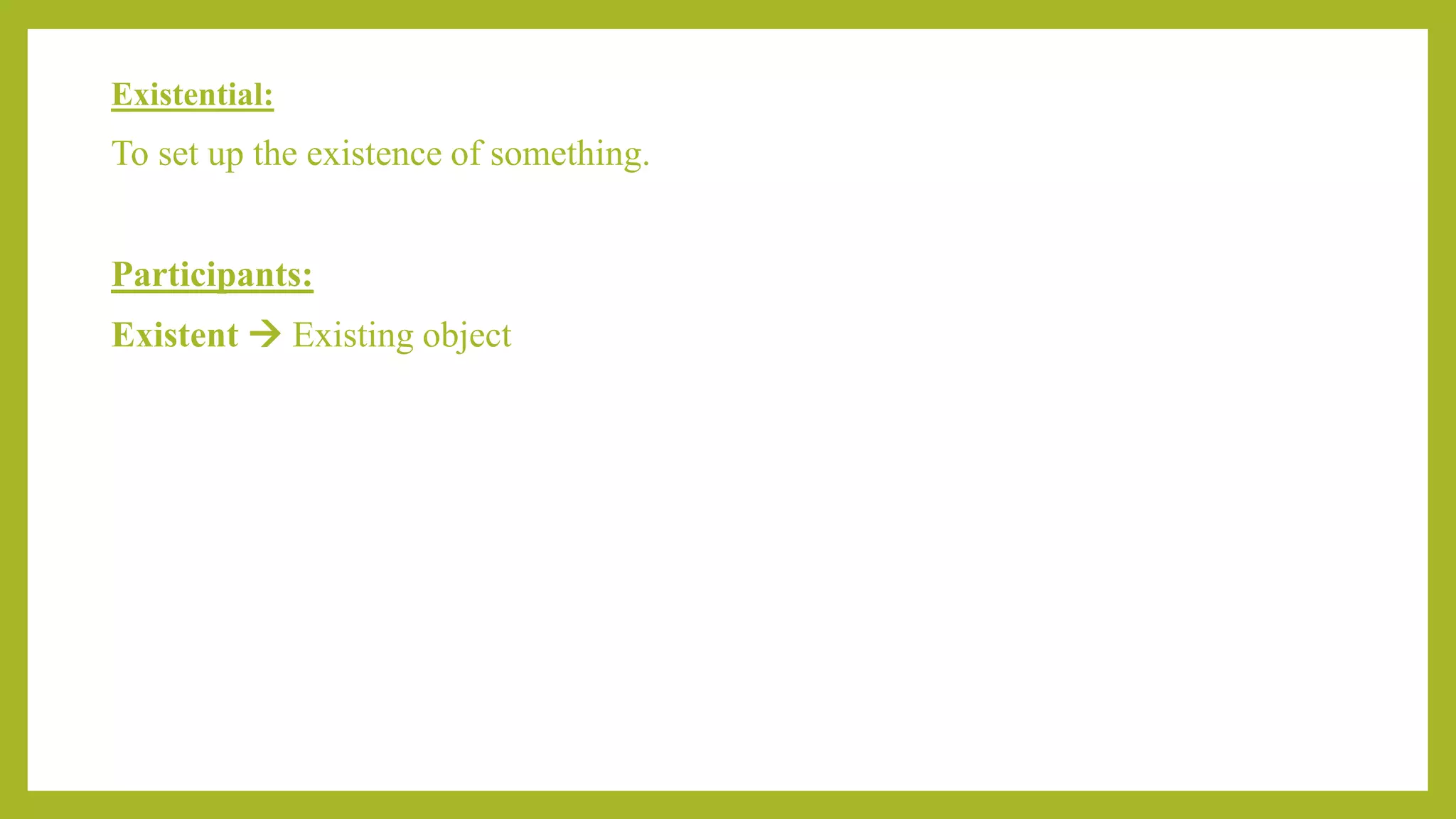
Existential:
To set up the existence of something.
Participants:
Existent  Existing object
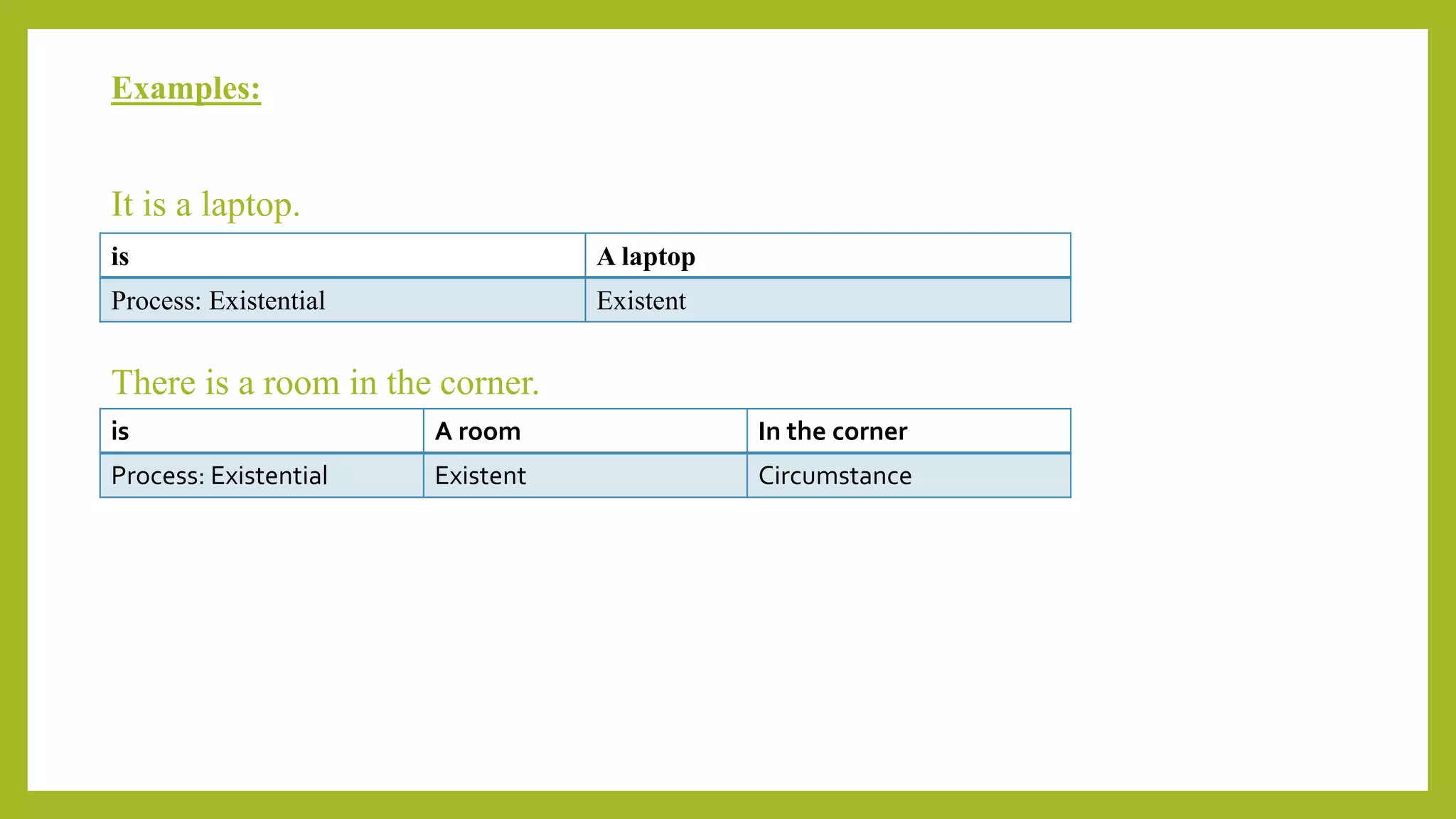
Examples:
It is a laptop.
There is a room in the corner.
is A laptop
Process: Existential Existent
is A room In the corner
Process: Existential Existent Circumstance
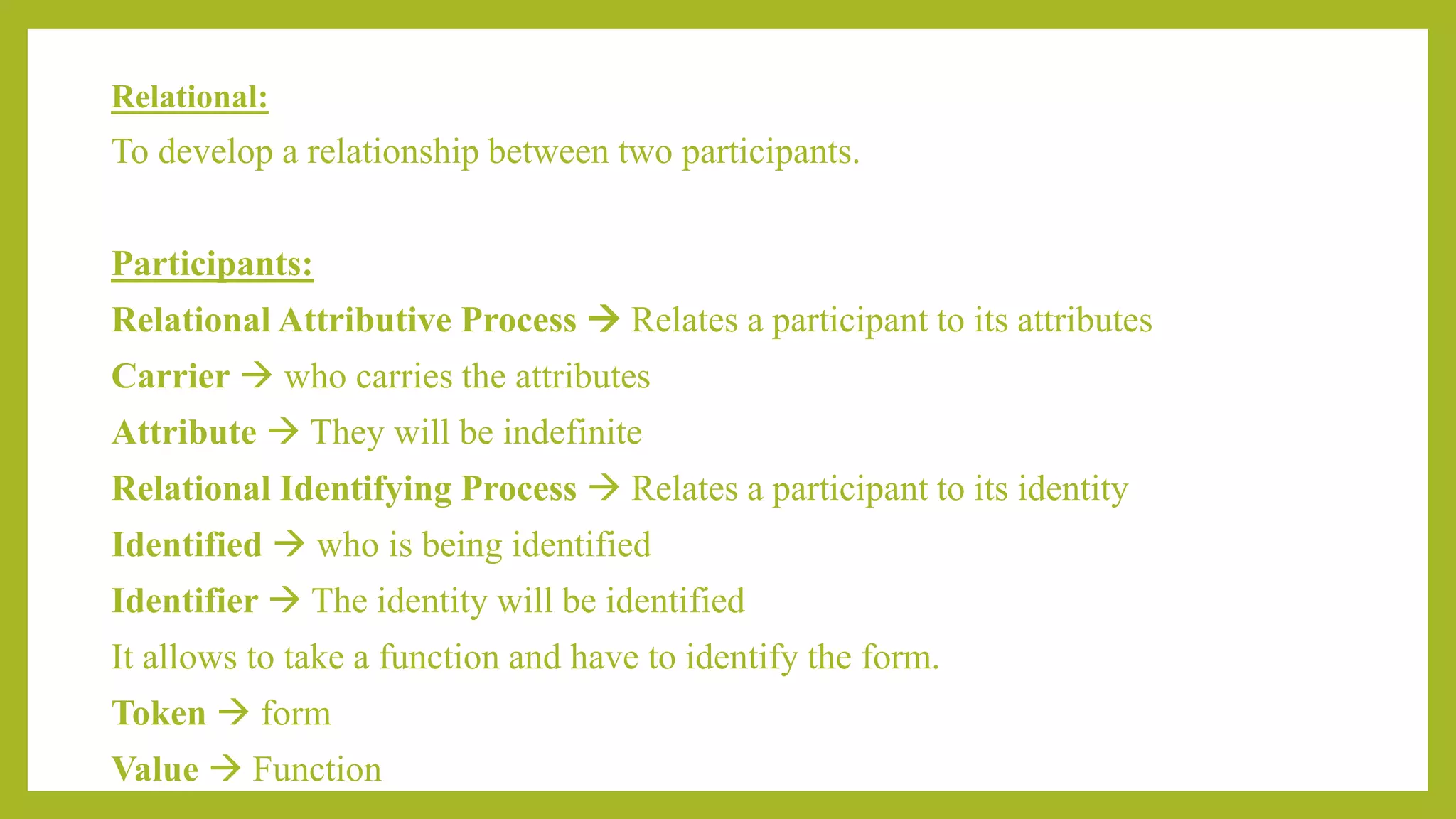
Relational:
To develop a relationship between two participants.
Participants:
Relational Attributive Process  Relates a participant to its attributes
Carrier  who carries the attributes
Attribute  They will be indefinite
Relational Identifying Process  Relates a participant to its identity
Identified  who is being identified
Identifier  The identity will be identified
It allows to take a function and have to identify the form.
Token  form
Value  Function
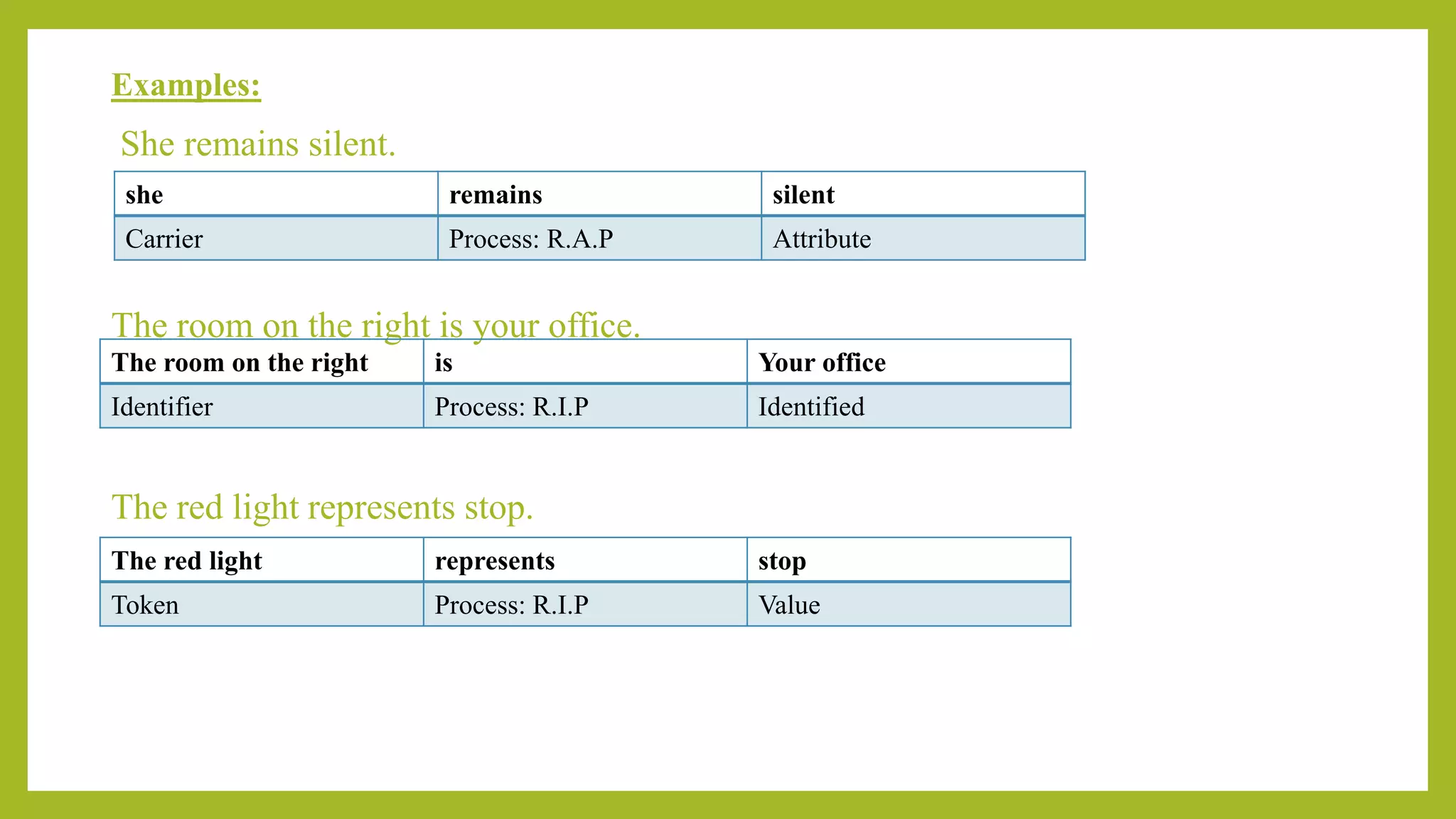
Examples:
She remains silent.
The room on the right is your office.
The red light represents stop.
she remains silent
Carrier Process: R.A.P Attribute
The room on the right is Your office
Identifier Process: R.I.P Identified
The red light represents stop
Token Process: R.I.P Value
Experiential Meta-Function

Experiential Meta-Function

  • 2.
    Experiential Meta-function: • Toencode your expressions. • Experience can be encoded by 3 things: Things Events (Code category) (verbal group etc.) Circumstances • Process is core primary part of clause. • What does what to whom under what circumstances?
  • 3.
    Possibilities: • Participant +Process + Circumstances • Participant + Process • Participant + Process + Participant • Participant + Process + Projected clause • Participant + Process + Participant + Projected Clause • Process
  • 4.
    Types: Doing – Theydescribe the expression/ action in outside the brain. Projecting – Whatever happens inside the brain .e.g. thinking etc. Being – They just describe the ‘being words’. Doing Material Behavioral Projecting Mental Verbal Being Existential Relational
  • 5.
    Material: Used to encodethe experiences in external material world. Participants • Actor  Doer of action • Goal  Thing affected by the process • Range  Thing unaffected by the process • Beneficiary  For whom the action is taken Recipient  The one who receive s the outcome of action Client  The one, for whom the action is done.
  • 6.
    Examples: He goes tomarket. The house was on fire. She smelled the roses. I wrote a letter to a friend. He goes To market Actor Process: Material Goal The house was On fire Actor Process: Material Circumstance She Smelled The roses Actor Process: Material Range I wrote A letter To a friend Actor Process: Material Goal Beneficiary: Recipient
  • 7.
    Behavioral: To encode physicaland psychological behavior. Its is a bridge between material and mental. Participants: • Behaver  Doer of action • Behavior  Compliment
  • 8.
    Examples: Tayyaba slept inthe class. She cried bitterly. Tayyaba slept In the class Behaver Process: Behavioral Circumstance She cried bitterly Behaver Process: Behavioral Behavior
  • 9.
    Mental: To encode theexperiences of inner world of consciousness. Participants: • Sensor  Does of Action • Phenomenon  which explain process
  • 10.
    Examples: Hania knows theanswer. I know what you are talking about. Hania knows The answer Sensor Process: Mental Phenomenon I know What you are talking about Sensor Process: Mental Phenomenon
  • 11.
    Verbal: To bring innerworld outside. Participants: • Sayer  Doer of action • Receiver  Addressee of speech • Target  Object of the talk • Verbiage  Equal to phenomenon, what is said
  • 12.
    Examples: She said whatshe had to say. ‘’What are you doing?’’, I asked him. I appreciate your intelligence. She said What she had to say Sayer Process: Verbal Verbiage ‘’what are you doing?’’ I asked him Verbiage Sayer Process: Verbal Receiver I appreciate Your intelligence Sayer Process: Verbal Target
  • 13.
    Existential: To set upthe existence of something. Participants: Existent  Existing object
  • 14.
    Examples: It is alaptop. There is a room in the corner. is A laptop Process: Existential Existent is A room In the corner Process: Existential Existent Circumstance
  • 15.
    Relational: To develop arelationship between two participants. Participants: Relational Attributive Process  Relates a participant to its attributes Carrier  who carries the attributes Attribute  They will be indefinite Relational Identifying Process  Relates a participant to its identity Identified  who is being identified Identifier  The identity will be identified It allows to take a function and have to identify the form. Token  form Value  Function
  • 16.
    Examples: She remains silent. Theroom on the right is your office. The red light represents stop. she remains silent Carrier Process: R.A.P Attribute The room on the right is Your office Identifier Process: R.I.P Identified The red light represents stop Token Process: R.I.P Value