RESPIRATORY
EMERGENCIES
DR SOURAB HIREMATH
MD INTERNAL MEDICINE
EMERGENCY MEDICINE
PRE TEST QUESTIONS
• Pulsus paradoxus is seen in mild asthma
• Silent chest in asthma is a good prognostic sign
• Unlike short examination of CVS in MI in exacerbation of COPD and Asthma a
detailed respiratory examination with chest measurements is a must
• Raised CO2 levels in COPD is more dangerous and life threatening than in
Asthma
• MGSO4 is a very crucial drug in treatment of COPD
• NIV when used early in severe exacerbation OF COPD IS LIFE SAVING
• Avoid injectable steroids in Severe Asthma
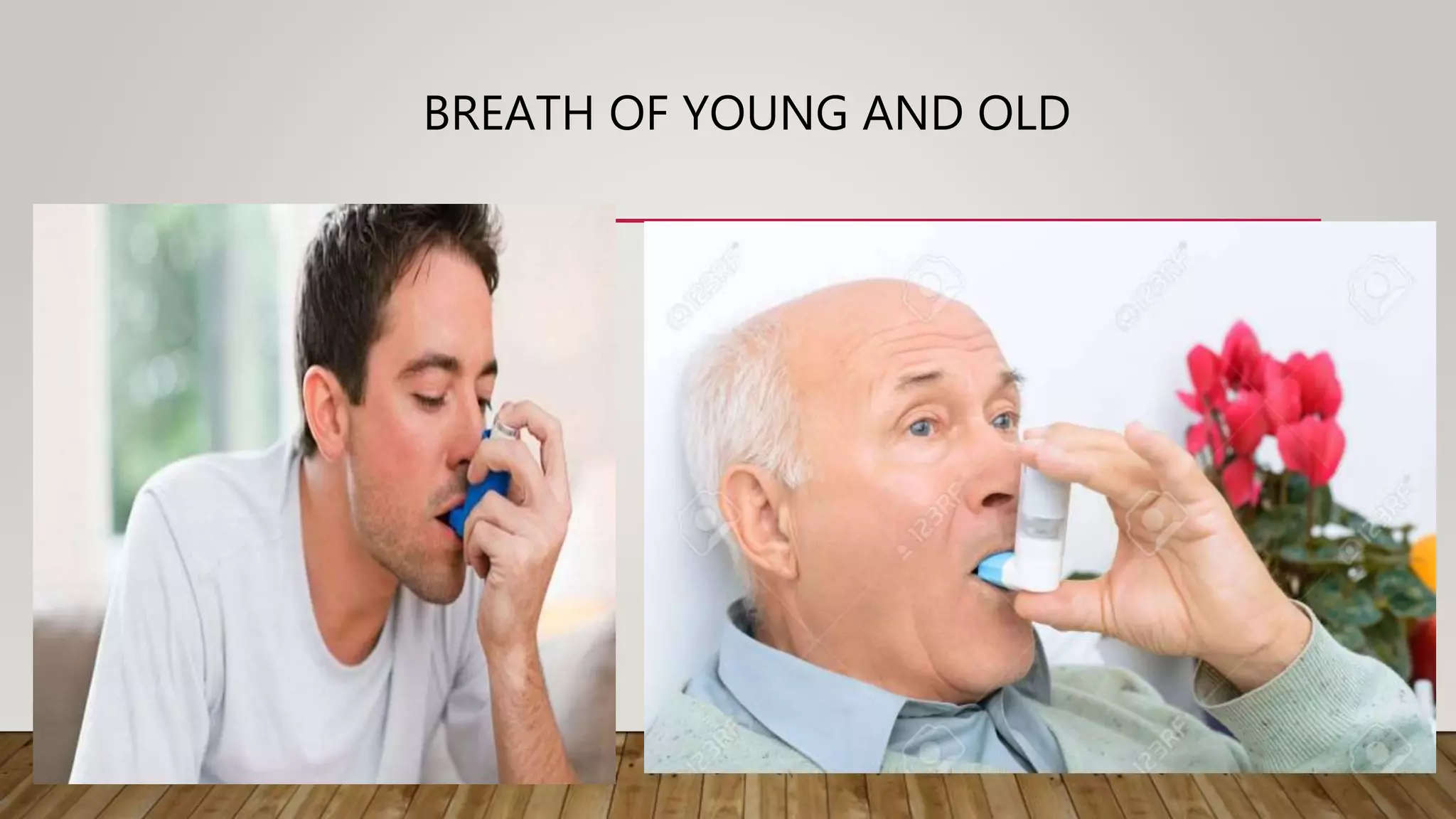
BREATH OF YOUNG AND OLD
CASE 1 CASE 2
64 year old male
c/o dypnea since 1 hour with severe chest tightness
Dyspnea associated with cough and increased mucoid
expectoration
h/o running nose since 3 days with fever
h/o excessive daily early morning cough and attempts
to clear secretions
Past history : repeated breathing difficulty with
previous hospitalisation six months back
Family : Nothing contributory
Personal : smoker since 40 years around one pack per
day
26 year old man
c/o acute onset of dyspnea since 1 hour with
severe chest tightness
Dyspnea was initially associated with wheeze but
now wheeze has disappeared
h/o running nose since 3 days with fever
History is provided by the bystander as the
patient is unable to complete sentences
Past history : repeated breathing difficulty with
one previous hospitalisation a year back
Family : H/o eczema present
Personal : No addictions non smoker
CASE 1 CASE 2
• Patient is restless and unable to lie down supine
in bed
• PR : 108/min
• BP: 120/80 mm of hg
• RR : 38/min
• SPO2 : 86%
• Patient is calm and drowsy
• PR : 112/min
• BP : 104/60 mm hg
• RR : 10 /min
• Spo2: 88 %
AUSCULTATION
Case 1
No sound from chest
Case 2
DIAGNOSIS
Case 1
Acute severe Asthma
(Status Asthmaticus)
Case 2
Acute severe Exacerbation of COPD
ACUTE EXACERBATION OF ASTHMA
GINA definition
"Asthma is a heterogeneous disease, usually characterized
by chronic airway inflammation. It is defined by the history
of respiratory symptoms such as wheeze, shortness of
breath, chest tightness, and cough that vary over time and
in intensity, together with variable expiratory airflow
limitation."
ASTHMA EXACERBATION
Pulmonary
Cardiac
Respiratory Muscle
Systemic
Clinical Features
LEVELS OF SEVERITY OF ACUTE ASTHMA
EXACERBATIONS
• MODERATE ASTHMA EXACERBATION
• ACUTE SEVERE ASTHMA
• LIFE THREATENING ASTHMA
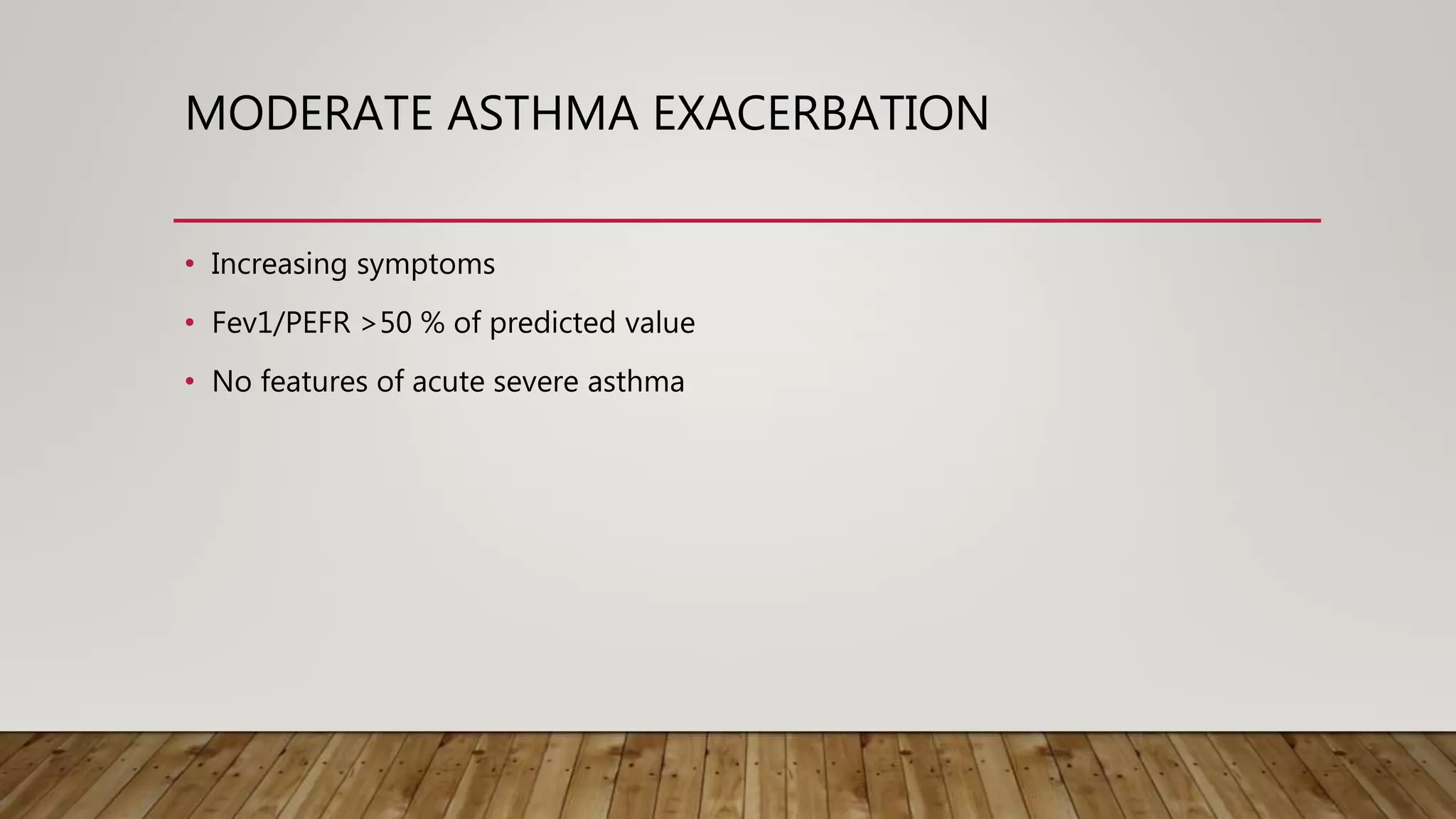
MODERATE ASTHMA EXACERBATION
• Increasing symptoms
• Fev1/PEFR >50 % of predicted value
• No features of acute severe asthma
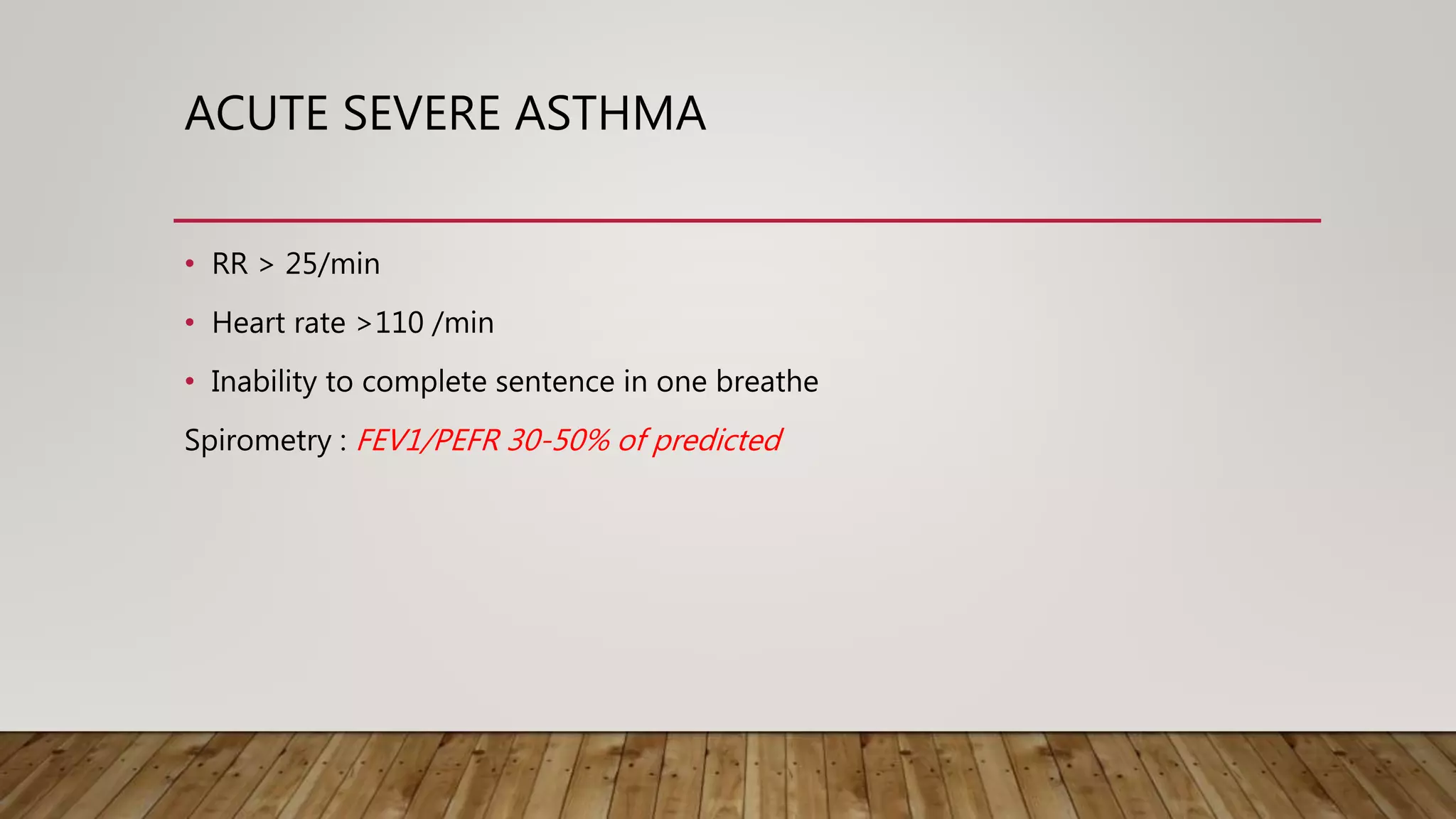
ACUTE SEVERE ASTHMA
• RR > 25/min
• Heart rate >110 /min
• Inability to complete sentence in one breathe
Spirometry : FEV1/PEFR 30-50% of predicted
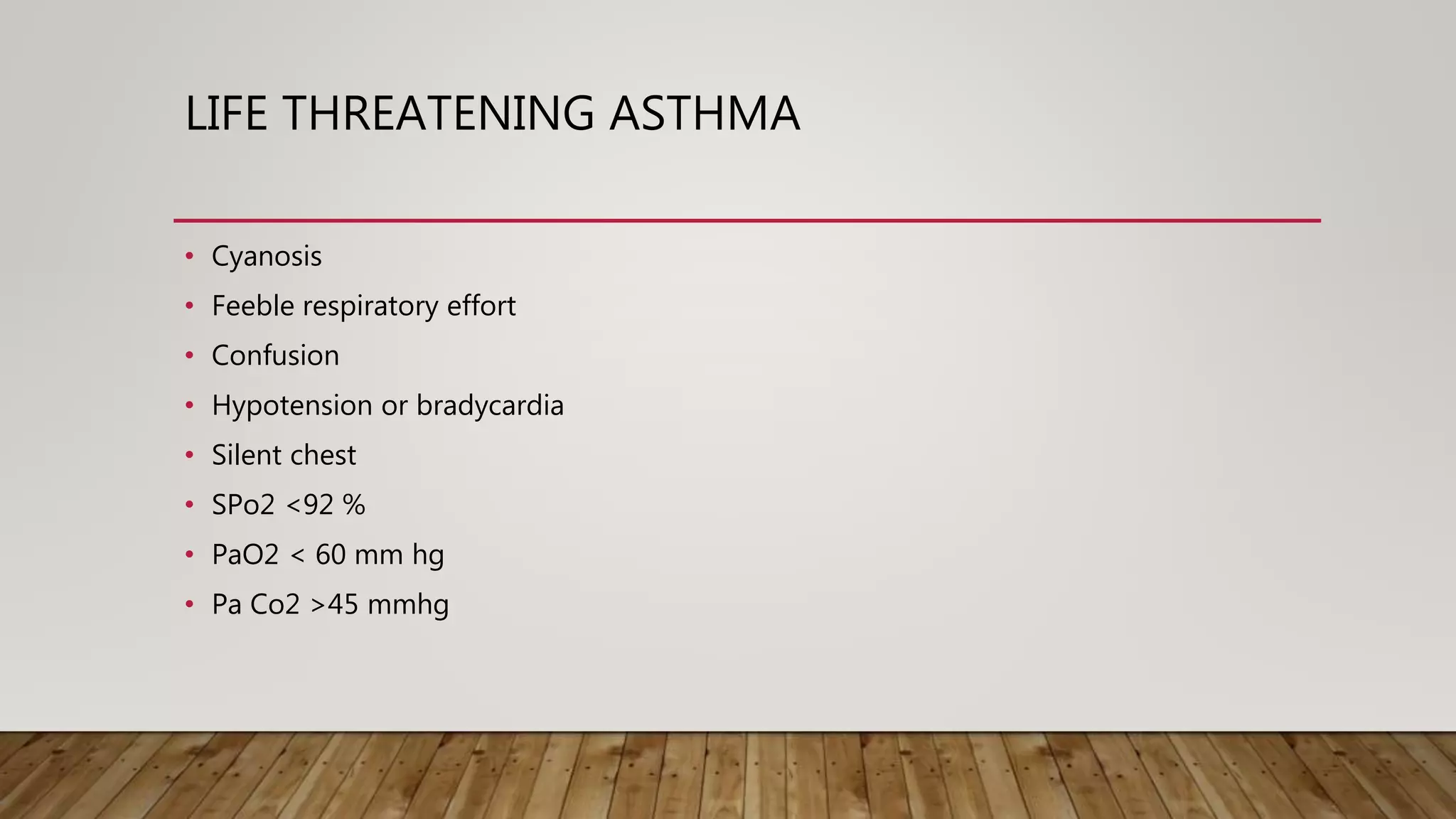
LIFE THREATENING ASTHMA
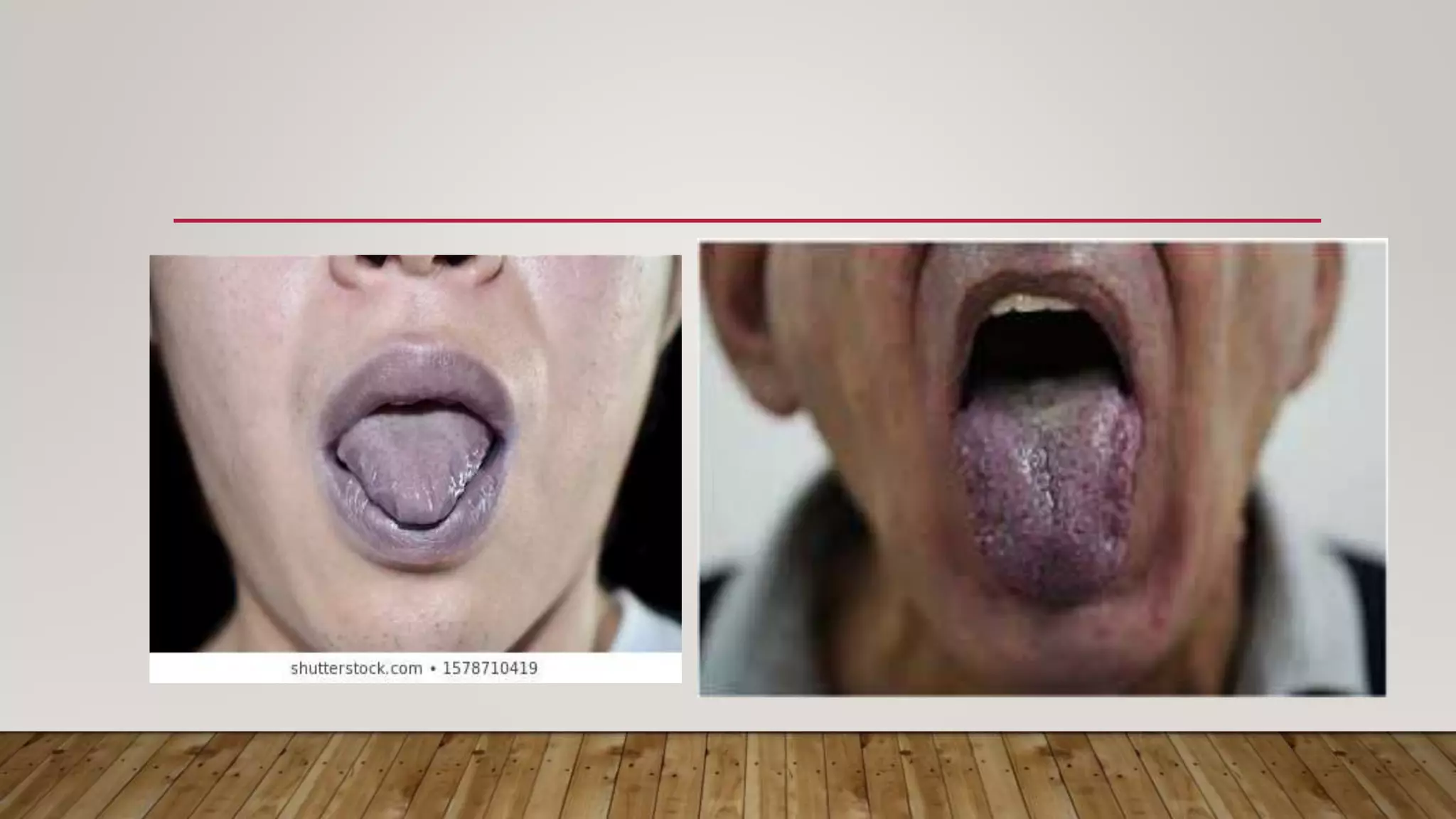
• Cyanosis
• Feeble respiratory effort
• Confusion
• Hypotension or bradycardia
• Silent chest
• SPo2 <92 %
• PaO2 < 60 mm hg
• Pa Co2 >45 mmhg
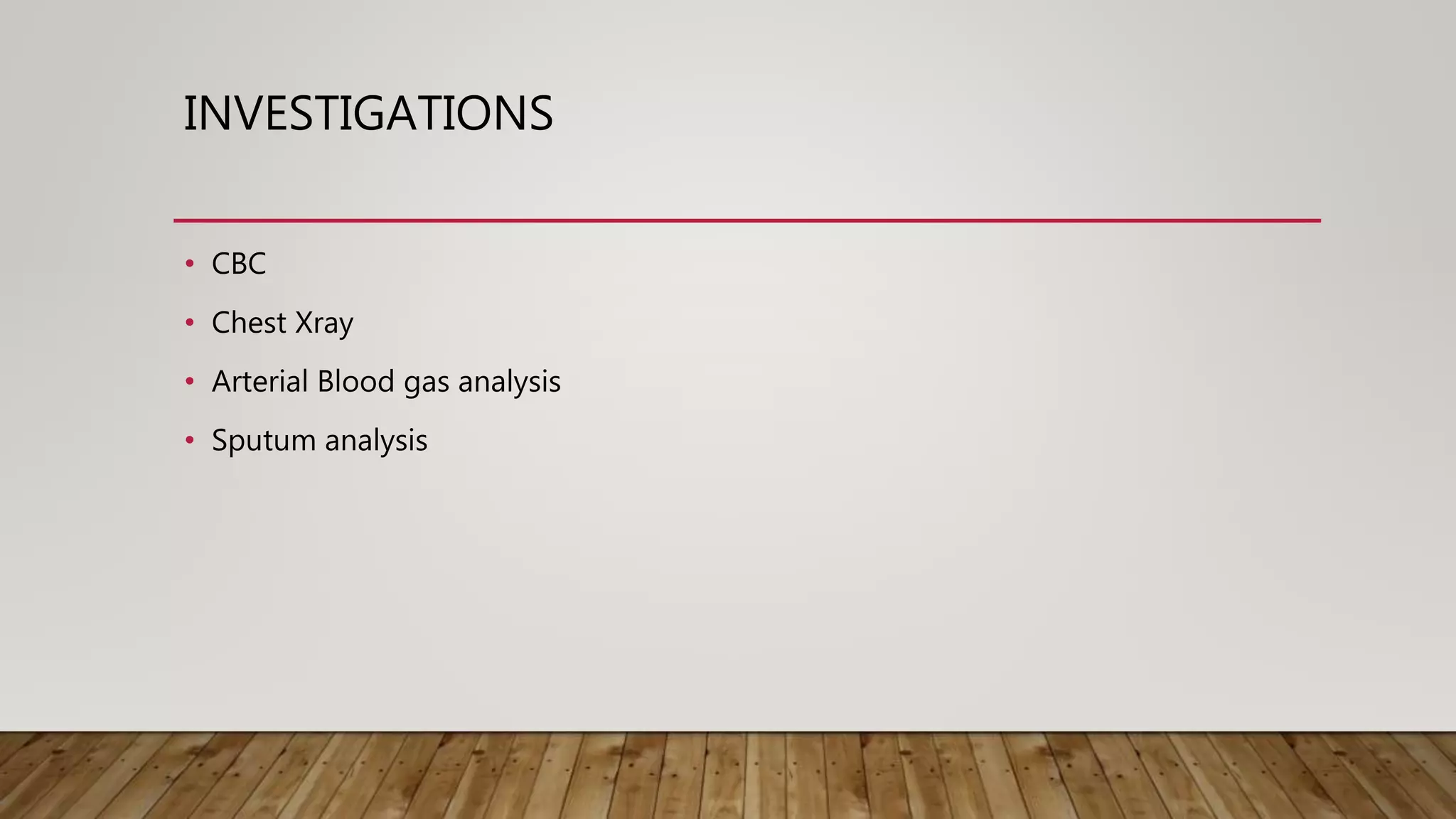
INVESTIGATIONS
• CBC
• Chest Xray
• Arterial Blood gas analysis
• Sputum analysis
MANAGEMENT
ABC
Oxygen to maintain SPo2 > 92 %
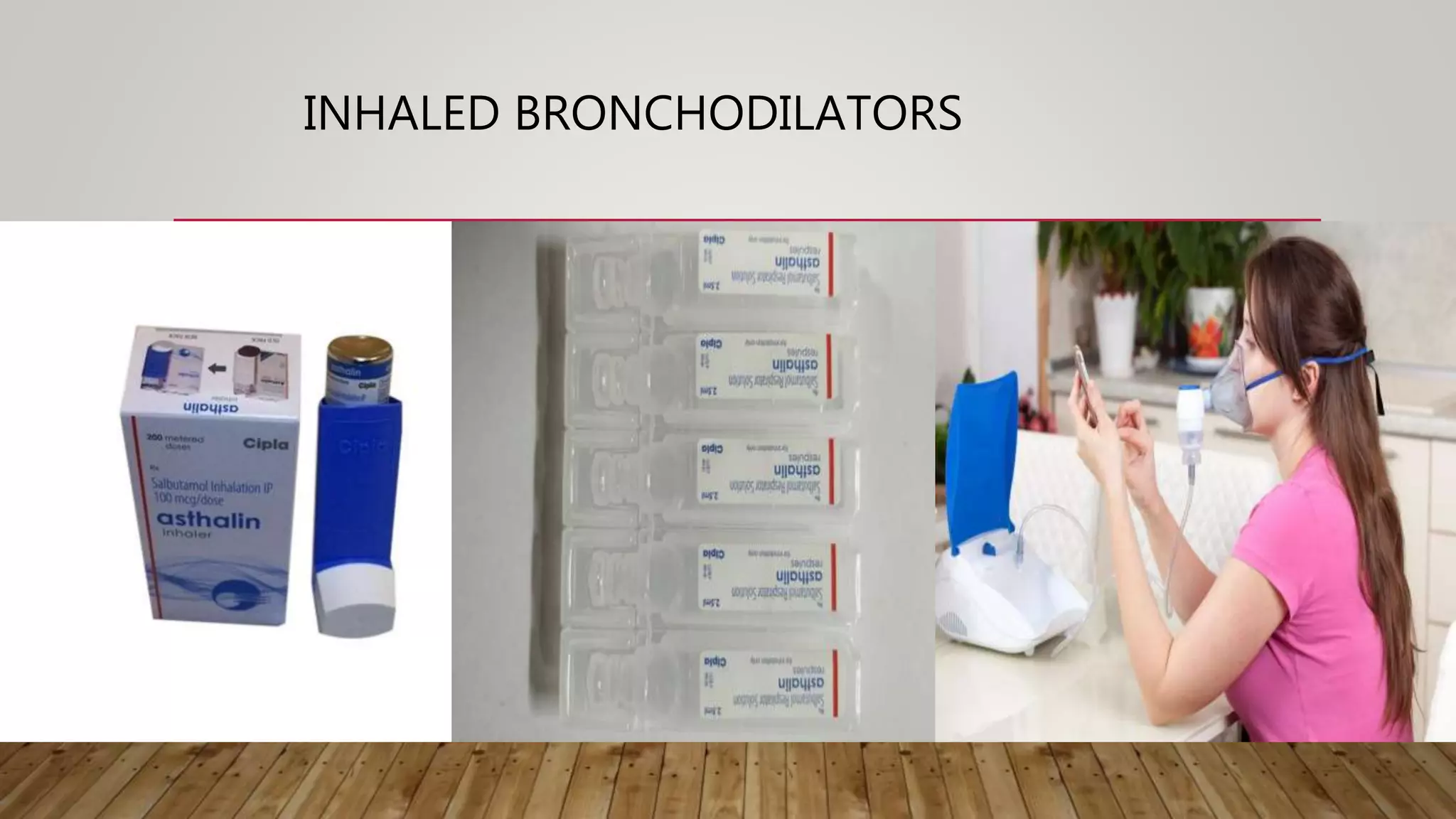
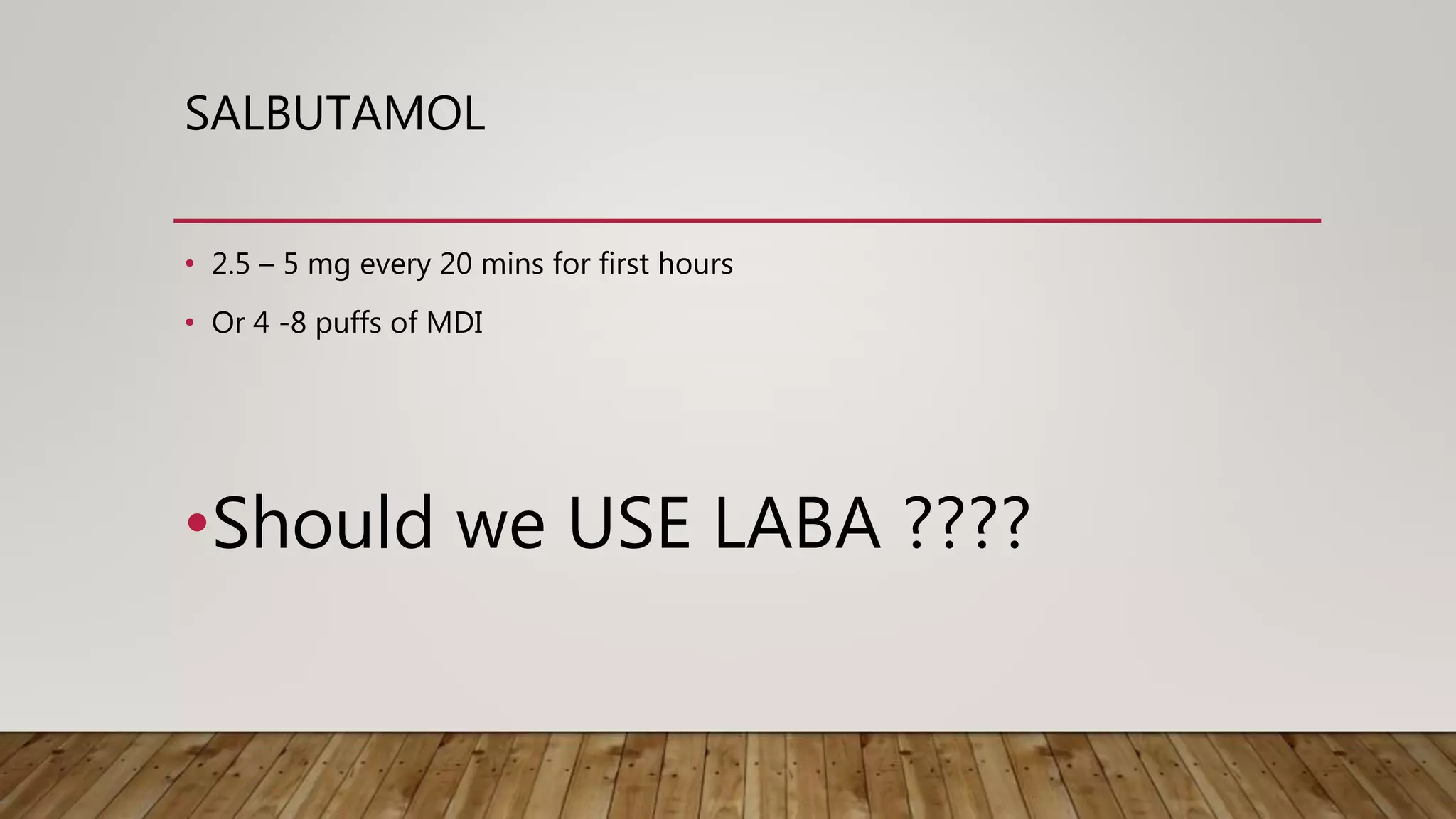
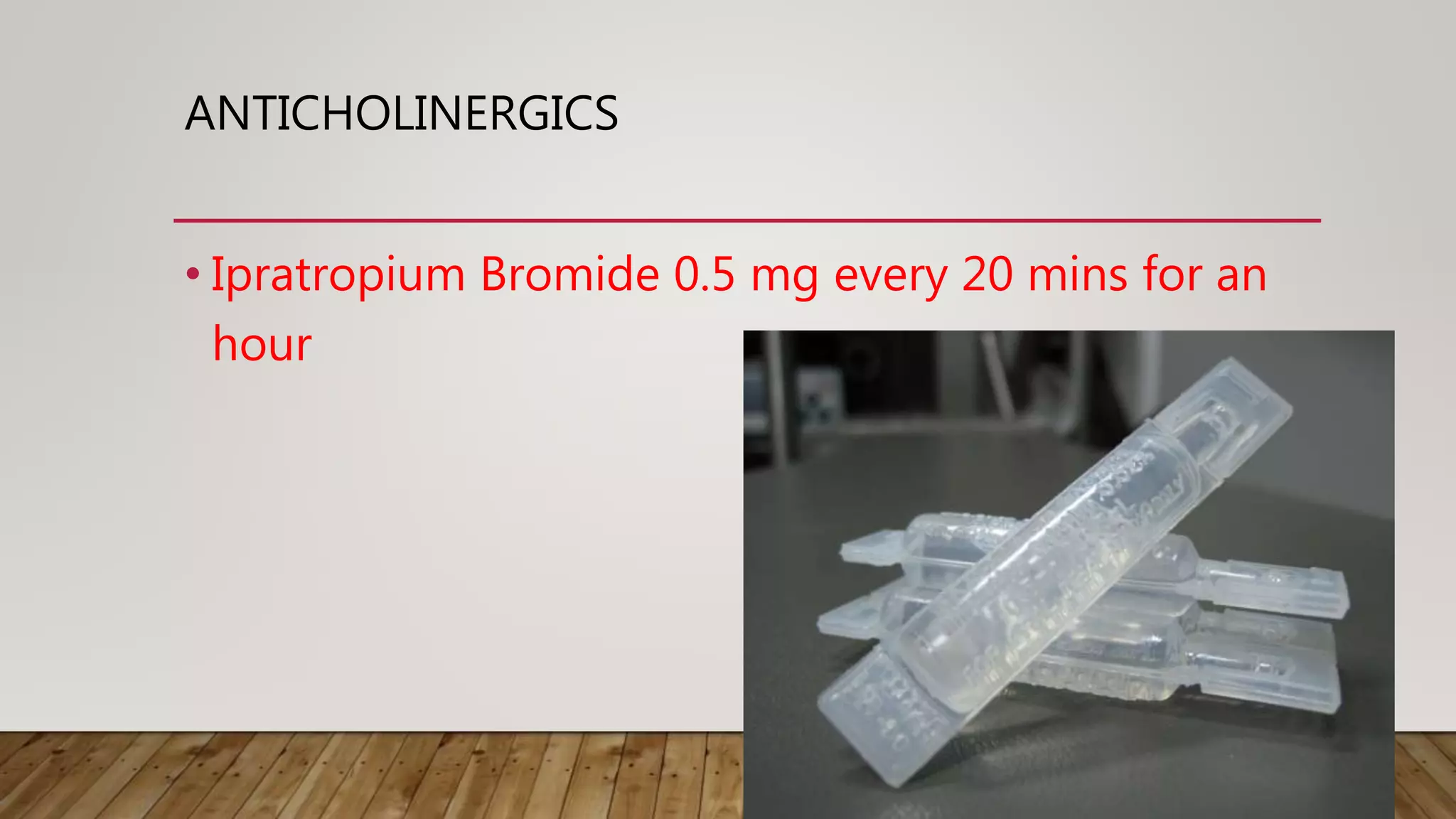
INHALED BRONCHODILATORS
SALBUTAMOL
• 2.5 – 5 mg every 20 mins for first hours
• Or 4 -8 puffs of MDI
•Should we USE LABA ????
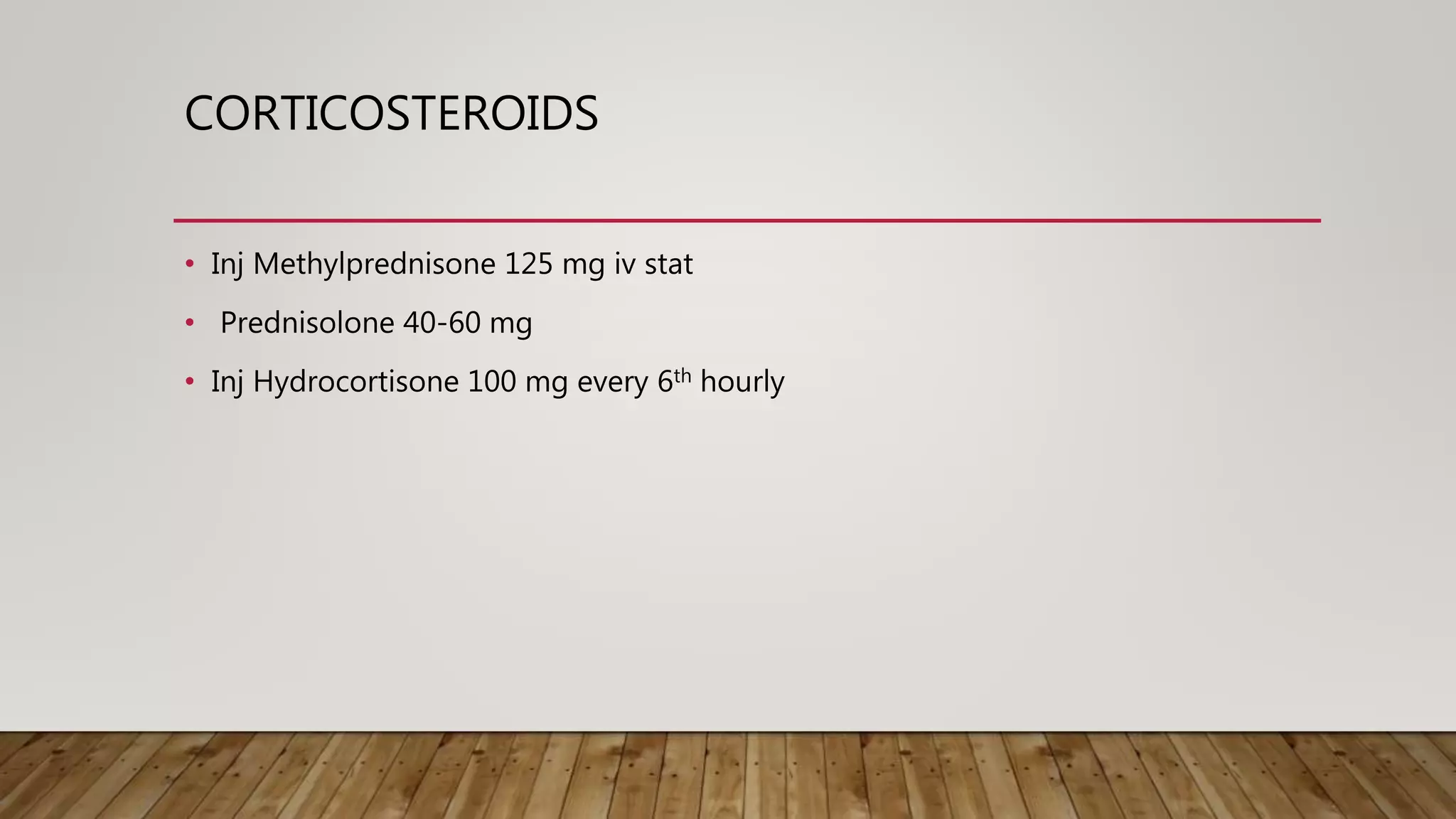
ANTICHOLINERGICS
• Ipratropium Bromide 0.5 mg every 20 mins for an
hour
CORTICOSTEROIDS
• Inj Methylprednisone 125 mg iv stat
• Prednisolone 40-60 mg
• Inj Hydrocortisone 100 mg every 6th hourly
IF NO IMPROVEMENT AFTER 30 MINS
• Continue oxygen
• Steroids
• Nebulisation
IF PATIENT DETORIATES AND NO IMPROVEMENT
• Discuss with ICU team
IV MGSO4 2 gm over 20
mins
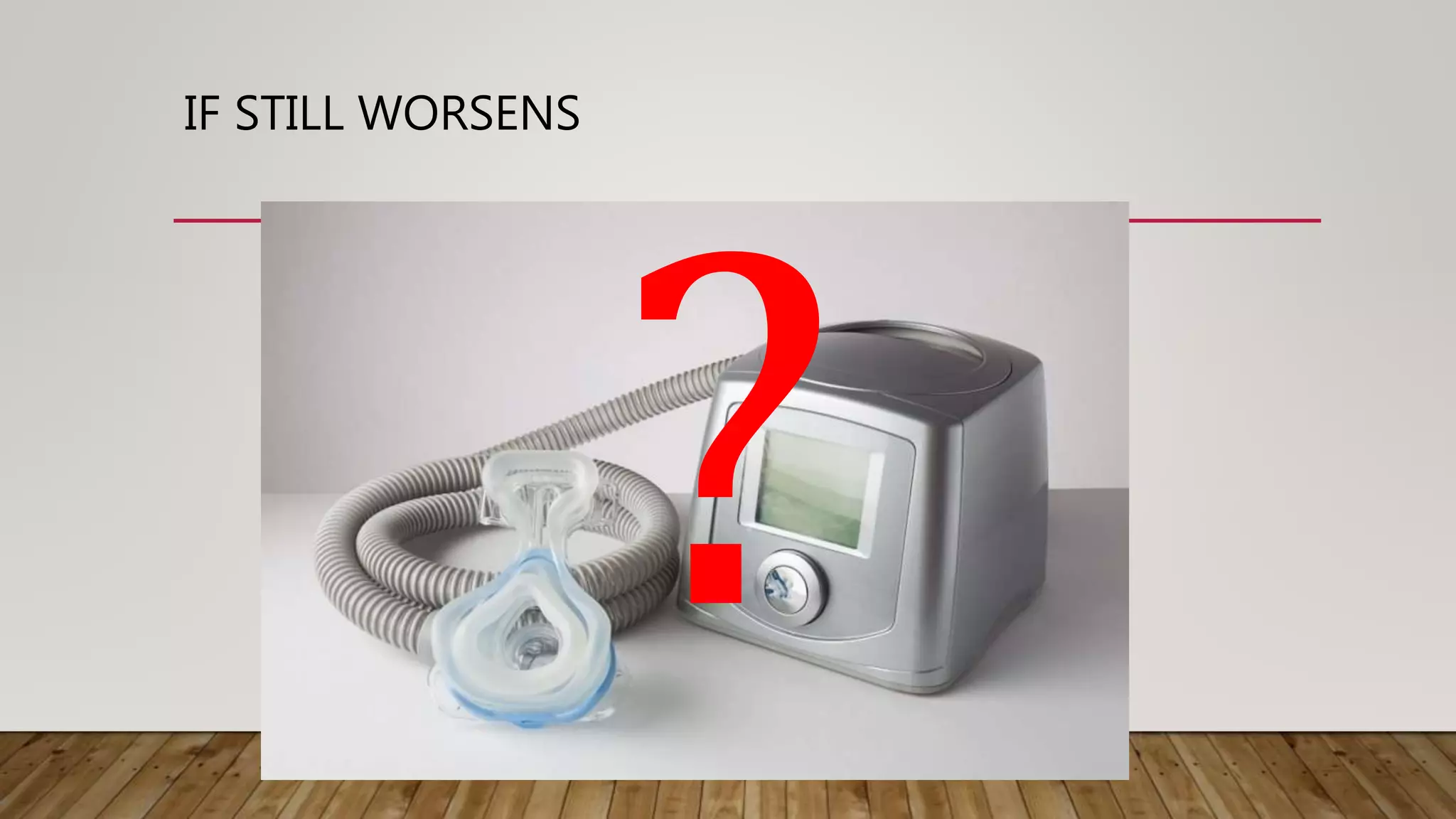
IF STILL WORSENS
MECHANICAL VENTILATION
ADDITIONAL DRUGS
• Antibiotics
• Montelukast
• Heliox
• Theophyllines
ACUTE EXACERBATION OF COPD
Definition of COPD by GOLD
COPD is a common, preventable, and treatable disease that is characterized by persistent
respiratory symptoms and airflow limitation that is due to airway and/or alveolar
abnormalities usually caused by significant exposure to noxious particles or gases. The
chronic airflow limitation that characterizes COPD is caused by a mixture of small airways
disease (eg, obstructive bronchiolitis) and parenchymal destruction (emphysema), the
relative contributions of which vary from person to person. Chronic inflammation causes
structural changes, small airways narrowing, and destruction of lung parenchyma. A loss
of small airways may contribute to airflow limitation and mucociliary dysfunction, a
characteristic feature of the disease.
DEFINITION OF EXACERBATION
• Worsening dyspnea
• Increase in sputum purulence
• Increase in sputum volume
TYPE 1 : all three : Severe
Type 2 : two symptoms : Moderate
Type 3 : one symptom : Mild
PRECIPITATING FACTORS
• Infection
• Environmental condition
• Host factors
Clinical Features
INVESTIGATIONS
• CBC
• Chest Xray
• Sputum Analysis
• ECG
ARTERIAL BLOOD GAS ANALYSIS
TREATMENT
ABC
TREATMENT
USE
CAUTIOUSLY
Avoid
respiratory
suppression
NEBULISATION
SABA : SALBUTAMOL . DOSE AND FREQUENCY ??????
Anticholinergics : Ipratropium Bromide : DOSE and
Frequency ???????
MODE OF ADMINISTRATION OF DRUG
??????????????
STEROIDS
• Hydrocortisone
• Methylprednisone
• Prednisolone
ANTIBIOTICS
IF PATIENT SERIOUSLY ILL
INDICATIONS FOR NIV
• Moderate to severe dyspnea
• Ph<7.35
• Paco2 > 45 mmhg
• RR >25 /min with use of accessory muscles of respirations
WHEN NOT TO USE NIV
• Respiratory arrest
• Cardiovascular instability
• Drowsy or comatosed patients
• High aspiration risk
• Craniofacial abnormalities
IF NO IMPROVEMENT ON NIV OR
CONTRAINDICATED
Exacerbation of COPD and ASTHMA

Exacerbation of COPD and ASTHMA

  • 1.
    RESPIRATORY EMERGENCIES DR SOURAB HIREMATH MDINTERNAL MEDICINE EMERGENCY MEDICINE
  • 2.
    PRE TEST QUESTIONS •Pulsus paradoxus is seen in mild asthma • Silent chest in asthma is a good prognostic sign • Unlike short examination of CVS in MI in exacerbation of COPD and Asthma a detailed respiratory examination with chest measurements is a must
  • 3.
    • Raised CO2levels in COPD is more dangerous and life threatening than in Asthma • MGSO4 is a very crucial drug in treatment of COPD • NIV when used early in severe exacerbation OF COPD IS LIFE SAVING • Avoid injectable steroids in Severe Asthma
  • 4.
  • 5.
    CASE 1 CASE2 64 year old male c/o dypnea since 1 hour with severe chest tightness Dyspnea associated with cough and increased mucoid expectoration h/o running nose since 3 days with fever h/o excessive daily early morning cough and attempts to clear secretions Past history : repeated breathing difficulty with previous hospitalisation six months back Family : Nothing contributory Personal : smoker since 40 years around one pack per day 26 year old man c/o acute onset of dyspnea since 1 hour with severe chest tightness Dyspnea was initially associated with wheeze but now wheeze has disappeared h/o running nose since 3 days with fever History is provided by the bystander as the patient is unable to complete sentences Past history : repeated breathing difficulty with one previous hospitalisation a year back Family : H/o eczema present Personal : No addictions non smoker
  • 6.
    CASE 1 CASE2 • Patient is restless and unable to lie down supine in bed • PR : 108/min • BP: 120/80 mm of hg • RR : 38/min • SPO2 : 86% • Patient is calm and drowsy • PR : 112/min • BP : 104/60 mm hg • RR : 10 /min • Spo2: 88 %
  • 9.
  • 10.
    DIAGNOSIS Case 1 Acute severeAsthma (Status Asthmaticus) Case 2 Acute severe Exacerbation of COPD
  • 11.
    ACUTE EXACERBATION OFASTHMA GINA definition "Asthma is a heterogeneous disease, usually characterized by chronic airway inflammation. It is defined by the history of respiratory symptoms such as wheeze, shortness of breath, chest tightness, and cough that vary over time and in intensity, together with variable expiratory airflow limitation."
  • 12.
  • 13.
  • 14.
    LEVELS OF SEVERITYOF ACUTE ASTHMA EXACERBATIONS • MODERATE ASTHMA EXACERBATION • ACUTE SEVERE ASTHMA • LIFE THREATENING ASTHMA
  • 15.
    MODERATE ASTHMA EXACERBATION •Increasing symptoms • Fev1/PEFR >50 % of predicted value • No features of acute severe asthma
  • 16.
    ACUTE SEVERE ASTHMA •RR > 25/min • Heart rate >110 /min • Inability to complete sentence in one breathe Spirometry : FEV1/PEFR 30-50% of predicted
  • 17.
    LIFE THREATENING ASTHMA •Cyanosis • Feeble respiratory effort • Confusion • Hypotension or bradycardia • Silent chest • SPo2 <92 % • PaO2 < 60 mm hg • Pa Co2 >45 mmhg
  • 18.
    INVESTIGATIONS • CBC • ChestXray • Arterial Blood gas analysis • Sputum analysis
  • 19.
  • 20.
  • 21.
    SALBUTAMOL • 2.5 –5 mg every 20 mins for first hours • Or 4 -8 puffs of MDI •Should we USE LABA ????
  • 22.
    ANTICHOLINERGICS • Ipratropium Bromide0.5 mg every 20 mins for an hour
  • 23.
    CORTICOSTEROIDS • Inj Methylprednisone125 mg iv stat • Prednisolone 40-60 mg • Inj Hydrocortisone 100 mg every 6th hourly
  • 24.
    IF NO IMPROVEMENTAFTER 30 MINS • Continue oxygen • Steroids • Nebulisation
  • 25.
    IF PATIENT DETORIATESAND NO IMPROVEMENT • Discuss with ICU team IV MGSO4 2 gm over 20 mins
  • 26.
  • 27.
  • 28.
    ADDITIONAL DRUGS • Antibiotics •Montelukast • Heliox • Theophyllines
  • 29.
    ACUTE EXACERBATION OFCOPD Definition of COPD by GOLD COPD is a common, preventable, and treatable disease that is characterized by persistent respiratory symptoms and airflow limitation that is due to airway and/or alveolar abnormalities usually caused by significant exposure to noxious particles or gases. The chronic airflow limitation that characterizes COPD is caused by a mixture of small airways disease (eg, obstructive bronchiolitis) and parenchymal destruction (emphysema), the relative contributions of which vary from person to person. Chronic inflammation causes structural changes, small airways narrowing, and destruction of lung parenchyma. A loss of small airways may contribute to airflow limitation and mucociliary dysfunction, a characteristic feature of the disease.
  • 31.
    DEFINITION OF EXACERBATION •Worsening dyspnea • Increase in sputum purulence • Increase in sputum volume TYPE 1 : all three : Severe Type 2 : two symptoms : Moderate Type 3 : one symptom : Mild
  • 32.
    PRECIPITATING FACTORS • Infection •Environmental condition • Host factors
  • 33.
  • 34.
    INVESTIGATIONS • CBC • ChestXray • Sputum Analysis • ECG
  • 35.
  • 36.
  • 37.
  • 38.
    NEBULISATION SABA : SALBUTAMOL. DOSE AND FREQUENCY ?????? Anticholinergics : Ipratropium Bromide : DOSE and Frequency ??????? MODE OF ADMINISTRATION OF DRUG ??????????????
  • 39.
  • 40.
  • 41.
  • 42.
    INDICATIONS FOR NIV •Moderate to severe dyspnea • Ph<7.35 • Paco2 > 45 mmhg • RR >25 /min with use of accessory muscles of respirations
  • 43.
    WHEN NOT TOUSE NIV • Respiratory arrest • Cardiovascular instability • Drowsy or comatosed patients • High aspiration risk • Craniofacial abnormalities
  • 44.
    IF NO IMPROVEMENTON NIV OR CONTRAINDICATED