Who are your audience and
what have you learned from
them?
Evaluation Task 4 -
Target Audience
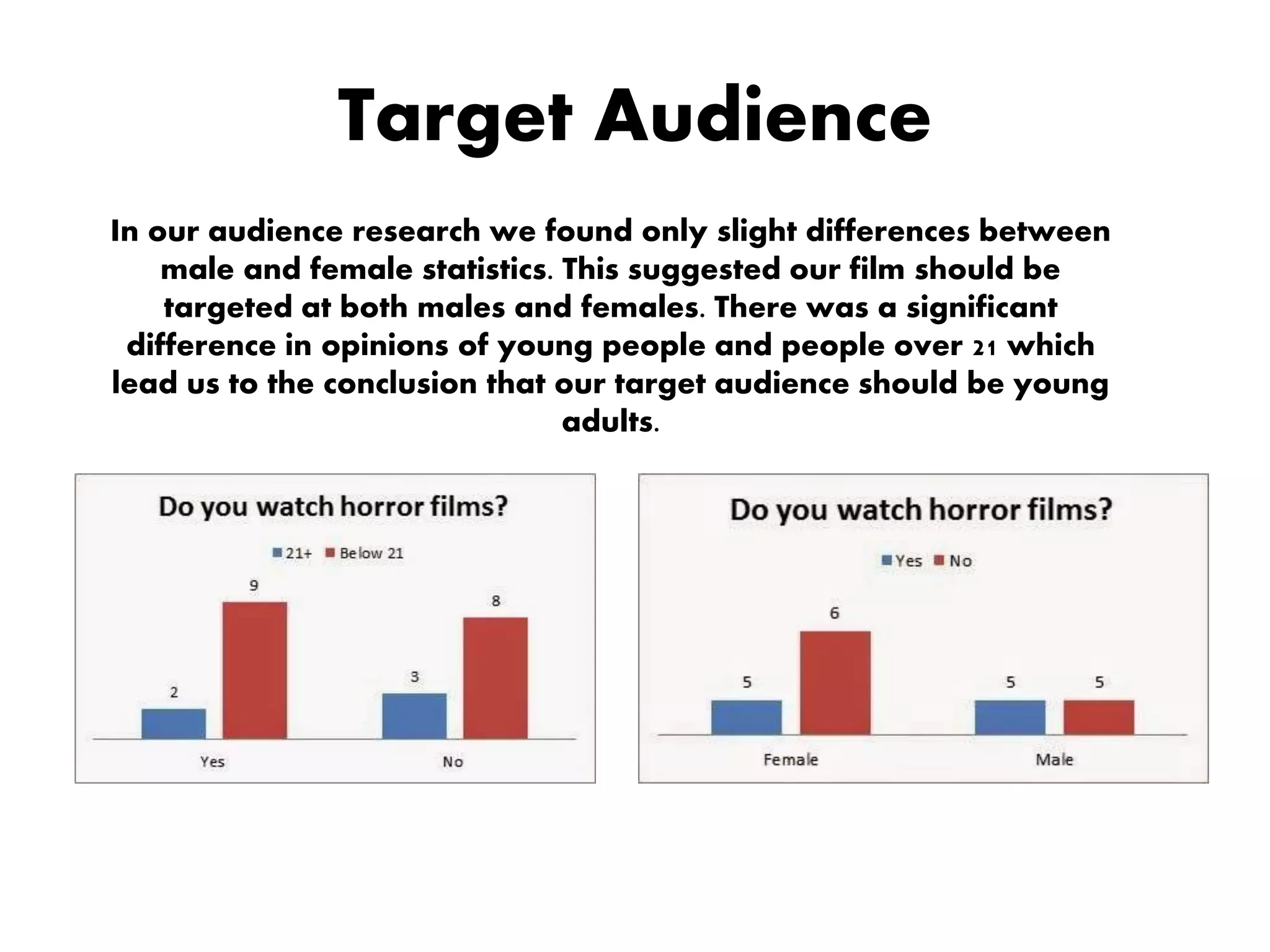
In our audience research we found only slight differences between
male and female statistics. This suggested our film should be
targeted at both males and females. There was a significant
difference in opinions of young people and people over 21 which
lead us to the conclusion that our target audience should be young
adults.
Genre and Audience Appeal
As we were planning to do a horror film, we decided to dedicate half of
the questions on our research survey purely to the horror genre.
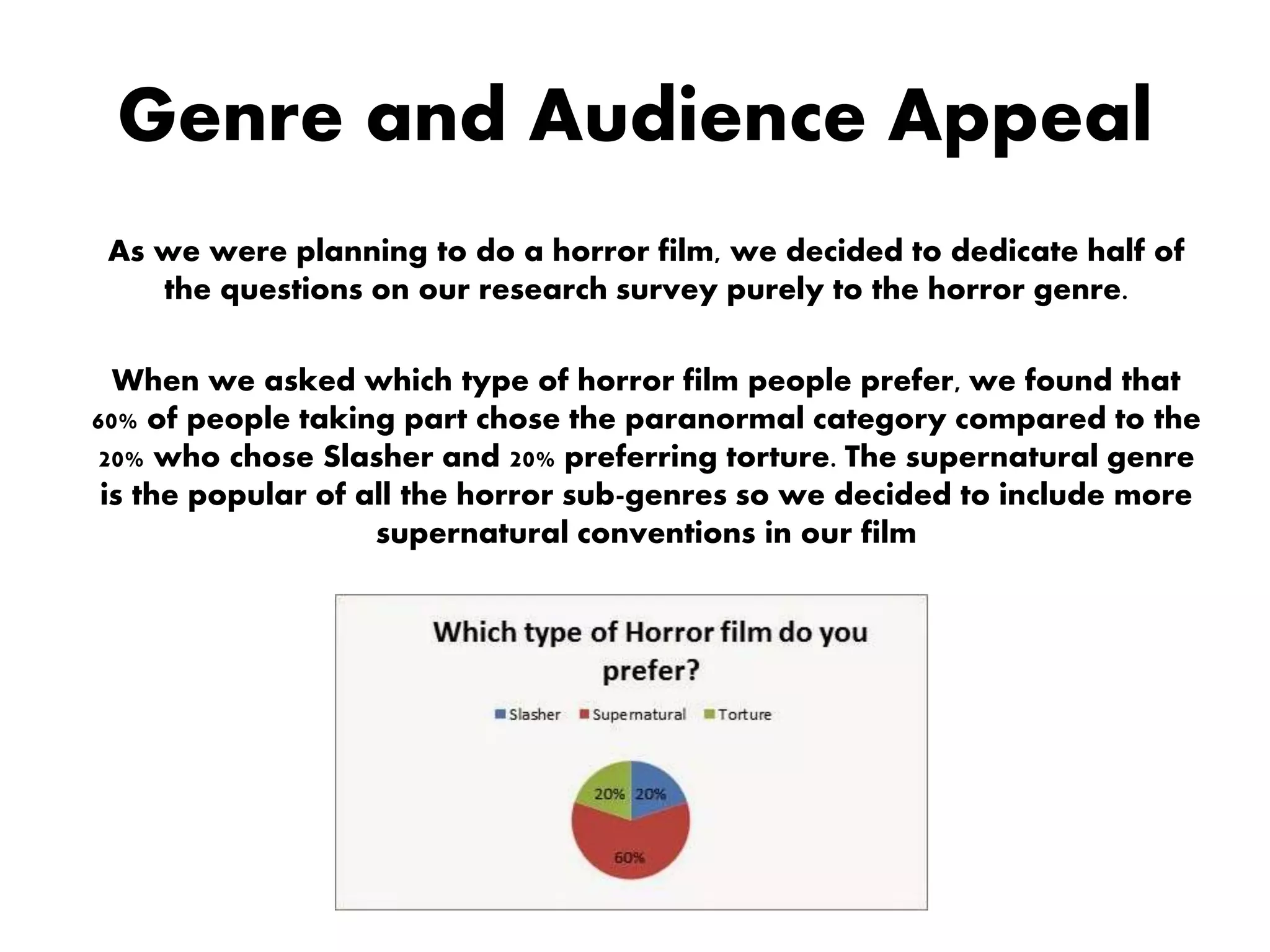
When we asked which type of horror film people prefer, we found that
60% of people taking part chose the paranormal category compared to the
20% who chose Slasher and 20% preferring torture. The supernatural genre
is the popular of all the horror sub-genres so we decided to include more
supernatural conventions in our film
Audience Theory
Gratification Theory
Bulmer & Kats (1974) came up with reasons why audiences use
media:
1) Diversion - Used as a diversion to escape from everyday pressures.
E.g. if a child is having a hard time at school they might like to watch
films to forget about bullying for a while.
2) Personal Relationships - Sociability through discussion about
media products. E.g. Not many people go to watch horror films by
themselves as they like to discuss the film with another person.
3) Personal Identity - Ability to compare ones own life with
events/characters.
4) Surveillance – information gathering
Hypodermic Needle Theory
There is thought to be two types of Audience
which are passive and active. Passive
audiences believe everything they see in the
media, whereas active audiences think about
what they are seeing and try to understand the
meaning behind it. The hypodermic needle
theory says that the mass audience are passive
and the media aims to inject ideas into a
passive audience.
In this sense, horror films can be quite
dangerous as a passive audience are unlikely
to challenge what they see and can be easily
manipulated by the violence they see. As
children are more gullible they are more likely
to take disturbing things they see in films as the
norm. This is why many horror films have an
age restriction of 15 .
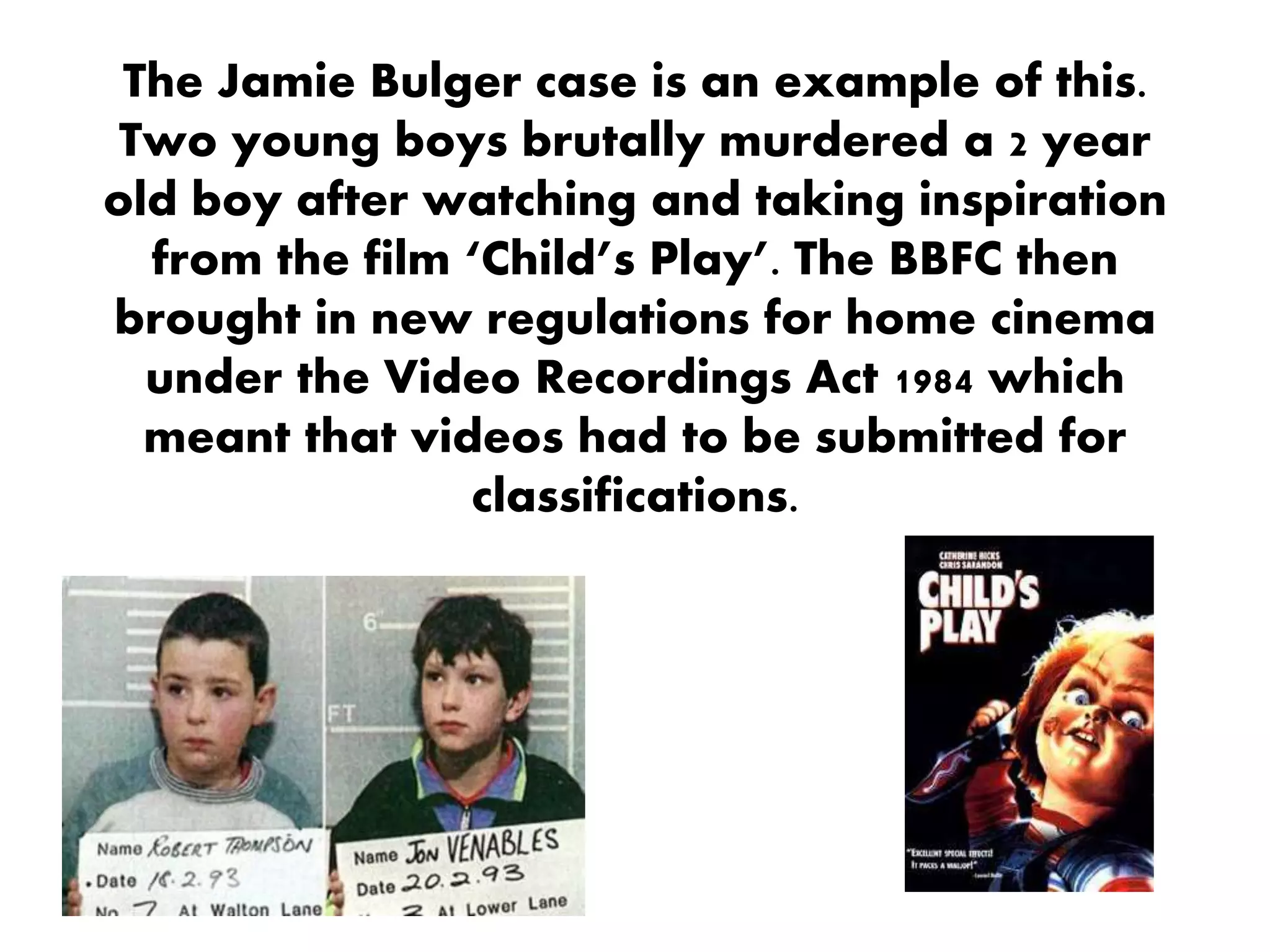
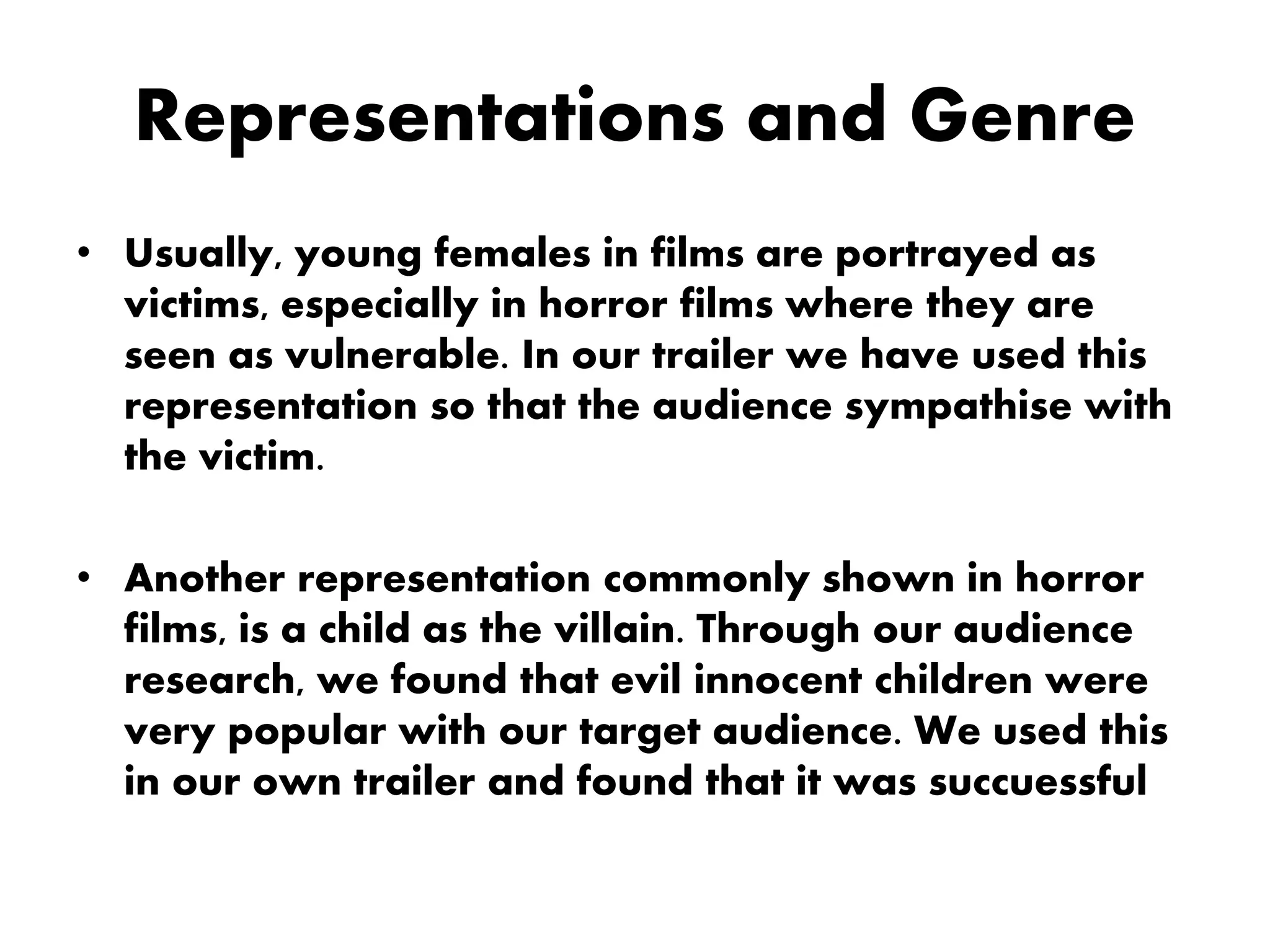
The Jamie Bulger case is an example of this.
Two young boys brutally murdered a 2 year
old boy after watching and taking inspiration
from the film ‘Child’s Play’. The BBFC then
brought in new regulations for home cinema
under the Video Recordings Act 1984 which
meant that videos had to be submitted for
classifications.
Representations and Genre
• Usually, young females in films are portrayed as
victims, especially in horror films where they are
seen as vulnerable. In our trailer we have used this
representation so that the audience sympathise with
the victim.
• Another representation commonly shown in horror
films, is a child as the villain. Through our audience
research, we found that evil innocent children were
very popular with our target audience. We used this
in our own trailer and found that it was succuessful
Feedback
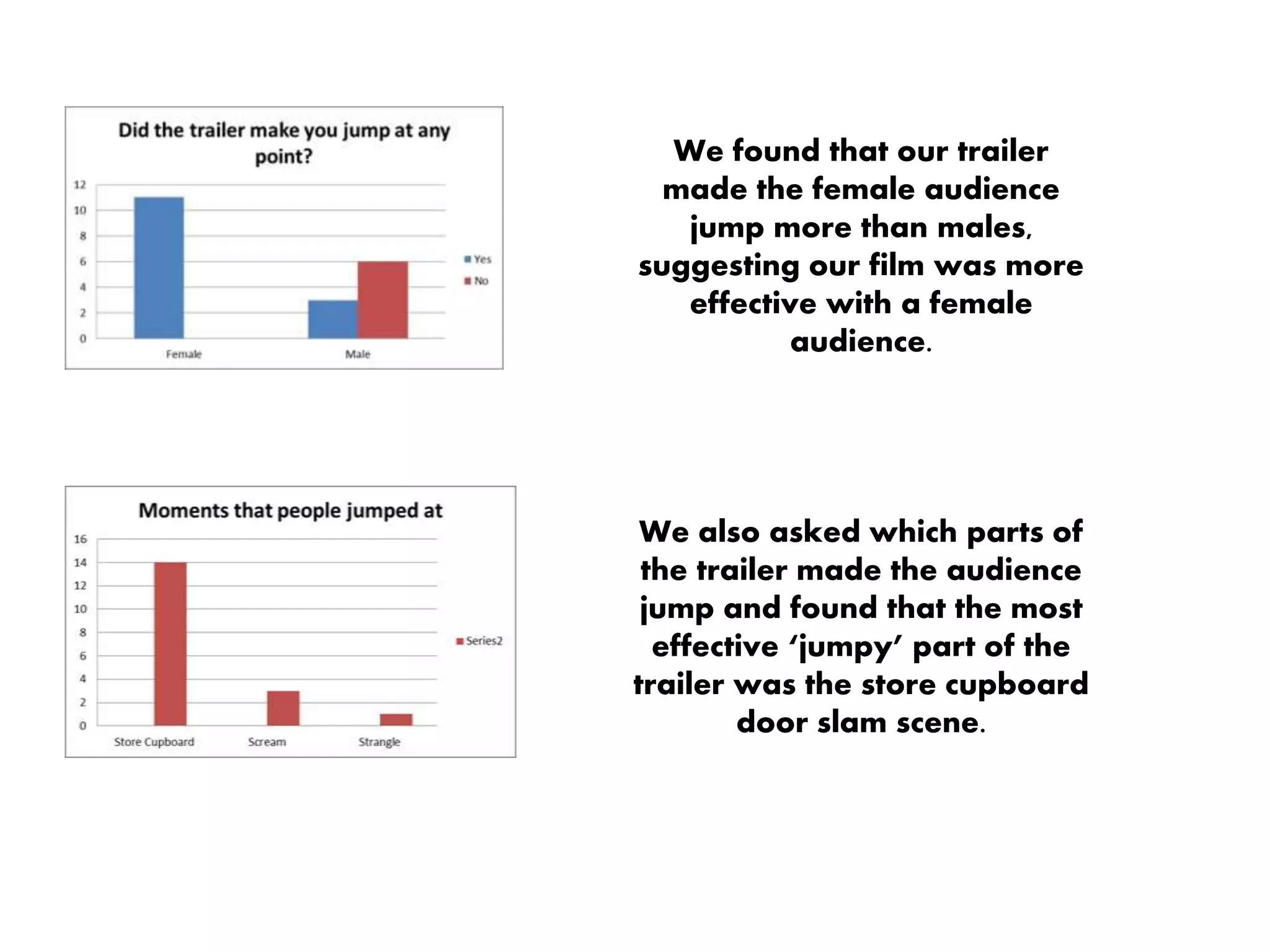
We gave out a questionnaire to a group of 10 males and 11 females after they
viewed North Chamber. We wanted to find out whether the trailer was easy to
understand and whether the genre was clear in the final cut of the trailer.
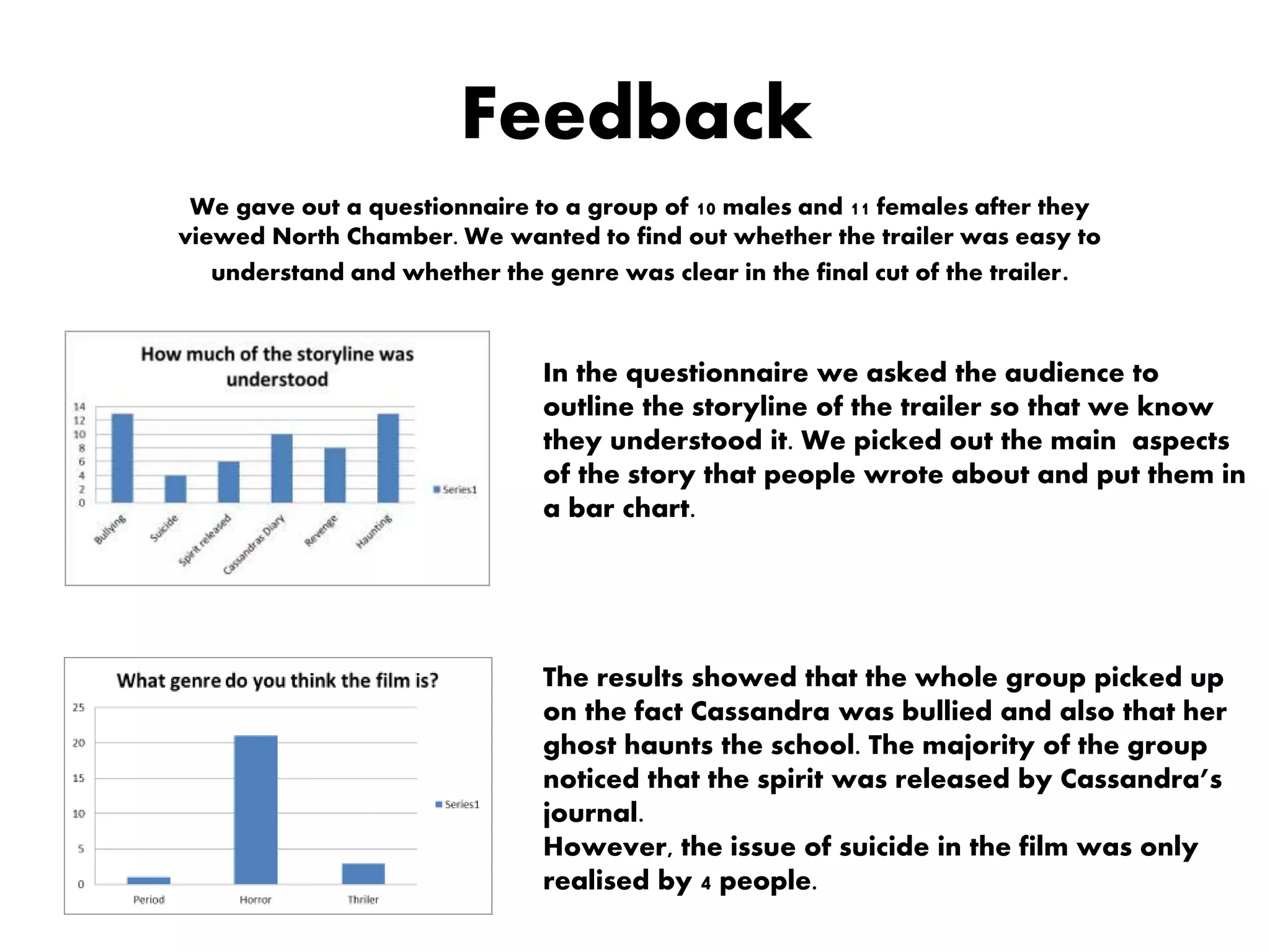
In the questionnaire we asked the audience to
outline the storyline of the trailer so that we know
they understood it. We picked out the main aspects
of the story that people wrote about and put them in
a bar chart.
The results showed that the whole group picked up
on the fact Cassandra was bullied and also that her
ghost haunts the school. The majority of the group
noticed that the spirit was released by Cassandra’s
journal.
However, the issue of suicide in the film was only
realised by 4 people.
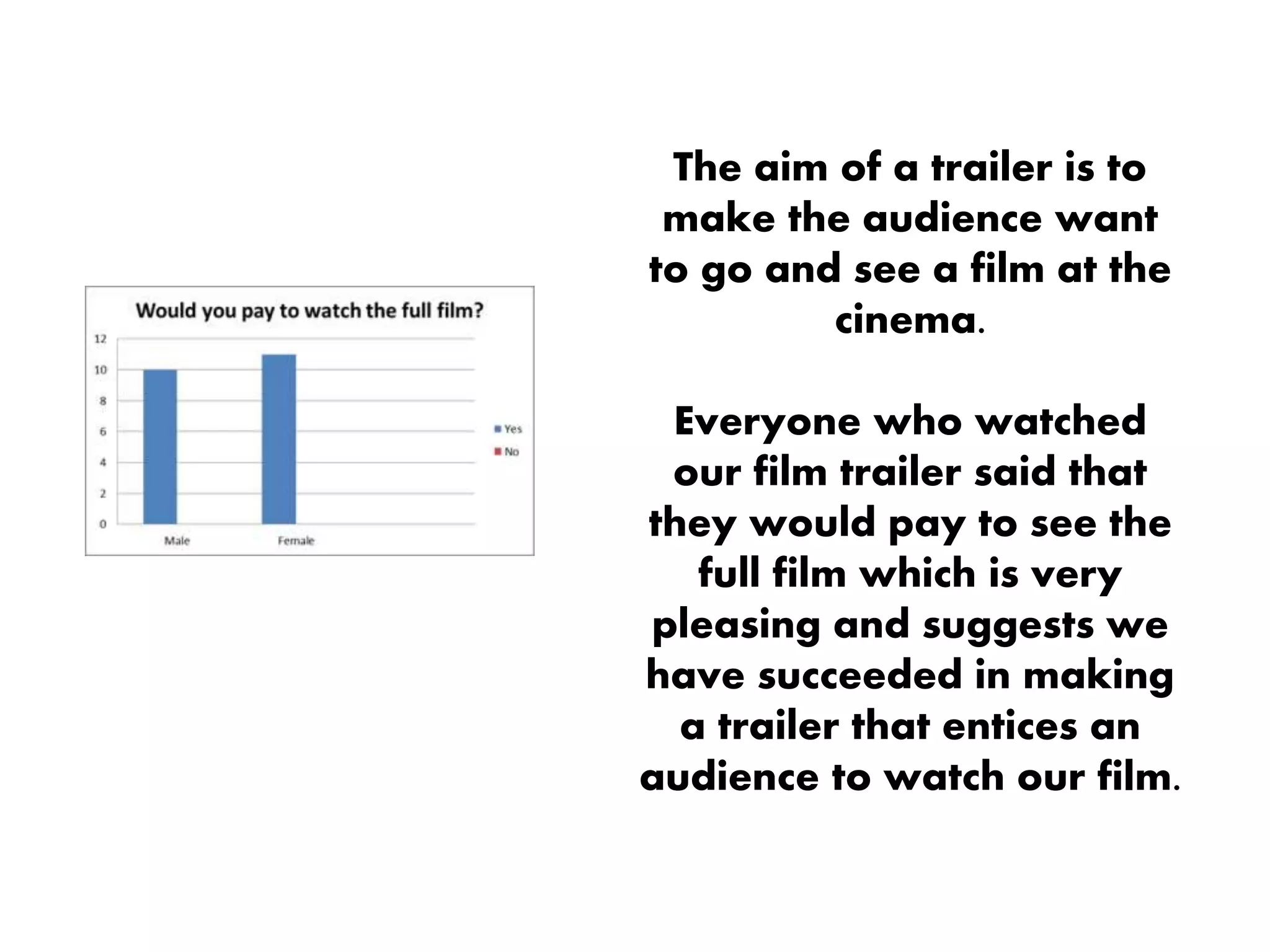
We found that our trailer
made the female audience
jump more than males,
suggesting our film was more
effective with a female
audience.
We also asked which parts of
the trailer made the audience
jump and found that the most
effective ‘jumpy’ part of the
trailer was the store cupboard
door slam scene.
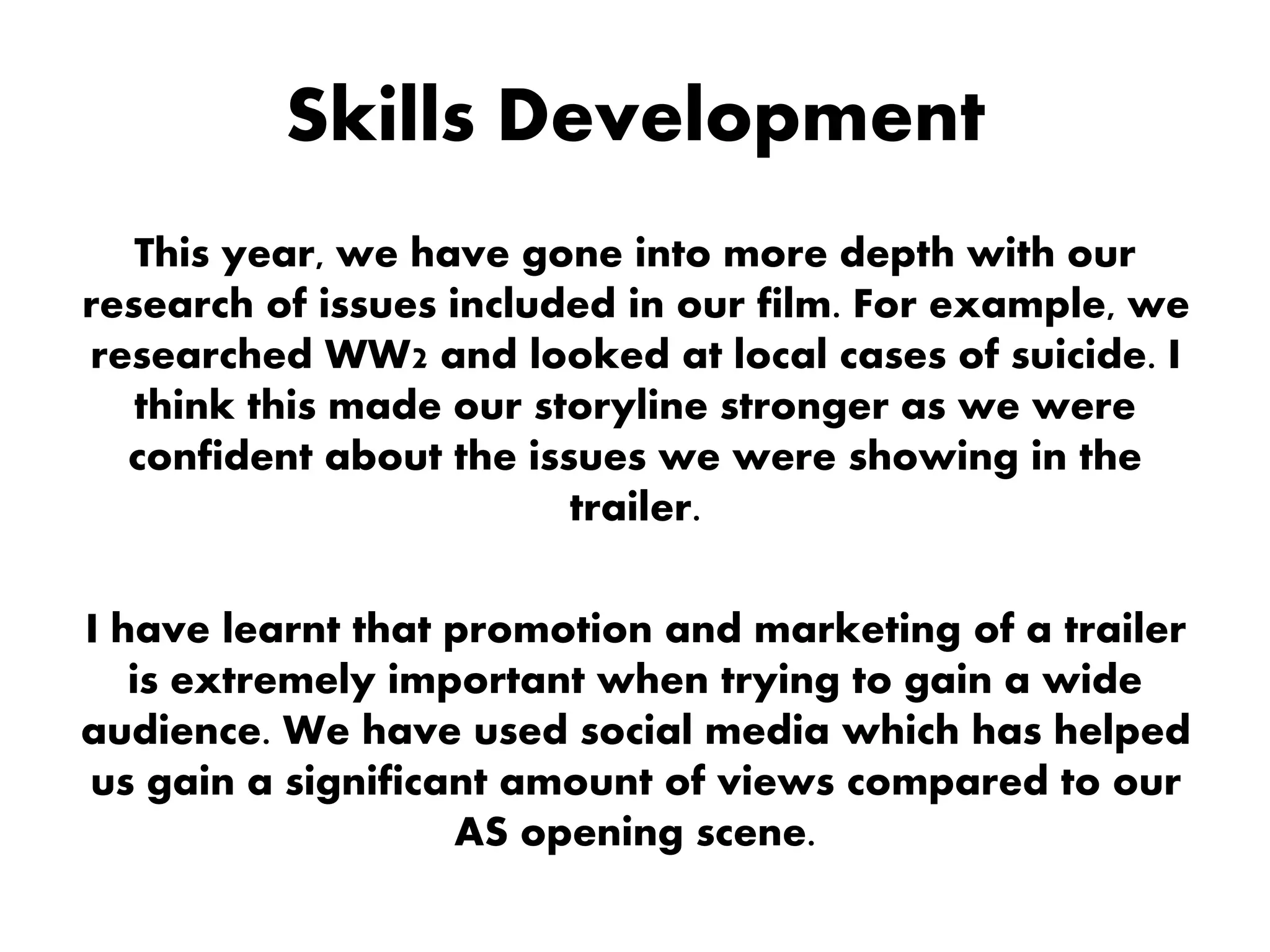
The aim of a trailer is to
make the audience want
to go and see a film at the
cinema.
Everyone who watched
our film trailer said that
they would pay to see the
full film which is very
pleasing and suggests we
have succeeded in making
a trailer that entices an
audience to watch our film.
Skills Development
This year, we have gone into more depth with our
research of issues included in our film. For example, we
researched WW2 and looked at local cases of suicide. I
think this made our storyline stronger as we were
confident about the issues we were showing in the
trailer.
I have learnt that promotion and marketing of a trailer
is extremely important when trying to gain a wide
audience. We have used social media which has helped
us gain a significant amount of views compared to our
AS opening scene.
I have also developed my planning skills whilst
making this trailer as I have learnt to make
professional looking scripts and call sheets
which have helped us whilst filming.
Lastly, my editing skills have improved a lot
since last year. I am more confident in using
various tools on Pinnacle Studios and I think
that is reflected in our trailer.
Was your trailer successful?
The fact that every person that saw the trailer
wanted to see the full film suggests that our
trailer was successful.
Our audience feedback suggested that our
trailer was scary and easy to understand which
was our main aim when planning to make the
trailer.

Evaluation Task 4 - who is your audience and what have you learned from them?

  • 1.
    Who are youraudience and what have you learned from them? Evaluation Task 4 -
  • 2.
    Target Audience In ouraudience research we found only slight differences between male and female statistics. This suggested our film should be targeted at both males and females. There was a significant difference in opinions of young people and people over 21 which lead us to the conclusion that our target audience should be young adults.
  • 3.
    Genre and AudienceAppeal As we were planning to do a horror film, we decided to dedicate half of the questions on our research survey purely to the horror genre. When we asked which type of horror film people prefer, we found that 60% of people taking part chose the paranormal category compared to the 20% who chose Slasher and 20% preferring torture. The supernatural genre is the popular of all the horror sub-genres so we decided to include more supernatural conventions in our film
  • 4.
    Audience Theory Gratification Theory Bulmer& Kats (1974) came up with reasons why audiences use media: 1) Diversion - Used as a diversion to escape from everyday pressures. E.g. if a child is having a hard time at school they might like to watch films to forget about bullying for a while. 2) Personal Relationships - Sociability through discussion about media products. E.g. Not many people go to watch horror films by themselves as they like to discuss the film with another person. 3) Personal Identity - Ability to compare ones own life with events/characters. 4) Surveillance – information gathering
  • 5.
    Hypodermic Needle Theory Thereis thought to be two types of Audience which are passive and active. Passive audiences believe everything they see in the media, whereas active audiences think about what they are seeing and try to understand the meaning behind it. The hypodermic needle theory says that the mass audience are passive and the media aims to inject ideas into a passive audience.
  • 6.
    In this sense,horror films can be quite dangerous as a passive audience are unlikely to challenge what they see and can be easily manipulated by the violence they see. As children are more gullible they are more likely to take disturbing things they see in films as the norm. This is why many horror films have an age restriction of 15 .
  • 7.
    The Jamie Bulgercase is an example of this. Two young boys brutally murdered a 2 year old boy after watching and taking inspiration from the film ‘Child’s Play’. The BBFC then brought in new regulations for home cinema under the Video Recordings Act 1984 which meant that videos had to be submitted for classifications.
  • 8.
    Representations and Genre •Usually, young females in films are portrayed as victims, especially in horror films where they are seen as vulnerable. In our trailer we have used this representation so that the audience sympathise with the victim. • Another representation commonly shown in horror films, is a child as the villain. Through our audience research, we found that evil innocent children were very popular with our target audience. We used this in our own trailer and found that it was succuessful
  • 9.
    Feedback We gave outa questionnaire to a group of 10 males and 11 females after they viewed North Chamber. We wanted to find out whether the trailer was easy to understand and whether the genre was clear in the final cut of the trailer. In the questionnaire we asked the audience to outline the storyline of the trailer so that we know they understood it. We picked out the main aspects of the story that people wrote about and put them in a bar chart. The results showed that the whole group picked up on the fact Cassandra was bullied and also that her ghost haunts the school. The majority of the group noticed that the spirit was released by Cassandra’s journal. However, the issue of suicide in the film was only realised by 4 people.
  • 10.
    We found thatour trailer made the female audience jump more than males, suggesting our film was more effective with a female audience. We also asked which parts of the trailer made the audience jump and found that the most effective ‘jumpy’ part of the trailer was the store cupboard door slam scene.
  • 11.
    The aim ofa trailer is to make the audience want to go and see a film at the cinema. Everyone who watched our film trailer said that they would pay to see the full film which is very pleasing and suggests we have succeeded in making a trailer that entices an audience to watch our film.
  • 12.
    Skills Development This year,we have gone into more depth with our research of issues included in our film. For example, we researched WW2 and looked at local cases of suicide. I think this made our storyline stronger as we were confident about the issues we were showing in the trailer. I have learnt that promotion and marketing of a trailer is extremely important when trying to gain a wide audience. We have used social media which has helped us gain a significant amount of views compared to our AS opening scene.
  • 13.
    I have alsodeveloped my planning skills whilst making this trailer as I have learnt to make professional looking scripts and call sheets which have helped us whilst filming. Lastly, my editing skills have improved a lot since last year. I am more confident in using various tools on Pinnacle Studios and I think that is reflected in our trailer.
  • 14.
    Was your trailersuccessful? The fact that every person that saw the trailer wanted to see the full film suggests that our trailer was successful. Our audience feedback suggested that our trailer was scary and easy to understand which was our main aim when planning to make the trailer.