Looking back
at your
preliminary
task, what do
you feel you
have learnt in
the
progression
from it to the
final product?
EVALUATION PART 7
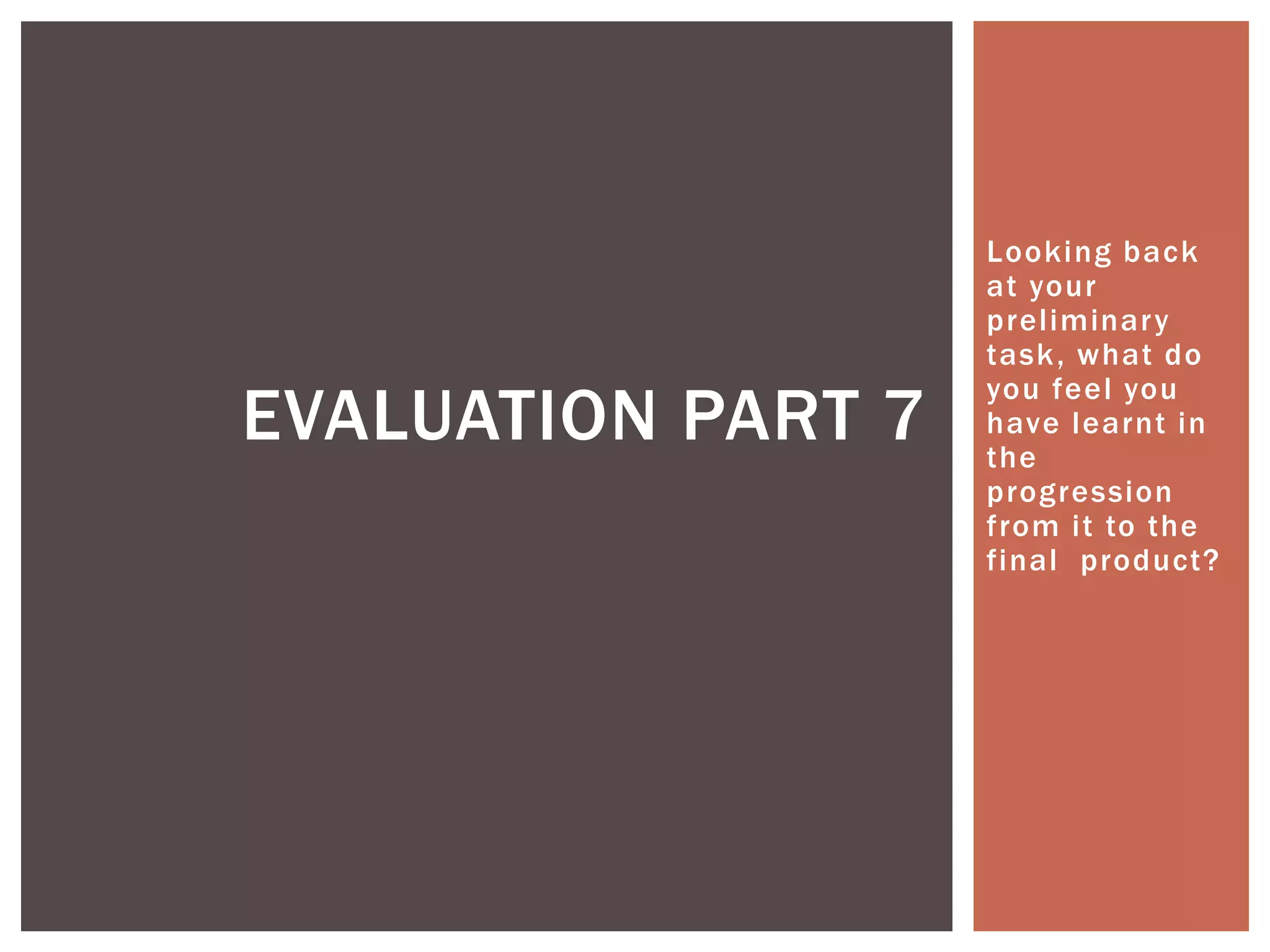
 In our Preliminary, our brief was a continuity task, and only
required a short amount of footage, where a character walked
into a room, sat down, spoke a few lines of dialogue with
another character, and then left. We needed to show we knew
how to work a camera and use a few basic skills, such as
match-on action, shot/reverse shot and the 180 degree rule.
WHAT BRIEF WERE YOU WORKING TO?
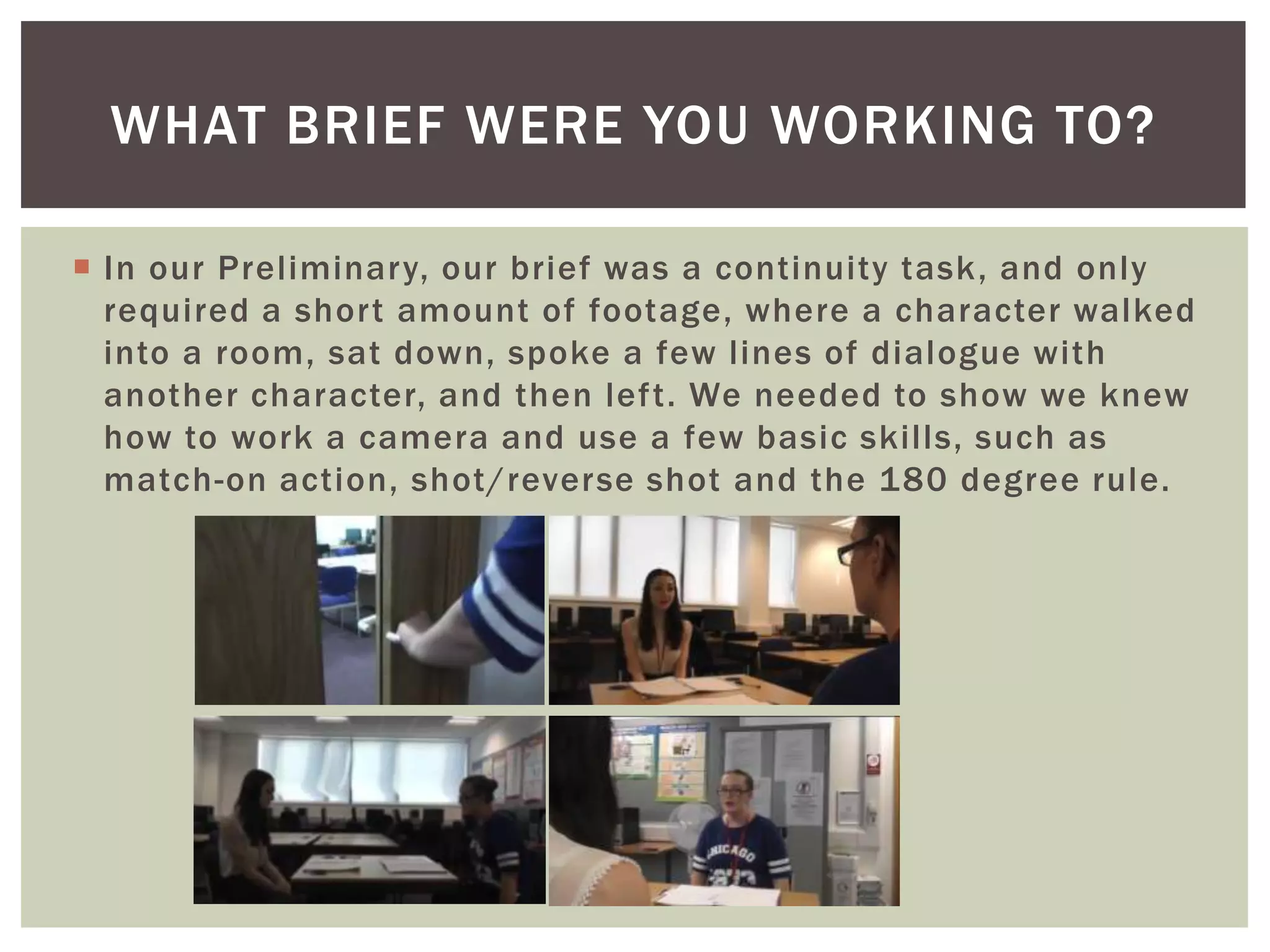
 In this brief, it was less specific, and was simply to create the
first two minutes of a full feature-length film, complete with a
title sequence, and the beginning of the plot. We had more
freedom to do what we wished in terms of effects, length of
dialogue and cinematography.
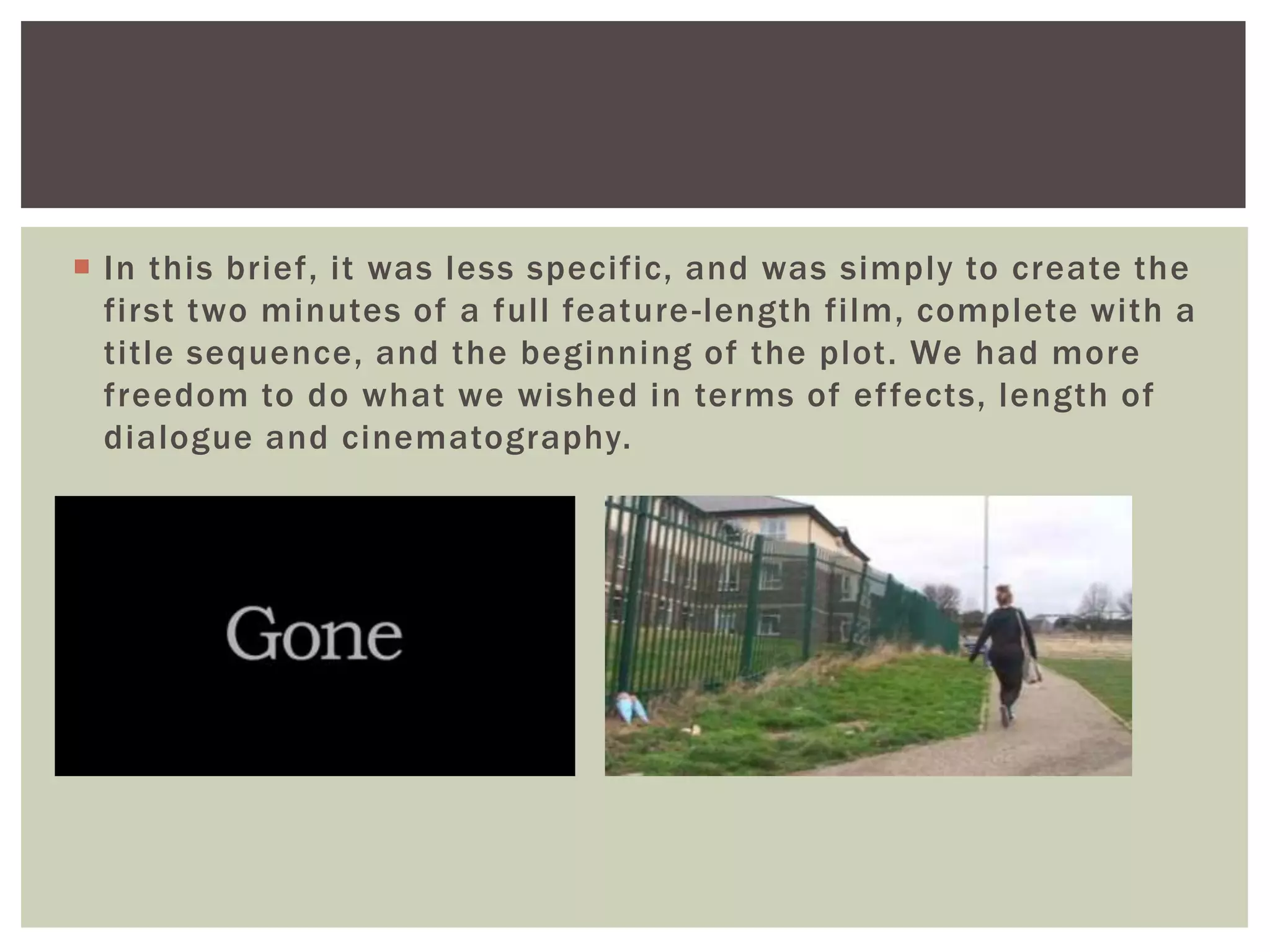
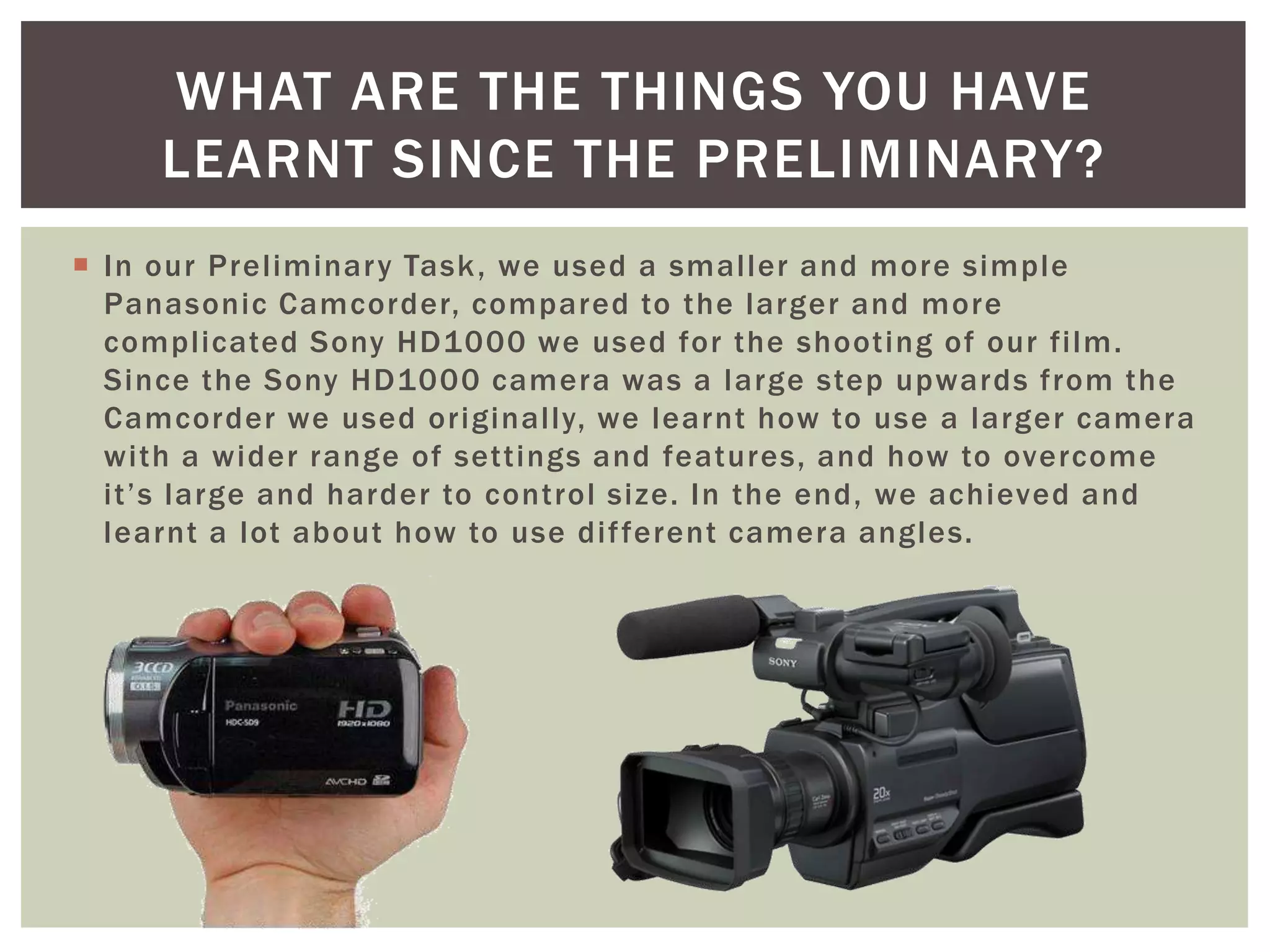
 In our Preliminary Task, we used a smaller and more simple
Panasonic Camcorder, compared to the larger and more
complicated Sony HD1000 we used for the shooting of our film.
Since the Sony HD1000 camera was a large step upwards from the
Camcorder we used originally, we learnt how to use a larger camera
with a wider range of settings and features, and how to overcome
it’s large and harder to control size. In the end, we achieved and
learnt a lot about how to use different camera angles.
WHAT ARE THE THINGS YOU HAVE
LEARNT SINCE THE PRELIMINARY?
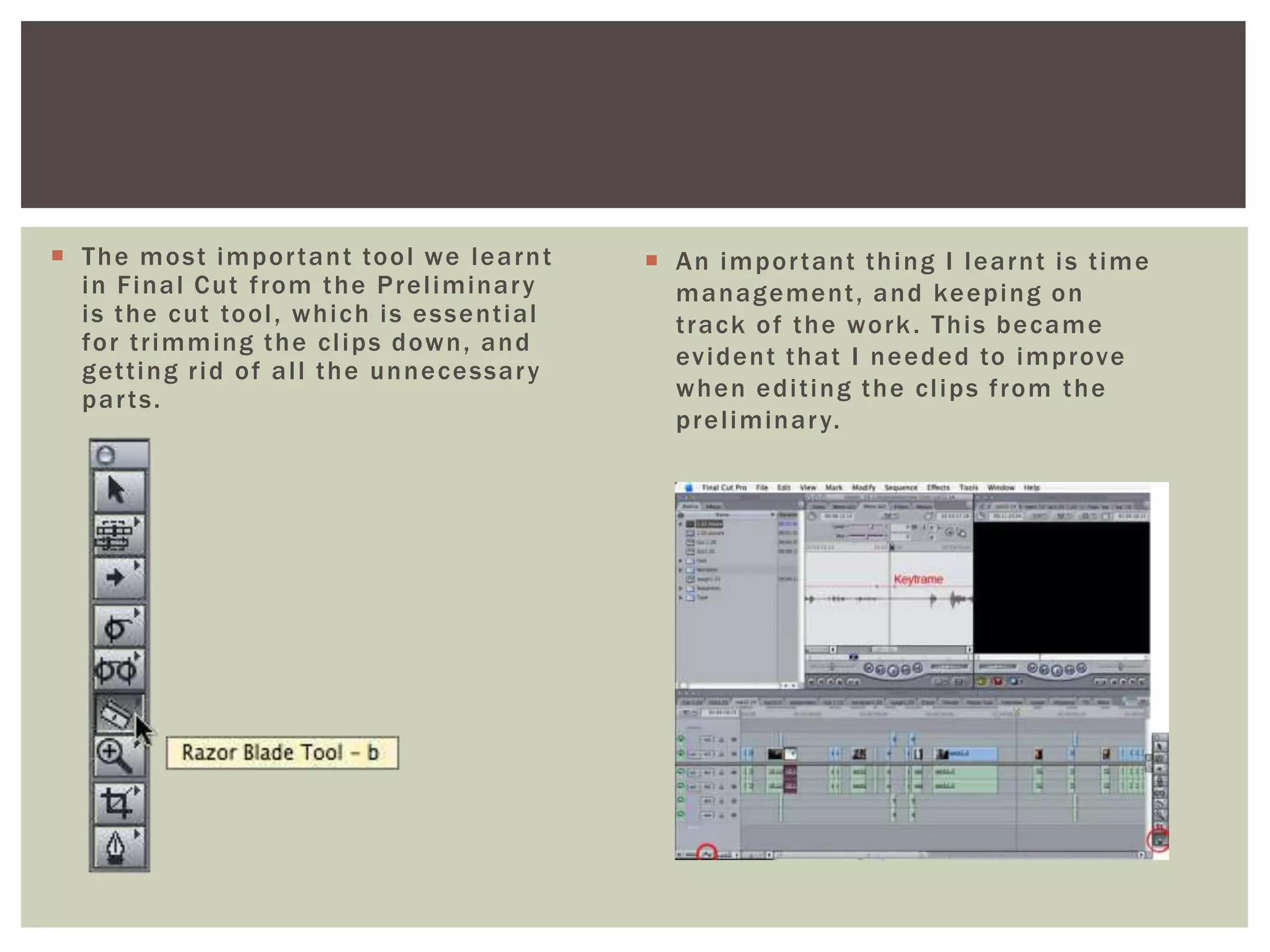
 The most important tool we learnt
in Final Cut from the Preliminary
is the cut tool, which is essential
for trimming the clips down, and
getting rid of all the unnecessary
parts.
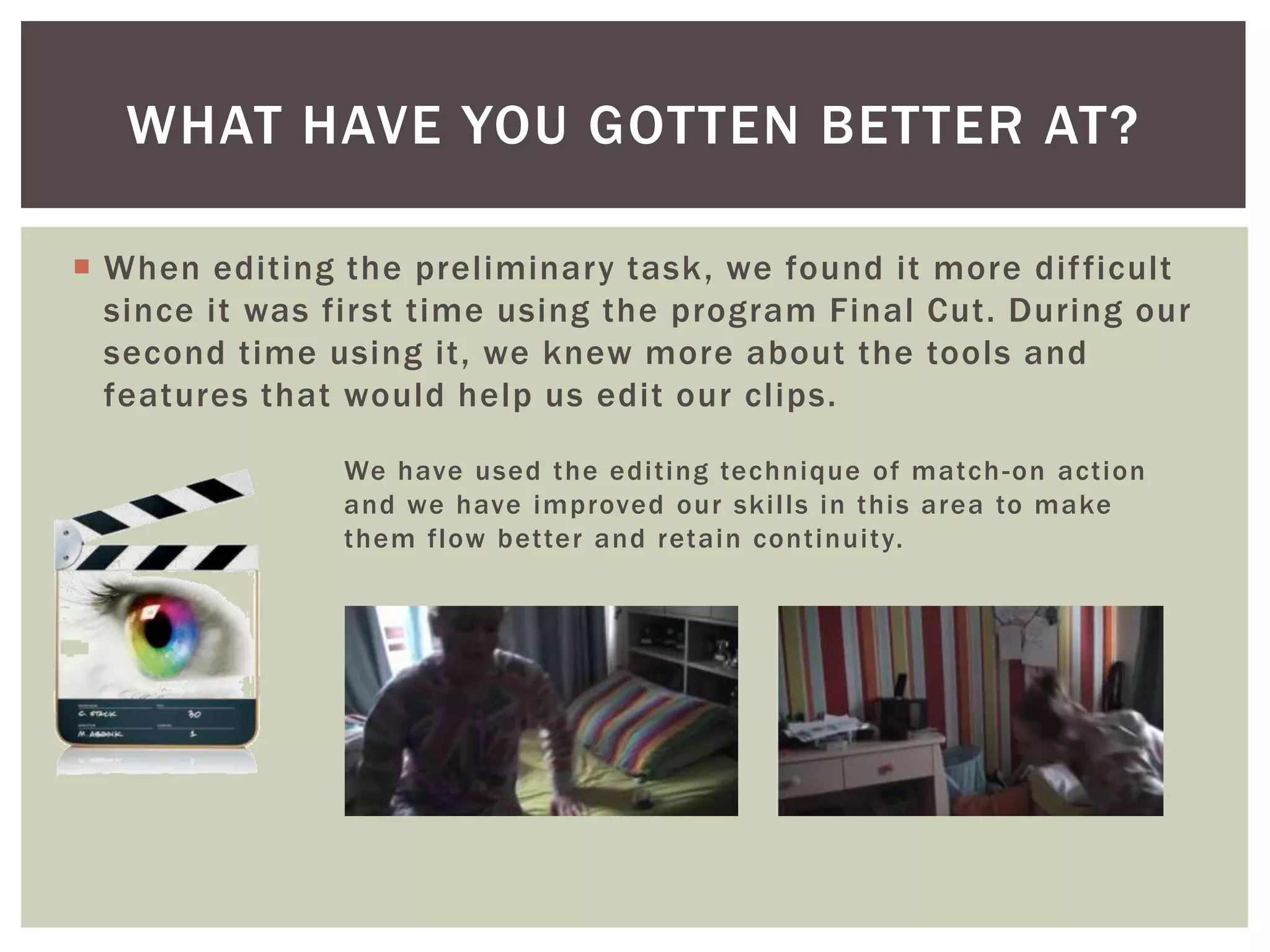
 An important thing I learnt is time
management, and keeping on
track of the work. This became
evident that I needed to improve
when editing the clips from the
preliminary.
 When editing the preliminary task, we found it more difficult
since it was first time using the program Final Cut. During our
second time using it, we knew more about the tools and
features that would help us edit our clips.
WHAT HAVE YOU GOTTEN BETTER AT?
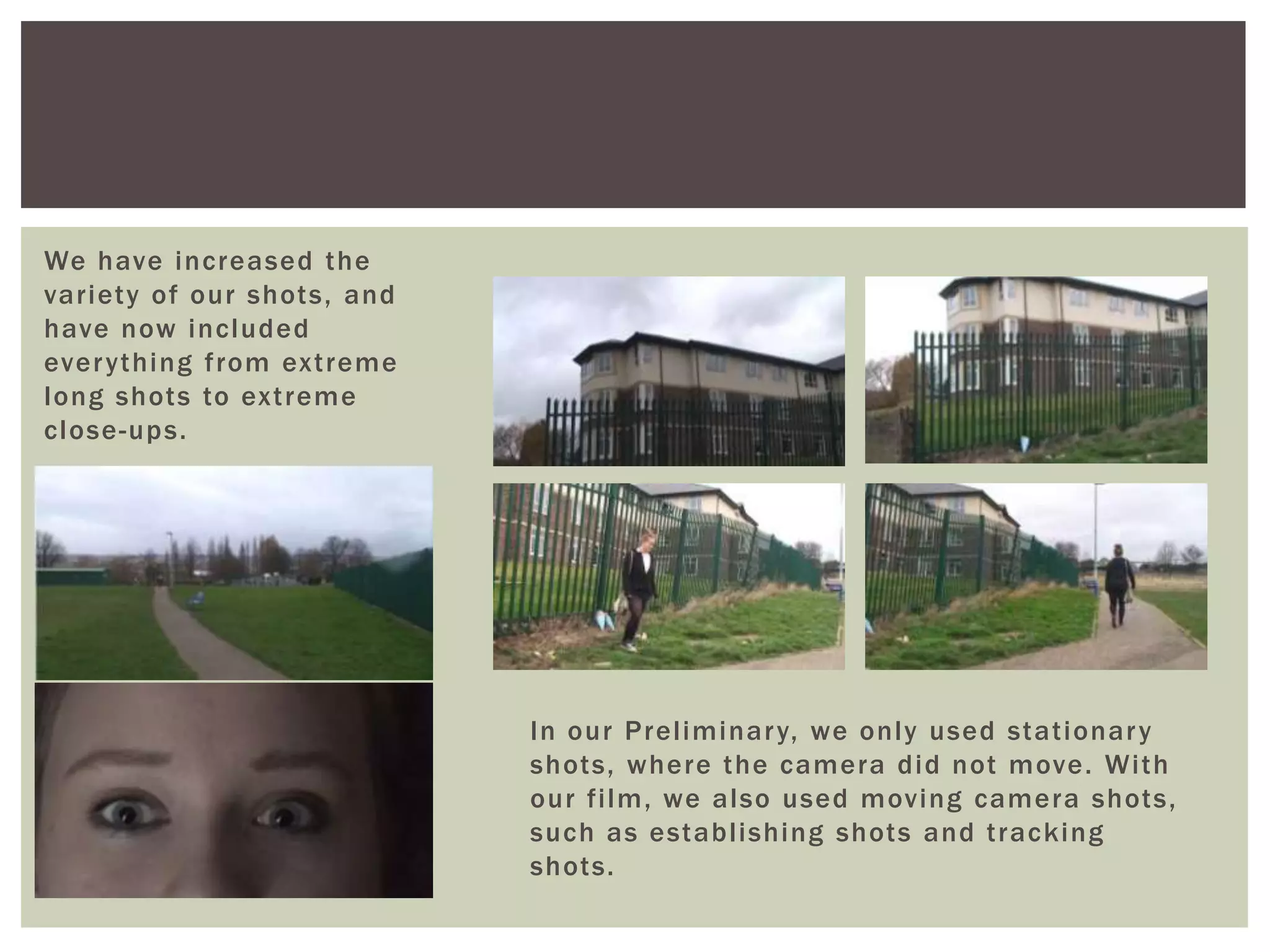
We have used the editing technique of match-on action
and we have improved our skills in this area to make
them flow better and retain continuity.
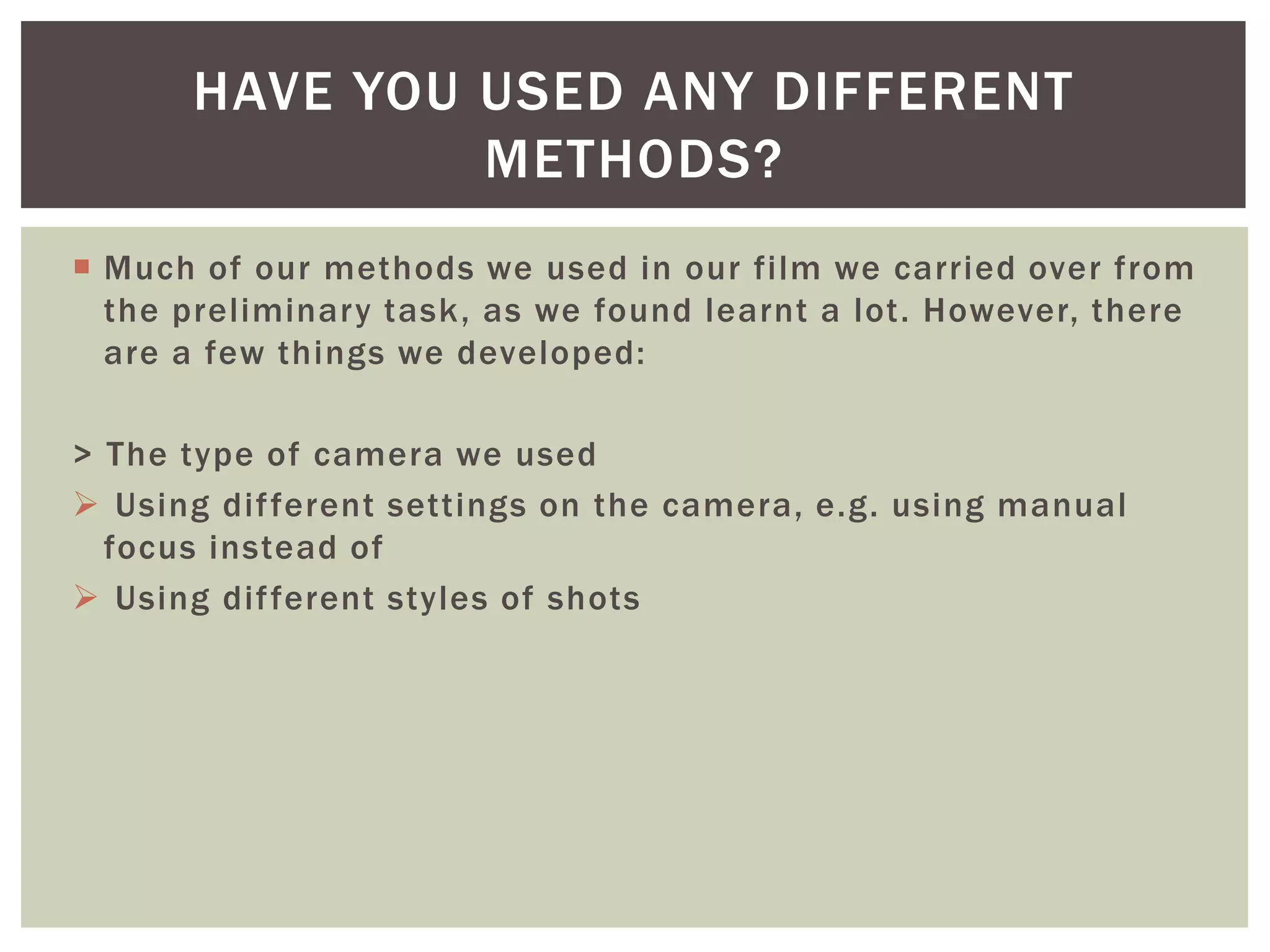
We have increased the
variety of our shots, and
have now included
everything from extreme
long shots to extreme
close-ups.
In our Preliminary, we only used stationary
shots, where the camera did not move. With
our film, we also used moving camera shots,
such as establishing shots and tracking
shots.
 Much of our methods we used in our film we carried over from
the preliminary task, as we found learnt a lot. However, there
are a few things we developed:
> The type of camera we used
 Using different settings on the camera, e.g. using manual
focus instead of
 Using different styles of shots
HAVE YOU USED ANY DIFFERENT
METHODS?

AS Media Evaluation part 7

  • 1.
    Looking back at your preliminary task,what do you feel you have learnt in the progression from it to the final product? EVALUATION PART 7
  • 2.
     In ourPreliminary, our brief was a continuity task, and only required a short amount of footage, where a character walked into a room, sat down, spoke a few lines of dialogue with another character, and then left. We needed to show we knew how to work a camera and use a few basic skills, such as match-on action, shot/reverse shot and the 180 degree rule. WHAT BRIEF WERE YOU WORKING TO?
  • 3.
     In thisbrief, it was less specific, and was simply to create the first two minutes of a full feature-length film, complete with a title sequence, and the beginning of the plot. We had more freedom to do what we wished in terms of effects, length of dialogue and cinematography.
  • 4.
     In ourPreliminary Task, we used a smaller and more simple Panasonic Camcorder, compared to the larger and more complicated Sony HD1000 we used for the shooting of our film. Since the Sony HD1000 camera was a large step upwards from the Camcorder we used originally, we learnt how to use a larger camera with a wider range of settings and features, and how to overcome it’s large and harder to control size. In the end, we achieved and learnt a lot about how to use different camera angles. WHAT ARE THE THINGS YOU HAVE LEARNT SINCE THE PRELIMINARY?
  • 5.
     The mostimportant tool we learnt in Final Cut from the Preliminary is the cut tool, which is essential for trimming the clips down, and getting rid of all the unnecessary parts.  An important thing I learnt is time management, and keeping on track of the work. This became evident that I needed to improve when editing the clips from the preliminary.
  • 6.
     When editingthe preliminary task, we found it more difficult since it was first time using the program Final Cut. During our second time using it, we knew more about the tools and features that would help us edit our clips. WHAT HAVE YOU GOTTEN BETTER AT? We have used the editing technique of match-on action and we have improved our skills in this area to make them flow better and retain continuity.
  • 7.
    We have increasedthe variety of our shots, and have now included everything from extreme long shots to extreme close-ups. In our Preliminary, we only used stationary shots, where the camera did not move. With our film, we also used moving camera shots, such as establishing shots and tracking shots.
  • 8.
     Much ofour methods we used in our film we carried over from the preliminary task, as we found learnt a lot. However, there are a few things we developed: > The type of camera we used  Using different settings on the camera, e.g. using manual focus instead of  Using different styles of shots HAVE YOU USED ANY DIFFERENT METHODS?