CES 2013 Conference: June 11, 2013
Presenters: Moujib Bahri, DBA & Micheline Turnau, M.Sc
Evaluating libraries business services
Agenda
 Evaluation questions
 Evaluation methods
 Results
 Conclusions/recommendations
 Questions
Evaluation questions
RQ1. What are the key variables impacting
awareness, use and informed decision?
RQ2. How do clients make an informed decision?
RQ3. Relevance - to what extent is OPL’s
Business Services meeting and unmet need?
Resources
* Core budget
& dedicated
funds
* Specialized
librarian
* Network of
partner
organizations
* Resource
collections
* Computer &
business
database
* Meeting
rooms
* Branches
Activities
Networking/
Outreach
Creating/
nourishing part,
Involvement
with the local
bus. community
Specialized
activities
Organizing and
conducting
workshops on
various business
topics
Information
provision
offering market
research and
one-on-one
consultations
Free information
Outputs
Meetings with
current/potent
ial partners
Membership in
business org.
Workshops
Invitations to
subject experts
Promotional
items
Newsletters
Market
research
studies
Consultations
Reach
New and
potential
entre-preneurs
Small business
owners
Immigrants
and new-
comers
Immediate and
intermediate outcomes
Awareness of
OPL’s business
services
increase
Entrepreneurs
and business
owners use/re-
use OPL’s
business
services
Business
services clients
make informed
decisions :
start / grow
their business
or change their
mind
Long term
outcomes
Improving the
competitive-
ness of SMEs
Building a
strong Ottawa
community
Situation Statement: OPL is offering BS to support Ottawa’s economic development. The literature showed that people rarely think of going to
the library for BI.
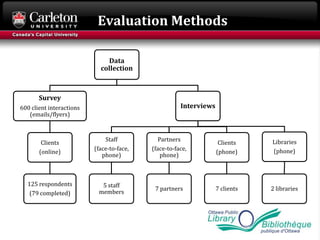
Evaluation Methods
Data
collection
Survey
600 client interactions
(emails/flyers)
Clients
(online)
125 respondents
(79 completed)
Interviews
Staff
(face-to-face,
phone)
5 staff
members
Partners
(face-to-face,
phone)
7 partners
Clients
(phone)
7 clients
Libraries
(phone)
2 libraries
Analysis methods
Mixed methodologies
Quantitative analysis (RQ1. What?)
- Descriptive statistics
- Partial least square (PLS) method
- Means comparison tests
Qualitative analysis (RQ2-Q3. How/Relevance?)
- Content analysis & synthesis
- Nvivo software
Descriptive statistics
Variable Demographics
Sex Male Female
60.7% 32.9%
Age 18-34 35-44 45-54 55 +
10.1% 21.5% 31.6% 36.7%
Education High school
or less
Post secondary -
college
University
6.3% 43.0% 50.6%
Immigrant to
Canada
Yes No
45.6% 54.4%
Immediate and intermediate outcomes
Theoryofchange
PathAnalysis
+ : Positive and significant relationship
-: Negative and significant relationship
1
2
4
7
Awareness
of OPL’s
business
services Business
services
clients
make
informed
decisions :
start /
grow their
business or
change
their mind
Clients’
satisfaction
Entreprene
urs and
business
owners
use/re-use
OPL’s
business
services
+ +
+
+
Focuson
Awareness
Awareness
OPL card
Promotion
tools
Barriers
+ -
+
+ : Positive and significant relationship
- : Negative and significant relationship
Website Flyer
Business
pages on
OPL website Workshops
Online
databases
Business
assistance
by staff
Awareness - Summary
Awareness was significantly influenced by:
• OPL cards
• OPL website & promotional flyers
• Number of barriers
Key Factors for Awareness:
• Networking is key for awareness (referrals)
• Identify & engage key target markets
• Work with loyal OPL customers to find out what they want
• Use innovative approaches to reduce barriers
• Develop partnership with Colleges and Universities
“They must let people know what services are available”
(OPL BS client)
FocusonUse/
Re-Use
+ : Positive and significant relationship
BS
use
Accessibility
+
Workshops
Business
webpages Online
resources
Use/Re-Use was significantly influenced by:
• Accessibility (space, consultations, business collections,
workshops)
• Degree of clients awareness
“We have good collaboration with the Ottawa Public Library.
This helps us to offer more” (OPL partner)
Key Factors for Use/Re-Use:
• Providing space for networking and business support groups
• Tailoring services to specific groups - separate business
training for new and old business owners
• Embrace diversity of clients
Use/Re-use Summary
Focuson
Informeddecison
Informed
decision
Staff
attitude
Satisfaction
+
+ : Positive and significant relationship
appropriate
helpful
prompt
Enough
time
+
Informed Decisions influenced by:
• Number of BS used
• Staff attitude (appropriate, helpful, prompt, timeliness)
Key Factors for Informed Decisions:
• Combined support from OPL & partner organizations
• Satisfaction is directly related to the decision quality
• Stages of starting a business:
o Clients with existing business were significantly more aware
of the business pages and used more services
“The resources I received were immensely helpful in taking me
from the idea stage to the planning stage” (OPL client)
Informed Decisions - Summary
Final Recommendations
Promoting to OPL card holders
Increasing accessibility (broaden services,
networking, workshops, tailor services)
Reducing barriers (location of workshops &
business librarians, online registration, timeliness)
Innovative web based solutions (webcasts, online
video, web materials)
Knowledge Exchange – share with other business
librarians across Ontario and Canada
Questions?roject.

Evaluating Libraries' Business Services

  • 1.
    CES 2013 Conference:June 11, 2013 Presenters: Moujib Bahri, DBA & Micheline Turnau, M.Sc Evaluating libraries business services
  • 2.
    Agenda  Evaluation questions Evaluation methods  Results  Conclusions/recommendations  Questions
  • 3.
    Evaluation questions RQ1. Whatare the key variables impacting awareness, use and informed decision? RQ2. How do clients make an informed decision? RQ3. Relevance - to what extent is OPL’s Business Services meeting and unmet need?
  • 4.
    Resources * Core budget &dedicated funds * Specialized librarian * Network of partner organizations * Resource collections * Computer & business database * Meeting rooms * Branches Activities Networking/ Outreach Creating/ nourishing part, Involvement with the local bus. community Specialized activities Organizing and conducting workshops on various business topics Information provision offering market research and one-on-one consultations Free information Outputs Meetings with current/potent ial partners Membership in business org. Workshops Invitations to subject experts Promotional items Newsletters Market research studies Consultations Reach New and potential entre-preneurs Small business owners Immigrants and new- comers Immediate and intermediate outcomes Awareness of OPL’s business services increase Entrepreneurs and business owners use/re- use OPL’s business services Business services clients make informed decisions : start / grow their business or change their mind Long term outcomes Improving the competitive- ness of SMEs Building a strong Ottawa community Situation Statement: OPL is offering BS to support Ottawa’s economic development. The literature showed that people rarely think of going to the library for BI.
  • 5.
    Evaluation Methods Data collection Survey 600 clientinteractions (emails/flyers) Clients (online) 125 respondents (79 completed) Interviews Staff (face-to-face, phone) 5 staff members Partners (face-to-face, phone) 7 partners Clients (phone) 7 clients Libraries (phone) 2 libraries
  • 6.
    Analysis methods Mixed methodologies Quantitativeanalysis (RQ1. What?) - Descriptive statistics - Partial least square (PLS) method - Means comparison tests Qualitative analysis (RQ2-Q3. How/Relevance?) - Content analysis & synthesis - Nvivo software
  • 7.
    Descriptive statistics Variable Demographics SexMale Female 60.7% 32.9% Age 18-34 35-44 45-54 55 + 10.1% 21.5% 31.6% 36.7% Education High school or less Post secondary - college University 6.3% 43.0% 50.6% Immigrant to Canada Yes No 45.6% 54.4%
  • 8.
    Immediate and intermediateoutcomes Theoryofchange PathAnalysis + : Positive and significant relationship -: Negative and significant relationship 1 2 4 7 Awareness of OPL’s business services Business services clients make informed decisions : start / grow their business or change their mind Clients’ satisfaction Entreprene urs and business owners use/re-use OPL’s business services + + + +
  • 9.
    Focuson Awareness Awareness OPL card Promotion tools Barriers + - + +: Positive and significant relationship - : Negative and significant relationship Website Flyer Business pages on OPL website Workshops Online databases Business assistance by staff
  • 10.
    Awareness - Summary Awarenesswas significantly influenced by: • OPL cards • OPL website & promotional flyers • Number of barriers Key Factors for Awareness: • Networking is key for awareness (referrals) • Identify & engage key target markets • Work with loyal OPL customers to find out what they want • Use innovative approaches to reduce barriers • Develop partnership with Colleges and Universities “They must let people know what services are available” (OPL BS client)
  • 11.
    FocusonUse/ Re-Use + : Positiveand significant relationship BS use Accessibility + Workshops Business webpages Online resources
  • 12.
    Use/Re-Use was significantlyinfluenced by: • Accessibility (space, consultations, business collections, workshops) • Degree of clients awareness “We have good collaboration with the Ottawa Public Library. This helps us to offer more” (OPL partner) Key Factors for Use/Re-Use: • Providing space for networking and business support groups • Tailoring services to specific groups - separate business training for new and old business owners • Embrace diversity of clients Use/Re-use Summary
  • 13.
    Focuson Informeddecison Informed decision Staff attitude Satisfaction + + : Positiveand significant relationship appropriate helpful prompt Enough time +
  • 14.
    Informed Decisions influencedby: • Number of BS used • Staff attitude (appropriate, helpful, prompt, timeliness) Key Factors for Informed Decisions: • Combined support from OPL & partner organizations • Satisfaction is directly related to the decision quality • Stages of starting a business: o Clients with existing business were significantly more aware of the business pages and used more services “The resources I received were immensely helpful in taking me from the idea stage to the planning stage” (OPL client) Informed Decisions - Summary
  • 15.
    Final Recommendations Promoting toOPL card holders Increasing accessibility (broaden services, networking, workshops, tailor services) Reducing barriers (location of workshops & business librarians, online registration, timeliness) Innovative web based solutions (webcasts, online video, web materials) Knowledge Exchange – share with other business librarians across Ontario and Canada
  • 16.

Editor's Notes

  • #7 What?Runs multiple regressions at the same timeWhy?More than one dependentawareness, use, informeddecision and satisfactionPathanalysisLatent variables (constructs)How?SmartPLS 2.0 software
  • #15 Important to track stage of business