Download as PDF, PPTX




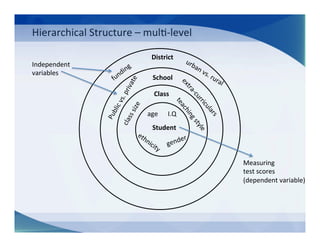
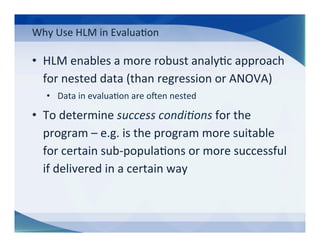
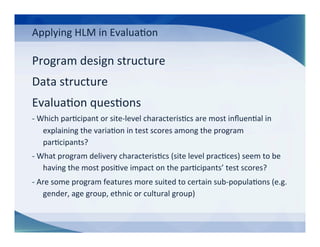
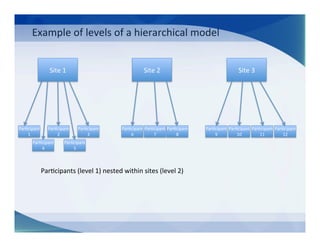
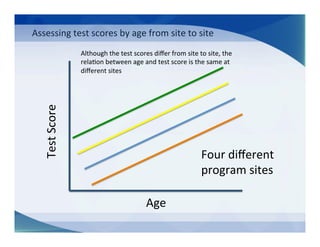
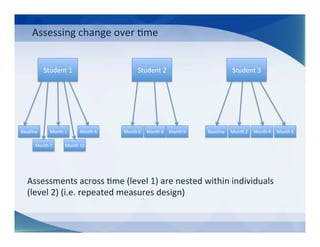
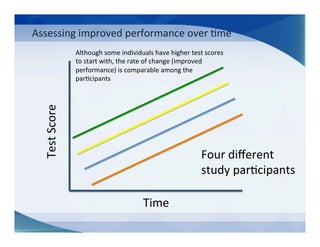

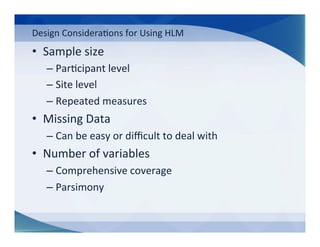
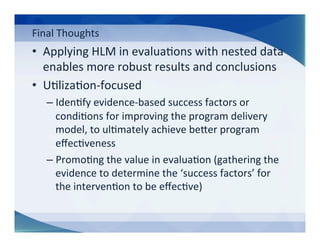


This document discusses hierarchical linear modeling (HLM) and how it can be used to analyze data from program evaluations with nested structures. HLM accounts for the non-independence of observations by modeling variability at multiple levels, such as students within classrooms or repeated measures over time within individuals. It allows evaluators to determine how program outcomes vary across these levels and which participant or site characteristics most influence outcomes. The presenters provide examples of how HLM can be applied to evaluation questions to identify evidence-based factors for improving a program's effectiveness.


![[Bảo vệ khóa luận] Dissertation defense](https://cdn.slidesharecdn.com/ss_thumbnails/dissertationdefense-150514155545-lva1-app6892-thumbnail.jpg?width=640&height=640&fit=bounds)


