3 July 2013
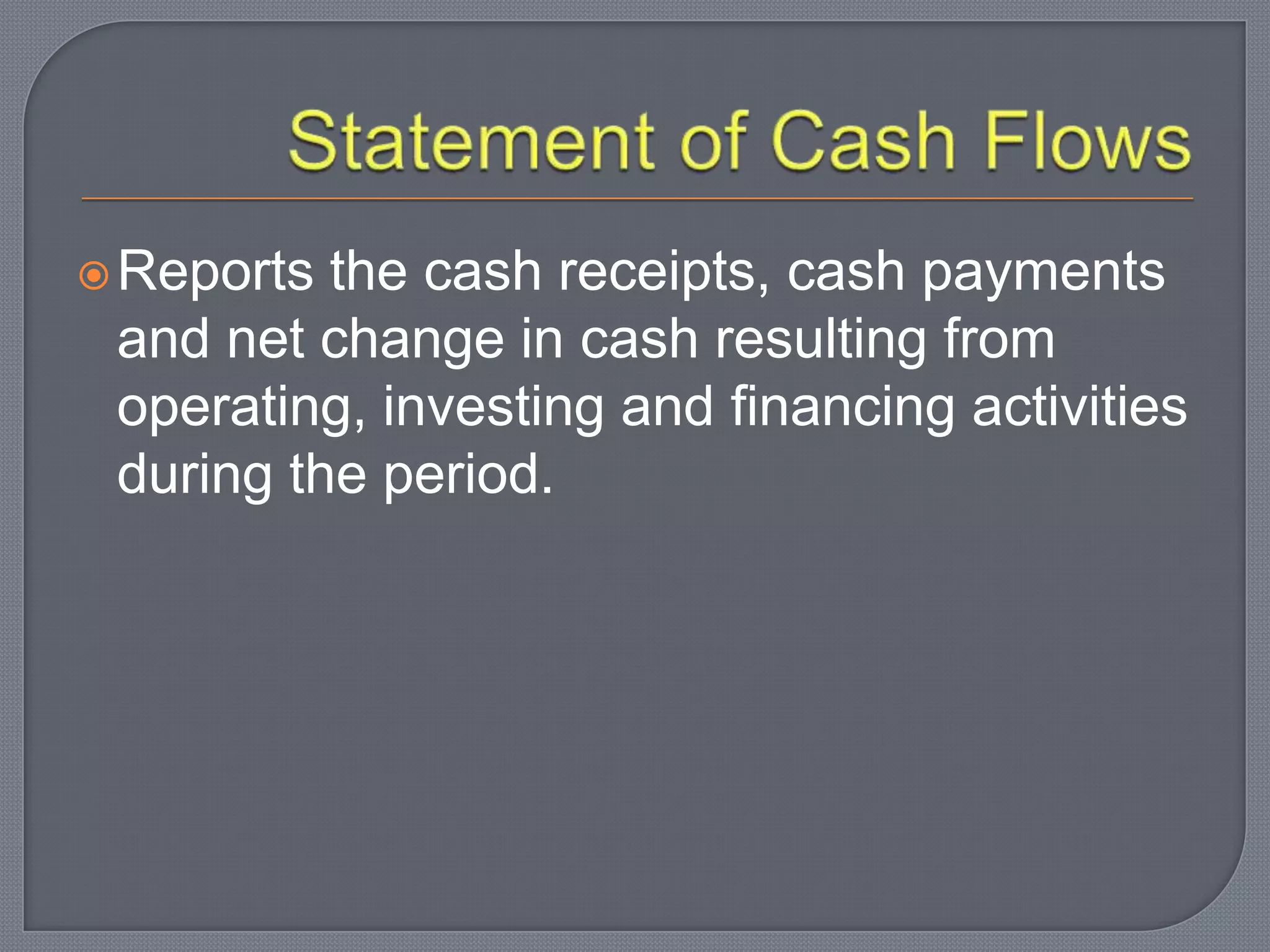
Reports the cash receipts, cash payments
and net change in cash resulting from
operating, investing and financing activities
during the period.
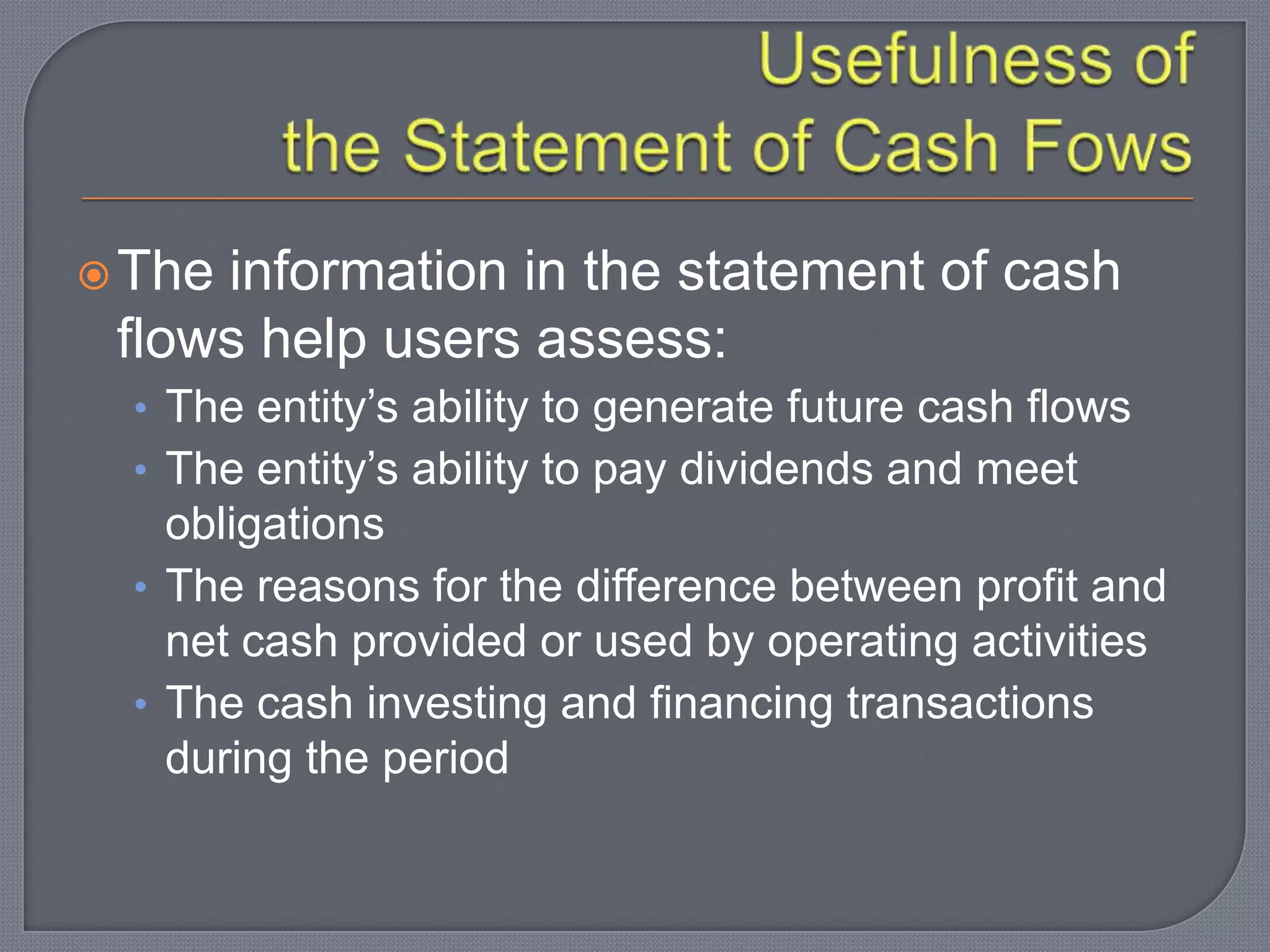
The information in the statement of cash
flows help users assess:
• The entity’s ability to generate future cash flows
• The entity’s ability to pay dividends and meet
obligations
• The reasons for the difference between profit and
net cash provided or used by operating activities
• The cash investing and financing transactions
during the period
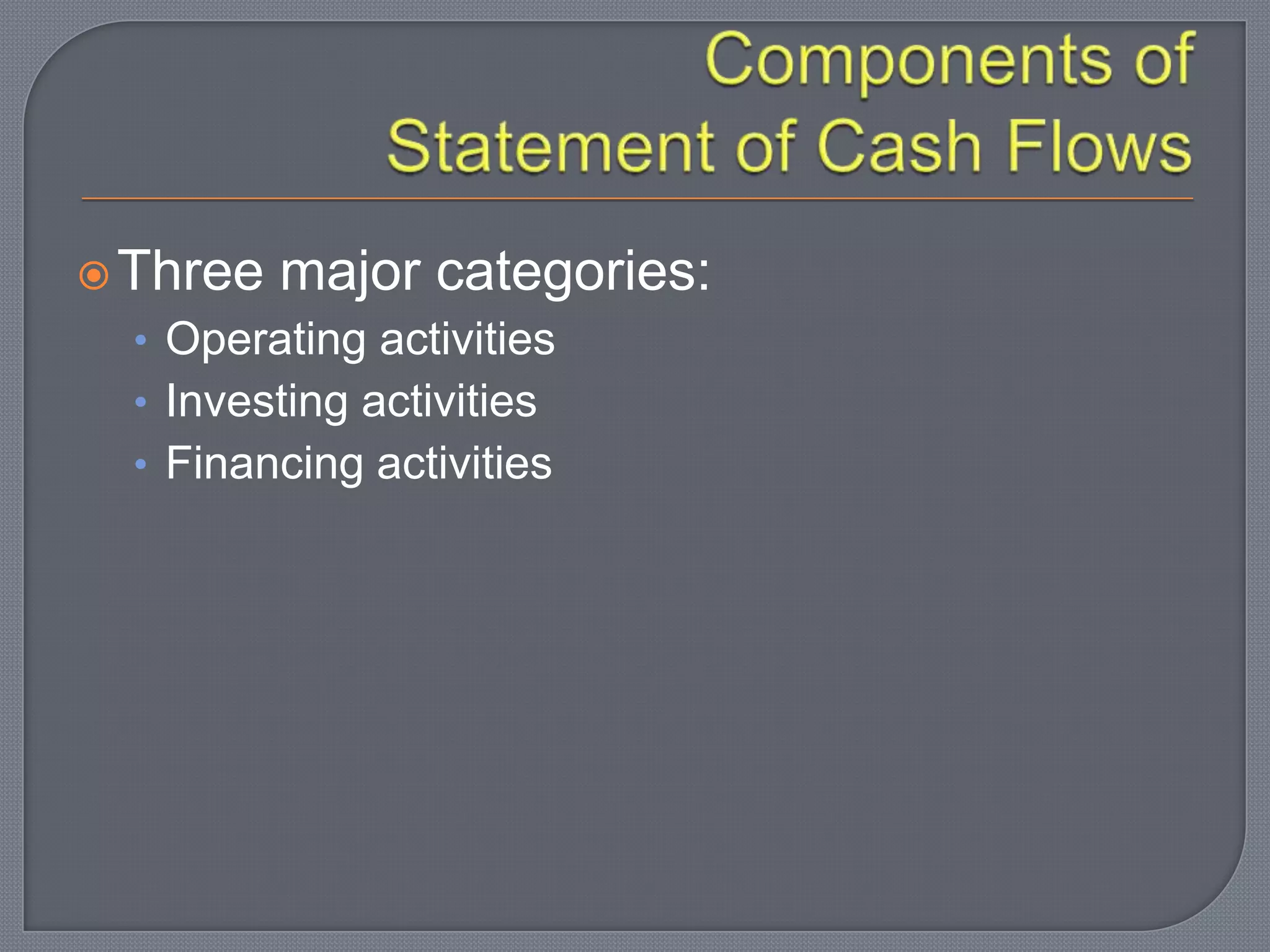
Three major categories:
• Operating activities
• Investing activities
• Financing activities
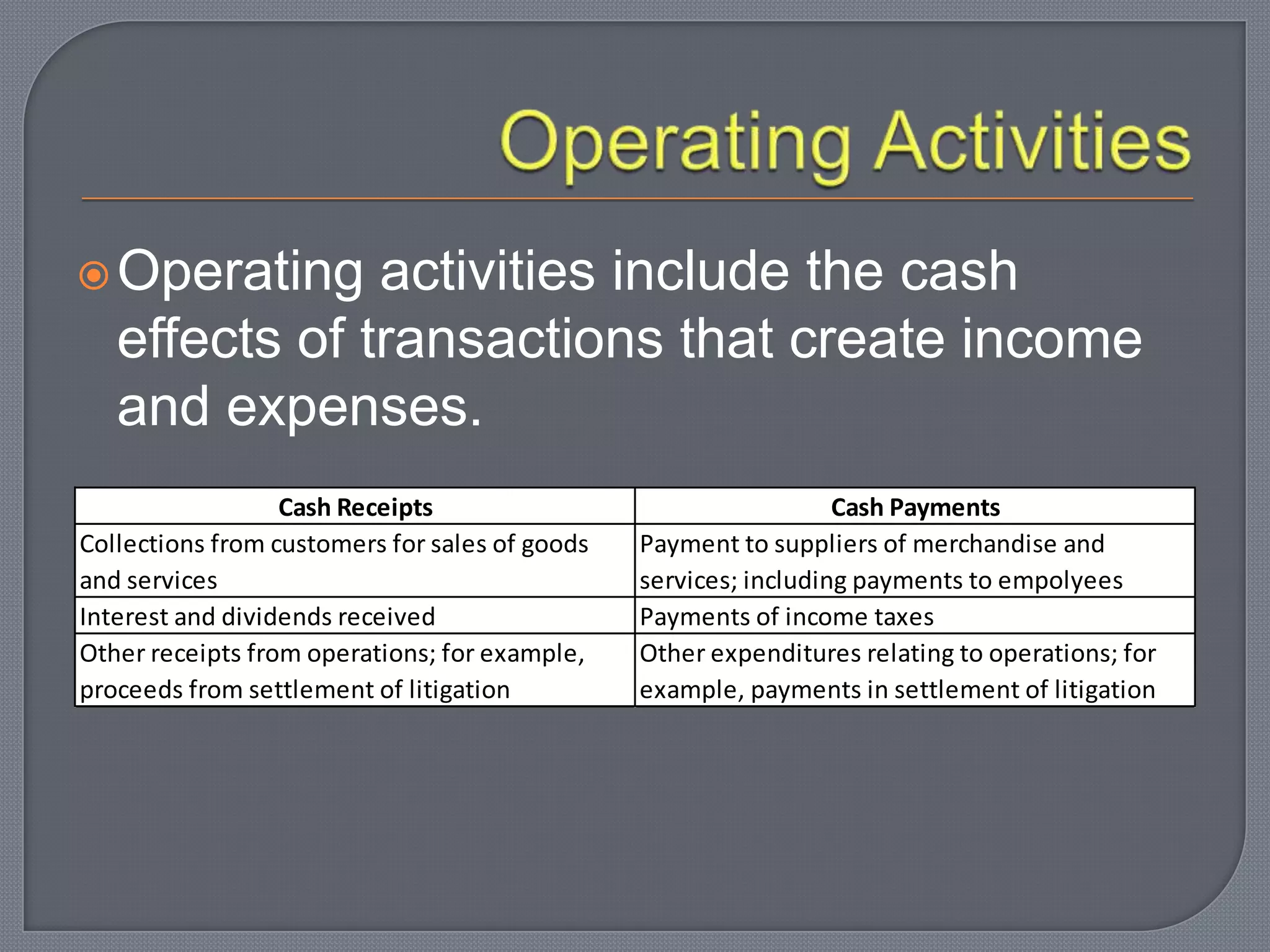
Operating activities include the cash
effects of transactions that create income
and expenses.
Cash Receipts Cash Payments
Collections from customers for sales of goods
and services
Payment to suppliers of merchandise and
services; including payments to empolyees
Interest and dividends received Payments of income taxes
Other receipts from operations; for example,
proceeds from settlement of litigation
Other expenditures relating to operations; for
example, payments in settlement of litigation
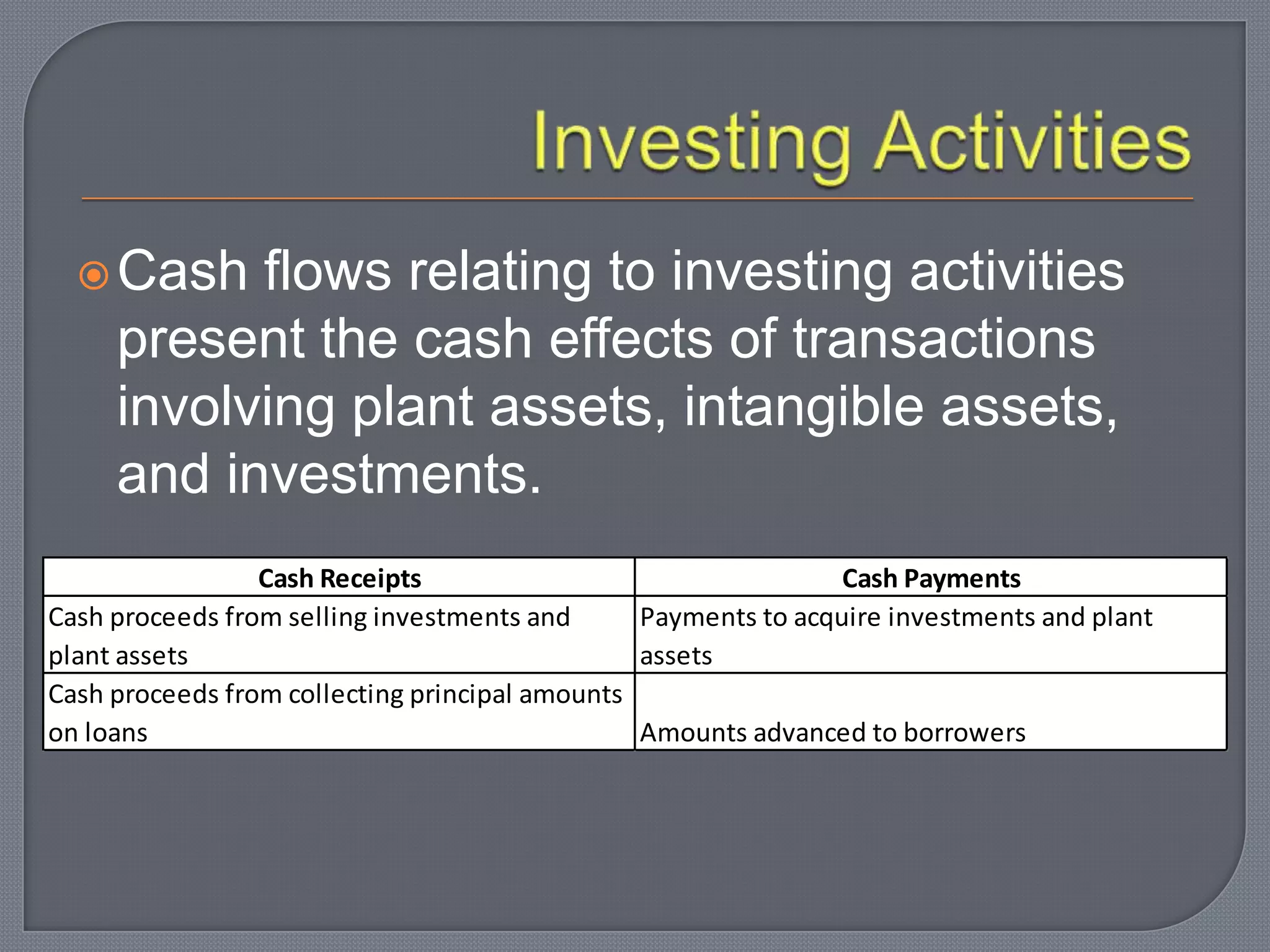
Cash flows relating to investing activities
present the cash effects of transactions
involving plant assets, intangible assets,
and investments.
Cash Receipts Cash Payments
Cash proceeds from selling investments and
plant assets
Payments to acquire investments and plant
assets
Cash proceeds from collecting principal amounts
on loans Amounts advanced to borrowers
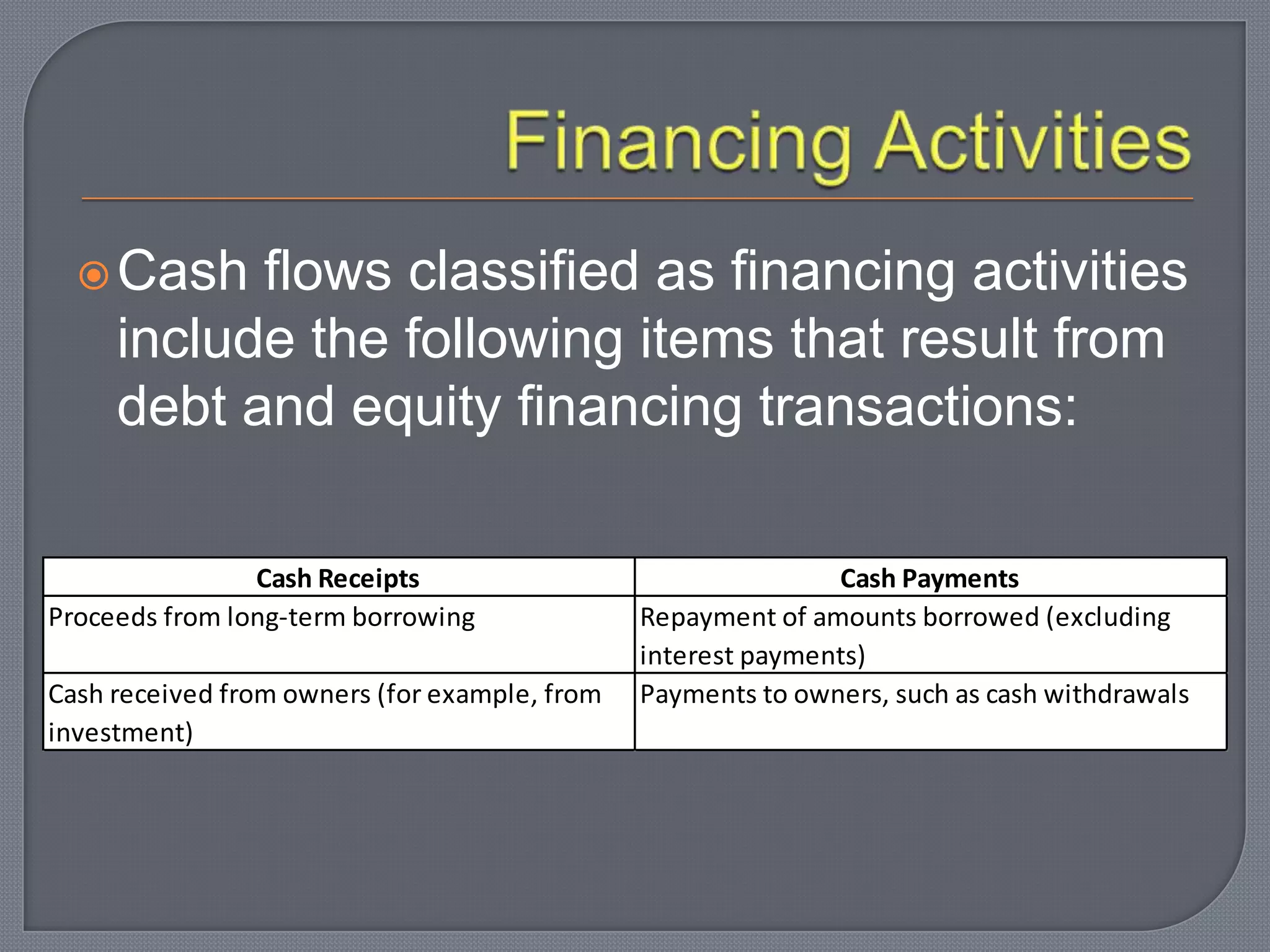
Cash flows classified as financing activities
include the following items that result from
debt and equity financing transactions:
Cash Receipts Cash Payments
Proceeds from long-term borrowing Repayment of amounts borrowed (excluding
interest payments)
Cash received from owners (for example, from
investment)
Payments to owners, such as cash withdrawals
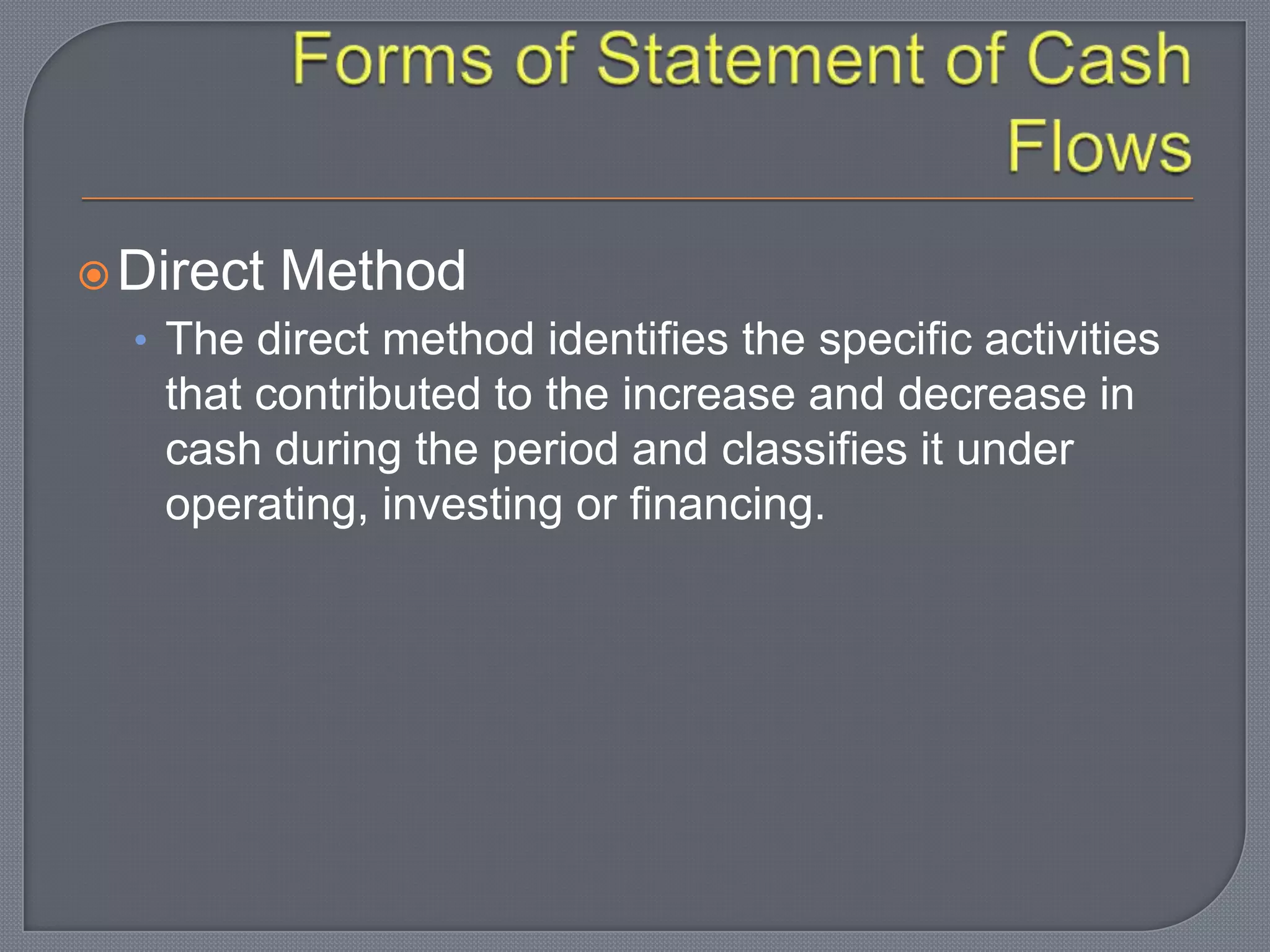
Direct Method
• The direct method identifies the specific activities
that contributed to the increase and decrease in
cash during the period and classifies it under
operating, investing or financing.
Indirect Method
• This method is normally used by companies that
employ the accrual method rather than cash
method in their accounting system. This format
starts with net income and reconciles to cash
flows from operating activities.

Evaluating cash flows 07032013

  • 1.
  • 2.
    Reports the cashreceipts, cash payments and net change in cash resulting from operating, investing and financing activities during the period.
  • 3.
    The information inthe statement of cash flows help users assess: • The entity’s ability to generate future cash flows • The entity’s ability to pay dividends and meet obligations • The reasons for the difference between profit and net cash provided or used by operating activities • The cash investing and financing transactions during the period
  • 4.
    Three major categories: •Operating activities • Investing activities • Financing activities
  • 5.
    Operating activities includethe cash effects of transactions that create income and expenses. Cash Receipts Cash Payments Collections from customers for sales of goods and services Payment to suppliers of merchandise and services; including payments to empolyees Interest and dividends received Payments of income taxes Other receipts from operations; for example, proceeds from settlement of litigation Other expenditures relating to operations; for example, payments in settlement of litigation
  • 6.
    Cash flows relatingto investing activities present the cash effects of transactions involving plant assets, intangible assets, and investments. Cash Receipts Cash Payments Cash proceeds from selling investments and plant assets Payments to acquire investments and plant assets Cash proceeds from collecting principal amounts on loans Amounts advanced to borrowers
  • 7.
    Cash flows classifiedas financing activities include the following items that result from debt and equity financing transactions: Cash Receipts Cash Payments Proceeds from long-term borrowing Repayment of amounts borrowed (excluding interest payments) Cash received from owners (for example, from investment) Payments to owners, such as cash withdrawals
  • 8.
    Direct Method • Thedirect method identifies the specific activities that contributed to the increase and decrease in cash during the period and classifies it under operating, investing or financing.
  • 9.
    Indirect Method • Thismethod is normally used by companies that employ the accrual method rather than cash method in their accounting system. This format starts with net income and reconciles to cash flows from operating activities.