PRESENTED BY:
J.Manohar Reddy
REG NO Y19MPH02052
DEPARTMENT OF PHARMCOLOGY
HINDU COLLEGE OF PHARMACY
1 1
Euthanasia
❖ Introduction
❖ Definition
❖ History
❖ Objectives of euthanasia
❖ Methods of Euthanasia
❖ Applications
❖ Advantages
❖ Disadvantages
❖ References
1 2
Euthanasia
Introduction
Animals are killed in laboratories or bleeding establishments for
various reasons.
At the end of an experiment or when there might be continuing
adverse effect.
When levels of pain, distress and suffering are likely to exceed
the designated level.
Unwanted stock or those with unsuitable characteristics , for
example, type or sex, are not needed.
1 3
Euthanasia
Definition
The term euthanasia is derived from the Greek terms eu meaning
good and thanatos meaning death.
A “good death” would be one that occurs with minimal pain and
distress. In the context
Euthanasia is the act of inducing humane death in an animal.
Sacrificing the experimental animal after use by gentle procedure
causing minimum of physical and mental suffering is called
euthanasia (Painless killing)
1 4
Euthanasia
History
The word "euthanasia" was first used in a medical
context by Francis Bacon in the 17th century, to
refer to an easy, painless, happy death, during which
it was a "physician's responsibility to alleviate the
'physical sufferings' of the body."
1 5
Euthanasia
Objectives of euthanasia
The primary criteria for euthanasia in terms of animal welfare are
that the method be painless, achieve rapid unconsciousness and
death, require minimum restraint, avoid excitement, is
appropriate for the age, species, and health of the animal, must
minimize fear and psychological stress in the animal, be reliable,
reproducible, irreversible, simple to administer (in small doses if
possible) and safe for the operator, and, so far as possible, be
aesthetically acceptable for the operator.
1 6
Euthanasia
Methods of Euthanasia
Chemical methods.
✓ Inhalant agents
✓ Injectable agents
Physical methods
✓ Penetrating Captive Bolt
✓ Euthanasia By A Blow To The Head
✓ Gunshot
✓ Cervical Dislocation
✓ Decapitation
✓ Electrocution
1 7
Euthanasia
Physical methods-Continued
✓ Microwave Irradiation
✓ Thoracic (Cardiopulmonary, Cardiac) Compression
✓ Kill Traps
✓ Maceration
✓ Adjunctive Methods
❑ Exsanguination
❑ Stunning
❑ Pithing
1 8
Euthanasia
Chemical methods.
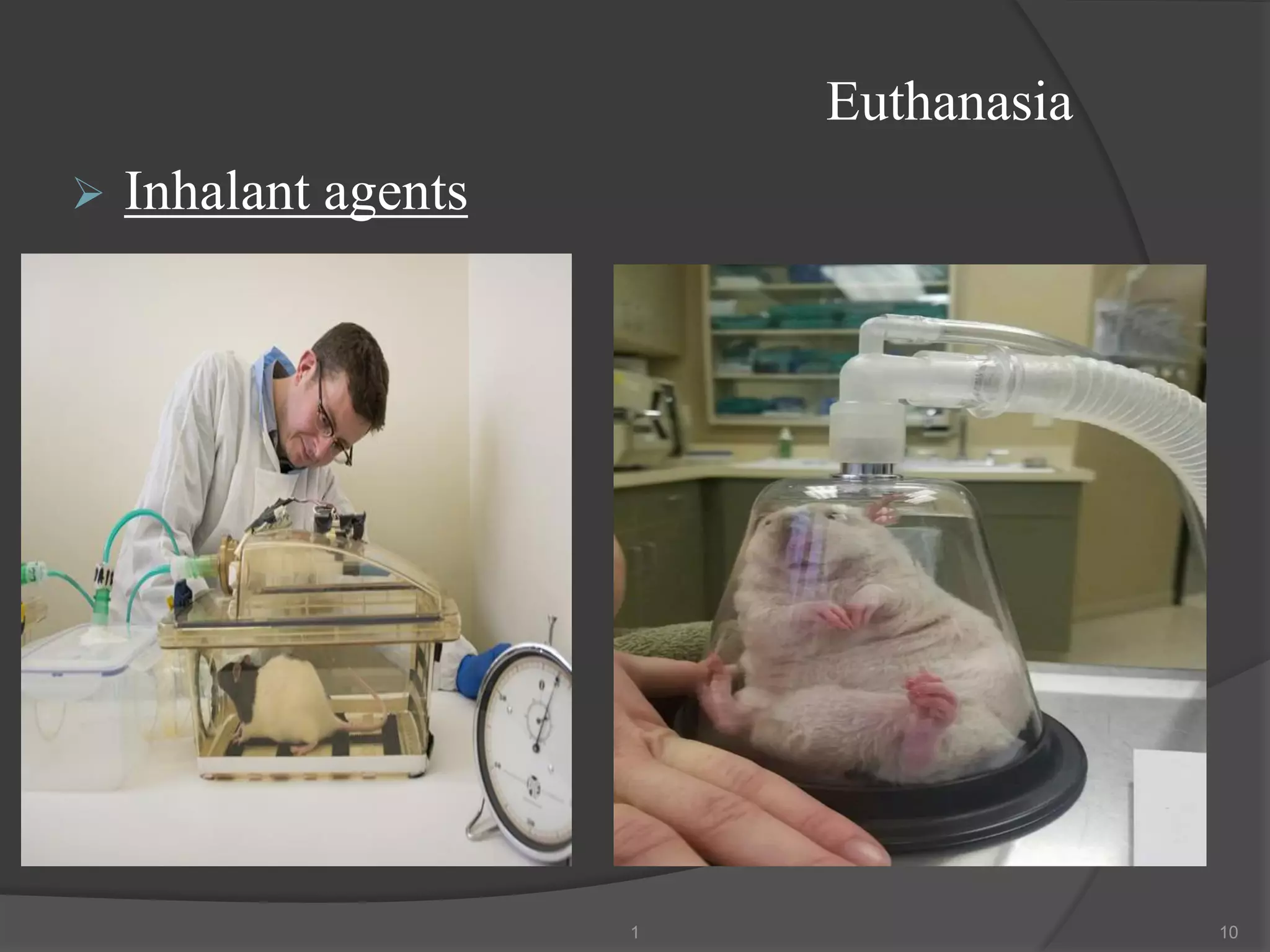
Inhalant agents
Any gas that is inhaled must reach a certain concentration in the body
before it is effective.
Best if rapid exposure in enclosed receptacle.
Disadvantages:
Hazardous to personnel
Slow time may cause agitation
Deep anesthesia level may induce seizures
Neonates appear resistant to hypoxia
Inhalant agents Ex –
ether, halothane, methoxyflurane, isoflurane, enflurane,
chloroform, nitrogen, nitrous oxide, carbon di oxide, carbon
monoxide, argon, hydrogen cyanide.
1 9
Euthanasia
➢ Inhalant agents
1 10
Euthanasia
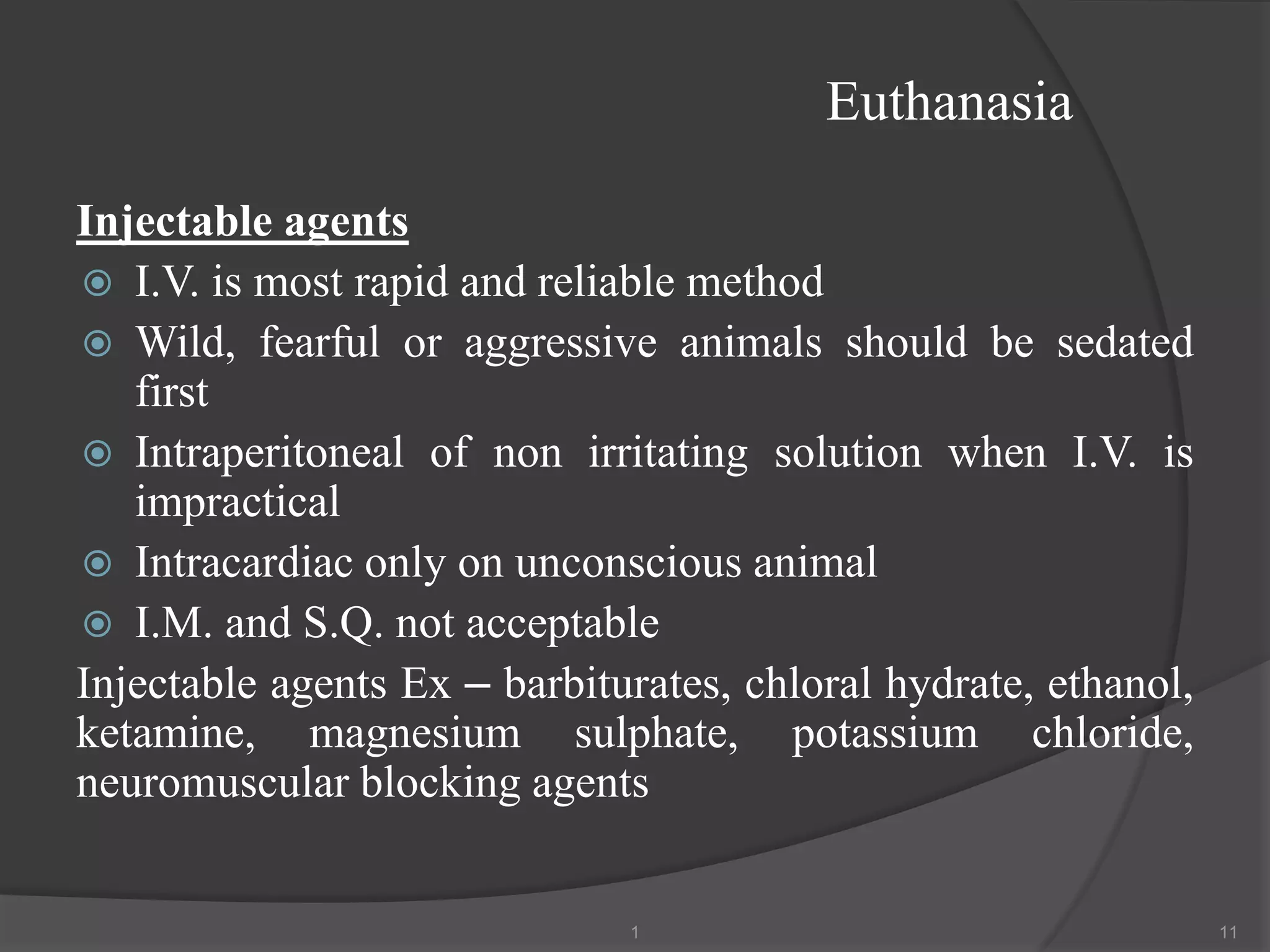
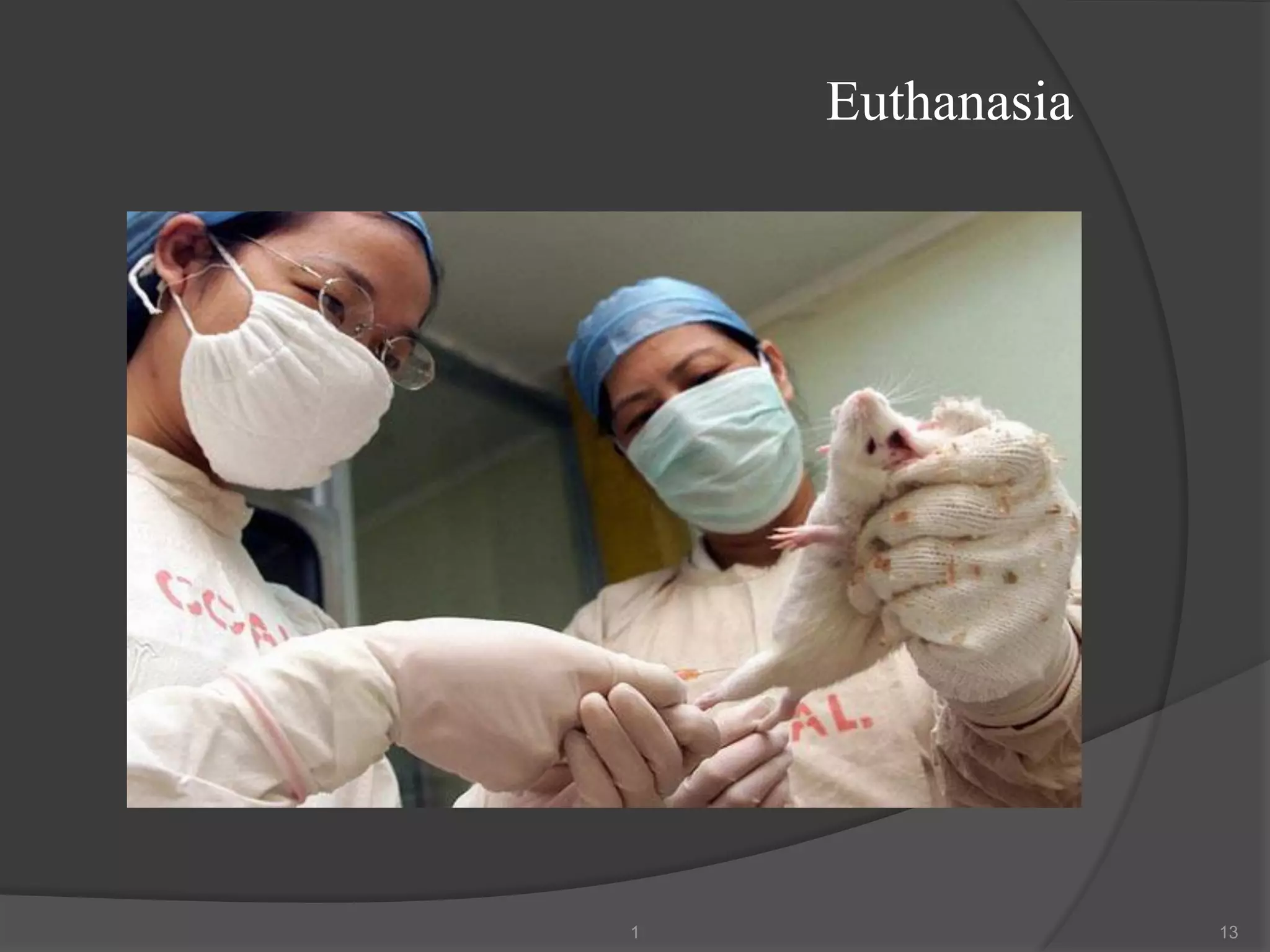
Injectable agents
 I.V. is most rapid and reliable method
 Wild, fearful or aggressive animals should be sedated
first
 Intraperitoneal of non irritating solution when I.V. is
impractical
 Intracardiac only on unconscious animal
 I.M. and S.Q. not acceptable
Injectable agents Ex – barbiturates, chloral hydrate, ethanol,
ketamine, magnesium sulphate, potassium chloride,
neuromuscular blocking agents
1 11
Euthanasia
Barbituates depress the Central Nervous System in descending
order beginning with the cerebral cortex unconsciousness
anesthesia apnea. cardiac arrest death.
Advantages:
Speed of action .
Minimal discomfort to animal
Less expensive than other euthanasia agents
Disadvantages:
Requires trained personnel.
Each animal must be individually restrained.
Strict accounting to DEA .
Movement, vocalization, Gasp may occur in unconscious animal
1 12
Euthanasia
1 13
Euthanasia
Physical methods
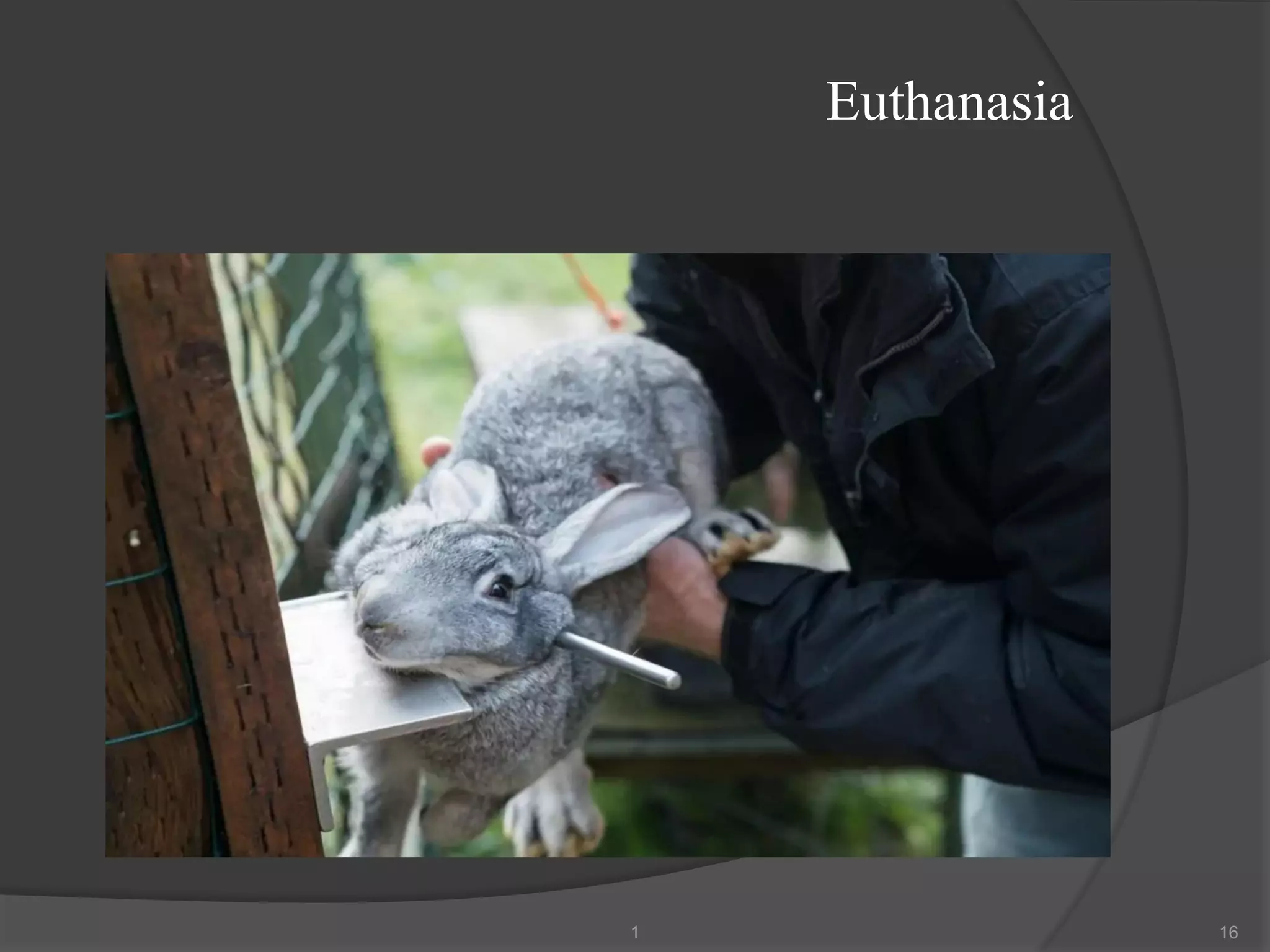
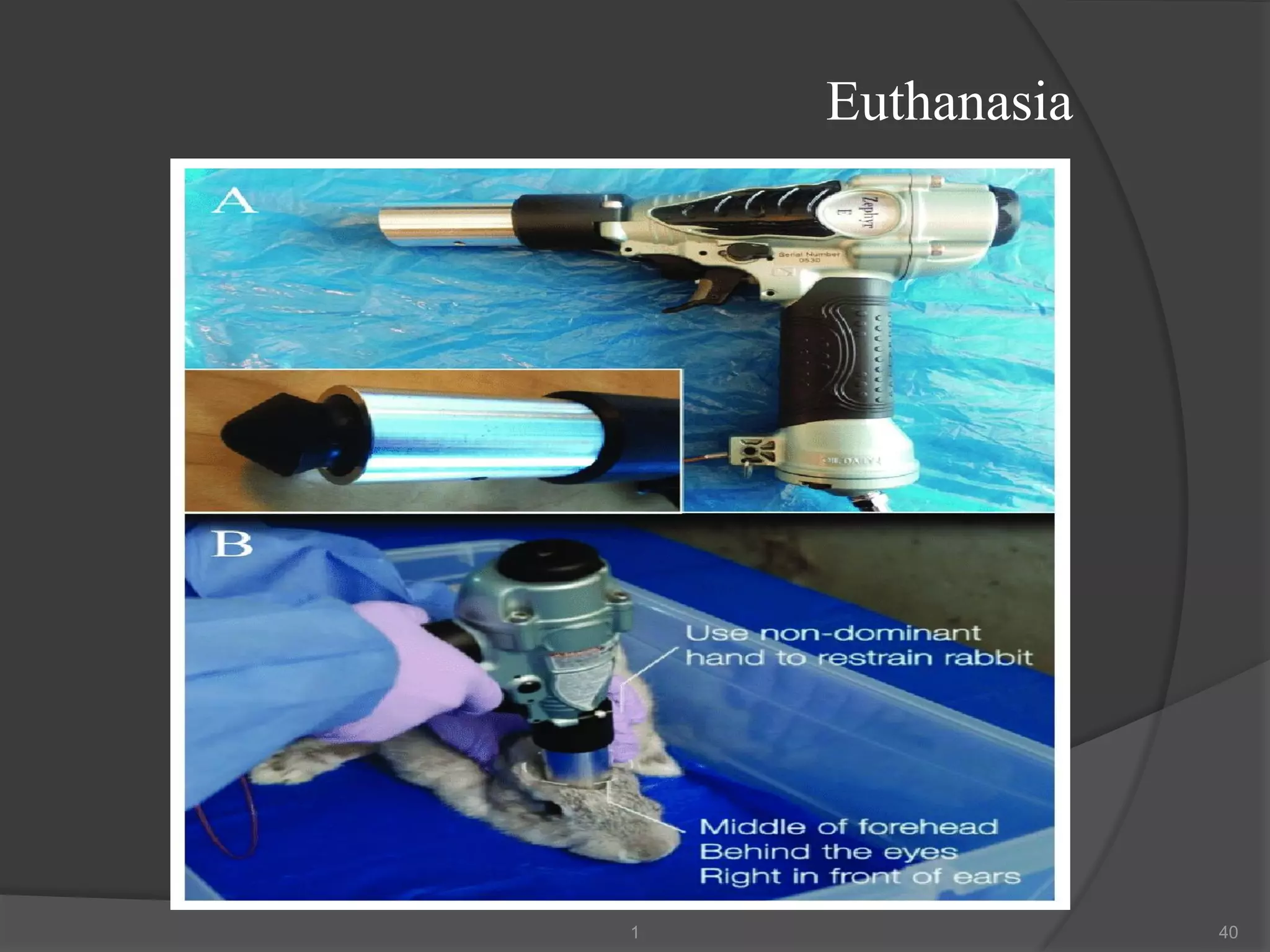
Penetrating Captive Bolt
A penetrating captive bolt is used for euthanasia of ruminants, horses,
swine, laboratory rabbits, and dogs. Its mode of action is concussion
and trauma to the cerebral hemisphere and brainstem
Advantages—
the penetrating captive bolt is an effective method of euthanasia for use
in slaughterhouses, in research facilities, and on the farm when use of
drugs is inappropriate.
Disadvantages—
It is aesthetically displeasing.
Death may not occur if equipment is not maintained and used properly.
1 14
Euthanasia
Euthanasia By A Blow To The Head
Euthanasia by a blow to the head must be evaluated in terms of
the anatomic features of the species on which it is to be
performed. The anatomic features of neonatal calves, however,
make a blow to the head in this species unacceptable.
Personnel performing euthanasia by use of a blow to the head
must be properly trained and monitored for proficiency with this
method of euthanasia, and they must be aware of its aesthetic
implications
1 15
Euthanasia
1 16
Euthanasia
Gunshot
A properly placed gunshot can cause immediate insensibility and
humane death. In some circumstances, a gunshot may be the only
practical method of euthanasia.
Advantages—
Loss of consciousness is instantaneous if the projectile destroys most of
the brain.
Given the need to minimize stress induced by handling and human
contact, gunshot may at times be the most practical and logical method
of euthanasia of wild or free-ranging species.
Disadvantages—
(1) Gunshot may be dangerous to personnel.
(2) It is aesthetically unpleasant.
(3) Under field conditions, it may be difficult to hit the vital target area.
1 17
Euthanasia
1 18
Euthanasia
Cervical Dislocation
Cervical dislocation is a technique that has been used for many
years and, when performed by well trained individuals, appears to
be humane. However, there are few scientific studies to confirm
this observation.
Advantages—
Cervical dislocation is a technique that may induce rapid loss of
consciousness.
It does not chemically contaminate tissue.
It is rapidly accomplished
1 19
Euthanasia
1 20
Euthanasia
Disadvantages—
1 cervical dislocation may be aesthetically displeasing to
personnel.
2 Cervical dislocation requires mastering technical skills to
ensure loss of consciousness is rapidly induced.
3 Its use is limited to poultry, other small birds, mice, and
immature rats and rabbits.
Decapitation
Decapitation can be used to euthanatize rodents and small rabbits
in research settings. It provides a means to recover tissues and
body fluids that are chemically uncontaminated.
1 21
Euthanasia
Advantages—
Decapitation is a technique that appears to induce rapid loss of
consciousness.
It does not chemically contaminate tissues.
It is rapidly accomplished.
Disadvantages—
Handling and restraint required to perform this technique may be
distressful to animals.
The interpretation of the presence of electrical activity in the
brain following decapitation has created controversy and its
importance may still be open to debate.
1 22
Euthanasia
1 23
Euthanasia
Electrocution
Electrocution, using alternating current, has been used as a
method of euthanasia for species such as dogs, cattle, sheep,
swine, foxes, and mink. Electrocution induces death by cardiac
fibrillation, which causes cerebral hypoxia. However, animals do
not lose consciousness for 10 to 30 seconds or more after onset of
cardiac fibrillation.
Advantages—
(1) Electrocution is humane if the animal is first rendered
unconscious.
(2) It does not chemically contaminate tissues. (3) It is
economical.
1 24
Euthanasia
1 25
Euthanasia
Disadvantages—
(1) Electrocution may be hazardous to personnel.
(2) When conventional single-animal probes are used, it may not
be a useful method for mass euthanasia because so much time
is required per animal.
Microwave Irradiation
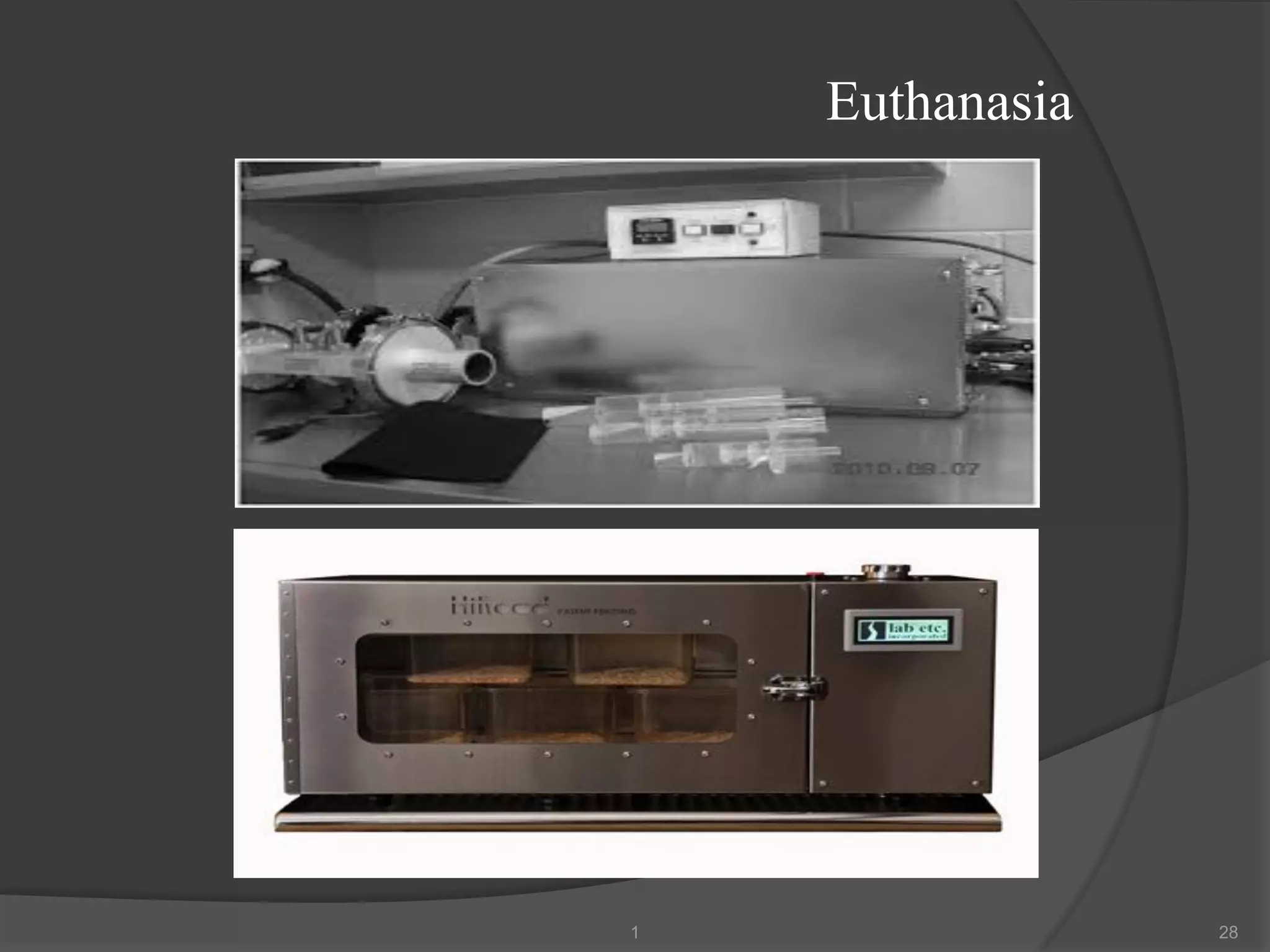
Heating by microwave irradiation is used primarily by
neurobiologists to fix brain metabolites in vivo while maintaining
the anatomic integrity of the brain. Microwave instruments have
been specifically designed for use in euthanasia of laboratory
mice and rats.
1 26
Euthanasia
Advantages—
(1) Loss of consciousness is achieved in less than 100ms, and
death in less than 1 second.
(2) This is the most effective method to fix brain tissue in vivo
for subsequent assay of enzymatically labile chemicals.
Disadvantages—
(1) Instruments are expensive.
(2) Only animals the size of mice and rats can be euthanatized
with commercial instruments that are currently available.
1 27
Euthanasia
1 28
Euthanasia
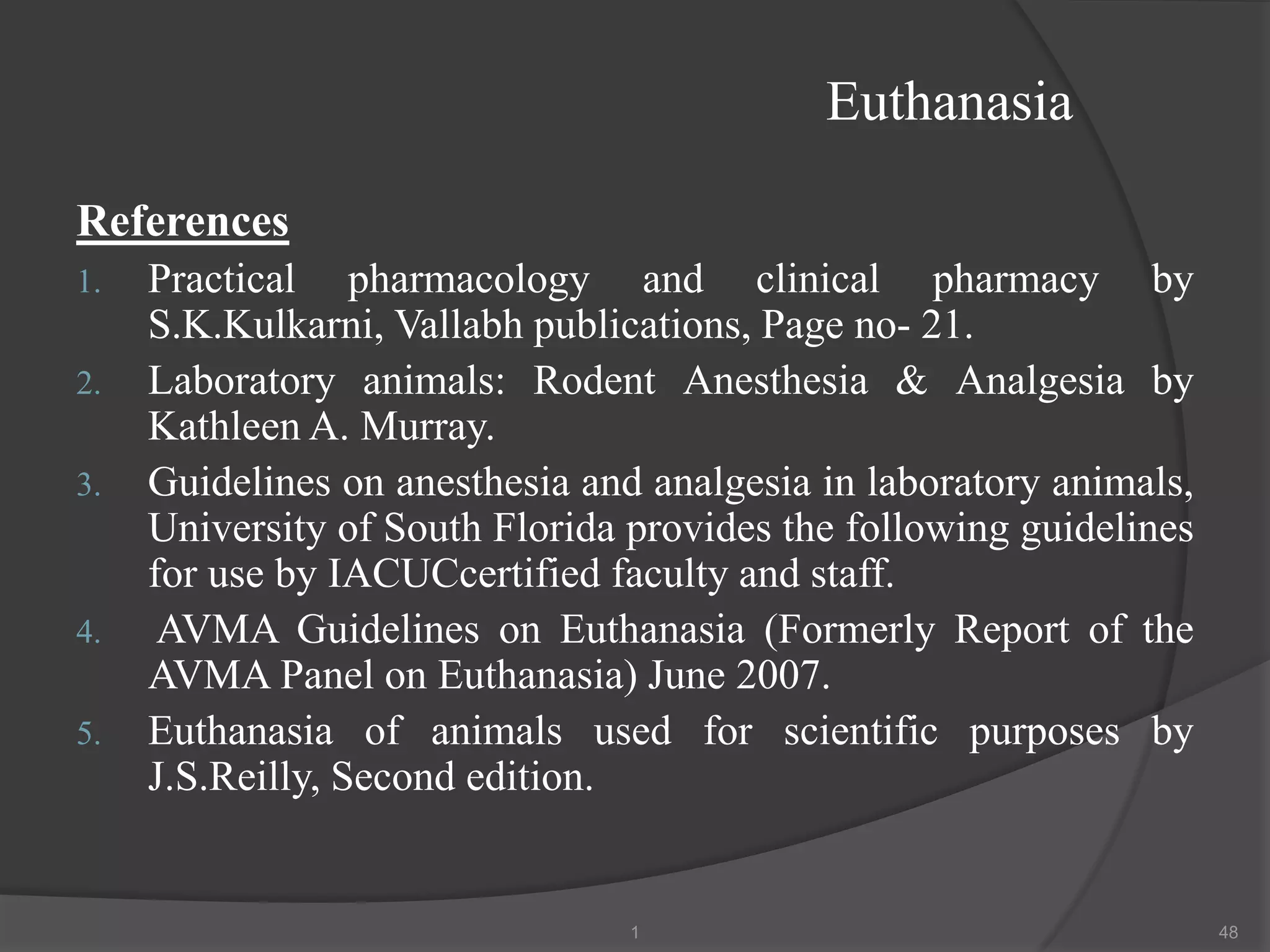
Thoracic (Cardiopulmonary, Cardiac) Compression
Thoracic (cardiopulmonary, cardiac) compression is used to
euthanatize small- to medium-sized free ranging birds when
alternate techniques described in these guidelines are not
practical.
Advantages—
(1) This technique is rapid.
(2) It is apparently painless.
(3) It maximizes carcass use for analytical/contaminant studies.
Disadvantages—
(1) It may be considered aesthetically unpleasant by onlookers.
(2) The degree of distress is unknown.
1 29
Euthanasia
1 30
Euthanasia
Kill Traps
Mechanical kill traps are used for the collection and killing of
small, free-ranging mammals for commercial purposes (fur, skin,
or meat), scientific purposes, to stop property damage, and to
protect human safety.
Advantage—
Free-ranging small mammals may be killed with minimal distress
associated with handling and human contact.
Disadvantages—
(1) Traps may not afford death within acceptable time periods.
(2) Selectivity and efficiency is dependent on the skill and
proficiency of the operator.
1 31
Euthanasia
1 32
Euthanasia
Maceration
Maceration, via use of a specially designed mechanical apparatus
having rotating blades or projections, causes immediate
fragmentation and death of day-old poultry and embryonated
eggs.
Advantages—
(1) Death is almost instantaneous.
(2)The method is safe for workers.
(3) Large numbers of animals can be killed quickly.
Disadvantages—
(1) Special equipment is required.
(2) Macerated tissues may present biosecurity risks.
1 33
Euthanasia
Adjunctive Methods
Stunning and pithing, when properly done, induce loss of
consciousness but do not ensure death. Therefore, these methods
must be used only in conjunction with other procedures, such as
pharmacologic agents, exsanguination, or decapitation to
euthanatize the animal.
Exsanguination
Exsanguination can be used to ensure death subsequent to
stunning, or in otherwise unconscious animals. Because anxiety
is associated with extreme hypovolemia, exsanguination must not
be used as a sole means of euthanasia. Animals may be
exsanguinated to obtain blood products, but only when they are
sedated, stunned, or anesthetized.
1 34
Euthanasia
1 35
Euthanasia
Stunning
Animals may be stunned by a blow to the head, by use of a
nonpenetrating captive bolt, or by use of electric current.
Stunning must be followed immediately by a method that ensures
death.
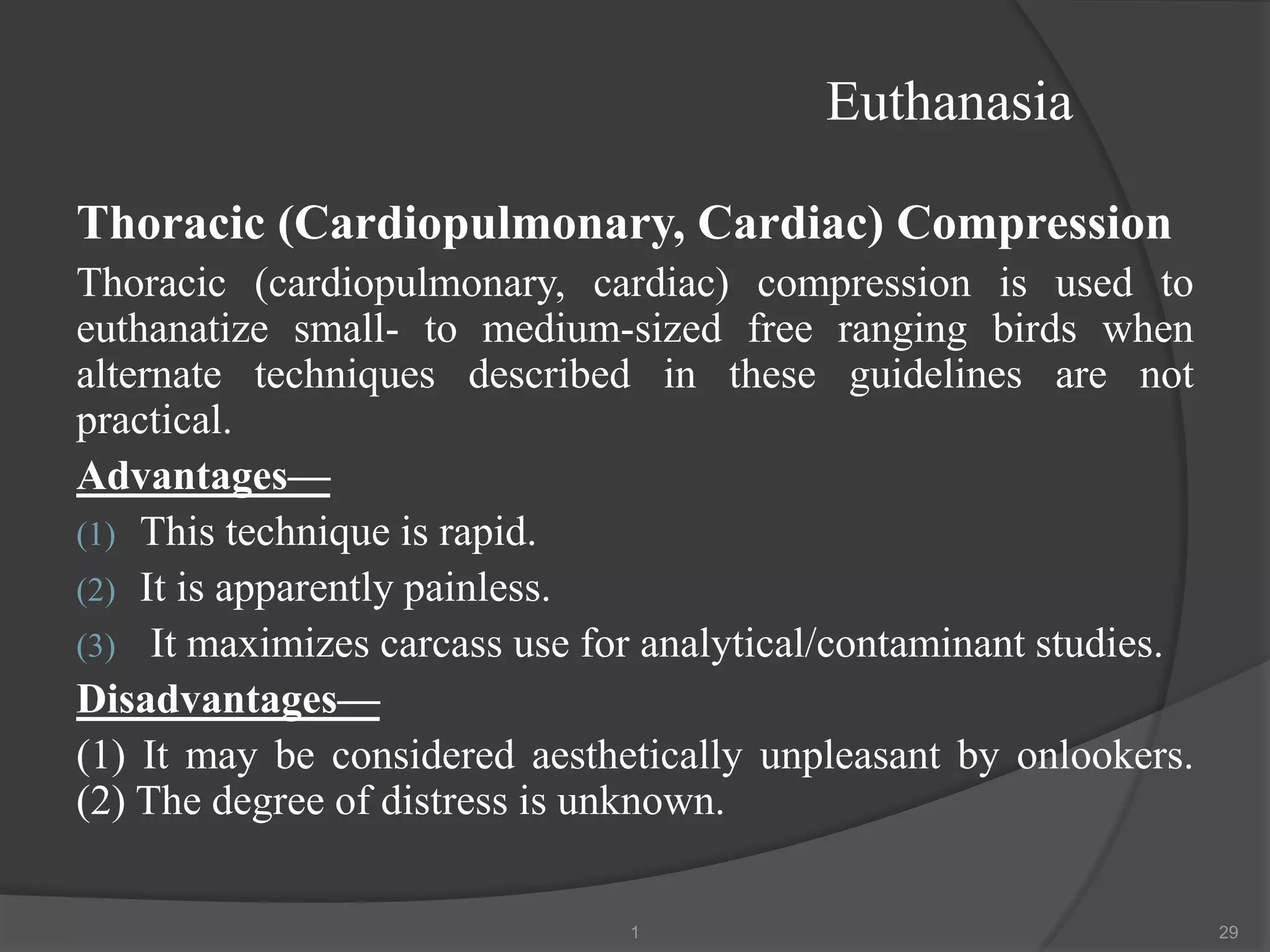
Blow to the head—
Stunning by a blow to the head is used primarily in small
laboratory animals with thin craniums. A single sharp blow must
be delivered to the central skull bones with sufficient force to
produce immediate depression of the central nervous system.
When properly done, consciousness is lost rapidly.
1 36
Euthanasia
1 37
Stunning
Euthanasia
1 38
Blow to the head
Euthanasia
Non-penetrating captive bolt—
A non-penetrating captive bolt may be used to induce loss of
consciousness in ruminants, horses, and swine.
Signs of effective stunning by captive bolt are immediate collapse
and a several second period of tetanic spasm, followed by slow
hind limb movements of increasing frequency.
Other aspects regarding use of the non-penetrating captive bolt
are similar to the use of a penetrating captive bolt, as previously
described.
1 39
Euthanasia
1 40
Euthanasia
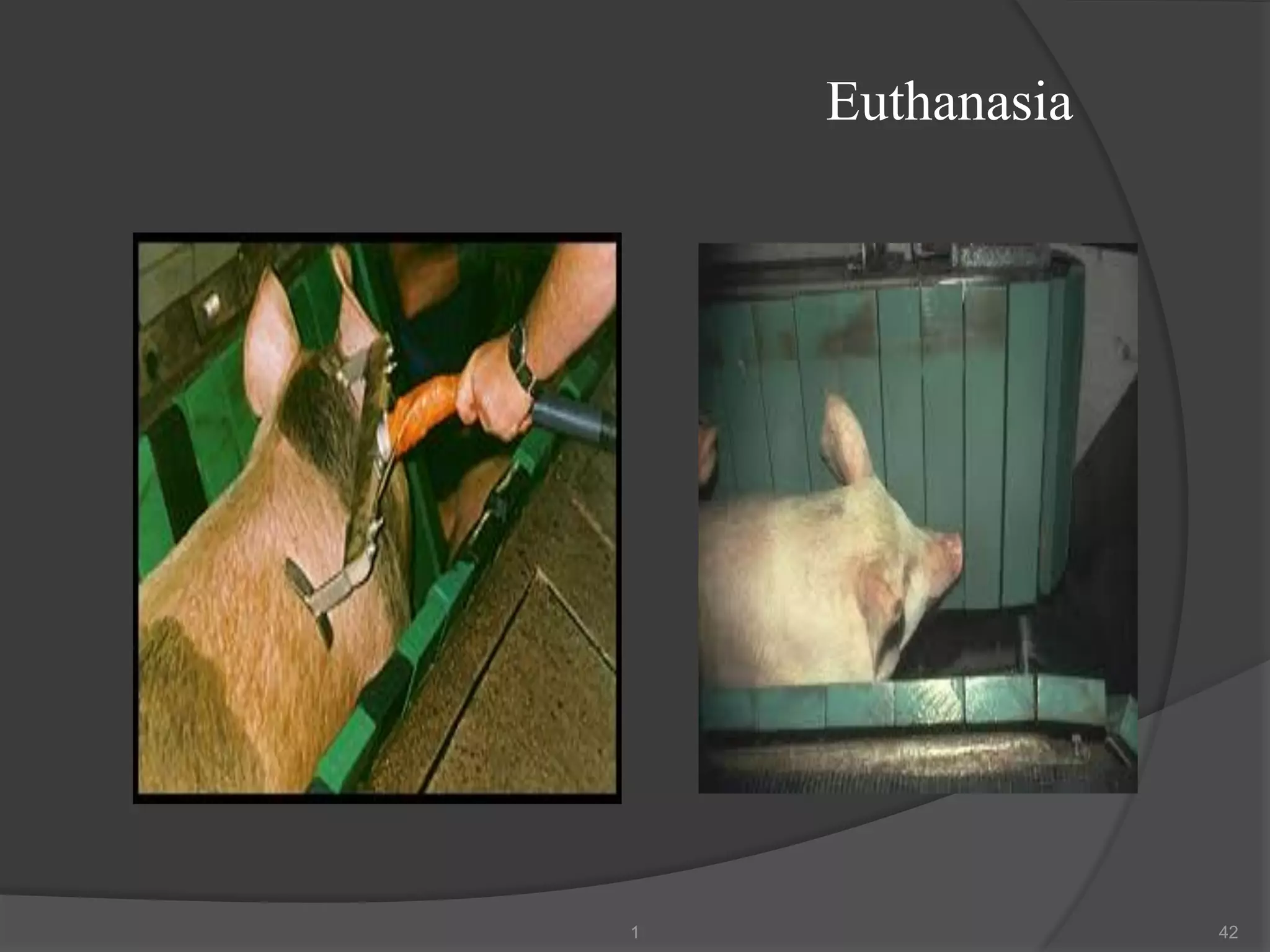
Electrical stunning—
Alternating electrical current has been used for stunning species
such as dogs, cattle, sheep, goats, hogs, fish and chickens.
Experiments with dogs have identified a need to direct the
electrical current through the brain to induce rapid loss of
consciousness.
In dogs, when electricity passes only between fore- and hind
limbs or neck and feet, it causes the heart to fibrillate but does not
induce sudden loss of consciousness.
For electrical stunning of any animal, an apparatus that applies
electrodes to opposite sides of the head, or in another way directs
electrical current immediately through the brain, is necessary to
induce rapid loss of consciousness.
1 41
Euthanasia
1 42
Euthanasia
Pithing:-
In general, pithing is used as an adjunctive procedure to ensure
death in an animal that has been rendered unconscious by other
means.
For some species, such as frogs, with anatomic features that
facilitate easy access to the central nervous system, pithing may
be used as a sole means of euthanasia, but an anesthetic overdose
is a more suitable method.
1 43
Euthanasia
1 44
Euthanasia
Applications
Euthanasia of animals may be required for a no. of reasons
including:
 Emergency euthanasia of animals with untreatable injuries
incurred during capture, handling or transit.
 Cases of untreated disease where an animal is suffering.
Collection of voucher specimens.
 Requirement of a research procedure, eg when fresh tissues
are required for analysis.
 Destruction of live-captured declared pest animals(where
release is prohibited).
1 45
Euthanasia
Factors to consider when choosing an appropriate method of
euthanasia are species, size, safety, location in the animal and
expertise and preference of the operator. The most appropriate
method for spices and age and size of animal should always be
used. 
Euthanasia procedures must be performed by persons competent
in and qualified for the methods to be used, or under the direct
supervision of a competent person. Some methods require
considerable training and experience to be used appropriately.
Training should include
1 46
Euthanasia
Advantages:
Speed of action .
Minimal discomfort to animal
Less expensive than other euthanasia agents
Disadvantages:
Requires trained personnel.
Each animal must be individually restrained.
Strict accounting to DEA .
Movement, vocalization, Gasp may occur in unconscious animal
1 47
Euthanasia
References
1. Practical pharmacology and clinical pharmacy by
S.K.Kulkarni, Vallabh publications, Page no- 21.
2. Laboratory animals: Rodent Anesthesia & Analgesia by
Kathleen A. Murray.
3. Guidelines on anesthesia and analgesia in laboratory animals,
University of South Florida provides the following guidelines
for use by IACUCcertified faculty and staff.
4. AVMA Guidelines on Euthanasia (Formerly Report of the
AVMA Panel on Euthanasia) June 2007.
5. Euthanasia of animals used for scientific purposes by
J.S.Reilly, Second edition.
1 48
Euthanasia
Thank you
1 49

Euthanasia converted

  • 1.
    PRESENTED BY: J.Manohar Reddy REGNO Y19MPH02052 DEPARTMENT OF PHARMCOLOGY HINDU COLLEGE OF PHARMACY 1 1
  • 2.
    Euthanasia ❖ Introduction ❖ Definition ❖History ❖ Objectives of euthanasia ❖ Methods of Euthanasia ❖ Applications ❖ Advantages ❖ Disadvantages ❖ References 1 2
  • 3.
    Euthanasia Introduction Animals are killedin laboratories or bleeding establishments for various reasons. At the end of an experiment or when there might be continuing adverse effect. When levels of pain, distress and suffering are likely to exceed the designated level. Unwanted stock or those with unsuitable characteristics , for example, type or sex, are not needed. 1 3
  • 4.
    Euthanasia Definition The term euthanasiais derived from the Greek terms eu meaning good and thanatos meaning death. A “good death” would be one that occurs with minimal pain and distress. In the context Euthanasia is the act of inducing humane death in an animal. Sacrificing the experimental animal after use by gentle procedure causing minimum of physical and mental suffering is called euthanasia (Painless killing) 1 4
  • 5.
    Euthanasia History The word "euthanasia"was first used in a medical context by Francis Bacon in the 17th century, to refer to an easy, painless, happy death, during which it was a "physician's responsibility to alleviate the 'physical sufferings' of the body." 1 5
  • 6.
    Euthanasia Objectives of euthanasia Theprimary criteria for euthanasia in terms of animal welfare are that the method be painless, achieve rapid unconsciousness and death, require minimum restraint, avoid excitement, is appropriate for the age, species, and health of the animal, must minimize fear and psychological stress in the animal, be reliable, reproducible, irreversible, simple to administer (in small doses if possible) and safe for the operator, and, so far as possible, be aesthetically acceptable for the operator. 1 6
  • 7.
    Euthanasia Methods of Euthanasia Chemicalmethods. ✓ Inhalant agents ✓ Injectable agents Physical methods ✓ Penetrating Captive Bolt ✓ Euthanasia By A Blow To The Head ✓ Gunshot ✓ Cervical Dislocation ✓ Decapitation ✓ Electrocution 1 7
  • 8.
    Euthanasia Physical methods-Continued ✓ MicrowaveIrradiation ✓ Thoracic (Cardiopulmonary, Cardiac) Compression ✓ Kill Traps ✓ Maceration ✓ Adjunctive Methods ❑ Exsanguination ❑ Stunning ❑ Pithing 1 8
  • 9.
    Euthanasia Chemical methods. Inhalant agents Anygas that is inhaled must reach a certain concentration in the body before it is effective. Best if rapid exposure in enclosed receptacle. Disadvantages: Hazardous to personnel Slow time may cause agitation Deep anesthesia level may induce seizures Neonates appear resistant to hypoxia Inhalant agents Ex – ether, halothane, methoxyflurane, isoflurane, enflurane, chloroform, nitrogen, nitrous oxide, carbon di oxide, carbon monoxide, argon, hydrogen cyanide. 1 9
  • 10.
  • 11.
    Euthanasia Injectable agents  I.V.is most rapid and reliable method  Wild, fearful or aggressive animals should be sedated first  Intraperitoneal of non irritating solution when I.V. is impractical  Intracardiac only on unconscious animal  I.M. and S.Q. not acceptable Injectable agents Ex – barbiturates, chloral hydrate, ethanol, ketamine, magnesium sulphate, potassium chloride, neuromuscular blocking agents 1 11
  • 12.
    Euthanasia Barbituates depress theCentral Nervous System in descending order beginning with the cerebral cortex unconsciousness anesthesia apnea. cardiac arrest death. Advantages: Speed of action . Minimal discomfort to animal Less expensive than other euthanasia agents Disadvantages: Requires trained personnel. Each animal must be individually restrained. Strict accounting to DEA . Movement, vocalization, Gasp may occur in unconscious animal 1 12
  • 13.
  • 14.
    Euthanasia Physical methods Penetrating CaptiveBolt A penetrating captive bolt is used for euthanasia of ruminants, horses, swine, laboratory rabbits, and dogs. Its mode of action is concussion and trauma to the cerebral hemisphere and brainstem Advantages— the penetrating captive bolt is an effective method of euthanasia for use in slaughterhouses, in research facilities, and on the farm when use of drugs is inappropriate. Disadvantages— It is aesthetically displeasing. Death may not occur if equipment is not maintained and used properly. 1 14
  • 15.
    Euthanasia Euthanasia By ABlow To The Head Euthanasia by a blow to the head must be evaluated in terms of the anatomic features of the species on which it is to be performed. The anatomic features of neonatal calves, however, make a blow to the head in this species unacceptable. Personnel performing euthanasia by use of a blow to the head must be properly trained and monitored for proficiency with this method of euthanasia, and they must be aware of its aesthetic implications 1 15
  • 16.
  • 17.
    Euthanasia Gunshot A properly placedgunshot can cause immediate insensibility and humane death. In some circumstances, a gunshot may be the only practical method of euthanasia. Advantages— Loss of consciousness is instantaneous if the projectile destroys most of the brain. Given the need to minimize stress induced by handling and human contact, gunshot may at times be the most practical and logical method of euthanasia of wild or free-ranging species. Disadvantages— (1) Gunshot may be dangerous to personnel. (2) It is aesthetically unpleasant. (3) Under field conditions, it may be difficult to hit the vital target area. 1 17
  • 18.
  • 19.
    Euthanasia Cervical Dislocation Cervical dislocationis a technique that has been used for many years and, when performed by well trained individuals, appears to be humane. However, there are few scientific studies to confirm this observation. Advantages— Cervical dislocation is a technique that may induce rapid loss of consciousness. It does not chemically contaminate tissue. It is rapidly accomplished 1 19
  • 20.
  • 21.
    Euthanasia Disadvantages— 1 cervical dislocationmay be aesthetically displeasing to personnel. 2 Cervical dislocation requires mastering technical skills to ensure loss of consciousness is rapidly induced. 3 Its use is limited to poultry, other small birds, mice, and immature rats and rabbits. Decapitation Decapitation can be used to euthanatize rodents and small rabbits in research settings. It provides a means to recover tissues and body fluids that are chemically uncontaminated. 1 21
  • 22.
    Euthanasia Advantages— Decapitation is atechnique that appears to induce rapid loss of consciousness. It does not chemically contaminate tissues. It is rapidly accomplished. Disadvantages— Handling and restraint required to perform this technique may be distressful to animals. The interpretation of the presence of electrical activity in the brain following decapitation has created controversy and its importance may still be open to debate. 1 22
  • 23.
  • 24.
    Euthanasia Electrocution Electrocution, using alternatingcurrent, has been used as a method of euthanasia for species such as dogs, cattle, sheep, swine, foxes, and mink. Electrocution induces death by cardiac fibrillation, which causes cerebral hypoxia. However, animals do not lose consciousness for 10 to 30 seconds or more after onset of cardiac fibrillation. Advantages— (1) Electrocution is humane if the animal is first rendered unconscious. (2) It does not chemically contaminate tissues. (3) It is economical. 1 24
  • 25.
  • 26.
    Euthanasia Disadvantages— (1) Electrocution maybe hazardous to personnel. (2) When conventional single-animal probes are used, it may not be a useful method for mass euthanasia because so much time is required per animal. Microwave Irradiation Heating by microwave irradiation is used primarily by neurobiologists to fix brain metabolites in vivo while maintaining the anatomic integrity of the brain. Microwave instruments have been specifically designed for use in euthanasia of laboratory mice and rats. 1 26
  • 27.
    Euthanasia Advantages— (1) Loss ofconsciousness is achieved in less than 100ms, and death in less than 1 second. (2) This is the most effective method to fix brain tissue in vivo for subsequent assay of enzymatically labile chemicals. Disadvantages— (1) Instruments are expensive. (2) Only animals the size of mice and rats can be euthanatized with commercial instruments that are currently available. 1 27
  • 28.
  • 29.
    Euthanasia Thoracic (Cardiopulmonary, Cardiac)Compression Thoracic (cardiopulmonary, cardiac) compression is used to euthanatize small- to medium-sized free ranging birds when alternate techniques described in these guidelines are not practical. Advantages— (1) This technique is rapid. (2) It is apparently painless. (3) It maximizes carcass use for analytical/contaminant studies. Disadvantages— (1) It may be considered aesthetically unpleasant by onlookers. (2) The degree of distress is unknown. 1 29
  • 30.
  • 31.
    Euthanasia Kill Traps Mechanical killtraps are used for the collection and killing of small, free-ranging mammals for commercial purposes (fur, skin, or meat), scientific purposes, to stop property damage, and to protect human safety. Advantage— Free-ranging small mammals may be killed with minimal distress associated with handling and human contact. Disadvantages— (1) Traps may not afford death within acceptable time periods. (2) Selectivity and efficiency is dependent on the skill and proficiency of the operator. 1 31
  • 32.
  • 33.
    Euthanasia Maceration Maceration, via useof a specially designed mechanical apparatus having rotating blades or projections, causes immediate fragmentation and death of day-old poultry and embryonated eggs. Advantages— (1) Death is almost instantaneous. (2)The method is safe for workers. (3) Large numbers of animals can be killed quickly. Disadvantages— (1) Special equipment is required. (2) Macerated tissues may present biosecurity risks. 1 33
  • 34.
    Euthanasia Adjunctive Methods Stunning andpithing, when properly done, induce loss of consciousness but do not ensure death. Therefore, these methods must be used only in conjunction with other procedures, such as pharmacologic agents, exsanguination, or decapitation to euthanatize the animal. Exsanguination Exsanguination can be used to ensure death subsequent to stunning, or in otherwise unconscious animals. Because anxiety is associated with extreme hypovolemia, exsanguination must not be used as a sole means of euthanasia. Animals may be exsanguinated to obtain blood products, but only when they are sedated, stunned, or anesthetized. 1 34
  • 35.
  • 36.
    Euthanasia Stunning Animals may bestunned by a blow to the head, by use of a nonpenetrating captive bolt, or by use of electric current. Stunning must be followed immediately by a method that ensures death. Blow to the head— Stunning by a blow to the head is used primarily in small laboratory animals with thin craniums. A single sharp blow must be delivered to the central skull bones with sufficient force to produce immediate depression of the central nervous system. When properly done, consciousness is lost rapidly. 1 36
  • 37.
  • 38.
  • 39.
    Euthanasia Non-penetrating captive bolt— Anon-penetrating captive bolt may be used to induce loss of consciousness in ruminants, horses, and swine. Signs of effective stunning by captive bolt are immediate collapse and a several second period of tetanic spasm, followed by slow hind limb movements of increasing frequency. Other aspects regarding use of the non-penetrating captive bolt are similar to the use of a penetrating captive bolt, as previously described. 1 39
  • 40.
  • 41.
    Euthanasia Electrical stunning— Alternating electricalcurrent has been used for stunning species such as dogs, cattle, sheep, goats, hogs, fish and chickens. Experiments with dogs have identified a need to direct the electrical current through the brain to induce rapid loss of consciousness. In dogs, when electricity passes only between fore- and hind limbs or neck and feet, it causes the heart to fibrillate but does not induce sudden loss of consciousness. For electrical stunning of any animal, an apparatus that applies electrodes to opposite sides of the head, or in another way directs electrical current immediately through the brain, is necessary to induce rapid loss of consciousness. 1 41
  • 42.
  • 43.
    Euthanasia Pithing:- In general, pithingis used as an adjunctive procedure to ensure death in an animal that has been rendered unconscious by other means. For some species, such as frogs, with anatomic features that facilitate easy access to the central nervous system, pithing may be used as a sole means of euthanasia, but an anesthetic overdose is a more suitable method. 1 43
  • 44.
  • 45.
    Euthanasia Applications Euthanasia of animalsmay be required for a no. of reasons including:  Emergency euthanasia of animals with untreatable injuries incurred during capture, handling or transit.  Cases of untreated disease where an animal is suffering. Collection of voucher specimens.  Requirement of a research procedure, eg when fresh tissues are required for analysis.  Destruction of live-captured declared pest animals(where release is prohibited). 1 45
  • 46.
    Euthanasia Factors to considerwhen choosing an appropriate method of euthanasia are species, size, safety, location in the animal and expertise and preference of the operator. The most appropriate method for spices and age and size of animal should always be used.  Euthanasia procedures must be performed by persons competent in and qualified for the methods to be used, or under the direct supervision of a competent person. Some methods require considerable training and experience to be used appropriately. Training should include 1 46
  • 47.
    Euthanasia Advantages: Speed of action. Minimal discomfort to animal Less expensive than other euthanasia agents Disadvantages: Requires trained personnel. Each animal must be individually restrained. Strict accounting to DEA . Movement, vocalization, Gasp may occur in unconscious animal 1 47
  • 48.
    Euthanasia References 1. Practical pharmacologyand clinical pharmacy by S.K.Kulkarni, Vallabh publications, Page no- 21. 2. Laboratory animals: Rodent Anesthesia & Analgesia by Kathleen A. Murray. 3. Guidelines on anesthesia and analgesia in laboratory animals, University of South Florida provides the following guidelines for use by IACUCcertified faculty and staff. 4. AVMA Guidelines on Euthanasia (Formerly Report of the AVMA Panel on Euthanasia) June 2007. 5. Euthanasia of animals used for scientific purposes by J.S.Reilly, Second edition. 1 48
  • 49.