Five generations of learners at the Free
         University of Bolzano

Gabriella Dodero, Katja Luterotti, Alessandra Papa, Daniela Pichler

                Free University of Bolzano Bozen
                      Bolzano Bozen, Italy
                 e-mail: development@unibz.it
Questions:


How can a regional University provide true ¨lifelong
learning¨ for all citizens?

   Can lifelong learning be addressed during childhood?

How could gaps between adult learners and University
be bridged, without obliging learners to undertake a full
¨Bologna Process¨ programme?
South Tyrol
   507.657 inhabitants
   Three languages spoken:
    German, Italian, Ladin
   Free University of Bolzano-
    Bozen established 14
    years ago
   Lifelong learning is part of
    its „mission statement“
   Population with a
    University degree: 5,6%
            Italy 11,6%,
            Europe 23,2%
                                      www.valgardena.it
Lifelong learning initiatives
   In-service teacher    Post-graduate training
    training courses,      for professionals:
    offered in three      Architects & civil
    languages              engineers
   Support courses for   Management engineers
    teachers'
    specializations:
    second language,
    music, disabled
    students, ...
Is this enough?

The University is addressing needs of just a


minority of the population:
  Young people

  People that have a degree and look for a

   specialization


     What about the others?
     Can we approach all the citizens?
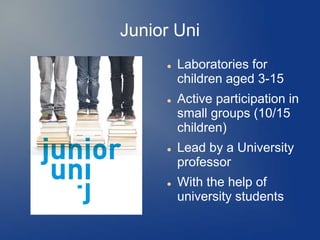
Junior Uni
        Laboratories for
         children aged 3-15
        Active participation in
         small groups (10/15
         children)
        Lead by a University
         professor
        With the help of
         university students
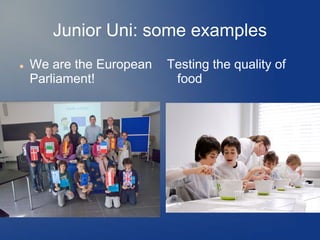
Junior Uni: some examples
   We are the European   Testing the quality of
    Parliament!            food
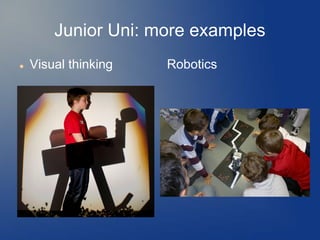
Junior Uni: more examples
   Visual thinking   Robotics
Junior Uni experience

A stimulating experience for all: children and their
families, university professors and students
Curiosity driven individual participation

Planting seeds for the future of the children

(learning can be fun!)
Getting in contact with a relatively new institution

from local adult population (parents and
grandparents)
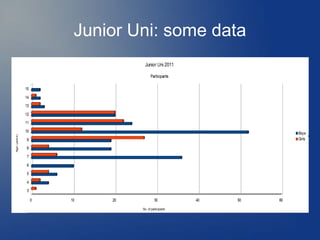
Junior Uni: some data
Studium Generale
   A cultural offer for the
    general population:
    working people, retired
    people, young people
    not interested in
    pursuing a „Bologna
    Process“ degree,
    housewives, university
    students who want to
    deepen topics outside
    their study plan
Studium Generale: the structure
   Overall 30 ECTS credits in three years, 6
    exams, 5 ECTS each
   Participation (without exams) possible also for
    people without high school diploma
   Four elective courses (chosen among a pool of
    offers)
   Two compulsory courses:
          Ethics
          Languages (language courses or linguistics
           seminars)
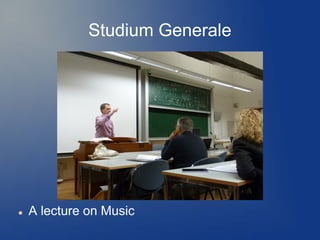
Studium Generale


   A lecture on Music
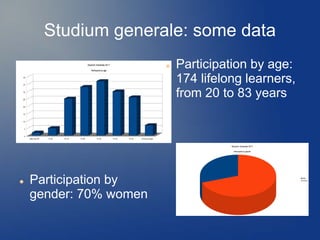
Studium generale: some data
                           Participation by age:
                            174 lifelong learners,
                            from 20 to 83 years


   Participation by
    gender: 70% women
Studium Generale: experience

The programme is not officially recognizable in
the Italian system, yet it attracts many participants
Desire to learn grows at any age

The majority of participants are women, aged 40-

60
Courses are given in Italian or German, students

are locals, and speak both languages
Some participant plans to „spend“ ECTS credit

points, in the future, to obtain a Bsc or Msc degree
Studium Generale and „Bologna
         Process“ programmes
   ECTS credits could be recognized for course
    programmes
   In principles, by all EU universities!
   In practice, some degree courses already
    recognize Studium Generale exams
   The first such example: Bsc in Computer
    Science and Engineering recognizes the course
    of „Ethics“ in the study plan
New paths for Lifelong Learning?
   Strengthening links between University and the
    local territory requires addressing more
    segments of population than just 20-year-old
    students
   Starting from childhood, to build on the idea that
    learning should be „fun“ to everyone
   Collecting demands for culture, at any age,
    within a university-level programme, that
    awards ECTS credit points
www.cantinatramin.it


                       Thank you!
                       Questions?

                        For more information, contact
                              development@unibz.it

Eucen2011 FUB

  • 1.
    Five generations oflearners at the Free University of Bolzano Gabriella Dodero, Katja Luterotti, Alessandra Papa, Daniela Pichler Free University of Bolzano Bozen Bolzano Bozen, Italy e-mail: development@unibz.it
  • 2.
    Questions: How can aregional University provide true ¨lifelong learning¨ for all citizens?  Can lifelong learning be addressed during childhood? How could gaps between adult learners and University be bridged, without obliging learners to undertake a full ¨Bologna Process¨ programme?
  • 3.
    South Tyrol  507.657 inhabitants  Three languages spoken: German, Italian, Ladin  Free University of Bolzano- Bozen established 14 years ago  Lifelong learning is part of its „mission statement“  Population with a University degree: 5,6%  Italy 11,6%,  Europe 23,2% www.valgardena.it
  • 4.
    Lifelong learning initiatives  In-service teacher Post-graduate training training courses, for professionals: offered in three Architects & civil languages engineers  Support courses for Management engineers teachers' specializations: second language, music, disabled students, ...
  • 5.
    Is this enough? TheUniversity is addressing needs of just a  minority of the population:  Young people  People that have a degree and look for a specialization  What about the others?  Can we approach all the citizens?
  • 6.
    Junior Uni  Laboratories for children aged 3-15  Active participation in small groups (10/15 children)  Lead by a University professor  With the help of university students
  • 7.
    Junior Uni: someexamples  We are the European Testing the quality of Parliament! food
  • 8.
    Junior Uni: moreexamples  Visual thinking Robotics
  • 9.
    Junior Uni experience Astimulating experience for all: children and their families, university professors and students Curiosity driven individual participation Planting seeds for the future of the children (learning can be fun!) Getting in contact with a relatively new institution from local adult population (parents and grandparents)
  • 10.
  • 11.
    Studium Generale  A cultural offer for the general population: working people, retired people, young people not interested in pursuing a „Bologna Process“ degree, housewives, university students who want to deepen topics outside their study plan
  • 12.
    Studium Generale: thestructure  Overall 30 ECTS credits in three years, 6 exams, 5 ECTS each  Participation (without exams) possible also for people without high school diploma  Four elective courses (chosen among a pool of offers)  Two compulsory courses:  Ethics  Languages (language courses or linguistics seminars)
  • 13.
    Studium Generale  A lecture on Music
  • 14.
    Studium generale: somedata  Participation by age: 174 lifelong learners, from 20 to 83 years  Participation by gender: 70% women
  • 15.
    Studium Generale: experience Theprogramme is not officially recognizable in the Italian system, yet it attracts many participants Desire to learn grows at any age The majority of participants are women, aged 40- 60 Courses are given in Italian or German, students are locals, and speak both languages Some participant plans to „spend“ ECTS credit points, in the future, to obtain a Bsc or Msc degree
  • 16.
    Studium Generale and„Bologna Process“ programmes  ECTS credits could be recognized for course programmes  In principles, by all EU universities!  In practice, some degree courses already recognize Studium Generale exams  The first such example: Bsc in Computer Science and Engineering recognizes the course of „Ethics“ in the study plan
  • 17.
    New paths forLifelong Learning?  Strengthening links between University and the local territory requires addressing more segments of population than just 20-year-old students  Starting from childhood, to build on the idea that learning should be „fun“ to everyone  Collecting demands for culture, at any age, within a university-level programme, that awards ECTS credit points
  • 18.
    www.cantinatramin.it Thank you! Questions? For more information, contact development@unibz.it