Dr. David Erdos
Trinity Hall
University of Cambridge
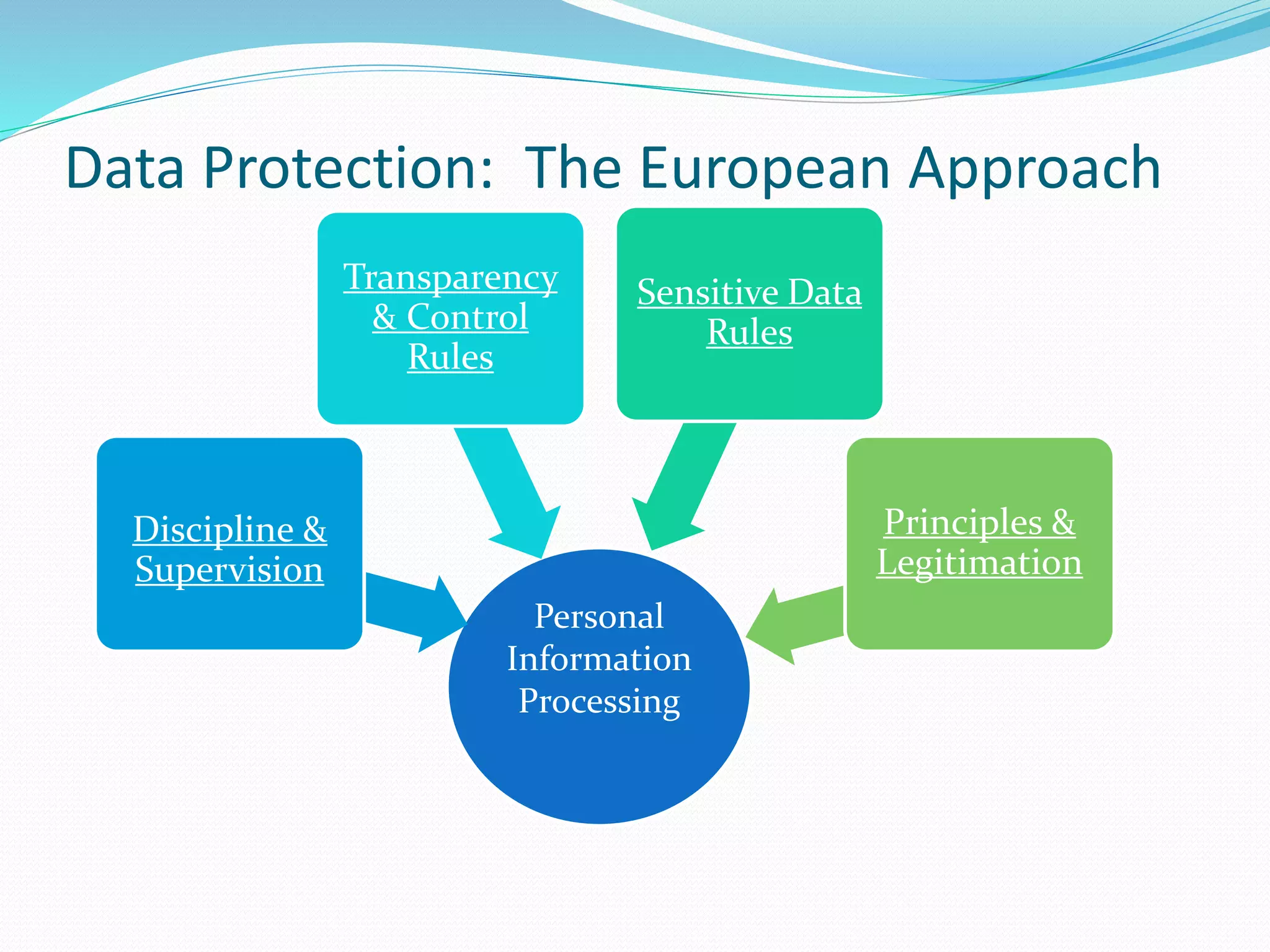
Data Protection: The European Approach
Personal
Information
Processing
Principles &
Legitimation
Sensitive Data
Rules
Transparency
& Control
Rules
Discipline &
Supervision
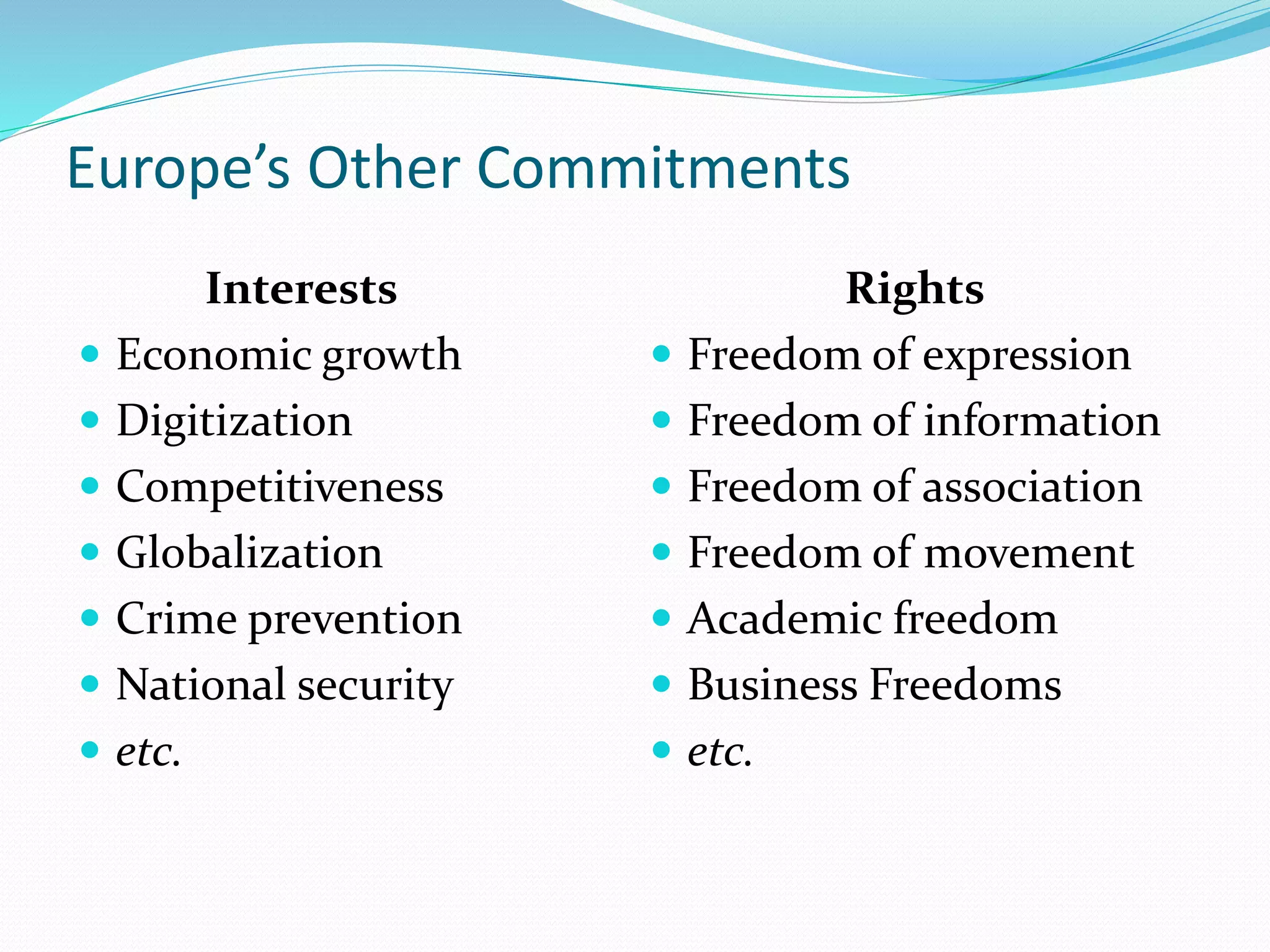
Europe’s Other Commitments
Interests
 Economic growth
 Digitization
 Competitiveness
 Globalization
 Crime prevention
 National security
 etc.
Rights
 Freedom of expression
 Freedom of information
 Freedom of association
 Freedom of movement
 Academic freedom
 Business Freedoms
 etc.
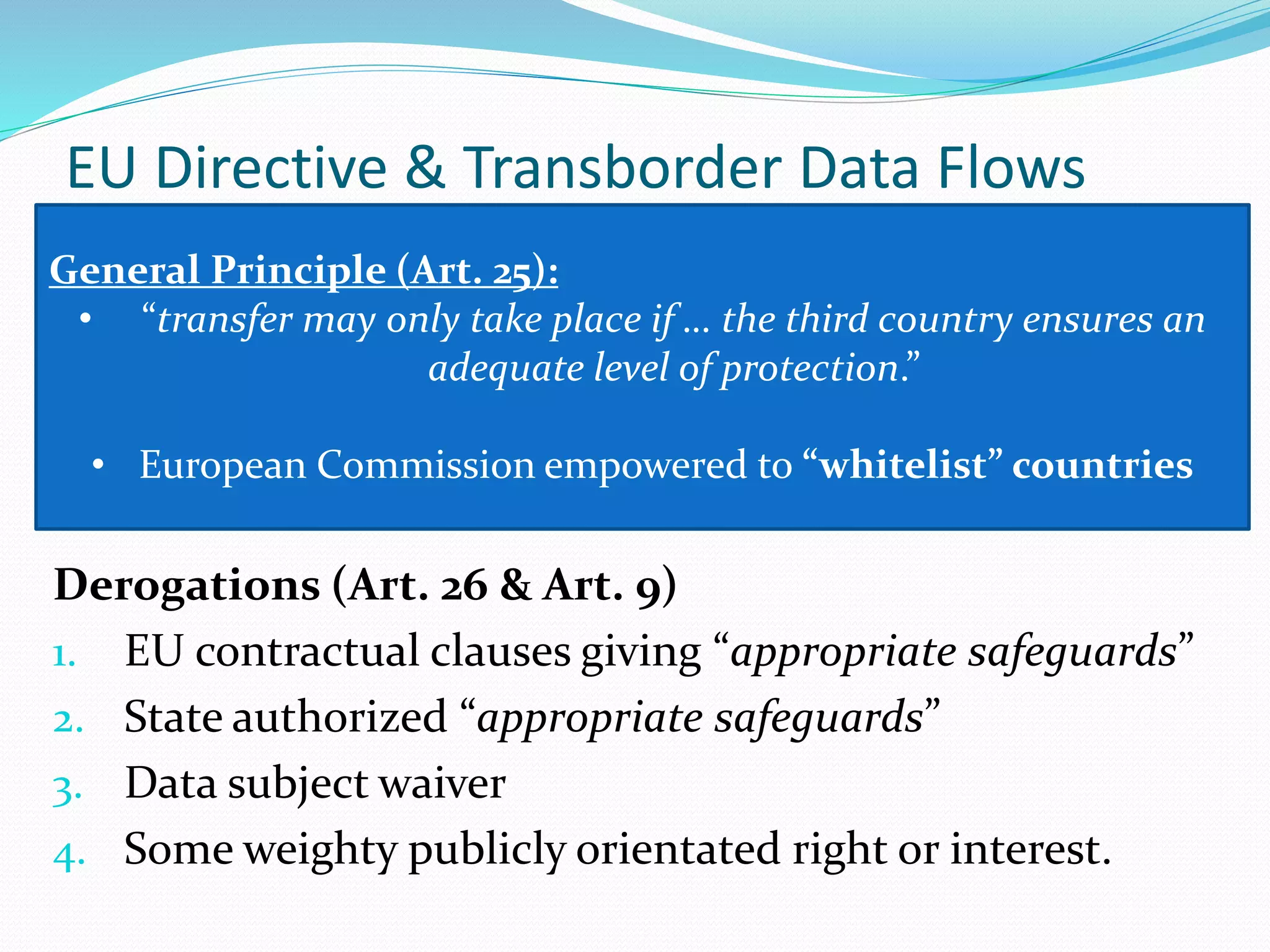
EU Directive & Transborder Data Flows
Derogations (Art. 26 & Art. 9)
1. EU contractual clauses giving “appropriate safeguards”
2. State authorized “appropriate safeguards”
3. Data subject waiver
4. Some weighty publicly orientated right or interest.
General Principle (Art. 25):
• “transfer may only take place if … the third country ensures an
adequate level of protection.”
• European Commission empowered to “whitelist” countries
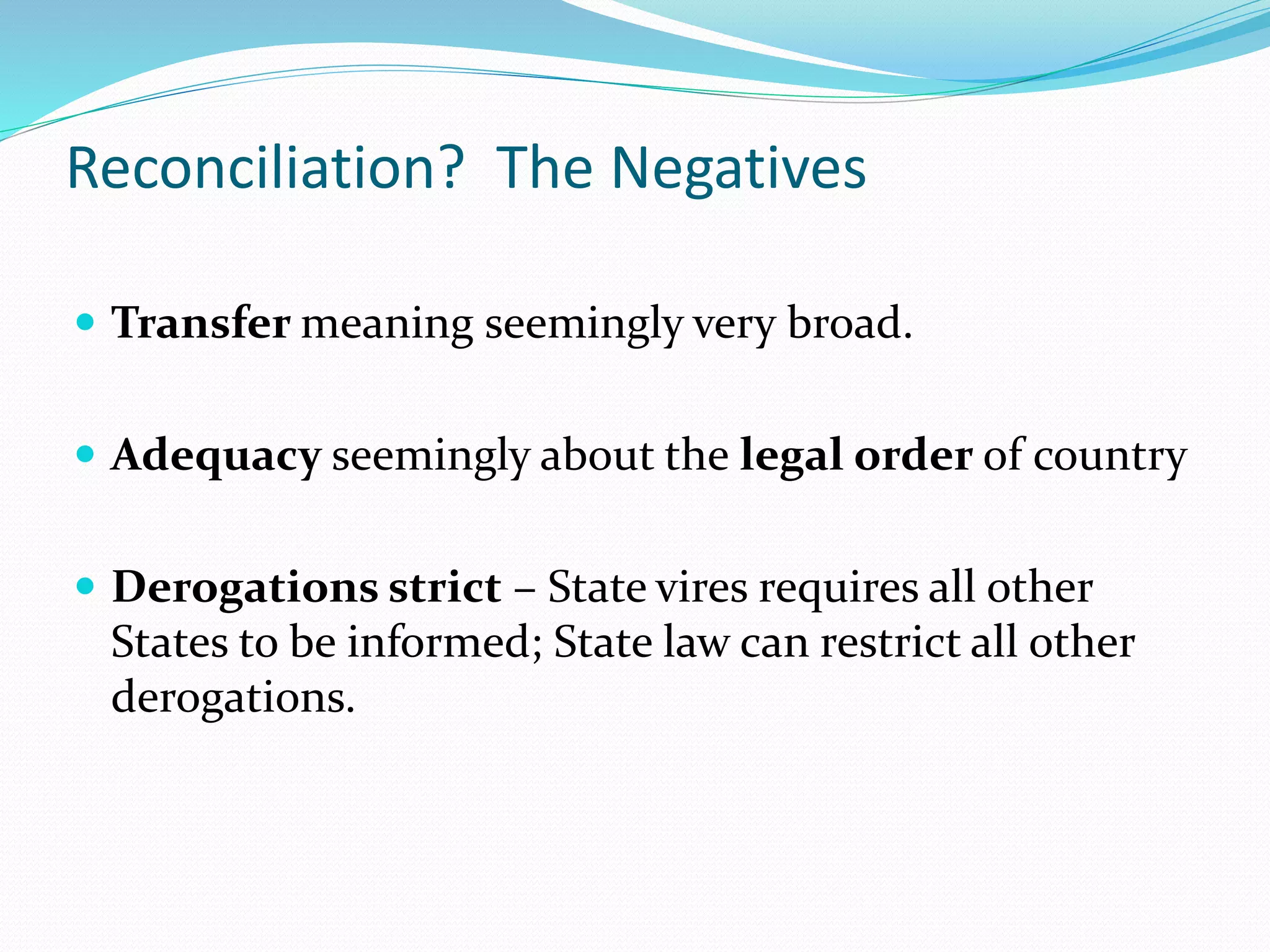
Reconciliation? The Negatives
 Transfer meaning seemingly very broad.
 Adequacy seemingly about the legal order of country
 Derogations strict – State vires requires all other
States to be informed; State law can restrict all other
derogations.
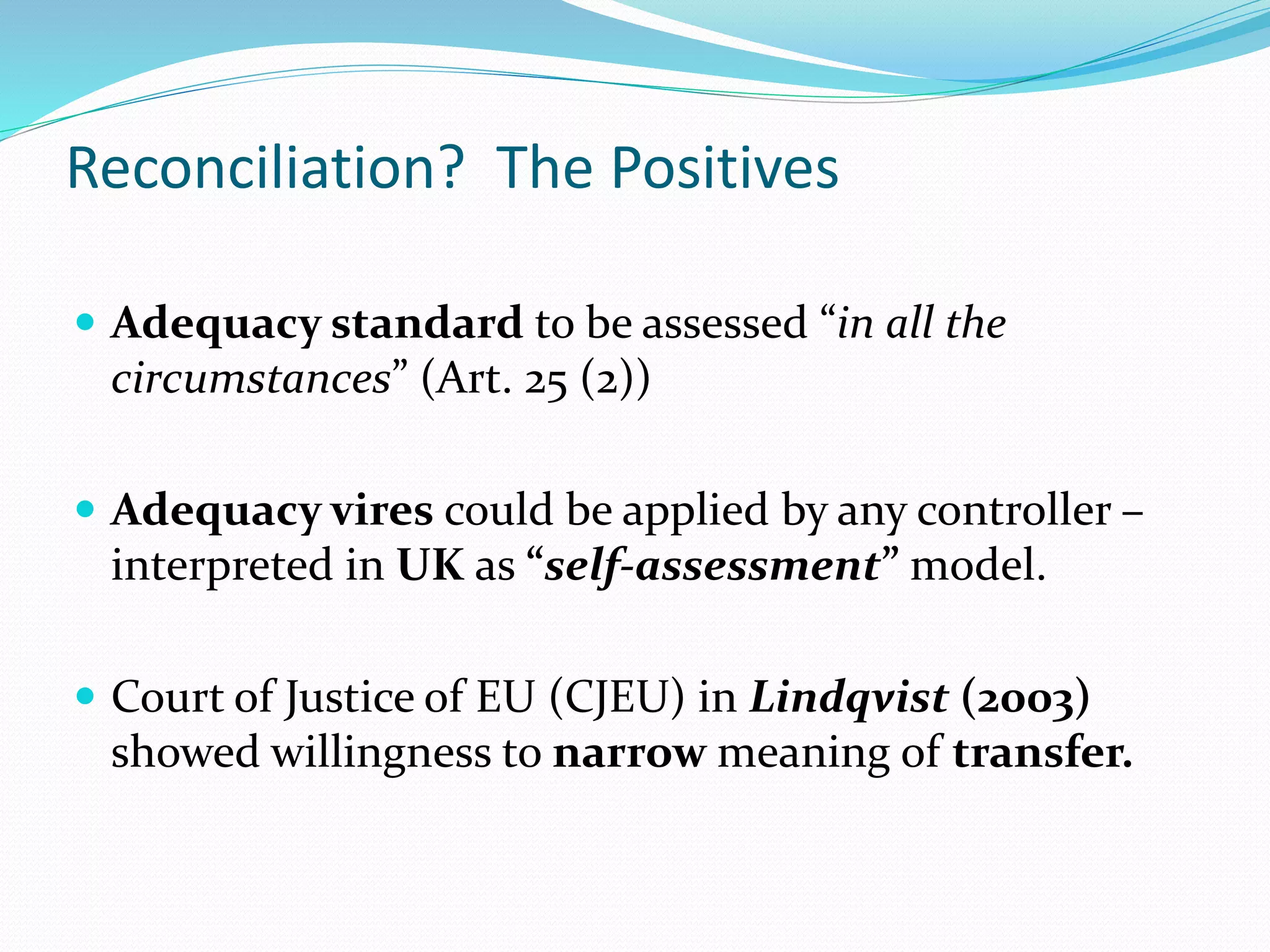
Reconciliation? The Positives
 Adequacy standard to be assessed “in all the
circumstances” (Art. 25 (2))
 Adequacy vires could be applied by any controller –
interpreted in UK as “self-assessment” model.
 Court of Justice of EU (CJEU) in Lindqvist (2003)
showed willingness to narrow meaning of transfer.
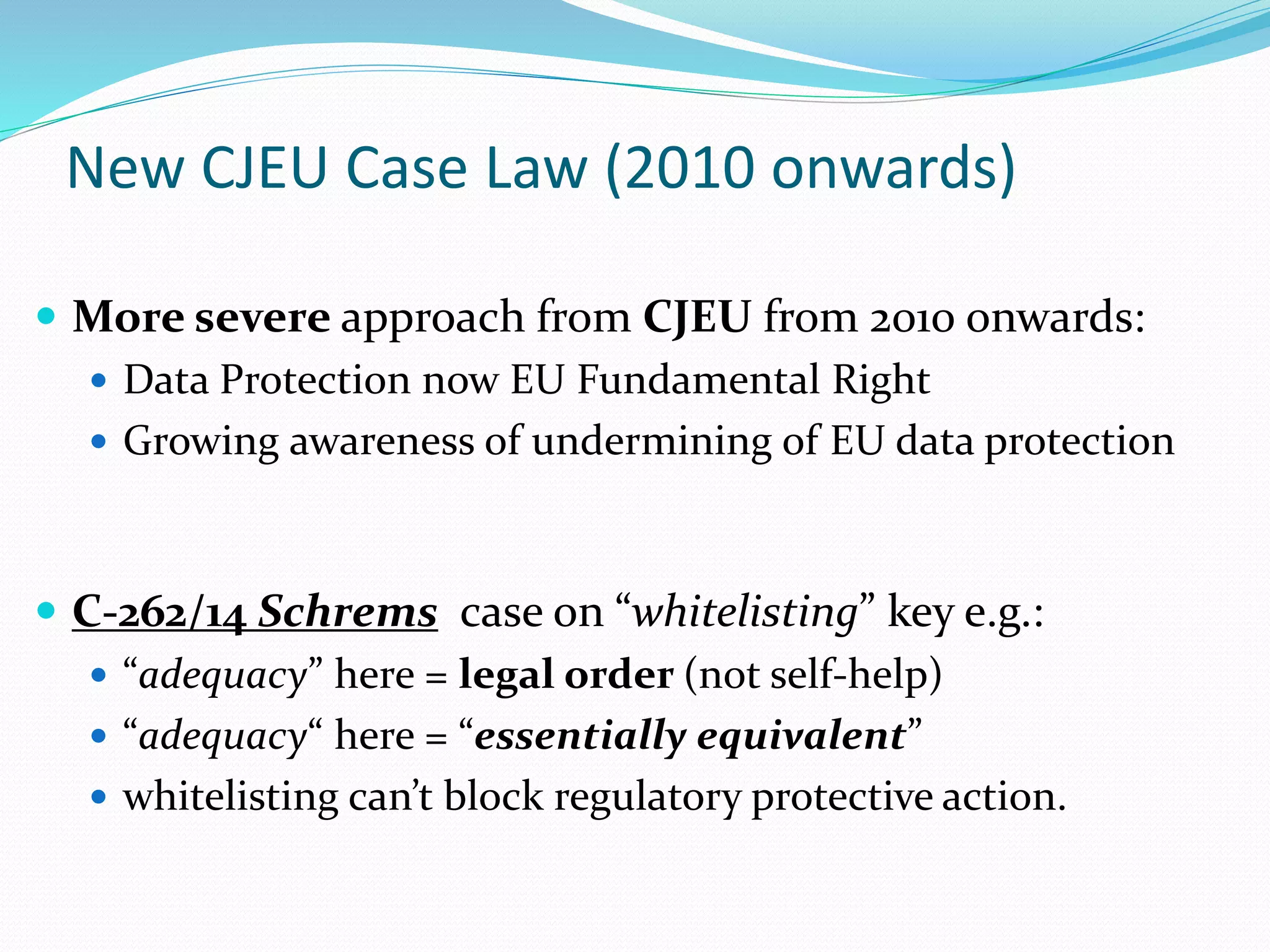
New CJEU Case Law (2010 onwards)
 More severe approach from CJEU from 2010 onwards:
 Data Protection now EU Fundamental Right
 Growing awareness of undermining of EU data protection
 C-262/14 Schrems case on “whitelisting” key e.g.:
 “adequacy” here = legal order (not self-help)
 “adequacy“ here = “essentially equivalent”
 whitelisting can’t block regulatory protective action.
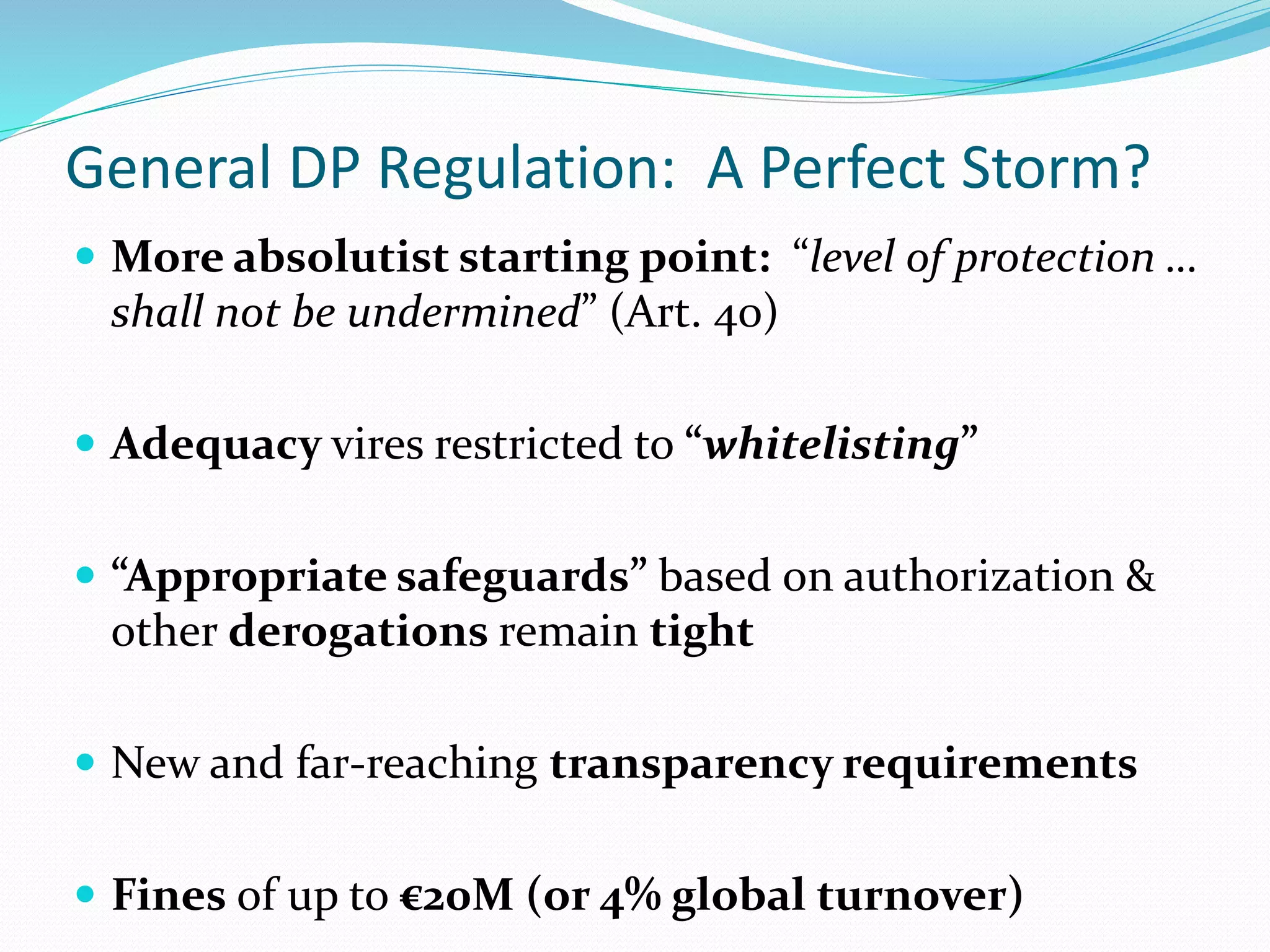
General DP Regulation: A Perfect Storm?
 More absolutist starting point: “level of protection …
shall not be undermined” (Art. 40)
 Adequacy vires restricted to “whitelisting”
 “Appropriate safeguards” based on authorization &
other derogations remain tight
 New and far-reaching transparency requirements
 Fines of up to €20M (or 4% global turnover)
Reconciliation under General DP Regulation?
 Legal Actors to develop contextual jurisprudence e.g.
 No transfer if fully under control of EU-based controller?
 Sometimes no transfer if public domain content already
transferred? (cf. C-466/12 Svensson re: copyright)
 Member States to make broad use of possible
derogations
 Regulators to “authorize” controllers to self-certify for
low-risk transfers.
Conclusions
 Failure of pan-EU statutory law to appropriately reconcile
values here
 Issues obscured by very lax enforcement to date
 Problems here will become more acute under GDPR
 Need a conversation on legal solutions to these problems

EU General Data Protection Regulation & Transborder Information Flow

  • 1.
    Dr. David Erdos TrinityHall University of Cambridge
  • 2.
    Data Protection: TheEuropean Approach Personal Information Processing Principles & Legitimation Sensitive Data Rules Transparency & Control Rules Discipline & Supervision
  • 3.
    Europe’s Other Commitments Interests Economic growth  Digitization  Competitiveness  Globalization  Crime prevention  National security  etc. Rights  Freedom of expression  Freedom of information  Freedom of association  Freedom of movement  Academic freedom  Business Freedoms  etc.
  • 4.
    EU Directive &Transborder Data Flows Derogations (Art. 26 & Art. 9) 1. EU contractual clauses giving “appropriate safeguards” 2. State authorized “appropriate safeguards” 3. Data subject waiver 4. Some weighty publicly orientated right or interest. General Principle (Art. 25): • “transfer may only take place if … the third country ensures an adequate level of protection.” • European Commission empowered to “whitelist” countries
  • 5.
    Reconciliation? The Negatives Transfer meaning seemingly very broad.  Adequacy seemingly about the legal order of country  Derogations strict – State vires requires all other States to be informed; State law can restrict all other derogations.
  • 6.
    Reconciliation? The Positives Adequacy standard to be assessed “in all the circumstances” (Art. 25 (2))  Adequacy vires could be applied by any controller – interpreted in UK as “self-assessment” model.  Court of Justice of EU (CJEU) in Lindqvist (2003) showed willingness to narrow meaning of transfer.
  • 7.
    New CJEU CaseLaw (2010 onwards)  More severe approach from CJEU from 2010 onwards:  Data Protection now EU Fundamental Right  Growing awareness of undermining of EU data protection  C-262/14 Schrems case on “whitelisting” key e.g.:  “adequacy” here = legal order (not self-help)  “adequacy“ here = “essentially equivalent”  whitelisting can’t block regulatory protective action.
  • 8.
    General DP Regulation:A Perfect Storm?  More absolutist starting point: “level of protection … shall not be undermined” (Art. 40)  Adequacy vires restricted to “whitelisting”  “Appropriate safeguards” based on authorization & other derogations remain tight  New and far-reaching transparency requirements  Fines of up to €20M (or 4% global turnover)
  • 9.
    Reconciliation under GeneralDP Regulation?  Legal Actors to develop contextual jurisprudence e.g.  No transfer if fully under control of EU-based controller?  Sometimes no transfer if public domain content already transferred? (cf. C-466/12 Svensson re: copyright)  Member States to make broad use of possible derogations  Regulators to “authorize” controllers to self-certify for low-risk transfers.
  • 10.
    Conclusions  Failure ofpan-EU statutory law to appropriately reconcile values here  Issues obscured by very lax enforcement to date  Problems here will become more acute under GDPR  Need a conversation on legal solutions to these problems