Objectives: At the end of the unit, the
students should be able to
•
a. Explain the concept and principles underpinning
community and community immersion;
b. Comprehend the importance of understanding
the dynamics and community immersion as a
way to realize the goals of NSTP program;
c. Practice the standard operating procedure and
establish protocols governing community
immersion.
It is a group of living things sharing the
same environment, they usually have
shared interests, have some of the same
beliefs and needs, and this affects the
identity of the group and the people in it.
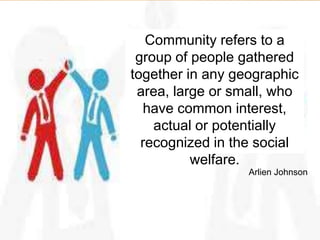
Community refers to a
group of people gathered
together in any geographic
area, large or small, who
have common interest,
actual or potentially
recognized in the social
welfare.
Arlien Johnson
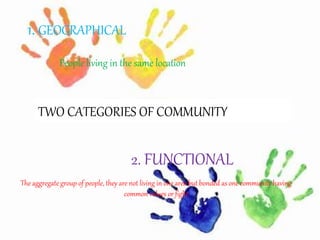
TWO CATEGORIES OF COMMUNITY
1. GEOGRAPHICAL
People living in the same location
2. FUNCTIONAL
The aggregate group of people, they are not living in one area but bonded as one community having
common values or fight
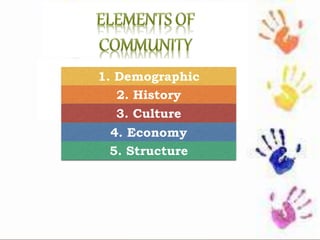
1. Demographic
2. History
3. Culture
4. Economy
5. Structure
Is an essential strategy in
community organizing work that
entails better understanding of the
different community concerns,
process, dynamic and lifestyle
through exposure and engaging in
different activities.
This gives them the opportunity
to reflect on their assumptions,
attitudes and to gain knowledge in
cultural diversity.
WHOM DO YOU IMMERSE WITH IN THE
COMMUNITY?
Community based service projects must be based on the
principle of people’s improvement and not the ‘dots cut’
mentality, teach people how to fish so that they will live
for a lifetime.
WHAT YOU SHOULD AND SHOULD NOT DO IN
COMMUNITY IMMERSION?
It is the basic rule that trainees must be well-versed with
this area, skilled to communicate with community and
disciplined
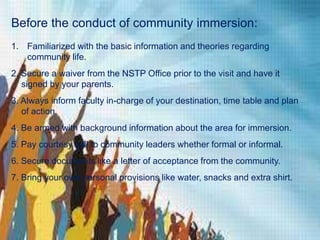
Before the conduct of community immersion:
1. Familiarized with the basic information and theories regarding
community life.
2. Secure a waiver from the NSTP Office prior to the visit and have it
signed by your parents.
3. Always inform faculty in-charge of your destination, time table and plan
of action.
4. Be armed with background information about the area for immersion.
5. Pay courtesy call to community leaders whether formal or informal.
6. Secure documents like a letter of acceptance from the community.
7. Bring your own personal provisions like water, snacks and extra shirt.
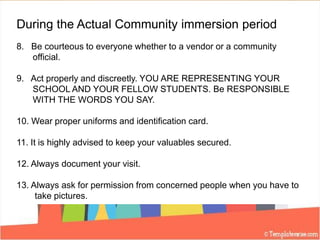
During the Actual Community immersion period
8. Be courteous to everyone whether to a vendor or a community
official.
9. Act properly and discreetly. YOU ARE REPRESENTING YOUR
SCHOOL AND YOUR FELLOW STUDENTS. Be RESPONSIBLE
WITH THE WORDS YOU SAY.
10. Wear proper uniforms and identification card.
11. It is highly advised to keep your valuables secured.
12. Always document your visit.
13. Always ask for permission from concerned people when you have to
take pictures.
After community immersion
14. Validate and evaluate if the
programs and activities were
conducted appropriately as planned.
15. Provide copies of your final
documentation output to the NSTP
Office and to the community where
you conducted your immersion for
records purposes.
ROSELYN M. AVISO
NSTP Instructor

COMMUNITY-IMMERSION.pptx

  • 3.
    Objectives: At theend of the unit, the students should be able to • a. Explain the concept and principles underpinning community and community immersion; b. Comprehend the importance of understanding the dynamics and community immersion as a way to realize the goals of NSTP program; c. Practice the standard operating procedure and establish protocols governing community immersion.
  • 6.
    It is agroup of living things sharing the same environment, they usually have shared interests, have some of the same beliefs and needs, and this affects the identity of the group and the people in it.
  • 7.
    Community refers toa group of people gathered together in any geographic area, large or small, who have common interest, actual or potentially recognized in the social welfare. Arlien Johnson
  • 8.
    TWO CATEGORIES OFCOMMUNITY 1. GEOGRAPHICAL People living in the same location 2. FUNCTIONAL The aggregate group of people, they are not living in one area but bonded as one community having common values or fight
  • 9.
    1. Demographic 2. History 3.Culture 4. Economy 5. Structure
  • 10.
    Is an essentialstrategy in community organizing work that entails better understanding of the different community concerns, process, dynamic and lifestyle through exposure and engaging in different activities. This gives them the opportunity to reflect on their assumptions, attitudes and to gain knowledge in cultural diversity.
  • 12.
    WHOM DO YOUIMMERSE WITH IN THE COMMUNITY? Community based service projects must be based on the principle of people’s improvement and not the ‘dots cut’ mentality, teach people how to fish so that they will live for a lifetime.
  • 13.
    WHAT YOU SHOULDAND SHOULD NOT DO IN COMMUNITY IMMERSION? It is the basic rule that trainees must be well-versed with this area, skilled to communicate with community and disciplined
  • 14.
    Before the conductof community immersion: 1. Familiarized with the basic information and theories regarding community life. 2. Secure a waiver from the NSTP Office prior to the visit and have it signed by your parents. 3. Always inform faculty in-charge of your destination, time table and plan of action. 4. Be armed with background information about the area for immersion. 5. Pay courtesy call to community leaders whether formal or informal. 6. Secure documents like a letter of acceptance from the community. 7. Bring your own personal provisions like water, snacks and extra shirt.
  • 15.
    During the ActualCommunity immersion period 8. Be courteous to everyone whether to a vendor or a community official. 9. Act properly and discreetly. YOU ARE REPRESENTING YOUR SCHOOL AND YOUR FELLOW STUDENTS. Be RESPONSIBLE WITH THE WORDS YOU SAY. 10. Wear proper uniforms and identification card. 11. It is highly advised to keep your valuables secured. 12. Always document your visit. 13. Always ask for permission from concerned people when you have to take pictures.
  • 16.
    After community immersion 14.Validate and evaluate if the programs and activities were conducted appropriately as planned. 15. Provide copies of your final documentation output to the NSTP Office and to the community where you conducted your immersion for records purposes.
  • 17.