HOSPITAL ETHICS 
COMMITTEES 
Bioethics Mahboob Ali Khan 
MHA,CPHQ
Mission 
Hospital Ethics Committee 
To create a mechanism to allow the patient or the patientโ€™s 
designated representative to participate in the 
consideration of ethical issues that arise in the care of 
the patient; to provide an organization and mechanism 
for the consideration of ethical issues arising in the care 
of patients; and to provide education to care givers and 
patients on ethical issues in health care.
Bioethics Issues: 
Past and Present 
โ€ข Defining Death 
โ€ข Foregoing/Withdrawing 
Treatment 
โ€ข Permanently Unconscious 
Patients 
โ€ข Withholding Food and 
Fluids 
โ€ข In Vitro Fertilization 
โ€ข Surrogate Parenting 
โ€ข Fetal Tissue Research 
โ€ข Euthanasia, Active and 
Passive 
โ€ข Abortion 
โ€ข Genetic Engineering 
โ€ข Assisted Suicide 
โ€ข Organ Transplantation 
โ€ข Do Not Resuscitate 
Orders 
โ€ข Informed Consent 
โ€ข Access to Care/Indigent 
Care 
โ€ข Allocation of Scarce 
Resources 
โ€ข Cloning
Brief History of the Bioethics Movement 
โ€ข 1962 Kidney Dialysis --โ€Patient Selection Committeesโ€ 
โ€ข 1968 Definition of Irreversible Come (Brain Death) by 
ad hoc Committee of Harvard Medical School 
โ€ข 1976 Karen Ann Quinlan --Prognosis Committeesโ€ 
โ€ข 1980-83 Presidentโ€™s Commission for the Study of 
Ethical Problems in Medicine and 
Biomedical and Behavioral Research 
โ€ข Early 80โ€™s Ethics Committees Emerging: 
1981 Less than 1% of Hospitals 
1985 50% of Hospitals 
Today 75% of Hospitals 
โ€ข 1982 Baby Doe Care (esophageal atresia) 
โ€ข 1989 Nancy Cruzan โ€“ right to die; removal of feeding tube
Joint Commission on Accreditation of 
Health Care Organizations 
Standard: โ€œPatient Rights and Organizational Ethicsโ€ 
โ€ข Promote consideration of patient values and preferences 
including decision to continue treatment 
โ€ข Recognize hospitalโ€™s responsibilities under the law 
โ€ข Inform patients of their responsibilities in the care process. 
โ€ข Manage the hospitalโ€™s relationships with patients and the 
public in an ethical manner.
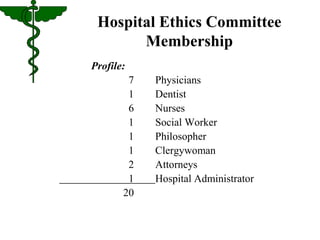
Hospital Ethics Committee 
Membership 
Profile: 
7 Physicians 
1 Dentist 
6 Nurses 
1 Social Worker 
1 Philosopher 
1 Clergywoman 
2 Attorneys 
1 Hospital Administrator 
20
Responsibilities of 
Hospital Ethics Committee 
โ€ข Education - facilitate educational opportunities for health 
care professionals, patients, and their families. 
โ€ข Consultation - provide consultative services regarding 
ethical issues pertaining to a specific patient. 
โ€ข Policies and Procedures - discussion and evaluation of 
policies and procedures having ethical implications.
Education
Principles of Patient Care 
โ€ข Each patient shall be treated as a whole, 
irreplaceable, unique and worthy person. 
โ€ข The patientโ€™s safety, health, or welfare shall be 
protected and shall not be subordinated to 
organizational, staff, educational, or research 
interests or to any other end.
Principles of Patient Care (cont.) 
โ€ข Behavior reflecting the dignity, responsibility and 
service orientation of health care professions worthy 
of the publicโ€™s respect and confidence, shall be 
practiced by all individuals. 
โ€ข Each patient shall have a responsible attending 
physician or dentist.
Principles of Patient Care (cont.) 
โ€ข The privacy of the patient and the confidentiality of 
every case and record shall be maintained. 
โ€ข Patients and/or responsible family shall be informed 
at all stages of care about personnel responsible for 
the patient care, treatment plans, and activities for 
the patient, facilities and services available to the 
patient, and responsibilities of the patient and family.
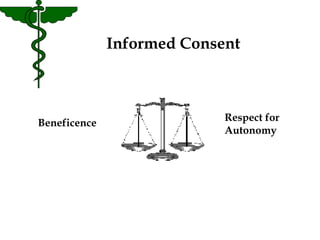
Informed Consent 
Respect for 
Autonomy 
Beneficence
Consultation
Policies and Procedures
Withholding/Withdrawing 
Potentially Life Sustaining 
Treatment 
-- Hospital Policy --
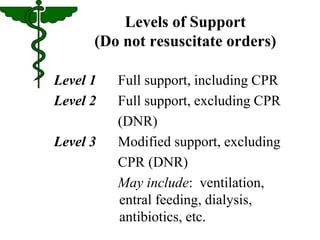
Levels of Support 
(Do not resuscitate orders) 
Level 1 Full support, including CPR 
Level 2 Full support, excluding CPR 
(DNR) 
Level 3 Modified support, excluding 
CPR (DNR) 
May include: ventilation, 
entral feeding, dialysis, 
antibiotics, etc.
Guidelines on Pain Control for 
the Dying Patient
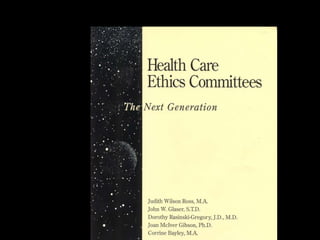
Resource Materials for a 
Establishing A Hospital Ethics 
Committee
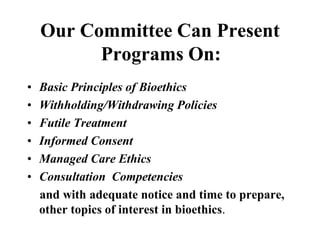
Our Committee Can Present 
Programs On: 
โ€ข Basic Principles of Bioethics 
โ€ข Withholding/Withdrawing Policies 
โ€ข Futile Treatment 
โ€ข Informed Consent 
โ€ข Managed Care Ethics 
โ€ข Consultation Competencies 
and with adequate notice and time to prepare, 
other topics of interest in bioethics.

Ethics in Healthcare Organization -A humane touch.

  • 1.
    HOSPITAL ETHICS COMMITTEES Bioethics Mahboob Ali Khan MHA,CPHQ
  • 2.
    Mission Hospital EthicsCommittee To create a mechanism to allow the patient or the patientโ€™s designated representative to participate in the consideration of ethical issues that arise in the care of the patient; to provide an organization and mechanism for the consideration of ethical issues arising in the care of patients; and to provide education to care givers and patients on ethical issues in health care.
  • 3.
    Bioethics Issues: Pastand Present โ€ข Defining Death โ€ข Foregoing/Withdrawing Treatment โ€ข Permanently Unconscious Patients โ€ข Withholding Food and Fluids โ€ข In Vitro Fertilization โ€ข Surrogate Parenting โ€ข Fetal Tissue Research โ€ข Euthanasia, Active and Passive โ€ข Abortion โ€ข Genetic Engineering โ€ข Assisted Suicide โ€ข Organ Transplantation โ€ข Do Not Resuscitate Orders โ€ข Informed Consent โ€ข Access to Care/Indigent Care โ€ข Allocation of Scarce Resources โ€ข Cloning
  • 4.
    Brief History ofthe Bioethics Movement โ€ข 1962 Kidney Dialysis --โ€Patient Selection Committeesโ€ โ€ข 1968 Definition of Irreversible Come (Brain Death) by ad hoc Committee of Harvard Medical School โ€ข 1976 Karen Ann Quinlan --Prognosis Committeesโ€ โ€ข 1980-83 Presidentโ€™s Commission for the Study of Ethical Problems in Medicine and Biomedical and Behavioral Research โ€ข Early 80โ€™s Ethics Committees Emerging: 1981 Less than 1% of Hospitals 1985 50% of Hospitals Today 75% of Hospitals โ€ข 1982 Baby Doe Care (esophageal atresia) โ€ข 1989 Nancy Cruzan โ€“ right to die; removal of feeding tube
  • 5.
    Joint Commission onAccreditation of Health Care Organizations Standard: โ€œPatient Rights and Organizational Ethicsโ€ โ€ข Promote consideration of patient values and preferences including decision to continue treatment โ€ข Recognize hospitalโ€™s responsibilities under the law โ€ข Inform patients of their responsibilities in the care process. โ€ข Manage the hospitalโ€™s relationships with patients and the public in an ethical manner.
  • 6.
    Hospital Ethics Committee Membership Profile: 7 Physicians 1 Dentist 6 Nurses 1 Social Worker 1 Philosopher 1 Clergywoman 2 Attorneys 1 Hospital Administrator 20
  • 7.
    Responsibilities of HospitalEthics Committee โ€ข Education - facilitate educational opportunities for health care professionals, patients, and their families. โ€ข Consultation - provide consultative services regarding ethical issues pertaining to a specific patient. โ€ข Policies and Procedures - discussion and evaluation of policies and procedures having ethical implications.
  • 8.
  • 9.
    Principles of PatientCare โ€ข Each patient shall be treated as a whole, irreplaceable, unique and worthy person. โ€ข The patientโ€™s safety, health, or welfare shall be protected and shall not be subordinated to organizational, staff, educational, or research interests or to any other end.
  • 10.
    Principles of PatientCare (cont.) โ€ข Behavior reflecting the dignity, responsibility and service orientation of health care professions worthy of the publicโ€™s respect and confidence, shall be practiced by all individuals. โ€ข Each patient shall have a responsible attending physician or dentist.
  • 11.
    Principles of PatientCare (cont.) โ€ข The privacy of the patient and the confidentiality of every case and record shall be maintained. โ€ข Patients and/or responsible family shall be informed at all stages of care about personnel responsible for the patient care, treatment plans, and activities for the patient, facilities and services available to the patient, and responsibilities of the patient and family.
  • 12.
    Informed Consent Respectfor Autonomy Beneficence
  • 13.
  • 14.
  • 15.
    Withholding/Withdrawing Potentially LifeSustaining Treatment -- Hospital Policy --
  • 16.
    Levels of Support (Do not resuscitate orders) Level 1 Full support, including CPR Level 2 Full support, excluding CPR (DNR) Level 3 Modified support, excluding CPR (DNR) May include: ventilation, entral feeding, dialysis, antibiotics, etc.
  • 17.
    Guidelines on PainControl for the Dying Patient
  • 18.
    Resource Materials fora Establishing A Hospital Ethics Committee
  • 20.
    Our Committee CanPresent Programs On: โ€ข Basic Principles of Bioethics โ€ข Withholding/Withdrawing Policies โ€ข Futile Treatment โ€ข Informed Consent โ€ข Managed Care Ethics โ€ข Consultation Competencies and with adequate notice and time to prepare, other topics of interest in bioethics.