ETHICALANDCULTURALISSUES
IN PEDIATRICNURSING
PRESENTED BY: Ms. SUKHRAJ KAUR
LECTURER (M.Sc. PEDIATRICS)
ASHOKA INSTITUTE OF NURSING, PATIALA
INTRODUCTION
โ€ข The term โ€˜ethicโ€™ comes from the Greek word:
ethikos which means โ€˜moral, characterโ€™
โ€ข The branch of philosophy concerned with the
distinction between right and wrong based on a
body of knowledge, not based only on
opinions.
Ethics are involved and/or influence by:
LAWS
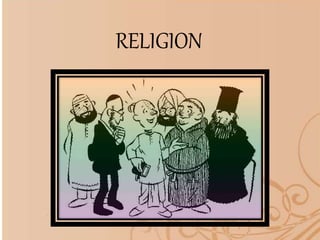
RELIGION
SCIENTIFICSTUDIES
PHILOSOPHY
MORAL
PRINCIPLESOF MEDICALETHICS
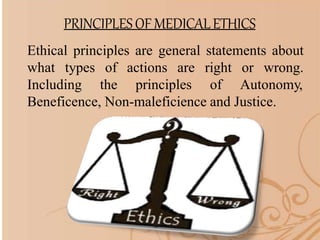
Ethical principles are general statements about
what types of actions are
Including the principles
right or wrong.
of Autonomy,
Beneficence, Non-maleficience and Justice.
contiโ€ฆ
A physician shall, in the provision of appropriate
patient care, except in emergencies, be free to
choose whom to serve, with whom to associate,
and the environment in which to provide
medical care.
contiโ€ฆ
A physician shall recognize a responsibility to
improvement of the community and
participate in activities contributing to the
the
betterment of public health.
contiโ€ฆ
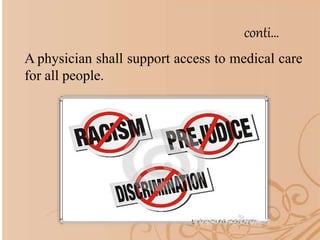
A physician shall support access to medical care
for all people.
contiโ€ฆ
Adopted by the AMA's House of Delegates June
17, 2001
contiโ€ฆ
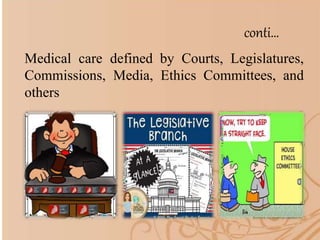
Medical care defined by Courts, Legislatures,
Commissions, Media, Ethics Committees, and
others
contiโ€ฆ
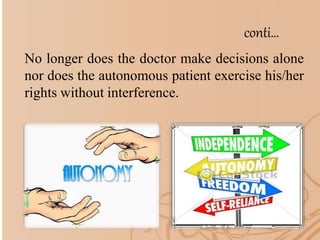
No longer does the doctor make decisions alone
nor does the autonomous patient exercise his/her
rights without interference.
contiโ€ฆ
ethics: decisions are more process
Clinical
oriented than outcome oriented, requiring a
process of consensus building, no matter the
outcome.
ETHICALISSUES INPEDIATRICS
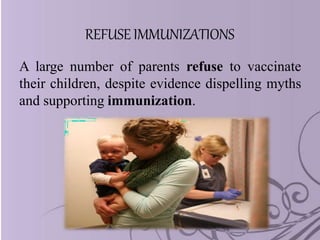
REFUSEIMMUNIZATIONS
A large number of parents refuse to vaccinate
their children, despite evidence dispelling myths
and supporting immunization.
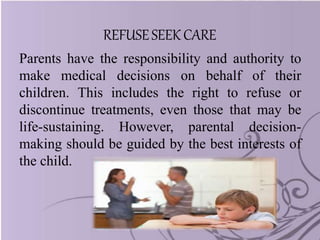
REFUSESEEK CARE
Parents have the responsibility and authority to
make medical decisions on behalf of their
children. This includes the right to refuse or
discontinue treatments, even those that may be
life-sustaining. However, parental decision-
making should be guided by the best interests of
the child.
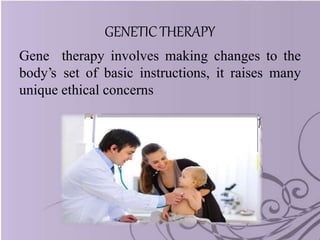
GENETICTHERAPY
Gene therapy involves making changes to the
bodyโ€™s set of basic instructions, it raises many
unique ethical concerns
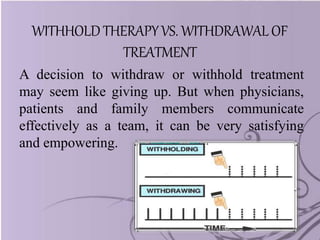
WITHHOLDTHERAPYVS. WITHDRAWALOF
TREATMENT
A decision to withdraw or withhold treatment
may seem like giving up. But when physicians,
patients and family members communicate
effectively as a team, it can be very satisfying
and empowering.
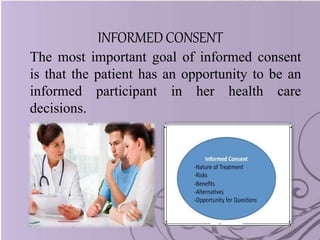
INFORMEDCONSENT
The most important goal of informed consent
is that the patient has an opportunity to be an
informed participant in her health care
decisions.
Contiโ€ฆ
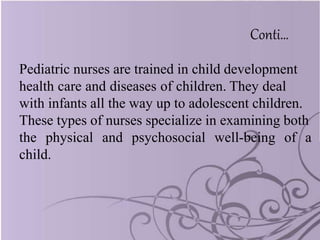
Pediatric nurses are trained in child development
health care and diseases of children. They deal
with infants all the way up to adolescent children.
These types of nurses specialize in examining both
the physical and psychosocial well-being of a
child.
Contiโ€ฆ
The ethical issues pediatric nurses face can be
quite challenging at times, as they must often
professionally solve conflicts involving a
familyโ€™s personal values.
COPING SKILLS
โ€ข If a child is recently diagnosed with a serious
condition, it can be quite overwhelming for
both the child and family members.
Contiโ€ฆ
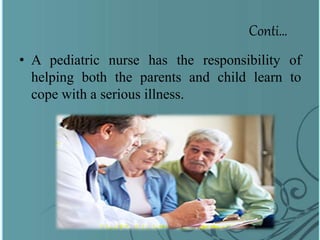
โ€ข A pediatric nurse has the responsibility of
helping both the parents and child learn to
cope with a serious illness.
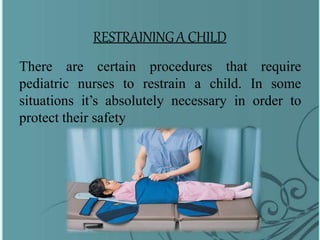
RESTRAININGA CHILD
There are certain procedures that require
pediatric nurses to restrain a child. In some
situations itโ€™s absolutely necessary in order to
protect their safety
Contiโ€ฆ
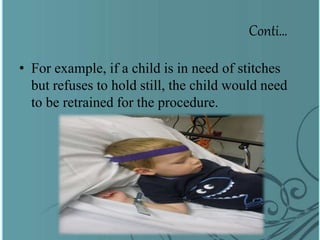
โ€ข For example, if a child is in need of stitches
but refuses to hold still, the child would need
to be retrained for the procedure.
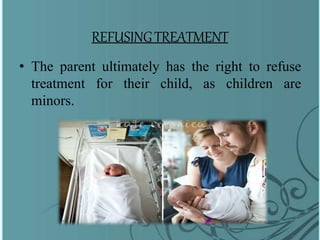
REFUSINGTREATMENT
โ€ข The parent ultimately has the right to refuse
treatment for their child, as children are
minors.
Contiโ€ฆ
โ€ข Therefore, it can be quite challenging for a
nurse to have to pull a child from life support
or not give a child certain treatments that may
help them recover, when the nurse feels that
itโ€™s ethically right to do so.
RELIGIOUSBELIEFS
โ€ข Despite a pediatric nurseโ€™s spiritual or religious
beliefs, she must comply with the familyโ€™s
beliefs, not allowing her own feelings to
personally get in the way.
ACCEPTINGREALITY
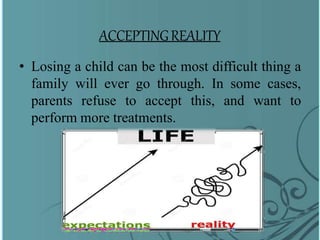
โ€ข Losing a child can be the most difficult thing a
family will ever go through. In some cases,
parents refuse to accept this, and want to
perform more treatments.
Contiโ€ฆ
โ€ข However, a pediatric nurse must help family
members understand when there is nothing
else that can be done in order to save the child.
ISSUESIN PEDIATRICNURSING
โ€ข Pediatric nurses are professional registered
nurses who often assist in the care and
treatment of young children or babies. The
young children and babies are sick, and some
are terminally ill and dying.
โ€ข A pediatric nurse has to remain ethical and
keep the best interest of the patient in mind at
all time to avoid legal issues.
HEALTHISSUES
โ€ข A pediatric nurse is always put in dangerous
situations, which is an issue for the nurse.
โ€ข Pediatric nurses are exposed to health hazards,
such as infectious disease because of the places
he works, and the direct contact the pediatric
nurse has with patients.
Contiโ€ฆ
โ€ข Pediatric nurses run the risk of being injured by
sharp object such as needles and blades.
โ€ข A pediatric nurse can also face the issues of
musculoskeletal problems and other back pain
problems due to carrying children and babies.
PATIENT ADVOCATE
โ€ข A pediatric nurse has the duty of remaining an
advocate for the patient. If the patient's activity
after or during treatment changes.
Contiโ€ฆ
โ€ข A pediatric nurse has the responsibility of
alerting physician of these changes
immediately. If the patient's physician is not on
call or working, then the pediatric nurse has
the responsibility to notify a working physician
who can provide proper care
CONFIDENTIALITY
โ€ข All information of the patient a pediatric nurse
is caring or treating must remain confidential.
โ€ข The pediatric nurse may not share the patient's
condition with anyone outside of the parents, or
authorized family, guardian or friends of the
patient.
Contiโ€ฆ
โ€ข Violating the patient's privacy is a violation of
the nursing ethics. A pediatric nurse is made to
follow, and a lawsuit can result because of this
violation. Along with a lawsuit, the pediatric
nurse can run the risk of losing his job and
nursing license.
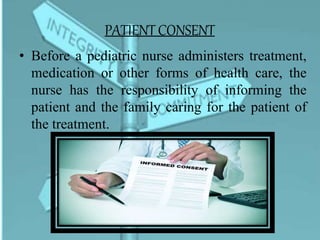
PATIENT CONSENT
โ€ข Before a pediatric nurse administers treatment,
medication or other forms of health care, the
nurse has the responsibility of informing the
patient and the family caring for the patient of
the treatment.
CONTIโ€ฆ
โ€ข The patient or the patient's parents must be
fully aware of what is going on.
โ€ข In some cases, a patient, parent or guardian
must sign a consent form, depending on the
type of treatment the pediatric nurse is
administering or providing. If the pediatric
nurse does not fully explain the form of health
care, the patient could become ill as a result,
which will bring the issue of a lawsuit for the
health care provider and the pediatric nurse.
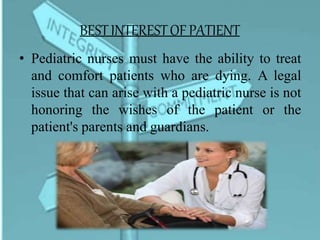
BESTINTERESTOF PATIENT
โ€ข Pediatric nurses must have the ability to treat
and comfort patients who are dying. A legal
issue that can arise with a pediatric nurse is not
honoring the wishes of the patient or the
patient's parents and guardians.
CONTIโ€ฆ
โ€ข Some pediatric nurses become emotionally
attached to patients, and take matters into their
own hands.
โ€ข The pediatric nurse has a legal obligation to
respect the wishes of the patient, and do what
is in the patient's best interest.
โ€ข Violating orders can lead to job and license
loss of the pediatric nurse.
ETHICALDILEMMA
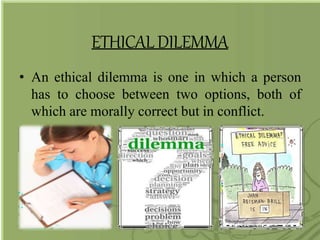
โ€ข An ethical dilemma is one in which a person
has to choose between two options, both of
which are morally correct but in conflict.
CONTIโ€ฆ
โ€ข The nurse must make a choice between two
alternatives that are equally unsatisfactory.
They both deal with questions of right and
wrong.
โ€ข Such dilemmas may occur as a result of
differences in cultural or religious beliefs.
EXAMPLESOF NURSINGETHICAL
DILEMMAS
INAPPROPRIATE MEDICATIONORDERS
โ€ข Giving wrong medication dosages or
medication for the wrong illness is unsafe for
patients and may lead to death.
โ€ข Nurses can find themselves in an ethical
dilemma when they have to challenge a
medication order written by a physician.
UNRESPONSIVE PHYSICIANS
โ€ข Nurses often have to call on physicians in
situations beyond their scope of practice such
as medical emergencies.
โ€ข The nurse finds herself in an ethical dilemma if
the physician does not respond and her
patient's condition goes from bad to worse.
INAPPROPRIATETASKS
โ€ข Nurses float from department to department in
the course of their career.
โ€ข When a nurse finds herself in an unfamiliar
department and is asked to provide care she is
inadequately trained for, she may have to
refuse to provide care to avoid making the
patient unsafe.
LIFETHREATENING PATIENT DECISIONS
โ€ข Patients sometimes make decisions that are
unsafe, such as refusing treatment for a baby,
medication or lifesaving procedures.
โ€ข The nurse finds herself in an ethical dilemma
because not giving the needed treatment goes
against beneficence and giving it ignores
patient autonomy.
SOLVE AN ETHICALDILEMMA
INSTRUCTIONS
โ€ข Consider your own motives and try to detach
them from your decision. If
dilemma
husband
is whether to tell
that she's cheating,
your
your
your
ethical
friend's
instinct
might be to keep quiet rather than potentially
lose your friendship.
โ€ข Take your own feelings out of the equation and
focus on consequences to the involved parties.
CONTIโ€ฆ
โ€ข Consider your moral code of conduct. If you're
pondering ethical issues, you must have a
strong sense of right and wrong.
โ€ข Ask your conscience what the right thing to do
is. See if that makes the dilemma easier to
solve.
PEDIATRIC CODEOF ETHICS
โ€ข Pediatricians are physicians who specialize in
the care of infants and children. They are
respected and trusted members in the
community.
โ€ข The American Medical Association (AMA)
developed a code of medical ethics that the
organization says contains "standards of
conduct that define honorable behavior" for
physicians.
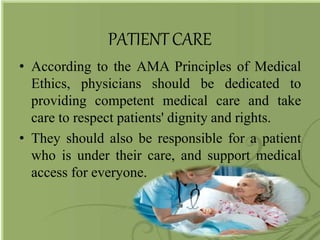
PATIENTCARE
โ€ข According to the AMA Principles of Medical
Ethics, physicians should be dedicated to
providing competent medical care and take
care to respect patients' dignity and rights.
โ€ข They should also be responsible for a patient
who is under their care, and support medical
access for everyone.
PATIENTCONFIDENTIALITY
Physicians should respect the rights of their
colleagues and other health professionals, as well
as protect patient confidentiality and privacy.
COMMUNITYINVOLVEMENT
The AMA suggests that physicians have a
responsibility to get involved in their community
by participating in activities that improve public
health.
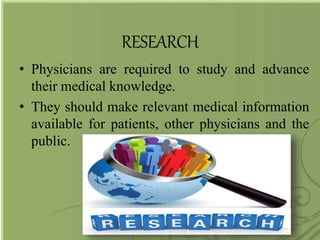
RESEARCH
โ€ข Physicians are required to study and advance
their medical knowledge.
โ€ข They should make relevant medical information
available for patients, other physicians and the
public.
THELAW
โ€ข The Principles of Medical Ethics also state that
physicians should respect the law when
providing patient care, but also seek to change
the law if it is in the best interest of the patient
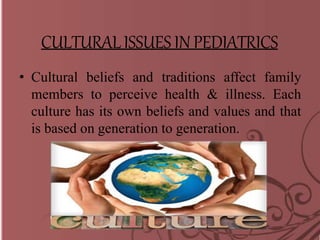
CULTURALISSUESIN PEDIATRICS
โ€ข Cultural beliefs and traditions affect family
members to perceive health & illness. Each
culture has its own beliefs and values and that
is based on generation to generation.
SOCIOECONOMIC FACTORS
โ€ข A higher percentage of low socioeconomic
group children suffer from many health
problems.
CONTIโ€ฆ
โ€ข Children of lower classes are unlikely to be
immunized properly
โ€ข Nurse must enquire about immunization and
provide nutritional information.
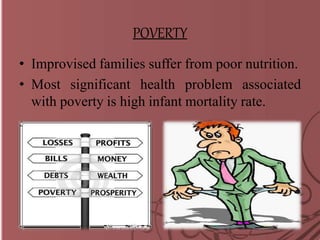
POVERTY
โ€ข Improvised families suffer from poor nutrition.
โ€ข Most significant health problem associated
with poverty is high infant mortality rate.
CONTIโ€ฆ
โ€ข Due to lack of money, people may consult folk
practitioners.
โ€ข Inadequate diet leads to nutritional deficiencies
(like anemia) and also growth retardation in
children.
โ€ข Poor sanitation and overcrowding leading to
illness.
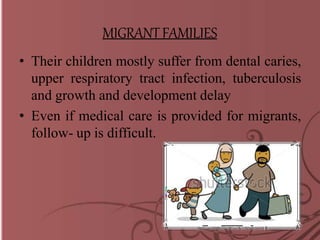
MIGRANTFAMILIES
โ€ข Their children mostly suffer from dental caries,
upper respiratory tract infection, tuberculosis
and growth and development delay
โ€ข Even if medical care is provided for migrants,
follow- up is difficult.
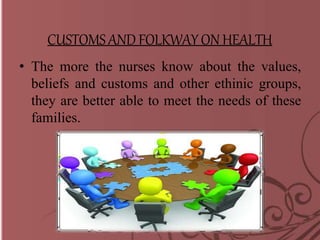
CUSTOMSAND FOLKWAY ON HEALTH
โ€ข The more the nurses know about the values,
beliefs and customs and other ethinic groups,
they are better able to meet the needs of these
families.
CONTIโ€ฆ
โ€ข For example: some culture view chronic illness
or disability as affecting only particular aspects
of childโ€™s life and the whole child is viewed as
normal.
CONTIโ€ฆ
โ€ข In some cultures, gender may influence a
familyโ€™s perception of implications of illness
or disability.
For example: in Arabic and Asian cultures, male
child is having higher esteem.
CONTIโ€ฆ
โ€ข Different diseases or signs and symptoms of
illness is also influenced by culture
For example: diarrhea is considered as cleaning
of the body that is essential for health
maintenance and illness prevention.
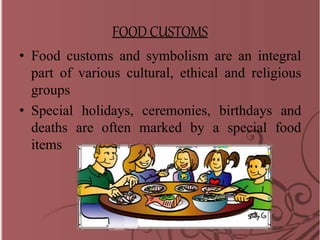
FOOD CUSTOMS
โ€ข Food customs and symbolism are an integral
part of various cultural, ethical and religious
groups
โ€ข Special holidays, ceremonies, birthdays and
deaths are often marked by a special food
items
CONTIโ€ฆ
โ€ข There are many dietary restrictions in few
cultures causing malnutrition in children
For example: seven- day Adventists vegetarian
diet.
BIBLIOGRAPHY
โ€ข Bbehraman Richerde. Nelson text book of
pediatrics 16 edition. Harcourt india Pp -5-9,
11-13.
โ€ข Parthasarathy A. Text book of pediatrics.
Jaypee publisher. 8th edition. Pp-160
โ€ข Marlow R. Dorothy Text book of pediatric
nursing. Elsevier publisher. Sixth edition. Pp-
383-384
โ€ข Padamja A text book of child health nursing.
Jaypee publishers. 1st edition. Pp โ€“ 31- 32
โ€ข WEBSITE
โ€ข http://www.smilefoundationindia.org/child_rig
hts.htm
โ€ข http://en.wikipedia.org/wiki/Category:Children
's_rights_in_India
โ€ข JOURNALS
โ€ข http://iosrjournals.org/
โ€ข Cultural and Ethical Issues Concerning
Research onAmerican Indian Youth
ethicalandculturalissuesinpediatrics.pptx

ethicalandculturalissuesinpediatrics.pptx

  • 1.
    ETHICALANDCULTURALISSUES IN PEDIATRICNURSING PRESENTED BY:Ms. SUKHRAJ KAUR LECTURER (M.Sc. PEDIATRICS) ASHOKA INSTITUTE OF NURSING, PATIALA
  • 2.
    INTRODUCTION โ€ข The termโ€˜ethicโ€™ comes from the Greek word: ethikos which means โ€˜moral, characterโ€™ โ€ข The branch of philosophy concerned with the distinction between right and wrong based on a body of knowledge, not based only on opinions.
  • 3.
    Ethics are involvedand/or influence by:
  • 4.
  • 5.
  • 6.
  • 7.
  • 8.
  • 9.
    PRINCIPLESOF MEDICALETHICS Ethical principlesare general statements about what types of actions are Including the principles right or wrong. of Autonomy, Beneficence, Non-maleficience and Justice.
  • 10.
    contiโ€ฆ A physician shall,in the provision of appropriate patient care, except in emergencies, be free to choose whom to serve, with whom to associate, and the environment in which to provide medical care.
  • 11.
    contiโ€ฆ A physician shallrecognize a responsibility to improvement of the community and participate in activities contributing to the the betterment of public health.
  • 12.
    contiโ€ฆ A physician shallsupport access to medical care for all people.
  • 13.
    contiโ€ฆ Adopted by theAMA's House of Delegates June 17, 2001
  • 14.
    contiโ€ฆ Medical care definedby Courts, Legislatures, Commissions, Media, Ethics Committees, and others
  • 15.
    contiโ€ฆ No longer doesthe doctor make decisions alone nor does the autonomous patient exercise his/her rights without interference.
  • 16.
    contiโ€ฆ ethics: decisions aremore process Clinical oriented than outcome oriented, requiring a process of consensus building, no matter the outcome.
  • 17.
  • 18.
    REFUSEIMMUNIZATIONS A large numberof parents refuse to vaccinate their children, despite evidence dispelling myths and supporting immunization.
  • 19.
    REFUSESEEK CARE Parents havethe responsibility and authority to make medical decisions on behalf of their children. This includes the right to refuse or discontinue treatments, even those that may be life-sustaining. However, parental decision- making should be guided by the best interests of the child.
  • 20.
    GENETICTHERAPY Gene therapy involvesmaking changes to the bodyโ€™s set of basic instructions, it raises many unique ethical concerns
  • 21.
    WITHHOLDTHERAPYVS. WITHDRAWALOF TREATMENT A decisionto withdraw or withhold treatment may seem like giving up. But when physicians, patients and family members communicate effectively as a team, it can be very satisfying and empowering.
  • 22.
    INFORMEDCONSENT The most importantgoal of informed consent is that the patient has an opportunity to be an informed participant in her health care decisions.
  • 23.
    Contiโ€ฆ Pediatric nurses aretrained in child development health care and diseases of children. They deal with infants all the way up to adolescent children. These types of nurses specialize in examining both the physical and psychosocial well-being of a child.
  • 24.
    Contiโ€ฆ The ethical issuespediatric nurses face can be quite challenging at times, as they must often professionally solve conflicts involving a familyโ€™s personal values.
  • 25.
    COPING SKILLS โ€ข Ifa child is recently diagnosed with a serious condition, it can be quite overwhelming for both the child and family members.
  • 26.
    Contiโ€ฆ โ€ข A pediatricnurse has the responsibility of helping both the parents and child learn to cope with a serious illness.
  • 27.
    RESTRAININGA CHILD There arecertain procedures that require pediatric nurses to restrain a child. In some situations itโ€™s absolutely necessary in order to protect their safety
  • 28.
    Contiโ€ฆ โ€ข For example,if a child is in need of stitches but refuses to hold still, the child would need to be retrained for the procedure.
  • 29.
    REFUSINGTREATMENT โ€ข The parentultimately has the right to refuse treatment for their child, as children are minors.
  • 30.
    Contiโ€ฆ โ€ข Therefore, itcan be quite challenging for a nurse to have to pull a child from life support or not give a child certain treatments that may help them recover, when the nurse feels that itโ€™s ethically right to do so.
  • 31.
    RELIGIOUSBELIEFS โ€ข Despite apediatric nurseโ€™s spiritual or religious beliefs, she must comply with the familyโ€™s beliefs, not allowing her own feelings to personally get in the way.
  • 32.
    ACCEPTINGREALITY โ€ข Losing achild can be the most difficult thing a family will ever go through. In some cases, parents refuse to accept this, and want to perform more treatments.
  • 33.
    Contiโ€ฆ โ€ข However, apediatric nurse must help family members understand when there is nothing else that can be done in order to save the child.
  • 34.
    ISSUESIN PEDIATRICNURSING โ€ข Pediatricnurses are professional registered nurses who often assist in the care and treatment of young children or babies. The young children and babies are sick, and some are terminally ill and dying. โ€ข A pediatric nurse has to remain ethical and keep the best interest of the patient in mind at all time to avoid legal issues.
  • 35.
    HEALTHISSUES โ€ข A pediatricnurse is always put in dangerous situations, which is an issue for the nurse. โ€ข Pediatric nurses are exposed to health hazards, such as infectious disease because of the places he works, and the direct contact the pediatric nurse has with patients.
  • 36.
    Contiโ€ฆ โ€ข Pediatric nursesrun the risk of being injured by sharp object such as needles and blades. โ€ข A pediatric nurse can also face the issues of musculoskeletal problems and other back pain problems due to carrying children and babies.
  • 37.
    PATIENT ADVOCATE โ€ข Apediatric nurse has the duty of remaining an advocate for the patient. If the patient's activity after or during treatment changes.
  • 38.
    Contiโ€ฆ โ€ข A pediatricnurse has the responsibility of alerting physician of these changes immediately. If the patient's physician is not on call or working, then the pediatric nurse has the responsibility to notify a working physician who can provide proper care
  • 39.
    CONFIDENTIALITY โ€ข All informationof the patient a pediatric nurse is caring or treating must remain confidential. โ€ข The pediatric nurse may not share the patient's condition with anyone outside of the parents, or authorized family, guardian or friends of the patient.
  • 40.
    Contiโ€ฆ โ€ข Violating thepatient's privacy is a violation of the nursing ethics. A pediatric nurse is made to follow, and a lawsuit can result because of this violation. Along with a lawsuit, the pediatric nurse can run the risk of losing his job and nursing license.
  • 41.
    PATIENT CONSENT โ€ข Beforea pediatric nurse administers treatment, medication or other forms of health care, the nurse has the responsibility of informing the patient and the family caring for the patient of the treatment.
  • 42.
    CONTIโ€ฆ โ€ข The patientor the patient's parents must be fully aware of what is going on. โ€ข In some cases, a patient, parent or guardian must sign a consent form, depending on the type of treatment the pediatric nurse is administering or providing. If the pediatric nurse does not fully explain the form of health care, the patient could become ill as a result, which will bring the issue of a lawsuit for the health care provider and the pediatric nurse.
  • 43.
    BESTINTERESTOF PATIENT โ€ข Pediatricnurses must have the ability to treat and comfort patients who are dying. A legal issue that can arise with a pediatric nurse is not honoring the wishes of the patient or the patient's parents and guardians.
  • 44.
    CONTIโ€ฆ โ€ข Some pediatricnurses become emotionally attached to patients, and take matters into their own hands. โ€ข The pediatric nurse has a legal obligation to respect the wishes of the patient, and do what is in the patient's best interest. โ€ข Violating orders can lead to job and license loss of the pediatric nurse.
  • 45.
    ETHICALDILEMMA โ€ข An ethicaldilemma is one in which a person has to choose between two options, both of which are morally correct but in conflict.
  • 46.
    CONTIโ€ฆ โ€ข The nursemust make a choice between two alternatives that are equally unsatisfactory. They both deal with questions of right and wrong. โ€ข Such dilemmas may occur as a result of differences in cultural or religious beliefs.
  • 47.
    EXAMPLESOF NURSINGETHICAL DILEMMAS INAPPROPRIATE MEDICATIONORDERS โ€ขGiving wrong medication dosages or medication for the wrong illness is unsafe for patients and may lead to death. โ€ข Nurses can find themselves in an ethical dilemma when they have to challenge a medication order written by a physician.
  • 48.
    UNRESPONSIVE PHYSICIANS โ€ข Nursesoften have to call on physicians in situations beyond their scope of practice such as medical emergencies. โ€ข The nurse finds herself in an ethical dilemma if the physician does not respond and her patient's condition goes from bad to worse.
  • 49.
    INAPPROPRIATETASKS โ€ข Nurses floatfrom department to department in the course of their career. โ€ข When a nurse finds herself in an unfamiliar department and is asked to provide care she is inadequately trained for, she may have to refuse to provide care to avoid making the patient unsafe.
  • 50.
    LIFETHREATENING PATIENT DECISIONS โ€ขPatients sometimes make decisions that are unsafe, such as refusing treatment for a baby, medication or lifesaving procedures. โ€ข The nurse finds herself in an ethical dilemma because not giving the needed treatment goes against beneficence and giving it ignores patient autonomy.
  • 51.
    SOLVE AN ETHICALDILEMMA INSTRUCTIONS โ€ขConsider your own motives and try to detach them from your decision. If dilemma husband is whether to tell that she's cheating, your your your ethical friend's instinct might be to keep quiet rather than potentially lose your friendship. โ€ข Take your own feelings out of the equation and focus on consequences to the involved parties.
  • 52.
    CONTIโ€ฆ โ€ข Consider yourmoral code of conduct. If you're pondering ethical issues, you must have a strong sense of right and wrong. โ€ข Ask your conscience what the right thing to do is. See if that makes the dilemma easier to solve.
  • 53.
    PEDIATRIC CODEOF ETHICS โ€ขPediatricians are physicians who specialize in the care of infants and children. They are respected and trusted members in the community. โ€ข The American Medical Association (AMA) developed a code of medical ethics that the organization says contains "standards of conduct that define honorable behavior" for physicians.
  • 54.
    PATIENTCARE โ€ข According tothe AMA Principles of Medical Ethics, physicians should be dedicated to providing competent medical care and take care to respect patients' dignity and rights. โ€ข They should also be responsible for a patient who is under their care, and support medical access for everyone.
  • 55.
    PATIENTCONFIDENTIALITY Physicians should respectthe rights of their colleagues and other health professionals, as well as protect patient confidentiality and privacy.
  • 56.
    COMMUNITYINVOLVEMENT The AMA suggeststhat physicians have a responsibility to get involved in their community by participating in activities that improve public health.
  • 57.
    RESEARCH โ€ข Physicians arerequired to study and advance their medical knowledge. โ€ข They should make relevant medical information available for patients, other physicians and the public.
  • 58.
    THELAW โ€ข The Principlesof Medical Ethics also state that physicians should respect the law when providing patient care, but also seek to change the law if it is in the best interest of the patient
  • 59.
    CULTURALISSUESIN PEDIATRICS โ€ข Culturalbeliefs and traditions affect family members to perceive health & illness. Each culture has its own beliefs and values and that is based on generation to generation.
  • 60.
    SOCIOECONOMIC FACTORS โ€ข Ahigher percentage of low socioeconomic group children suffer from many health problems.
  • 61.
    CONTIโ€ฆ โ€ข Children oflower classes are unlikely to be immunized properly โ€ข Nurse must enquire about immunization and provide nutritional information.
  • 62.
    POVERTY โ€ข Improvised familiessuffer from poor nutrition. โ€ข Most significant health problem associated with poverty is high infant mortality rate.
  • 63.
    CONTIโ€ฆ โ€ข Due tolack of money, people may consult folk practitioners. โ€ข Inadequate diet leads to nutritional deficiencies (like anemia) and also growth retardation in children. โ€ข Poor sanitation and overcrowding leading to illness.
  • 64.
    MIGRANTFAMILIES โ€ข Their childrenmostly suffer from dental caries, upper respiratory tract infection, tuberculosis and growth and development delay โ€ข Even if medical care is provided for migrants, follow- up is difficult.
  • 65.
    CUSTOMSAND FOLKWAY ONHEALTH โ€ข The more the nurses know about the values, beliefs and customs and other ethinic groups, they are better able to meet the needs of these families.
  • 66.
    CONTIโ€ฆ โ€ข For example:some culture view chronic illness or disability as affecting only particular aspects of childโ€™s life and the whole child is viewed as normal.
  • 67.
    CONTIโ€ฆ โ€ข In somecultures, gender may influence a familyโ€™s perception of implications of illness or disability. For example: in Arabic and Asian cultures, male child is having higher esteem.
  • 68.
    CONTIโ€ฆ โ€ข Different diseasesor signs and symptoms of illness is also influenced by culture For example: diarrhea is considered as cleaning of the body that is essential for health maintenance and illness prevention.
  • 69.
    FOOD CUSTOMS โ€ข Foodcustoms and symbolism are an integral part of various cultural, ethical and religious groups โ€ข Special holidays, ceremonies, birthdays and deaths are often marked by a special food items
  • 70.
    CONTIโ€ฆ โ€ข There aremany dietary restrictions in few cultures causing malnutrition in children For example: seven- day Adventists vegetarian diet.
  • 71.
    BIBLIOGRAPHY โ€ข Bbehraman Richerde.Nelson text book of pediatrics 16 edition. Harcourt india Pp -5-9, 11-13. โ€ข Parthasarathy A. Text book of pediatrics. Jaypee publisher. 8th edition. Pp-160 โ€ข Marlow R. Dorothy Text book of pediatric nursing. Elsevier publisher. Sixth edition. Pp- 383-384
  • 72.
    โ€ข Padamja Atext book of child health nursing. Jaypee publishers. 1st edition. Pp โ€“ 31- 32 โ€ข WEBSITE โ€ข http://www.smilefoundationindia.org/child_rig hts.htm โ€ข http://en.wikipedia.org/wiki/Category:Children 's_rights_in_India โ€ข JOURNALS โ€ข http://iosrjournals.org/ โ€ข Cultural and Ethical Issues Concerning Research onAmerican Indian Youth