
Topic #3 : Ethical Principles
Lecture :6
Dr. Mohammad Almermesh
Lecturer
Pharmacology and Clinical Pharmacy Department
Overview
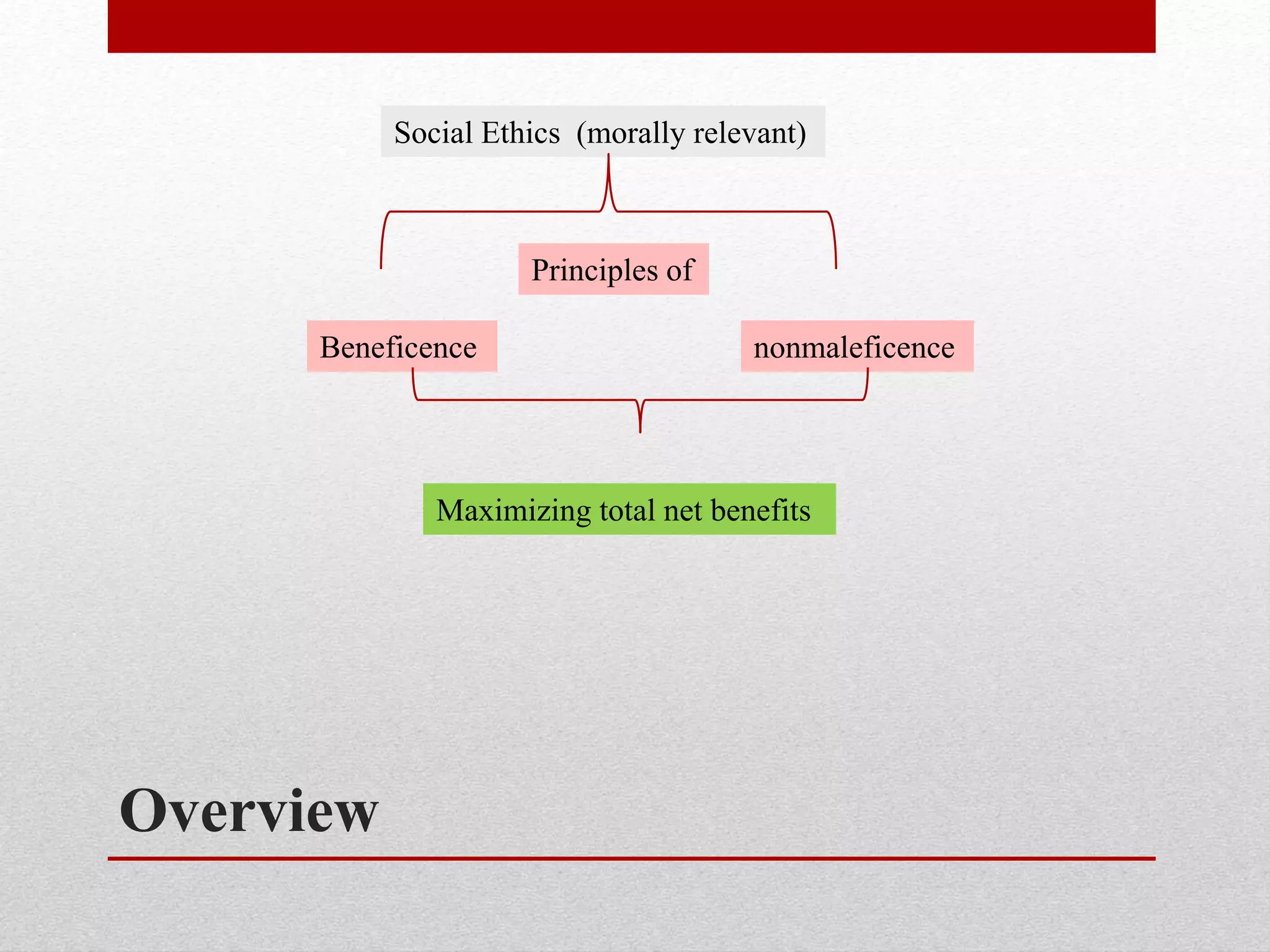
Social Ethics (morally relevant)
nonmaleficenceBeneficence
Maximizing total net benefits
Principles of
Overview
• The principle of justice (may be morally relevant),
affirms that certain patterns of distribution of the good
(e.g. distribution based on medical need)
• Other moral principles
(Autonomy-Veracity- Fidelity- Avoidance of killing)
• Actions or practices that do not focus on
maximizing the net good produced
• These are more individual ethical concerns
• Are important in traditional clinical health care
ethics
• Acting on one and only one patient (even one
patient)
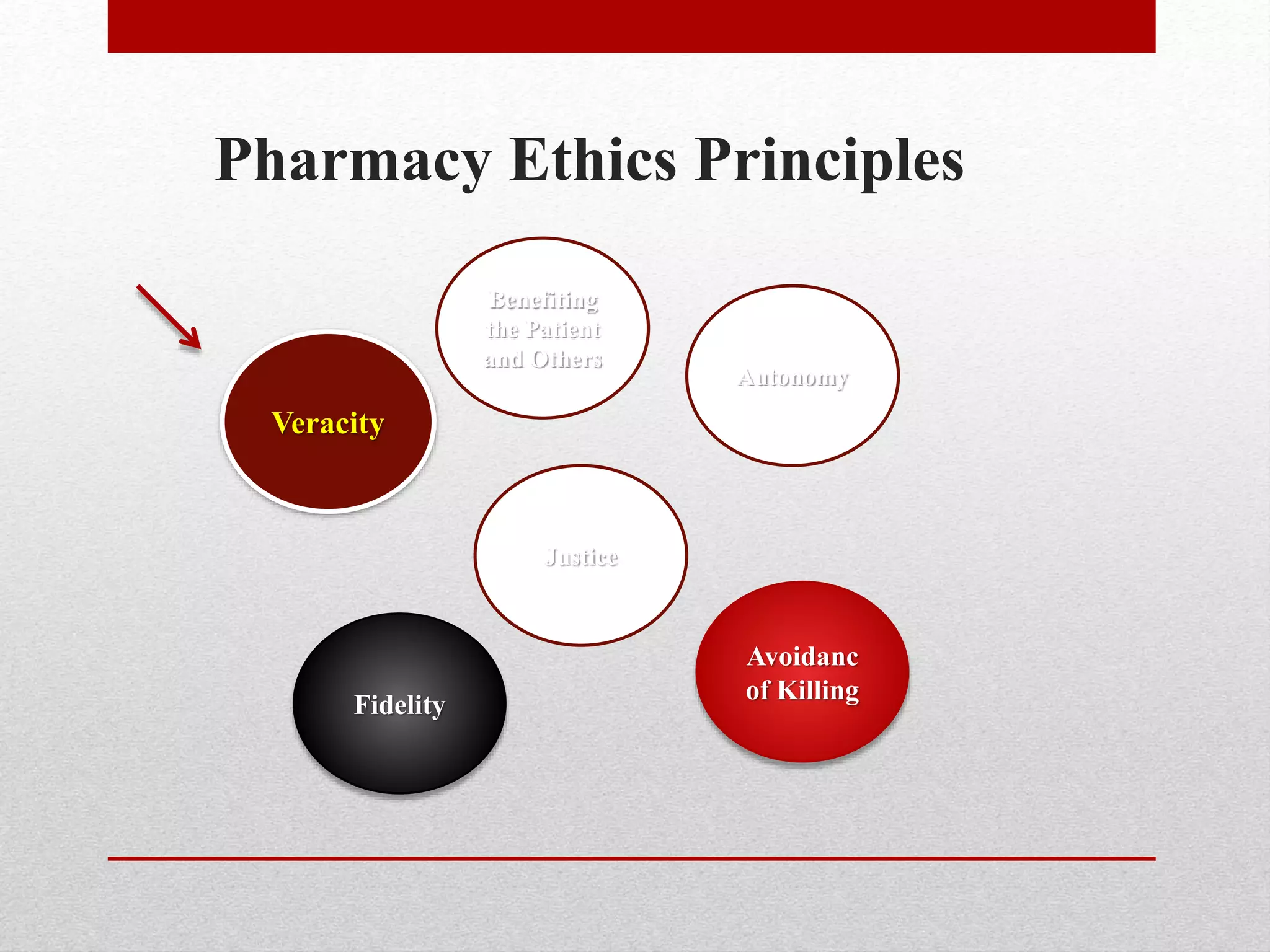
Pharmacy Ethics Principles
Benefiting
the Patient
and Others
Autonomy
Veracity
Fidelity
Avoidanc
of Killing
Justice
Veracity
• Veracity (dealing honestly with patients)
• Many common moral systems treat lying as wrong/ traditional
professional health care ethics has not
• Hippocratic Oath does not require that physicians deal honestly with
patients/ they claim that it spares patient agony/ focusing on the
consequences but not inherent moral element
• American Pharmacists Association (APhA) Code, 1969 “ a
pharmacist “should strive to provide info to the pts. Regarding
professional services truthfully, accurately, and fully and should
avoid misleading patients regarding the nature, cost, or value of these
professional services
• 1995 revised code” A pharmacist “acts with honesty and integrity in
professional relationships.”/ its interpretation is “ A pharmacist has a
duty to tell the truth and act with conviction of conscience”
The End

Ethical Principles veracity

  • 1.
    Topic #3 :Ethical Principles Lecture :6 Dr. Mohammad Almermesh Lecturer Pharmacology and Clinical Pharmacy Department
  • 2.
    Overview Social Ethics (morallyrelevant) nonmaleficenceBeneficence Maximizing total net benefits Principles of
  • 3.
    Overview • The principleof justice (may be morally relevant), affirms that certain patterns of distribution of the good (e.g. distribution based on medical need) • Other moral principles (Autonomy-Veracity- Fidelity- Avoidance of killing) • Actions or practices that do not focus on maximizing the net good produced • These are more individual ethical concerns • Are important in traditional clinical health care ethics • Acting on one and only one patient (even one patient)
  • 4.
    Pharmacy Ethics Principles Benefiting thePatient and Others Autonomy Veracity Fidelity Avoidanc of Killing Justice
  • 5.
    Veracity • Veracity (dealinghonestly with patients) • Many common moral systems treat lying as wrong/ traditional professional health care ethics has not • Hippocratic Oath does not require that physicians deal honestly with patients/ they claim that it spares patient agony/ focusing on the consequences but not inherent moral element • American Pharmacists Association (APhA) Code, 1969 “ a pharmacist “should strive to provide info to the pts. Regarding professional services truthfully, accurately, and fully and should avoid misleading patients regarding the nature, cost, or value of these professional services • 1995 revised code” A pharmacist “acts with honesty and integrity in professional relationships.”/ its interpretation is “ A pharmacist has a duty to tell the truth and act with conviction of conscience”
  • 6.