ETHICAL HACKING AND
SYSTEM ADMINISTRATION
By Rajan Maharjan
 Hacking
 Types of Hackers
 Ethical Hacking
 System Administrator
 Administration includes
 Skills and Prerequisites
 Career in ethical hacking and system
administration
 Hacking is unauthorized use of computer
and network resources.
 According to Computer Crime Research
Center:“It is act of gaining access
without legal authorization to computer
or computer network.”
 Dec 04 2013
Hackers Compromise 2 Million
Facebook, Twitter and Gmail Accounts
http://mashable.com/2013/12/04/hackers-facebook-twitter-gmail/
 Jan 29 2014
GoDaddy Admits Hacker’s Social
Engineering Led It To Divulge Info In
@N Twitter Account Hack
http://techcrunch.com/2014/01/29/godaddy-admits-hackers-social-engineering-
led-it-to-divulge-info-in-n-twitter-account-hack/
 Record-breaking DDoS attack in
Europe hits 400Gbps
http://news.cnet.com/8301-1009_3-57618762-83/record-breaking-ddos-attack-
in-europe-hits-400gbps/
The term hacker has dual usage in modern
days but was defined in early days as:
HACKER noun
1.A person who enjoys learning the details of
computer systems and how to stretch their
capabilities—as opposed to most users of
computers, who prefer to learn only the
minimum
amount necessary.
2. One who programs enthusiastically or who
enjoys programming rather than just theorizing
about programming.
TYPES OF HACKERS
 Black hats :– highly skilled, malicious,
destructive “crackers” ; offensive
 White hats – skills used for defensive
security analysts ; defensive
 Gray hats – offensively and defensively;
will hack for different reasons, depends
on situation.
ETHICAL HACKING
 Ethical hacking ,also known as penetration
testing or white-hat hacking with the
permission of the target.
 involves the same tools, tricks, and
techniques that hackers use, i.e, by
duplicating the intent and actions of
malicious hacker.
Ethical Hackers
 Trustworthy security professional
 Applies hacking skills for defensive purpose
 Has very strong programming skill and system
understanding
 Firewalls: configurations, and operation of
intrusion detection systems.
 License to hack
 The International Council of E-Commerce
Consultants (EC-Council) provides a professional
certification for Certified Ethical Hackers (CEH).
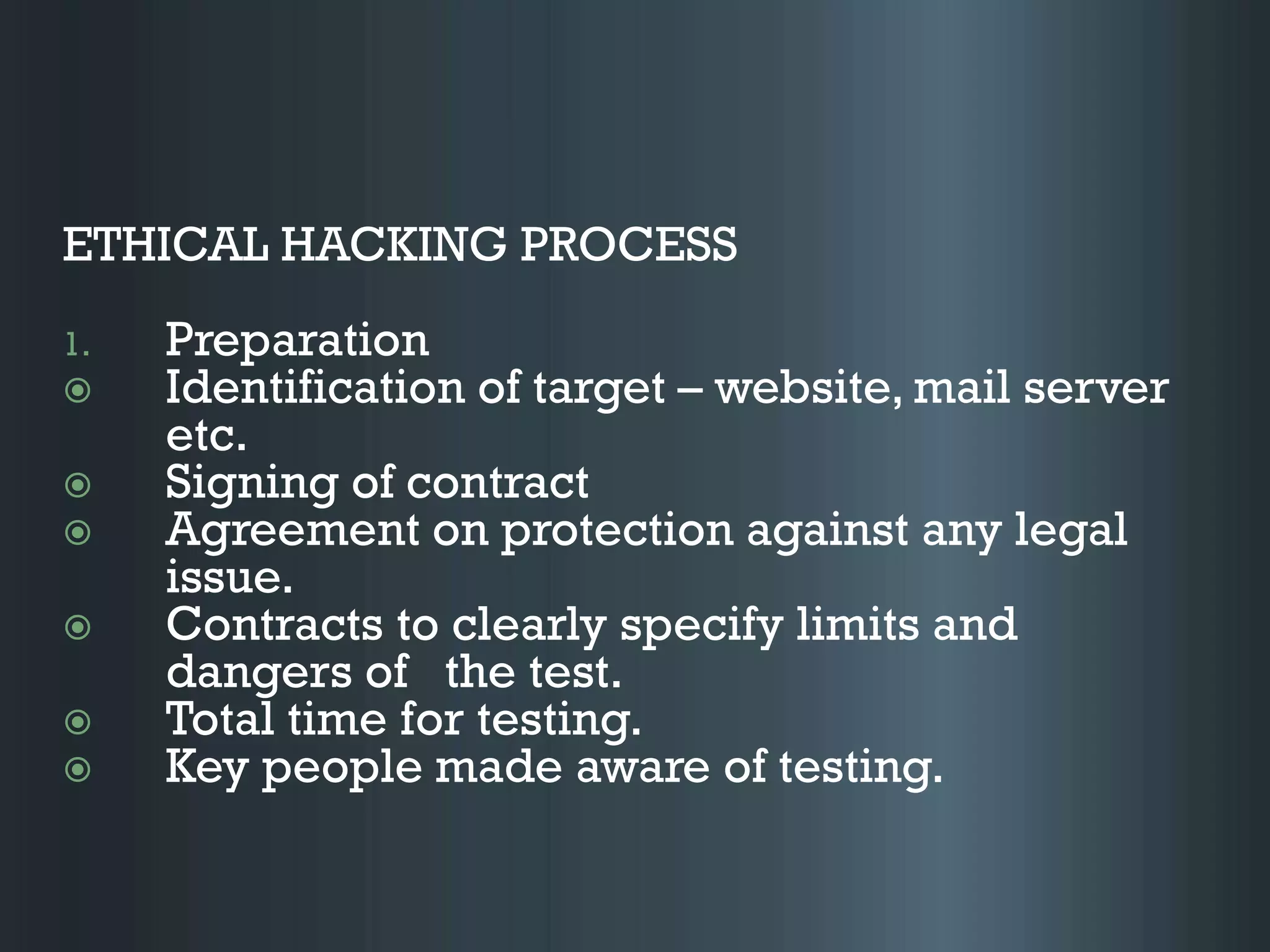
ETHICAL HACKING PROCESS
1. Preparation
 Identification of target – website, mail server
etc.
 Signing of contract
 Agreement on protection against any legal
issue.
 Contracts to clearly specify limits and
dangers of the test.
 Total time for testing.
 Key people made aware of testing.
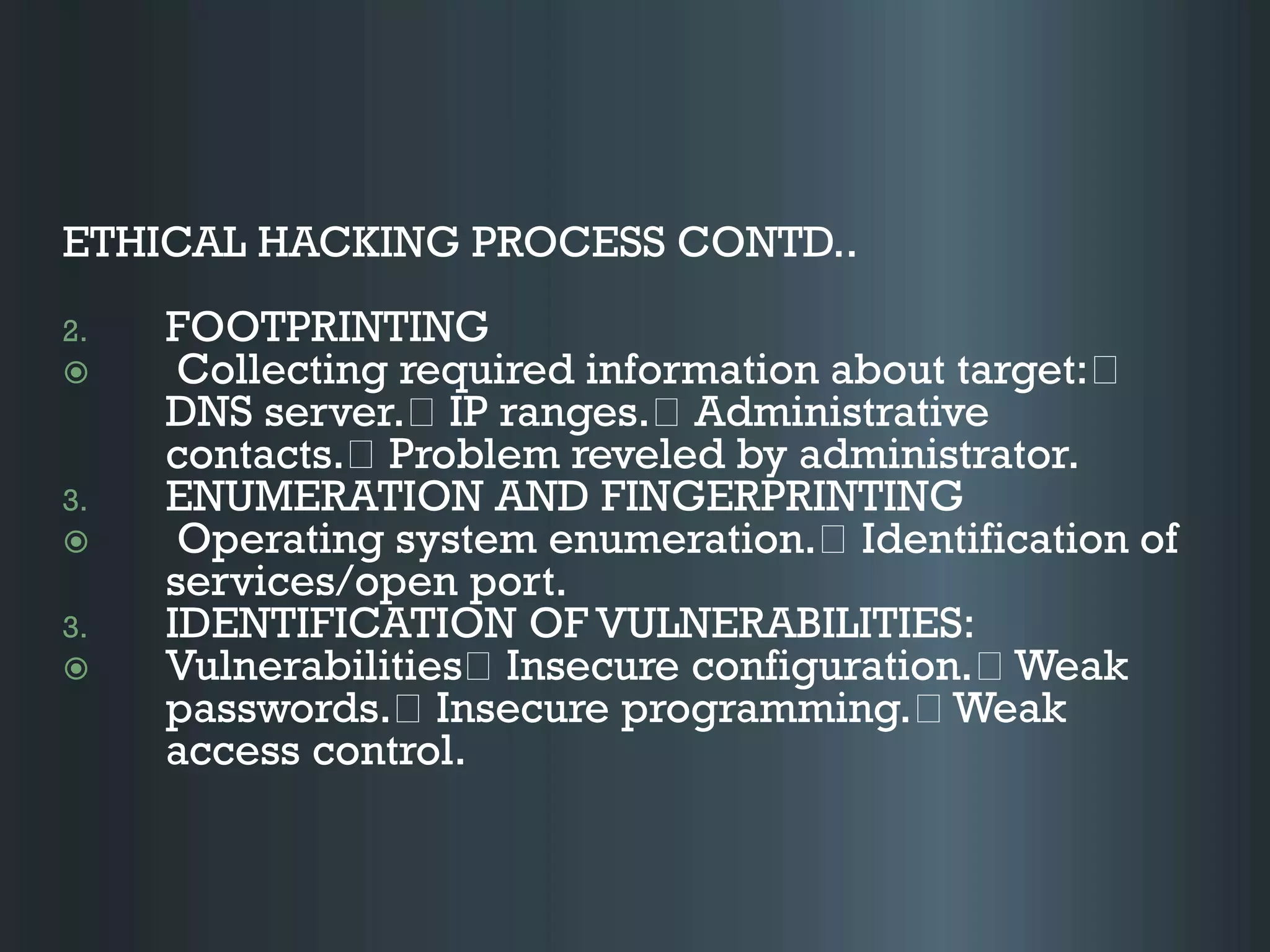
ETHICAL HACKING PROCESS CONTD..
2. FOOTPRINTING
 Collecting required information about target:
DNS server. IP ranges. Administrative
contacts. Problem reveled by administrator.
3. ENUMERATION AND FINGERPRINTING
 Operating system enumeration. Identification of
services/open port.
3. IDENTIFICATION OF VULNERABILITIES:
 Vulnerabilities Insecure configuration. Weak
passwords. Insecure programming. Weak
access control.
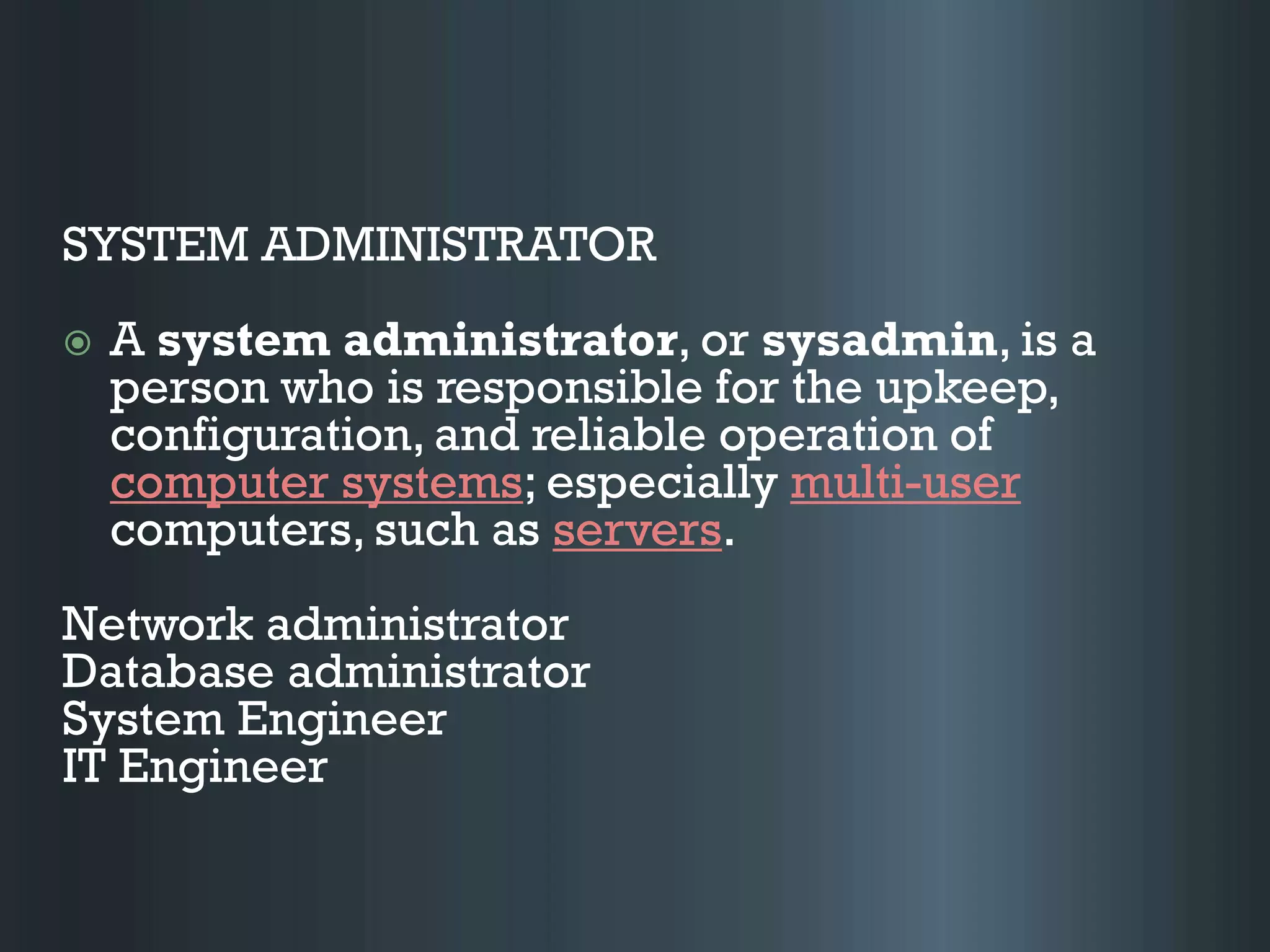
SYSTEM ADMINISTRATOR
 A system administrator, or sysadmin, is a
person who is responsible for the upkeep,
configuration, and reliable operation of
computer systems; especially multi-user
computers, such as servers.
Network administrator
Database administrator
System Engineer
IT Engineer
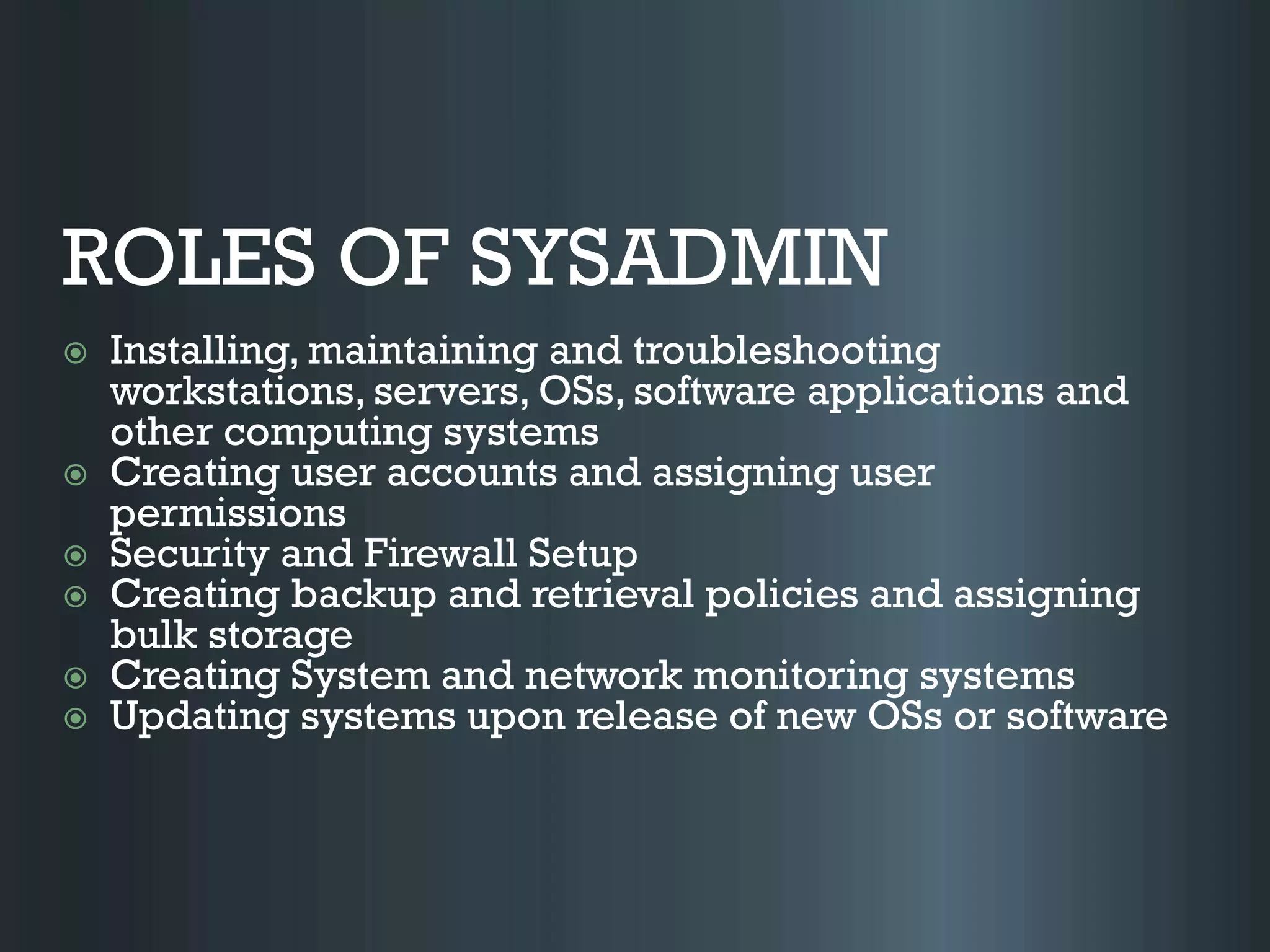
ROLES OF SYSADMIN
 Installing, maintaining and troubleshooting
workstations, servers, OSs, software applications and
other computing systems
 Creating user accounts and assigning user
permissions
 Security and Firewall Setup
 Creating backup and retrieval policies and assigning
bulk storage
 Creating System and network monitoring systems
 Updating systems upon release of new OSs or software
ROLES OF SYSADMIN CONTD..
 Strategic planning for service and system outages
 Light programming or scripting System-related project
management
 User training and management High-level technical
knowledge and technical support experience
 Hardware and software system security, such as
protection against hardware theft and abuse,
malware/spyware and unauthorized use of systems
and components, including firewall and intrusion
detection system(IDS)
DESIRED TRAITS AND SKILLS
 Deep understanding of system and netwoking
 Cloud Technology
 Linux
 Virtualization
 Routing Protocols and Layers (IP,TCP, OSPF)
 Scripting ( bash, python, powershell etc)
 Database administration
 Certifications ( MCSE,RHCE, CCNA, CEH etc ) *
 Problem solving ability
 Multitasking
 Patience
CAREER OPPORTUNITIES
 Local and global opportunities
 Software Companies
 Banks
 ISPs
 Department of IT in all companies
 Freelancing
 Lot more
THANKYOU ALL!
ANY QUESTIONS?
razanwidz@gmail.com
http://np.linkedin.com/pub/rajan-maharjan/4a/552/68b/
facebook.com/rjnmhrjn

Ethical hacking and System administration

  • 1.
    ETHICAL HACKING AND SYSTEMADMINISTRATION By Rajan Maharjan
  • 2.
     Hacking  Typesof Hackers  Ethical Hacking  System Administrator  Administration includes  Skills and Prerequisites  Career in ethical hacking and system administration
  • 3.
     Hacking isunauthorized use of computer and network resources.  According to Computer Crime Research Center:“It is act of gaining access without legal authorization to computer or computer network.”
  • 4.
     Dec 042013 Hackers Compromise 2 Million Facebook, Twitter and Gmail Accounts http://mashable.com/2013/12/04/hackers-facebook-twitter-gmail/  Jan 29 2014 GoDaddy Admits Hacker’s Social Engineering Led It To Divulge Info In @N Twitter Account Hack http://techcrunch.com/2014/01/29/godaddy-admits-hackers-social-engineering- led-it-to-divulge-info-in-n-twitter-account-hack/  Record-breaking DDoS attack in Europe hits 400Gbps http://news.cnet.com/8301-1009_3-57618762-83/record-breaking-ddos-attack- in-europe-hits-400gbps/
  • 5.
    The term hackerhas dual usage in modern days but was defined in early days as: HACKER noun 1.A person who enjoys learning the details of computer systems and how to stretch their capabilities—as opposed to most users of computers, who prefer to learn only the minimum amount necessary. 2. One who programs enthusiastically or who enjoys programming rather than just theorizing about programming.
  • 6.
    TYPES OF HACKERS Black hats :– highly skilled, malicious, destructive “crackers” ; offensive  White hats – skills used for defensive security analysts ; defensive  Gray hats – offensively and defensively; will hack for different reasons, depends on situation.
  • 7.
    ETHICAL HACKING  Ethicalhacking ,also known as penetration testing or white-hat hacking with the permission of the target.  involves the same tools, tricks, and techniques that hackers use, i.e, by duplicating the intent and actions of malicious hacker.
  • 8.
    Ethical Hackers  Trustworthysecurity professional  Applies hacking skills for defensive purpose  Has very strong programming skill and system understanding  Firewalls: configurations, and operation of intrusion detection systems.  License to hack  The International Council of E-Commerce Consultants (EC-Council) provides a professional certification for Certified Ethical Hackers (CEH).
  • 9.
    ETHICAL HACKING PROCESS 1.Preparation  Identification of target – website, mail server etc.  Signing of contract  Agreement on protection against any legal issue.  Contracts to clearly specify limits and dangers of the test.  Total time for testing.  Key people made aware of testing.
  • 10.
    ETHICAL HACKING PROCESSCONTD.. 2. FOOTPRINTING  Collecting required information about target: DNS server. IP ranges. Administrative contacts. Problem reveled by administrator. 3. ENUMERATION AND FINGERPRINTING  Operating system enumeration. Identification of services/open port. 3. IDENTIFICATION OF VULNERABILITIES:  Vulnerabilities Insecure configuration. Weak passwords. Insecure programming. Weak access control.
  • 11.
    SYSTEM ADMINISTRATOR  Asystem administrator, or sysadmin, is a person who is responsible for the upkeep, configuration, and reliable operation of computer systems; especially multi-user computers, such as servers. Network administrator Database administrator System Engineer IT Engineer
  • 12.
    ROLES OF SYSADMIN Installing, maintaining and troubleshooting workstations, servers, OSs, software applications and other computing systems  Creating user accounts and assigning user permissions  Security and Firewall Setup  Creating backup and retrieval policies and assigning bulk storage  Creating System and network monitoring systems  Updating systems upon release of new OSs or software
  • 13.
    ROLES OF SYSADMINCONTD..  Strategic planning for service and system outages  Light programming or scripting System-related project management  User training and management High-level technical knowledge and technical support experience  Hardware and software system security, such as protection against hardware theft and abuse, malware/spyware and unauthorized use of systems and components, including firewall and intrusion detection system(IDS)
  • 14.
    DESIRED TRAITS ANDSKILLS  Deep understanding of system and netwoking  Cloud Technology  Linux  Virtualization  Routing Protocols and Layers (IP,TCP, OSPF)  Scripting ( bash, python, powershell etc)  Database administration  Certifications ( MCSE,RHCE, CCNA, CEH etc ) *  Problem solving ability  Multitasking  Patience
  • 15.
    CAREER OPPORTUNITIES  Localand global opportunities  Software Companies  Banks  ISPs  Department of IT in all companies  Freelancing  Lot more
  • 16.