ESSENTIAL TOOLS FOR
PRODUCTIVITY
WordCamp DC 2017
TARA CLAEYS
@design_tlc
WHY BE
PRODUCTIVE?
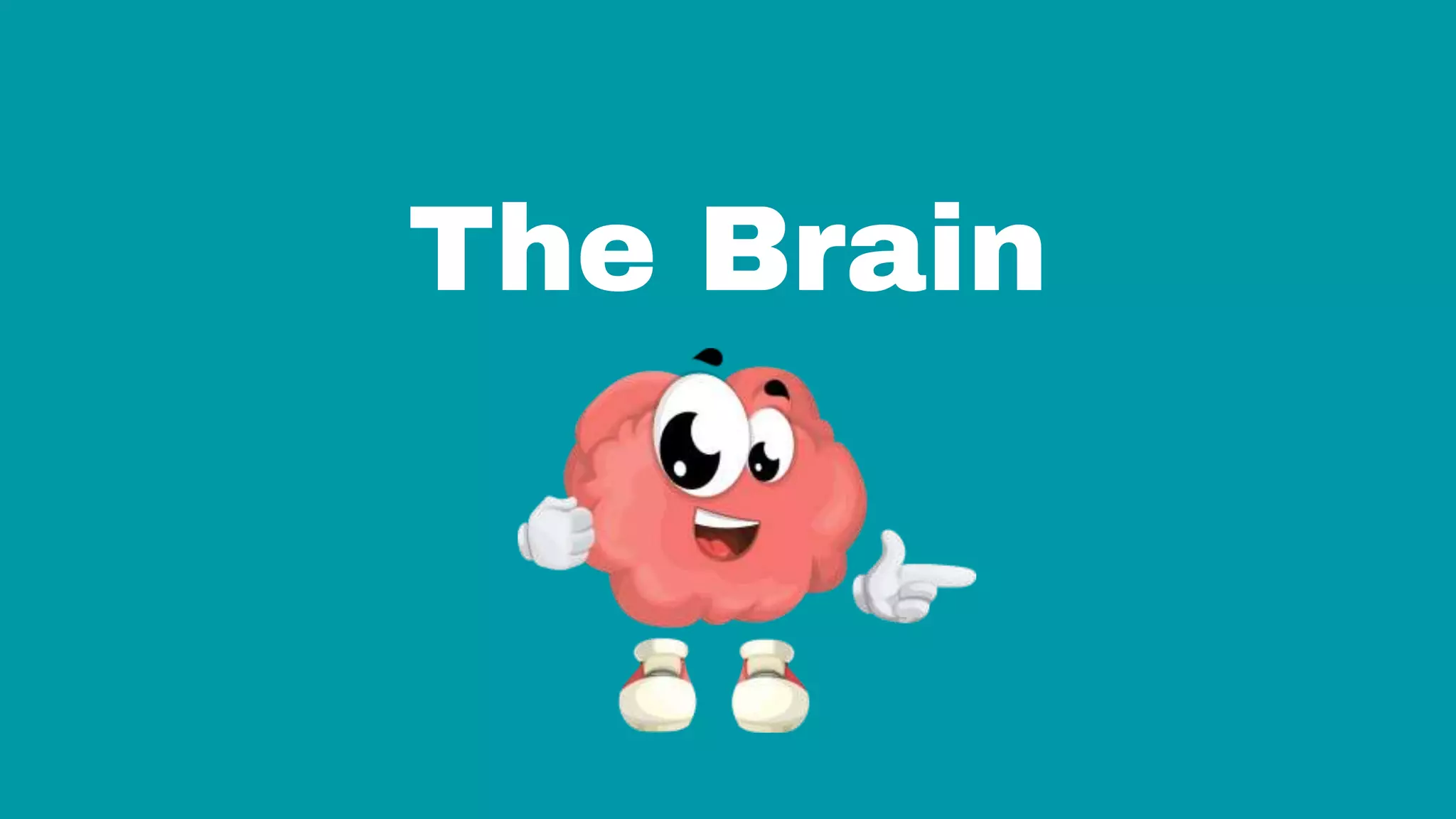
The Brain
EAT THE FROG
You Don't Have a Productivity Problem
You Have a Priority Problem
Getting Things Done
Write It Down
RULE OF 3
MULTI-TASKING
HABITS
Cue
Routine
Reward
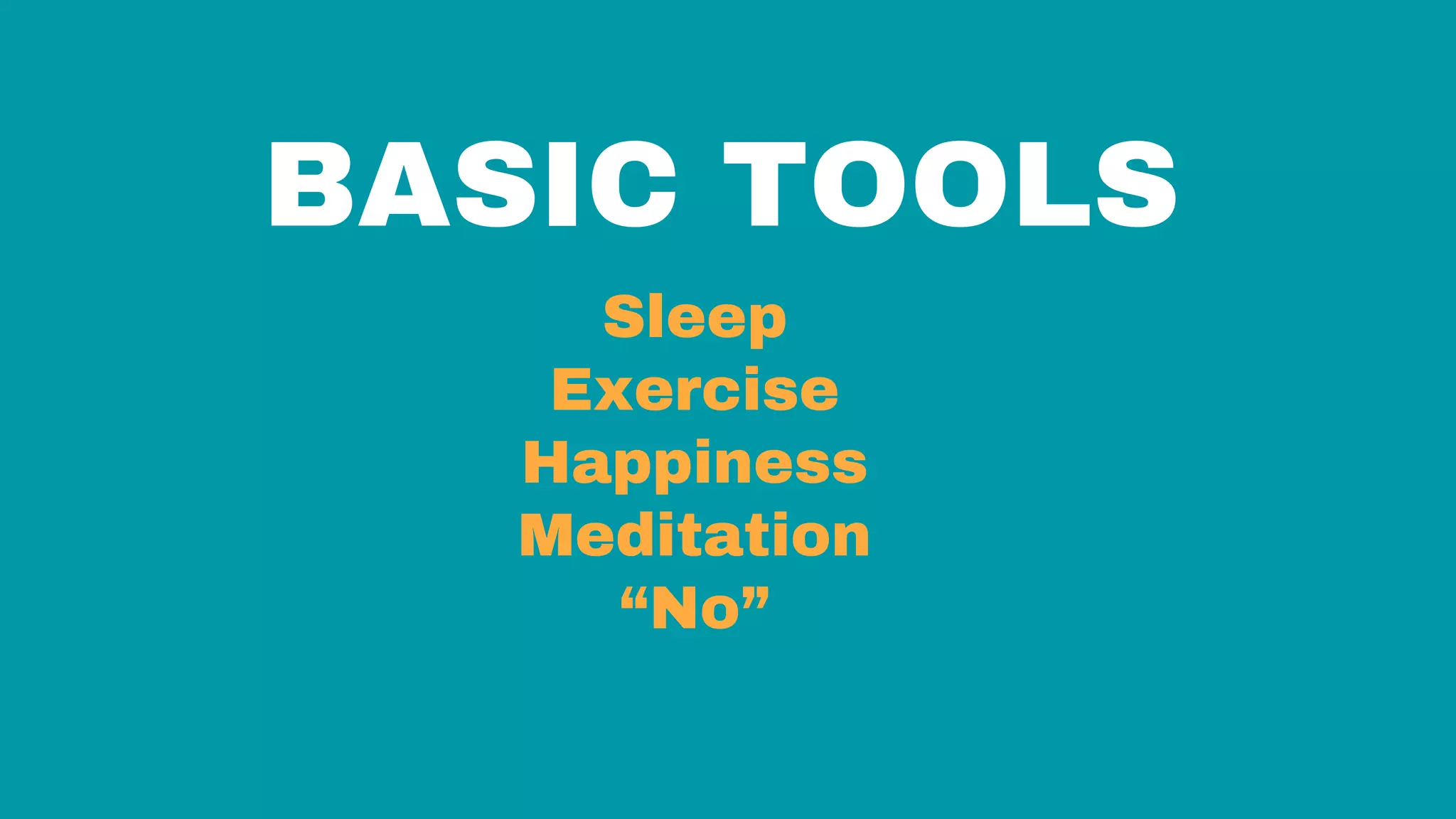
BASIC TOOLS
Sleep
Exercise
Happiness
Meditation
“No”
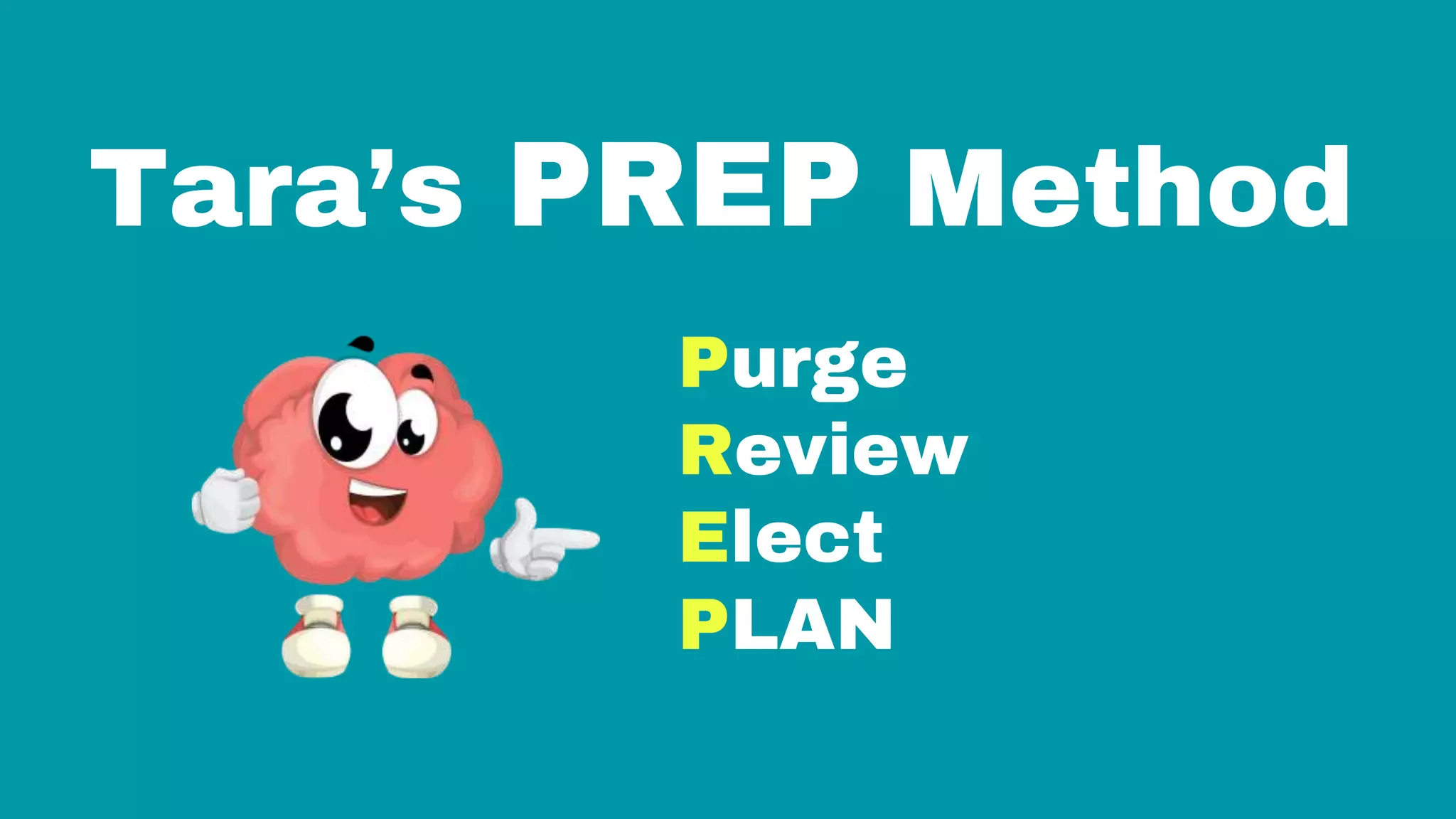
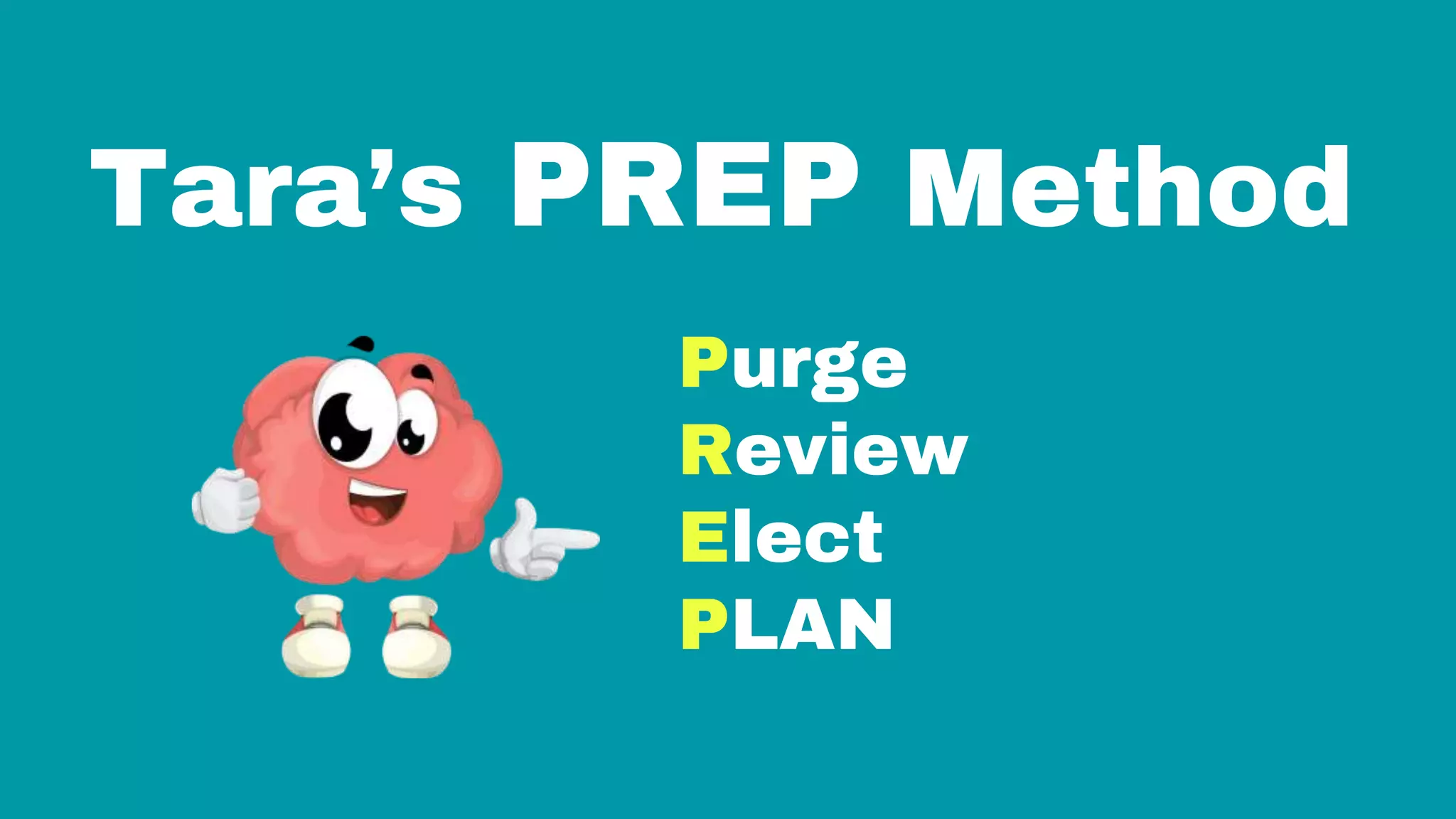
Tara’s PREP Method
Purge
Review
Elect
PLAN
EMAIL
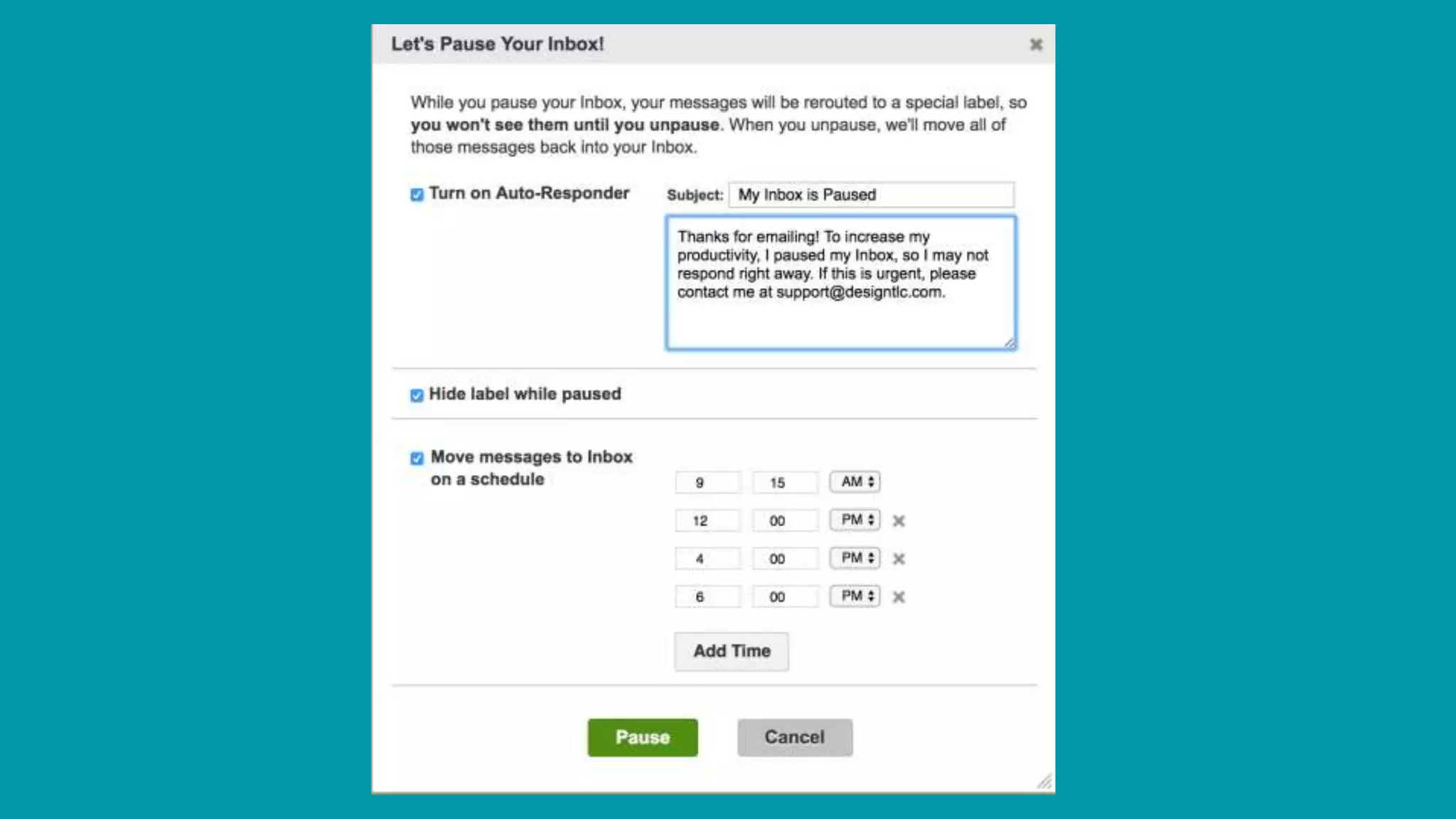
Check Email 3x/Day
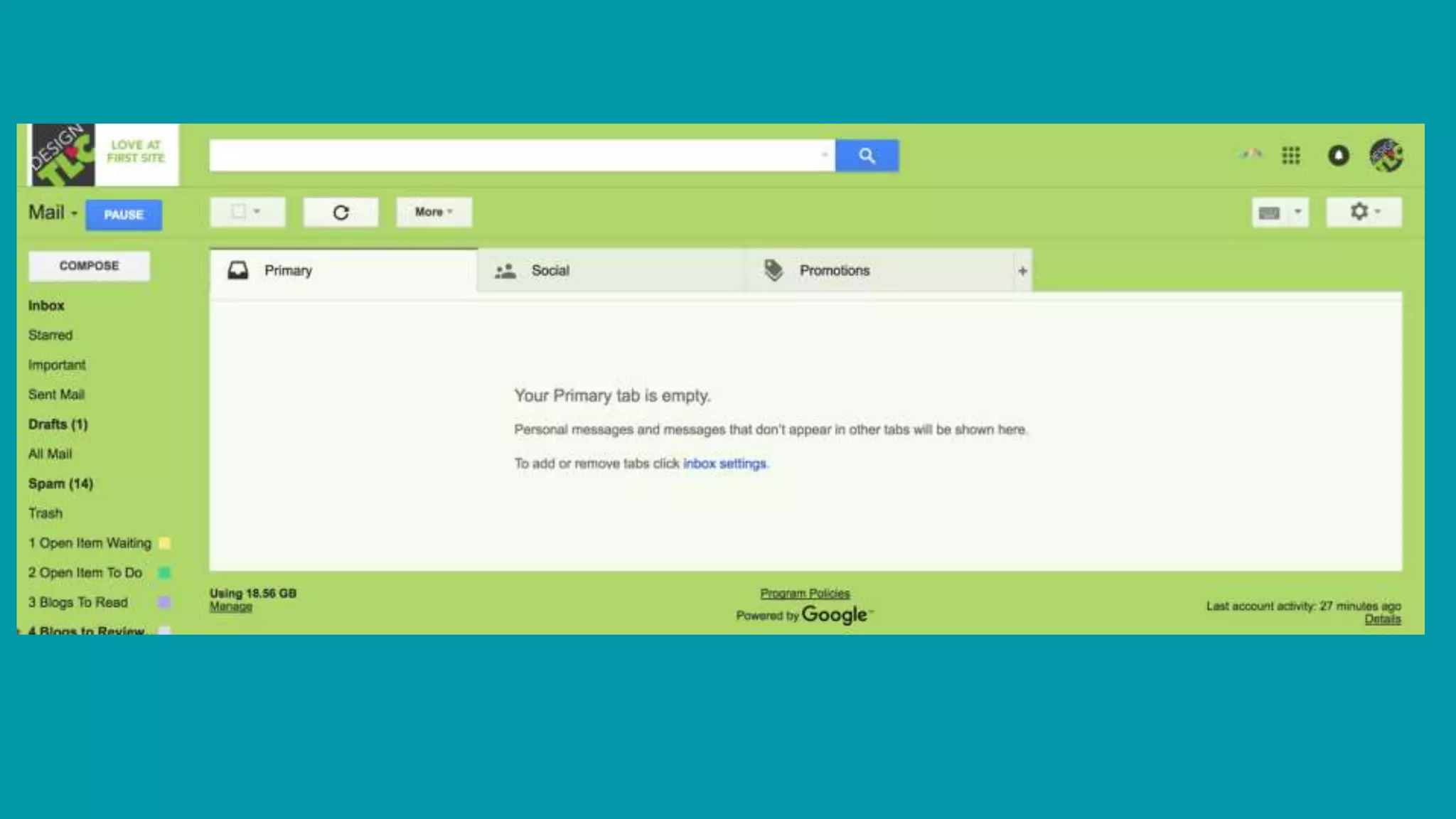
Inbox Pause
EMAIL
Actionable?
Respond
Delegate
Defer
EMAIL
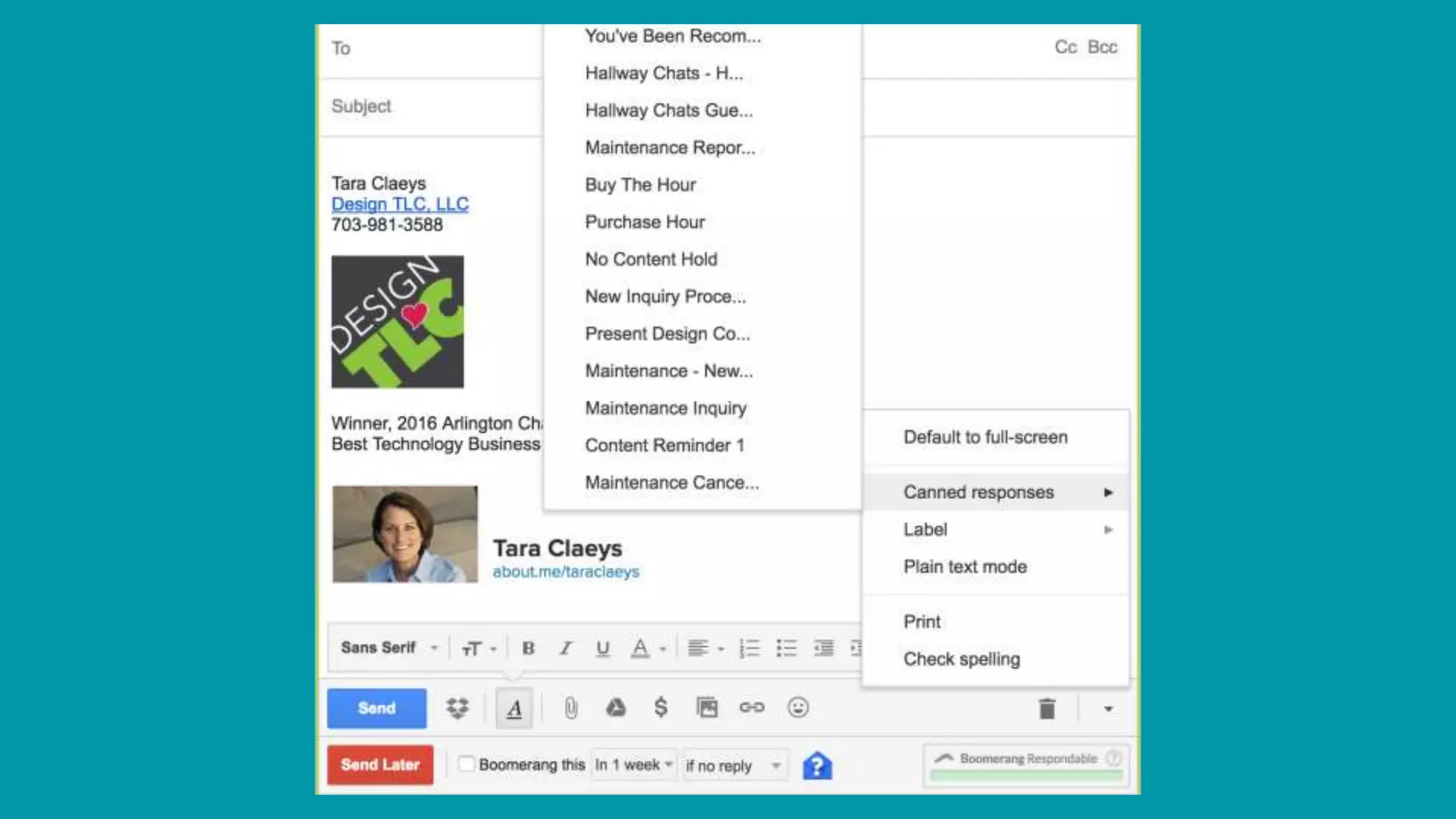
Respond <2 Minutes
Canned Responses
EMAIL
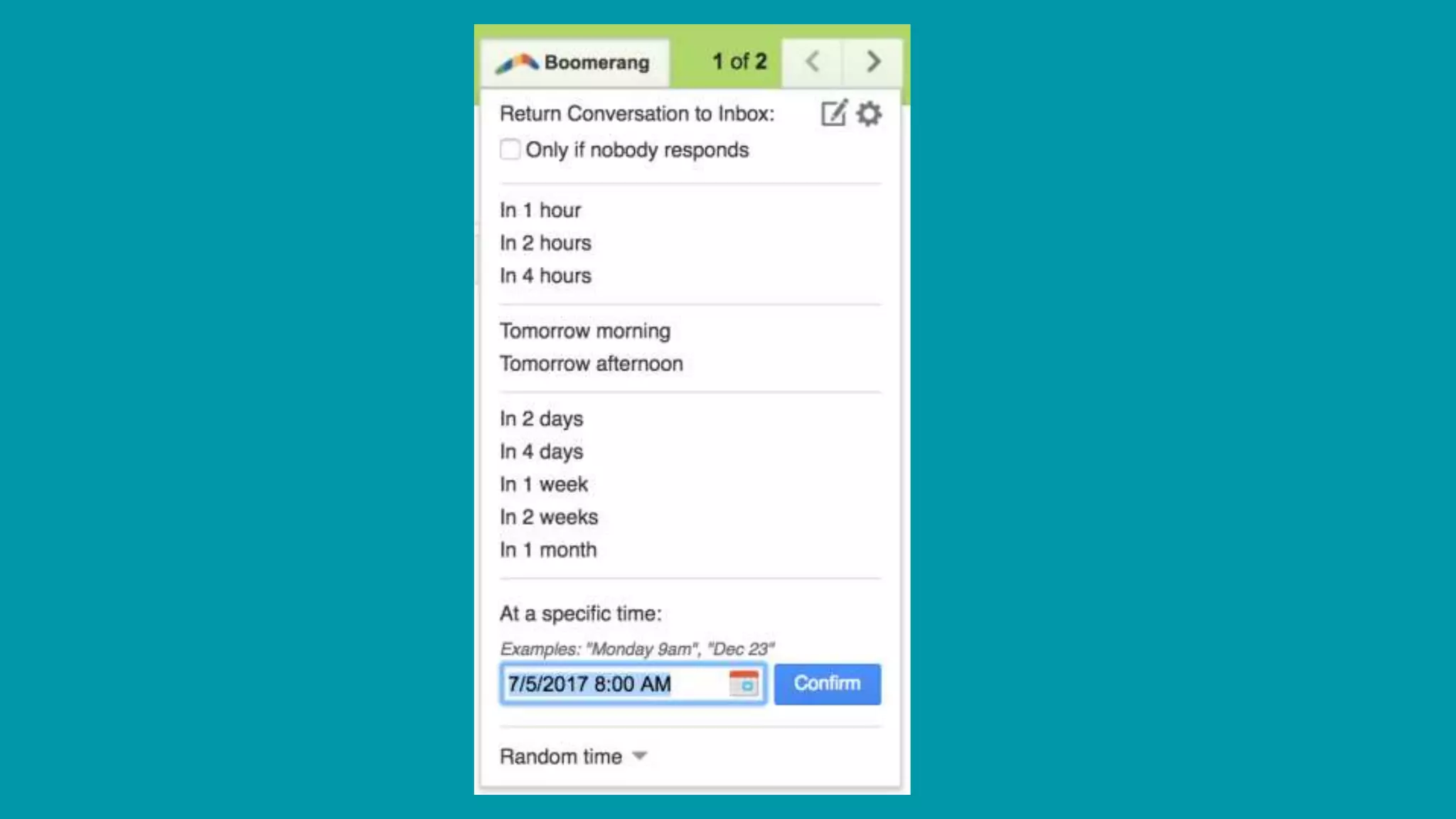
Delegate/Defer
Boomerang
EMAIL
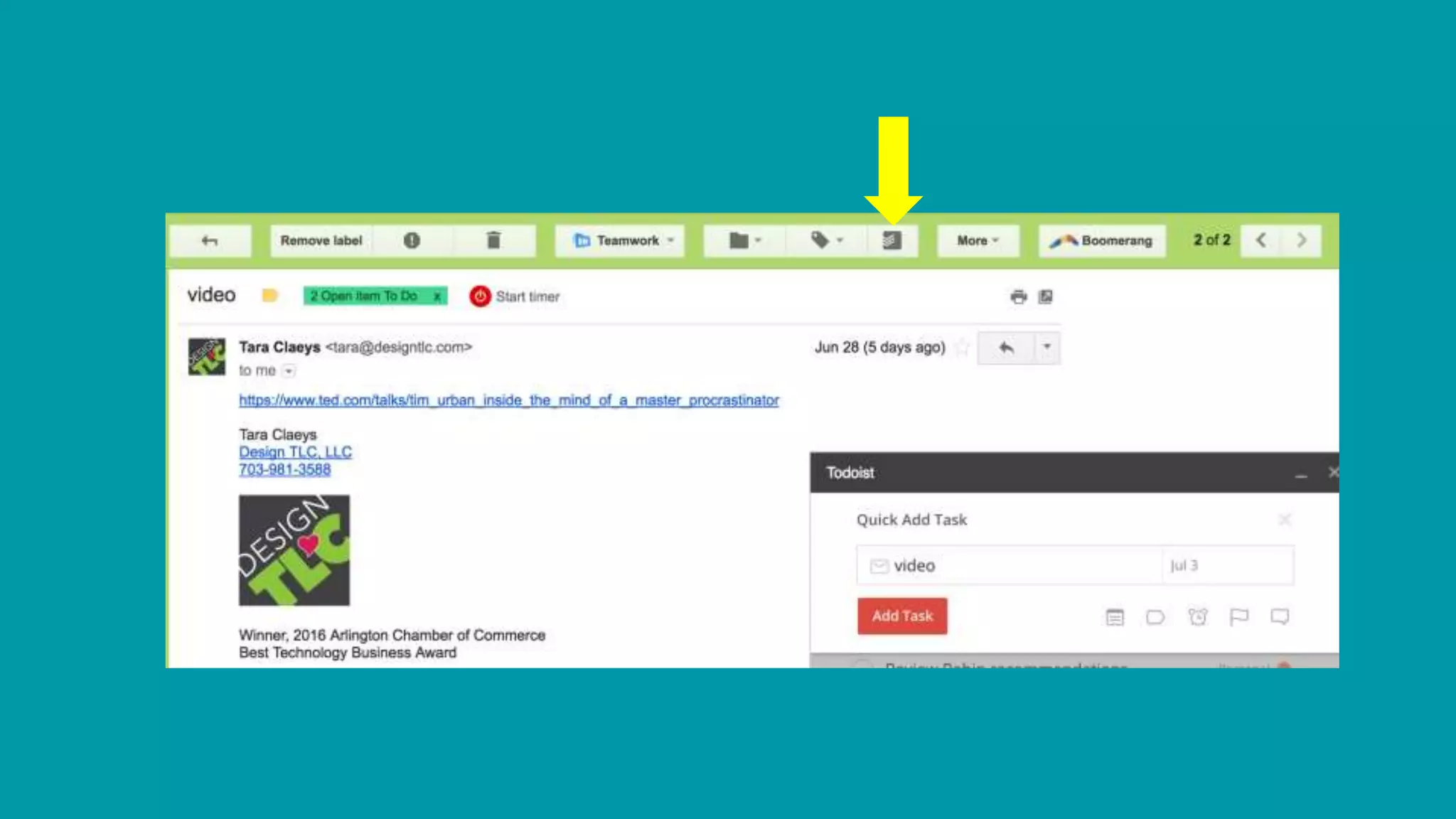
Delegate/Defer
To DoIst
EMAIL
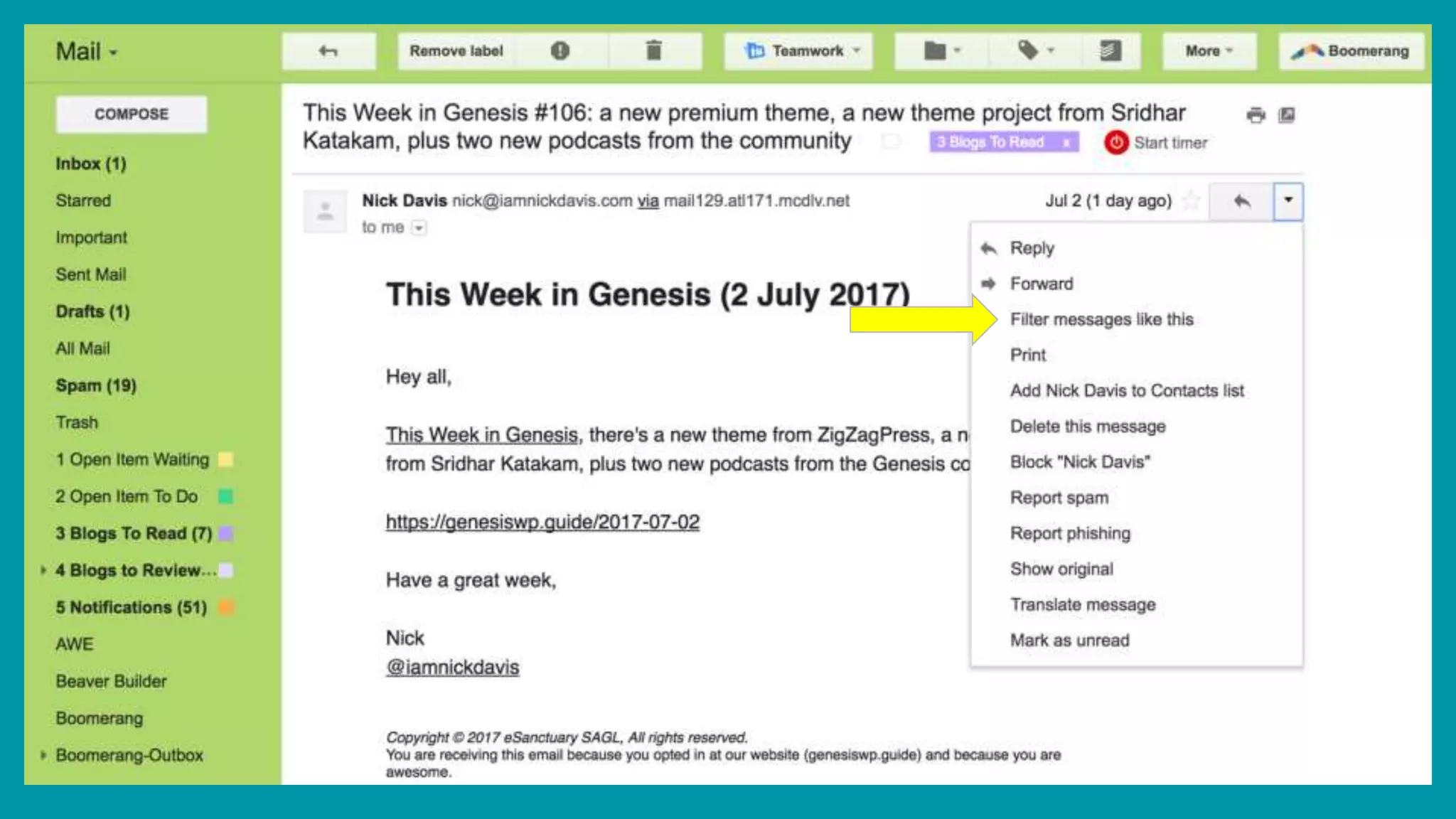
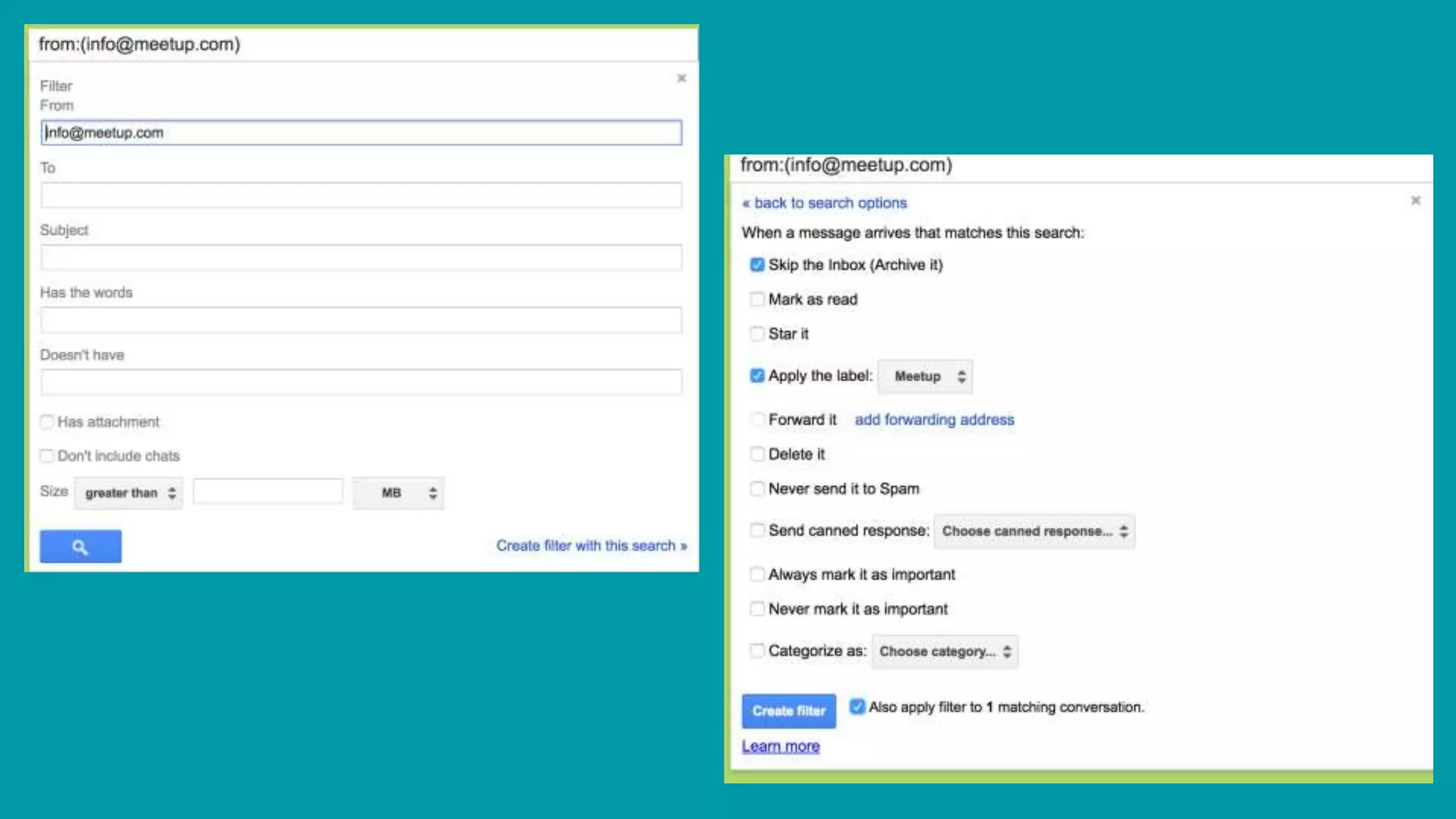
Delete/Filter - <1 Minute
TIME SAVERS
Hotkeys, Keywords, Text
Expansion, Automated Tasks
Alfred
Hazel
Last Pass
WEB TOOLS
Bookmarks
Pocket
SCHEDULING & TIME
Paper & Pen
Google Calendar
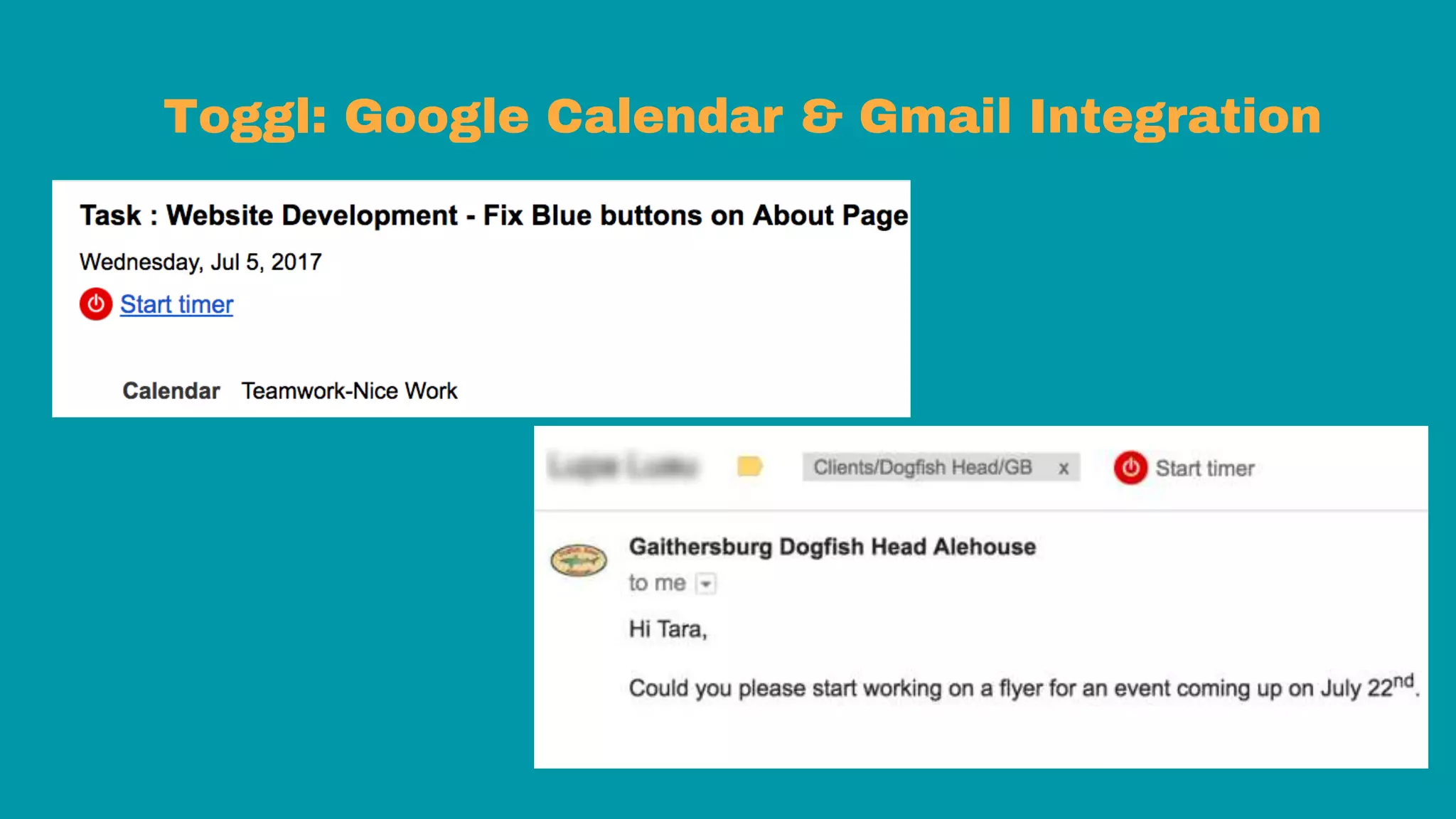
Toggl
Toggl: Google Calendar & Gmail Integration
SCHEDULING & TIME
Calendly
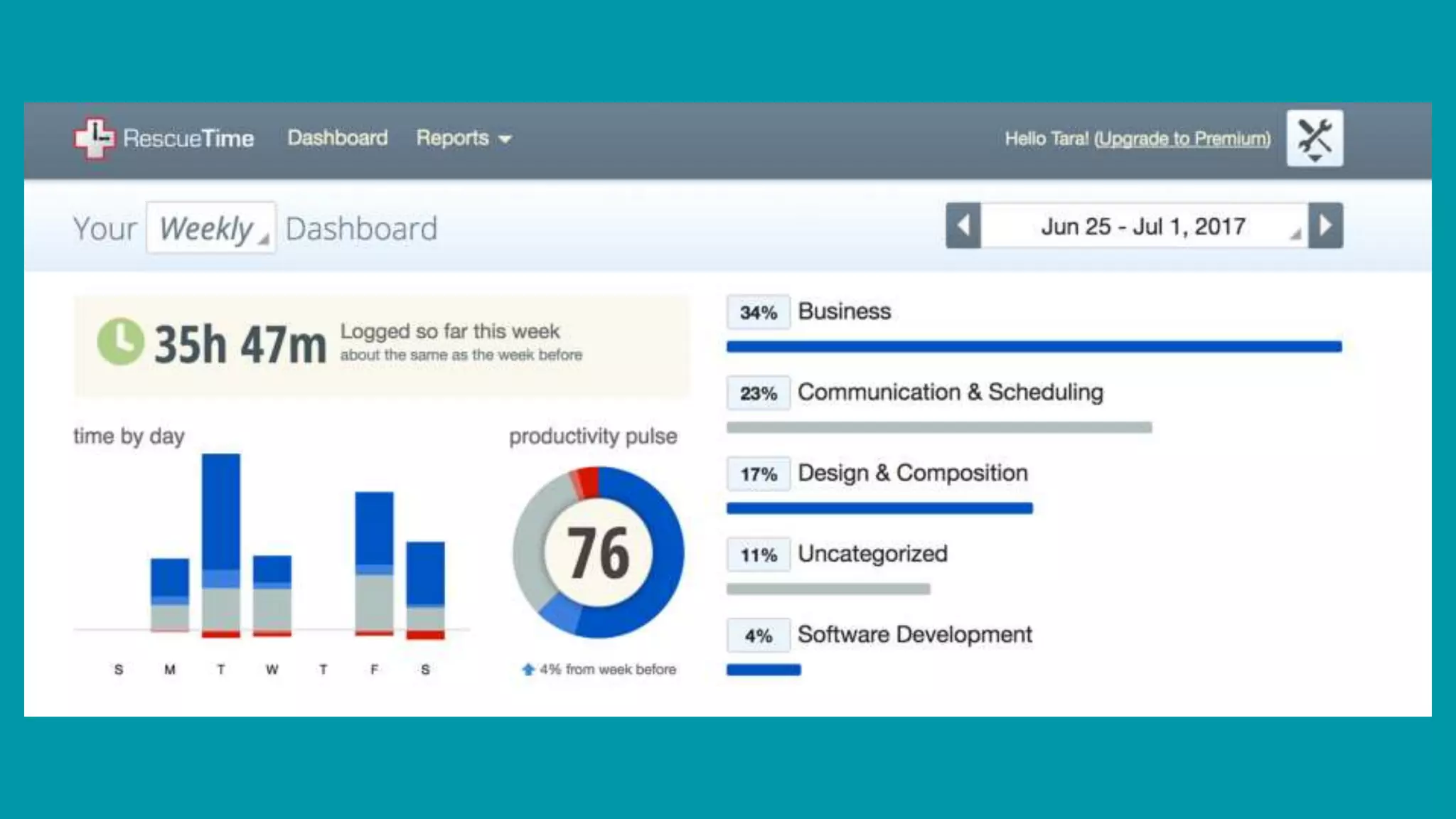
Rescue Time
WEB DESIGN & DEVELOPMENT
Wireframeapp.io
Sketch
Invision
Google Docs
(WordPress.com for Google Docs)
Workspaces
Tara’s PREP Method
Purge
Review
Elect
PLAN
QUESTIONS?
TARA CLAEYS
@design_tlc
RESOURCES
APPS/TOOLS
Boomerang
Inbox Pause
Gmail Canned Responses
Toggl
Rescue Time
Last Pass
Pocket
ToDoIst
Alfred
(Text Expander)
Hazel
(Unroll.me)
RESOURCES
APPS/TOOLS
WordPress.com for Google Docs
Wireframeapp.io
Sketch
Invision
Workspaces
RESOURCES
BOOKS
Eat The Frog, Brian Tracey
The Productivity Project, Chris Bailey
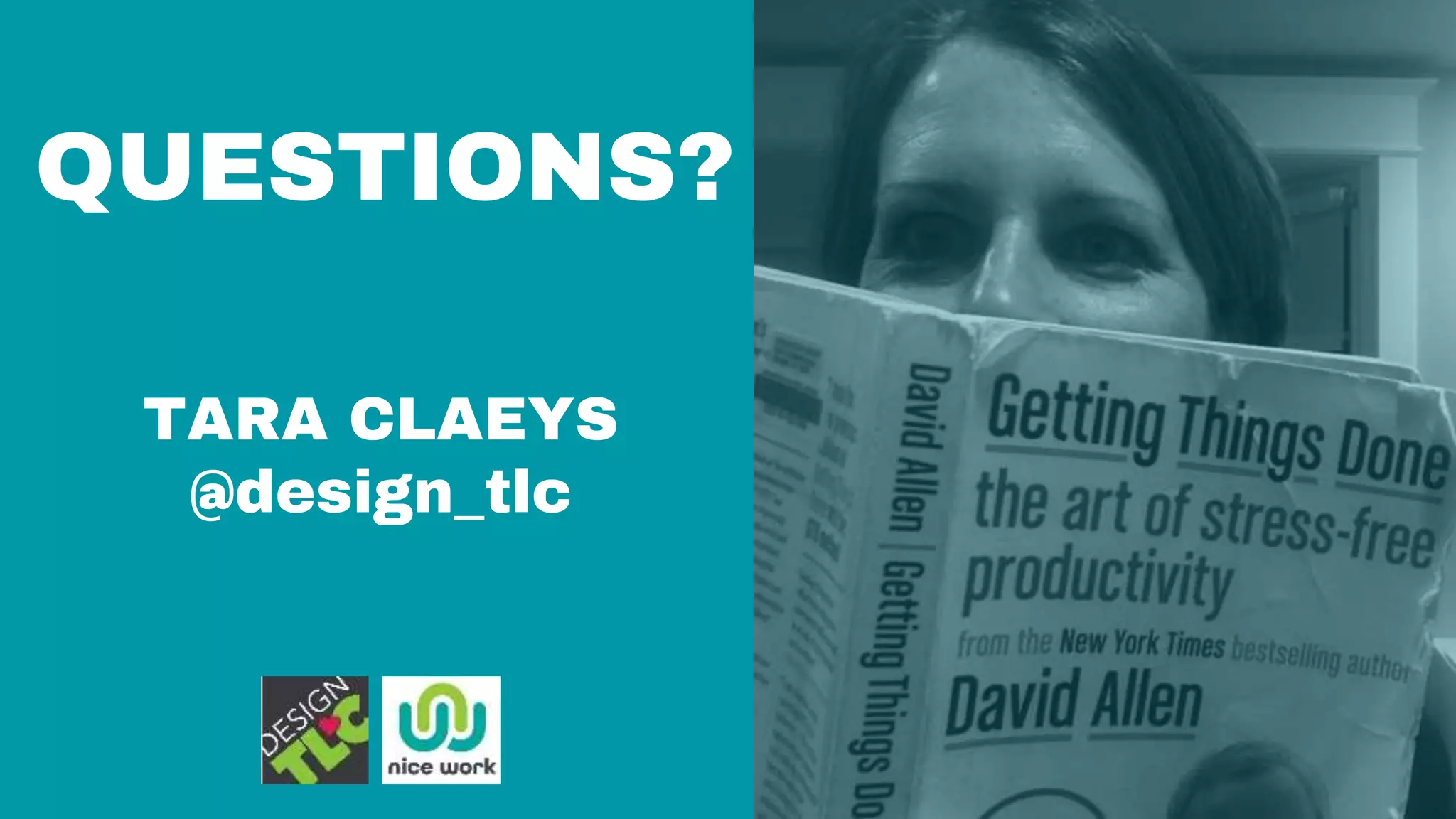
Getting Things Done, David Allen
The Power of Habit, Charles Duhigg
Smarter, Faster, Better, Charles Duhigg

Essential tools for productivity (and knowing when to try the new toy)

Editor's Notes

  • #4  Being productive gives you purpose. Being productive keeps your mind active. Being productive can increase your quality of life. Being productive can improve your mood. Being productive motivates the people around you. According to self-help author, motivational speaker and entrepreneur Steve Pavlina, the typical office worker only does about 90 minutes of real work per workday. You may think that, with the developments in technology making life ever-easier for us, this time-wasting habit would have decreased over the years, but it hasn’t. If anything, the more technology we have, the more distractions we have available! 2down v
  • #5 Areas of the brain : prefrontal cortex and limbic system These two areas function and interact to influence our behavior, emotions, thinking, and what we’re going to do with our life. Frontal lobes interpret situations and events and then communicate that interpretation to the limbic system which then produces the appropriate emotion. Prefrontal = logic, responsible Limbic System (survival instincts and emotions, endorphins) tempts you
  • #6 Book by Brian Tracey Mark Twain: If the first thing you do each morning is eat a live frgb, you can go forward with your day knowing that you have already done the worst thing that is going to happen to you all day. Structured procrastination is ultimately a trick that you play on yourself. If the top things on your list feel too big to tackle, you will search for other tasks to check off in order to feel good about your day. Act Immediately
  • #7 Book by David Allen. Define what “done” is; Define what “doing” looks like Short Term Memory is limited (RAM) - too many thoughts decreases performance Part of you thinks you should do it RIGHT NOW to get it off your mind and get it done Get rid of stress and noise Stay on task To Do Lists are great if you use them correctly. If you set it up to list easy items you can cross off right away( Limbic system happy!) you are doing it for mood repair, not productivity. Make lists with stretch goals and SMART goals. Manageable goals: Duke University - athletes were asked to run around track and when signaled get as close as possible to the finish line 200 meters away within 10 seconds. NOT POSSIBLE. Athletes made it on ave. 59.6 meters. When asked to go to finish line only 100 Meters away, more doable … they made it 63.1 meters in 10 seconds.
  • #8 Rule of 3 in writing (3 little pigs, 3 musketeers, 3 bears …), art/design, religion Productivity technique that focuses on achieving three meaningful outcomes every day, week, month, and year. mental focus and concentration. J.D. Meier’s fantastic book on agile time management, Getting Results the Agile Way. What 3 things, if I accomplished them today (this week, month, year), would make for a good day’s (week/month/year) work?
  • #9  Interrupting one task to suddenly focus on another can be enough to disrupt short term memory, according to a 2011 study. Multitasking reduces your efficiency and performance because your brain can only focus on one thing at a time. When you try to do two things at once, your brain lacks the capacity to perform both tasks successfully. Research also shows that, in addition to slowing you down, multitasking lowers your IQ and makes you miss out on life. People who are busy doing two things at once don’t even see obvious things right in front of them, according to a 2009 study from Western Washington University. 75% of college students who walked across a campus square while talking on their cell phones did not notice a clown riding a unicycle nearby. The researchers call this “inattentional blindness,” saying that even though the cell-phone talkers were technically looking at their surroundings, none of it was actually registering in their brains. Bad for relationships
  • #10 The Power of Habit, Charles Duhigg … Driven by Cravings: A simple neurological loop at the core of every habit, a loop that consists of three parts: A cue, a routine and a reward. Identify the routine and what is the cue (boredom?) Test with different rewards to isolate what you are actually craving. Make a plan … change routine. Facebook Let’s talk about the EMAIL Habit
  • #13 Envision your day - PREP and PLAN. Get in a habit of anticipating what is going to happen next. Decide what deserves your attention. Becoming more productive takes one step at a time. Chip away at tasks.
  • #14 Inbox Zero - Email Tools & Techniques
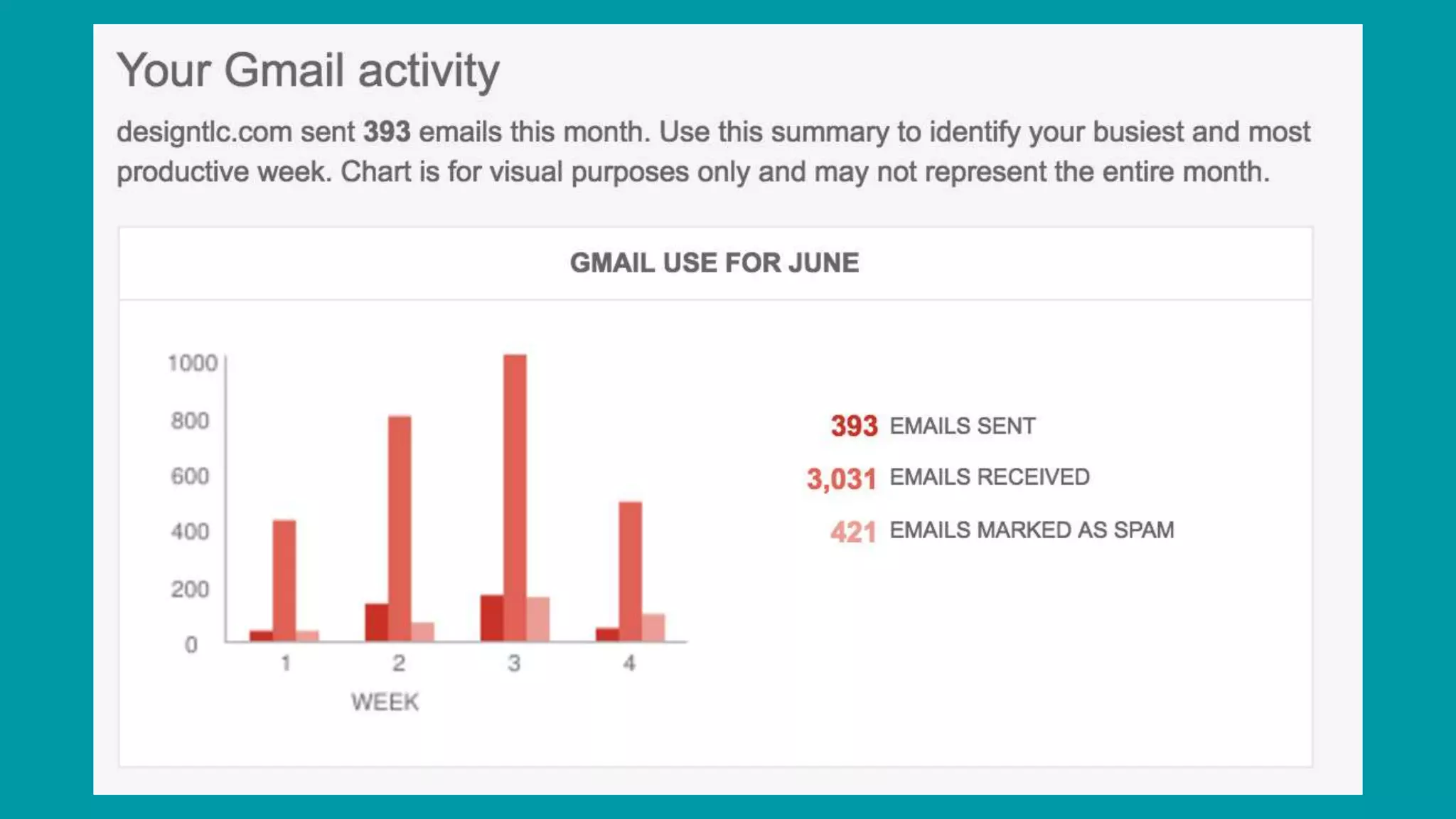
  • #15 Around 100 trillion emails are now sent every year A new French law establishing workers’ “right to disconnect” Jan 1 2017. The law requires companies with more than 50 employees to establish hours when staff should not send or answer emails. The goals of the law include making sure employees are fairly paid for work, and preventing burnout by protecting private time. A study out of the University of British Columbia found that participants who were assigned to check their email only three times a day were found to be less stressed than those who could check their emails continuously. Another study out of Colorado State University found that even the anticipatory stress of expecting after-hours emails might have a negative effect on our well-being.
  • #18 Email is Fake Work. Monitoring for incoming grenades feels like work … kind of. It generates positive and rewarding feeling as if you’ve done something productive.
  • #28 Alfred: boosts your efficiency with hotkeys, keywords, text expansion and more.
  • #29 Alfred: boosts your efficiency with hotkeys, keywords, text expansion and more.
  • #31 Build in time for maintenance and learning. Get better at your key tasks. Build in time to learn new or advance skills.
  • #37 Envision your day - PREP and PLAN. Get in a habit of anticipating what is going to happen next. Decide what deserves your attention. Becoming more productive takes one step at a time. Chip away at tasks.