ESOPHAGEAL CANCER
LANDMARK TRIALS
Moderator - Dr Ravi
Arjunan
Presenter - Vijay Koduru
DISCUSSION TOPICS
A. Introduction & Historic treatment
B. Complementary to Surgery - RT/CT
C. RT alone vs Chemoradiation – RTOG 8501 Trial
D. CT alone vs Chemoradiation – STAHL Trial/POET Trial
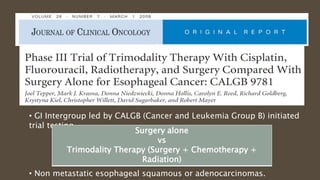
E. Trimodality Treatment vs Surgery alone – CALGB 9781 Trial
- CROSS Trial
F. Changing trends and subgroup studies – FFCD 9102 Trial
- FFCD 9901 Trial
G. Conclusion
HISTORY
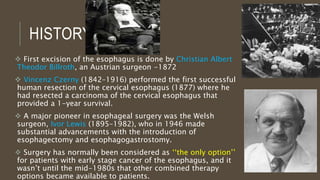
 First excision of the esophagus is done by Christian Albert
Theodor Billroth, an Austrian surgeon -1872
 Vincenz Czerny (1842–1916) performed the first successful
human resection of the cervical esophagus (1877) where he
had resected a carcinoma of the cervical esophagus that
provided a 1-year survival.
 A major pioneer in esophageal surgery was the Welsh
surgeon, Ivor Lewis (1895–1982), who in 1946 made
substantial advancements with the introduction of
esophagectomy and esophagogastrostomy.
 Surgery has normally been considered as ‘‘the only option’’
for patients with early stage cancer of the esophagus, and it
wasn’t until the mid-1980s that other combined therapy
options became available to patients.
INTRODUCTION
‘‘The main goal of surgery in esophageal cancer was good
palliation and that cure is an accident.’
- Ronald H. Belsey (1910–2007)
 Mean survival with surgery alone - 9 months.
 Earlam and Cuhna-Melo’s 1980 review of 122 articles describing
the surgical care of 83783 cases of squamous cell carcinoma of the
esophagus revealed 5-year survival rate of 4%.
 Their subsequent review of the role of radiation therapy (RT) found
an almost equally dismal rate of 6%.
This led to a combined trial of both Chemoradiation published in June
1992 – RTOG 8501
RTOG 85-01 TRIAL RT alone vs
ChemoRT
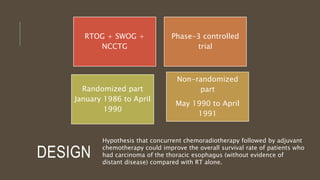
DESIGN
RTOG + SWOG +
NCCTG
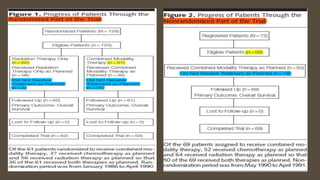
Phase-3 controlled
trial
Non-randomized
part
May 1990 to April
1991
Randomized part
January 1986 to April
1990
Hypothesis that concurrent chemoradiotherapy followed by adjuvant
chemotherapy could improve the overall survival rate of patients who
had carcinoma of the thoracic esophagus (without evidence of
distant disease) compared with RT alone.
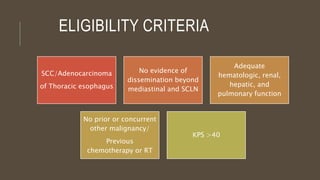
ELIGIBILITY CRITERIA
SCC/Adenocarcinoma
of Thoracic esophagus
No evidence of
dissemination beyond
mediastinal and SCLN
Adequate
hematologic, renal,
hepatic, and
pulmonary function
No prior or concurrent
other malignancy/
Previous
chemotherapy or RT
KPS >40
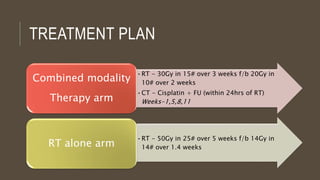
TREATMENT PLAN
•RT - 30Gy in 15# over 3 weeks f/b 20Gy in
10# over 2 weeks
•CT - Cisplatin + FU (within 24hrs of RT)
Weeks-1,5,8,11
Combined modality
Therapy arm
•RT - 50Gy in 25# over 5 weeks f/b 14Gy in
14# over 1.4 weeksRT alone arm
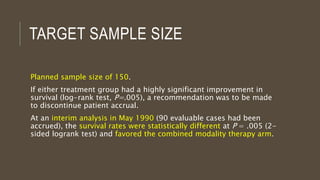
TARGET SAMPLE SIZE
Planned sample size of 150.
If either treatment group had a highly significant improvement in
survival (log-rank test, P=.005), a recommendation was to be made
to discontinue patient accrual.
At an interim analysis in May 1990 (90 evaluable cases had been
accrued), the survival rates were statistically different at P = .005 (2-
sided logrank test) and favored the combined modality therapy arm.
OUTCOMES
Primary endpoint
 Overall survival
Secondary endpoints
 Ability to tolerate treatment, toxicity and recurrence
The patients were treated surgically only for recurrences or
complications.
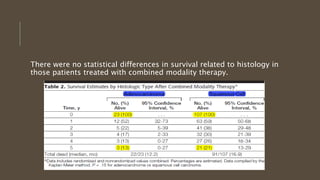
OVERALL SURVIVAL
By 5 years,
26% (95% confidence
interval [CI], 15%-37%) of
the randomized combined
modality group
14% (95% CI, 6%-23%) of
the nonrandomized
combined modality group
were alive
NONE in the RT group.
There were no statistical differences in survival related to histology in
those patients treated with combined modality therapy.
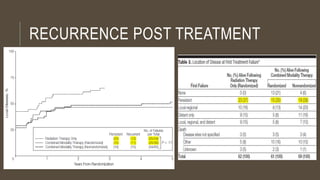
RECURRENCE POST TREATMENT
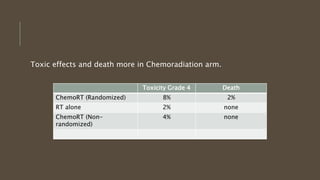
Toxic effects and death more in Chemoradiation arm.
Toxicity Grade 4 Death
ChemoRT (Randomized) 8% 2%
RT alone 2% none
ChemoRT (Non-
randomized)
4% none
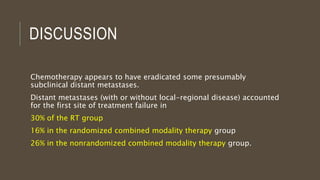
DISCUSSION
Chemotherapy appears to have eradicated some presumably
subclinical distant metastases.
Distant metastases (with or without local-regional disease) accounted
for the first site of treatment failure in
30% of the RT group
16% in the randomized combined modality therapy group
26% in the nonrandomized combined modality therapy group.
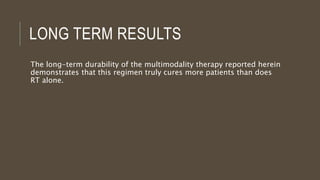
LONG TERM RESULTS
The long-term durability of the multimodality therapy reported herein
demonstrates that this regimen truly cures more patients than does
RT alone.
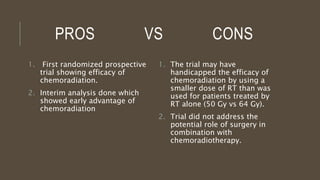
PROS VS CONS
1. First randomized prospective
trial showing efficacy of
chemoradiation.
2. Interim analysis done which
showed early advantage of
chemoradiation
1. The trial may have
handicapped the efficacy of
chemoradiation by using a
smaller dose of RT than was
used for patients treated by
RT alone (50 Gy vs 64 Gy).
2. Trial did not address the
potential role of surgery in
combination with
chemoradiotherapy.
CONCLUSION
Chemoradiotherapy - a standard of care for patients who have
carcinoma of the esophagus.
Since local-regional persistence of disease accounted for the majority
of treatment failures in the trial, surgery might be able to eradicate
some of these tumors.
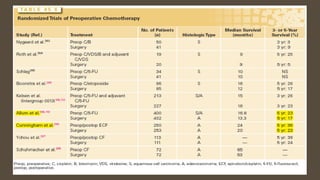
STAHL TRIAL / POET TRIALJ Clin Oncol 27:851-856.
2009
CT alone vs ChemoR
J Clin Oncol 27:851-856. © 2009 by American Society of Clinical
Oncology
Multi institutional German Study
DESIGN
Unblinded
prospective
Randomized
Phase-3
controlled trial
19 German
centers
Nov 2000 to
Dec 2005
Aim of the study is for an improvement of 10% in 3-year
survival rate (from 25% to 35%) by adding radiation therapy to
preoperative chemotherapy.
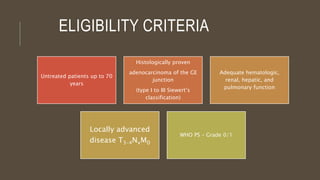
ELIGIBILITY CRITERIA
Untreated patients up to 70
years
Histologically proven
adenocarcinoma of the GE
junction
(type I to III Siewert’s
classification)
Adequate hematologic,
renal, hepatic, and
pulmonary function
Locally advanced
disease T3-4NxM0
WHO PS – Grade 0/1
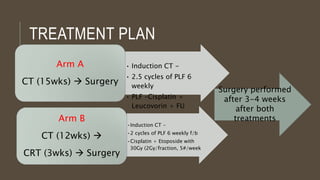
TREATMENT PLAN
• Induction CT -
• 2.5 cycles of PLF 6
weekly
• PLF –Cisplatin +
Leucovorin + FU
Arm A
CT (15wks)  Surgery
•Induction CT -
•2 cycles of PLF 6 weekly f/b
•Cisplatin + Etoposide with
30Gy (2Gy/fraction, 5#/week
Arm B
CT (12wks) 
CRT (3wks)  Surgery
Surgery performed
after 3-4 weeks
after both
treatments
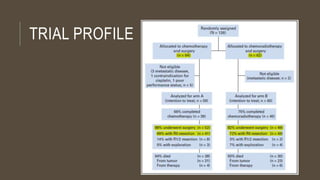
TRIAL PROFILE
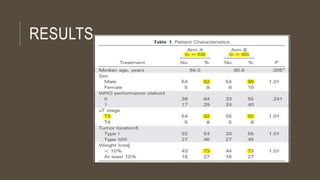
RESULTS
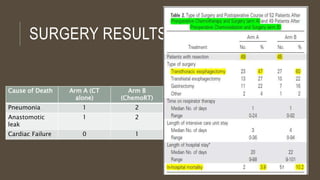
SURGERY RESULTS
Cause of Death Arm A (CT
alone)
Arm B
(ChemoRT)
Pneumonia 1 2
Anastomotic
leak
1 2
Cardiac Failure 0 1
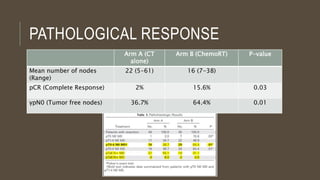
PATHOLOGICAL RESPONSE
Arm A (CT
alone)
Arm B (ChemoRT) P-value
Mean number of nodes
(Range)
22 (5-61) 16 (7-38)
pCR (Complete Response) 2% 15.6% 0.03
ypN0 (Tumor free nodes) 36.7% 64.4% 0.01
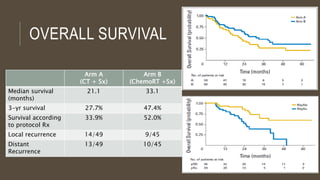
OVERALL SURVIVAL
Arm A
(CT + Sx)
Arm B
(ChemoRT +Sx)
Median survival
(months)
21.1 33.1
3-yr survival 27.7% 47.4%
Survival according
to protocol Rx
33.9% 52.0%
Local recurrence 14/49 9/45
Distant
Recurrence
13/49 10/45
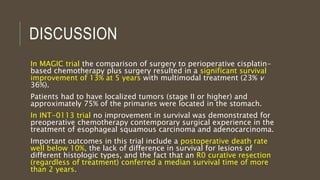
DISCUSSION
In MAGIC trial the comparison of surgery to perioperative cisplatin-
based chemotherapy plus surgery resulted in a significant survival
improvement of 13% at 5 years with multimodal treatment (23% v
36%).
Patients had to have localized tumors (stage II or higher) and
approximately 75% of the primaries were located in the stomach.
In INT-0113 trial no improvement in survival was demonstrated for
preoperative chemotherapy contemporary surgical experience in the
treatment of esophageal squamous carcinoma and adenocarcinoma.
Important outcomes in this trial include a postoperative death rate
well below 10%, the lack of difference in survival for lesions of
different histologic types, and the fact that an R0 curative resection
(regardless of treatment) conferred a median survival time of more
than 2 years.
PROS & CONS
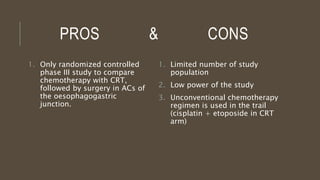
1. Only randomized controlled
phase III study to compare
chemotherapy with CRT,
followed by surgery in ACs of
the oesophagogastric
junction.
1. Limited number of study
population
2. Low power of the study
3. Unconventional chemotherapy
regimen is used in the trail
(cisplatin + etoposide in CRT
arm)
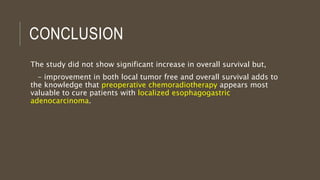
CONCLUSION
The study did not show significant increase in overall survival but,
- improvement in both local tumor free and overall survival adds to
the knowledge that preoperative chemoradiotherapy appears most
valuable to cure patients with localized esophagogastric
adenocarcinoma.
TRIMODALITY TREATMENT
VS SURGERY ALONE
CALGB 9781 Trial
CROSS Trial
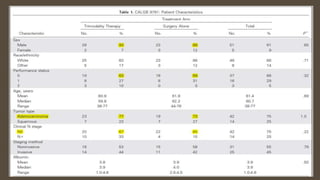
• GI Intergroup led by CALGB (Cancer and Leukemia Group B) initiated
trial testing –
• Non metastatic esophageal squamous or adenocarcinomas.
Surgery alone
vs
Trimodality Therapy (Surgery + Chemotherapy +
Radiation)
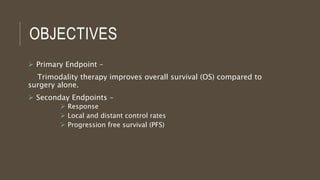
OBJECTIVES
 Primary Endpoint –
Trimodality therapy improves overall survival (OS) compared to
surgery alone.
 Seconday Endpoints –
 Response
 Local and distant control rates
 Progression free survival (PFS)
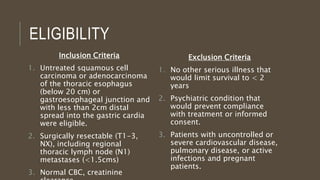
ELIGIBILITY
Inclusion Criteria
1. Untreated squamous cell
carcinoma or adenocarcinoma
of the thoracic esophagus
(below 20 cm) or
gastroesophageal junction and
with less than 2cm distal
spread into the gastric cardia
were eligible.
2. Surgically resectable (T1-3,
NX), including regional
thoracic lymph node (N1)
metastases (<1.5cms)
3. Normal CBC, creatinine
Exclusion Criteria
1. No other serious illness that
would limit survival to < 2
years
2. Psychiatric condition that
would prevent compliance
with treatment or informed
consent.
3. Patients with uncontrolled or
severe cardiovascular disease,
pulmonary disease, or active
infections and pregnant
patients.
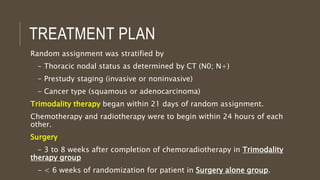
TREATMENT PLAN
Random assignment was stratified by
- Thoracic nodal status as determined by CT (N0; N+)
- Prestudy staging (invasive or noninvasive)
- Cancer type (squamous or adenocarcinoma)
Trimodality therapy began within 21 days of random assignment.
Chemotherapy and radiotherapy were to begin within 24 hours of each
other.
Surgery
- 3 to 8 weeks after completion of chemoradiotherapy in Trimodality
therapy group
- < 6 weeks of randomization for patient in Surgery alone group.
TREATMENT PLAN
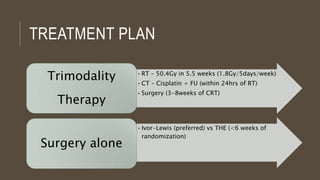
•RT – 50.4Gy in 5.5 weeks (1.8Gy/5days/week)
•CT – Cisplatin + FU (within 24hrs of RT)
•Surgery (3-8weeks of CRT)
Trimodality
Therapy
•Ivor-Lewis (preferred) vs THE (<6 weeks of
randomization)
Surgery alone
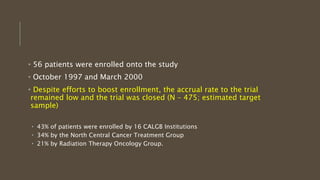
• 56 patients were enrolled onto the study
• October 1997 and March 2000
• Despite efforts to boost enrollment, the accrual rate to the trial
remained low and the trial was closed (N – 475; estimated target
sample)
• 43% of patients were enrolled by 16 CALGB Institutions
• 34% by the North Central Cancer Treatment Group
• 21% by Radiation Therapy Oncology Group.
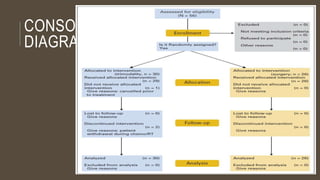
CONSORT
DIAGRAM
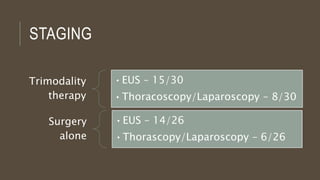
STAGING
Trimodality
therapy
•EUS – 15/30
•Thoracoscopy/Laparoscopy – 8/30
Surgery
alone
•EUS – 14/26
•Thorascopy/Laparoscopy – 6/26
SURGICAL ASPECT
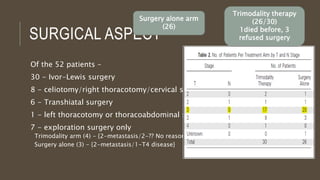
Of the 52 patients –
30 - Ivor-Lewis surgery
8 - celiotomy/right thoracotomy/cervical surgery
6 - Transhiatal surgery
1 - left thoracotomy or thoracoabdominal surgery
7 - exploration surgery only
Trimodality arm (4) - {2-metastasis/2-?? No reason}
Surgery alone (3) - {2-metastasis/1-T4 disease}
Trimodality therapy
(26/30)
1died before, 3
refused surgery
Surgery alone arm
(26)
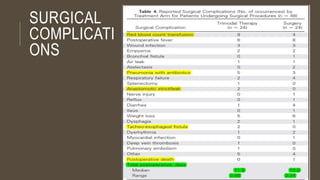
SURGICAL
COMPLICATI
ONS
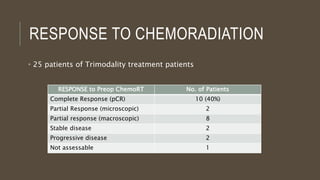
RESPONSE TO CHEMORADIATION
• 25 patients of Trimodality treatment patients
RESPONSE to Preop ChemoRT No. of Patients
Complete Response (pCR) 10 (40%)
Partial Response (microscopic) 2
Partial response (macroscopic) 8
Stable disease 2
Progressive disease 2
Not assessable 1
OVERALL SURVIVAL
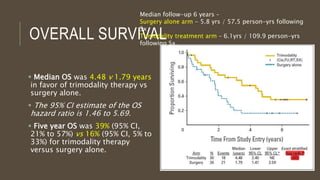
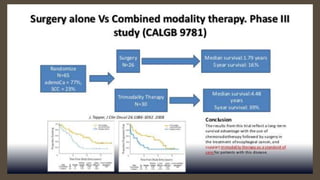
 Median OS was 4.48 v 1.79 years
in favor of trimodality therapy vs
surgery alone.
 The 95% CI estimate of the OS
hazard ratio is 1.46 to 5.69.
 Five year OS was 39% (95% CI,
21% to 57%) vs 16% (95% CI, 5% to
33%) for trimodality therapy
versus surgery alone.
Median follow-up 6 years –
Surgery alone arm - 5.8 yrs / 57.5 person-yrs following
Sx
Trimodality treatment arm – 6.1yrs / 109.9 person-yrs
following Sx.
PROGRESSION FREE SURVIVAL
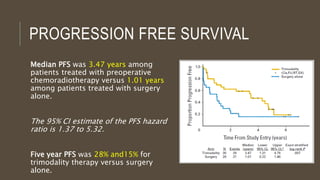
Median PFS was 3.47 years among
patients treated with preoperative
chemoradiotherapy versus 1.01 years
among patients treated with surgery
alone.
The 95% CI estimate of the PFS hazard
ratio is 1.37 to 5.32.
Five year PFS was 28% and15% for
trimodality therapy versus surgery
alone.
RECURRENCE
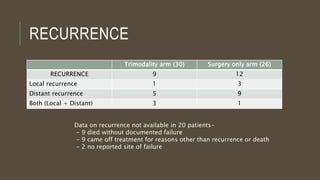
Trimodality arm (30) Surgery only arm (26)
RECURRENCE 9 12
Local recurrence 1 3
Distant recurrence 5 9
Both (Local + Distant) 3 1
Data on recurrence not available in 20 patients-
- 9 died without documented failure
- 9 came off treatment for reasons other than recurrence or death
- 2 no reported site of failure
DISCUSSION
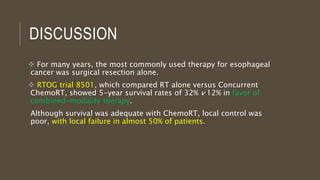
 For many years, the most commonly used therapy for esophageal
cancer was surgical resection alone.
 RTOG trial 8501, which compared RT alone versus Concurrent
ChemoRT, showed 5-year survival rates of 32% v 12% in favor of
combined-modality therapy.
Although survival was adequate with ChemoRT, local control was
poor, with local failure in almost 50% of patients.
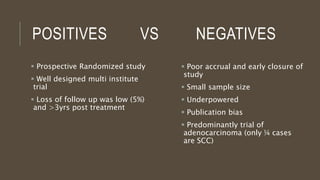
POSITIVES VS NEGATIVES
 Poor accrual and early closure of
study
 Small sample size
 Underpowered
 Publication bias
 Predominantly trial of
adenocarcinoma (only ¼ cases
are SCC)
 Prospective Randomized study
 Well designed multi institute
trial
 Loss of follow up was low (5%)
and >3yrs post treatment
CONCLUSION
1. The study indicates a benefit in OS and PFS with trimodality
therapy compared to surgery alone.
2. There was no suggestion that operative mortality was increased by
the use of trimodality therapy.
3. The preoperative treatment was accomplished with manageable
toxicity.
NEOADJUVANT
CHEMORADIOTHERAPY PLUS
SURGERY VERSUS SURGERY ALONE
FOR OESOPHAGEAL OR JUNCTIONAL
CANCER
Chemoradiotherapy for Esophageal Cancer Followed by Surgery Study
(CROSS) Group
(Netherlands)
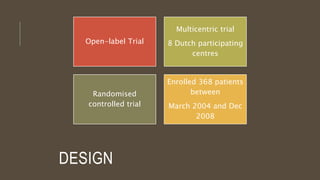
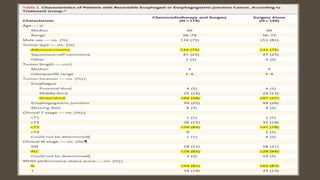
DESIGN
Open-label Trial
Multicentric trial
8 Dutch participating
centres
Randomised
controlled trial
Enrolled 368 patients
between
March 2004 and Dec
2008
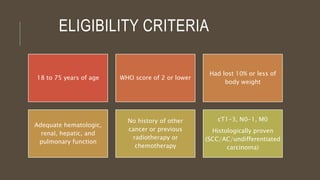
ELIGIBILITY CRITERIA
18 to 75 years of age WHO score of 2 or lower
Had lost 10% or less of
body weight
Adequate hematologic,
renal, hepatic, and
pulmonary function
No history of other
cancer or previous
radiotherapy or
chemotherapy
cT1-3, N0-1, M0
Histologically proven
(SCC/AC/undifferentiated
carcinoma)
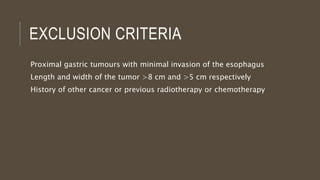
EXCLUSION CRITERIA
Proximal gastric tumours with minimal invasion of the esophagus
Length and width of the tumor >8 cm and >5 cm respectively
History of other cancer or previous radiotherapy or chemotherapy
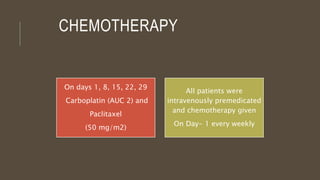
On days 1, 8, 15, 22, 29
Carboplatin (AUC 2) and
Paclitaxel
(50 mg/m2)
All patients were
intravenously premedicated
and chemotherapy given
On Day- 1 every weekly
CHEMOTHERAPY
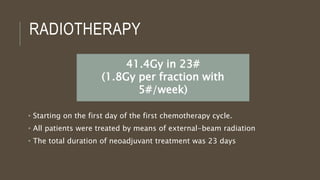
• Starting on the first day of the first chemotherapy cycle.
• All patients were treated by means of external-beam radiation
• The total duration of neoadjuvant treatment was 23 days
RADIOTHERAPY
41.4Gy in 23#
(1.8Gy per fraction with
5#/week)
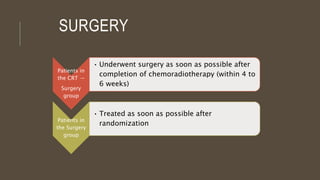
Patients in
the CRT →
Surgery
group
• Underwent surgery as soon as possible after
completion of chemoradiotherapy (within 4 to
6 weeks)
Patients in
the Surgery
group
• Treated as soon as possible after
randomization
SURGERY
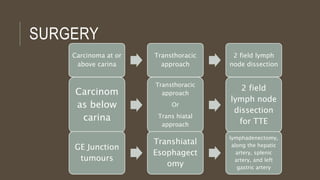
SURGERY
Carcinoma at or
above carina
Transthoracic
approach
2 field lymph
node dissection
Carcinom
as below
carina
Transthoracic
approach
Or
Trans hiatal
approach
2 field
lymph node
dissection
for TTE
GE Junction
tumours
Transhiatal
Esophagect
omy
lymphadenectomy,
along the hepatic
artery, splenic
artery, and left
gastric artery
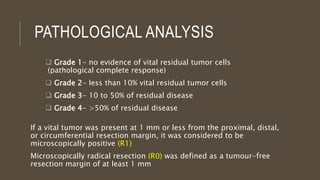
 Grade 1- no evidence of vital residual tumor cells
(pathological complete response)
 Grade 2- less than 10% vital residual tumor cells
 Grade 3- 10 to 50% of residual disease
 Grade 4- >50% of residual disease
PATHOLOGICAL ANALYSIS
If a vital tumor was present at 1 mm or less from the proximal, distal,
or circumferential resection margin, it was considered to be
microscopically positive (R1)
Microscopically radical resection (R0) was defined as a tumour-free
resection margin of at least 1 mm
After treatment completion
 First year - every 3 months
 Second year - every 6 months
 Annually thereafter until 5 years after treatment
FOLLOW-UP
OUTCOMES
Primary endpoint
 Overall survival
 From the date of randomization to the date of all-cause death
or to the last day of follow-up
Secondary endpoints
 Progression-free survival
 Progression-free interval
OUTCOMES
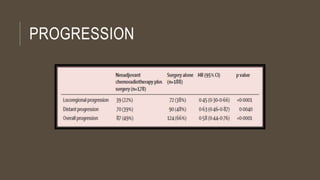
Locoregional progression - mediastinum, the supraclavicular region,
and the coeliac trunk region.
Distant progression was defined as occurrence of disseminated
disease, either during or after completion of treatment.
Distant disease included cervical and (para-aortic) lymph node
dissemination below the level of the pancreas, malignant pleural
effusions, peritoneal carcinomatosis, and further haematogenous
(organ) dissemination
RESULTS
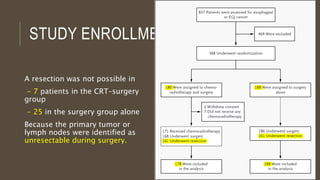
STUDY ENROLLMENT
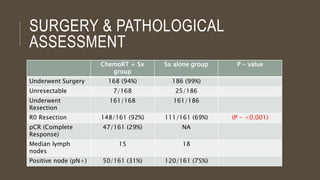
A resection was not possible in
- 7 patients in the CRT–surgery
group
- 25 in the surgery group alone
Because the primary tumor or
lymph nodes were identified as
unresectable during surgery.
SURGERY & PATHOLOGICAL
ASSESSMENT
ChemoRT + Sx
group
Sx alone group P - value
Underwent Surgery 168 (94%) 186 (99%)
Unresectable 7/168 25/186
Underwent
Resection
161/168 161/186
R0 Resection 148/161 (92%) 111/161 (69%) (P - <0.001)
pCR (Complete
Response)
47/161 (29%) NA
Median lymph
nodes
15 18
Positive node (pN+) 50/161 (31%) 120/161 (75%)
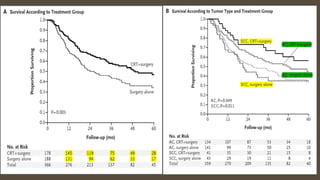
OVERALL
SURVIVAL
48.6 months (95% CI 32.1–65.1) in
the neoadjuvant CTRT plus surgery
group
24.0 months (14.2–33.7) in the
surgery alone group (HR 0.68 [95% CI
0.53–0.88])
OVERALL
SURVIVAL
SCC
81.6 months (95% ci 47.2–116.0) in the
neoadjuvant CTRT plus surgery group
21.1 months (15.4–26.7) in the surgery
alone group (HR 0.48 [95% CI 0.28–
0.83])
Adenocarcinoma
43.2 months (24.9–61.4) in the
neoadjuvant CTRT plus surgery group
27.1 months (13.0–41.2) in the surgery
alone group (HR 0.73 [95% CI 0.55–0.98
PFS
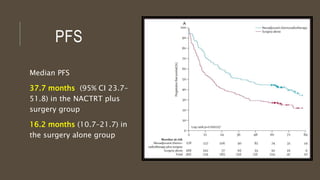
Median PFS
37.7 months (95% CI 23.7–
51.8) in the NACTRT plus
surgery group
16.2 months (10.7–21.7) in
the surgery alone group
PFS
SCC
74.7 months (95% CI 55.1–94.4) in
the NACTRT plus surgery group
11.6 months (4.4–18.8) in the
surgery alone group (HR 0.48 [95%
CI 0.28–0.82]
ADENOCARCINOMA
29.9 months (95% CI 15.9–43.9) in
the NACT plus surgery group
17.7 months (11.9-23.5) in the
surgery alone group (HR 0.69[95%
CI 0.52–0.9]
PROGRESSION
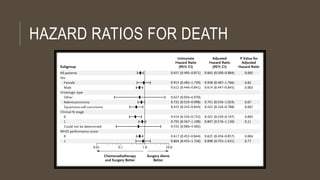
HAZARD RATIOS FOR DEATH
DISCUSSION
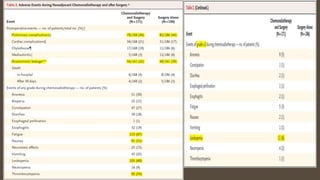
The chemoradiotherapy was associated with a low frequency of high-
grade toxic effects and could be given as an outpatient treatment.
The observed survival in both groups was superior to the anticipated
survival and to that reported in earlier randomized trials.
The preoperative chemoradiotherapy did not significantly change the
individual chance of undergoing a resection.
Postoperative complication rates, although similar between groups,
were higher than reported in other studies. (A plausible explanation
for this finding, other than the fact that all postoperative events were
meticulously recorded)
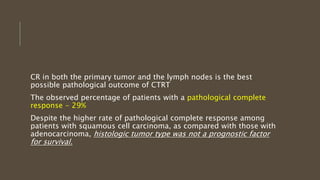
CR in both the primary tumor and the lymph nodes is the best
possible pathological outcome of CTRT
The observed percentage of patients with a pathological complete
response - 29%
Despite the higher rate of pathological complete response among
patients with squamous cell carcinoma, as compared with those with
adenocarcinoma, histologic tumor type was not a prognostic factor
for survival.
PROS & CONS
1. Well randomized multi-
institutional trial
2. High pCR rate compared to
other similar trials
1. Treatment protocol does not
vary with histological type of
cancer
CONCLUSION
Preoperative chemoradiotherapy (five courses of carboplatin and
paclitaxel, with 41.4 Gy of concurrent radiotherapy) is safe and leads
to a significant increase in overall survival among patients with
adenocarcinoma or squamous-cell carcinoma of the esophagus or
esophagogastric junction.
Chemoradiotherapy improves long-term overall and progression-free
survival in patients with oesophageal and junctional cancer.
CHANGING TREND AND
SUBGROUP STUDIES
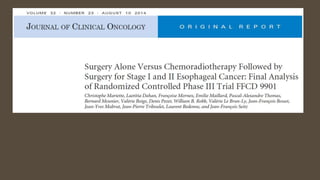
FFCD 9102 Trial
FFCD 9901 Trial
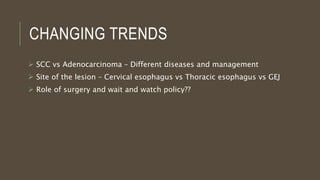
CHANGING TRENDS
 SCC vs Adenocarcinoma – Different diseases and management
 Site of the lesion – Cervical esophagus vs Thoracic esophagus vs GEJ
 Role of surgery and wait and watch policy??
CONCLUSION
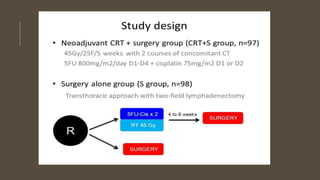
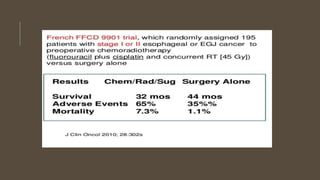
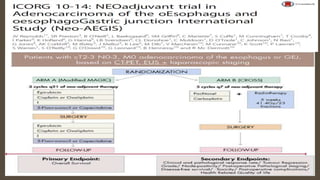
Compared with surgery alone, NCRT with cisplatin plus fluorouracil
does not improve R0 resection rate or survival but enhances
postoperative mortality in patients with stage I or II Esophageal
cancer.
Negative trial.
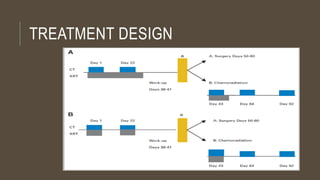
TREATMENT DESIGN
CONCLUSION
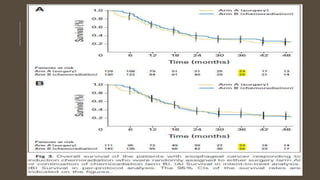
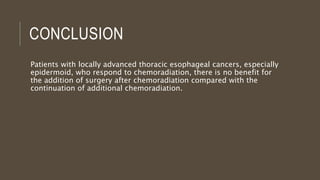
Patients with locally advanced thoracic esophageal cancers, especially
epidermoid, who respond to chemoradiation, there is no benefit for
the addition of surgery after chemoradiation compared with the
continuation of additional chemoradiation.
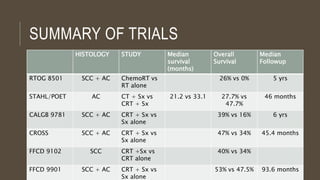
SUMMARY OF TRIALS
HISTOLOGY STUDY Median
survival
(months)
Overall
Survival
Median
Followup
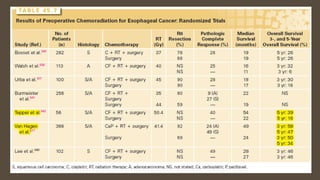
RTOG 8501 SCC + AC ChemoRT vs
RT alone
26% vs 0% 5 yrs
STAHL/POET AC CT + Sx vs
CRT + Sx
21.2 vs 33.1 27.7% vs
47.7%
46 months
CALGB 9781 SCC + AC CRT + Sx vs
Sx alone
39% vs 16% 6 yrs
CROSS SCC + AC CRT + Sx vs
Sx alone
47% vs 34% 45.4 months
FFCD 9102 SCC CRT +Sx vs
CRT alone
40% vs 34%
FFCD 9901 SCC + AC CRT + Sx vs
Sx alone
53% vs 47.5% 93.6 months
TAKE HOME POINTS
 Multimodality treatment in esophageal cancer is a must for improved
overall survival and progression free survival of the patient.
 Management protocol depends on
- Histopathology – SCC vs AC
- Site of the lesion – Cervical vs Thoracic vs GEJ
- General condition of the patient
 Preoperative Chemoradiation followed by surgery is standard of care
for locally advanced esophageal cancer.
THANK YOU

Esophageal carcinoma trials

  • 1.
    ESOPHAGEAL CANCER LANDMARK TRIALS Moderator- Dr Ravi Arjunan Presenter - Vijay Koduru
  • 2.
    DISCUSSION TOPICS A. Introduction& Historic treatment B. Complementary to Surgery - RT/CT C. RT alone vs Chemoradiation – RTOG 8501 Trial D. CT alone vs Chemoradiation – STAHL Trial/POET Trial E. Trimodality Treatment vs Surgery alone – CALGB 9781 Trial - CROSS Trial F. Changing trends and subgroup studies – FFCD 9102 Trial - FFCD 9901 Trial G. Conclusion
  • 3.
    HISTORY  First excisionof the esophagus is done by Christian Albert Theodor Billroth, an Austrian surgeon -1872  Vincenz Czerny (1842–1916) performed the first successful human resection of the cervical esophagus (1877) where he had resected a carcinoma of the cervical esophagus that provided a 1-year survival.  A major pioneer in esophageal surgery was the Welsh surgeon, Ivor Lewis (1895–1982), who in 1946 made substantial advancements with the introduction of esophagectomy and esophagogastrostomy.  Surgery has normally been considered as ‘‘the only option’’ for patients with early stage cancer of the esophagus, and it wasn’t until the mid-1980s that other combined therapy options became available to patients.
  • 4.
    INTRODUCTION ‘‘The main goalof surgery in esophageal cancer was good palliation and that cure is an accident.’ - Ronald H. Belsey (1910–2007)  Mean survival with surgery alone - 9 months.  Earlam and Cuhna-Melo’s 1980 review of 122 articles describing the surgical care of 83783 cases of squamous cell carcinoma of the esophagus revealed 5-year survival rate of 4%.  Their subsequent review of the role of radiation therapy (RT) found an almost equally dismal rate of 6%. This led to a combined trial of both Chemoradiation published in June 1992 – RTOG 8501
  • 5.
    RTOG 85-01 TRIALRT alone vs ChemoRT
  • 6.
    DESIGN RTOG + SWOG+ NCCTG Phase-3 controlled trial Non-randomized part May 1990 to April 1991 Randomized part January 1986 to April 1990 Hypothesis that concurrent chemoradiotherapy followed by adjuvant chemotherapy could improve the overall survival rate of patients who had carcinoma of the thoracic esophagus (without evidence of distant disease) compared with RT alone.
  • 7.
    ELIGIBILITY CRITERIA SCC/Adenocarcinoma of Thoracicesophagus No evidence of dissemination beyond mediastinal and SCLN Adequate hematologic, renal, hepatic, and pulmonary function No prior or concurrent other malignancy/ Previous chemotherapy or RT KPS >40
  • 8.
    TREATMENT PLAN •RT -30Gy in 15# over 3 weeks f/b 20Gy in 10# over 2 weeks •CT - Cisplatin + FU (within 24hrs of RT) Weeks-1,5,8,11 Combined modality Therapy arm •RT - 50Gy in 25# over 5 weeks f/b 14Gy in 14# over 1.4 weeksRT alone arm
  • 9.
    TARGET SAMPLE SIZE Plannedsample size of 150. If either treatment group had a highly significant improvement in survival (log-rank test, P=.005), a recommendation was to be made to discontinue patient accrual. At an interim analysis in May 1990 (90 evaluable cases had been accrued), the survival rates were statistically different at P = .005 (2- sided logrank test) and favored the combined modality therapy arm.
  • 10.
    OUTCOMES Primary endpoint  Overallsurvival Secondary endpoints  Ability to tolerate treatment, toxicity and recurrence The patients were treated surgically only for recurrences or complications.
  • 12.
    OVERALL SURVIVAL By 5years, 26% (95% confidence interval [CI], 15%-37%) of the randomized combined modality group 14% (95% CI, 6%-23%) of the nonrandomized combined modality group were alive NONE in the RT group.
  • 13.
    There were nostatistical differences in survival related to histology in those patients treated with combined modality therapy.
  • 14.
  • 15.
    Toxic effects anddeath more in Chemoradiation arm. Toxicity Grade 4 Death ChemoRT (Randomized) 8% 2% RT alone 2% none ChemoRT (Non- randomized) 4% none
  • 16.
    DISCUSSION Chemotherapy appears tohave eradicated some presumably subclinical distant metastases. Distant metastases (with or without local-regional disease) accounted for the first site of treatment failure in 30% of the RT group 16% in the randomized combined modality therapy group 26% in the nonrandomized combined modality therapy group.
  • 17.
    LONG TERM RESULTS Thelong-term durability of the multimodality therapy reported herein demonstrates that this regimen truly cures more patients than does RT alone.
  • 18.
    PROS VS CONS 1.First randomized prospective trial showing efficacy of chemoradiation. 2. Interim analysis done which showed early advantage of chemoradiation 1. The trial may have handicapped the efficacy of chemoradiation by using a smaller dose of RT than was used for patients treated by RT alone (50 Gy vs 64 Gy). 2. Trial did not address the potential role of surgery in combination with chemoradiotherapy.
  • 19.
    CONCLUSION Chemoradiotherapy - astandard of care for patients who have carcinoma of the esophagus. Since local-regional persistence of disease accounted for the majority of treatment failures in the trial, surgery might be able to eradicate some of these tumors.
  • 20.
    STAHL TRIAL /POET TRIALJ Clin Oncol 27:851-856. 2009 CT alone vs ChemoR
  • 21.
    J Clin Oncol27:851-856. © 2009 by American Society of Clinical Oncology Multi institutional German Study
  • 22.
    DESIGN Unblinded prospective Randomized Phase-3 controlled trial 19 German centers Nov2000 to Dec 2005 Aim of the study is for an improvement of 10% in 3-year survival rate (from 25% to 35%) by adding radiation therapy to preoperative chemotherapy.
  • 23.
    ELIGIBILITY CRITERIA Untreated patientsup to 70 years Histologically proven adenocarcinoma of the GE junction (type I to III Siewert’s classification) Adequate hematologic, renal, hepatic, and pulmonary function Locally advanced disease T3-4NxM0 WHO PS – Grade 0/1
  • 24.
    TREATMENT PLAN • InductionCT - • 2.5 cycles of PLF 6 weekly • PLF –Cisplatin + Leucovorin + FU Arm A CT (15wks)  Surgery •Induction CT - •2 cycles of PLF 6 weekly f/b •Cisplatin + Etoposide with 30Gy (2Gy/fraction, 5#/week Arm B CT (12wks)  CRT (3wks)  Surgery Surgery performed after 3-4 weeks after both treatments
  • 25.
  • 26.
  • 27.
    SURGERY RESULTS Cause ofDeath Arm A (CT alone) Arm B (ChemoRT) Pneumonia 1 2 Anastomotic leak 1 2 Cardiac Failure 0 1
  • 28.
    PATHOLOGICAL RESPONSE Arm A(CT alone) Arm B (ChemoRT) P-value Mean number of nodes (Range) 22 (5-61) 16 (7-38) pCR (Complete Response) 2% 15.6% 0.03 ypN0 (Tumor free nodes) 36.7% 64.4% 0.01
  • 29.
    OVERALL SURVIVAL Arm A (CT+ Sx) Arm B (ChemoRT +Sx) Median survival (months) 21.1 33.1 3-yr survival 27.7% 47.4% Survival according to protocol Rx 33.9% 52.0% Local recurrence 14/49 9/45 Distant Recurrence 13/49 10/45
  • 30.
    DISCUSSION In MAGIC trialthe comparison of surgery to perioperative cisplatin- based chemotherapy plus surgery resulted in a significant survival improvement of 13% at 5 years with multimodal treatment (23% v 36%). Patients had to have localized tumors (stage II or higher) and approximately 75% of the primaries were located in the stomach. In INT-0113 trial no improvement in survival was demonstrated for preoperative chemotherapy contemporary surgical experience in the treatment of esophageal squamous carcinoma and adenocarcinoma. Important outcomes in this trial include a postoperative death rate well below 10%, the lack of difference in survival for lesions of different histologic types, and the fact that an R0 curative resection (regardless of treatment) conferred a median survival time of more than 2 years.
  • 32.
    PROS & CONS 1.Only randomized controlled phase III study to compare chemotherapy with CRT, followed by surgery in ACs of the oesophagogastric junction. 1. Limited number of study population 2. Low power of the study 3. Unconventional chemotherapy regimen is used in the trail (cisplatin + etoposide in CRT arm)
  • 33.
    CONCLUSION The study didnot show significant increase in overall survival but, - improvement in both local tumor free and overall survival adds to the knowledge that preoperative chemoradiotherapy appears most valuable to cure patients with localized esophagogastric adenocarcinoma.
  • 34.
    TRIMODALITY TREATMENT VS SURGERYALONE CALGB 9781 Trial CROSS Trial
  • 35.
    • GI Intergroupled by CALGB (Cancer and Leukemia Group B) initiated trial testing – • Non metastatic esophageal squamous or adenocarcinomas. Surgery alone vs Trimodality Therapy (Surgery + Chemotherapy + Radiation)
  • 36.
    OBJECTIVES  Primary Endpoint– Trimodality therapy improves overall survival (OS) compared to surgery alone.  Seconday Endpoints –  Response  Local and distant control rates  Progression free survival (PFS)
  • 37.
    ELIGIBILITY Inclusion Criteria 1. Untreatedsquamous cell carcinoma or adenocarcinoma of the thoracic esophagus (below 20 cm) or gastroesophageal junction and with less than 2cm distal spread into the gastric cardia were eligible. 2. Surgically resectable (T1-3, NX), including regional thoracic lymph node (N1) metastases (<1.5cms) 3. Normal CBC, creatinine Exclusion Criteria 1. No other serious illness that would limit survival to < 2 years 2. Psychiatric condition that would prevent compliance with treatment or informed consent. 3. Patients with uncontrolled or severe cardiovascular disease, pulmonary disease, or active infections and pregnant patients.
  • 38.
    TREATMENT PLAN Random assignmentwas stratified by - Thoracic nodal status as determined by CT (N0; N+) - Prestudy staging (invasive or noninvasive) - Cancer type (squamous or adenocarcinoma) Trimodality therapy began within 21 days of random assignment. Chemotherapy and radiotherapy were to begin within 24 hours of each other. Surgery - 3 to 8 weeks after completion of chemoradiotherapy in Trimodality therapy group - < 6 weeks of randomization for patient in Surgery alone group.
  • 39.
    TREATMENT PLAN •RT –50.4Gy in 5.5 weeks (1.8Gy/5days/week) •CT – Cisplatin + FU (within 24hrs of RT) •Surgery (3-8weeks of CRT) Trimodality Therapy •Ivor-Lewis (preferred) vs THE (<6 weeks of randomization) Surgery alone
  • 40.
    • 56 patientswere enrolled onto the study • October 1997 and March 2000 • Despite efforts to boost enrollment, the accrual rate to the trial remained low and the trial was closed (N – 475; estimated target sample) • 43% of patients were enrolled by 16 CALGB Institutions • 34% by the North Central Cancer Treatment Group • 21% by Radiation Therapy Oncology Group.
  • 41.
  • 42.
    STAGING Trimodality therapy •EUS – 15/30 •Thoracoscopy/Laparoscopy– 8/30 Surgery alone •EUS – 14/26 •Thorascopy/Laparoscopy – 6/26
  • 44.
    SURGICAL ASPECT Of the52 patients – 30 - Ivor-Lewis surgery 8 - celiotomy/right thoracotomy/cervical surgery 6 - Transhiatal surgery 1 - left thoracotomy or thoracoabdominal surgery 7 - exploration surgery only Trimodality arm (4) - {2-metastasis/2-?? No reason} Surgery alone (3) - {2-metastasis/1-T4 disease} Trimodality therapy (26/30) 1died before, 3 refused surgery Surgery alone arm (26)
  • 45.
  • 46.
    RESPONSE TO CHEMORADIATION •25 patients of Trimodality treatment patients RESPONSE to Preop ChemoRT No. of Patients Complete Response (pCR) 10 (40%) Partial Response (microscopic) 2 Partial response (macroscopic) 8 Stable disease 2 Progressive disease 2 Not assessable 1
  • 47.
    OVERALL SURVIVAL  MedianOS was 4.48 v 1.79 years in favor of trimodality therapy vs surgery alone.  The 95% CI estimate of the OS hazard ratio is 1.46 to 5.69.  Five year OS was 39% (95% CI, 21% to 57%) vs 16% (95% CI, 5% to 33%) for trimodality therapy versus surgery alone. Median follow-up 6 years – Surgery alone arm - 5.8 yrs / 57.5 person-yrs following Sx Trimodality treatment arm – 6.1yrs / 109.9 person-yrs following Sx.
  • 48.
    PROGRESSION FREE SURVIVAL MedianPFS was 3.47 years among patients treated with preoperative chemoradiotherapy versus 1.01 years among patients treated with surgery alone. The 95% CI estimate of the PFS hazard ratio is 1.37 to 5.32. Five year PFS was 28% and15% for trimodality therapy versus surgery alone.
  • 49.
    RECURRENCE Trimodality arm (30)Surgery only arm (26) RECURRENCE 9 12 Local recurrence 1 3 Distant recurrence 5 9 Both (Local + Distant) 3 1 Data on recurrence not available in 20 patients- - 9 died without documented failure - 9 came off treatment for reasons other than recurrence or death - 2 no reported site of failure
  • 50.
    DISCUSSION  For manyyears, the most commonly used therapy for esophageal cancer was surgical resection alone.  RTOG trial 8501, which compared RT alone versus Concurrent ChemoRT, showed 5-year survival rates of 32% v 12% in favor of combined-modality therapy. Although survival was adequate with ChemoRT, local control was poor, with local failure in almost 50% of patients.
  • 51.
    POSITIVES VS NEGATIVES Poor accrual and early closure of study  Small sample size  Underpowered  Publication bias  Predominantly trial of adenocarcinoma (only ¼ cases are SCC)  Prospective Randomized study  Well designed multi institute trial  Loss of follow up was low (5%) and >3yrs post treatment
  • 52.
    CONCLUSION 1. The studyindicates a benefit in OS and PFS with trimodality therapy compared to surgery alone. 2. There was no suggestion that operative mortality was increased by the use of trimodality therapy. 3. The preoperative treatment was accomplished with manageable toxicity.
  • 54.
    NEOADJUVANT CHEMORADIOTHERAPY PLUS SURGERY VERSUSSURGERY ALONE FOR OESOPHAGEAL OR JUNCTIONAL CANCER
  • 55.
    Chemoradiotherapy for EsophagealCancer Followed by Surgery Study (CROSS) Group (Netherlands)
  • 56.
    DESIGN Open-label Trial Multicentric trial 8Dutch participating centres Randomised controlled trial Enrolled 368 patients between March 2004 and Dec 2008
  • 57.
    ELIGIBILITY CRITERIA 18 to75 years of age WHO score of 2 or lower Had lost 10% or less of body weight Adequate hematologic, renal, hepatic, and pulmonary function No history of other cancer or previous radiotherapy or chemotherapy cT1-3, N0-1, M0 Histologically proven (SCC/AC/undifferentiated carcinoma)
  • 58.
    EXCLUSION CRITERIA Proximal gastrictumours with minimal invasion of the esophagus Length and width of the tumor >8 cm and >5 cm respectively History of other cancer or previous radiotherapy or chemotherapy
  • 59.
    On days 1,8, 15, 22, 29 Carboplatin (AUC 2) and Paclitaxel (50 mg/m2) All patients were intravenously premedicated and chemotherapy given On Day- 1 every weekly CHEMOTHERAPY
  • 60.
    • Starting onthe first day of the first chemotherapy cycle. • All patients were treated by means of external-beam radiation • The total duration of neoadjuvant treatment was 23 days RADIOTHERAPY 41.4Gy in 23# (1.8Gy per fraction with 5#/week)
  • 61.
    Patients in the CRT→ Surgery group • Underwent surgery as soon as possible after completion of chemoradiotherapy (within 4 to 6 weeks) Patients in the Surgery group • Treated as soon as possible after randomization SURGERY
  • 62.
    SURGERY Carcinoma at or abovecarina Transthoracic approach 2 field lymph node dissection Carcinom as below carina Transthoracic approach Or Trans hiatal approach 2 field lymph node dissection for TTE GE Junction tumours Transhiatal Esophagect omy lymphadenectomy, along the hepatic artery, splenic artery, and left gastric artery
  • 63.
     Grade 1-no evidence of vital residual tumor cells (pathological complete response)  Grade 2- less than 10% vital residual tumor cells  Grade 3- 10 to 50% of residual disease  Grade 4- >50% of residual disease PATHOLOGICAL ANALYSIS If a vital tumor was present at 1 mm or less from the proximal, distal, or circumferential resection margin, it was considered to be microscopically positive (R1) Microscopically radical resection (R0) was defined as a tumour-free resection margin of at least 1 mm
  • 64.
    After treatment completion First year - every 3 months  Second year - every 6 months  Annually thereafter until 5 years after treatment FOLLOW-UP
  • 65.
    OUTCOMES Primary endpoint  Overallsurvival  From the date of randomization to the date of all-cause death or to the last day of follow-up Secondary endpoints  Progression-free survival  Progression-free interval
  • 66.
    OUTCOMES Locoregional progression -mediastinum, the supraclavicular region, and the coeliac trunk region. Distant progression was defined as occurrence of disseminated disease, either during or after completion of treatment. Distant disease included cervical and (para-aortic) lymph node dissemination below the level of the pancreas, malignant pleural effusions, peritoneal carcinomatosis, and further haematogenous (organ) dissemination
  • 67.
  • 68.
    STUDY ENROLLMENT A resectionwas not possible in - 7 patients in the CRT–surgery group - 25 in the surgery group alone Because the primary tumor or lymph nodes were identified as unresectable during surgery.
  • 70.
    SURGERY & PATHOLOGICAL ASSESSMENT ChemoRT+ Sx group Sx alone group P - value Underwent Surgery 168 (94%) 186 (99%) Unresectable 7/168 25/186 Underwent Resection 161/168 161/186 R0 Resection 148/161 (92%) 111/161 (69%) (P - <0.001) pCR (Complete Response) 47/161 (29%) NA Median lymph nodes 15 18 Positive node (pN+) 50/161 (31%) 120/161 (75%)
  • 73.
    OVERALL SURVIVAL 48.6 months (95%CI 32.1–65.1) in the neoadjuvant CTRT plus surgery group 24.0 months (14.2–33.7) in the surgery alone group (HR 0.68 [95% CI 0.53–0.88])
  • 74.
    OVERALL SURVIVAL SCC 81.6 months (95%ci 47.2–116.0) in the neoadjuvant CTRT plus surgery group 21.1 months (15.4–26.7) in the surgery alone group (HR 0.48 [95% CI 0.28– 0.83]) Adenocarcinoma 43.2 months (24.9–61.4) in the neoadjuvant CTRT plus surgery group 27.1 months (13.0–41.2) in the surgery alone group (HR 0.73 [95% CI 0.55–0.98
  • 75.
    PFS Median PFS 37.7 months(95% CI 23.7– 51.8) in the NACTRT plus surgery group 16.2 months (10.7–21.7) in the surgery alone group
  • 76.
    PFS SCC 74.7 months (95%CI 55.1–94.4) in the NACTRT plus surgery group 11.6 months (4.4–18.8) in the surgery alone group (HR 0.48 [95% CI 0.28–0.82] ADENOCARCINOMA 29.9 months (95% CI 15.9–43.9) in the NACT plus surgery group 17.7 months (11.9-23.5) in the surgery alone group (HR 0.69[95% CI 0.52–0.9]
  • 77.
  • 78.
  • 79.
  • 80.
    The chemoradiotherapy wasassociated with a low frequency of high- grade toxic effects and could be given as an outpatient treatment. The observed survival in both groups was superior to the anticipated survival and to that reported in earlier randomized trials. The preoperative chemoradiotherapy did not significantly change the individual chance of undergoing a resection. Postoperative complication rates, although similar between groups, were higher than reported in other studies. (A plausible explanation for this finding, other than the fact that all postoperative events were meticulously recorded)
  • 81.
    CR in boththe primary tumor and the lymph nodes is the best possible pathological outcome of CTRT The observed percentage of patients with a pathological complete response - 29% Despite the higher rate of pathological complete response among patients with squamous cell carcinoma, as compared with those with adenocarcinoma, histologic tumor type was not a prognostic factor for survival.
  • 82.
    PROS & CONS 1.Well randomized multi- institutional trial 2. High pCR rate compared to other similar trials 1. Treatment protocol does not vary with histological type of cancer
  • 83.
    CONCLUSION Preoperative chemoradiotherapy (fivecourses of carboplatin and paclitaxel, with 41.4 Gy of concurrent radiotherapy) is safe and leads to a significant increase in overall survival among patients with adenocarcinoma or squamous-cell carcinoma of the esophagus or esophagogastric junction. Chemoradiotherapy improves long-term overall and progression-free survival in patients with oesophageal and junctional cancer.
  • 85.
    CHANGING TREND AND SUBGROUPSTUDIES FFCD 9102 Trial FFCD 9901 Trial
  • 86.
    CHANGING TRENDS  SCCvs Adenocarcinoma – Different diseases and management  Site of the lesion – Cervical esophagus vs Thoracic esophagus vs GEJ  Role of surgery and wait and watch policy??
  • 90.
    CONCLUSION Compared with surgeryalone, NCRT with cisplatin plus fluorouracil does not improve R0 resection rate or survival but enhances postoperative mortality in patients with stage I or II Esophageal cancer. Negative trial.
  • 92.
  • 94.
    CONCLUSION Patients with locallyadvanced thoracic esophageal cancers, especially epidermoid, who respond to chemoradiation, there is no benefit for the addition of surgery after chemoradiation compared with the continuation of additional chemoradiation.
  • 96.
    SUMMARY OF TRIALS HISTOLOGYSTUDY Median survival (months) Overall Survival Median Followup RTOG 8501 SCC + AC ChemoRT vs RT alone 26% vs 0% 5 yrs STAHL/POET AC CT + Sx vs CRT + Sx 21.2 vs 33.1 27.7% vs 47.7% 46 months CALGB 9781 SCC + AC CRT + Sx vs Sx alone 39% vs 16% 6 yrs CROSS SCC + AC CRT + Sx vs Sx alone 47% vs 34% 45.4 months FFCD 9102 SCC CRT +Sx vs CRT alone 40% vs 34% FFCD 9901 SCC + AC CRT + Sx vs Sx alone 53% vs 47.5% 93.6 months
  • 97.
    TAKE HOME POINTS Multimodality treatment in esophageal cancer is a must for improved overall survival and progression free survival of the patient.  Management protocol depends on - Histopathology – SCC vs AC - Site of the lesion – Cervical vs Thoracic vs GEJ - General condition of the patient  Preoperative Chemoradiation followed by surgery is standard of care for locally advanced esophageal cancer.
  • 98.

Editor's Notes

  • #11 that treatment-related deaths and non-oesophageal cancer-related deaths were not counted as events
  • #65 To grade the response to therapy, degree of histomorphologic regression was classified into four categories:
  • #67 that treatment-related deaths and non-oesophageal cancer-related deaths were not counted as events
  • #68 was defined as either progression of locoregional disease during treatment (resulting in irresectability) or as locoregional recurrence after completion of treatment.
  • #80 This forest plot