Javier A. García B.
C.I. V-26.609.413
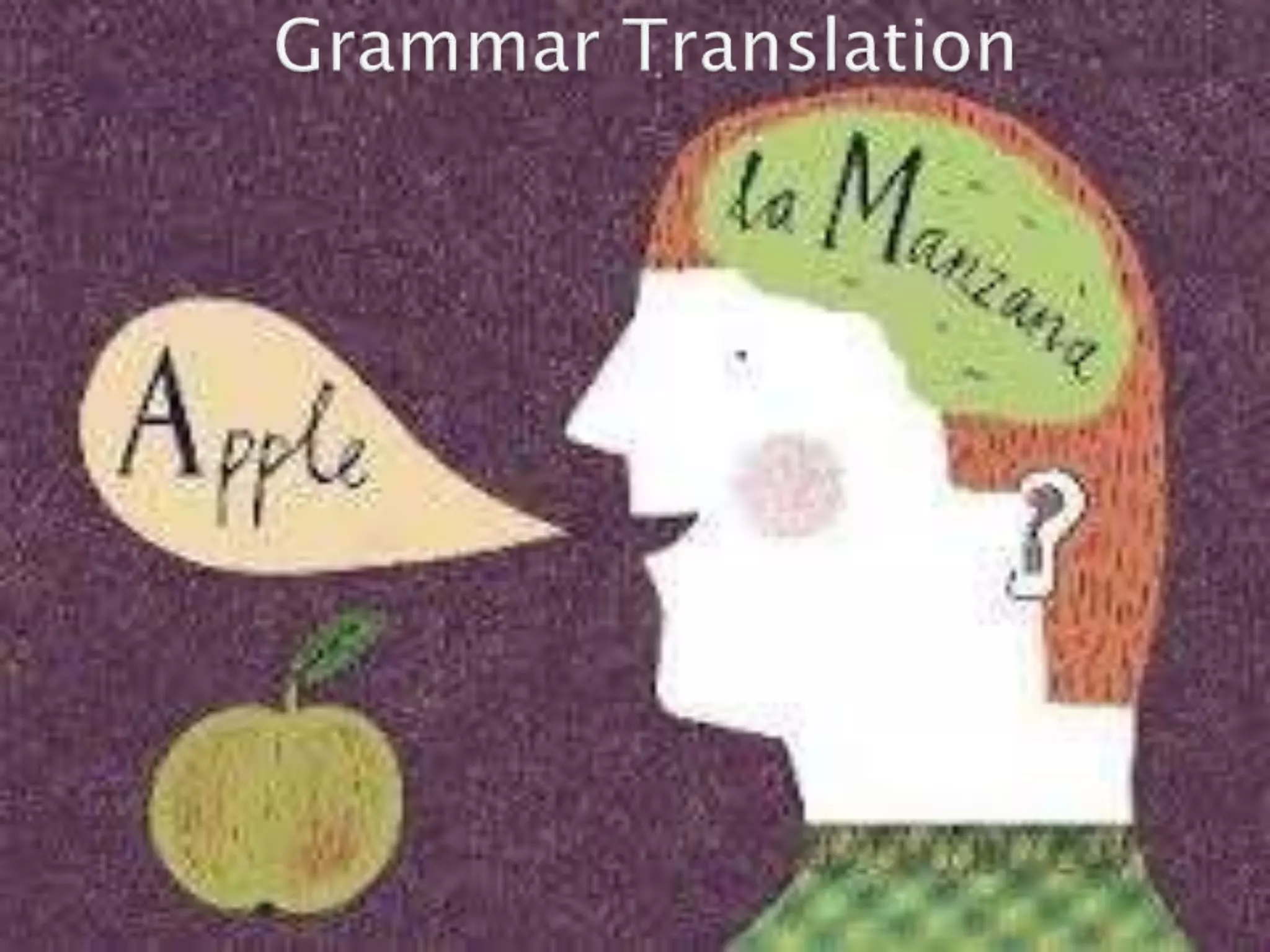
 Based mostly on the translation of passages
from the native language into the target
language.
 Little or no attention paid to oral expression
nor communication skills.
 Mainly focused in grammar explanations.
 Little or no oral use of the target language;
the whole class is directed in the native
language.
Proposed by
Prof. Karl Plotz
(1819-1881)
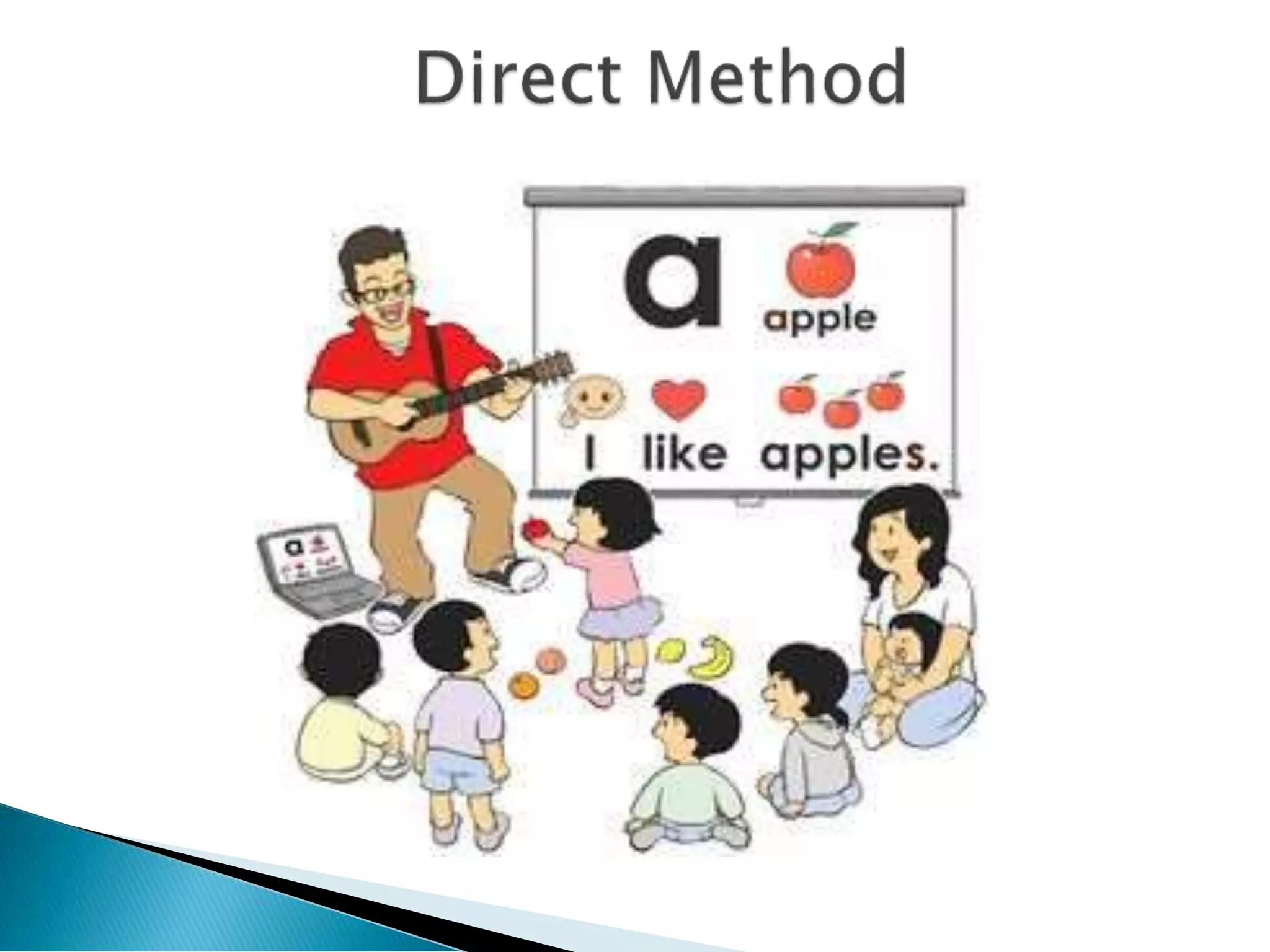
 Meaning should be connected directly with
the target language.
 No translation in to the native language.
 A lot of teacher-students dialogues, later
systematic teaching of grammar and
vocabulary.
 The reading skill will be developed through
practice with speaking. Language is primarily
speech.
Usually associated to
François Gouin and
Charles Berlitz
 Based on Skinner’s Behaviorism theory.
 It assumed that a human being can be trained
using a system of reinforcement: Correct
behavior receives positive feedback, while
errors receive negative feedback.
 Prioritizes listening and speaking skills over
reading and writing.
 Inductive learning of grammar rules based on
dialogues
Had its origins during
World War II which is
why it is also known as
‘The Army Method’
 Teacher-centred.
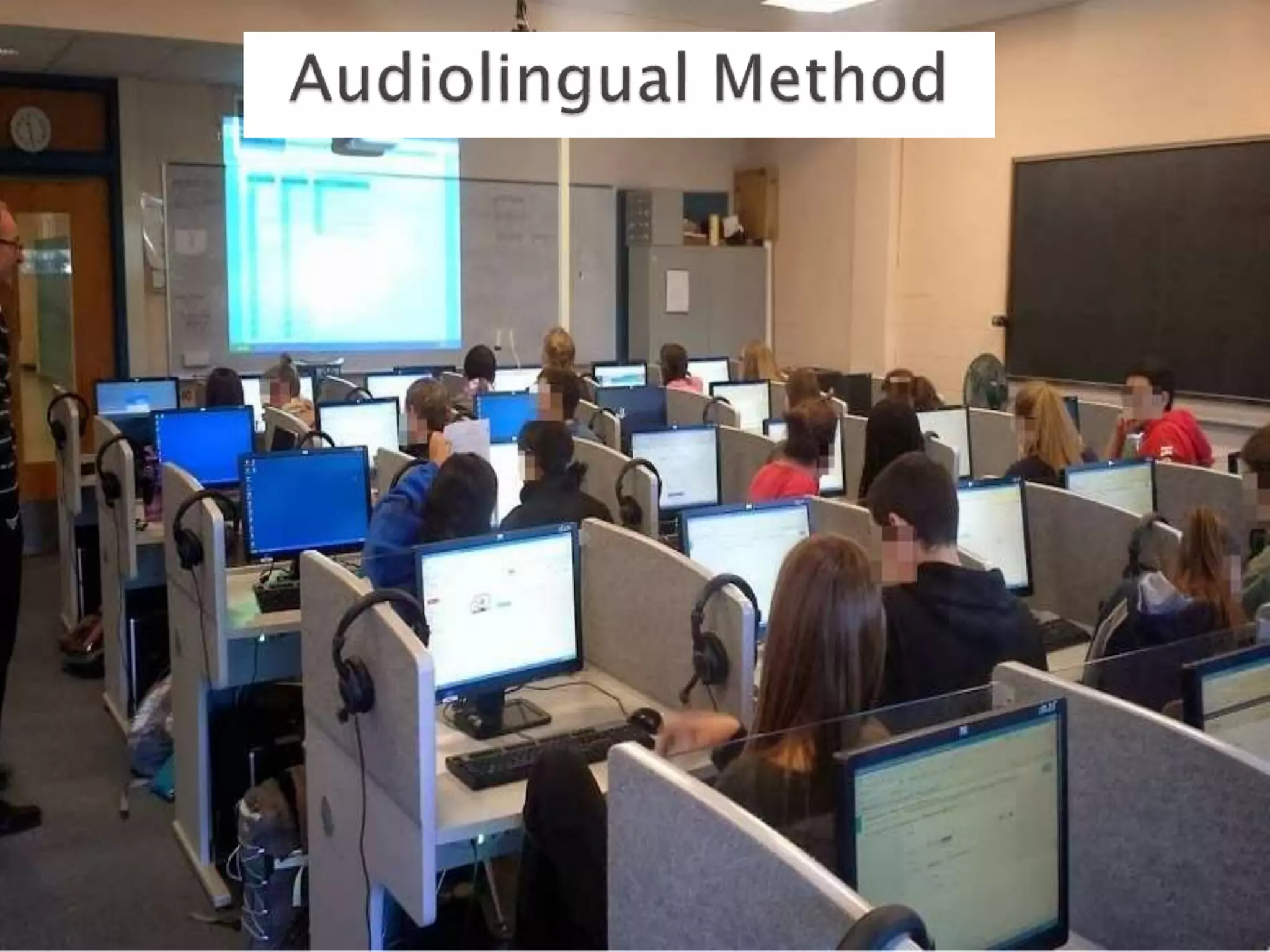
 Use of tapes, visual aids and ultimately
language labs.
 Reading and written work based on earlier
oral work, sometimes given as homework.
 Focus is on pronunciation.
 Nowadays, it is normally used as a part of
individual lessons rather than as the
foundation of the course.
 All methods that have been created since the
1970’s are called designer methods.
 They were first referred to as ‘Designer
Methods’ by David Nunan.
 Fundaments generally psychological and/or
linguistic.
 Some of these designer methods will be
mentioned and explained in the following
slides.
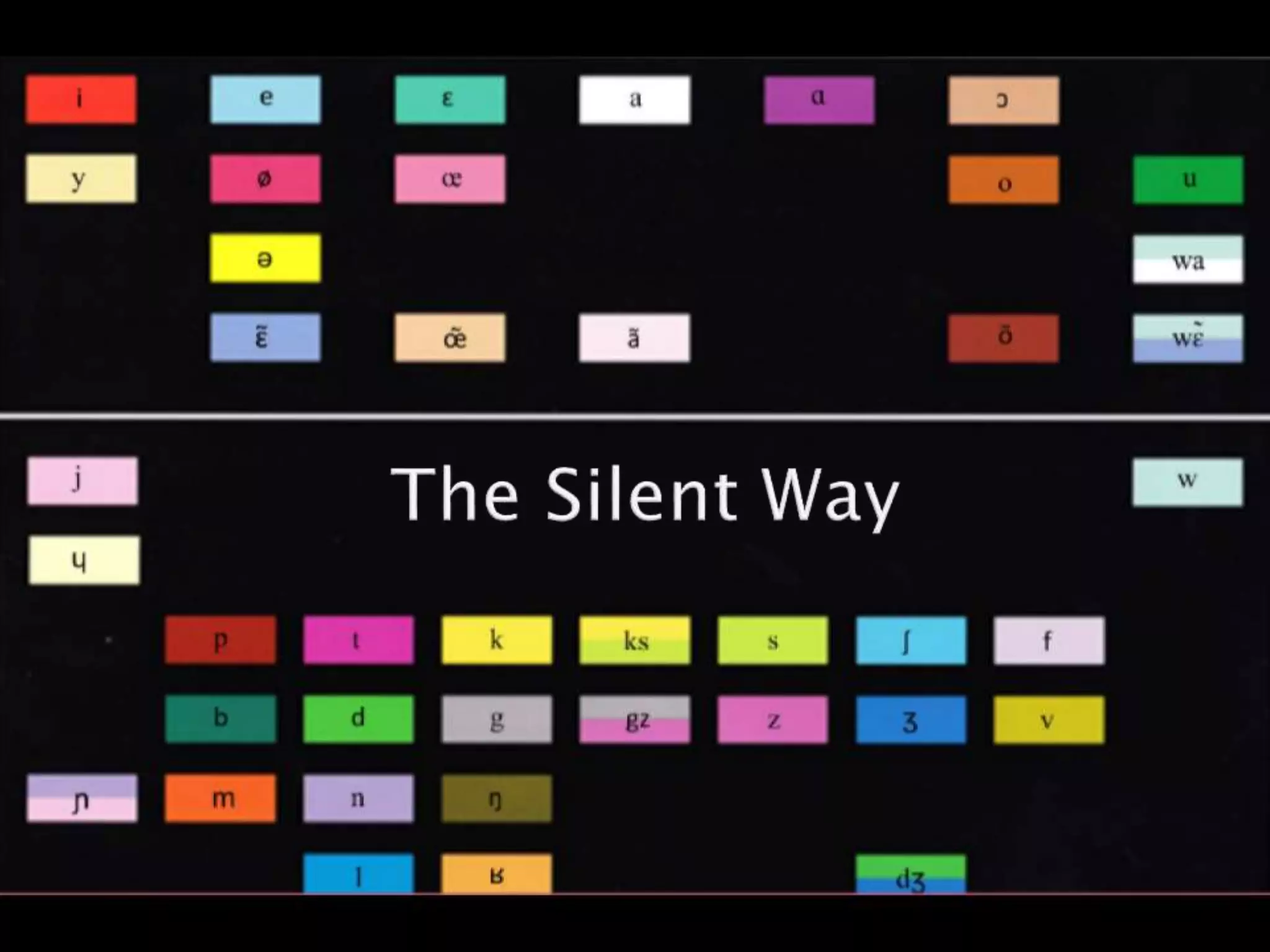
 Teachers should be as silent as possible
during a class but learners should be
encouraged to speak as much as possible.
 The learner needs to discover or create.
 Learning is made easier by the use of physical
objects.
 Learning is made easier by problem-solving
using the target language.
Created by
Caleb Gattegno
in 1963
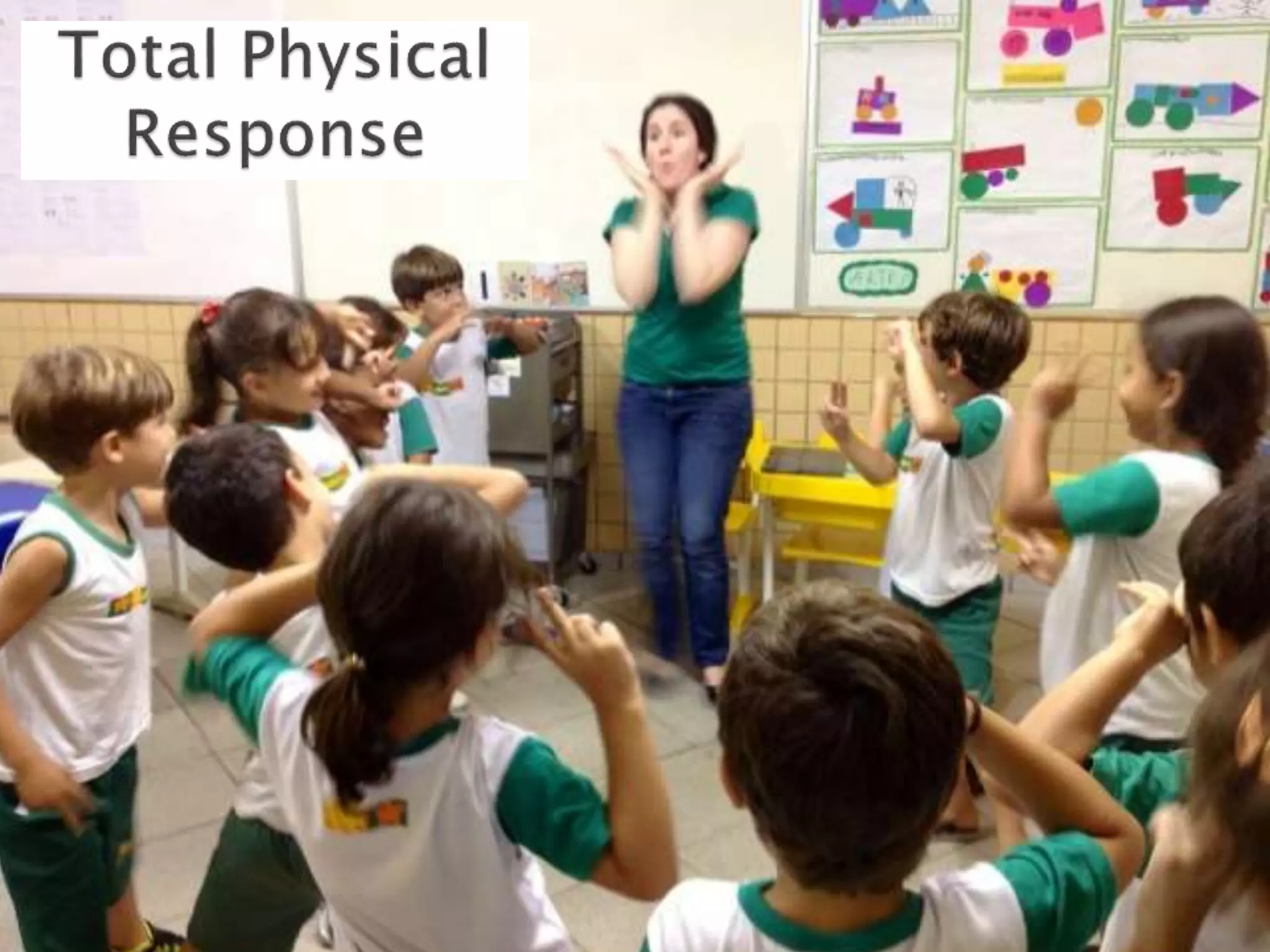
 It is based on the coordination of language
and physical movement.
 It is a means of quickly recognizing meaning
in the language being learned.
 Passively learning the structure of the
language itself.
 Grammar is not taught explicitly but can be
learned from the language input.
 It is popular with beginners and with young
learners
Developed by Dr.
James J Asher
 Lessons take place against a background of
soothing music in an emotionally comforting
environment.
 Teacher-centred method.
 Positive suggestion and negative "de-
suggestion" by teacher.
 classroom activities based on dialogues,
including Q&A, games and song
Created by
Georgi Lozanov
 Extremely learner-focused.
 Focus on fluency in the early stages.
 It's important that the learners understand
their and your new roles in the language
learning process.
 Recorded dialogue transcribed by teacher on
board.
 Analysis of dialogue by learners.
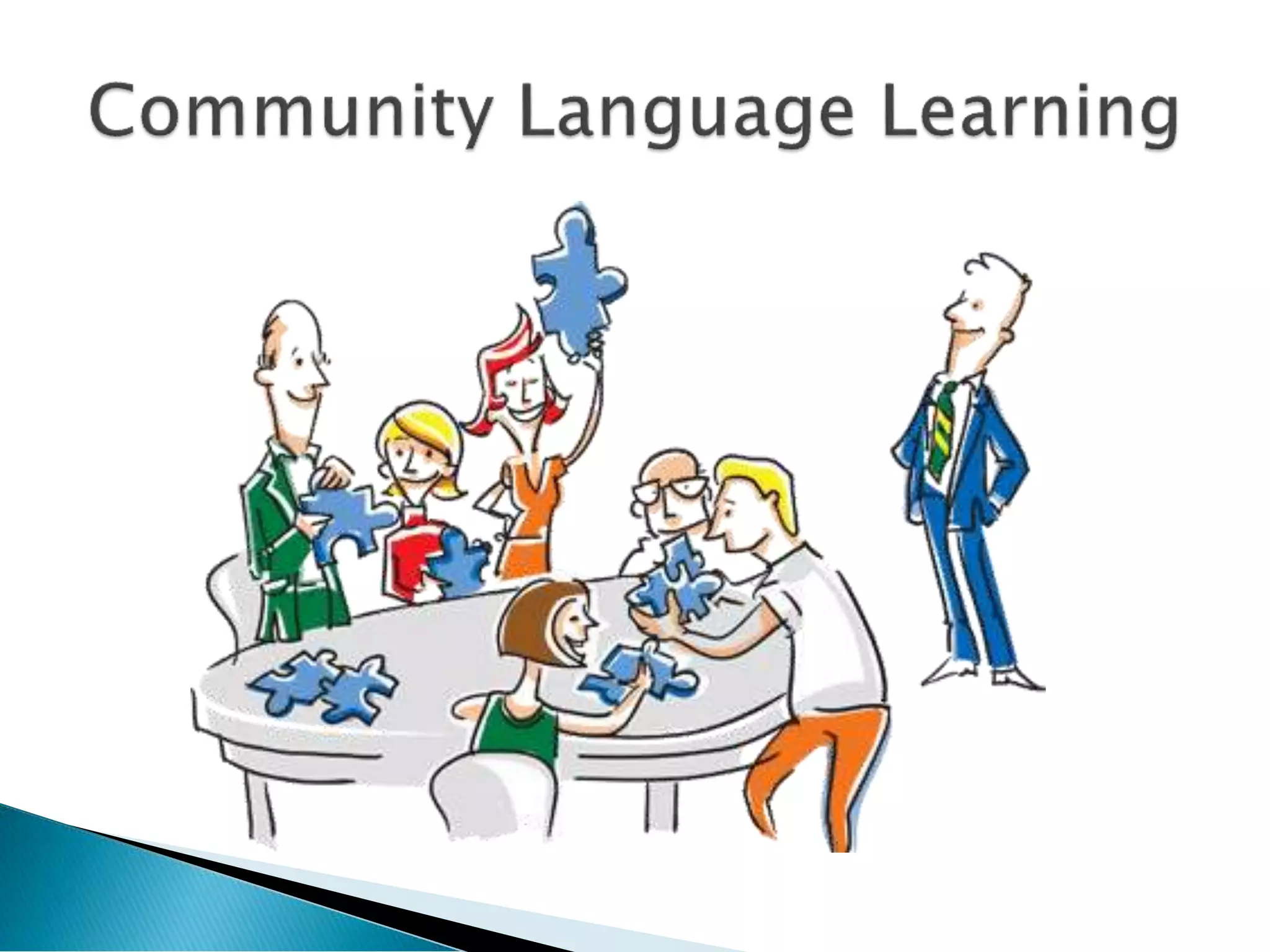
 The teacher plays the part of "counselor",
while the learners are encouraged to work
together
Developed by
Charles Curran
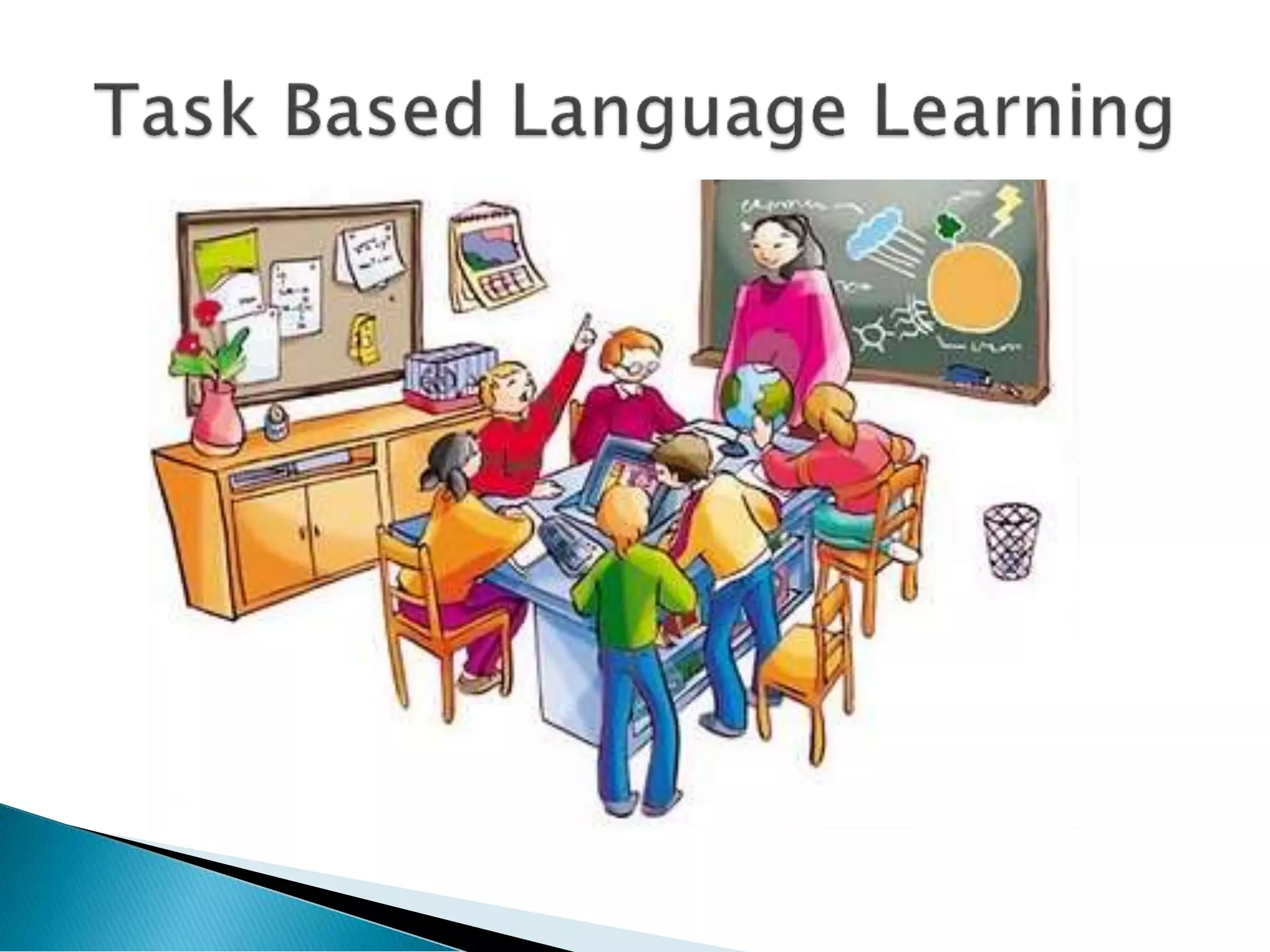
 The teacher doesn't pre-determine what
language will be studied.
 The lesson is based around the completion of
a central task and the language studied is
determined by what happens as the students
complete it.
 The students complete a task in pairs or
groups using the language resources that
they have.
 A natural context is developed from the
students' experiences with the language that
is personalized and relevant to them.
 The language explored arises from the
students' needs.
 It is enjoyable and motivating.
Popularized by
Teresa P. Pica
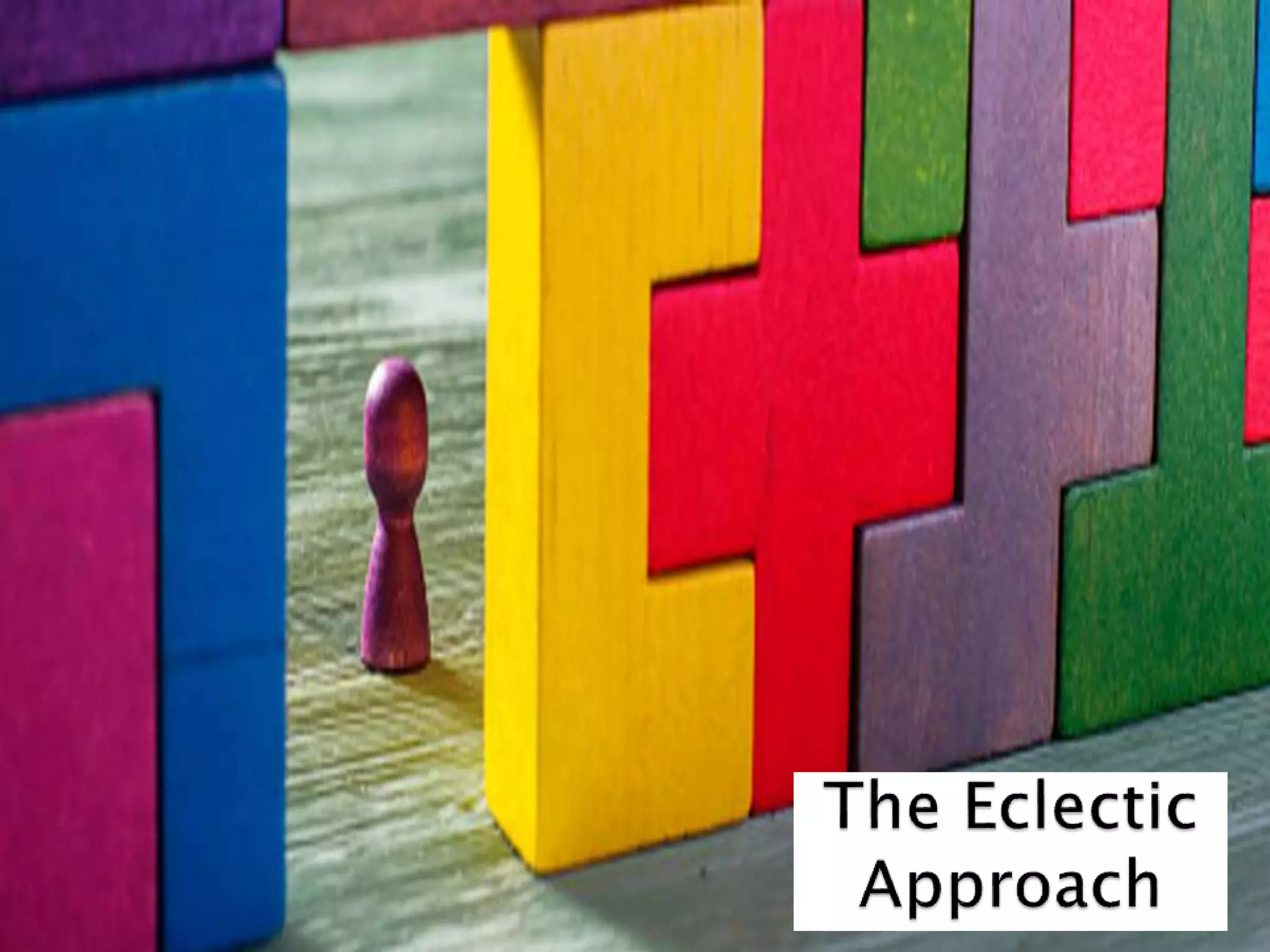
 The teacher decides what methodology or
approach to use depending on the aims of
the lesson and the learners in the group.
 A typical lesson might combine elements
from various sources.
 It is not based on a single method.
 It is a mixture of approaches and
methodologies.
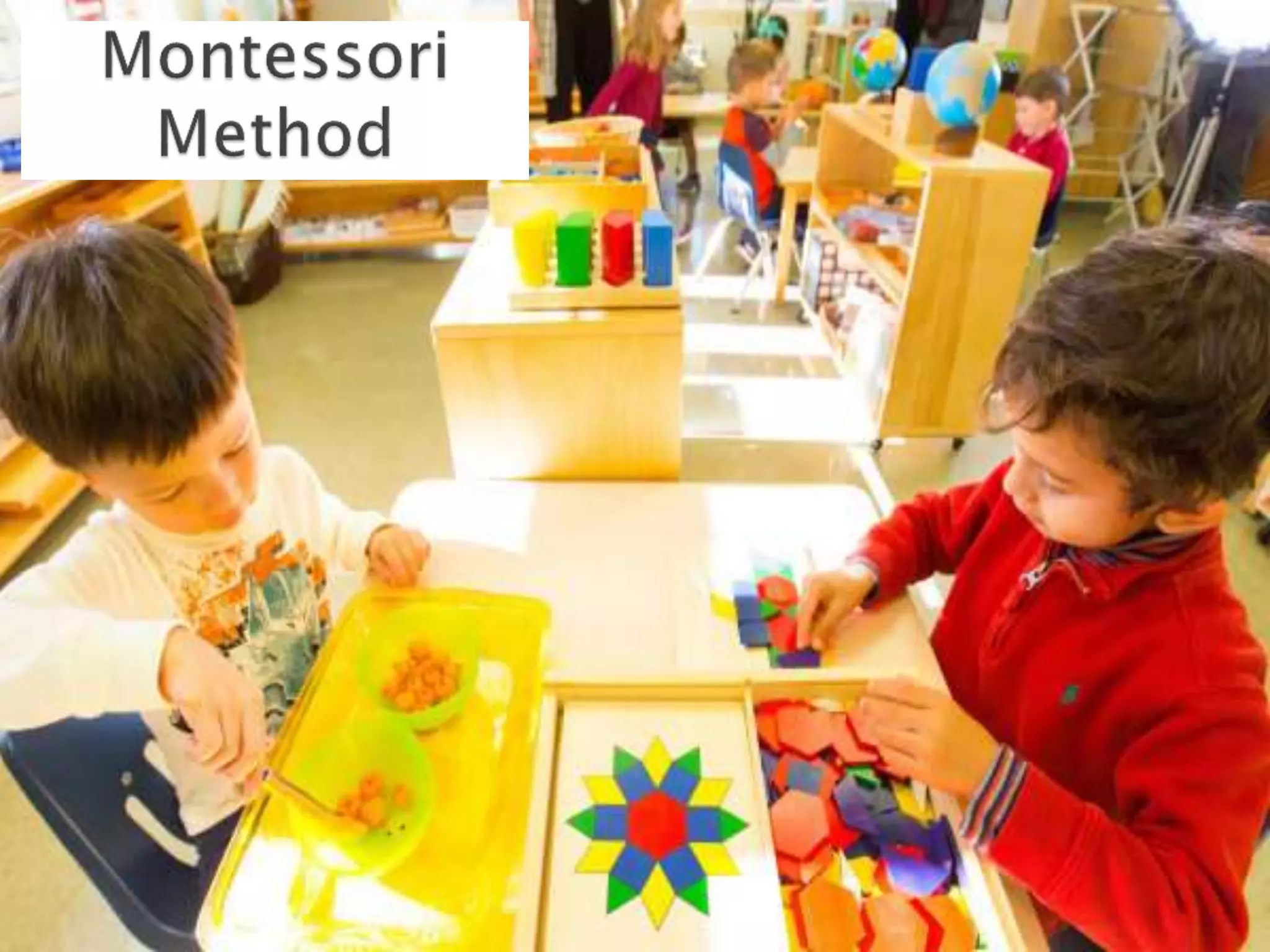
 Follows the child’s interests.
 Moves at the child’s pace.
 Effective at helping children gain literacy
skills and help children grow academically
overall.
 Labels on everyday objects such as “window”,
“chair”, “bookshelf”.
Based on Maria
Montessori’s
way of teaching
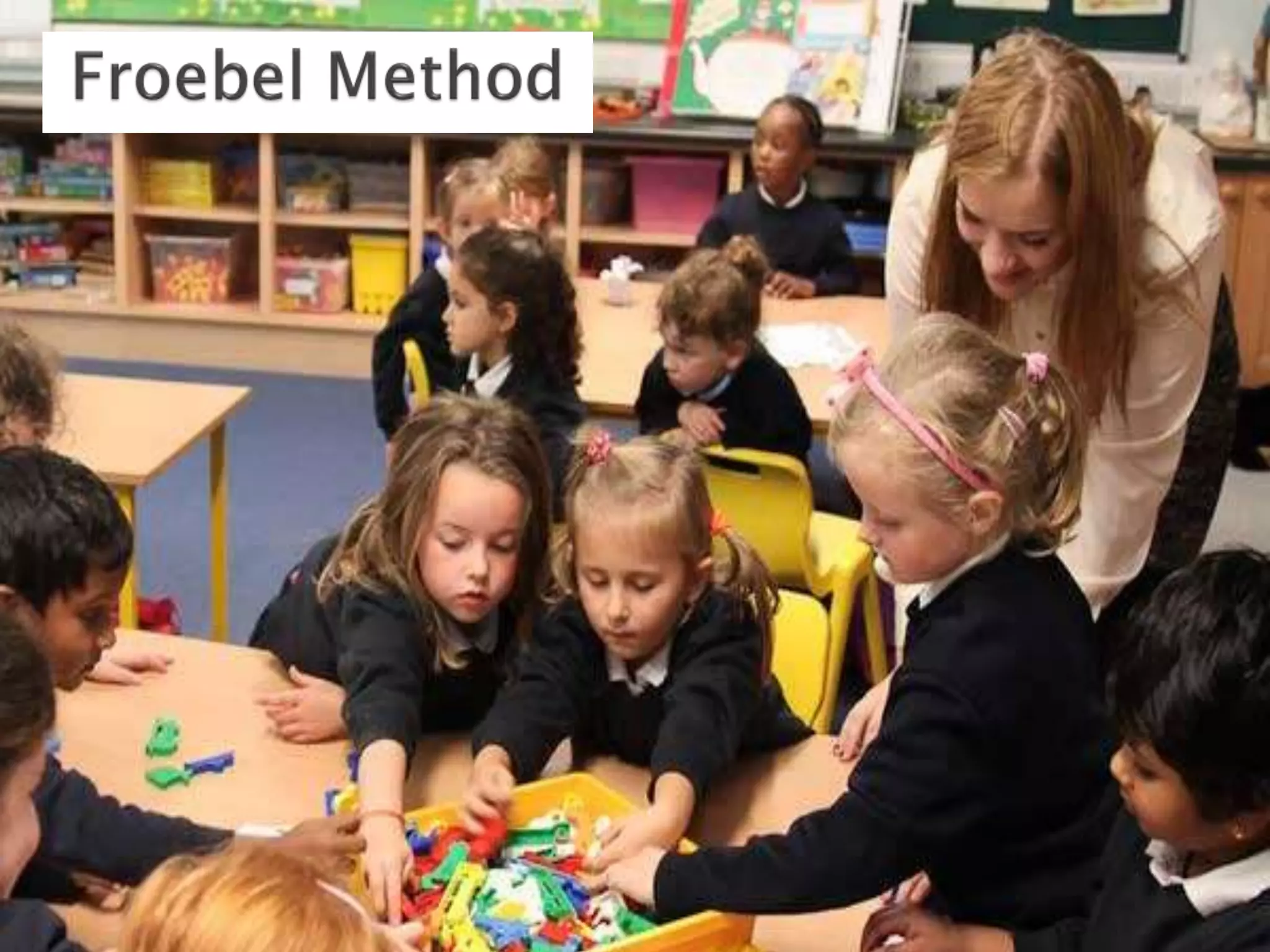
 Based on 'play and activity' and 'the nurturing
of creativity' to help children develop and
grow.
 Based on the philosophy that humans are
essentially creative beings.
 Young children learn best in settings that
provide a stimulating and prepared
environment.
Based on Friedrich
Froebel’s teaching
method
 Strongly influenced by the communicative
approach.
 Similar to the Direct Method.
 Follows a cognitive model.
 Teacher-centred
 Authentic or close to authentic materials are
employed throughout the class.
 Coursebook-centred.
Created by
Lewis Th.
Girau
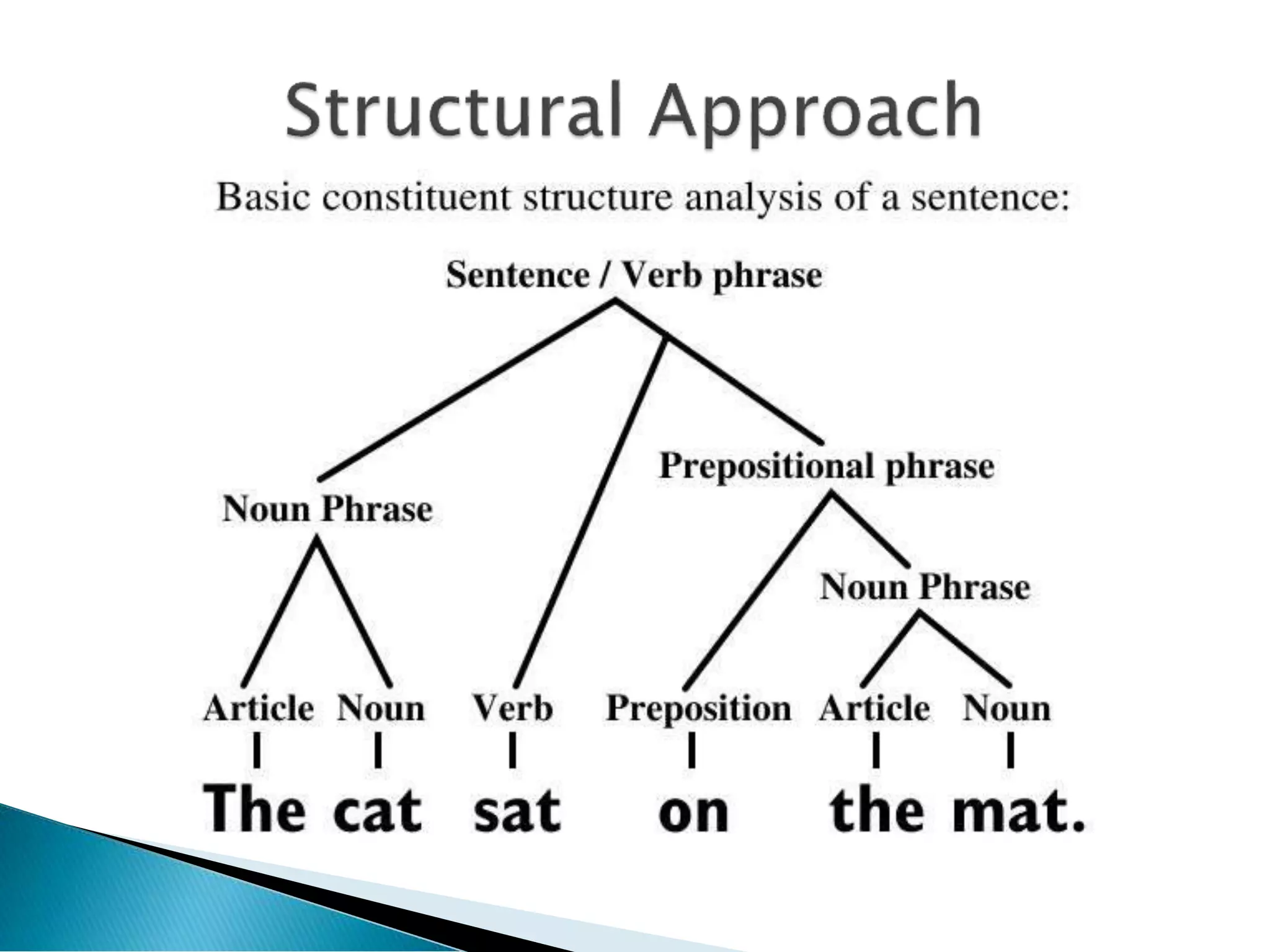
 The arrangement of words in such a way as to
form a suitable pattern of sentence.
 The selection of content words is directed by
their usefulness.
 The goal is that students understand the
pattern and structure of the language.
 Importance of speech.
 Student-centred
 Importance of the formulation of language
habit in arranging words in proper pattern.
 https://www.enotes.com/homework-help/write-note-grammar-translation-
method-364053
 https://aminghori.blogspot.com/2017/05/the-direct-method-of-teaching-
english.html
 http://absetiyadi-unila.blogspot.com/2010/10/direct-method.html
 https://www.tefl.net/methods/audiolingual.htm
 https://blog.tjtaylor.net/method-audio-lingual/
 https://www.englishclub.com/tefl-articles/history-english-language-
teaching.htm
 https://www.teachingenglish.org.uk/article/silent-way
 https://en.wikipedia.org/wiki/Total_physical_response
 https://www.tefl.net/methods/suggestopedia.htm
 https://www.teachingenglish.org.uk/article/community-language-learning
 https://www.tefl.net/methods/community-language-learning.htm
 https://www.teachingenglish.org.uk/article/a-task-based-approach
 https://en.wikipedia.org/wiki/Task-based_language_learning
 https://www.teachingenglish.org.uk/article/eclectic-approach
 https://davinciclubar.com/esl-the-montessori-way-5-simple-diy-activities/
 https://www.fundacionmontessori.org/the-montessori-method.htm
 https://www.careforkids.com.au/child-care-articles/article/157/the-
froebel-approach
 https://www.teachingenglish.org.uk/article/methods-post-method-
m%C3%A9todos

Esl teaching methods

  • 1.
    Javier A. GarcíaB. C.I. V-26.609.413
  • 2.
     Based mostlyon the translation of passages from the native language into the target language.  Little or no attention paid to oral expression nor communication skills.  Mainly focused in grammar explanations.  Little or no oral use of the target language; the whole class is directed in the native language. Proposed by Prof. Karl Plotz (1819-1881)
  • 4.
     Meaning shouldbe connected directly with the target language.  No translation in to the native language.  A lot of teacher-students dialogues, later systematic teaching of grammar and vocabulary.  The reading skill will be developed through practice with speaking. Language is primarily speech. Usually associated to François Gouin and Charles Berlitz
  • 6.
     Based onSkinner’s Behaviorism theory.  It assumed that a human being can be trained using a system of reinforcement: Correct behavior receives positive feedback, while errors receive negative feedback.  Prioritizes listening and speaking skills over reading and writing.  Inductive learning of grammar rules based on dialogues Had its origins during World War II which is why it is also known as ‘The Army Method’
  • 7.
     Teacher-centred.  Useof tapes, visual aids and ultimately language labs.  Reading and written work based on earlier oral work, sometimes given as homework.  Focus is on pronunciation.  Nowadays, it is normally used as a part of individual lessons rather than as the foundation of the course.
  • 9.
     All methodsthat have been created since the 1970’s are called designer methods.  They were first referred to as ‘Designer Methods’ by David Nunan.  Fundaments generally psychological and/or linguistic.  Some of these designer methods will be mentioned and explained in the following slides.
  • 10.
     Teachers shouldbe as silent as possible during a class but learners should be encouraged to speak as much as possible.  The learner needs to discover or create.  Learning is made easier by the use of physical objects.  Learning is made easier by problem-solving using the target language. Created by Caleb Gattegno in 1963
  • 12.
     It isbased on the coordination of language and physical movement.  It is a means of quickly recognizing meaning in the language being learned.  Passively learning the structure of the language itself.  Grammar is not taught explicitly but can be learned from the language input.  It is popular with beginners and with young learners Developed by Dr. James J Asher
  • 14.
     Lessons takeplace against a background of soothing music in an emotionally comforting environment.  Teacher-centred method.  Positive suggestion and negative "de- suggestion" by teacher.  classroom activities based on dialogues, including Q&A, games and song Created by Georgi Lozanov
  • 16.
     Extremely learner-focused. Focus on fluency in the early stages.  It's important that the learners understand their and your new roles in the language learning process.  Recorded dialogue transcribed by teacher on board.  Analysis of dialogue by learners.  The teacher plays the part of "counselor", while the learners are encouraged to work together Developed by Charles Curran
  • 18.
     The teacherdoesn't pre-determine what language will be studied.  The lesson is based around the completion of a central task and the language studied is determined by what happens as the students complete it.  The students complete a task in pairs or groups using the language resources that they have.
  • 19.
     A naturalcontext is developed from the students' experiences with the language that is personalized and relevant to them.  The language explored arises from the students' needs.  It is enjoyable and motivating. Popularized by Teresa P. Pica
  • 21.
     The teacherdecides what methodology or approach to use depending on the aims of the lesson and the learners in the group.  A typical lesson might combine elements from various sources.  It is not based on a single method.  It is a mixture of approaches and methodologies.
  • 23.
     Follows thechild’s interests.  Moves at the child’s pace.  Effective at helping children gain literacy skills and help children grow academically overall.  Labels on everyday objects such as “window”, “chair”, “bookshelf”. Based on Maria Montessori’s way of teaching
  • 25.
     Based on'play and activity' and 'the nurturing of creativity' to help children develop and grow.  Based on the philosophy that humans are essentially creative beings.  Young children learn best in settings that provide a stimulating and prepared environment. Based on Friedrich Froebel’s teaching method
  • 27.
     Strongly influencedby the communicative approach.  Similar to the Direct Method.  Follows a cognitive model.  Teacher-centred  Authentic or close to authentic materials are employed throughout the class.  Coursebook-centred. Created by Lewis Th. Girau
  • 28.
     The arrangementof words in such a way as to form a suitable pattern of sentence.  The selection of content words is directed by their usefulness.  The goal is that students understand the pattern and structure of the language.  Importance of speech.  Student-centred  Importance of the formulation of language habit in arranging words in proper pattern.
  • 30.
     https://www.enotes.com/homework-help/write-note-grammar-translation- method-364053  https://aminghori.blogspot.com/2017/05/the-direct-method-of-teaching- english.html http://absetiyadi-unila.blogspot.com/2010/10/direct-method.html  https://www.tefl.net/methods/audiolingual.htm  https://blog.tjtaylor.net/method-audio-lingual/  https://www.englishclub.com/tefl-articles/history-english-language- teaching.htm  https://www.teachingenglish.org.uk/article/silent-way  https://en.wikipedia.org/wiki/Total_physical_response  https://www.tefl.net/methods/suggestopedia.htm  https://www.teachingenglish.org.uk/article/community-language-learning  https://www.tefl.net/methods/community-language-learning.htm  https://www.teachingenglish.org.uk/article/a-task-based-approach
  • 31.
     https://en.wikipedia.org/wiki/Task-based_language_learning  https://www.teachingenglish.org.uk/article/eclectic-approach https://davinciclubar.com/esl-the-montessori-way-5-simple-diy-activities/  https://www.fundacionmontessori.org/the-montessori-method.htm  https://www.careforkids.com.au/child-care-articles/article/157/the- froebel-approach  https://www.teachingenglish.org.uk/article/methods-post-method- m%C3%A9todos