Download as PPS, PPTX
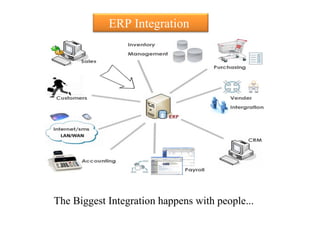
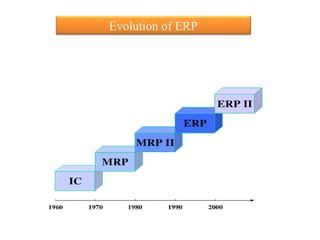
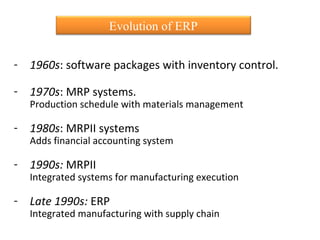

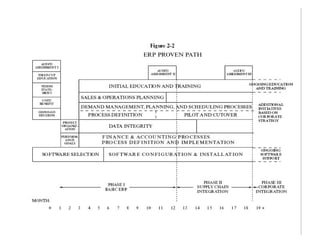


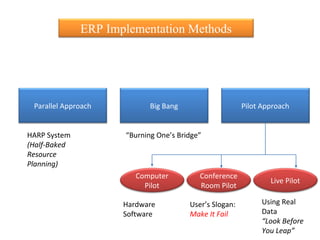
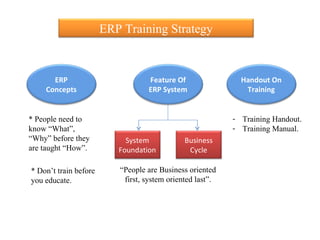


ERP stands for Enterprise Resource Planning. The primary purpose of implementing an ERP system is to help a business run efficiently in a competitive environment. ERP systems have evolved from inventory control software in the 1960s to integrated manufacturing and supply chain systems in the late 1990s. The key stages of an ERP implementation include acquisition, evaluation, adoption, implementation, use and maintenance, and retirement. People are the most important element of a successful ERP implementation. Common ERP implementation methods include the parallel approach, big bang, pilot approach, and hybrid systems. Training strategies should educate users on ERP concepts and the business processes before teaching them how to use the system.


