Weathering and Erosion
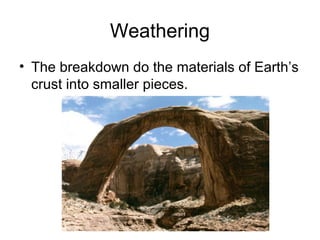
Weathering 
• The breakdown do the materials of Earth’s 
crust into smaller pieces.
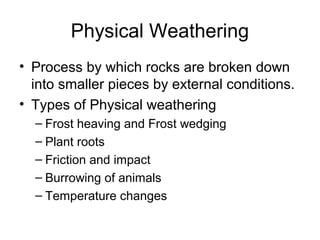
Physical Weathering 
• Process by which rocks are broken down 
into smaller pieces by external conditions. 
• Types of Physical weathering 
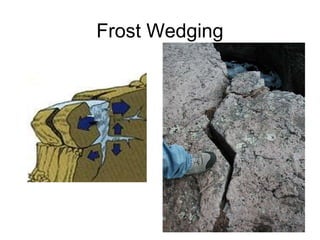
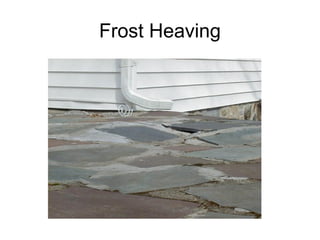
– Frost heaving and Frost wedging 
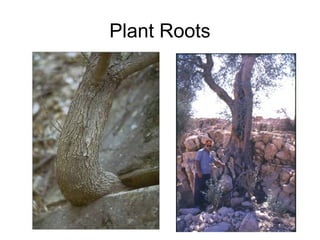
– Plant roots 
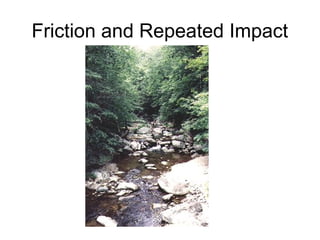
– Friction and impact 
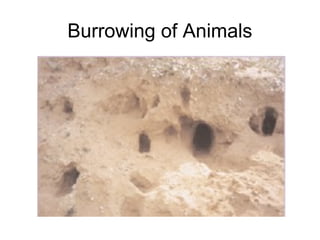
– Burrowing of animals 
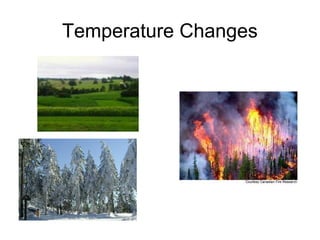
– Temperature changes
Frost Wedging
Frost Heaving
Plant Roots
Friction and Repeated Impact
Burrowing of Animals
Temperature Changes
Chemical Weathering 
• The process that breaks down rock 
through chemical changes. 
• The agents of chemical weathering 
– Water 
– Oxygen 
– Carbon dioxide 
– Living organisms 
– Acid rain
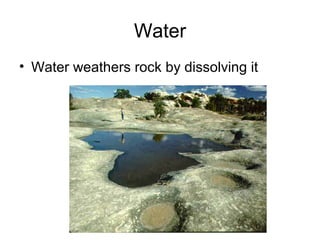
Water 
• Water weathers rock by dissolving it
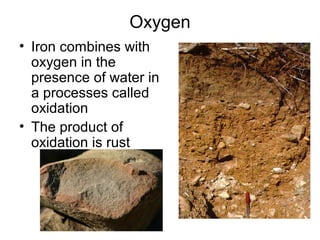
Oxygen 
• Iron combines with 
oxygen in the 
presence of water in 
a processes called 
oxidation 
• The product of 
oxidation is rust
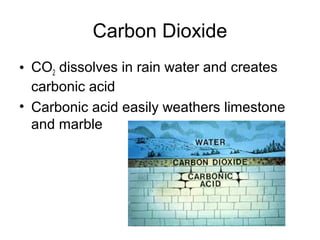
Carbon Dioxide 
• CO2 dissolves in rain water and creates 
carbonic acid 
• Carbonic acid easily weathers limestone 
and marble
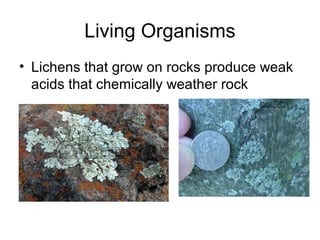
Living Organisms 
• Lichens that grow on rocks produce weak 
acids that chemically weather rock
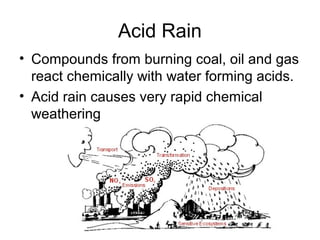
Acid Rain 
• Compounds from burning coal, oil and gas 
react chemically with water forming acids. 
• Acid rain causes very rapid chemical 
weathering
Karst Topography 
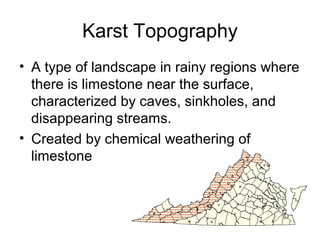
• A type of landscape in rainy regions where 
there is limestone near the surface, 
characterized by caves, sinkholes, and 
disappearing streams. 
• Created by chemical weathering of 
limestone
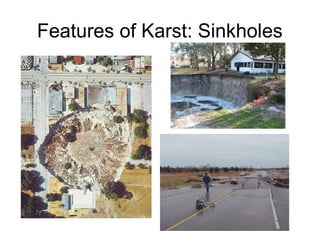
Features of Karst: Sinkholes
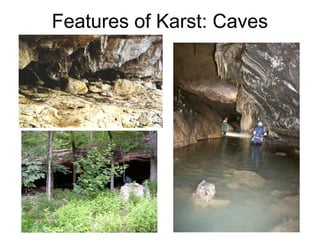
Features of Karst: Caves
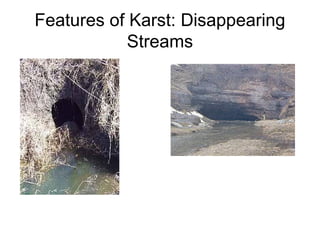
Features of Karst: Disappearing 
Streams
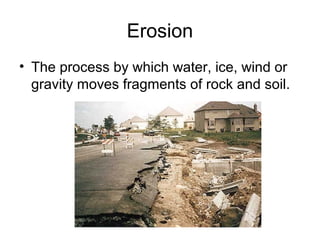
Erosion 
• The process by which water, ice, wind or 
gravity moves fragments of rock and soil.
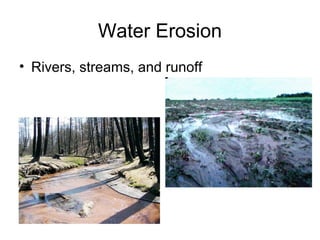
Water Erosion 
• Rivers, streams, and runoff
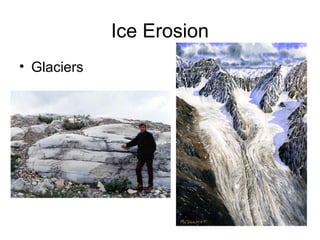
Ice Erosion 
• Glaciers
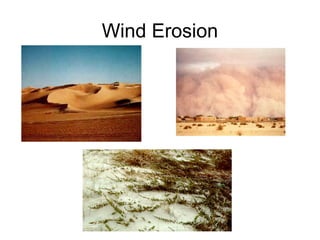
Wind Erosion
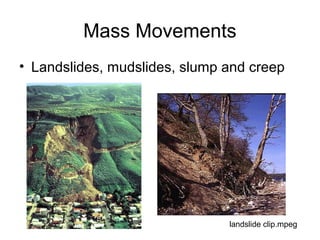
Mass Movements 
• Landslides, mudslides, slump and creep 
landslide clip.mpeg

erosion