
Walker Learning in K-2 
Play Matters 
Erin Healy 
Kindergarten Teacher 
St Joseph’s School Kununurra 
References from Play Matters by Kathy Walker 2011
What is Walker Learning 
 Play based, developmentally appropriate practice. 
 In K-2 it is based around investigative learning. 
 Australian. 
 Based on the children’s interests.
Key Elements of Walker Learning 
 Focus Child 
 Reporter and Photographer 
 Tuning in and reflection 
 Investigations 
 Communication board 
 Planning and documentation
Focus Child 
 Each child will be a focus child for a whole day once a 
fortnight. 
 Roster system lets all students and parents know when each 
child will have their turn. 
 Focus children; 
- stand or sit at the front of the class during tuning in and 
reflection 
- teacher discusses their interests with them in front of the 
class to scaffold and model learning intentions 
- spend special time with the teacher during investigations 
- report back to the class on their learning during reflection.
Reporter and Photographer 
 Teacher directed roles 
 Teacher gives photographer and reporter a task and 
requirements during tuning in each morning. 
 During reflection time children report back to the 
class about their task. 
 Reporters; look on, talk with, listen and respond to 
other children in the class. Specific task for each child. 
 Photographer; before & after photos, examples of 
particular skills, time sequence of investigations.
Tuning in 
 Tuning in is for the learning for the whole day. 
 4 key parts; 
- welcome and administration 
- reflection & revision of literacy & numeracy 
intentions 
- focus children, reporter & photographer scaffolding 
in front of group 
- intentional direction at dispersal
Reflection 
 Reflection time is the springboard into formal teaching. 
 Four key parts; 
- scaffolding focus children, reporter and photographer 
- teacher modelling particular skills and concepts from 
investigations 
- freebies  children who are chosen to demonstrate a 
particular skill 
- setting up and packing away ready for the rest of the 
learning.
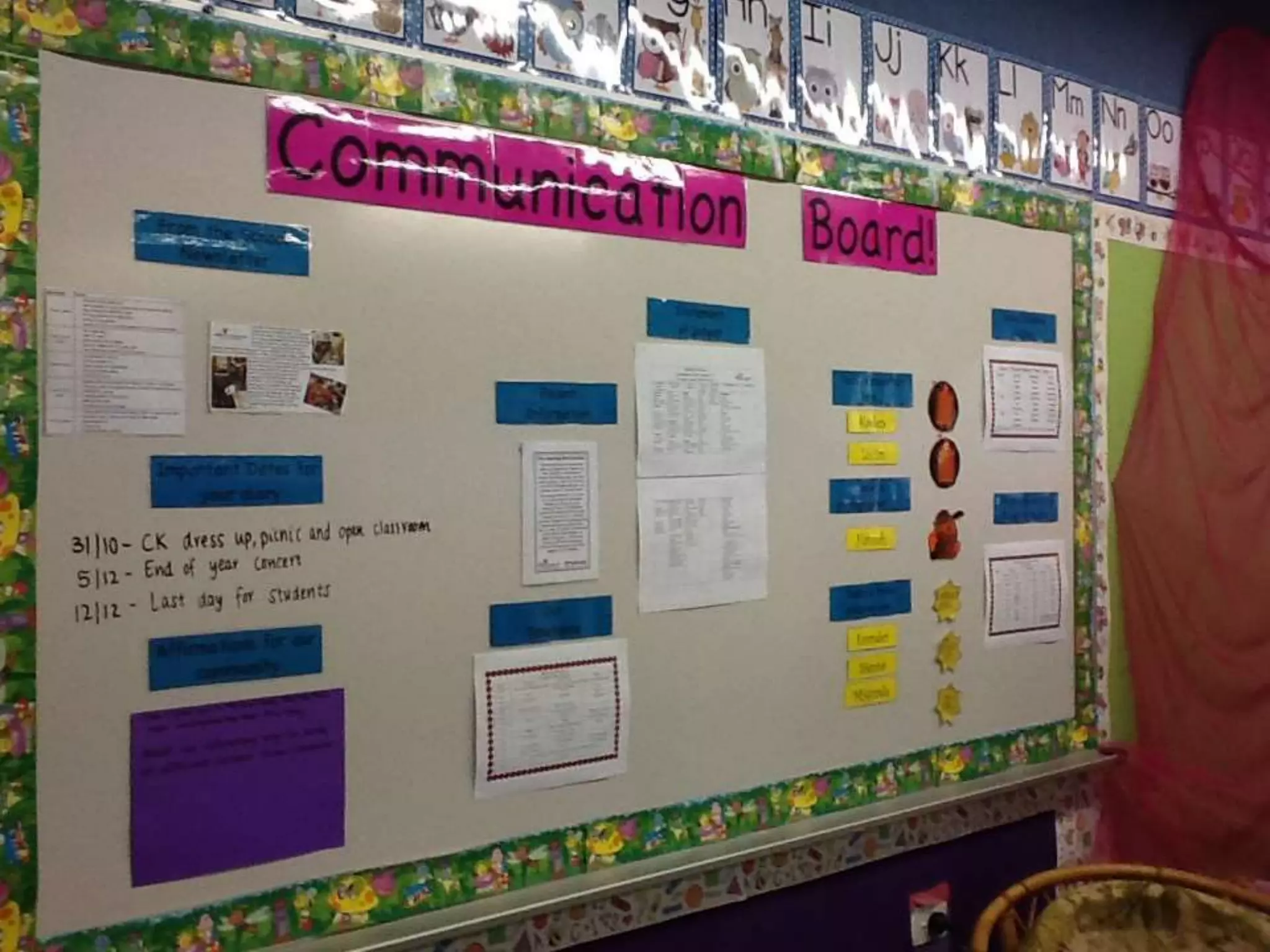
Communication Board 
 Central focus in the classroom meeting area. 
 Statement of Intent for the fortnight is displayed. 
 Timetables, focus children, reporter and 
photographer rosters. 
 Developing responsibility in the children – checking in 
daily. 
 Information for parents and carers
Planning and documentation 
 Planning is fortnightly. 
 Use statement of intent. 
 Daily record sheet 
 Individual record sheets
Investigations 
 At least four mornings a week 
 Day starts with active hands-on experience. 
 Each day there is still formal instruction in literacy and 
numeracy. 
 Experiences of the children and the explicit teaching 
that takes place during investigations are used as a 
springboard into the formal teaching of the day. 
 Focus children, photographer & reporter 
 Investigating requires at least 45 minutes.
Benefits 
 Calmer classroom. 
 Children are learning more authentically. 
 Higher levels of engagement as learning is based 
around the children’s interests. 
 Build better relationships with children. 
 Children are happy and excited about coming to 
school. 
 Teachers enjoy it too!
Erin Healy - Walker Learning Approach in Kindergarten

Erin Healy - Walker Learning Approach in Kindergarten

  • 1.
    Walker Learning inK-2 Play Matters Erin Healy Kindergarten Teacher St Joseph’s School Kununurra References from Play Matters by Kathy Walker 2011
  • 2.
    What is WalkerLearning  Play based, developmentally appropriate practice.  In K-2 it is based around investigative learning.  Australian.  Based on the children’s interests.
  • 3.
    Key Elements ofWalker Learning  Focus Child  Reporter and Photographer  Tuning in and reflection  Investigations  Communication board  Planning and documentation
  • 4.
    Focus Child Each child will be a focus child for a whole day once a fortnight.  Roster system lets all students and parents know when each child will have their turn.  Focus children; - stand or sit at the front of the class during tuning in and reflection - teacher discusses their interests with them in front of the class to scaffold and model learning intentions - spend special time with the teacher during investigations - report back to the class on their learning during reflection.
  • 5.
    Reporter and Photographer  Teacher directed roles  Teacher gives photographer and reporter a task and requirements during tuning in each morning.  During reflection time children report back to the class about their task.  Reporters; look on, talk with, listen and respond to other children in the class. Specific task for each child.  Photographer; before & after photos, examples of particular skills, time sequence of investigations.
  • 6.
    Tuning in Tuning in is for the learning for the whole day.  4 key parts; - welcome and administration - reflection & revision of literacy & numeracy intentions - focus children, reporter & photographer scaffolding in front of group - intentional direction at dispersal
  • 7.
    Reflection  Reflectiontime is the springboard into formal teaching.  Four key parts; - scaffolding focus children, reporter and photographer - teacher modelling particular skills and concepts from investigations - freebies  children who are chosen to demonstrate a particular skill - setting up and packing away ready for the rest of the learning.
  • 8.
    Communication Board Central focus in the classroom meeting area.  Statement of Intent for the fortnight is displayed.  Timetables, focus children, reporter and photographer rosters.  Developing responsibility in the children – checking in daily.  Information for parents and carers
  • 10.
    Planning and documentation  Planning is fortnightly.  Use statement of intent.  Daily record sheet  Individual record sheets
  • 11.
    Investigations  Atleast four mornings a week  Day starts with active hands-on experience.  Each day there is still formal instruction in literacy and numeracy.  Experiences of the children and the explicit teaching that takes place during investigations are used as a springboard into the formal teaching of the day.  Focus children, photographer & reporter  Investigating requires at least 45 minutes.
  • 12.
    Benefits  Calmerclassroom.  Children are learning more authentically.  Higher levels of engagement as learning is based around the children’s interests.  Build better relationships with children.  Children are happy and excited about coming to school.  Teachers enjoy it too!