GERD:
A practical approach
CLEVELAND CLINIC JOURNAL OF MEDICINE VOLUME 87 • NUMBER 4 APRIL 2020 223
Gastroesophageal reflux disease (GERD)
is common, accounting for more than 5.6
million physician visits each year.1
From 10%
to 20% of adults in Western countries and
nearly 5% of those in Asia experience GERD
symptoms at least weekly.2
The prevalence of
GERD symptoms is increasing by about 4% per
year, in parallel with increases in obesity rates
and reduction in prevalence of Helicobacter py-
lori over the past several decades.3
However, pa-
tients may not have symptoms of GERD even if
they have objective evidence of it such as ero-
sive esophagitis or Barrett esophagus.4
In 2015, the total direct economic impact
of GERD and its complications was estimat-
ed to be over $18 billion, with use of proton
pump inhibitors (PPIs) accounting for $12.4
billion, while the indirect costs driven by de-
creased work productivity were as much as $75
billion.1,5
■ TROUBLESOME SYMPTOMS,
COMPLICATIONS
An international consensus group has defined
GERD as a condition that develops when re-
flux of stomach contents causes troublesome
symptoms with or without complications.6
Typical symptoms that lead to the diagnosis
of GERD are regurgitation and heartburn. As
much as 16% of the US population complains
of regurgitation, and 6% report clinically
troublesome heartburn.7
However, while these
symptoms are specific for the disease, they are
insensitive markers of reflux.
GERD symptoms can worsen with lying re-
cumbent, especially after meals.
Of note, dysphagia can be a symptom of un-
complicated GERD, but its presence warrants
more intensive examination and potential in-
REVIEW
doi:10.3949/ccjm.87a.19114
ABSTRACT
Gastroesophageal reflux disease (GERD) is mainly a
clinical diagnosis based on typical symptoms of heart-
burn and acid regurgitation. Current guidelines indicate
that patients with typical symptoms should first try a
proton pump inhibitor (PPI). If reflux symptoms persist
after 8 weeks on a PPI, endoscopy of the esophagus is
recommended, with biopsies taken to rule out eosino-
philic esophagitis. This review discusses the evidence for
different medical, endoscopic, and surgical therapies and
presents a management algorithm.
KEY POINTS
The diagnosis of GERD is mainly symptom-based and
often does not require endoscopic confirmation.
Endoscopy is warranted in patients with red-flag symp-
toms such as dysphagia, anemia, weight loss, bleeding,
and recurrent vomiting.
PPIs are the first-line medical therapy. Histamine 2 recep-
tor antagonists are mainly used to treat breakthrough
nocturnal symptoms.
Endoscopic and surgical options exist but are pursued
only if medical therapy fails.
Andrew Young, DO
Department of Internal Medicine,
Cleveland Clinic
Mythri Anil Kumar, MD
Department of Gastroenterology and
Hepatology, Cleveland Clinic
Prashanthi N. Thota, MD, FACG
Medical Director, Esophageal Center, Digestive Disease
and Surgery Institute, Cleveland Clinic; ClinicalAssistant
Professor, Cleveland Clinic Lerner College of Medicine of
CaseWestern Reserve University, Cleveland, OH
CME MOC
on February 8, 2022. For personal use only. All other uses require permission.
www.ccjm.org
Downloaded from
224 CLEVELAND CLINIC JOURNAL OF MEDICINE VOLUME 87 • NUMBER 4 APRIL 2020
GERD
tervention, as it can be caused by strictures,
rings, malignancy, or esophageal dysmotility.
Chest pain is another symptom often asso-
ciated with GERD, but a cardiac cause should
be considered and ruled out before GERD is
considered.
Other symptoms of GERD include dyspep-
sia, nausea, bloating, sore throat, globus sensa-
tion, and epigastric pain.
A systematic review discovered that symp-
toms of GERD are less frequent in the elderly.8
However, on average, the severity of disease
in the elderly was found to be greater than
that in younger patients. Therefore, it was
concluded that while the prevalence of docu-
mented GERD in older patients is less than
that in younger patients, the actual rate of
GERD is likely similar.
A subset of patients has extraesophageal
symptoms of GERD such as asthma, laryngi-
tis, pharyngitis, chronic cough, sinusitis, idio-
pathic pulmonary fibrosis, dental erosions, and
recurrent otitis media.6
■ PATHOPHYSIOLOGY
Since GERD was first described in 1879 by
Heinrich Quincke, our understanding of its
pathophysiology has slowly expanded and
evolved.9
Factors now known to contribute to
GERD include:
• Transient lower esophageal sphincter
(LES) relaxation
• Sliding hiatal hernia
• Low LES pressure
• Acid pocket development due to poor
mixing of acid with chyme in the proximal
stomach
• Increased gastroesophageal junction dis-
tensibility
• Obesity
• Delayed gastric emptying.9
Most symptoms are caused by acid reflux,
but if symptoms persist on PPI therapy, they
are likely due to either weakly acidic or weakly
alkaline secretions.10,11
The distance up the esophagus that the re-
flux travels also plays a role in the symptoms
of GERD. Acid reflux episodes that extend
In patients
with chest pain,
rule out
heart disease
before
considering
a diagnosis
of GERD
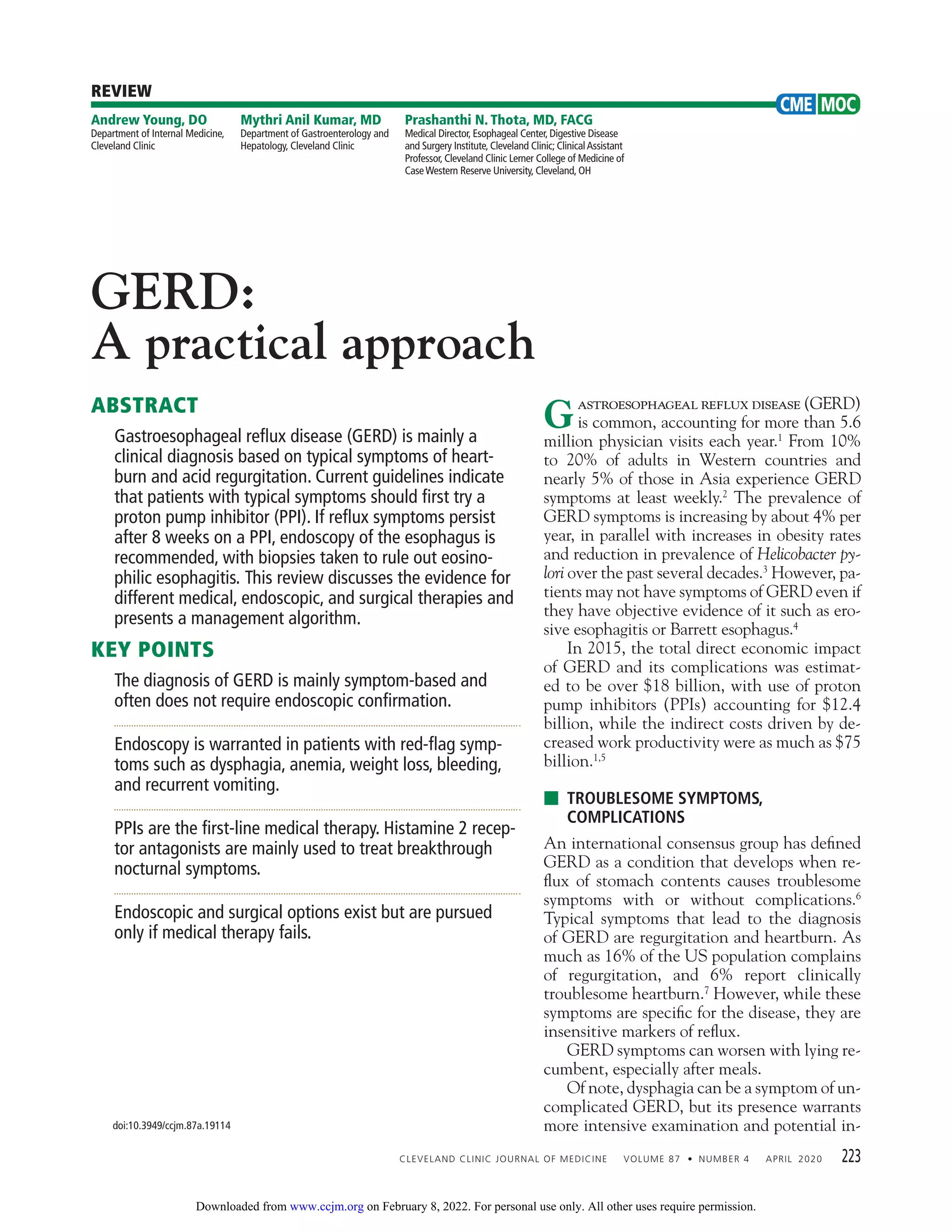
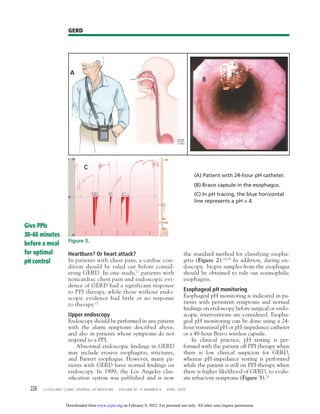
Figure 1. Approach to gastroesophageal reflux disease (PPI = proton pump inhibitor, EGD =
esophagogastroduodenoscopy).
Managing gastroesophageal reflux disease
Alarm symptoms:
Dysphagia, odynophagia,
bleeding, anemia, weight loss,
early satiety, vomiting Yes
No
Start PPI therapy
(8 weeks)
Response?
No
EGD
Abnormal Treat in response
to findings
Yes Normal
Taper to
lowest
possible dose
Any extra-
esophageal
symptoms?
No pH
monitoring
Yes Abnormal Normal
Consider referral
to ear, nose, and throat,
pulmonary, allergy services
Optimize medical therapy
Consider surgical and
endoscopic therapies
Consider
functional
heartburn or
reflux hyper-
sensitivity
on February 8, 2022. For personal use only. All other uses require permission.
www.ccjm.org
Downloaded from
CLEVELAND CLINIC JOURNAL OF MEDICINE VOLUME 87 • NUMBER 4 APRIL 2020 225
YOUNG AND COLLEAGUES
higher into the esophagus are associated with
worse symptoms, regardless of the acidity of
the bolus.12,13
Trimble et al13
found that patients with
GERD have enhanced esophageal sensation
and likely have heightened perceptions of
normal nonacidic reflux events due to lower
sensory thresholds. Another hypothesis is that
sustained esophageal longitudinal muscle con-
tractions may lead to transient ischemia of the
esophageal wall, resulting in GERD symptoms
in some patients.14
■ DIAGNOSIS AND MANAGEMENT
GERD is mainly a clinical diagnosis based on
typical symptoms. Its diagnosis and manage-
ment are summarized in Figure 1.
If no alarm symptoms, first try a PPI
Current guidelines indicate that patients
with typical symptoms should first be given
a trial of PPI treatment.15
However, patients
with alarm symptoms including dysphagia,
anemia, weight loss, bleeding, and recurrent
vomiting should proceed directly to upper
endoscopy.
There are limitations to this approach: a
meta-analysis showed that a short course of
PPI therapy has a 78% sensitivity and 54%
specificity in accurately diagnosing GERD.16
In general, if typical symptoms resolve with
an initial trial of a PPI, GERD should be
diagnosed and the patient should continue
taking a PPI daily.
Alarm
symptoms
include
dysphagia,
anemia,
weight loss,
bleeding,
and recurrent
vomiting
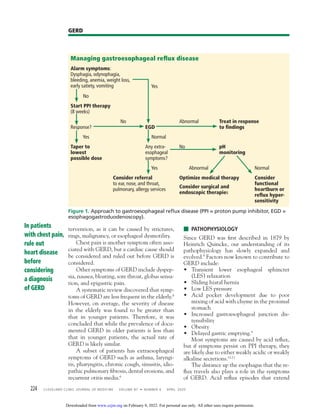
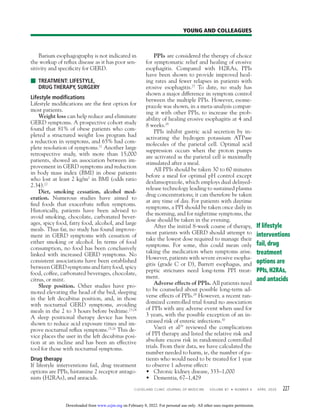
Figure 2. Endoscopic views of esophagitis grades. (A) Grade A—1 or more mucosal breaks
(arrow) no longer than 5 mm that do not extend between the tops of two mucosal folds.
(B) Grade B—1 or more mucosal breaks (arrow) longer than 5 mm that do not extend be-
tween the tops of two mucosal folds. (C) Grade C—1 or more mucosal breaks (arrows) that
are continuous between the tops of 2 or more mucosal folds, but involve less than 75% of
the circumference. (D) Grade D—1 or more mucosal breaks (arrows) that involve at least
75% of the esophageal circumference.
on February 8, 2022. For personal use only. All other uses require permission.
www.ccjm.org
Downloaded from
226 CLEVELAND CLINIC JOURNAL OF MEDICINE VOLUME 87 • NUMBER 4 APRIL 2020
GERD
Heartburn? Or heart attack?
In patients with chest pain, a cardiac con-
dition should be ruled out before consid-
ering GERD. In one study,17
patients with
noncardiac chest pain and endoscopic evi-
dence of GERD had a significant response
to PPI therapy, while those without endo-
scopic evidence had little or no response
to therapy.17
Upper endoscopy
Endoscopy should be performed in any patient
with the alarm symptoms described above,
and also in patients whose symptoms do not
respond to a PPI.
Abnormal endoscopic findings in GERD
may include erosive esophagitis, strictures,
and Barrett esophagus. However, many pa-
tients with GERD have normal findings on
endoscopy. In 1999, the Los Angeles clas-
sification system was published and is now
the standard method for classifying esopha-
gitis (Figure 2).18,19
In addition, during en-
doscopy, biopsy samples from the esophagus
should be obtained to rule out eosinophilic
esophagitis.
Esophageal pH monitoring
Esophageal pH monitoring is indicated in pa-
tients with persistent symptoms and normal
findings on endoscopy before surgical or endo-
scopic interventions are considered. Esopha-
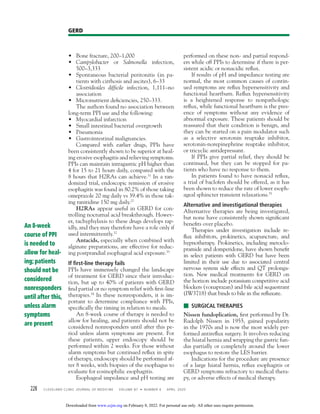
geal pH monitoring can be done using a 24-
hour transnasal pH or pH-impedance catheter
or a 48-hour Bravo wireless capsule.
In clinical practice, pH testing is per-
formed with the patient off PPI therapy when
there is low clinical suspicion for GERD,
whereas pH-impedance testing is performed
while the patient is still on PPI therapy when
there is higher likelihood of GERD, to evalu-
ate refractory symptoms (Figure 3).20
Give PPIs
30–60 minutes
before a meal
for optimal
pH control
(A) Patient with 24-hour pH catheter.
(B) Bravo capsule in the esophagus.
(C) In pH tracing, the blue horizontal
line represents a pH < 4.
A
Figure 3.
on February 8, 2022. For personal use only. All other uses require permission.
www.ccjm.org
Downloaded from
CLEVELAND CLINIC JOURNAL OF MEDICINE VOLUME 87 • NUMBER 4 APRIL 2020 227
YOUNG AND COLLEAGUES
Barium esophagography is not indicated in
the workup of reflux disease as it has poor sen-
sitivity and specificity for GERD.
■ TREATMENT: LIFESTYLE,
DRUG THERAPY, SURGERY
Lifestyle modifications
Lifestyle modifications are the first option for
most patients.
Weight loss can help reduce and eliminate
GERD symptoms. A prospective cohort study
found that 81% of obese patients who com-
pleted a structured weight loss program had
a reduction in symptoms, and 65% had com-
plete resolution of symptoms.21
Another large
retrospective study, with more than 15,000
patients, showed an association between im-
provement in GERD symptoms and reduction
in body mass index (BMI) in obese patients
who lost at least 2 kg/m2
in BMI (odds ratio
2.34).22
Diet, smoking cessation, alcohol mod-
eration. Numerous studies have aimed to
find foods that exacerbate reflux symptoms.
Historically, patients have been advised to
avoid smoking, chocolate, carbonated bever-
ages, spicy food, fatty food, alcohol, and large
meals. Thus far, no study has found improve-
ment in GERD symptoms with cessation of
either smoking or alcohol. In terms of food
consumption, no food has been conclusively
linked with increased GERD symptoms. No
consistent associations have been established
between GERD symptoms and fatty food, spicy
food, coffee, carbonated beverages, chocolate,
citrus, or mint.
Sleep position. Other studies have pro-
moted elevating the head of the bed, sleeping
in the left decubitus position, and, in those
with nocturnal GERD symptoms, avoiding
meals in the 2 to 3 hours before bedtime.23,24
A sleep positional therapy device has been
shown to reduce acid exposure times and im-
prove nocturnal reflux symptoms.25,26
This de-
vice places the user in the left decubitus posi-
tion at an incline and has been an effective
tool for those with nocturnal symptoms.
Drug therapy
If lifestyle interventions fail, drug treatment
options are PPIs, histamine 2 receptor antago-
nists (H2RAs), and antacids.
PPIs are considered the therapy of choice
for symptomatic relief and healing of erosive
esophagitis. Compared with H2RAs, PPIs
have been shown to provide improved heal-
ing rates and fewer relapses in patients with
erosive esophagitis.27
To date, no study has
shown a major difference in symptom control
between the multiple PPIs. However, esome-
prazole was shown, in a meta-analysis compar-
ing it with other PPIs, to increase the prob-
ability of healing erosive esophagitis at 4 and
8 weeks.28
PPIs inhibit gastric acid secretion by in-
activating the hydrogen potassium ATPase
molecules of the parietal cell. Optimal acid
suppression occurs when the proton pumps
are activated as the parietal cell is maximally
stimulated after a meal.
All PPIs should be taken 30 to 60 minutes
before a meal for optimal pH control except
dexlansoprazole, which employs dual delayed-
release technology leading to sustained plasma
drug concentrations; it can therefore be taken
at any time of day. For patients with daytime
symptoms, a PPI should be taken once daily in
the morning, and for nighttime symptoms, the
dose should be taken in the evening.
After the initial 8-week course of therapy,
most patients with GERD should attempt to
take the lowest dose required to manage their
symptoms. For some, this could mean only
taking the medication when symptoms arise.
However, patients with severe erosive esopha-
gitis (grade C or D), Barrett esophagus, and
peptic strictures need long-term PPI treat-
ment.
Adverse effects of PPIs. All patients need
to be counseled about possible long-term ad-
verse effects of PPIs.29
However, a recent ran-
domized controlled trial found no association
of PPIs with any adverse event when used for
3 years, with the possible exception of an in-
creased risk of enteric infections.30
Vaezi et al29
reviewed the complications
of PPI therapy and listed the relative risk and
absolute excess risk in randomized controlled
trials. From their data, we have calculated the
number needed to harm, ie, the number of pa-
tients who would need to be treated for 1 year
to observe 1 adverse effect:
• Chronic kidney disease, 333–1,000
• Dementia, 67–1,429
If lifestyle
interventions
fail, drug
treatment
options are
PPIs, H2RAs,
and antacids
on February 8, 2022. For personal use only. All other uses require permission.
www.ccjm.org
Downloaded from
228 CLEVELAND CLINIC JOURNAL OF MEDICINE VOLUME 87 • NUMBER 4 APRIL 2020
GERD
An 8-week
course of PPI
is needed to
allow for heal-
ing; patients
should not be
considered
nonresponders
until after this,
unless alarm
symptoms
are present
• Bone fracture, 200–1,000
• Campylobacter or Salmonella infection,
500–3,333
• Spontaneous bacterial peritonitis (in pa-
tients with cirrhosis and ascites), 6–33
• Clostridioides difficile infection, 1,111–no
association
• Micronutrient deficiencies, 250–333.
The authors found no association between
long-term PPI use and the following:
• Myocardial infarction
• Small intestinal bacterial overgrowth
• Pneumonia
• Gastrointestinal malignancies.
Compared with earlier drugs, PPIs have
been consistently shown to be superior at heal-
ing erosive esophagitis and relieving symptoms.
PPIs can maintain intragastric pH higher than
4 for 15 to 21 hours daily, compared with the
8 hours that H2RAs can achieve.31
In a ran-
domized trial, endoscopic remission of erosive
esophagitis was found in 80.2% of those taking
omeprazole 20 mg daily vs 39.4% in those tak-
ing ranitidine 150 mg daily.27
H2RAs appear useful in GERD for con-
trolling nocturnal acid breakthrough. Howev-
er, tachyphylaxis to these drugs develops rap-
idly, and they may therefore have a role only if
used intermittently.32
Antacids, especially when combined with
alginate preparations, are effective for reduc-
ing postprandial esophageal acid exposure.33
If first-line therapy fails
PPIs have immensely changed the landscape
of treatment for GERD since their introduc-
tion, but up to 40% of patients with GERD
find partial or no symptom relief with first-line
therapies.34
In these nonresponders, it is im-
portant to determine compliance with PPIs,
specifically the timing in relation to meals.
An 8-week course of therapy is needed to
allow for healing, and patients should not be
considered nonresponders until after this pe-
riod unless alarm symptoms are present. For
these patients, upper endoscopy should be
performed within 2 weeks. For those without
alarm symptoms but continued reflux in spite
of therapy, endoscopy should be performed af-
ter 8 weeks, with biopsies of the esophagus to
evaluate for eosinophilic esophagitis.
Esophageal impedance and pH testing are
performed on these non- and partial respond-
ers while off PPIs to determine if there is per-
sistent acidic or nonacidic reflux.
If results of pH and impedance testing are
normal, the most common causes of contin-
ued symptoms are reflux hypersensitivity and
functional heartburn. Reflux hypersensitivity
is a heightened response to nonpathologic
reflux, while functional heartburn is the pres-
ence of symptoms without any evidence of
abnormal exposure. These patients should be
reassured that their condition is benign, and
they can be started on a pain modulator such
as a selective serotonin reuptake inhibitor,
serotonin-norepinephrine reuptake inhibitor,
or tricyclic antidepressant.
If PPIs give partial relief, they should be
continued, but they can be stopped for pa-
tients who have no response to them.
In patients found to have nonacid reflux,
a trial of baclofen should be offered, as it has
been shown to reduce the rate of lower esoph-
ageal sphincter transient relaxations.35
Alternative and investigational therapies
Alternative therapies are being investigated,
but none have consistently shown significant
benefits over placebo.
Therapies under investigation include re-
flux inhibitors, prokinetics, acupuncture, and
hypnotherapy. Prokinetics, including metoclo-
pramide and domperidone, have shown benefit
in select patients with GERD but have been
limited in their use due to associated central
nervous system side effects and QT prolonga-
tion. New medical treatments for GERD on
the horizon include potassium competitive acid
blockers (vonaprazan) and bile acid sequestrant
(IW3718) that binds to bile in the refluxate.
■ SURGICAL THERAPIES
Nissen fundoplication, first performed by Dr.
Rudolph Nissen in 1955, gained popularity
in the 1970s and is now the most widely per-
formed antireflux surgery. It involves reducing
the hiatal hernia and wrapping the gastric fun-
dus partially or completely around the lower
esophagus to restore the LES barrier.
Indications for the procedure are presence
of a large hiatal hernia, reflux esophagitis or
GERD symptoms refractory to medical thera-
py, or adverse effects of medical therapy.
on February 8, 2022. For personal use only. All other uses require permission.
www.ccjm.org
Downloaded from
CLEVELAND CLINIC JOURNAL OF MEDICINE VOLUME 87 • NUMBER 4 APRIL 2020 229
YOUNG AND COLLEAGUES
A trial comparing laparoscopic fundopli-
cation with esomeprazole therapy found simi-
lar remission rates after 3 years and a higher
rate with esomeprazole after 5 years.36
While
esomeprazole was associated with more symp-
toms of reflux compared with fundoplication,
patients who underwent this surgery report-
ed higher rates of dysphagia, flatulence, and
bloating.
Antireflux surgery should be recommended
with caution, as it can have severe side effects
such as dysphagia, gas bloat syndrome, and
flatulence and the intended effect may only be
temporary, as up to 60% of patients will re-
quire antireflux medications regularly in the
decade afterward.37
Esophageal manometry
should be obtained before surgery to screen for
esophageal aperistalsis, as this is an absolute
contraindication to the procedure. Further-
more, manometry will exclude other motility
disorders that can present similarly to GERD
as discussed. Of note, antireflux surgery is not
recommended in PPI nonresponders.15
The Linx procedure (magnetic sphincter
augmentation; Torax Medical Inc., Shore-
view, MN) is a minimally invasive alternative.
It involves laparoscopic insertion of a band of
magnetic beads around the LES, which allows
passage of food and then closes to prevent
acid reflux. The procedure is associated with
improvement in symptom scores and reduced
need for PPI therapy but not with consistent
reduction in esophageal acid exposure.38
Roux-en-Y gastric bypass is a surgical op-
tion for morbidly obese patients. A prospective
study with 53 patients showed an improve-
ment in GERD symptoms, reflux esophagitis,
and esophageal acid exposure for more than 3
years following bypass.39
■ ENDOSCOPIC THERAPIES
Alternatively, several endoscopic treatments
for GERD have been developed over the last
2 decades.40
These include:
• Transoral incisionless fundoplication (TIF)
using the Esophyx device (EndoGastric
Solutions, Redmond, WA)
• Radiofrequency energy delivery to the LES
(the Stretta procedure; Respiratory Tech-
nology Corporation, Houston, TX)
• Endoscopic anterior fundoplication using
the Medigus ultrasonic surgical endosta-
pler (Medigus, Omer, Israel).
Of these, the first 2 have the most evidence.
TIF involves creation of a partial gastric
wrap around the lower esophagus with an Eso-
phyx device mounted on the endoscope. TIF
is associated with symptom control and PPI
reduction or cessation for at least 6 years and
is a viable option for a select group of GERD
patients with small hiatal hernias and pre-
served esophageal function.
A large randomized trial comparing TIF
with PPIs showed symptomatic control in
67% vs 45% patients. TIF was associated with
a reduction in esophageal acid exposure time
from 9.3% to 6.4% and DeMeester score re-
duction from 33.6 to 23.9.41
In 2018, a meta-analysis was performed
to compare TIF with Nissen fundoplication,
a sham procedure, and PPIs.42
TIF was asso-
ciated with a larger increase in quality of life
measures, while Nissen fundoplication had a
greater ability to improve physiologic param-
eters associated with GERD including LES
pressure and the percentage of time the pH
was less than 4.
The Stretta device was developed in
2000 and works by delivering thermal energy
to the LES, which is postulated to increase
sphincter thickness through scar tissue depo-
sition, thereby reducing reflux. However in a
meta-analysis of randomized controlled trials,
Stretta treatment did not reduce percentage of
time when pH is less than 4 or increase LES
pressure or ability to stop PPIs.43
■
Antireflux
surgery
should be
recommended
with caution,
as it can have
severe
side effects
■ REFERENCES
1. Peery AF, Crockett SD, Murphy CC, et al. Burden and cost of gastrointesti-
nal, liver, and pancreatic diseases in the United States: update 2018. Gastro-
enterology 2019; 156(1):254–272.e11. doi:10.1053/j.gastro.2018.08.063
2. Dent J, El-Serag HB, Wallander MA, Johansson S. Epidemiology of gastro-
oesophageal reflux disease: a systematic review. Gut 2005; 54(5):710–717.
doi:10.1136/gut.2004.051821
3. El–Serag HB. Time trends of gastroesophageal reflux disease: a systematic
review. Clin Gastroenterol Hepatol 2007; 5(1):17–26.
doi:10.1016/j.cgh.2006.09.016
4. Zagari RM, Fuccio L, Wallander MA, et al. Gastro-oesophageal reflux symp-
toms, oesophagitis and Barrett’s oesophagus in the general population: the
Loiano-Monghidoro study. Gut 2008; 57(10):1354–1359.
doi:10.1136/gut.2007.145177
5. Wahlqvist P
, Reilly MC, Barkun A. Systematic review: the impact of gastro-
oesophageal reflux disease on work productivity. Aliment Pharmacol Ther
2006; 24(2):259–272. doi:10.1111/j.1365-2036.2006.02996.x
6. Vakil N, van Zanten SV, Kahrilas P
, Dent J, Jones R; Global Consensus Group.
The Montreal definition and classification of gastroesophageal reflux
disease: a global evidence-based consensus. Am J Gastroenterol 2006;
on February 8, 2022. For personal use only. All other uses require permission.
www.ccjm.org
Downloaded from
230 CLEVELAND CLINIC JOURNAL OF MEDICINE VOLUME 87 • NUMBER 4 APRIL 2020
GERD
101(8):1900–1920. doi:10.1111/j.1572-0241.2006.00630.x
7. Flegal KM, Carroll MD, Kit BK, Ogden CL. Prevalence of obesity and trends
in the distribution of body mass index among US adults, 1999–2010. JAMA
2012; 307(5):491–497. doi:10.1001/jama.2012.39
8. Becher A, Dent J. Systematic review: ageing and gastro-oesophageal reflux
disease symptoms, oesophageal function and reflux oesophagitis. Aliment
Pharmacol Ther 2011; 33(4):442–454. doi:10.1111/j.1365-2036.2010.04542.x
9. Herregods TV, Bredenoord AJ, Smout AJ. Pathophysiology of gastroesopha-
geal reflux disease: new understanding in a new era. Neurogastroenterol
Motil 2015; 27(9):1202–1213. doi:10.1111/nmo.12611
10. Smith JL, Opekun AR, Larkai E, Graham DY. Sensitivity of the esophageal
mucosa to pH in gastroesophageal reflux disease. Gastroenterology 1989;
96(3):683–689. pmid:2914634
11. Sung HJ, Cho YK, Moon SJ, et al. Role of acid and weakly acidic reflux in
gastroesophageal reflux disease off proton pump inhibitor therapy. J Neu-
rogastroenterol Motil 2012; 18(3):291–297. doi:10.5056/jnm.2012.18.3.291
12. Weusten BL, Akkermans LM, vanBerge-Henegouwen GP
, Smout AJ. Symp-
tom perception in gastroesophageal reflux disease is dependent on spatio-
temporal reflux characteristics. Gastroenterology 1995; 108(6):1739–1744.
doi:10.1016/0016-5085(95)90135-3
13. Trimble KC, Pryde A, Heading RC. Lowered oesophageal sensory thresholds
in patients with symptomatic but not excess gastro-oesophageal reflux: evi-
dence for a spectrum of visceral sensitivity in GORD. Gut 1995; 37(1):7–12.
doi:10.1136/gut.37.1.7
14. Balaban DH, Yamamoto Y, Liu J, et al. Sustained esophageal contraction: a
marker of esophageal chest pain identified by intraluminal ultrasonogra-
phy. Gastroenterology 1999; 116(1):29–37.
doi:10.1016/s0016-5085(99)70225-8
15. Katz PO, Gerson LB, Vela MF. Guidelines for the diagnosis and manage-
ment of gastroesophageal reflux disease. Am J Gastroenterol 2013;
108(3):308–328. doi:10.1038/ajg.2012.444
16. Numans ME, Lau J, de Wit NJ, Bonis PA. Short-term treatment with proton-
pump inhibitors as a test for gastroesophageal reflux disease: a meta-anal-
ysis of diagnostic test characteristics. Ann Intern Med 2004; 140(7):518–527.
doi:10.7326/0003-4819-140-7-200404060-00011
17. Kahrilas PJ, Hughes N, Howden CW. Response of unexplained chest pain
to proton pump inhibitor treatment in patients with and without objective
evidence of gastro-oesophageal reflux disease. Gut 2011; 60(11):1473–1478.
doi:10.1136/gut.2011.241307
18. Sami SS, Ragunath K. The Los Angeles classification of gastroesophageal
reflux disease. Video Journal and Encyclopedia of GI Endoscopy 2013;
1(1):103–104. doi:10.1016/S2212-0971(13)70046-3
19. Lundell LR, Dent J, Bennett JR, et al. Endoscopic assessment of oesophagitis:
clinical and functional correlates and further validation of the Los Angeles
classification. Gut 1999; 45(2):172–180. doi:10.1136/gut.45.2.172
20. Gyawali CP
, Kahrilas PJ, Savarino E, et al. Modern diagnosis of GERD: the
Lyon consensus. Gut 2018; 67(7):1351–1362.
doi:10.1136/gutjnl-2017-314722
21. Singh M, Lee J, Gupta N, et al. Weight loss can lead to resolution of
gastroesophageal reflux disease symptoms: a prospective intervention trial.
Obesity (Silver Spring) 2013; 21(2):284–290. doi:10.1002/oby.20279
22. Park SK, Lee T, Yang HJ, et al. Weight loss and waist reduction is associated
with improvement in gastroesophageal disease reflux symptoms: a longitu-
dinal study of 15,295 subjects undergoing health checkups. Neurogastroen-
terol Motil 2017; 29(5). doi:10.1111/nmo.13009
23. Khan BA, Sodhi JS, Zargar SA, et al. Effect of bed head elevation during
sleep in symptomatic patients of nocturnal gastroesophageal reflux. J
Gastroenterol Hepatol 2012; 27(6):1078–1082.
doi:10.1111/j.1440-1746.2011.06968.x
24. Duroux P
, Bauerfeind P
, Emde C, Koelz HR, Blum AL. Early dinner reduces
nocturnal gastric acidity. Gut 1989; 30(8):1063–1067.
doi:10.1136/gut.30.8.1063
25. Person E, Rife C, Freeman J, Clark A, Castell DO. A novel sleep positioning
device reduces gastroesophageal reflux: a randomized controlled trial. J
Clin Gastroenterol 2015; 49(8):655–659.
doi:10.1097/MCG.0000000000000359
26. Allampati S, Lopez R, Thota PN, Ray M, Birgisson S, Gabbard SL. Use of a
positional therapy device significantly improves nocturnal gastroesophage-
al reflux symptoms. Dis Esophagus 2017; 30(3):1–7. doi:10.1111/dote.12495
27. Carlsson R, Galmiche JP
, Dent J, Lundell L, Frison L. Prognostic factors
influencing relapse of oesophagitis during maintenance therapy with an-
tisecretory drugs: a meta-analysis of long-term omeprazole trials. Aliment
Pharmacol Ther 1997; 11(3):473–482. doi:10.1046/j.1365-2036.1997.00167.x
28. Gralnek IM, Dulai GS, Fennerty MB, Spiegel BM. Esomeprazole versus other
proton pump inhibitors in erosive esophagitis: a meta-analysis of random-
ized clinical trials. Clin Gastroenterol Hepatol 2006; 4(12):1452–1458.
doi:10.1016/j.cgh.2006.09.013
29. Vaezi MF, Yang YX, Howden CW. Complications of proton pump inhibitor
therapy. Gastroenterology 2017; 153(1):35–48. doi:10.1053/j.gastro.2017.04.047
30. Moayyedi P
, Eikelboom JW, Bosch J, et al; COMPASS Investigators. Safety
of proton pump inhibitors based on a large, multi-year, randomized
trial of patients receiving rivaroxaban or aspirin. Gastroenterology 2019;
157(3):682–691.e2. doi:10.1053/j.gastro.2019.05.056
31. Wolfe MM, Sachs G. Acid suppression: optimizing therapy for gastroduo-
denal ulcer healing, gastroesophageal reflux disease, and stress-related
erosive syndrome. Gastroenterology 2000; 118(2 suppl 1):S9–S31.
doi:10.1016/s0016-5085(00)70004-7
32. Komazawa Y, Adachi K, Mihara T, et al. Tolerance to famotidine and raniti-
dine treatment after 14 days of administration in healthy subjects without
Helicobacter pylori infection. J Gastroenterol Hepatol 2003; 18(6):678–682.
doi:10.1046/j.1440-1746.2003.03041.x
33. De Ruigh A, Roman S, Chen J, Pandolfino JE, Kahrilas PJ. Gaviscon
double action liquid (antacid & alginate) is more effective than antacid in
controlling post-prandial oesophageal acid exposure in GERD patients: a
double-blind crossover study. Aliment Pharmacol Ther 2014; 40(5):531–537.
doi:10.1111/apt.12857
34. Johnson T, Gerson L, Hershcovici T, Stave C, Fass R. Systematic review: the ef-
fects of carbonated beverages on gastro-oesophageal reflux disease. Aliment
Pharmacol Ther 2010; 31(6):607–614. doi:10.1111/j.1365-2036.2010.04232.x
35. Grossi L, Spezzaferro M, Sacco LF, Marzio L. Effect of baclofen on oesopha-
geal motility and transient lower oesophageal sphincter relaxations in
GORD patients: a 48-h manometric study. Neurogastroenterol Motil 2008;
20(7):760–766. doi:10.1111/j.1365-2982.2008.01115.x
36. Galmiche JP
, Hatlebakk J, Attwood S, et al; LOTUS Trial Collaborators.
Laparoscopic antireflux surgery vs esomeprazole treatment for chronic
GERD: the LOTUS randomized clinical trial. JAMA 2011; 305(19):1969–1977.
doi:10.1001/jama.2011.626
37. Spechler SJ, Lee E, Ahnen D, et al. Long-term outcome of medical and
surgical therapies for gastroesophageal reflux disease: follow-up of a
randomized controlled trial. JAMA 2001; 285(18):2331–2338.
doi:10.1001/jama.285.18.2331
38. Bell R, Lipham J, Louie B, et al. Laparoscopic magnetic sphincter augmen-
tation versus double-dose proton pump inhibitors for management of
moderate-to-severe regurgitation in GERD: a randomized controlled trial.
Gastrointest Endosc 2019; 89(1):14–22.e1. doi:10.1016/j.gie.2018.07.007
39. Madalosso CA, Gurski RR, Callegari-Jacques SM, Navarini D, Mazzini G,
Pereira Mda S. The impact of gastric bypass on gastroesophageal reflux
disease in morbidly obese patients. Ann Surg 2016; 263(1):110–116.
doi:10.1097/SLA.0000000000001139
40. Rouphael C, Padival R, Sanaka MR, Thota PN. Endoscopic treatments of
GERD. Curr Treat Options Gastroenterol 2018; 16(1):58–71.
doi:10.1007/s11938-018-0170-6
41. Hunter JG, Kahrilas PJ, Bell RC, et al. Efficacy of transoral fundoplication
vs omeprazole for treatment of regurgitation in a randomized controlled
trial. Gastroenterology 2015; 148(2):324–333.e5.
doi:10.1053/j.gastro.2014.10.009
42. Richter JE, Kumar A, Lipka S, Miladinovic B, Velanovich V. Efficacy of
laparoscopic Nissen fundoplication vs transoral incisionless fundoplication
or proton pump inhibitors in patients with gastroesophageal reflux disease:
a systematic review and network meta-analysis. Gastroenterology 2018;
154(5):1298–1308.e7. doi:10.1053/j.gastro.2017.12.021
43. Lipka S, Kumar A, Richter JE. No evidence for efficacy of radiofrequency
ablation for treatment of gastroesophageal reflux disease: a systematic re-
view and meta-analysis. Clin Gastroenterol Hepatol 2015;1 3(6):1058–1067.
e1. doi:10.1016/j.cgh.2014.10.013
Address: Prashanthi N. Thota, MD, FACG, Esophageal Center, Digestive
Disease and Surgery Institute, A31, Cleveland Clinic, 9500 Euclid Avenue,
Cleveland, OH 44195; thotap@ccf.org
on February 8, 2022. For personal use only. All other uses require permission.
www.ccjm.org
Downloaded from

Erge 2020

  • 1.
    GERD: A practical approach CLEVELANDCLINIC JOURNAL OF MEDICINE VOLUME 87 • NUMBER 4 APRIL 2020 223 Gastroesophageal reflux disease (GERD) is common, accounting for more than 5.6 million physician visits each year.1 From 10% to 20% of adults in Western countries and nearly 5% of those in Asia experience GERD symptoms at least weekly.2 The prevalence of GERD symptoms is increasing by about 4% per year, in parallel with increases in obesity rates and reduction in prevalence of Helicobacter py- lori over the past several decades.3 However, pa- tients may not have symptoms of GERD even if they have objective evidence of it such as ero- sive esophagitis or Barrett esophagus.4 In 2015, the total direct economic impact of GERD and its complications was estimat- ed to be over $18 billion, with use of proton pump inhibitors (PPIs) accounting for $12.4 billion, while the indirect costs driven by de- creased work productivity were as much as $75 billion.1,5 ■ TROUBLESOME SYMPTOMS, COMPLICATIONS An international consensus group has defined GERD as a condition that develops when re- flux of stomach contents causes troublesome symptoms with or without complications.6 Typical symptoms that lead to the diagnosis of GERD are regurgitation and heartburn. As much as 16% of the US population complains of regurgitation, and 6% report clinically troublesome heartburn.7 However, while these symptoms are specific for the disease, they are insensitive markers of reflux. GERD symptoms can worsen with lying re- cumbent, especially after meals. Of note, dysphagia can be a symptom of un- complicated GERD, but its presence warrants more intensive examination and potential in- REVIEW doi:10.3949/ccjm.87a.19114 ABSTRACT Gastroesophageal reflux disease (GERD) is mainly a clinical diagnosis based on typical symptoms of heart- burn and acid regurgitation. Current guidelines indicate that patients with typical symptoms should first try a proton pump inhibitor (PPI). If reflux symptoms persist after 8 weeks on a PPI, endoscopy of the esophagus is recommended, with biopsies taken to rule out eosino- philic esophagitis. This review discusses the evidence for different medical, endoscopic, and surgical therapies and presents a management algorithm. KEY POINTS The diagnosis of GERD is mainly symptom-based and often does not require endoscopic confirmation. Endoscopy is warranted in patients with red-flag symp- toms such as dysphagia, anemia, weight loss, bleeding, and recurrent vomiting. PPIs are the first-line medical therapy. Histamine 2 recep- tor antagonists are mainly used to treat breakthrough nocturnal symptoms. Endoscopic and surgical options exist but are pursued only if medical therapy fails. Andrew Young, DO Department of Internal Medicine, Cleveland Clinic Mythri Anil Kumar, MD Department of Gastroenterology and Hepatology, Cleveland Clinic Prashanthi N. Thota, MD, FACG Medical Director, Esophageal Center, Digestive Disease and Surgery Institute, Cleveland Clinic; ClinicalAssistant Professor, Cleveland Clinic Lerner College of Medicine of CaseWestern Reserve University, Cleveland, OH CME MOC on February 8, 2022. For personal use only. All other uses require permission. www.ccjm.org Downloaded from
  • 2.
    224 CLEVELAND CLINICJOURNAL OF MEDICINE VOLUME 87 • NUMBER 4 APRIL 2020 GERD tervention, as it can be caused by strictures, rings, malignancy, or esophageal dysmotility. Chest pain is another symptom often asso- ciated with GERD, but a cardiac cause should be considered and ruled out before GERD is considered. Other symptoms of GERD include dyspep- sia, nausea, bloating, sore throat, globus sensa- tion, and epigastric pain. A systematic review discovered that symp- toms of GERD are less frequent in the elderly.8 However, on average, the severity of disease in the elderly was found to be greater than that in younger patients. Therefore, it was concluded that while the prevalence of docu- mented GERD in older patients is less than that in younger patients, the actual rate of GERD is likely similar. A subset of patients has extraesophageal symptoms of GERD such as asthma, laryngi- tis, pharyngitis, chronic cough, sinusitis, idio- pathic pulmonary fibrosis, dental erosions, and recurrent otitis media.6 ■ PATHOPHYSIOLOGY Since GERD was first described in 1879 by Heinrich Quincke, our understanding of its pathophysiology has slowly expanded and evolved.9 Factors now known to contribute to GERD include: • Transient lower esophageal sphincter (LES) relaxation • Sliding hiatal hernia • Low LES pressure • Acid pocket development due to poor mixing of acid with chyme in the proximal stomach • Increased gastroesophageal junction dis- tensibility • Obesity • Delayed gastric emptying.9 Most symptoms are caused by acid reflux, but if symptoms persist on PPI therapy, they are likely due to either weakly acidic or weakly alkaline secretions.10,11 The distance up the esophagus that the re- flux travels also plays a role in the symptoms of GERD. Acid reflux episodes that extend In patients with chest pain, rule out heart disease before considering a diagnosis of GERD Figure 1. Approach to gastroesophageal reflux disease (PPI = proton pump inhibitor, EGD = esophagogastroduodenoscopy). Managing gastroesophageal reflux disease Alarm symptoms: Dysphagia, odynophagia, bleeding, anemia, weight loss, early satiety, vomiting Yes No Start PPI therapy (8 weeks) Response? No EGD Abnormal Treat in response to findings Yes Normal Taper to lowest possible dose Any extra- esophageal symptoms? No pH monitoring Yes Abnormal Normal Consider referral to ear, nose, and throat, pulmonary, allergy services Optimize medical therapy Consider surgical and endoscopic therapies Consider functional heartburn or reflux hyper- sensitivity on February 8, 2022. For personal use only. All other uses require permission. www.ccjm.org Downloaded from
  • 3.
    CLEVELAND CLINIC JOURNALOF MEDICINE VOLUME 87 • NUMBER 4 APRIL 2020 225 YOUNG AND COLLEAGUES higher into the esophagus are associated with worse symptoms, regardless of the acidity of the bolus.12,13 Trimble et al13 found that patients with GERD have enhanced esophageal sensation and likely have heightened perceptions of normal nonacidic reflux events due to lower sensory thresholds. Another hypothesis is that sustained esophageal longitudinal muscle con- tractions may lead to transient ischemia of the esophageal wall, resulting in GERD symptoms in some patients.14 ■ DIAGNOSIS AND MANAGEMENT GERD is mainly a clinical diagnosis based on typical symptoms. Its diagnosis and manage- ment are summarized in Figure 1. If no alarm symptoms, first try a PPI Current guidelines indicate that patients with typical symptoms should first be given a trial of PPI treatment.15 However, patients with alarm symptoms including dysphagia, anemia, weight loss, bleeding, and recurrent vomiting should proceed directly to upper endoscopy. There are limitations to this approach: a meta-analysis showed that a short course of PPI therapy has a 78% sensitivity and 54% specificity in accurately diagnosing GERD.16 In general, if typical symptoms resolve with an initial trial of a PPI, GERD should be diagnosed and the patient should continue taking a PPI daily. Alarm symptoms include dysphagia, anemia, weight loss, bleeding, and recurrent vomiting Figure 2. Endoscopic views of esophagitis grades. (A) Grade A—1 or more mucosal breaks (arrow) no longer than 5 mm that do not extend between the tops of two mucosal folds. (B) Grade B—1 or more mucosal breaks (arrow) longer than 5 mm that do not extend be- tween the tops of two mucosal folds. (C) Grade C—1 or more mucosal breaks (arrows) that are continuous between the tops of 2 or more mucosal folds, but involve less than 75% of the circumference. (D) Grade D—1 or more mucosal breaks (arrows) that involve at least 75% of the esophageal circumference. on February 8, 2022. For personal use only. All other uses require permission. www.ccjm.org Downloaded from
  • 4.
    226 CLEVELAND CLINICJOURNAL OF MEDICINE VOLUME 87 • NUMBER 4 APRIL 2020 GERD Heartburn? Or heart attack? In patients with chest pain, a cardiac con- dition should be ruled out before consid- ering GERD. In one study,17 patients with noncardiac chest pain and endoscopic evi- dence of GERD had a significant response to PPI therapy, while those without endo- scopic evidence had little or no response to therapy.17 Upper endoscopy Endoscopy should be performed in any patient with the alarm symptoms described above, and also in patients whose symptoms do not respond to a PPI. Abnormal endoscopic findings in GERD may include erosive esophagitis, strictures, and Barrett esophagus. However, many pa- tients with GERD have normal findings on endoscopy. In 1999, the Los Angeles clas- sification system was published and is now the standard method for classifying esopha- gitis (Figure 2).18,19 In addition, during en- doscopy, biopsy samples from the esophagus should be obtained to rule out eosinophilic esophagitis. Esophageal pH monitoring Esophageal pH monitoring is indicated in pa- tients with persistent symptoms and normal findings on endoscopy before surgical or endo- scopic interventions are considered. Esopha- geal pH monitoring can be done using a 24- hour transnasal pH or pH-impedance catheter or a 48-hour Bravo wireless capsule. In clinical practice, pH testing is per- formed with the patient off PPI therapy when there is low clinical suspicion for GERD, whereas pH-impedance testing is performed while the patient is still on PPI therapy when there is higher likelihood of GERD, to evalu- ate refractory symptoms (Figure 3).20 Give PPIs 30–60 minutes before a meal for optimal pH control (A) Patient with 24-hour pH catheter. (B) Bravo capsule in the esophagus. (C) In pH tracing, the blue horizontal line represents a pH < 4. A Figure 3. on February 8, 2022. For personal use only. All other uses require permission. www.ccjm.org Downloaded from
  • 5.
    CLEVELAND CLINIC JOURNALOF MEDICINE VOLUME 87 • NUMBER 4 APRIL 2020 227 YOUNG AND COLLEAGUES Barium esophagography is not indicated in the workup of reflux disease as it has poor sen- sitivity and specificity for GERD. ■ TREATMENT: LIFESTYLE, DRUG THERAPY, SURGERY Lifestyle modifications Lifestyle modifications are the first option for most patients. Weight loss can help reduce and eliminate GERD symptoms. A prospective cohort study found that 81% of obese patients who com- pleted a structured weight loss program had a reduction in symptoms, and 65% had com- plete resolution of symptoms.21 Another large retrospective study, with more than 15,000 patients, showed an association between im- provement in GERD symptoms and reduction in body mass index (BMI) in obese patients who lost at least 2 kg/m2 in BMI (odds ratio 2.34).22 Diet, smoking cessation, alcohol mod- eration. Numerous studies have aimed to find foods that exacerbate reflux symptoms. Historically, patients have been advised to avoid smoking, chocolate, carbonated bever- ages, spicy food, fatty food, alcohol, and large meals. Thus far, no study has found improve- ment in GERD symptoms with cessation of either smoking or alcohol. In terms of food consumption, no food has been conclusively linked with increased GERD symptoms. No consistent associations have been established between GERD symptoms and fatty food, spicy food, coffee, carbonated beverages, chocolate, citrus, or mint. Sleep position. Other studies have pro- moted elevating the head of the bed, sleeping in the left decubitus position, and, in those with nocturnal GERD symptoms, avoiding meals in the 2 to 3 hours before bedtime.23,24 A sleep positional therapy device has been shown to reduce acid exposure times and im- prove nocturnal reflux symptoms.25,26 This de- vice places the user in the left decubitus posi- tion at an incline and has been an effective tool for those with nocturnal symptoms. Drug therapy If lifestyle interventions fail, drug treatment options are PPIs, histamine 2 receptor antago- nists (H2RAs), and antacids. PPIs are considered the therapy of choice for symptomatic relief and healing of erosive esophagitis. Compared with H2RAs, PPIs have been shown to provide improved heal- ing rates and fewer relapses in patients with erosive esophagitis.27 To date, no study has shown a major difference in symptom control between the multiple PPIs. However, esome- prazole was shown, in a meta-analysis compar- ing it with other PPIs, to increase the prob- ability of healing erosive esophagitis at 4 and 8 weeks.28 PPIs inhibit gastric acid secretion by in- activating the hydrogen potassium ATPase molecules of the parietal cell. Optimal acid suppression occurs when the proton pumps are activated as the parietal cell is maximally stimulated after a meal. All PPIs should be taken 30 to 60 minutes before a meal for optimal pH control except dexlansoprazole, which employs dual delayed- release technology leading to sustained plasma drug concentrations; it can therefore be taken at any time of day. For patients with daytime symptoms, a PPI should be taken once daily in the morning, and for nighttime symptoms, the dose should be taken in the evening. After the initial 8-week course of therapy, most patients with GERD should attempt to take the lowest dose required to manage their symptoms. For some, this could mean only taking the medication when symptoms arise. However, patients with severe erosive esopha- gitis (grade C or D), Barrett esophagus, and peptic strictures need long-term PPI treat- ment. Adverse effects of PPIs. All patients need to be counseled about possible long-term ad- verse effects of PPIs.29 However, a recent ran- domized controlled trial found no association of PPIs with any adverse event when used for 3 years, with the possible exception of an in- creased risk of enteric infections.30 Vaezi et al29 reviewed the complications of PPI therapy and listed the relative risk and absolute excess risk in randomized controlled trials. From their data, we have calculated the number needed to harm, ie, the number of pa- tients who would need to be treated for 1 year to observe 1 adverse effect: • Chronic kidney disease, 333–1,000 • Dementia, 67–1,429 If lifestyle interventions fail, drug treatment options are PPIs, H2RAs, and antacids on February 8, 2022. For personal use only. All other uses require permission. www.ccjm.org Downloaded from
  • 6.
    228 CLEVELAND CLINICJOURNAL OF MEDICINE VOLUME 87 • NUMBER 4 APRIL 2020 GERD An 8-week course of PPI is needed to allow for heal- ing; patients should not be considered nonresponders until after this, unless alarm symptoms are present • Bone fracture, 200–1,000 • Campylobacter or Salmonella infection, 500–3,333 • Spontaneous bacterial peritonitis (in pa- tients with cirrhosis and ascites), 6–33 • Clostridioides difficile infection, 1,111–no association • Micronutrient deficiencies, 250–333. The authors found no association between long-term PPI use and the following: • Myocardial infarction • Small intestinal bacterial overgrowth • Pneumonia • Gastrointestinal malignancies. Compared with earlier drugs, PPIs have been consistently shown to be superior at heal- ing erosive esophagitis and relieving symptoms. PPIs can maintain intragastric pH higher than 4 for 15 to 21 hours daily, compared with the 8 hours that H2RAs can achieve.31 In a ran- domized trial, endoscopic remission of erosive esophagitis was found in 80.2% of those taking omeprazole 20 mg daily vs 39.4% in those tak- ing ranitidine 150 mg daily.27 H2RAs appear useful in GERD for con- trolling nocturnal acid breakthrough. Howev- er, tachyphylaxis to these drugs develops rap- idly, and they may therefore have a role only if used intermittently.32 Antacids, especially when combined with alginate preparations, are effective for reduc- ing postprandial esophageal acid exposure.33 If first-line therapy fails PPIs have immensely changed the landscape of treatment for GERD since their introduc- tion, but up to 40% of patients with GERD find partial or no symptom relief with first-line therapies.34 In these nonresponders, it is im- portant to determine compliance with PPIs, specifically the timing in relation to meals. An 8-week course of therapy is needed to allow for healing, and patients should not be considered nonresponders until after this pe- riod unless alarm symptoms are present. For these patients, upper endoscopy should be performed within 2 weeks. For those without alarm symptoms but continued reflux in spite of therapy, endoscopy should be performed af- ter 8 weeks, with biopsies of the esophagus to evaluate for eosinophilic esophagitis. Esophageal impedance and pH testing are performed on these non- and partial respond- ers while off PPIs to determine if there is per- sistent acidic or nonacidic reflux. If results of pH and impedance testing are normal, the most common causes of contin- ued symptoms are reflux hypersensitivity and functional heartburn. Reflux hypersensitivity is a heightened response to nonpathologic reflux, while functional heartburn is the pres- ence of symptoms without any evidence of abnormal exposure. These patients should be reassured that their condition is benign, and they can be started on a pain modulator such as a selective serotonin reuptake inhibitor, serotonin-norepinephrine reuptake inhibitor, or tricyclic antidepressant. If PPIs give partial relief, they should be continued, but they can be stopped for pa- tients who have no response to them. In patients found to have nonacid reflux, a trial of baclofen should be offered, as it has been shown to reduce the rate of lower esoph- ageal sphincter transient relaxations.35 Alternative and investigational therapies Alternative therapies are being investigated, but none have consistently shown significant benefits over placebo. Therapies under investigation include re- flux inhibitors, prokinetics, acupuncture, and hypnotherapy. Prokinetics, including metoclo- pramide and domperidone, have shown benefit in select patients with GERD but have been limited in their use due to associated central nervous system side effects and QT prolonga- tion. New medical treatments for GERD on the horizon include potassium competitive acid blockers (vonaprazan) and bile acid sequestrant (IW3718) that binds to bile in the refluxate. ■ SURGICAL THERAPIES Nissen fundoplication, first performed by Dr. Rudolph Nissen in 1955, gained popularity in the 1970s and is now the most widely per- formed antireflux surgery. It involves reducing the hiatal hernia and wrapping the gastric fun- dus partially or completely around the lower esophagus to restore the LES barrier. Indications for the procedure are presence of a large hiatal hernia, reflux esophagitis or GERD symptoms refractory to medical thera- py, or adverse effects of medical therapy. on February 8, 2022. For personal use only. All other uses require permission. www.ccjm.org Downloaded from
  • 7.
    CLEVELAND CLINIC JOURNALOF MEDICINE VOLUME 87 • NUMBER 4 APRIL 2020 229 YOUNG AND COLLEAGUES A trial comparing laparoscopic fundopli- cation with esomeprazole therapy found simi- lar remission rates after 3 years and a higher rate with esomeprazole after 5 years.36 While esomeprazole was associated with more symp- toms of reflux compared with fundoplication, patients who underwent this surgery report- ed higher rates of dysphagia, flatulence, and bloating. Antireflux surgery should be recommended with caution, as it can have severe side effects such as dysphagia, gas bloat syndrome, and flatulence and the intended effect may only be temporary, as up to 60% of patients will re- quire antireflux medications regularly in the decade afterward.37 Esophageal manometry should be obtained before surgery to screen for esophageal aperistalsis, as this is an absolute contraindication to the procedure. Further- more, manometry will exclude other motility disorders that can present similarly to GERD as discussed. Of note, antireflux surgery is not recommended in PPI nonresponders.15 The Linx procedure (magnetic sphincter augmentation; Torax Medical Inc., Shore- view, MN) is a minimally invasive alternative. It involves laparoscopic insertion of a band of magnetic beads around the LES, which allows passage of food and then closes to prevent acid reflux. The procedure is associated with improvement in symptom scores and reduced need for PPI therapy but not with consistent reduction in esophageal acid exposure.38 Roux-en-Y gastric bypass is a surgical op- tion for morbidly obese patients. A prospective study with 53 patients showed an improve- ment in GERD symptoms, reflux esophagitis, and esophageal acid exposure for more than 3 years following bypass.39 ■ ENDOSCOPIC THERAPIES Alternatively, several endoscopic treatments for GERD have been developed over the last 2 decades.40 These include: • Transoral incisionless fundoplication (TIF) using the Esophyx device (EndoGastric Solutions, Redmond, WA) • Radiofrequency energy delivery to the LES (the Stretta procedure; Respiratory Tech- nology Corporation, Houston, TX) • Endoscopic anterior fundoplication using the Medigus ultrasonic surgical endosta- pler (Medigus, Omer, Israel). Of these, the first 2 have the most evidence. TIF involves creation of a partial gastric wrap around the lower esophagus with an Eso- phyx device mounted on the endoscope. TIF is associated with symptom control and PPI reduction or cessation for at least 6 years and is a viable option for a select group of GERD patients with small hiatal hernias and pre- served esophageal function. A large randomized trial comparing TIF with PPIs showed symptomatic control in 67% vs 45% patients. TIF was associated with a reduction in esophageal acid exposure time from 9.3% to 6.4% and DeMeester score re- duction from 33.6 to 23.9.41 In 2018, a meta-analysis was performed to compare TIF with Nissen fundoplication, a sham procedure, and PPIs.42 TIF was asso- ciated with a larger increase in quality of life measures, while Nissen fundoplication had a greater ability to improve physiologic param- eters associated with GERD including LES pressure and the percentage of time the pH was less than 4. The Stretta device was developed in 2000 and works by delivering thermal energy to the LES, which is postulated to increase sphincter thickness through scar tissue depo- sition, thereby reducing reflux. However in a meta-analysis of randomized controlled trials, Stretta treatment did not reduce percentage of time when pH is less than 4 or increase LES pressure or ability to stop PPIs.43 ■ Antireflux surgery should be recommended with caution, as it can have severe side effects ■ REFERENCES 1. Peery AF, Crockett SD, Murphy CC, et al. Burden and cost of gastrointesti- nal, liver, and pancreatic diseases in the United States: update 2018. Gastro- enterology 2019; 156(1):254–272.e11. doi:10.1053/j.gastro.2018.08.063 2. Dent J, El-Serag HB, Wallander MA, Johansson S. Epidemiology of gastro- oesophageal reflux disease: a systematic review. Gut 2005; 54(5):710–717. doi:10.1136/gut.2004.051821 3. El–Serag HB. Time trends of gastroesophageal reflux disease: a systematic review. Clin Gastroenterol Hepatol 2007; 5(1):17–26. doi:10.1016/j.cgh.2006.09.016 4. Zagari RM, Fuccio L, Wallander MA, et al. Gastro-oesophageal reflux symp- toms, oesophagitis and Barrett’s oesophagus in the general population: the Loiano-Monghidoro study. Gut 2008; 57(10):1354–1359. doi:10.1136/gut.2007.145177 5. Wahlqvist P , Reilly MC, Barkun A. Systematic review: the impact of gastro- oesophageal reflux disease on work productivity. Aliment Pharmacol Ther 2006; 24(2):259–272. doi:10.1111/j.1365-2036.2006.02996.x 6. Vakil N, van Zanten SV, Kahrilas P , Dent J, Jones R; Global Consensus Group. The Montreal definition and classification of gastroesophageal reflux disease: a global evidence-based consensus. Am J Gastroenterol 2006; on February 8, 2022. For personal use only. All other uses require permission. www.ccjm.org Downloaded from
  • 8.
    230 CLEVELAND CLINICJOURNAL OF MEDICINE VOLUME 87 • NUMBER 4 APRIL 2020 GERD 101(8):1900–1920. doi:10.1111/j.1572-0241.2006.00630.x 7. Flegal KM, Carroll MD, Kit BK, Ogden CL. Prevalence of obesity and trends in the distribution of body mass index among US adults, 1999–2010. JAMA 2012; 307(5):491–497. doi:10.1001/jama.2012.39 8. Becher A, Dent J. Systematic review: ageing and gastro-oesophageal reflux disease symptoms, oesophageal function and reflux oesophagitis. Aliment Pharmacol Ther 2011; 33(4):442–454. doi:10.1111/j.1365-2036.2010.04542.x 9. Herregods TV, Bredenoord AJ, Smout AJ. Pathophysiology of gastroesopha- geal reflux disease: new understanding in a new era. Neurogastroenterol Motil 2015; 27(9):1202–1213. doi:10.1111/nmo.12611 10. Smith JL, Opekun AR, Larkai E, Graham DY. Sensitivity of the esophageal mucosa to pH in gastroesophageal reflux disease. Gastroenterology 1989; 96(3):683–689. pmid:2914634 11. Sung HJ, Cho YK, Moon SJ, et al. Role of acid and weakly acidic reflux in gastroesophageal reflux disease off proton pump inhibitor therapy. J Neu- rogastroenterol Motil 2012; 18(3):291–297. doi:10.5056/jnm.2012.18.3.291 12. Weusten BL, Akkermans LM, vanBerge-Henegouwen GP , Smout AJ. Symp- tom perception in gastroesophageal reflux disease is dependent on spatio- temporal reflux characteristics. Gastroenterology 1995; 108(6):1739–1744. doi:10.1016/0016-5085(95)90135-3 13. Trimble KC, Pryde A, Heading RC. Lowered oesophageal sensory thresholds in patients with symptomatic but not excess gastro-oesophageal reflux: evi- dence for a spectrum of visceral sensitivity in GORD. Gut 1995; 37(1):7–12. doi:10.1136/gut.37.1.7 14. Balaban DH, Yamamoto Y, Liu J, et al. Sustained esophageal contraction: a marker of esophageal chest pain identified by intraluminal ultrasonogra- phy. Gastroenterology 1999; 116(1):29–37. doi:10.1016/s0016-5085(99)70225-8 15. Katz PO, Gerson LB, Vela MF. Guidelines for the diagnosis and manage- ment of gastroesophageal reflux disease. Am J Gastroenterol 2013; 108(3):308–328. doi:10.1038/ajg.2012.444 16. Numans ME, Lau J, de Wit NJ, Bonis PA. Short-term treatment with proton- pump inhibitors as a test for gastroesophageal reflux disease: a meta-anal- ysis of diagnostic test characteristics. Ann Intern Med 2004; 140(7):518–527. doi:10.7326/0003-4819-140-7-200404060-00011 17. Kahrilas PJ, Hughes N, Howden CW. Response of unexplained chest pain to proton pump inhibitor treatment in patients with and without objective evidence of gastro-oesophageal reflux disease. Gut 2011; 60(11):1473–1478. doi:10.1136/gut.2011.241307 18. Sami SS, Ragunath K. The Los Angeles classification of gastroesophageal reflux disease. Video Journal and Encyclopedia of GI Endoscopy 2013; 1(1):103–104. doi:10.1016/S2212-0971(13)70046-3 19. Lundell LR, Dent J, Bennett JR, et al. Endoscopic assessment of oesophagitis: clinical and functional correlates and further validation of the Los Angeles classification. Gut 1999; 45(2):172–180. doi:10.1136/gut.45.2.172 20. Gyawali CP , Kahrilas PJ, Savarino E, et al. Modern diagnosis of GERD: the Lyon consensus. Gut 2018; 67(7):1351–1362. doi:10.1136/gutjnl-2017-314722 21. Singh M, Lee J, Gupta N, et al. Weight loss can lead to resolution of gastroesophageal reflux disease symptoms: a prospective intervention trial. Obesity (Silver Spring) 2013; 21(2):284–290. doi:10.1002/oby.20279 22. Park SK, Lee T, Yang HJ, et al. Weight loss and waist reduction is associated with improvement in gastroesophageal disease reflux symptoms: a longitu- dinal study of 15,295 subjects undergoing health checkups. Neurogastroen- terol Motil 2017; 29(5). doi:10.1111/nmo.13009 23. Khan BA, Sodhi JS, Zargar SA, et al. Effect of bed head elevation during sleep in symptomatic patients of nocturnal gastroesophageal reflux. J Gastroenterol Hepatol 2012; 27(6):1078–1082. doi:10.1111/j.1440-1746.2011.06968.x 24. Duroux P , Bauerfeind P , Emde C, Koelz HR, Blum AL. Early dinner reduces nocturnal gastric acidity. Gut 1989; 30(8):1063–1067. doi:10.1136/gut.30.8.1063 25. Person E, Rife C, Freeman J, Clark A, Castell DO. A novel sleep positioning device reduces gastroesophageal reflux: a randomized controlled trial. J Clin Gastroenterol 2015; 49(8):655–659. doi:10.1097/MCG.0000000000000359 26. Allampati S, Lopez R, Thota PN, Ray M, Birgisson S, Gabbard SL. Use of a positional therapy device significantly improves nocturnal gastroesophage- al reflux symptoms. Dis Esophagus 2017; 30(3):1–7. doi:10.1111/dote.12495 27. Carlsson R, Galmiche JP , Dent J, Lundell L, Frison L. Prognostic factors influencing relapse of oesophagitis during maintenance therapy with an- tisecretory drugs: a meta-analysis of long-term omeprazole trials. Aliment Pharmacol Ther 1997; 11(3):473–482. doi:10.1046/j.1365-2036.1997.00167.x 28. Gralnek IM, Dulai GS, Fennerty MB, Spiegel BM. Esomeprazole versus other proton pump inhibitors in erosive esophagitis: a meta-analysis of random- ized clinical trials. Clin Gastroenterol Hepatol 2006; 4(12):1452–1458. doi:10.1016/j.cgh.2006.09.013 29. Vaezi MF, Yang YX, Howden CW. Complications of proton pump inhibitor therapy. Gastroenterology 2017; 153(1):35–48. doi:10.1053/j.gastro.2017.04.047 30. Moayyedi P , Eikelboom JW, Bosch J, et al; COMPASS Investigators. Safety of proton pump inhibitors based on a large, multi-year, randomized trial of patients receiving rivaroxaban or aspirin. Gastroenterology 2019; 157(3):682–691.e2. doi:10.1053/j.gastro.2019.05.056 31. Wolfe MM, Sachs G. Acid suppression: optimizing therapy for gastroduo- denal ulcer healing, gastroesophageal reflux disease, and stress-related erosive syndrome. Gastroenterology 2000; 118(2 suppl 1):S9–S31. doi:10.1016/s0016-5085(00)70004-7 32. Komazawa Y, Adachi K, Mihara T, et al. Tolerance to famotidine and raniti- dine treatment after 14 days of administration in healthy subjects without Helicobacter pylori infection. J Gastroenterol Hepatol 2003; 18(6):678–682. doi:10.1046/j.1440-1746.2003.03041.x 33. De Ruigh A, Roman S, Chen J, Pandolfino JE, Kahrilas PJ. Gaviscon double action liquid (antacid & alginate) is more effective than antacid in controlling post-prandial oesophageal acid exposure in GERD patients: a double-blind crossover study. Aliment Pharmacol Ther 2014; 40(5):531–537. doi:10.1111/apt.12857 34. Johnson T, Gerson L, Hershcovici T, Stave C, Fass R. Systematic review: the ef- fects of carbonated beverages on gastro-oesophageal reflux disease. Aliment Pharmacol Ther 2010; 31(6):607–614. doi:10.1111/j.1365-2036.2010.04232.x 35. Grossi L, Spezzaferro M, Sacco LF, Marzio L. Effect of baclofen on oesopha- geal motility and transient lower oesophageal sphincter relaxations in GORD patients: a 48-h manometric study. Neurogastroenterol Motil 2008; 20(7):760–766. doi:10.1111/j.1365-2982.2008.01115.x 36. Galmiche JP , Hatlebakk J, Attwood S, et al; LOTUS Trial Collaborators. Laparoscopic antireflux surgery vs esomeprazole treatment for chronic GERD: the LOTUS randomized clinical trial. JAMA 2011; 305(19):1969–1977. doi:10.1001/jama.2011.626 37. Spechler SJ, Lee E, Ahnen D, et al. Long-term outcome of medical and surgical therapies for gastroesophageal reflux disease: follow-up of a randomized controlled trial. JAMA 2001; 285(18):2331–2338. doi:10.1001/jama.285.18.2331 38. Bell R, Lipham J, Louie B, et al. Laparoscopic magnetic sphincter augmen- tation versus double-dose proton pump inhibitors for management of moderate-to-severe regurgitation in GERD: a randomized controlled trial. Gastrointest Endosc 2019; 89(1):14–22.e1. doi:10.1016/j.gie.2018.07.007 39. Madalosso CA, Gurski RR, Callegari-Jacques SM, Navarini D, Mazzini G, Pereira Mda S. The impact of gastric bypass on gastroesophageal reflux disease in morbidly obese patients. Ann Surg 2016; 263(1):110–116. doi:10.1097/SLA.0000000000001139 40. Rouphael C, Padival R, Sanaka MR, Thota PN. Endoscopic treatments of GERD. Curr Treat Options Gastroenterol 2018; 16(1):58–71. doi:10.1007/s11938-018-0170-6 41. Hunter JG, Kahrilas PJ, Bell RC, et al. Efficacy of transoral fundoplication vs omeprazole for treatment of regurgitation in a randomized controlled trial. Gastroenterology 2015; 148(2):324–333.e5. doi:10.1053/j.gastro.2014.10.009 42. Richter JE, Kumar A, Lipka S, Miladinovic B, Velanovich V. Efficacy of laparoscopic Nissen fundoplication vs transoral incisionless fundoplication or proton pump inhibitors in patients with gastroesophageal reflux disease: a systematic review and network meta-analysis. Gastroenterology 2018; 154(5):1298–1308.e7. doi:10.1053/j.gastro.2017.12.021 43. Lipka S, Kumar A, Richter JE. No evidence for efficacy of radiofrequency ablation for treatment of gastroesophageal reflux disease: a systematic re- view and meta-analysis. Clin Gastroenterol Hepatol 2015;1 3(6):1058–1067. e1. doi:10.1016/j.cgh.2014.10.013 Address: Prashanthi N. Thota, MD, FACG, Esophageal Center, Digestive Disease and Surgery Institute, A31, Cleveland Clinic, 9500 Euclid Avenue, Cleveland, OH 44195; thotap@ccf.org on February 8, 2022. For personal use only. All other uses require permission. www.ccjm.org Downloaded from