Special Educational
Needs in England
An overview
• Overseen by the Department for Education;
• Compulsory schooling from 5 – 18 years;
• General expectation that all students achieve
a Grade C in English and Maths at GCSE level;
• Academic year runs from September to July.
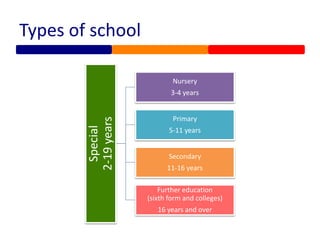
Types of school
Special
2-19years
Nursery
3-4 years
Primary
5-11 years
Secondary
11-16 years
Further education
(sixth form and colleges)
16 years and over
The legal framework for SEN
• Children and Families Acts 2014
- early identification
- joint working between education, health and
social care services
- listening to the views and wishes of children,
young people and their families
• The Special Educational Needs and Disability
Code of Practice
Areas of SEN
• Communication and Interaction
- Speech, Language and Communication Needs
- Autism Spectrum Disorders
• Cognition and learning
- Moderate learning difficulties
- Severe learning difficulties
- Specific learning difficulties (e.g. Dyslexia)
- Profound and Multiple learning difficulties
Areas of SEN
• Social, emotional and mental health
difficulties
• Sensory and/or physical needs
- Physical disabilities e.g. Cerebral Palsy
- Sensory impairment (hearing/visual/multi-
sensory)
Identification and assessment of SEN
• SEN support
• Statutory assessment
• Education, Health and Care Plans
Education, Health & Care Plans
• Legal document
• Includes child/family
views and wishes
• Education, health and
social care support
• Outcomes
• Funding details
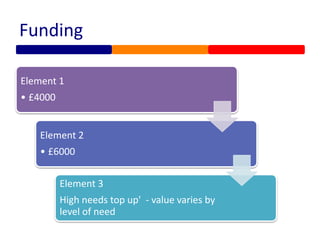
Funding
Element 1
• £4000
Element 2
• £6000
Element 3
High needs top up' - value varies by
level of need
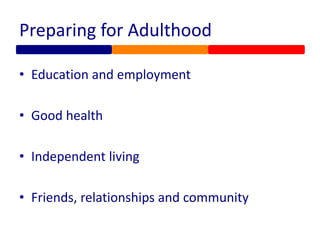
Preparing for Adulthood
• Education and employment
• Good health
• Independent living
• Friends, relationships and community
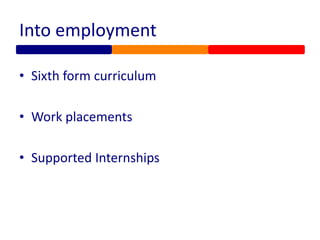
Into employment
• Sixth form curriculum
• Work placements
• Supported Internships

Erasmus SEN education_England

  • 1.
  • 2.
    An overview • Overseenby the Department for Education; • Compulsory schooling from 5 – 18 years; • General expectation that all students achieve a Grade C in English and Maths at GCSE level; • Academic year runs from September to July.
  • 3.
    Types of school Special 2-19years Nursery 3-4years Primary 5-11 years Secondary 11-16 years Further education (sixth form and colleges) 16 years and over
  • 4.
    The legal frameworkfor SEN • Children and Families Acts 2014 - early identification - joint working between education, health and social care services - listening to the views and wishes of children, young people and their families • The Special Educational Needs and Disability Code of Practice
  • 5.
    Areas of SEN •Communication and Interaction - Speech, Language and Communication Needs - Autism Spectrum Disorders • Cognition and learning - Moderate learning difficulties - Severe learning difficulties - Specific learning difficulties (e.g. Dyslexia) - Profound and Multiple learning difficulties
  • 6.
    Areas of SEN •Social, emotional and mental health difficulties • Sensory and/or physical needs - Physical disabilities e.g. Cerebral Palsy - Sensory impairment (hearing/visual/multi- sensory)
  • 7.
    Identification and assessmentof SEN • SEN support • Statutory assessment • Education, Health and Care Plans
  • 8.
    Education, Health &Care Plans • Legal document • Includes child/family views and wishes • Education, health and social care support • Outcomes • Funding details
  • 9.
    Funding Element 1 • £4000 Element2 • £6000 Element 3 High needs top up' - value varies by level of need
  • 10.
    Preparing for Adulthood •Education and employment • Good health • Independent living • Friends, relationships and community
  • 11.
    Into employment • Sixthform curriculum • Work placements • Supported Internships