Enhanced Recovery After
Surgery
Dr. Tanya Das
Moderator:Prof. Dr. Rachana Saha
What Is ERAS?
• Collection of evidence based perioperative practices
designed to improve recovery in patients undergoing
major surgery
1. Reduce Surgical Stress
2. Maintain normal physiologic function
3. Enhance early mobilisation after surgery
• Benefits of ERAS
1. Reduced length of stay
2. Decrease surgical complications and readmissions
3. Decrease cost
4. Increased patient satisfaction and quality of life
HISTORY
• Also Known as Enhanced Recovery Programs(ERPs)
or Fast Track Surgery
• First described in 1990 by European
Anaesthesiologists and Surgeons especially Henrik
Kehlet
• ERAS society created in 2001
• First consensus protocol published in 2005
• 2016- ERAS society guidelines for GYN ONC
• Introduced the concept that the key to decreasing
post-operative morbidity is to:
1. Limit the degree of surgical injury
2. Find ways to help body cope with stress by
decreasing neurohormonal response and
complement pathways
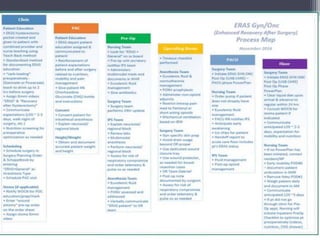
ERAS Components
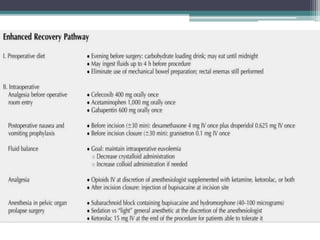
• Pre-operative:
1. Patient education and preadmission counselling
2. Carbohydrate loading
3. No prolonged fasting
4. Avoid bowel Preparation
5. Nausea and Vomiting Prophylaxis
6. Thromboprophylaxis
• Intra-operative:
1. Zero balance fluid policy
2. Minimally invasive surgery
3. No drains
4. Normothermia
5. Multimodal Pain Management
6. Regional Anaesthesia
7. Short acting Anaesthetics
• Post-operative:
1. Early Mobilization
2. Early enteral Feeding
3. No NG tubes
4. Early urinary catheter removal
5. Multimodal pain Management
6. Zero balance Fluid Policy
7. Regional Anaesthesia
8. Nausea and Vomiting prophylaxis
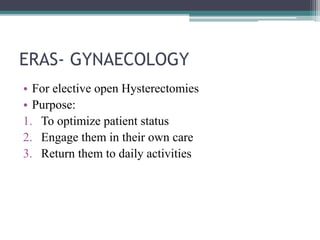
ERAS- GYNAECOLOGY
• For elective open Hysterectomies
• Purpose:
1. To optimize patient status
2. Engage them in their own care
3. Return them to daily activities
Preoperative Education
• Pre-operative Education
- Handouts and pamphlets
- Patient counselling:
1. Regarding details of surgical and anaesthetic procedures
2. Postoperative pulmonary physiotherapy, early
mobilization and early resumption of oral intake
3. Alcohol and tobacco consumption: to be withheld 1
month prior
4. Mitigating medical comorbidities
5. Chlorhexidine Bathing, full body shower, starting daily 3
days prior to surgery
Preoperative ERAS- New Paradigm
Shift
• NPO status- no solids 6 hours prior, clear liquid upto
2 Hours before Surgery
• Carbohydrate rich Beverage
• Perioperative Diet:
- Fasting patients retained a higher amount of gastric
contents when compared with patients who were allowed
to drink water prior to surgery
- Prolonged fasting – depleted glycogen stores– insulin
resistance and hyperglycemia– post-operative
complications and morbidity
- According to American Society Of Anesthesiologists-
advised Fasting of 6 hours for solids and 2 hours for
liquids
- Preoperative Carbohydrate loading drinks: 400ml of 12.5%
maltodextrin drink given 2-3 hours prior decreases insulin
resistance
Role Of Mechanical Bowel Preparation
• Aim of MBP is to rid the large bowel of solid fecal
contents and to reduce bacterial load; however MBP
liquefies solid Faeces, which may increase the risk of
intraoperative spillage of contaminant
• Causes metabolic and electrolyte disbalance,
dehydration, abdominal pain/bloating and fatigue
• RCT from Denmark in 2007: examined 1431 patients
and found no difference in anastomotic leakage,
septic complications, Fascial dehiscence or mortality
between groups undergoing colorectal surgery
• For gynaecological surgery, a recent meta-analysis of
5 RCTs found that there was no benefit of bowel
preparation in regards to visualisation of surgical
field or operative time
Intra-operative ERAS
• Minimizing Surgical Insult
- By using smallest incision possible
- Reduces risk of surgical site infection, venous
thromboembolism, shorter hospital stay and
improvement in quality of life
• Normothermia:
- Preventing Hypothermia: hypothermic patients have
higher rates of wound infection, more cardiac
morbidity and increased rates of coagulopathy
- Compensatory shivering: increases oxygen
consumption and contributes to patient entering
catabolic state
- Use of warm infusion saline, forcedair infusion
blankets, heating mattress pads and circulating
garment systems
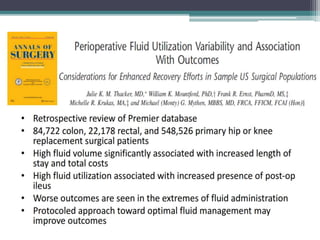
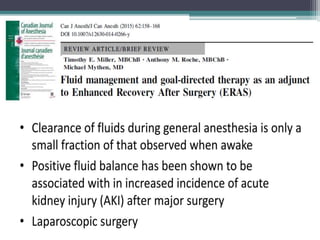
Fluid Administration
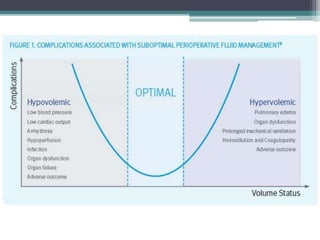
• Hypovolemia leads to low cardiac output and
decreased tissue perfusion
• Hypervolemia associated with increases in morbidity,
length of intensive care unit stay, and postoperative
mortality
Acute Kidney Injury
• Major concern is that oliguria is a sign of developing
renal failure
• As a result, surgeons and anaesthesiologists strive to
maintain Urinary output most commonly with
intravenous boluses
• Within an ERAS protocol, postoperative hypotension
and low UOP are common within the first 24 hr,
whereas renal dysfunction is extremely rare
• ERAS calls for a zero-sum fluid balance which is
obtained by
1. Minimizing crystalloid administration
2. Increasing use of colloids
3. Use of lactated ringers, in place of normal saline to
lower sodium content and decrease risk of electrolyte
abnormalities
4. Use of vasopressors in place of crystalloid for
hypotension
• Goal Directed Fluid Therapy
- Use of minimally invasive devices such as esophageal
dopplers to measure cardiac output during surgery
- Patient is progressively challenged with small boluses of
colloid while measuring stroke volume. An increase of
>10% in stroke volume means that the patient is on point in
the starling curve where they are still fluid responsive and
thus increased fluid delivery will improve cardiac output;
progressive colloid challenges are infused until the cardiac
output is less than 10%; at this point patient is considered
fluid balanced
Postoperative ERAS
• Pain management- limited use of opioids
• Diet-Clear liquids and advance diet as tolerated, as
quickly to regular as patient tolerates
• Ambulation-Out of bed 2 hours before midnight on
day of surgery
Pain Management
• Decrease total amount of opioids as opioids are
associated with impaired gastrointestinal function and
nausea and vomiting
• Multimodal Pain management- use of NSAIDs and
Acetamenophen as adjunct
• Regional anaesthesia is mainstay of ERAS: neural
blockades
• One RCT of patients undergoing radical hysterectomy
found patients undergoing epidural anaesthesia had
significant shorter return of bowel function and shorter
hospital stay
Post-operative Diet
• In addition to preoperative carbohydrate loading, early
postoperative nutrition can ameliorate the metabolic
response leading to less insulin resistance, lower
nitrogen losses and reduce the loss of muscle strength
• A Cochrane review in 2006 found a direction of effect
towards a reduction in complications and mortality
rate,and in an update to their original metanalysis,
Lewis and colleagues confirmed no benefit to keeping
patients nothing by mouth (NBM) postoperatively, a
reduction in complications and a reduced mortality
rate; although, the mechanism for reduced mortality
remains unclear
• Patients following ERAS are permitted and
encouraged to drink clear liquids upon awakening
from anaesthesia and to eat general diet upon arrival
to the floor
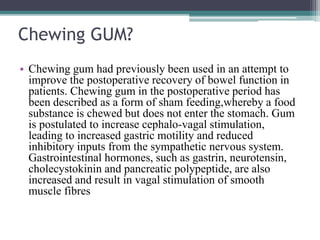
Chewing GUM?
• Chewing gum had previously been used in an attempt to
improve the postoperative recovery of bowel function in
patients. Chewing gum in the postoperative period has
been described as a form of sham feeding,whereby a food
substance is chewed but does not enter the stomach. Gum
is postulated to increase cephalo-vagal stimulation,
leading to increased gastric motility and reduced
inhibitory inputs from the sympathetic nervous system.
Gastrointestinal hormones, such as gastrin, neurotensin,
cholecystokinin and pancreatic polypeptide, are also
increased and result in vagal stimulation of smooth
muscle fibres
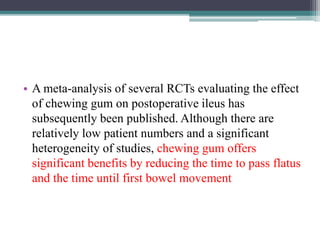
• A meta-analysis of several RCTs evaluating the effect
of chewing gum on postoperative ileus has
subsequently been published. Although there are
relatively low patient numbers and a significant
heterogeneity of studies, chewing gum offers
significant benefits by reducing the time to pass flatus
and the time until first bowel movement
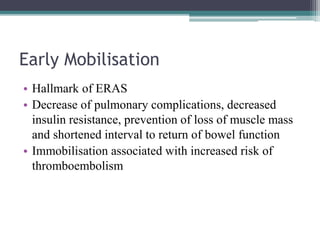
Early Mobilisation
• Hallmark of ERAS
• Decrease of pulmonary complications, decreased
insulin resistance, prevention of loss of muscle mass
and shortened interval to return of bowel function
• Immobilisation associated with increased risk of
thromboembolism
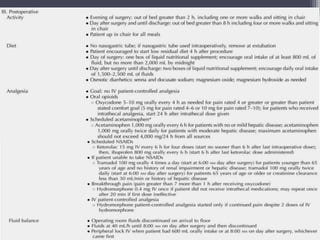
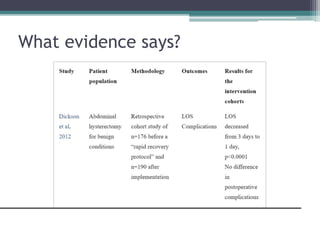
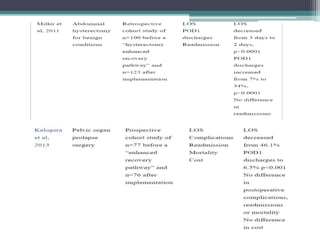
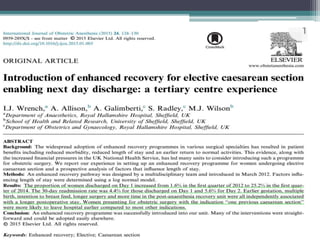
What evidence says?
Thank YOU!!!!

ERAS

  • 1.
    Enhanced Recovery After Surgery Dr.Tanya Das Moderator:Prof. Dr. Rachana Saha
  • 2.
    What Is ERAS? •Collection of evidence based perioperative practices designed to improve recovery in patients undergoing major surgery 1. Reduce Surgical Stress 2. Maintain normal physiologic function 3. Enhance early mobilisation after surgery
  • 3.
    • Benefits ofERAS 1. Reduced length of stay 2. Decrease surgical complications and readmissions 3. Decrease cost 4. Increased patient satisfaction and quality of life
  • 4.
    HISTORY • Also Knownas Enhanced Recovery Programs(ERPs) or Fast Track Surgery • First described in 1990 by European Anaesthesiologists and Surgeons especially Henrik Kehlet • ERAS society created in 2001 • First consensus protocol published in 2005 • 2016- ERAS society guidelines for GYN ONC
  • 5.
    • Introduced theconcept that the key to decreasing post-operative morbidity is to: 1. Limit the degree of surgical injury 2. Find ways to help body cope with stress by decreasing neurohormonal response and complement pathways
  • 6.
    ERAS Components • Pre-operative: 1.Patient education and preadmission counselling 2. Carbohydrate loading 3. No prolonged fasting 4. Avoid bowel Preparation 5. Nausea and Vomiting Prophylaxis 6. Thromboprophylaxis
  • 7.
    • Intra-operative: 1. Zerobalance fluid policy 2. Minimally invasive surgery 3. No drains 4. Normothermia 5. Multimodal Pain Management 6. Regional Anaesthesia 7. Short acting Anaesthetics
  • 8.
    • Post-operative: 1. EarlyMobilization 2. Early enteral Feeding 3. No NG tubes 4. Early urinary catheter removal 5. Multimodal pain Management 6. Zero balance Fluid Policy 7. Regional Anaesthesia 8. Nausea and Vomiting prophylaxis
  • 9.
    ERAS- GYNAECOLOGY • Forelective open Hysterectomies • Purpose: 1. To optimize patient status 2. Engage them in their own care 3. Return them to daily activities
  • 11.
    Preoperative Education • Pre-operativeEducation - Handouts and pamphlets - Patient counselling: 1. Regarding details of surgical and anaesthetic procedures 2. Postoperative pulmonary physiotherapy, early mobilization and early resumption of oral intake 3. Alcohol and tobacco consumption: to be withheld 1 month prior 4. Mitigating medical comorbidities 5. Chlorhexidine Bathing, full body shower, starting daily 3 days prior to surgery
  • 12.
    Preoperative ERAS- NewParadigm Shift • NPO status- no solids 6 hours prior, clear liquid upto 2 Hours before Surgery • Carbohydrate rich Beverage
  • 13.
    • Perioperative Diet: -Fasting patients retained a higher amount of gastric contents when compared with patients who were allowed to drink water prior to surgery - Prolonged fasting – depleted glycogen stores– insulin resistance and hyperglycemia– post-operative complications and morbidity - According to American Society Of Anesthesiologists- advised Fasting of 6 hours for solids and 2 hours for liquids - Preoperative Carbohydrate loading drinks: 400ml of 12.5% maltodextrin drink given 2-3 hours prior decreases insulin resistance
  • 14.
    Role Of MechanicalBowel Preparation • Aim of MBP is to rid the large bowel of solid fecal contents and to reduce bacterial load; however MBP liquefies solid Faeces, which may increase the risk of intraoperative spillage of contaminant • Causes metabolic and electrolyte disbalance, dehydration, abdominal pain/bloating and fatigue • RCT from Denmark in 2007: examined 1431 patients and found no difference in anastomotic leakage, septic complications, Fascial dehiscence or mortality between groups undergoing colorectal surgery
  • 15.
    • For gynaecologicalsurgery, a recent meta-analysis of 5 RCTs found that there was no benefit of bowel preparation in regards to visualisation of surgical field or operative time
  • 16.
    Intra-operative ERAS • MinimizingSurgical Insult - By using smallest incision possible - Reduces risk of surgical site infection, venous thromboembolism, shorter hospital stay and improvement in quality of life
  • 17.
    • Normothermia: - PreventingHypothermia: hypothermic patients have higher rates of wound infection, more cardiac morbidity and increased rates of coagulopathy - Compensatory shivering: increases oxygen consumption and contributes to patient entering catabolic state - Use of warm infusion saline, forcedair infusion blankets, heating mattress pads and circulating garment systems
  • 18.
    Fluid Administration • Hypovolemialeads to low cardiac output and decreased tissue perfusion • Hypervolemia associated with increases in morbidity, length of intensive care unit stay, and postoperative mortality
  • 19.
    Acute Kidney Injury •Major concern is that oliguria is a sign of developing renal failure • As a result, surgeons and anaesthesiologists strive to maintain Urinary output most commonly with intravenous boluses • Within an ERAS protocol, postoperative hypotension and low UOP are common within the first 24 hr, whereas renal dysfunction is extremely rare
  • 23.
    • ERAS callsfor a zero-sum fluid balance which is obtained by 1. Minimizing crystalloid administration 2. Increasing use of colloids 3. Use of lactated ringers, in place of normal saline to lower sodium content and decrease risk of electrolyte abnormalities 4. Use of vasopressors in place of crystalloid for hypotension
  • 24.
    • Goal DirectedFluid Therapy - Use of minimally invasive devices such as esophageal dopplers to measure cardiac output during surgery - Patient is progressively challenged with small boluses of colloid while measuring stroke volume. An increase of >10% in stroke volume means that the patient is on point in the starling curve where they are still fluid responsive and thus increased fluid delivery will improve cardiac output; progressive colloid challenges are infused until the cardiac output is less than 10%; at this point patient is considered fluid balanced
  • 25.
    Postoperative ERAS • Painmanagement- limited use of opioids • Diet-Clear liquids and advance diet as tolerated, as quickly to regular as patient tolerates • Ambulation-Out of bed 2 hours before midnight on day of surgery
  • 26.
    Pain Management • Decreasetotal amount of opioids as opioids are associated with impaired gastrointestinal function and nausea and vomiting • Multimodal Pain management- use of NSAIDs and Acetamenophen as adjunct • Regional anaesthesia is mainstay of ERAS: neural blockades • One RCT of patients undergoing radical hysterectomy found patients undergoing epidural anaesthesia had significant shorter return of bowel function and shorter hospital stay
  • 27.
    Post-operative Diet • Inaddition to preoperative carbohydrate loading, early postoperative nutrition can ameliorate the metabolic response leading to less insulin resistance, lower nitrogen losses and reduce the loss of muscle strength • A Cochrane review in 2006 found a direction of effect towards a reduction in complications and mortality rate,and in an update to their original metanalysis, Lewis and colleagues confirmed no benefit to keeping patients nothing by mouth (NBM) postoperatively, a reduction in complications and a reduced mortality rate; although, the mechanism for reduced mortality remains unclear
  • 28.
    • Patients followingERAS are permitted and encouraged to drink clear liquids upon awakening from anaesthesia and to eat general diet upon arrival to the floor
  • 29.
    Chewing GUM? • Chewinggum had previously been used in an attempt to improve the postoperative recovery of bowel function in patients. Chewing gum in the postoperative period has been described as a form of sham feeding,whereby a food substance is chewed but does not enter the stomach. Gum is postulated to increase cephalo-vagal stimulation, leading to increased gastric motility and reduced inhibitory inputs from the sympathetic nervous system. Gastrointestinal hormones, such as gastrin, neurotensin, cholecystokinin and pancreatic polypeptide, are also increased and result in vagal stimulation of smooth muscle fibres
  • 30.
    • A meta-analysisof several RCTs evaluating the effect of chewing gum on postoperative ileus has subsequently been published. Although there are relatively low patient numbers and a significant heterogeneity of studies, chewing gum offers significant benefits by reducing the time to pass flatus and the time until first bowel movement
  • 31.
    Early Mobilisation • Hallmarkof ERAS • Decrease of pulmonary complications, decreased insulin resistance, prevention of loss of muscle mass and shortened interval to return of bowel function • Immobilisation associated with increased risk of thromboembolism
  • 34.
  • 37.