1
CONTENTS
 What is Epilepsy
 Epidemiology
 Pathophysiology
 Causes
 Signs and symptoms
 Types of epilepsy
 Diagnosis
 Treatment
 Future perspective
 Summary
 References
2
What is Epilepsy?
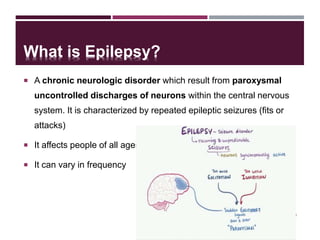
 A chronic neurologic disorder which result from paroxysmal
uncontrolled discharges of neurons within the central nervous
system. It is characterized by repeated epileptic seizures (fits or
attacks)
 It affects people of all ages.
 It can vary in frequency
3
EPIDEMIOLOGY
Epilepsy knows no geographical, racial or social boundries
Accordindg to WHO:
 50 million people-worldwide have epilepsy
 2.4 million people-globally diagnosed with epilepsy each year
 In 2013- 116,ooo deaths reported
 Overall prevalence of epilepsy in Pakistan is estimated to be 9.99
per 1000 population
4
Pathophysiology
5
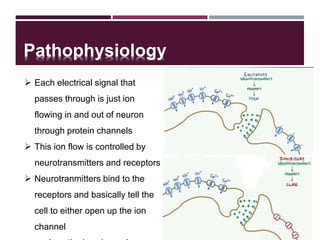
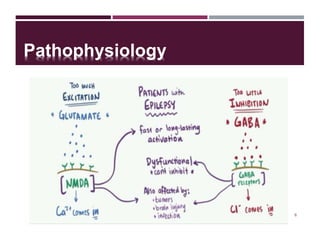
 Each electrical signal that
passes through is just ion
flowing in and out of neuron
through protein channels
 This ion flow is controlled by
neurotransmitters and receptors
 Neurotranmitters bind to the
receptors and basically tell the
cell to either open up the ion
channel
Pathophysiology
6
CAUSES OF EPILEPSY
 Idiopathic epilepsy- 65-70% cases
 Symptomatic epilepsy
i. Brain damage
ii. A severe head injury
iii. Brain trauma
iv. Congenital abnormalities
v. A stroke
vi. An infection of brain
vii. Permanent change of brain tissues
7
SIGNS AND SYMPTOMS
8
 Signs and symptoms depend upon where in the brain it first
start
 Outward signs are
• Jerking
• Moving
• Losing consciousness
• Recurring episodes of seizures
 Only experienced by patient
• Fears
• Strange smells
TYPES OF SEIZURES
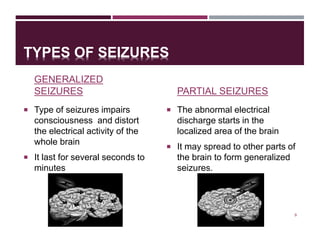
GENERALIZED
SEIZURES
 Type of seizures impairs
consciousness and distort
the electrical activity of the
whole brain
 It last for several seconds to
minutes
PARTIAL SEIZURES
 The abnormal electrical
discharge starts in the
localized area of the brain
 It may spread to other parts of
the brain to form generalized
seizures.
9
TYPES OF SEIZURES
 GENERALIZED SEIZURES
i. Generalized tonic-clonic seizures
ii. Tonic seizures
iii. Clonic seizures
iv. Absence seizures
v. Myoclonic seizures
vi. Atonic seizures
10
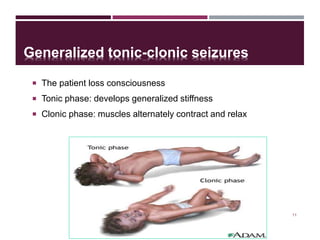
Generalized tonic-clonic seizures
 The patient loss consciousness
 Tonic phase: develops generalized stiffness
 Clonic phase: muscles alternately contract and relax
11
TONIC AND CLONIC SEIZURES
 Tonic seizures
 Sudden sustained muscle contraction
 Immediate loss of consciousness
 Deviation of eyes and head towards one side
 Clonic seizures
 Repetitive clonic jerks
 Neck, face and arms are commonly affected
12
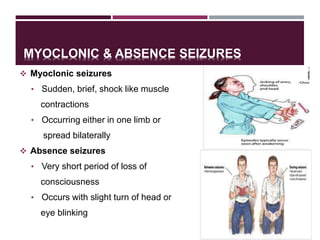
MYOCLONIC & ABSENCE SEIZURES
 Myoclonic seizures
• Sudden, brief, shock like muscle
contractions
• Occurring either in one limb or
spread bilaterally
 Absence seizures
• Very short period of loss of
consciousness
• Occurs with slight turn of head or
eye blinking 13
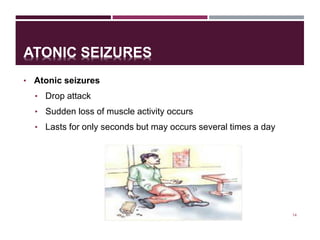
ATONIC SEIZURES
• Atonic seizures
• Drop attack
• Sudden loss of muscle activity occurs
• Lasts for only seconds but may occurs several times a day
14
TYPES OF SEIZURES
 PARTIAL SEIZURES
i. Simple partial seizures
ii. Complex partial seizures
15
Simple partial seizures
 Patient does not loose consciousness
 Include sensory, psychic, autonomic, and motor phenomena
 Accompanied by three features
i. Jacksonian march-seconds to minutes
ii. Todd’s paralysis –minutes to hours
iii. Epilepsia partials continua- hours to days
16
Complex partial seizures
 Impaired consciousness or losing consciousness completely
 Don’t remember exactly what happened during the seizures
17
DIAGNOSIS
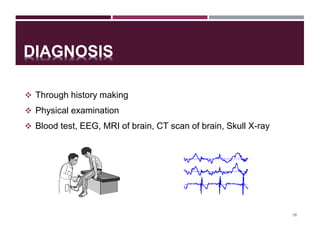
 Through history making
 Physical examination
 Blood test, EEG, MRI of brain, CT scan of brain, Skull X-ray
18
TREATMENT
 Medication
 Surgery
 Diet
 Vagus nerve stimulation(VNS)
19
TREATMENT
 Medication
 Anti-epileptic drugs (AEDs)
 70% of children and adults can be treated
 Surgery
 Surgical therapy might be beneficial to patients who respond
poorly to drug treatments
20
TREATMENT
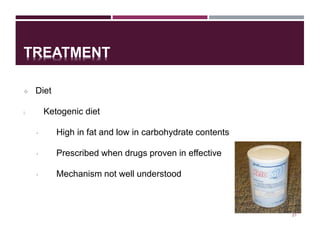
 Diet
i. Ketogenic diet
• High in fat and low in carbohydrate contents
• Prescribed when drugs proven in effective
• Mechanism not well understood
21
TREATMENT
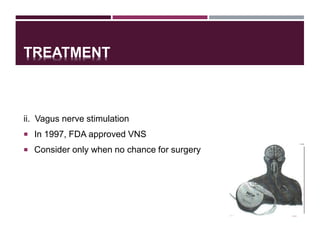
ii. Vagus nerve stimulation
 In 1997, FDA approved VNS
 Consider only when no chance for surgery
22
FUTURE PERESPECTIVE
 Radiosurgery –in future might be an alternate treatment of surgery
 It might be an effective or safe techniques.
23
SUMMARY
 Epilepsy is neurologic disorder resulting from abnormal discharge
of neurons from brain.
 Causes include head injury, brain trauma, stoke, brain infections.
 Two types: generalized and partial epilepsy
 Diagnosis is made through history making, physical examination,
and laboratory examination
 Medication, surgery, and non-pharmacologic treatments are used
24
REFERENCES
 https://en.wikipedia.org/wiki/Epilepsy
 http://www.webmd.com/epilepsy/
 http://www.who.int/mediacentre/factsheets/fs999/en/
 www.who.int/mental_health/media/en/639.pd
 http://www.ncbi.nlm.nih.gov/pmc/articles/PMC1867089/
25
THANK YOU
26

Epilepsy

  • 1.
  • 2.
    CONTENTS  What isEpilepsy  Epidemiology  Pathophysiology  Causes  Signs and symptoms  Types of epilepsy  Diagnosis  Treatment  Future perspective  Summary  References 2
  • 3.
    What is Epilepsy? A chronic neurologic disorder which result from paroxysmal uncontrolled discharges of neurons within the central nervous system. It is characterized by repeated epileptic seizures (fits or attacks)  It affects people of all ages.  It can vary in frequency 3
  • 4.
    EPIDEMIOLOGY Epilepsy knows nogeographical, racial or social boundries Accordindg to WHO:  50 million people-worldwide have epilepsy  2.4 million people-globally diagnosed with epilepsy each year  In 2013- 116,ooo deaths reported  Overall prevalence of epilepsy in Pakistan is estimated to be 9.99 per 1000 population 4
  • 5.
    Pathophysiology 5  Each electricalsignal that passes through is just ion flowing in and out of neuron through protein channels  This ion flow is controlled by neurotransmitters and receptors  Neurotranmitters bind to the receptors and basically tell the cell to either open up the ion channel
  • 6.
  • 7.
    CAUSES OF EPILEPSY Idiopathic epilepsy- 65-70% cases  Symptomatic epilepsy i. Brain damage ii. A severe head injury iii. Brain trauma iv. Congenital abnormalities v. A stroke vi. An infection of brain vii. Permanent change of brain tissues 7
  • 8.
    SIGNS AND SYMPTOMS 8 Signs and symptoms depend upon where in the brain it first start  Outward signs are • Jerking • Moving • Losing consciousness • Recurring episodes of seizures  Only experienced by patient • Fears • Strange smells
  • 9.
    TYPES OF SEIZURES GENERALIZED SEIZURES Type of seizures impairs consciousness and distort the electrical activity of the whole brain  It last for several seconds to minutes PARTIAL SEIZURES  The abnormal electrical discharge starts in the localized area of the brain  It may spread to other parts of the brain to form generalized seizures. 9
  • 10.
    TYPES OF SEIZURES GENERALIZED SEIZURES i. Generalized tonic-clonic seizures ii. Tonic seizures iii. Clonic seizures iv. Absence seizures v. Myoclonic seizures vi. Atonic seizures 10
  • 11.
    Generalized tonic-clonic seizures The patient loss consciousness  Tonic phase: develops generalized stiffness  Clonic phase: muscles alternately contract and relax 11
  • 12.
    TONIC AND CLONICSEIZURES  Tonic seizures  Sudden sustained muscle contraction  Immediate loss of consciousness  Deviation of eyes and head towards one side  Clonic seizures  Repetitive clonic jerks  Neck, face and arms are commonly affected 12
  • 13.
    MYOCLONIC & ABSENCESEIZURES  Myoclonic seizures • Sudden, brief, shock like muscle contractions • Occurring either in one limb or spread bilaterally  Absence seizures • Very short period of loss of consciousness • Occurs with slight turn of head or eye blinking 13
  • 14.
    ATONIC SEIZURES • Atonicseizures • Drop attack • Sudden loss of muscle activity occurs • Lasts for only seconds but may occurs several times a day 14
  • 15.
    TYPES OF SEIZURES PARTIAL SEIZURES i. Simple partial seizures ii. Complex partial seizures 15
  • 16.
    Simple partial seizures Patient does not loose consciousness  Include sensory, psychic, autonomic, and motor phenomena  Accompanied by three features i. Jacksonian march-seconds to minutes ii. Todd’s paralysis –minutes to hours iii. Epilepsia partials continua- hours to days 16
  • 17.
    Complex partial seizures Impaired consciousness or losing consciousness completely  Don’t remember exactly what happened during the seizures 17
  • 18.
    DIAGNOSIS  Through historymaking  Physical examination  Blood test, EEG, MRI of brain, CT scan of brain, Skull X-ray 18
  • 19.
    TREATMENT  Medication  Surgery Diet  Vagus nerve stimulation(VNS) 19
  • 20.
    TREATMENT  Medication  Anti-epilepticdrugs (AEDs)  70% of children and adults can be treated  Surgery  Surgical therapy might be beneficial to patients who respond poorly to drug treatments 20
  • 21.
    TREATMENT  Diet i. Ketogenicdiet • High in fat and low in carbohydrate contents • Prescribed when drugs proven in effective • Mechanism not well understood 21
  • 22.
    TREATMENT ii. Vagus nervestimulation  In 1997, FDA approved VNS  Consider only when no chance for surgery 22
  • 23.
    FUTURE PERESPECTIVE  Radiosurgery–in future might be an alternate treatment of surgery  It might be an effective or safe techniques. 23
  • 24.
    SUMMARY  Epilepsy isneurologic disorder resulting from abnormal discharge of neurons from brain.  Causes include head injury, brain trauma, stoke, brain infections.  Two types: generalized and partial epilepsy  Diagnosis is made through history making, physical examination, and laboratory examination  Medication, surgery, and non-pharmacologic treatments are used 24
  • 25.
    REFERENCES  https://en.wikipedia.org/wiki/Epilepsy  http://www.webmd.com/epilepsy/ http://www.who.int/mediacentre/factsheets/fs999/en/  www.who.int/mental_health/media/en/639.pd  http://www.ncbi.nlm.nih.gov/pmc/articles/PMC1867089/ 25
  • 26.

Editor's Notes

  • #5 In low and middle income countries, this figure can be upto two times higher, this is likely due to increase risk of endemic conditions such as malaria and neurocysticerosis, increased risk of road traffic injuries,birth related injuries, and variation in medical infrastructure
  • #8 Brain damage
  • #9 Its signs n sym vary depending upon where in the brain it first start and how far it spread, depending on this epilepsy classified into two types general n partial which will discussed later
  • #12 DURING TONIC PHASE THE BREATHING STOPS AS ALL THE MUSCLES OF THE TRUNK ARE IN SPASMA
  • #17 Focus on primary motor cortex, primary sensory cortex, foci in the temporal lobe of the brain, consist of changes in the mood, memory or thought. There may be distorted perception or problem with language
  • #18 A strange feeling in the stomach rises upto the throat and head, or sensation of light, smell, sound or taste. Automatism-psychomotor symptoms like chewing movements, smacking of lips, the patient is completely unaware of their actions
  • #19 EEG, Imaging scan to confrm the diagnosis of epilepsy
  • #22 Shifting of ph towards the metabolic acidosis and alteration of brain metabolism may be involved.
  • #23 Device is implanted to control seizures by delivering electrical stimulation to the vagus nerve in the neck, which relays impulses to widespread areas of the brain
  • #24 Radiosurgery focus raditions on targed volume area with in the brain which have been identified by MRI, this treatment being evaluated as alternate treatment to surgery, it may be an effective or safe technique