biodiversitY,
population control
chapter 5
environmental
science
species interaction
&
learning objectives
1
Analyze population growth models
and predict the potential
consequences of environmental
changes on population size.
Explain how different types of species
interactions (competition, predation,
parasitism, mutualism, commensalism)
affect the populations of the involved species
and the overall structure of an ecosystem.
2
Develop an awareness of the potential
consequences of human activities on the
interactions between species, population
sizes, and ecosystem stability.
3
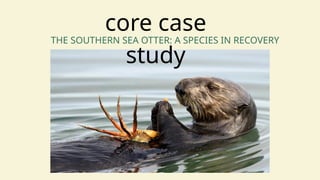
core case
study
THE SOUTHERN SEA OTTER: A SPECIES IN RECOVERY
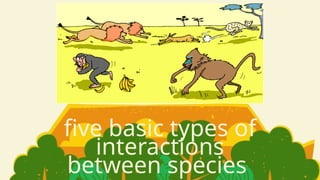
five basic types of
interactions
between species
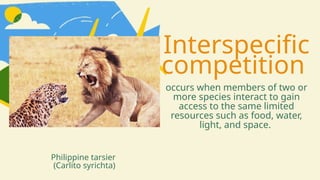
Interspecific
competition
occurs when members of two or
more species interact to gain
access to the same limited
resources such as food, water,
light, and space.
Philippine tarsier
(Carlito syrichta)
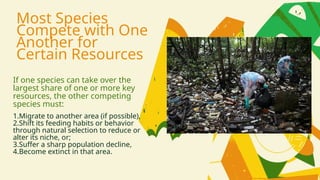
Most Species
Compete with One
Another for
Certain Resources
If one species can take over the
largest share of one or more key
resources, the other competing
species must:
1.Migrate to another area (if possible),
2.Shift its feeding habits or behavior
through natural selection to reduce or
alter its niche, or;
3.Suffer a sharp population decline,
4.Become extinct in that area.
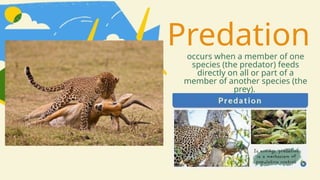
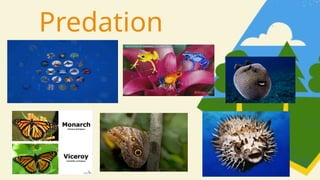
Predation
occurs when a member of one
species (the predator) feeds
directly on all or part of a
member of another species (the
prey).
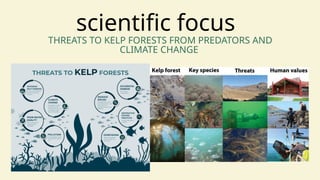
scientific focus
THREATS TO KELP FORESTS FROM PREDATORS AND
CLIMATE CHANGE
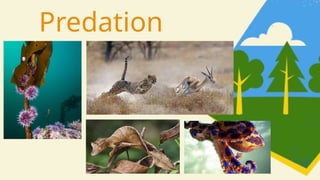
Predation
Predation
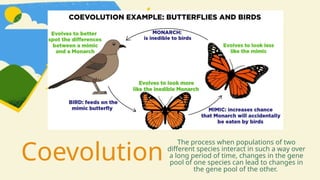
Coevolution
The process when populations of two
different species interact in such a way over
a long period of time, changes in the gene
pool of one species can lead to changes in
the gene pool of the other.
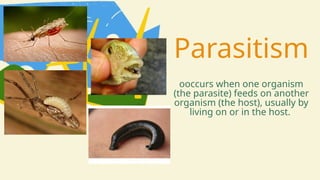
Parasitism
ooccurs when one organism
(the parasite) feeds on another
organism (the host), usually by
living on or in the host.
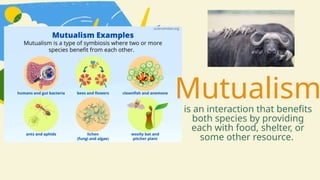
Mutualism
is an interaction that benefits
both species by providing
each with food, shelter, or
some other resource.
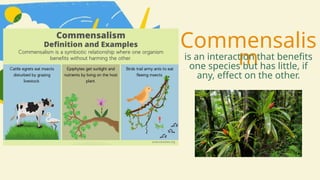
Commensalis
m
is an interaction that benefits
one species but has little, if
any, effect on the other.
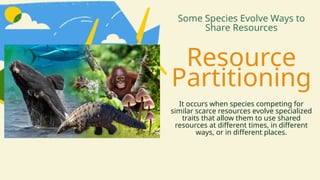
Resource
Partitioning
Some Species Evolve Ways to
Share Resources
It occurs when species competing for
similar scarce resources evolve specialized
traits that allow them to use shared
resources at different times, in different
ways, or in different places.
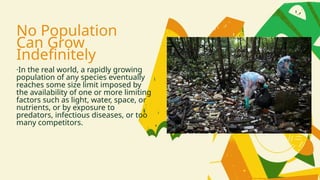
No Population
Can Grow
Indefinitely
·In the real world, a rapidly growing
population of any species eventually
reaches some size limit imposed by
the availability of one or more limiting
factors such as light, water, space, or
nutrients, or by exposure to
predators, infectious diseases, or too
many competitors.
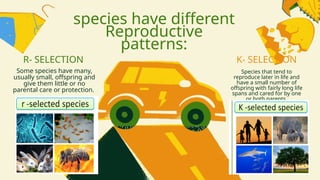
species have different
Reproductive
patterns:
Some species have many,
usually small, offspring and
give them little or no
parental care or protection.
Species that tend to
reproduce later in life and
have a small number of
offspring with fairly long life
spans and cared for by one
or both parents.
R- SELECTION K- SELECTION
WHAT LIMITS THE
GROWTH OF
POPULATIONS?
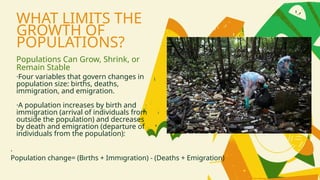
Populations Can Grow, Shrink, or
Remain Stable
·Four variables that govern changes in
population size: births, deaths,
immigration, and emigration.
·A population increases by birth and
immigration (arrival of individuals from
outside the population) and decreases
by death and emigration (departure of
individuals from the population):
·
Population change= (Bırths + Immıgration) - (Deaths + Emigration)
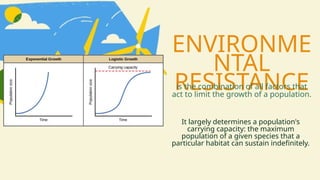
ENVIRONME
NTAL
RESISTANCE
is the combination of all factors that
act to limit the growth of a population.
It largely determines a population's
carrying capacity: the maximum
population of a given species that a
particular habitat can sustain indefinitely.
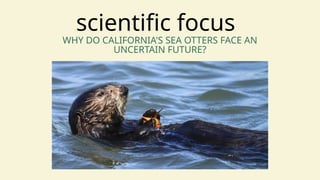
scientific focus
WHY DO CALIFORNIA'S SEA OTTERS FACE AN
UNCERTAIN FUTURE?
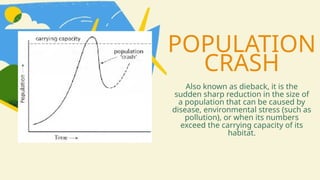
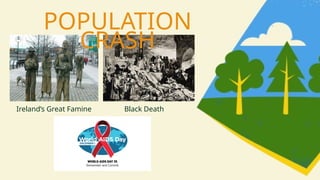
POPULATION
CRASH
Also known as dieback, it is the
sudden sharp reduction in the size of
a population that can be caused by
disease, environmental stress (such as
pollution), or when its numbers
exceed the carrying capacity of its
habitat.
POPULATION
CRASH
Ireland’s Great Famine Black Death
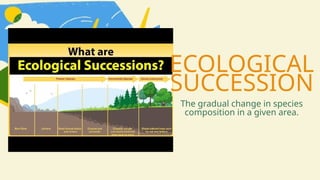
ECOLOGICAL
SUCCESSION
The gradual change in species
composition in a given area.
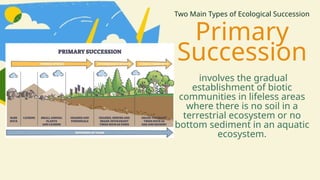
Primary
Succession
involves the gradual
establishment of biotic
communities in lifeless areas
where there is no soil in a
terrestrial ecosystem or no
bottom sediment in an aquatic
ecosystem.
Two Main Types of Ecological Succession
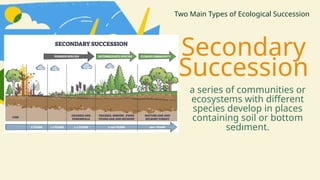
Secondary
Succession
a series of communities or
ecosystems with different
species develop in places
containing soil or bottom
sedıment.
Two Main Types of Ecological Succession
Succession
Does Not
Follow a
Predictable
Path
Inertia
or persistence: the ability of
a living system such as
grassland or a forest to
survive moderate
disturbances.
Two Aspects of Stability in Living Systems
Resilience
the ability of a living system to
be restored through
secondary succession after a
more severe disturbance.
3
2
1
Changes in environmental
conditions alter the
composition of species and
their population sizes in
communities and
ecosystems (ecological
succession).
There are
always limits to
population
growth in
nature.
1.Interactions
between species
affect their use of
resources and their
population sizes.
Three Big Ideas of
chapter 5
Questions and
Discussion
We invite your
questions, thoughts,
and ideas.
Lorem ipsum dolor sit amet,
consectetur adipiscing elit. Ut
pharetra dignissim lectus sed
porttitor. Nullam facilisis vel eros
in tempus. Suspendisse ultrices
orci id odio rhoncus, vitae aliquet
purus placerat.
thanks for listening!
Contact us at hello@reallygreatsite.com

Environmental Science Species Interaction.pptx

  • 1.
  • 2.
    learning objectives 1 Analyze populationgrowth models and predict the potential consequences of environmental changes on population size. Explain how different types of species interactions (competition, predation, parasitism, mutualism, commensalism) affect the populations of the involved species and the overall structure of an ecosystem. 2 Develop an awareness of the potential consequences of human activities on the interactions between species, population sizes, and ecosystem stability. 3
  • 3.
    core case study THE SOUTHERNSEA OTTER: A SPECIES IN RECOVERY
  • 4.
    five basic typesof interactions between species
  • 5.
    Interspecific competition occurs when membersof two or more species interact to gain access to the same limited resources such as food, water, light, and space. Philippine tarsier (Carlito syrichta)
  • 6.
    Most Species Compete withOne Another for Certain Resources If one species can take over the largest share of one or more key resources, the other competing species must: 1.Migrate to another area (if possible), 2.Shift its feeding habits or behavior through natural selection to reduce or alter its niche, or; 3.Suffer a sharp population decline, 4.Become extinct in that area.
  • 7.
    Predation occurs when amember of one species (the predator) feeds directly on all or part of a member of another species (the prey).
  • 8.
    scientific focus THREATS TOKELP FORESTS FROM PREDATORS AND CLIMATE CHANGE
  • 9.
  • 10.
  • 11.
    Coevolution The process whenpopulations of two different species interact in such a way over a long period of time, changes in the gene pool of one species can lead to changes in the gene pool of the other.
  • 12.
    Parasitism ooccurs when oneorganism (the parasite) feeds on another organism (the host), usually by living on or in the host.
  • 13.
    Mutualism is an interactionthat benefits both species by providing each with food, shelter, or some other resource.
  • 14.
    Commensalis m is an interactionthat benefits one species but has little, if any, effect on the other.
  • 15.
    Resource Partitioning Some Species EvolveWays to Share Resources It occurs when species competing for similar scarce resources evolve specialized traits that allow them to use shared resources at different times, in different ways, or in different places.
  • 16.
    No Population Can Grow Indefinitely ·Inthe real world, a rapidly growing population of any species eventually reaches some size limit imposed by the availability of one or more limiting factors such as light, water, space, or nutrients, or by exposure to predators, infectious diseases, or too many competitors.
  • 17.
    species have different Reproductive patterns: Somespecies have many, usually small, offspring and give them little or no parental care or protection. Species that tend to reproduce later in life and have a small number of offspring with fairly long life spans and cared for by one or both parents. R- SELECTION K- SELECTION
  • 18.
    WHAT LIMITS THE GROWTHOF POPULATIONS? Populations Can Grow, Shrink, or Remain Stable ·Four variables that govern changes in population size: births, deaths, immigration, and emigration. ·A population increases by birth and immigration (arrival of individuals from outside the population) and decreases by death and emigration (departure of individuals from the population): · Population change= (Bırths + Immıgration) - (Deaths + Emigration)
  • 19.
    ENVIRONME NTAL RESISTANCE is the combinationof all factors that act to limit the growth of a population. It largely determines a population's carrying capacity: the maximum population of a given species that a particular habitat can sustain indefinitely.
  • 20.
    scientific focus WHY DOCALIFORNIA'S SEA OTTERS FACE AN UNCERTAIN FUTURE?
  • 21.
    POPULATION CRASH Also known asdieback, it is the sudden sharp reduction in the size of a population that can be caused by disease, environmental stress (such as pollution), or when its numbers exceed the carrying capacity of its habitat.
  • 22.
  • 23.
    ECOLOGICAL SUCCESSION The gradual changein species composition in a given area.
  • 24.
    Primary Succession involves the gradual establishmentof biotic communities in lifeless areas where there is no soil in a terrestrial ecosystem or no bottom sediment in an aquatic ecosystem. Two Main Types of Ecological Succession
  • 25.
    Secondary Succession a series ofcommunities or ecosystems with different species develop in places containing soil or bottom sedıment. Two Main Types of Ecological Succession
  • 26.
  • 27.
    Inertia or persistence: theability of a living system such as grassland or a forest to survive moderate disturbances. Two Aspects of Stability in Living Systems Resilience the ability of a living system to be restored through secondary succession after a more severe disturbance.
  • 28.
    3 2 1 Changes in environmental conditionsalter the composition of species and their population sizes in communities and ecosystems (ecological succession). There are always limits to population growth in nature. 1.Interactions between species affect their use of resources and their population sizes. Three Big Ideas of chapter 5
  • 29.
    Questions and Discussion We inviteyour questions, thoughts, and ideas. Lorem ipsum dolor sit amet, consectetur adipiscing elit. Ut pharetra dignissim lectus sed porttitor. Nullam facilisis vel eros in tempus. Suspendisse ultrices orci id odio rhoncus, vitae aliquet purus placerat.
  • 30.
    thanks for listening! Contactus at hello@reallygreatsite.com

Editor's Notes

  • #6 Most Species Compete with One Another for Certain Resources Most Species Compete with One Another for Certain Resources • If one species can take over the largest share of one or more key resources, the other competing species must: 1. Migrate to another area (if possible), 2. Shift its feeding habits or behavior through natural selection to reduce or alter its niche, or; 3. Suffer a sharp population decline, 4. Become extinct in that area.
  • #11 Interactions between Predator and Prey Species Can Drive Each Other's Evolution COEVOLUTION- The process when populations of two different species interact in such a way over a long period of time, changes in the gene pool of one species can lead to changes in the gene pool of the other.
  • #22 • Ireland experienced such a crash after a fungus destroyed its potato crop in 1845. About 1 million people died from hunger or diseases related to malnutrition, and 3 million people migrated to other countries, mostly the United States. • During the 14th century the bubonic plague spread through densely populated European cities and killed at least 25 million people, about the same number as the combined populations of the U.S. states of New York and North Carolina. • Between 1981 and 2008, AIDS killed more than 27 million people and claims another 2 million lives each year--an average of four deaths per minute.
  • #24 1. Primary Succession- involves the gradual establishment of biotic communities in lifeless areas where there is no soil in a terrestrial ecosystem or no bottom sediment in an aquatic ecosystem. o Examples include bare rock exposed by a retreating glacier, newly cooled lava, an abandoned highway or parking lot, and a newly created shallow pond or reservoir.
  • #25 1. Primary Succession- involves the gradual establishment of biotic communities in lifeless areas where there is no soil in a terrestrial ecosystem or no bottom sediment in an aquatic ecosystem. o Examples include bare rock exposed by a retreating glacier, newly cooled lava, an abandoned highway or parking lot, and a newly created shallow pond or reservoir.
  • #27 Living Systems Are Sustained through Constant Change, but There Are Limits STABILITY- is the capacity to withstand external stress and disturbance. Two Aspects of Stability in Living Systems 1. Inertia- or persistence: the ability of a living system such as grassland or a forest to survive moderate disturbances. 2. Resilience- the ability of a living system to be restored through secondary succession after a more severe disturbance.