ENVIRONMENTALENVIRONMENTAL
POLLUTIONPOLLUTION
ENVIRONMENTAL POLLUTION
Environmental pollution is one of several factors that
can affect environmental change. Environmental pollution
is the entry of materials into the environment which can
interfere with organisms live on it.
Pollutants or material that can caused pollution may include
chemicals, dust, noise, radiation, or heat into the environment.
The factors that cause pollution is:
1.Uncontrolled population growth (over population);
2.The rapid development and deployment of technologies;
3.The presence of pollutants in large quantities and nature can
no longer neutralizing
POLLUTANT
When a substance can be considered as pollutants?
1. If the levels are exceeding the limits of normal levels or
thresholds
2. Exist at the wrong time
3. Exist in the wrong place
How was the characteristics of pollutants?
1. Damaging for a while and after reacting with the
environment, substance does not damage anymore.
2. Damage after a certain period, for example DDT and Pb
(lead)
POLLUTANT
SEA WATER SOIL AIR FRESH WATER
ALGAE SOIL WATER WIND SOIL
SMALL FISH
WATER
RESOURCE
CLOUD PLANT
BIG FISH RAIN
HUMAN
TYPES OF ENVIRONMENTAL POLLUTION
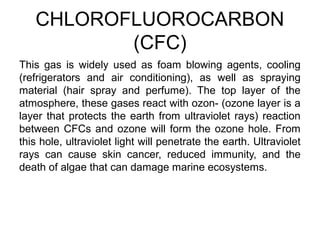
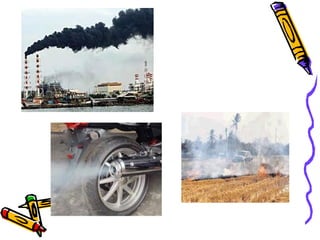
- AIR POLLUTION
Air pollutants can be either gases and particles. For example,
as follows.
a. H2S gas
This is a toxic gas, contained in the volcano area,? Can
also be produced from the burning of oil and coal
b. CO and CO2 gas.
Carbon monoxide (CO) is a colorless and odorless, toxic, is
the result of incomplete combustion of waste material
cars and engines. In addition, if the amount of C02 gas
are too much on earth, it can bind the sun's heat so that
the temperature of the earth's heat.
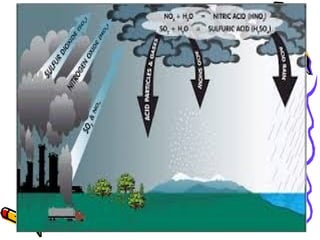
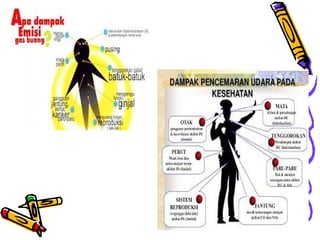
c. Sulfur dioksida bersama dengan udara serta oksigen dan sinar matahari
dapat menghasilkan asam sulfur. Asam ini membentuk kabut dan suatu
saat akan jatuh sebagai hujan yang disebut hujan asam. Hujan asam
dapat menyebabkan gangguan pada manusia, hewan, maupun
tumbuhan. Misalnya gangguan pernapasan, perubahan morfologi pada
daun, batang, dan benih.
d. Hidrokarbon (HC) dan Nitrogen Oksida (NO)
HC dan NO yang dipengaruhi oleh sinar matahari akan membentuk
smog yang berupa gas yang sangat pedih jika mengenai mata dan juga
sebagai penyebab penyakit kanker.
CHLOROFLUOROCARBON
(CFC)
This gas is widely used as foam blowing agents, cooling
(refrigerators and air conditioning), as well as spraying
material (hair spray and perfume). The top layer of the
atmosphere, these gases react with ozon- (ozone layer is a
layer that protects the earth from ultraviolet rays) reaction
between CFCs and ozone will form the ozone hole. From
this hole, ultraviolet light will penetrate the earth. Ultraviolet
rays can cause skin cancer, reduced immunity, and the
death of algae that can damage marine ecosystems.
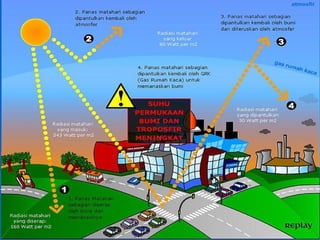
• The greenhouse effect is caused by
rising concentrations of carbon dioxide
(CO2) and other gases in the
atmosphere. The increase in the
concentration of CO2 is caused by the
increase in the burning of fuel oil
(BBM), coal and other organic fuels are
beyond the ability of plants and sea to
absorb it.
• CO2 is the greatest greenhouse gases that forms a
layer in the atmosphere. In addition to CO2 gas,
which can cause the greenhouse effect are sulfur
dioxide (SO2), nitrogen monoxide (NO) and nitrogen
dioxide (NO2) and some organic compounds such as
methane (CH4) and chlorofluoro carbon (CFC). These
gases play an important role in increasing the
greenhouse effect.
• So far, we do not feel the presence of CO2 as a
pollutant, since CO2 is not toxic. However, carbon
dioxide (CO2) is an important greenhouse gas that is
most widely produced and is a significant cause of
global warming.
• Is greenhouse always harmful?
- WATER POLLUTION
Water pollution can be caused by several
types of pollutants as follows.
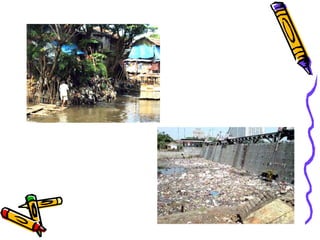
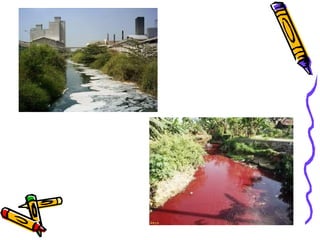
a. Disposal of industrial waste, residual insecticides,
and disposal of domestic waste, for example,
residual detergents pollute the water. Exiles?
Industries such as Pb, Hg, Zn, and CO, can
accumulate and be poison
b. The organic waste is decomposed by bacteria in
the water causes 02 is reduced so that interfere
with the activity of living organisms is water.
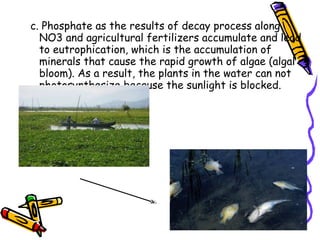
c. Phosphate as the results of decay process along
NO3 and agricultural fertilizers accumulate and lead
to eutrophication, which is the accumulation of
minerals that cause the rapid growth of algae (algal
bloom). As a result, the plants in the water can not
photosynthesize because the sunlight is blocked.
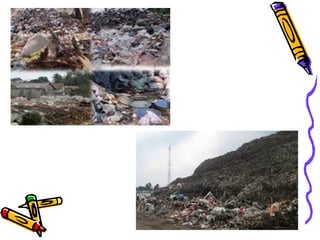
- SOIL POLLUTION
Soil contamination caused by some types of
pollution following:
a. rubbish such as bottles crushed hard,
synthetic rubber, glass, and cans
b. detergents that are non bio degradable
(naturally hard outlined)
c. chemicals from agricultural effluent,
such as insecticides.
SOUND POLLUTION (NOISE)
Noise pollution caused by the noise of motor
vehicles, airplanes, factories roar of the
engine, radio / tape recorder that reads
loud that it interferes with hearing.
Parameter of Pollution
Parameters that can be used as indicators of
pollution is as follows
1.Chemical parameters Parameters include C02
chemistry, pH, alkalinity, phosphorus, and heavy
metals.
2.Biochemical parameters
Biochemical parameters include BOD
(Biochemical Oxygen Demand), ie the amount of
oxygen in the water. The way the measurement is
to keep the water samples of known oxygen
content for 5 days. Then the oxygen levels were
measured again. BOD is used to measure the
amount of organic pollutants. According to the
health minister, the oxygen content in drinking
water or BOD should not be less
c. Physical parameters
Physical parameters include temperature,
color, taste, odor, turbidity, and
radioactivity.
d. Biological parameter
Biological parameters include the presence
or absence of microorganisms, for
example, coli bacteria, viruses, benthos,
and plankton.
C. IMPACT OF ENVIRONMENTAL
POLLUTION
1. Extinction of species
2. Pest
3. Environmental balance disorders
4. Reduced soil fertility
5. Poisoning and diseases
6. Concentration of biological
7. Formed ozone hole
8. Greenhouse effect
Environmental pollution

Environmental pollution

  • 1.
  • 2.
    ENVIRONMENTAL POLLUTION Environmental pollutionis one of several factors that can affect environmental change. Environmental pollution is the entry of materials into the environment which can interfere with organisms live on it. Pollutants or material that can caused pollution may include chemicals, dust, noise, radiation, or heat into the environment. The factors that cause pollution is: 1.Uncontrolled population growth (over population); 2.The rapid development and deployment of technologies; 3.The presence of pollutants in large quantities and nature can no longer neutralizing
  • 3.
    POLLUTANT When a substancecan be considered as pollutants? 1. If the levels are exceeding the limits of normal levels or thresholds 2. Exist at the wrong time 3. Exist in the wrong place How was the characteristics of pollutants? 1. Damaging for a while and after reacting with the environment, substance does not damage anymore. 2. Damage after a certain period, for example DDT and Pb (lead)
  • 4.
    POLLUTANT SEA WATER SOILAIR FRESH WATER ALGAE SOIL WATER WIND SOIL SMALL FISH WATER RESOURCE CLOUD PLANT BIG FISH RAIN HUMAN
  • 5.
    TYPES OF ENVIRONMENTALPOLLUTION - AIR POLLUTION Air pollutants can be either gases and particles. For example, as follows. a. H2S gas This is a toxic gas, contained in the volcano area,? Can also be produced from the burning of oil and coal b. CO and CO2 gas. Carbon monoxide (CO) is a colorless and odorless, toxic, is the result of incomplete combustion of waste material cars and engines. In addition, if the amount of C02 gas are too much on earth, it can bind the sun's heat so that the temperature of the earth's heat.
  • 6.
    c. Sulfur dioksidabersama dengan udara serta oksigen dan sinar matahari dapat menghasilkan asam sulfur. Asam ini membentuk kabut dan suatu saat akan jatuh sebagai hujan yang disebut hujan asam. Hujan asam dapat menyebabkan gangguan pada manusia, hewan, maupun tumbuhan. Misalnya gangguan pernapasan, perubahan morfologi pada daun, batang, dan benih. d. Hidrokarbon (HC) dan Nitrogen Oksida (NO) HC dan NO yang dipengaruhi oleh sinar matahari akan membentuk smog yang berupa gas yang sangat pedih jika mengenai mata dan juga sebagai penyebab penyakit kanker.
  • 7.
    CHLOROFLUOROCARBON (CFC) This gas iswidely used as foam blowing agents, cooling (refrigerators and air conditioning), as well as spraying material (hair spray and perfume). The top layer of the atmosphere, these gases react with ozon- (ozone layer is a layer that protects the earth from ultraviolet rays) reaction between CFCs and ozone will form the ozone hole. From this hole, ultraviolet light will penetrate the earth. Ultraviolet rays can cause skin cancer, reduced immunity, and the death of algae that can damage marine ecosystems.
  • 12.
    • The greenhouseeffect is caused by rising concentrations of carbon dioxide (CO2) and other gases in the atmosphere. The increase in the concentration of CO2 is caused by the increase in the burning of fuel oil (BBM), coal and other organic fuels are beyond the ability of plants and sea to absorb it.
  • 13.
    • CO2 isthe greatest greenhouse gases that forms a layer in the atmosphere. In addition to CO2 gas, which can cause the greenhouse effect are sulfur dioxide (SO2), nitrogen monoxide (NO) and nitrogen dioxide (NO2) and some organic compounds such as methane (CH4) and chlorofluoro carbon (CFC). These gases play an important role in increasing the greenhouse effect. • So far, we do not feel the presence of CO2 as a pollutant, since CO2 is not toxic. However, carbon dioxide (CO2) is an important greenhouse gas that is most widely produced and is a significant cause of global warming. • Is greenhouse always harmful?
  • 14.
    - WATER POLLUTION Waterpollution can be caused by several types of pollutants as follows. a. Disposal of industrial waste, residual insecticides, and disposal of domestic waste, for example, residual detergents pollute the water. Exiles? Industries such as Pb, Hg, Zn, and CO, can accumulate and be poison b. The organic waste is decomposed by bacteria in the water causes 02 is reduced so that interfere with the activity of living organisms is water.
  • 15.
    c. Phosphate asthe results of decay process along NO3 and agricultural fertilizers accumulate and lead to eutrophication, which is the accumulation of minerals that cause the rapid growth of algae (algal bloom). As a result, the plants in the water can not photosynthesize because the sunlight is blocked.
  • 18.
    - SOIL POLLUTION Soilcontamination caused by some types of pollution following: a. rubbish such as bottles crushed hard, synthetic rubber, glass, and cans b. detergents that are non bio degradable (naturally hard outlined) c. chemicals from agricultural effluent, such as insecticides.
  • 20.
    SOUND POLLUTION (NOISE) Noisepollution caused by the noise of motor vehicles, airplanes, factories roar of the engine, radio / tape recorder that reads loud that it interferes with hearing.
  • 22.
    Parameter of Pollution Parametersthat can be used as indicators of pollution is as follows 1.Chemical parameters Parameters include C02 chemistry, pH, alkalinity, phosphorus, and heavy metals. 2.Biochemical parameters Biochemical parameters include BOD (Biochemical Oxygen Demand), ie the amount of oxygen in the water. The way the measurement is to keep the water samples of known oxygen content for 5 days. Then the oxygen levels were measured again. BOD is used to measure the amount of organic pollutants. According to the health minister, the oxygen content in drinking water or BOD should not be less
  • 23.
    c. Physical parameters Physicalparameters include temperature, color, taste, odor, turbidity, and radioactivity. d. Biological parameter Biological parameters include the presence or absence of microorganisms, for example, coli bacteria, viruses, benthos, and plankton.
  • 24.
    C. IMPACT OFENVIRONMENTAL POLLUTION 1. Extinction of species 2. Pest 3. Environmental balance disorders 4. Reduced soil fertility 5. Poisoning and diseases 6. Concentration of biological 7. Formed ozone hole 8. Greenhouse effect