INTRODUCTION
 Environmental Impact Assessment is one of the most topical
subjects in environmental science at present, yet it is also
one of the most poorly understood.
 It is used as an environmental management buzzword rather
than a scientific technique.
 It is used to identify the environmental and social impact of
a project prior to decision making.
 It aims to predict environmental impacts at an early stage in
project planning and design, find ways and means to reduce
adverse impacts, shape projects to suit the local environment
and present the predictions and options to decision makers.
KEY ELEMENTS OF EIA
• SCOOPING : Identifies key issues and concerns of interested
parties.
• SCREENING : It decides weather EIA is required based on information collected.
• IDENTIFYING AND EVALUATING PROJECT ALTERNATIVES : It lists
alternatives sites and technique and impact of each.
• MITIGATING MEASURE DEALING WITH UNCERTAINITY : It reviews the
proposed actins to prevent or minimize the potential adverse affect of the world.
• ISSUING ENVIRONMENTAL STATEMENTS : It reports the findings of the
EIA.
• DECISION MAKING TO BE BALANCED
• PUBLIC PARTICIPATION IN ALL STAGES
NEED FOR EIA
 Natural environment undergoes continual change on a time
scale of hundred of millions of years.
 In addition to these natural changes man made environmental
changes by human increases.
 Man as a hunter, used fire, which modified the natural
environment.
 As developmental activities became more, rate of
environmental changes by human increases.
 Due to vastly increased population and high per capita
consumption ill effects on environment increased.
 Man’s increasing control of his environmental often
creates conflicts between human goals and natural
press.
 Pollution due to the grinding and the pervasive
poverty in the underdeveloped countries.
 Pollution due to richness in the industralized
countries due to the over use of resources.
 So countries plan for eco development which involve:
1.Better utilization of the local source of energy.
2.Efficient recycling
3.Pollution alleviation by locally activity.
NEED OF EIA FOR
DEVELOPING COUNTRIES
 Developmental activities are affecting the environment.
 Advanced agricultural techniques disrupted traditional village
structure because of changes of the distribution of wealth and
value pattern.
 In the cities the immigrants minified the problems of waste
disposal, water supply housing shortage and unemployment .
 In the hill they cut the forest and sell the wood.
 Cultivation in the hills without practicing proper soil conservation
techniques lead to soil erosion.
NEED OF EIA FOR DEVELOPED
COUNTRIES
 Planning management of land and water still present major
problems in the industralized developed countries.
 The problems of industralized countries are associated with
the massive demand for energy and water by consumer
society.
 It affects the quality of water and the organic matters.
 So decaying of food chains, which leads to instability aquatic
ecosystem.
COMPONENTS OF EIA
 Establishment of goals.
 Establishment of policy and programms.
 Actions - Proposed action, proposed projects,
legislative actions
 Determination of significant impact – Environmental
impact assessment.
 Decision making
 Implementation
 Post audit
EIA METHODS
There are many seperate methods for identifying, for predicting, for
determining and for communicating inspection procedures. There
are three methods for identification of effects and impacts.
1.CHECK LIST
 There are comprehensive lists of environmental effects and impact
indicators.
 It stimulates analyst to think broadly about possible consequences
of contemplated action.
 This listening is a strength as well as weakness.
 These are found in one form or another in nearly all EIA methods.
2.MATRICES
 It employs a list of human action in addition to list impact
indicators.
 These two lists are related in a matrix, which can be used to
identify the cause effect relationship.
 Publish guidelines may specify these relationships or the
analyst may inform an open matrix of possible actions and
characteristics.
3.FLOW DIAGRAMS
 These used to identify action effect impact relationship.
 It premises the analyst to vizualise the connection between
action and impact.
 It studied to single project assessment.
REVIEW AND EVALUATING
THE EIA REPORT
 The paper of the EIA should respond to the comments
and such substantive comments and response should
be attached to final report.
 The EIA document should be circulated to different
governmental agencies for review.
 The reports are reviewed in respect of their
completness, adequacy and merit.
APPLICATION OF EIA
ACID RAIN
The international scientific community regards acid rain as
one of the most serious and significant environmental problem
of our time, requiring urgent attention and immediate
political initiative.
Acid rain was not perceived as a serious threat in India till
recently and did not feature as frequently in environment
related debates as other issues of common concern.
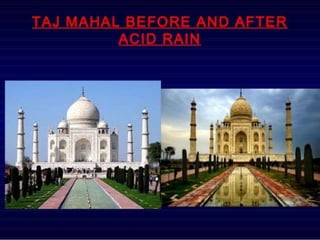
However, reports on the corrosion of the Tajmahal in
focusing public attention on the threat India faced from acid
rain.
 This realization was forcefully brought home when the supreme
court ordered the closure of the oil refineries and other industries
implicated in corroding the Tajmahal with their acidic emissions.
 It is evident that the gravity of the situation has sunk in.
IMPACT OF ACID RAIN
1. Fresh water ecosystem destroyed.
2. Fertility of soil declined.
3. Vegetation and undergrowth causing reduced or abnormal
growth.
4. Acid rain affect human health in a number of ways such as
irritation of the skin, respiratory tract etc.
5. Buildings have been affected by ‘marble cancer’,’stone cancer’
etc.
CONTROL MEASURES
1) Reduce amount of sulphur dioxide and
oxides of nitrogen released into the
atmosphere.
2) Use cleaner fuels.
3) Reducing the effects of acid rain by
liming.
4) Flue gas desulphurisation.
DROUGHT
A drought is a period of below average
precipitation in a given region, resulting in
prolonged shortages in the water supply,
whether atmospheric, surface water or
ground water.
A drought can last for months or years or
may be declared after as few as 15 days.
IMPACT OF DROUGHT
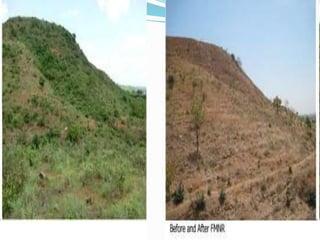
1. Drying out of water bodies.
2. Reduction in soil quality.
3. Unsuitable conditions for plant and
survival.
4. Migration and even death of animals and
wildlife.
5. Insect damage and disease.
CONTROL MEASURES
1) Construction of dams and
reservoirs.
2) Drought monitoring.
3) Rainwater harvesting.
4) Recycled water.
CONCLUSION
 EIA process would be more efficient as soon as
environmental agencies again experience in ‘scooping
and reviewing’.
 EIAs public participation is more effective as soon as
citizen become more familiar with laws and
procedures , and as they became more confident that
there participation can affect the review of the
‘proposal action’.
THANK YOU

Environmental impact assessment

  • 2.
    INTRODUCTION  Environmental ImpactAssessment is one of the most topical subjects in environmental science at present, yet it is also one of the most poorly understood.  It is used as an environmental management buzzword rather than a scientific technique.  It is used to identify the environmental and social impact of a project prior to decision making.  It aims to predict environmental impacts at an early stage in project planning and design, find ways and means to reduce adverse impacts, shape projects to suit the local environment and present the predictions and options to decision makers.
  • 3.
    KEY ELEMENTS OFEIA • SCOOPING : Identifies key issues and concerns of interested parties. • SCREENING : It decides weather EIA is required based on information collected. • IDENTIFYING AND EVALUATING PROJECT ALTERNATIVES : It lists alternatives sites and technique and impact of each. • MITIGATING MEASURE DEALING WITH UNCERTAINITY : It reviews the proposed actins to prevent or minimize the potential adverse affect of the world. • ISSUING ENVIRONMENTAL STATEMENTS : It reports the findings of the EIA. • DECISION MAKING TO BE BALANCED • PUBLIC PARTICIPATION IN ALL STAGES
  • 4.
    NEED FOR EIA Natural environment undergoes continual change on a time scale of hundred of millions of years.  In addition to these natural changes man made environmental changes by human increases.  Man as a hunter, used fire, which modified the natural environment.  As developmental activities became more, rate of environmental changes by human increases.  Due to vastly increased population and high per capita consumption ill effects on environment increased.
  • 5.
     Man’s increasingcontrol of his environmental often creates conflicts between human goals and natural press.  Pollution due to the grinding and the pervasive poverty in the underdeveloped countries.  Pollution due to richness in the industralized countries due to the over use of resources.  So countries plan for eco development which involve: 1.Better utilization of the local source of energy. 2.Efficient recycling 3.Pollution alleviation by locally activity.
  • 6.
    NEED OF EIAFOR DEVELOPING COUNTRIES  Developmental activities are affecting the environment.  Advanced agricultural techniques disrupted traditional village structure because of changes of the distribution of wealth and value pattern.  In the cities the immigrants minified the problems of waste disposal, water supply housing shortage and unemployment .  In the hill they cut the forest and sell the wood.  Cultivation in the hills without practicing proper soil conservation techniques lead to soil erosion.
  • 7.
    NEED OF EIAFOR DEVELOPED COUNTRIES  Planning management of land and water still present major problems in the industralized developed countries.  The problems of industralized countries are associated with the massive demand for energy and water by consumer society.  It affects the quality of water and the organic matters.  So decaying of food chains, which leads to instability aquatic ecosystem.
  • 8.
    COMPONENTS OF EIA Establishment of goals.  Establishment of policy and programms.  Actions - Proposed action, proposed projects, legislative actions  Determination of significant impact – Environmental impact assessment.  Decision making  Implementation  Post audit
  • 9.
    EIA METHODS There aremany seperate methods for identifying, for predicting, for determining and for communicating inspection procedures. There are three methods for identification of effects and impacts. 1.CHECK LIST  There are comprehensive lists of environmental effects and impact indicators.  It stimulates analyst to think broadly about possible consequences of contemplated action.  This listening is a strength as well as weakness.  These are found in one form or another in nearly all EIA methods.
  • 10.
    2.MATRICES  It employsa list of human action in addition to list impact indicators.  These two lists are related in a matrix, which can be used to identify the cause effect relationship.  Publish guidelines may specify these relationships or the analyst may inform an open matrix of possible actions and characteristics. 3.FLOW DIAGRAMS  These used to identify action effect impact relationship.  It premises the analyst to vizualise the connection between action and impact.  It studied to single project assessment.
  • 11.
    REVIEW AND EVALUATING THEEIA REPORT  The paper of the EIA should respond to the comments and such substantive comments and response should be attached to final report.  The EIA document should be circulated to different governmental agencies for review.  The reports are reviewed in respect of their completness, adequacy and merit.
  • 12.
    APPLICATION OF EIA ACIDRAIN The international scientific community regards acid rain as one of the most serious and significant environmental problem of our time, requiring urgent attention and immediate political initiative. Acid rain was not perceived as a serious threat in India till recently and did not feature as frequently in environment related debates as other issues of common concern. However, reports on the corrosion of the Tajmahal in focusing public attention on the threat India faced from acid rain.
  • 14.
     This realizationwas forcefully brought home when the supreme court ordered the closure of the oil refineries and other industries implicated in corroding the Tajmahal with their acidic emissions.  It is evident that the gravity of the situation has sunk in. IMPACT OF ACID RAIN 1. Fresh water ecosystem destroyed. 2. Fertility of soil declined. 3. Vegetation and undergrowth causing reduced or abnormal growth. 4. Acid rain affect human health in a number of ways such as irritation of the skin, respiratory tract etc. 5. Buildings have been affected by ‘marble cancer’,’stone cancer’ etc.
  • 15.
    CONTROL MEASURES 1) Reduceamount of sulphur dioxide and oxides of nitrogen released into the atmosphere. 2) Use cleaner fuels. 3) Reducing the effects of acid rain by liming. 4) Flue gas desulphurisation.
  • 16.
    DROUGHT A drought isa period of below average precipitation in a given region, resulting in prolonged shortages in the water supply, whether atmospheric, surface water or ground water. A drought can last for months or years or may be declared after as few as 15 days.
  • 17.
    IMPACT OF DROUGHT 1.Drying out of water bodies. 2. Reduction in soil quality. 3. Unsuitable conditions for plant and survival. 4. Migration and even death of animals and wildlife. 5. Insect damage and disease.
  • 19.
    CONTROL MEASURES 1) Constructionof dams and reservoirs. 2) Drought monitoring. 3) Rainwater harvesting. 4) Recycled water.
  • 20.
    CONCLUSION  EIA processwould be more efficient as soon as environmental agencies again experience in ‘scooping and reviewing’.  EIAs public participation is more effective as soon as citizen become more familiar with laws and procedures , and as they became more confident that there participation can affect the review of the ‘proposal action’.
  • 21.