KIMEP (Kazakhstan Instıtute Management and Economic Research)  June 10, 2011  Almaty, Kazakhtstan  Entrepreneurship in a Free Society Moderator :  Bahattin Karademir
Contents  What is entrepreneurship? Who are the entrepreneurs? What is the significance of entrepreneurship? How to nurture entrepreneurship?  What should be the appropriate strategies?


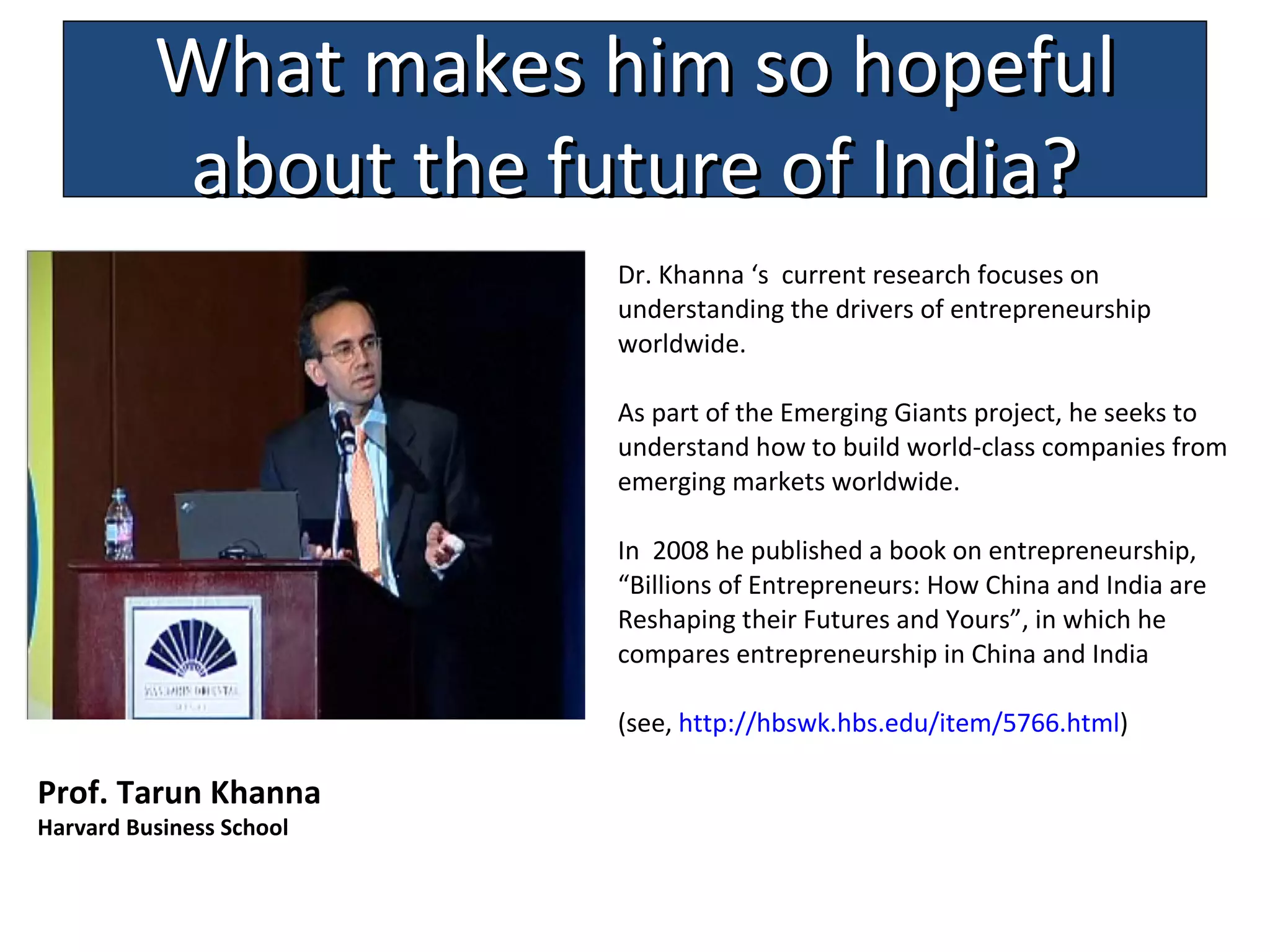
D r. Khanna  ‘s  current research focuses on understanding the drivers of entrepreneurship worldwide.  As part of the Emerging Giants project, he seeks to understand how to build world-class companies from emerging markets worldwide.  In  2008 he published a book on entrepreneurship ,  “ Billions of Entrepreneurs: How China and India are Reshaping their Futures and Yours ”, in which he compares entrepreneurship in China and India  (see,  http:// hbswk . hbs .edu/ item /5766.html )  Prof. Tarun Khanna  Harvard Business School What makes him so hopeful about the future of India?
What is Entrepreneurship? Process of creating something new; Devoting the necessary time and effort;  Assuming the financial, psychic and social risks; Receiving the resulting rewards of monetary and personal satisfaction and independence.
Who are Entrepreneurs? An entrepreneur may be: Man or woman  Someone with high income or low income A technologist or someone lacking technological sophistication A college graduate or a primary school dropout
Who are Entrepreneurs? An entrepreneur may have been: An inventor A manager A nurse A salesperson  An engineer  A student  A teacher  A retiree
Traits of Entrepreneurs Willing to exploit new opportunities Prefer risk taking over security Eager to acquire new skills Driven by ambition Listen to their intuition Learn from their mistakes © Prentice Hall, 2005 Excellence in Business,  Revised Edition Chapter 5 -
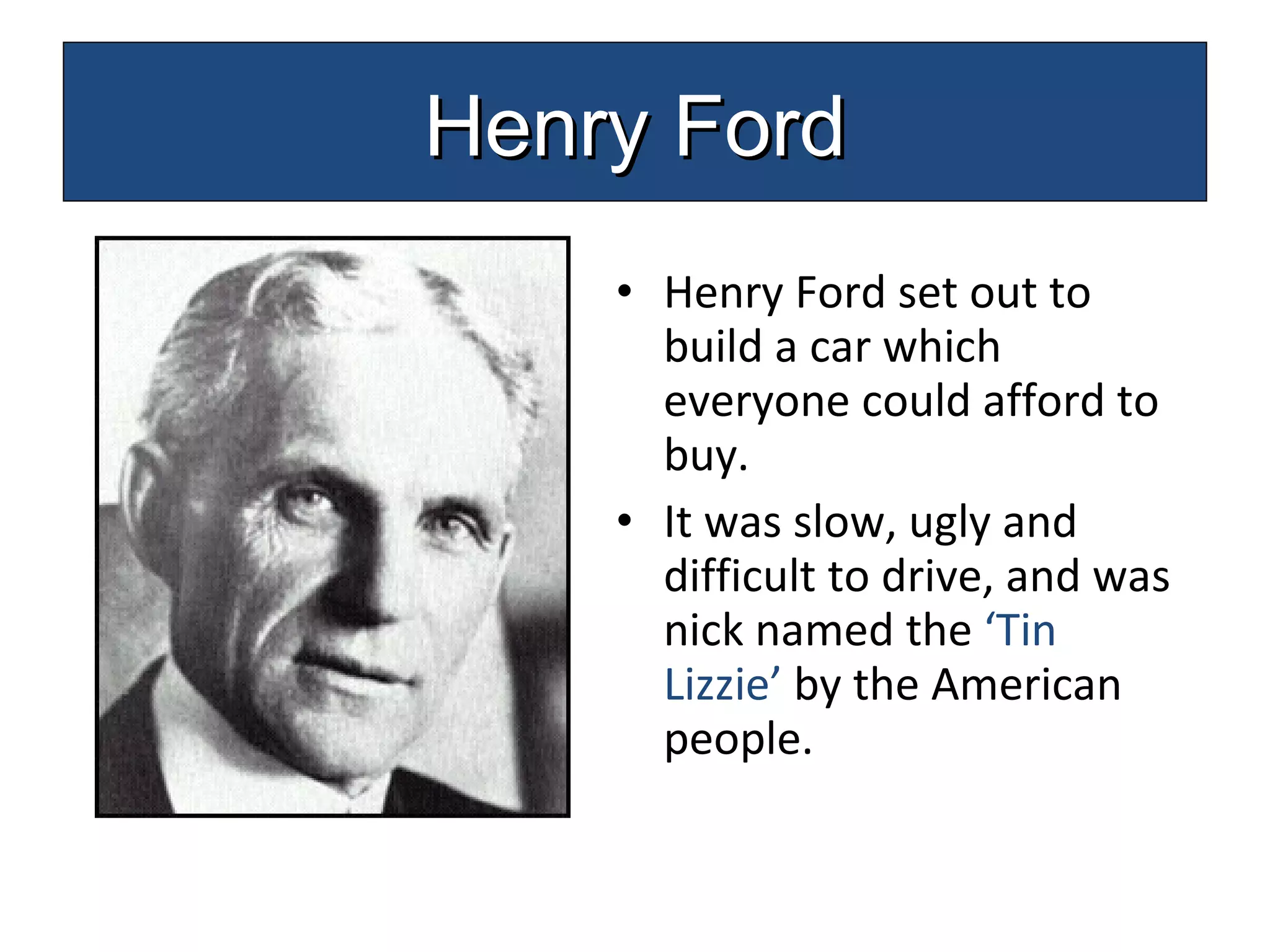
Henry Ford set out to build a car which everyone could afford to buy. It was slow, ugly and difficult to drive, and was nick named the  ‘Tin Lizzie’  by the American people. Henry Ford
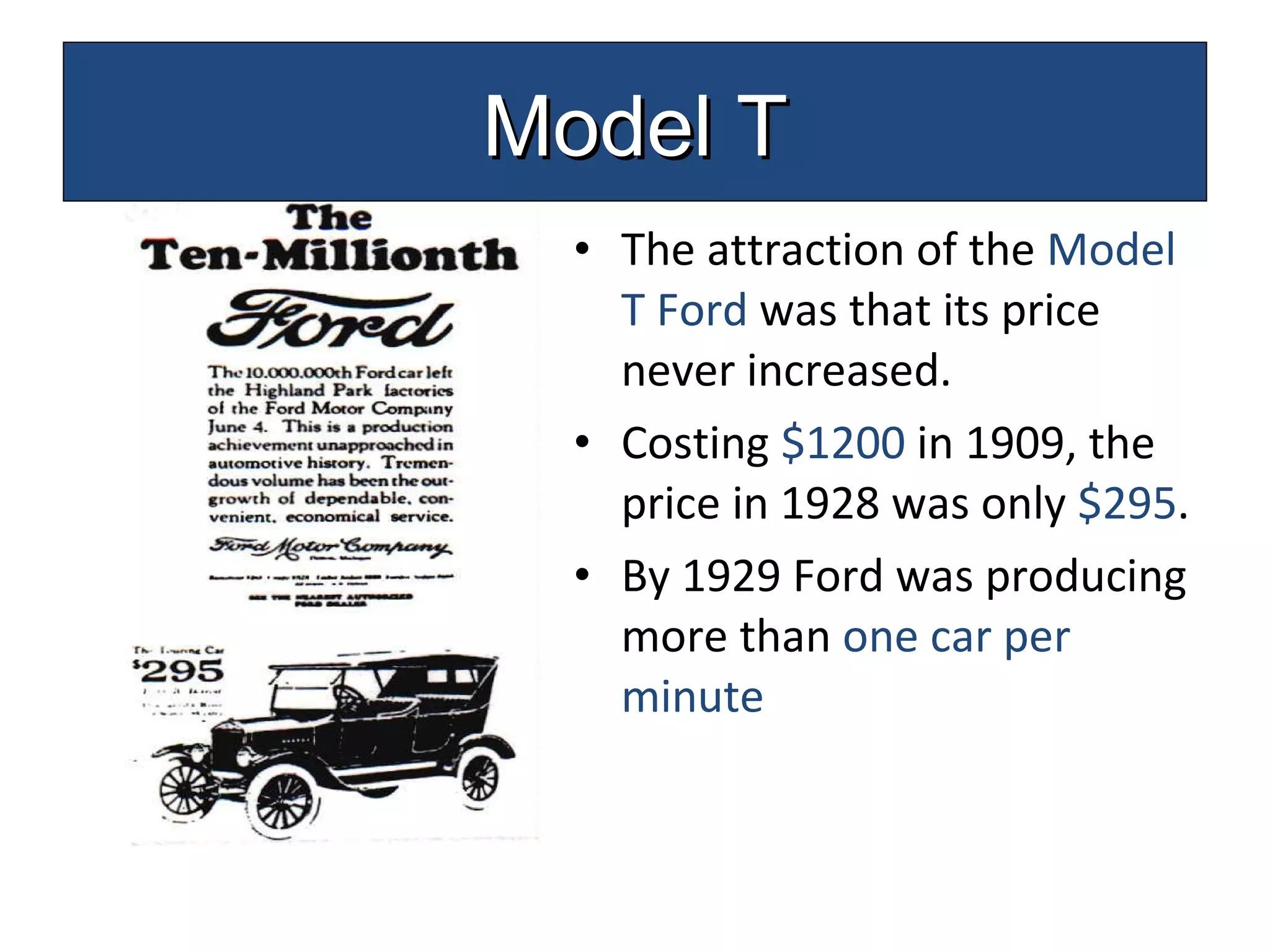
The attraction of the  Model T Ford  was that its price never increased. Costing  $1200  in 1909, the price in 1928 was only  $295 . By 1929 Ford was producing more than  one car per   minute Model T
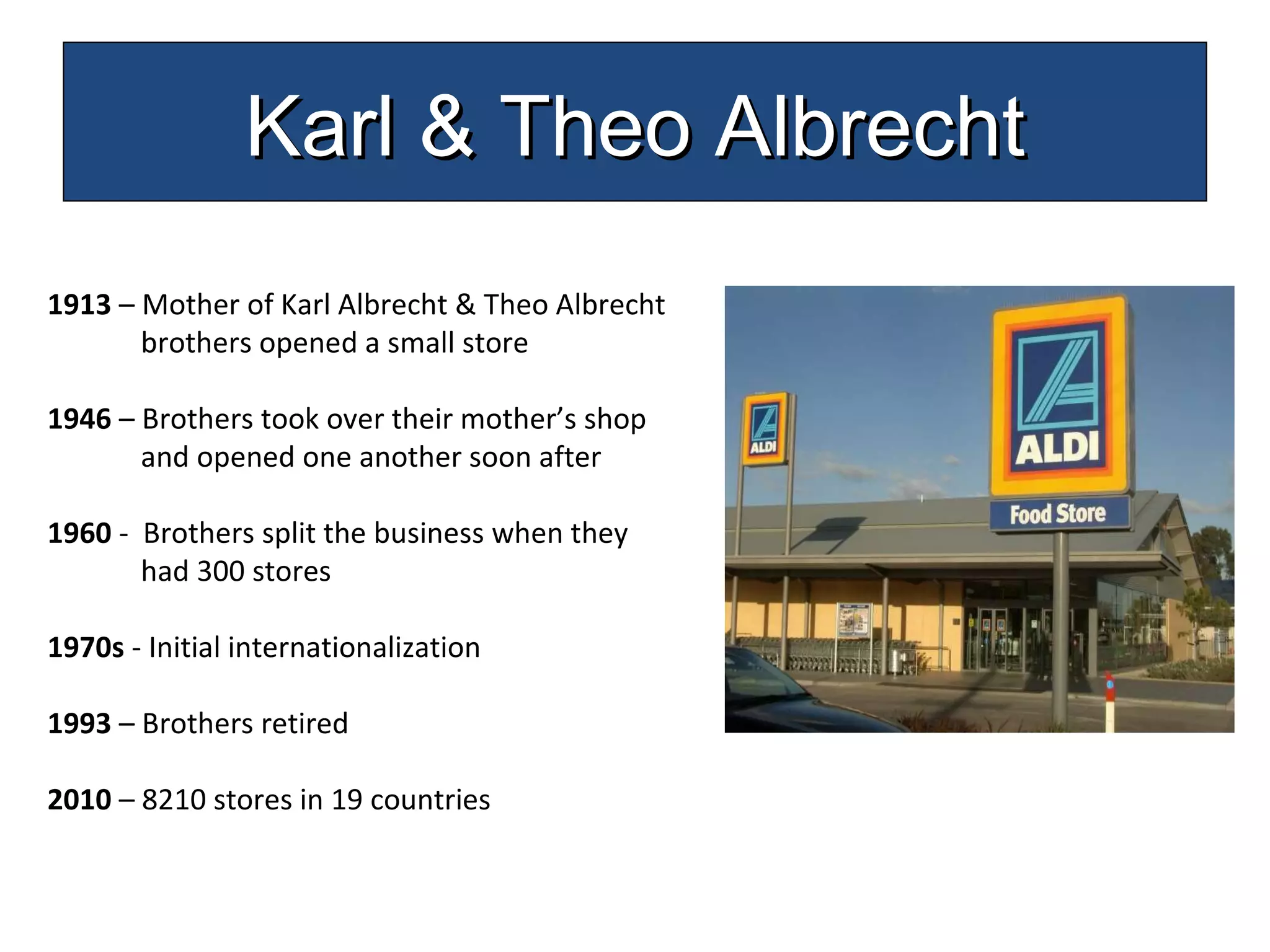
1913  – Mother of Karl Albrecht & Theo Albrecht  brothers opened a small store 1946  – Brothers took over their mother’s shop  and opened one another soon after 1960  -  Brothers split the business when they  had 300 stores 1970s  - Initial internationalization  1993  – Brothers retired 2010  – 8210 stores in 19 countries  Karl & Theo Albrecht
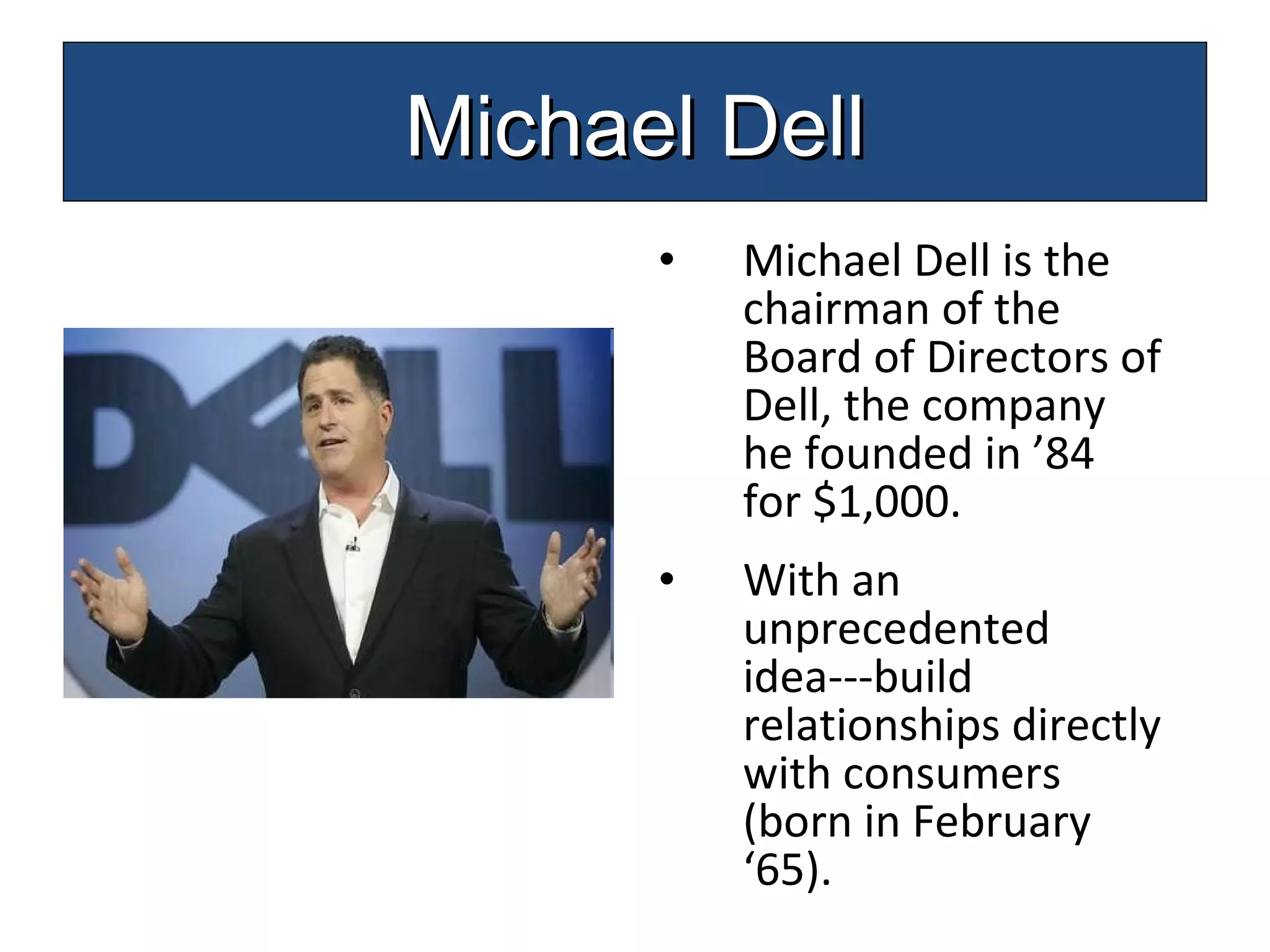
Michael Dell is the chairman of the Board of Directors of Dell, the company he founded in ’84 for $1,000. With an unprecedented idea---build relationships directly with consumers (born in February ‘65). Michael Dell
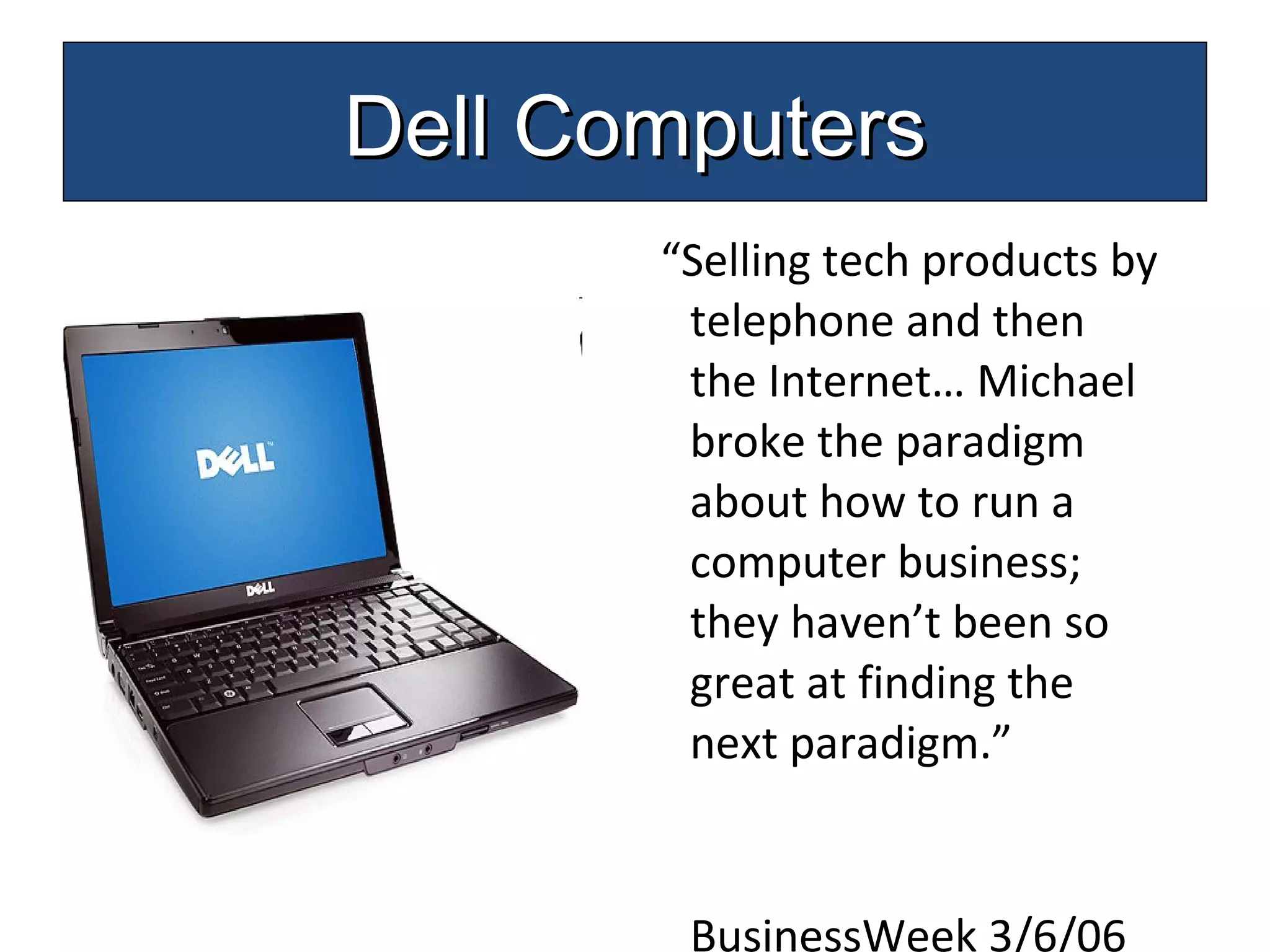
“ Selling tech products by telephone and then the Internet… Michael broke the paradigm about how to run a computer business; they haven’t been so great at finding the next paradigm.”  BusinessWeek 3/6/06 Dell Computers
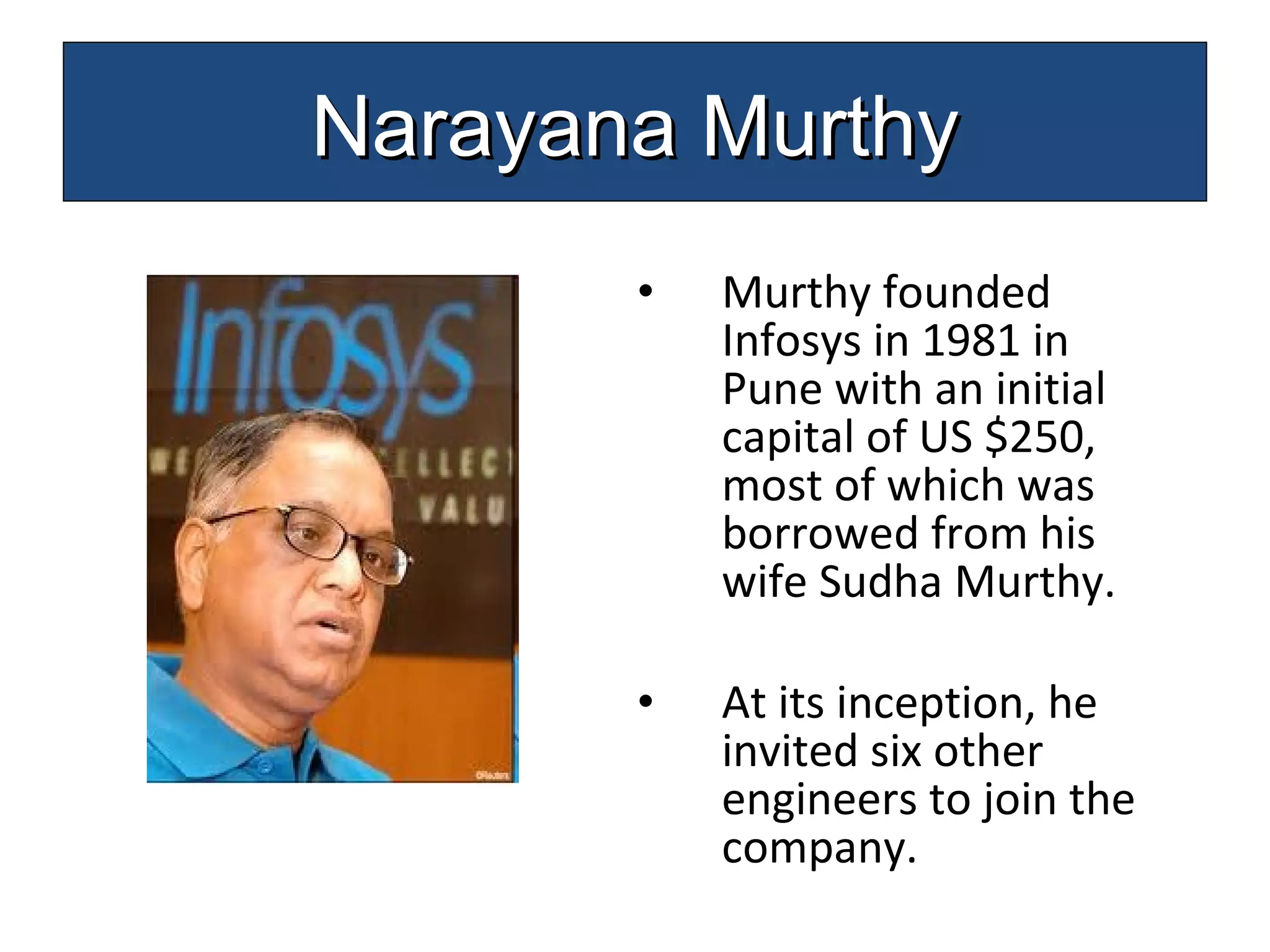
Murthy founded Infosys in 1981 in Pune with an initial capital of US $250, most of which was borrowed from his wife  Sudha Murthy . At its inception, he invited six other engineers to join the company.  Narayana Murthy
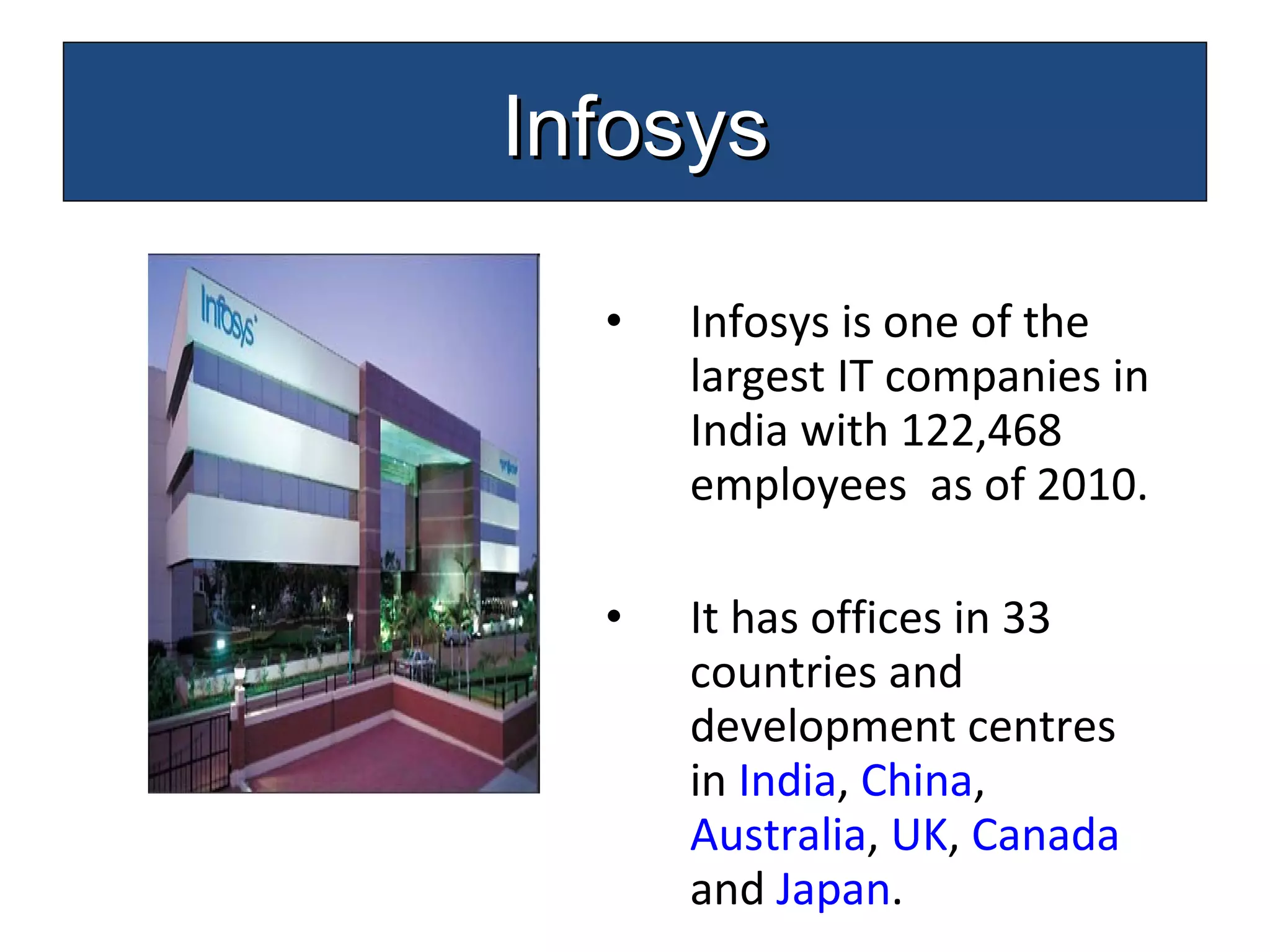
Infosys is one of the largest IT companies in India with 122,468 employees  as of 2010. It has offices in 33 countries and development centres in  India ,  China ,  Australia ,  UK ,  Canada  and  Japan .  Infosys
The Small Business Not Dominant In Its Field Fewer Than 50 Employees  Independently Owned and Operated Relatively Small Annual Sales
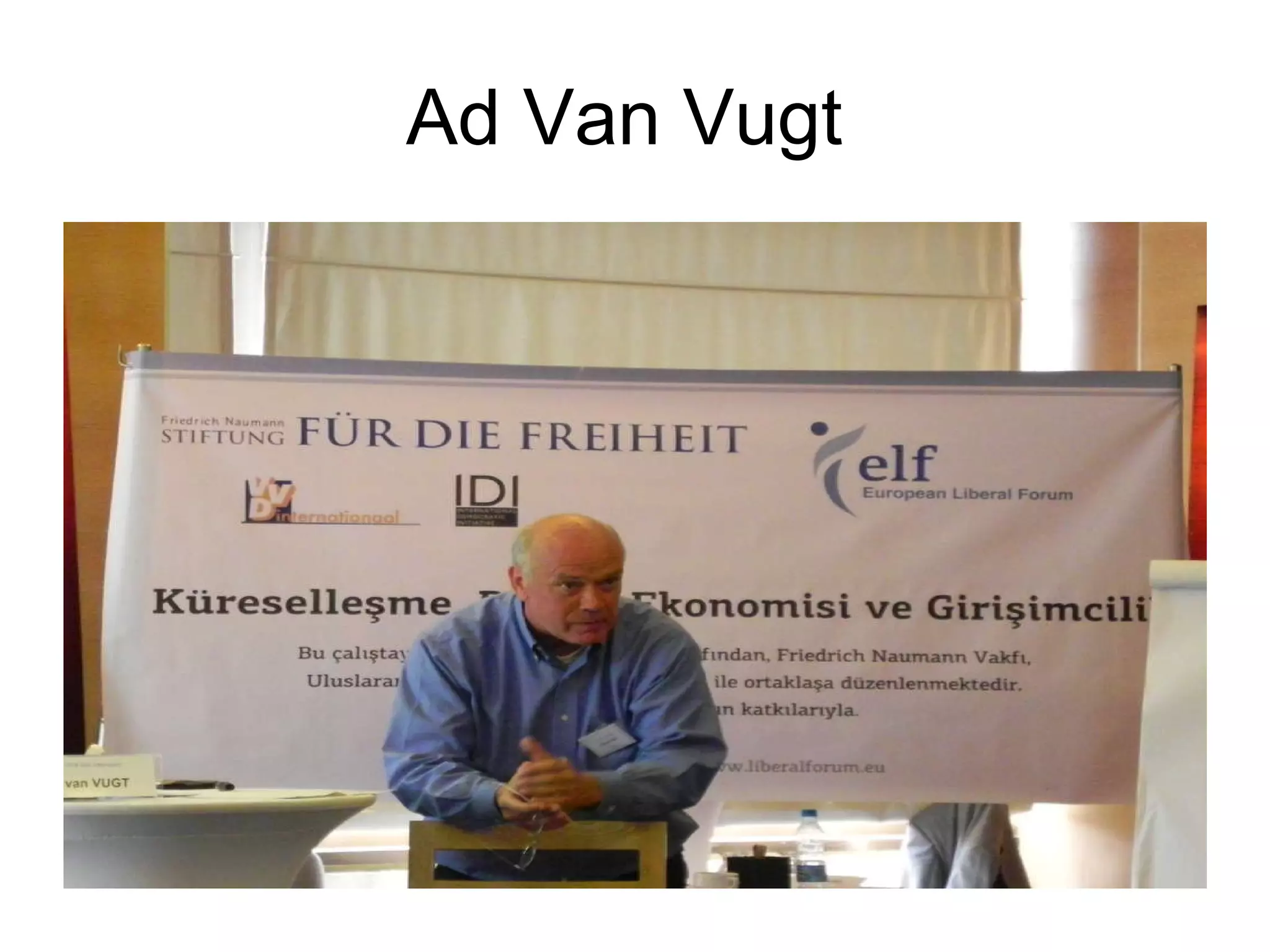
Ad Van Vugt
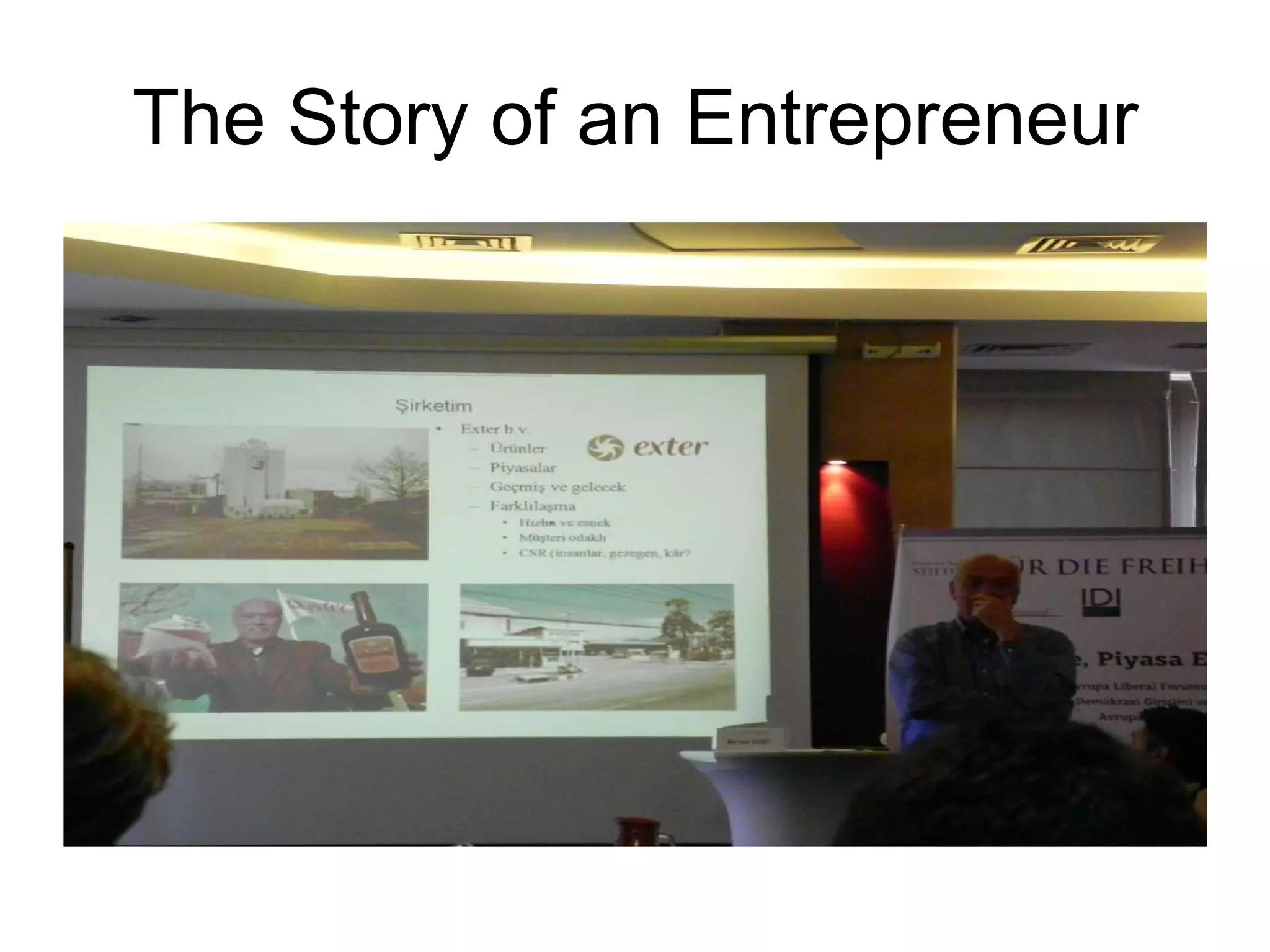
The Story of an Entrepreneur
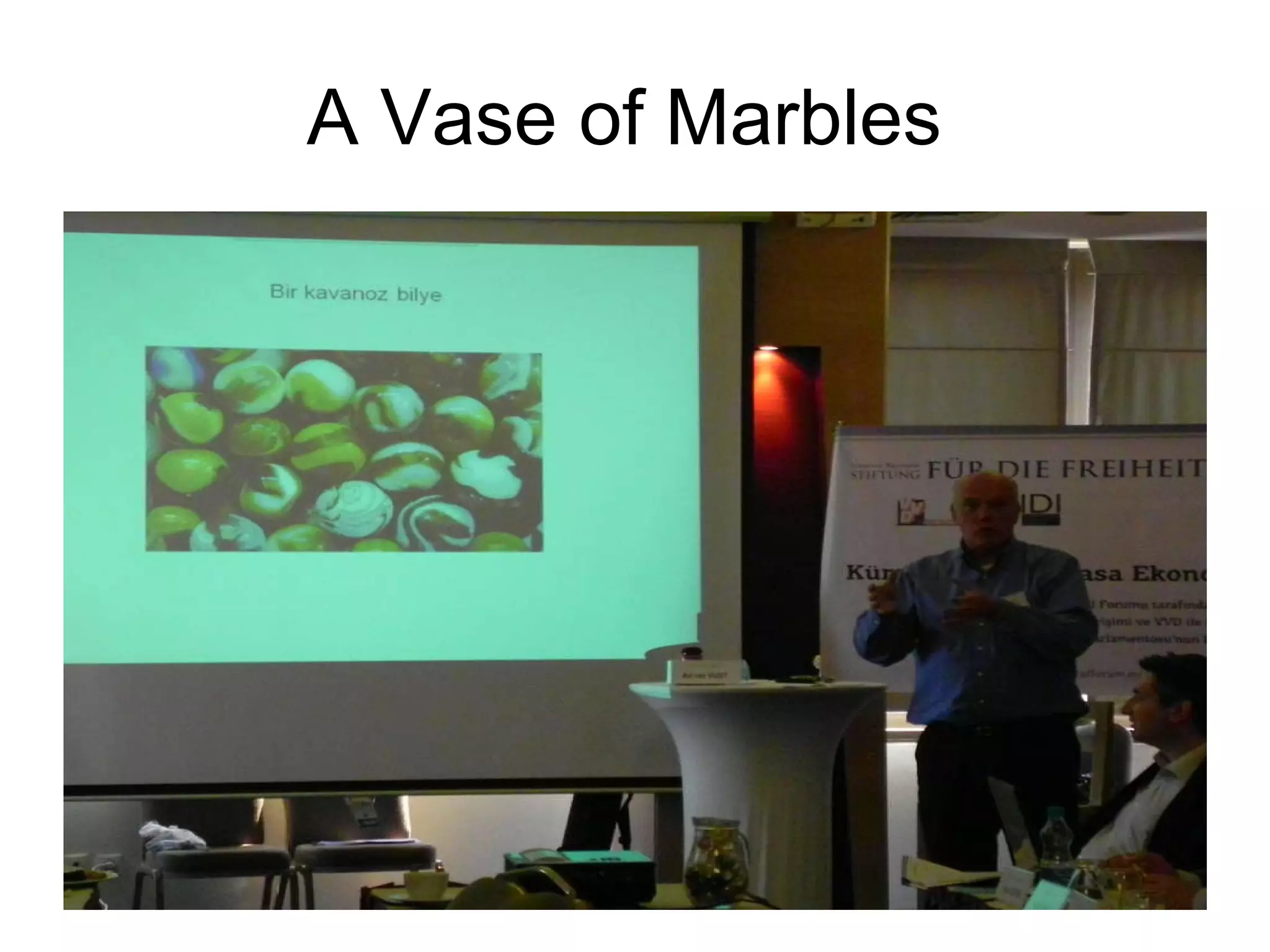
A Vase of Marbles
 
 
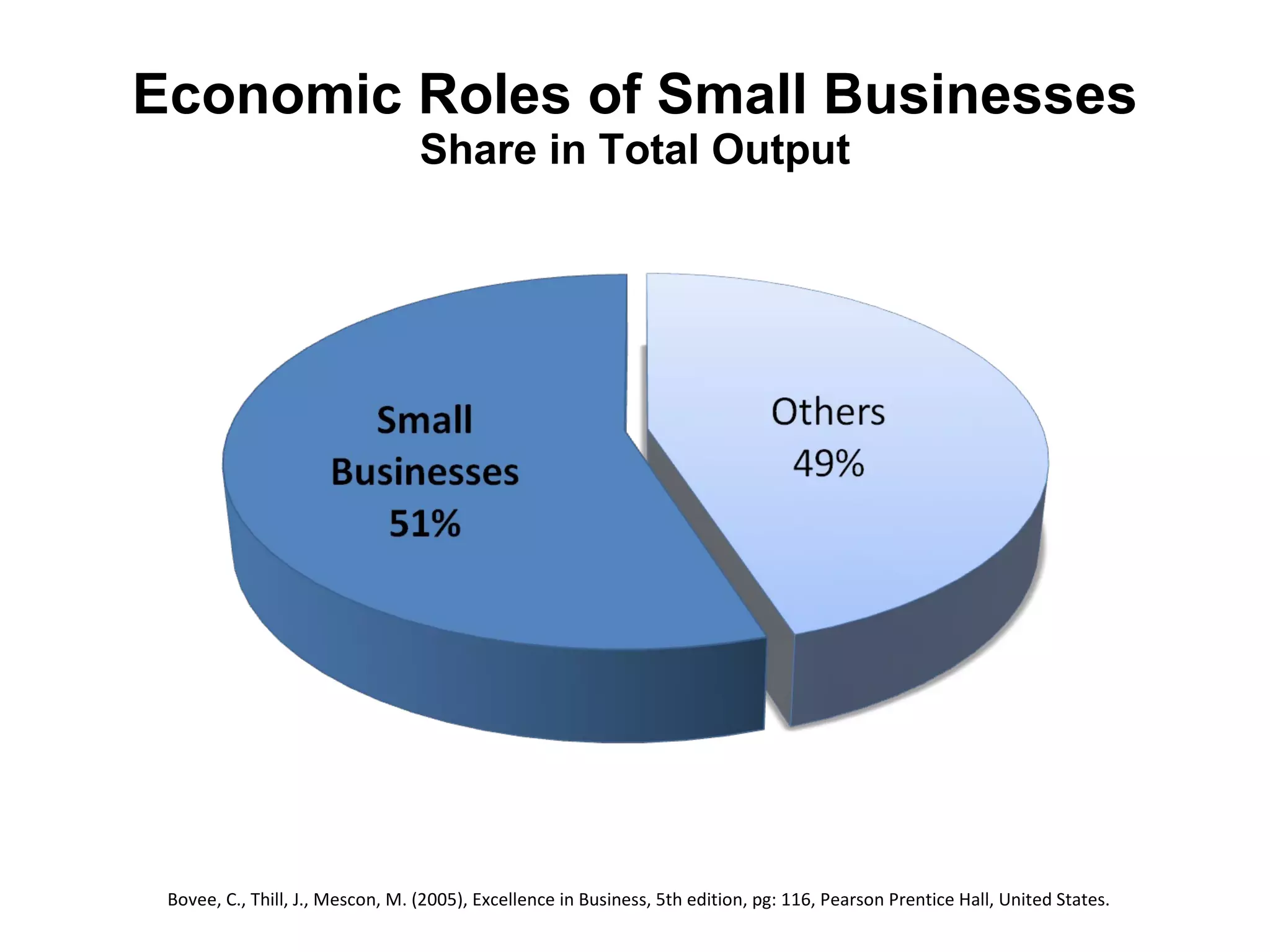
Economic Roles of Small Businesses Share in Total Output Bovee, C., Thill, J., Mescon, M. (2005), Excellence in Business, 5th edition, pg: 116, Pearson Prentice Hall, United States.
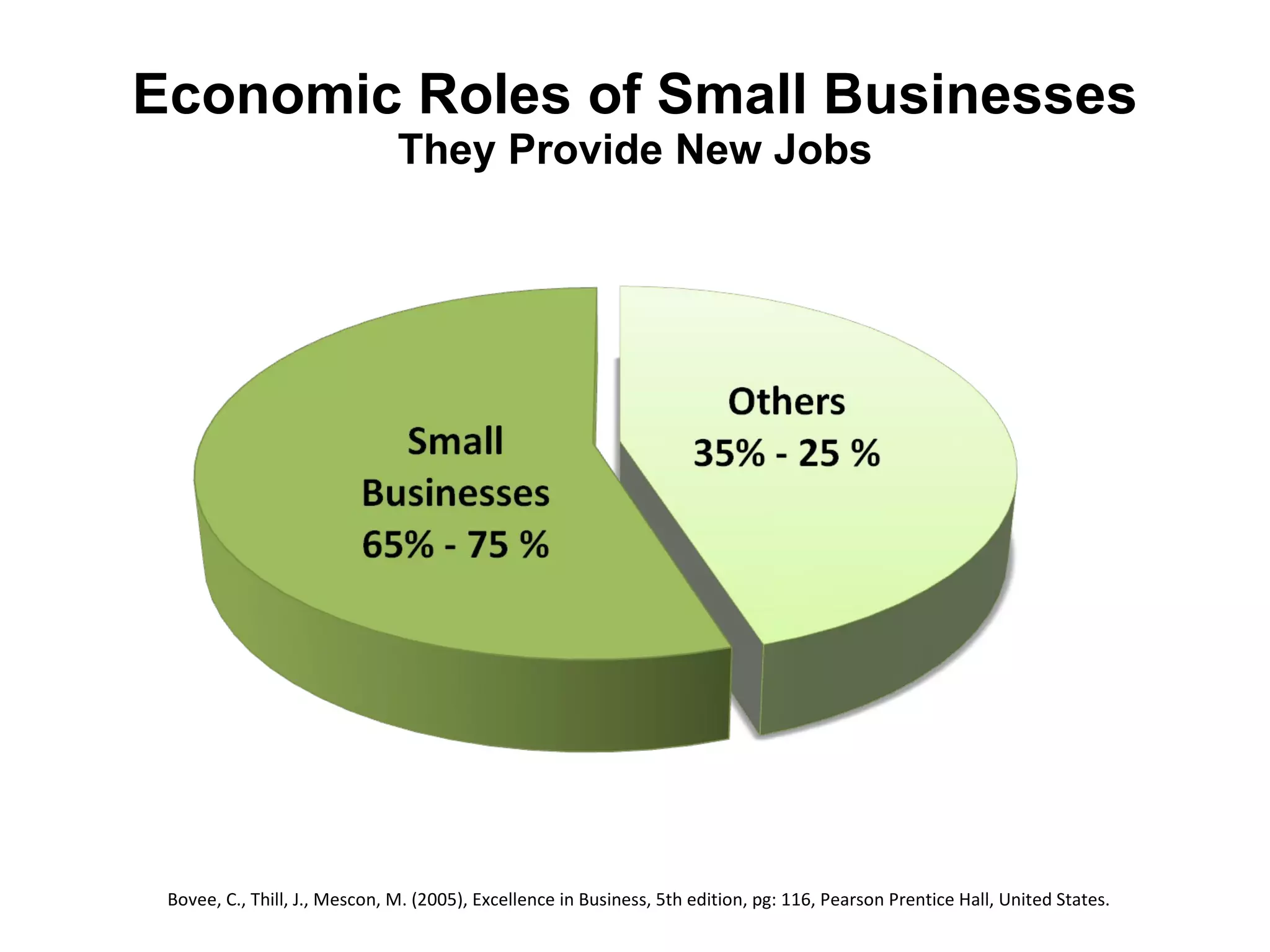
Economic Roles of Small Businesses They Provide New Jobs Bovee, C., Thill, J., Mescon, M. (2005), Excellence in Business, 5th edition, pg: 116, Pearson Prentice Hall, United States.
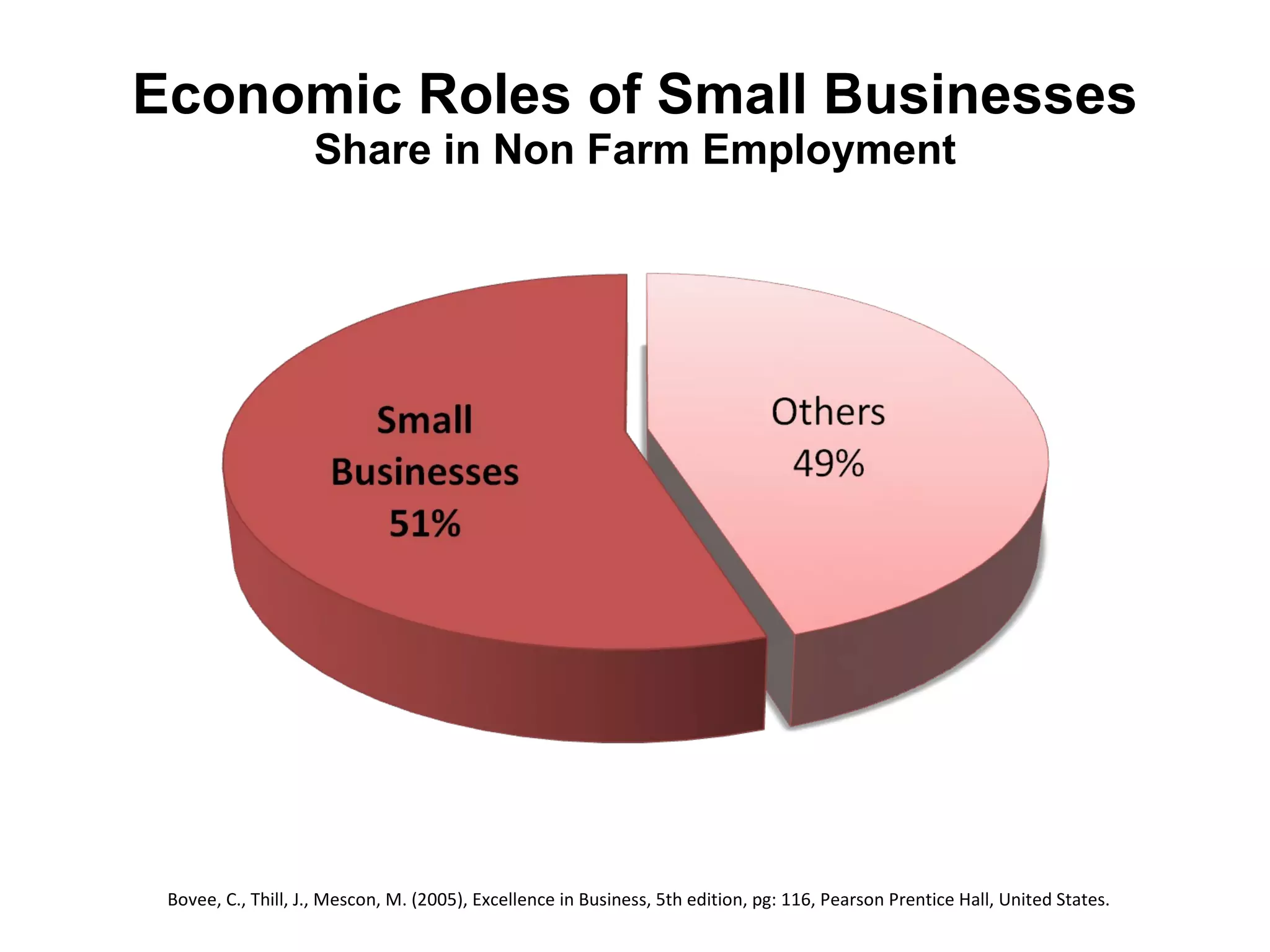
Economic Roles of Small Businesses Share in Non Farm Employment Bovee, C., Thill, J., Mescon, M. (2005), Excellence in Business, 5th edition, pg: 116, Pearson Prentice Hall, United States.
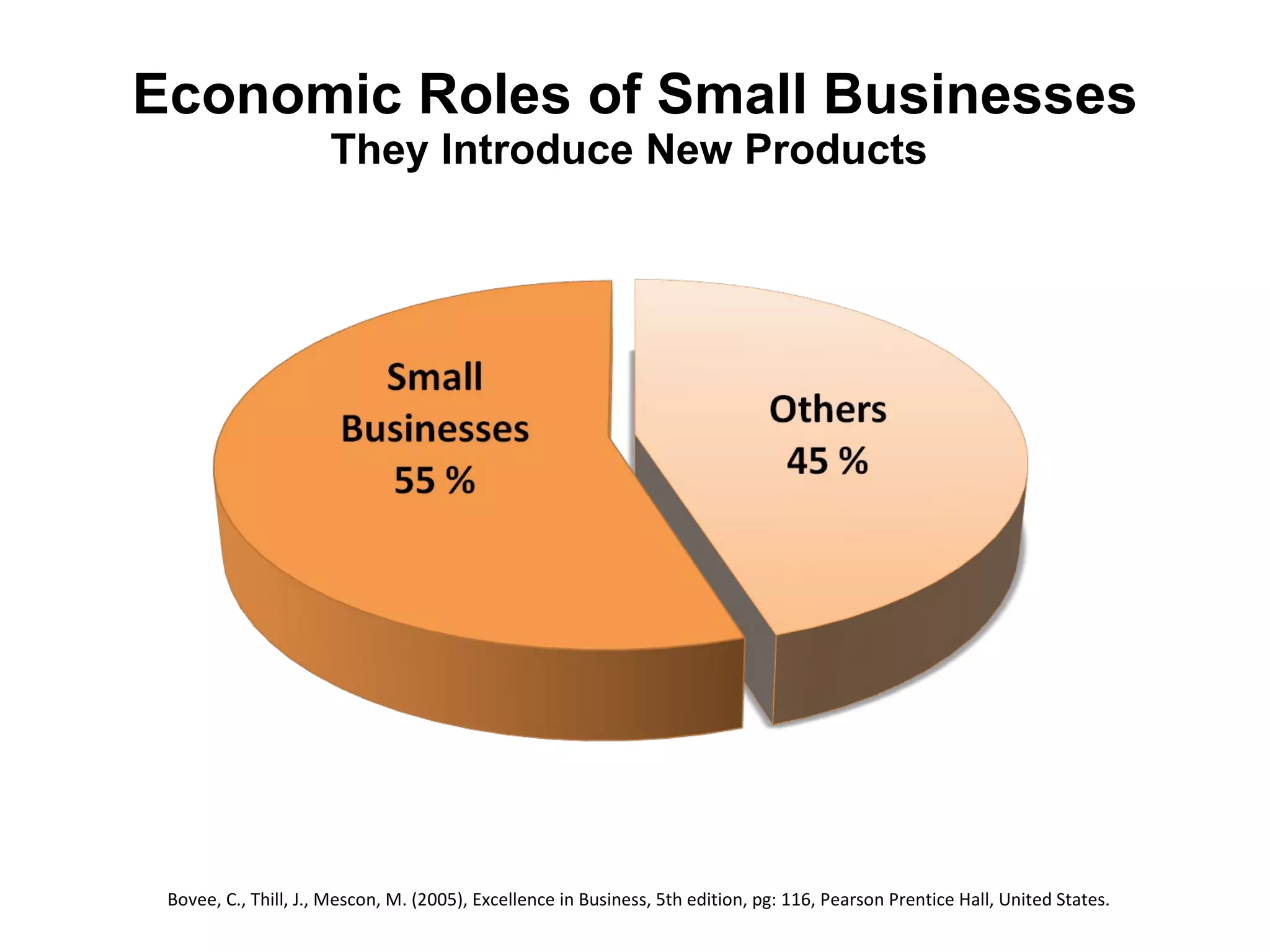
Economic Roles of Small Businesses They Introduce New Products  Bovee, C., Thill, J., Mescon, M. (2005), Excellence in Business, 5th edition, pg: 116, Pearson Prentice Hall, United States.
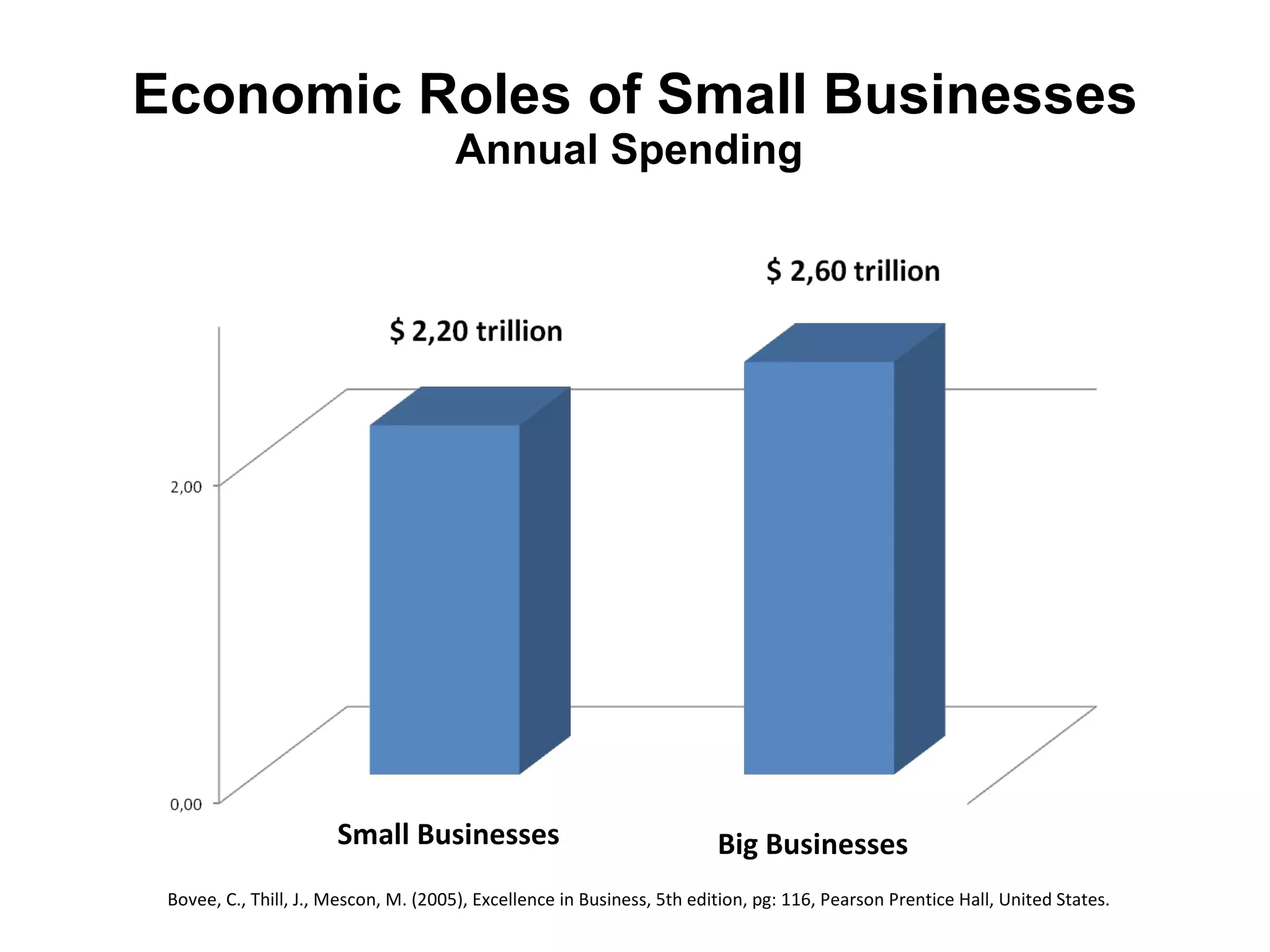
Economic Roles of Small Businesses Annual Spending  Bovee, C., Thill, J., Mescon, M. (2005), Excellence in Business, 5th edition, pg: 116, Pearson Prentice Hall, United States. Small Businesses  Big Businesses
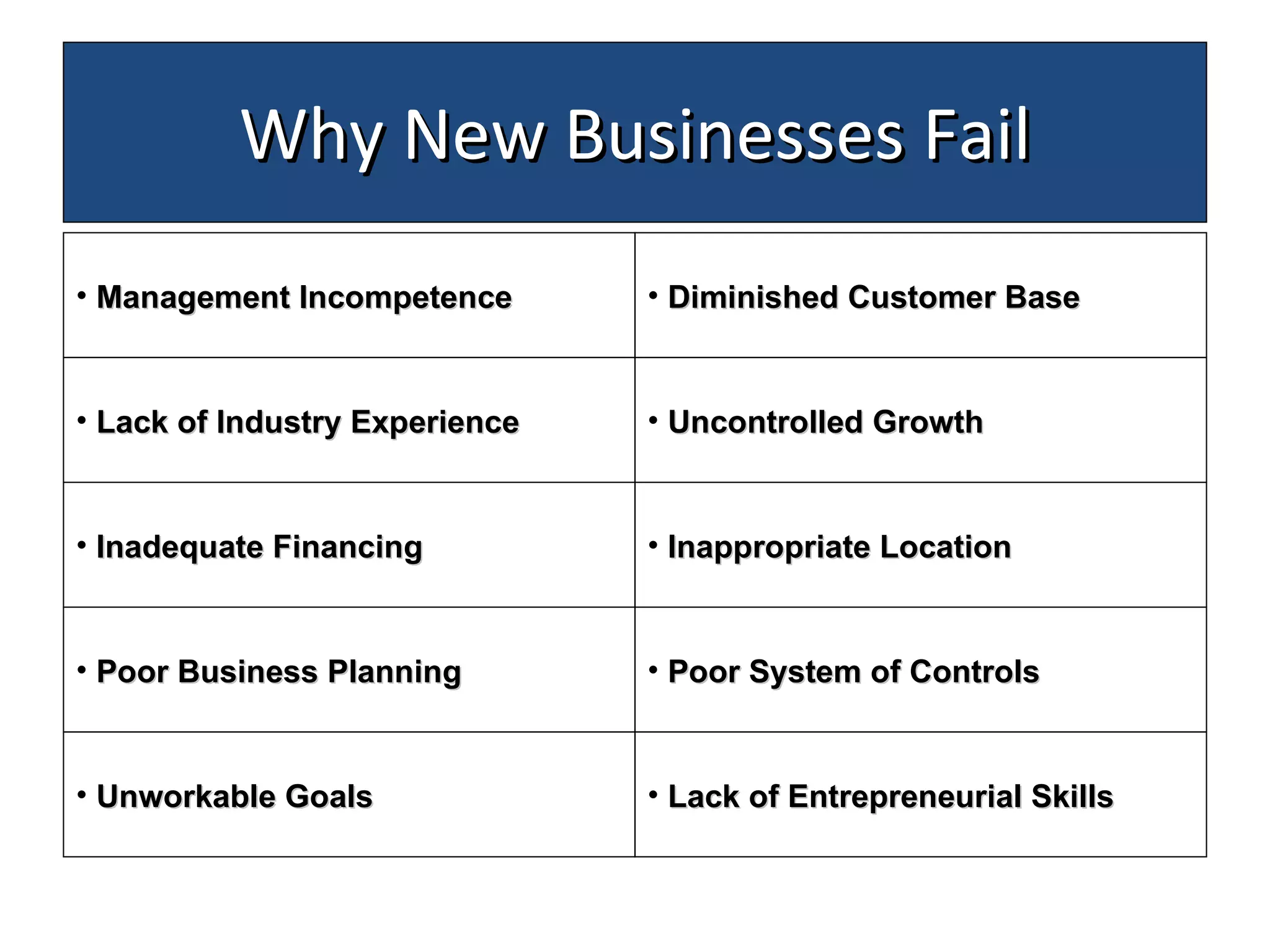
Why New Businesses Fail Management Incompetence Lack of Industry Experience Inadequate Financing Poor Business Planning Unworkable Goals Diminished Customer Base Uncontrolled Growth Inappropriate Location Poor System of Controls Lack of Entrepreneurial Skills
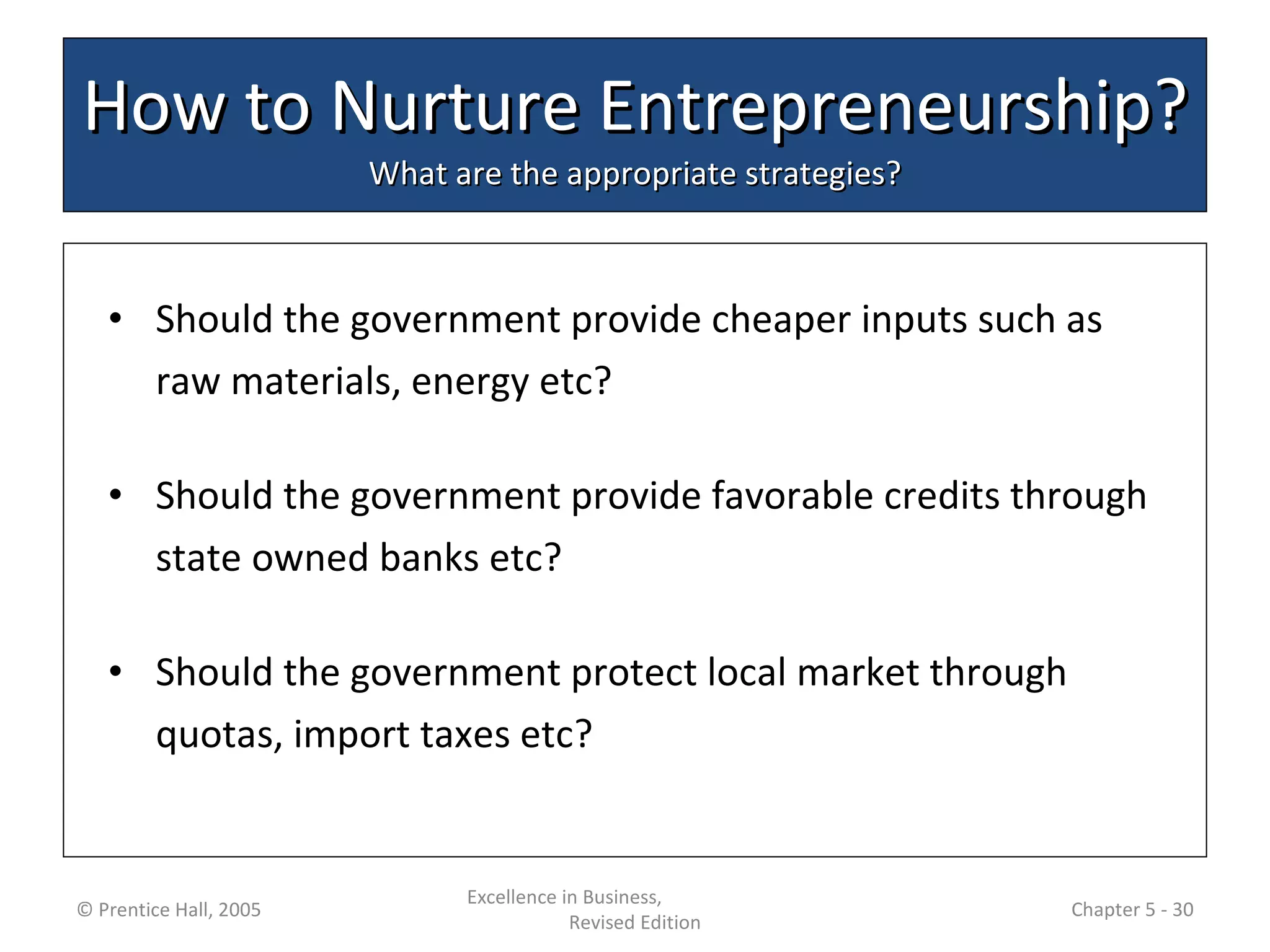
How to Nurture Entrepreneurship? What are the appropriate strategies? Should the government provide cheaper inputs such as raw materials, energy etc? Should the government provide favorable credits through state owned banks etc? Should the government protect local market through quotas, import taxes etc? © Prentice Hall, 2005 Excellence in Business,  Revised Edition Chapter 5 -
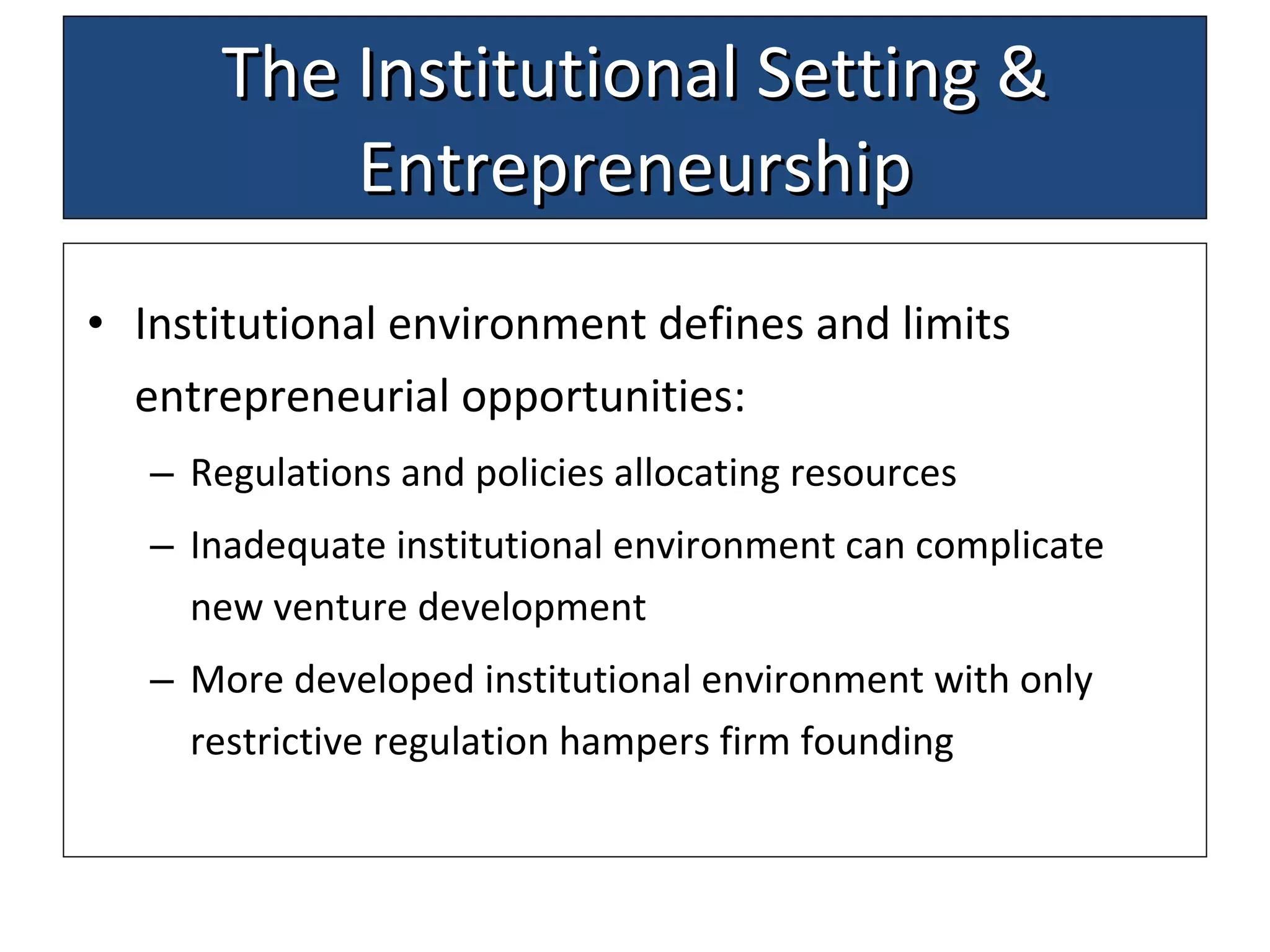
The Institutional Setting & Entrepreneurship Institutional environment defines and limits entrepreneurial opportunities: Regulations and policies allocating resources Inadequate institutional environment can complicate new venture development More developed institutional  environment  with only restrictive regulation hamper s  firm founding
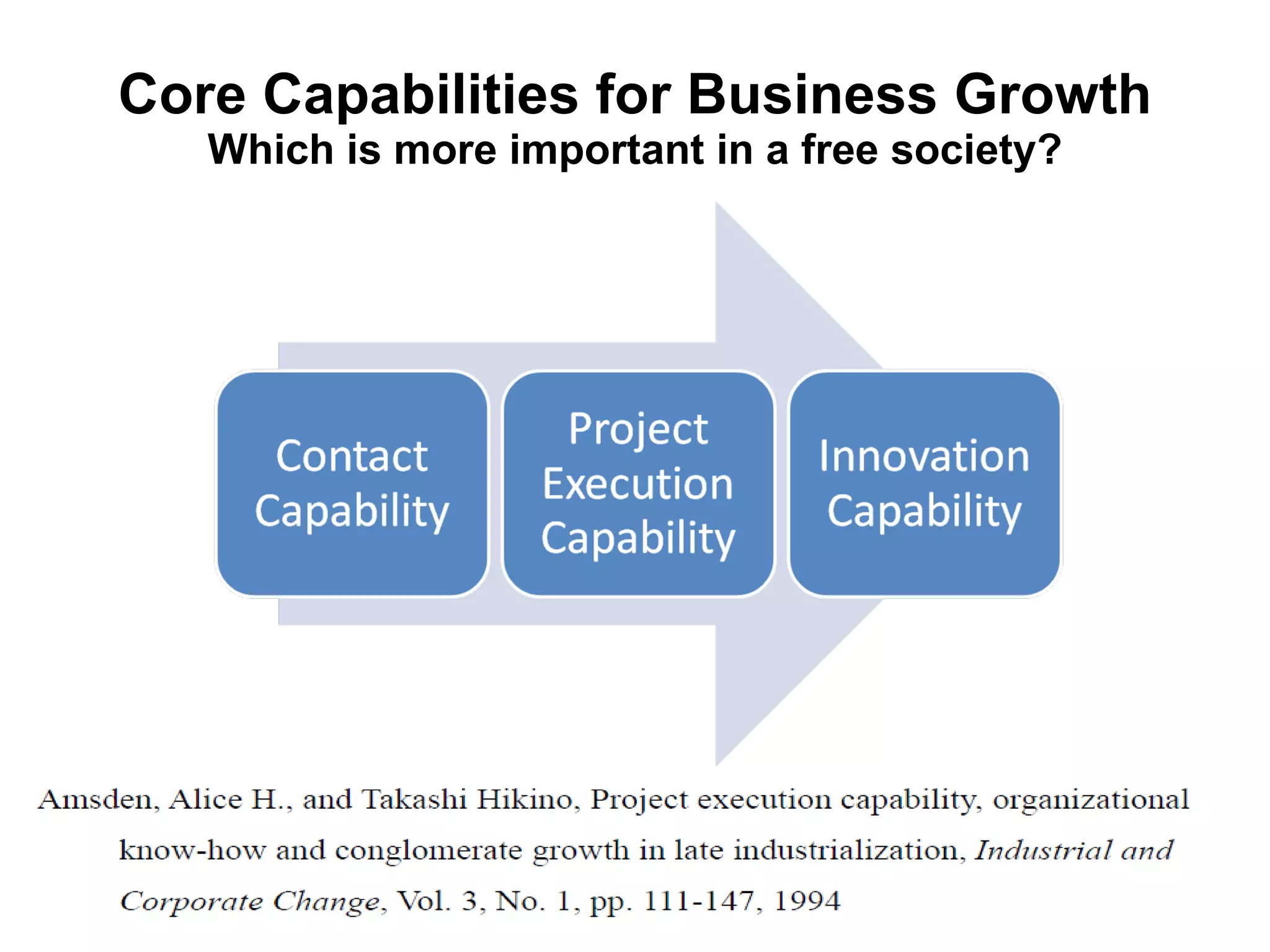
Core Capabilities for Business Growth Which is more important in a free society?
 
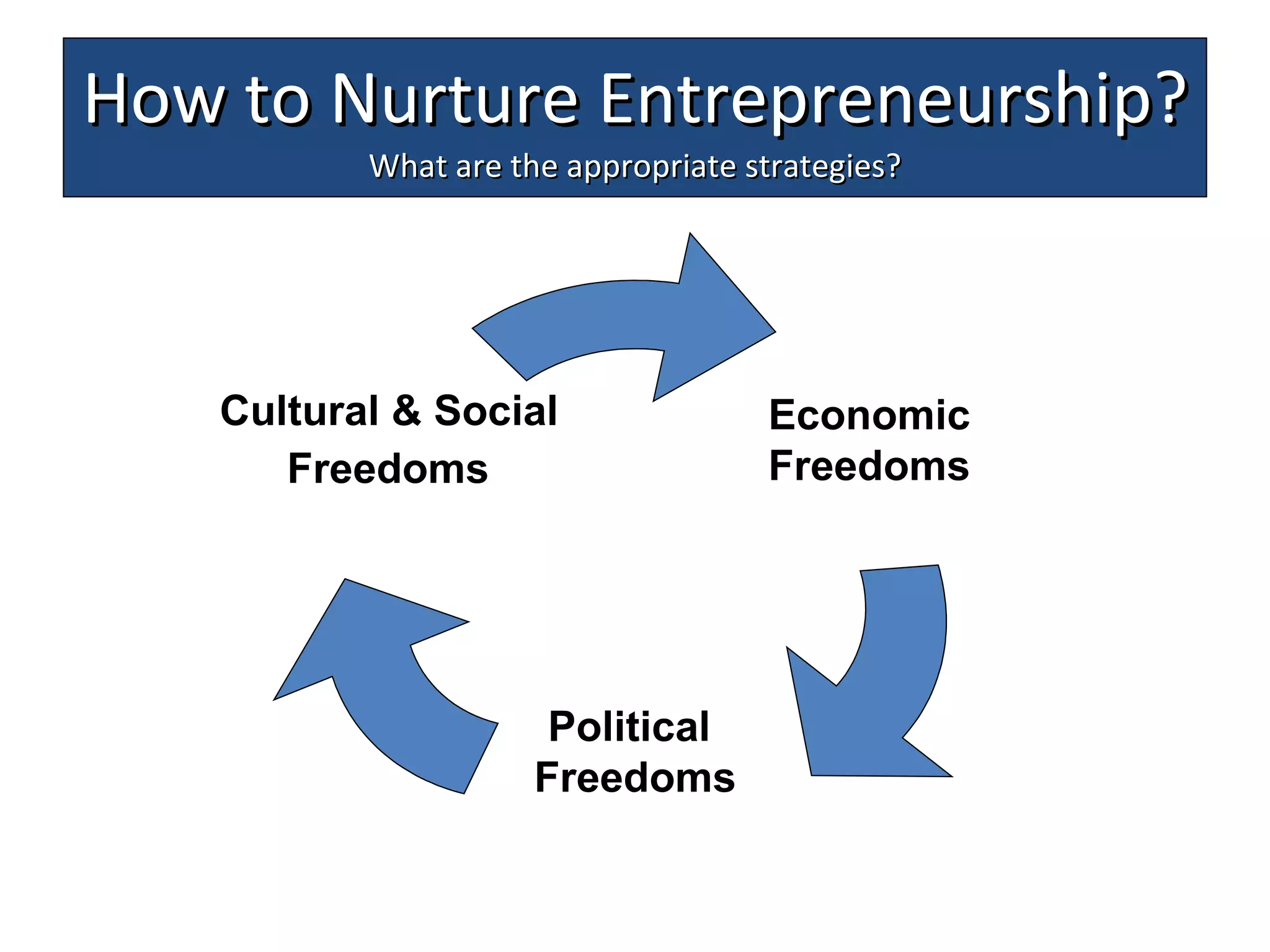
How to Nurture Entrepreneurship? What are the appropriate strategies? Economic  Freedoms   Political  Freedoms Cultural & Social  Freedoms
Thanks for listening!  Q & A

Entrep presentation

  • 1.
    KIMEP (Kazakhstan InstıtuteManagement and Economic Research) June 10, 2011 Almaty, Kazakhtstan Entrepreneurship in a Free Society Moderator : Bahattin Karademir
  • 2.
    Contents Whatis entrepreneurship? Who are the entrepreneurs? What is the significance of entrepreneurship? How to nurture entrepreneurship? What should be the appropriate strategies?
  • 3.
  • 4.
  • 5.
  • 6.
    D r. Khanna ‘s current research focuses on understanding the drivers of entrepreneurship worldwide. As part of the Emerging Giants project, he seeks to understand how to build world-class companies from emerging markets worldwide. In 2008 he published a book on entrepreneurship , “ Billions of Entrepreneurs: How China and India are Reshaping their Futures and Yours ”, in which he compares entrepreneurship in China and India (see, http:// hbswk . hbs .edu/ item /5766.html ) Prof. Tarun Khanna Harvard Business School What makes him so hopeful about the future of India?
  • 7.
    What is Entrepreneurship?Process of creating something new; Devoting the necessary time and effort; Assuming the financial, psychic and social risks; Receiving the resulting rewards of monetary and personal satisfaction and independence.
  • 8.
    Who are Entrepreneurs?An entrepreneur may be: Man or woman Someone with high income or low income A technologist or someone lacking technological sophistication A college graduate or a primary school dropout
  • 9.
    Who are Entrepreneurs?An entrepreneur may have been: An inventor A manager A nurse A salesperson An engineer A student A teacher A retiree
  • 10.
    Traits of EntrepreneursWilling to exploit new opportunities Prefer risk taking over security Eager to acquire new skills Driven by ambition Listen to their intuition Learn from their mistakes © Prentice Hall, 2005 Excellence in Business, Revised Edition Chapter 5 -
  • 11.
    Henry Ford setout to build a car which everyone could afford to buy. It was slow, ugly and difficult to drive, and was nick named the ‘Tin Lizzie’ by the American people. Henry Ford
  • 12.
    The attraction ofthe Model T Ford was that its price never increased. Costing $1200 in 1909, the price in 1928 was only $295 . By 1929 Ford was producing more than one car per minute Model T
  • 13.
    1913 –Mother of Karl Albrecht & Theo Albrecht brothers opened a small store 1946 – Brothers took over their mother’s shop and opened one another soon after 1960 - Brothers split the business when they had 300 stores 1970s - Initial internationalization 1993 – Brothers retired 2010 – 8210 stores in 19 countries Karl & Theo Albrecht
  • 14.
    Michael Dell isthe chairman of the Board of Directors of Dell, the company he founded in ’84 for $1,000. With an unprecedented idea---build relationships directly with consumers (born in February ‘65). Michael Dell
  • 15.
    “ Selling techproducts by telephone and then the Internet… Michael broke the paradigm about how to run a computer business; they haven’t been so great at finding the next paradigm.” BusinessWeek 3/6/06 Dell Computers
  • 16.
    Murthy founded Infosysin 1981 in Pune with an initial capital of US $250, most of which was borrowed from his wife Sudha Murthy . At its inception, he invited six other engineers to join the company. Narayana Murthy
  • 17.
    Infosys is oneof the largest IT companies in India with 122,468 employees as of 2010. It has offices in 33 countries and development centres in India , China , Australia , UK , Canada and Japan . Infosys
  • 18.
    The Small BusinessNot Dominant In Its Field Fewer Than 50 Employees Independently Owned and Operated Relatively Small Annual Sales
  • 19.
  • 20.
    The Story ofan Entrepreneur
  • 21.
    A Vase ofMarbles
  • 22.
  • 23.
  • 24.
    Economic Roles ofSmall Businesses Share in Total Output Bovee, C., Thill, J., Mescon, M. (2005), Excellence in Business, 5th edition, pg: 116, Pearson Prentice Hall, United States.
  • 25.
    Economic Roles ofSmall Businesses They Provide New Jobs Bovee, C., Thill, J., Mescon, M. (2005), Excellence in Business, 5th edition, pg: 116, Pearson Prentice Hall, United States.
  • 26.
    Economic Roles ofSmall Businesses Share in Non Farm Employment Bovee, C., Thill, J., Mescon, M. (2005), Excellence in Business, 5th edition, pg: 116, Pearson Prentice Hall, United States.
  • 27.
    Economic Roles ofSmall Businesses They Introduce New Products Bovee, C., Thill, J., Mescon, M. (2005), Excellence in Business, 5th edition, pg: 116, Pearson Prentice Hall, United States.
  • 28.
    Economic Roles ofSmall Businesses Annual Spending Bovee, C., Thill, J., Mescon, M. (2005), Excellence in Business, 5th edition, pg: 116, Pearson Prentice Hall, United States. Small Businesses Big Businesses
  • 29.
    Why New BusinessesFail Management Incompetence Lack of Industry Experience Inadequate Financing Poor Business Planning Unworkable Goals Diminished Customer Base Uncontrolled Growth Inappropriate Location Poor System of Controls Lack of Entrepreneurial Skills
  • 30.
    How to NurtureEntrepreneurship? What are the appropriate strategies? Should the government provide cheaper inputs such as raw materials, energy etc? Should the government provide favorable credits through state owned banks etc? Should the government protect local market through quotas, import taxes etc? © Prentice Hall, 2005 Excellence in Business, Revised Edition Chapter 5 -
  • 31.
    The Institutional Setting& Entrepreneurship Institutional environment defines and limits entrepreneurial opportunities: Regulations and policies allocating resources Inadequate institutional environment can complicate new venture development More developed institutional environment with only restrictive regulation hamper s firm founding
  • 32.
    Core Capabilities forBusiness Growth Which is more important in a free society?
  • 33.
  • 34.
    How to NurtureEntrepreneurship? What are the appropriate strategies? Economic Freedoms Political Freedoms Cultural & Social Freedoms
  • 35.

Editor's Notes

  • #3 Besides the ability to see things differently, commonly know as vision, entrepreneurs tend to have these qualities in common: They are highly disciplined. They like to control their destiny. They listen to their intuitive sense. They relate well to others. They are eager to learn whatever skills are necessary to reach their goal. They learn from their mistakes.
  • #8 Besides the ability to see things differently, commonly know as vision, entrepreneurs tend to have these qualities in common: They are highly disciplined. They like to control their destiny. They listen to their intuitive sense. They relate well to others. They are eager to learn whatever skills are necessary to reach their goal. They learn from their mistakes.
  • #9 Besides the ability to see things differently, commonly know as vision, entrepreneurs tend to have these qualities in common: They are highly disciplined. They like to control their destiny. They listen to their intuitive sense. They relate well to others. They are eager to learn whatever skills are necessary to reach their goal. They learn from their mistakes.
  • #10 Besides the ability to see things differently, commonly know as vision, entrepreneurs tend to have these qualities in common: They are highly disciplined. They like to control their destiny. They listen to their intuitive sense. They relate well to others. They are eager to learn whatever skills are necessary to reach their goal. They learn from their mistakes.
  • #11 They stay abreast of market changes. They are willing to exploit new opportunities. They seldom follow trends (rather, they spot and interpret trends). They are driven by ambition. They think positively. They prefer the excitement and potential rewards of risk taking over security.
  • #19 One reliable source of information for small businesses is the Small Business Administration (SBA). This government agency serves as a resource and advocate for small firms, providing them with financial assistance, training, and a variety of helpful programs that are discussed later in this chapter. The SBA defines a small business as a firm that is (a) independently owned and operated, (b) is not dominant in its field, (c) relatively small in terms of annual sales, and (d) has fewer than 500 employees. The SBA reports that 80 percent of all U.S. companies have annual sales of less than $1 million and that about 60 percent of the nation’s employers have fewer than five workers .
  • #30 Most new businesses fail for a number of reasons : Management incompetence. Lack of industry experience. Inadequate financing. Poor business planning. Unclear or unrealistic goals. Failure to attract and keep target customers. Uncontrolled growth. Inappropriate location. Poor inventory and financial controls. Inability to make the entrepreneurial transition.
  • #31 They stay abreast of market changes. They are willing to exploit new opportunities. They seldom follow trends (rather, they spot and interpret trends). They are driven by ambition. They think positively. They prefer the excitement and potential rewards of risk taking over security.
  • #32 Besides the ability to see things differently, commonly know as vision, entrepreneurs tend to have these qualities in common: They are highly disciplined. They like to control their destiny. They listen to their intuitive sense. They relate well to others. They are eager to learn whatever skills are necessary to reach their goal. They learn from their mistakes.
  • #35 They stay abreast of market changes. They are willing to exploit new opportunities. They seldom follow trends (rather, they spot and interpret trends). They are driven by ambition. They think positively. They prefer the excitement and potential rewards of risk taking over security.