Entrepreneurship and You Iain Verigin [email_address]   September 2009
Who Are You? What is your specialization? Mech, EE, Comp Sci, other. Post-Grad - What are you gonna Do? Grad School? Work? Big Company Small Company Start-up? Travel? - Let’s show some hands -
Who Am I ? Education :  McGill Physics, UBC Eng Phys EE option, SFU M.Eng EE (Comm’s, Semi’s & Optics ) Work Engineering : PMC-Sierra Marketing : PMC-Sierra & Packet Engines Business Development : PMC-Sierra Hobbies “ Health Issues”, Philanthropy (Eng Phys Professorship), Coaching Hockey & Track, Golf, Blogging, reading, “bad” music.
Lecture Objectives Understand entrepreneurial leadership   and its process in high-technology industries Dispel common myths & misconceptions .  Learn skills   important for 21st century technology leaders.  Stimulate continuous learning   and personal reflection regarding entrepreneurship and your future.
Agenda Introduction - today. Entrepreneurship Skills
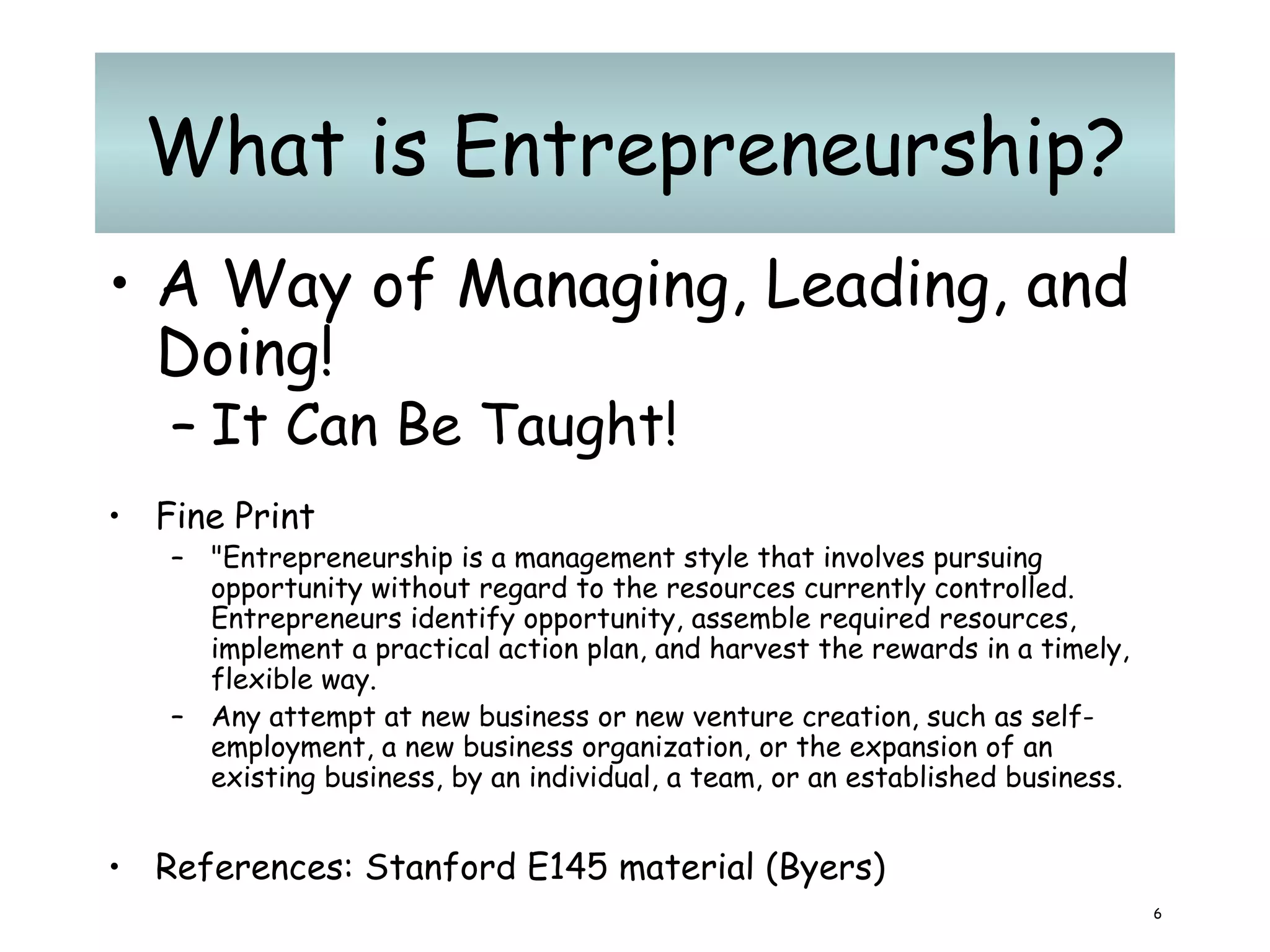
What is Entrepreneurship? A Way of Managing, Leading, and Doing! It Can Be Taught!   Fine Print "Entrepreneurship is a management style that involves pursuing opportunity without regard to the resources currently controlled. Entrepreneurs identify opportunity, assemble required resources, implement a practical action plan, and harvest the rewards in a timely, flexible way. A ny attempt at new business or new venture creation, such as self-employment, a new business organization, or the expansion of an existing business, by an individual, a team, or an established business. References: Stanford E145 material (Byers)
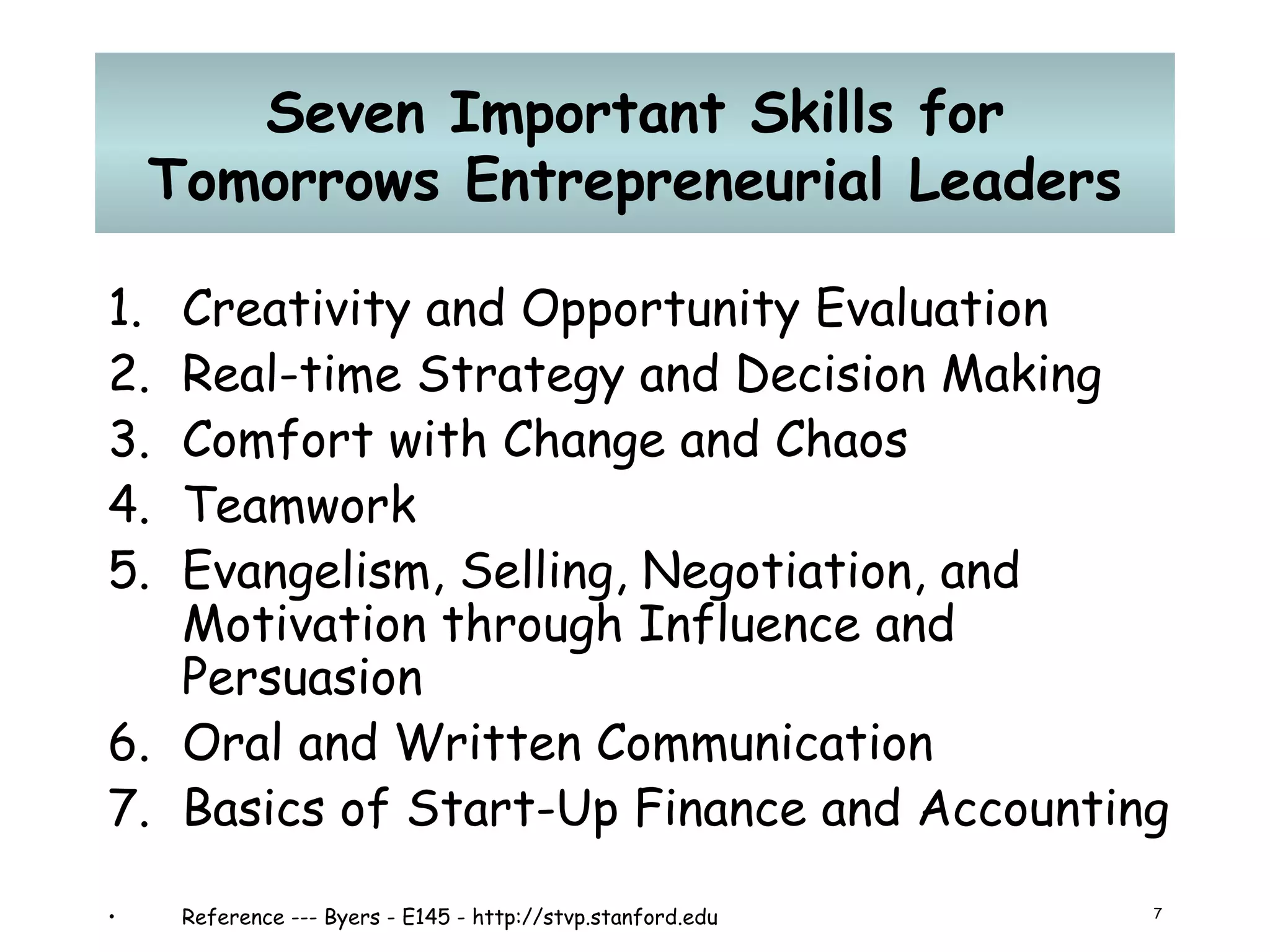
Seven Important Skills for Tomorrows Entrepreneurial Leaders Creativity and Opportunity Evaluation  Real-time Strategy and Decision Making  Comfort with Change and Chaos  Teamwork  Evangelism, Selling, Negotiation, and Motivation through Influence and Persuasion  Oral and Written Communication  Basics of Start-Up Finance and Accounting Reference --- Byers - E145 - http://stvp.stanford.edu
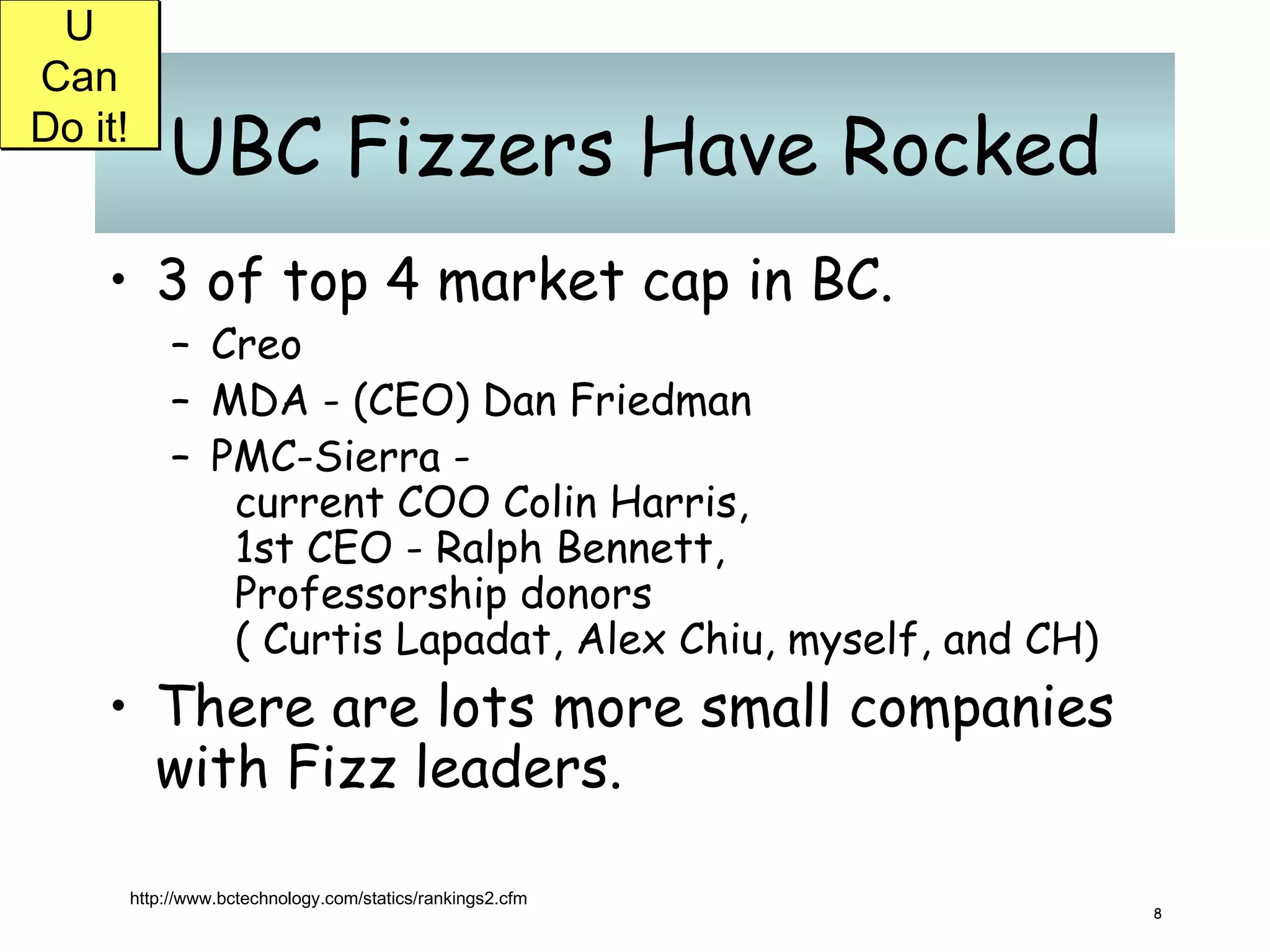
UBC Fizzers Have Rocked 3 of top 4 market cap in BC. Creo MDA - (CEO) Dan Friedman  PMC-Sierra -  current COO Colin Harris,  1st CEO - Ralph Bennett,  Professorship donors  ( Curtis Lapadat, Alex Chiu, myself, and CH) There are lots more small companies with Fizz leaders. http://www.bctechnology.com/statics/rankings2.cfm U Can Do it!
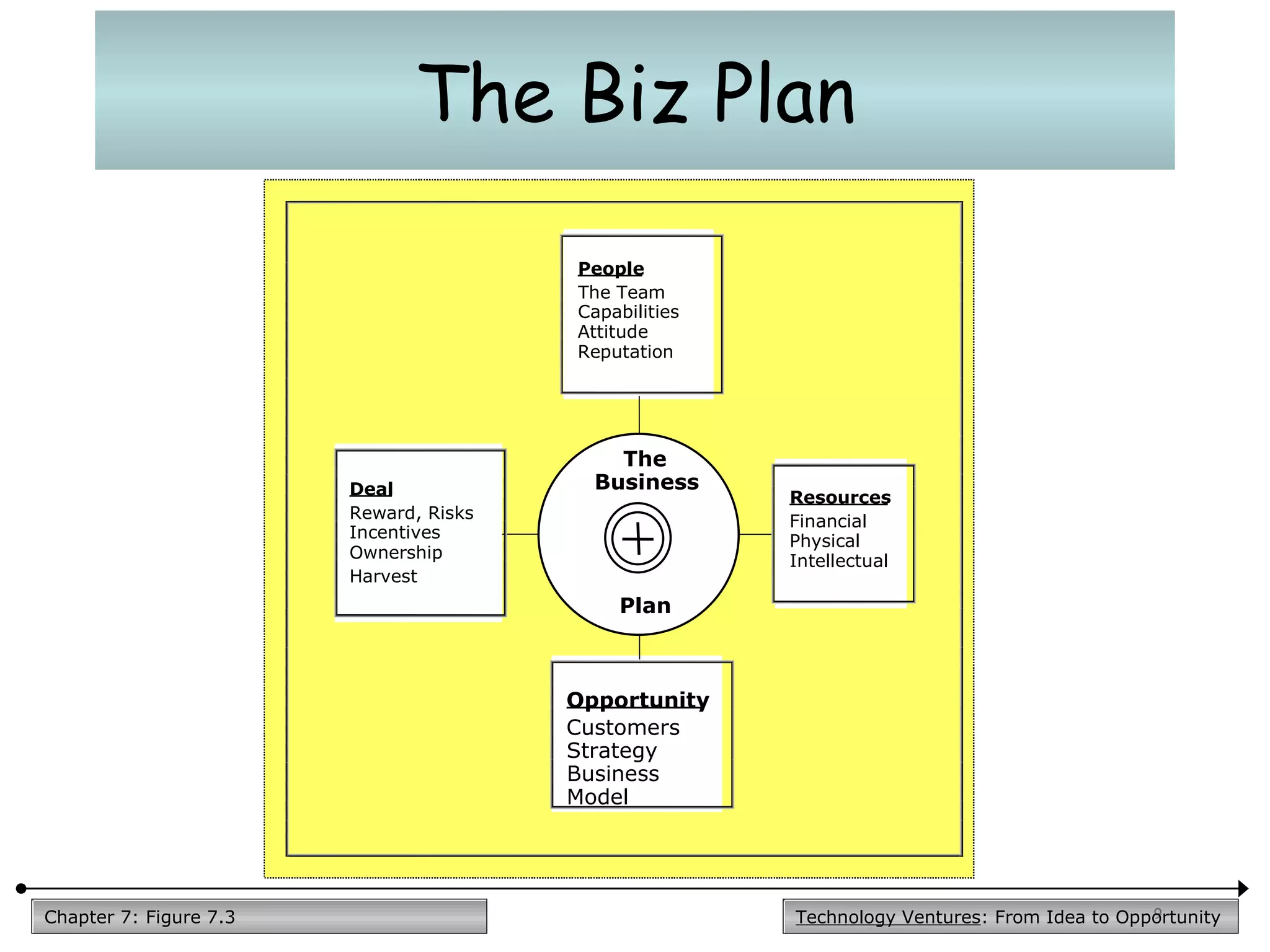
The Biz Plan Technology Ventures : From Idea to Opportunity Chapter 7: Figure 7.3 Resources Financial  Physical  Intellectual Deal Reward, Risks  Incentives  Ownership Harvest People The Team Capabilities Attitude Reputation Opportunity Customers Strategy  Business  Model The  Business Plan
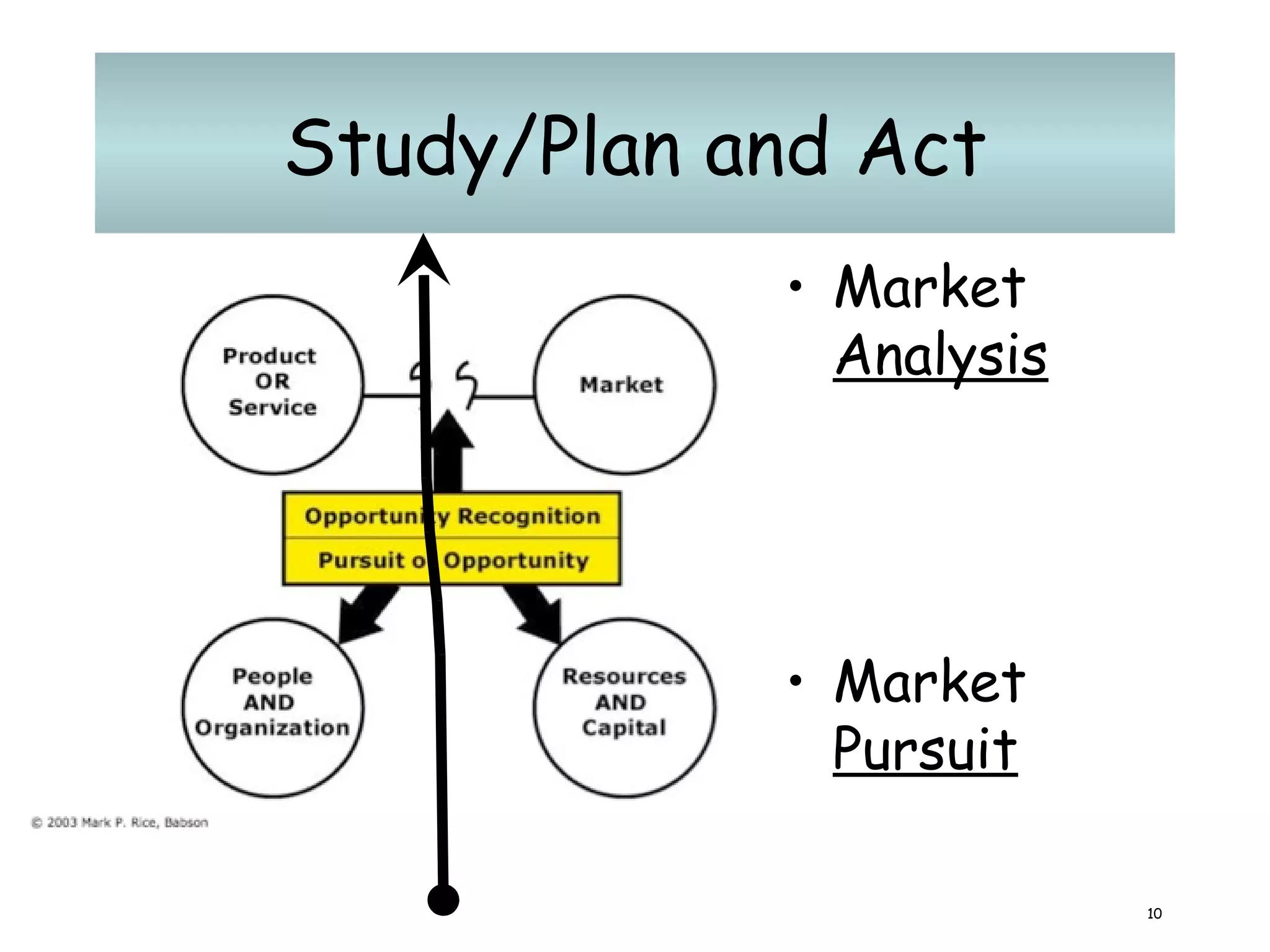
Study/Plan and Act Market  Analysis Market  Pursuit
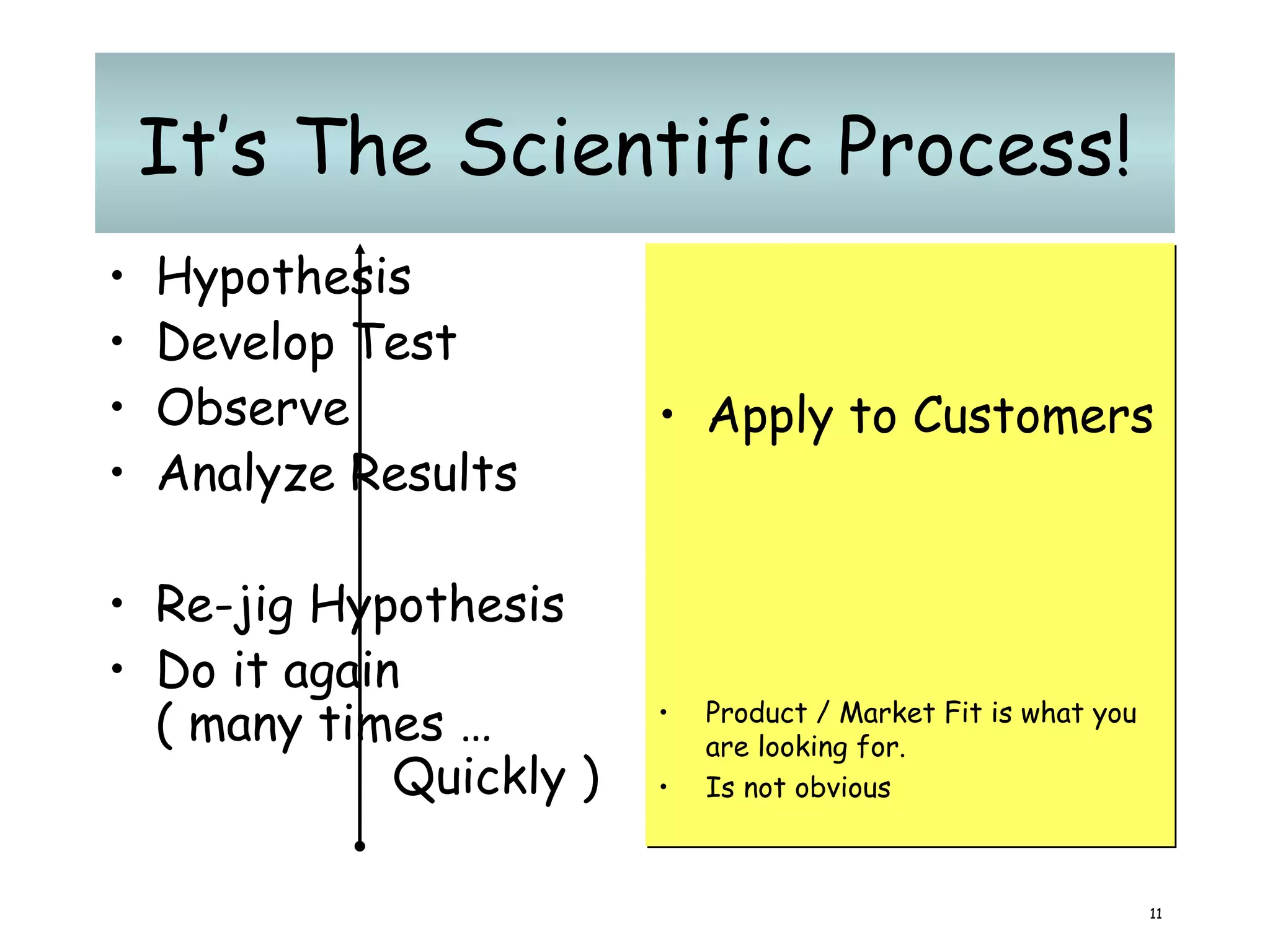
It’s The Scientific Process! Hypothesis Develop Test Observe Analyze Results Re-jig Hypothesis Do it again  ( many times …   Quickly ) Apply to Customers Product / Market Fit is what you are looking for. Is not obvious
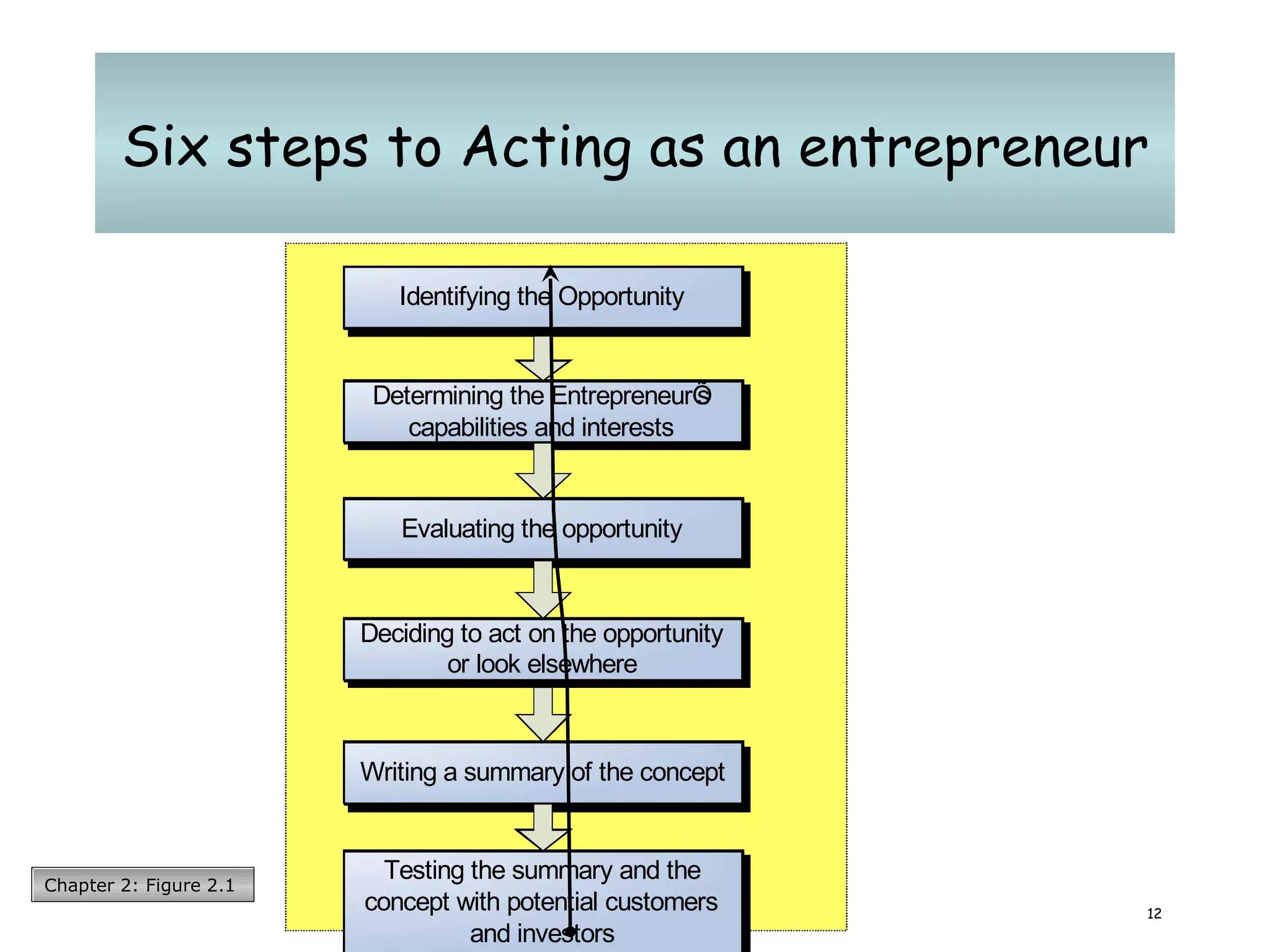
Six steps to Acting as an entrepreneur Chapter 2: Figure 2.1
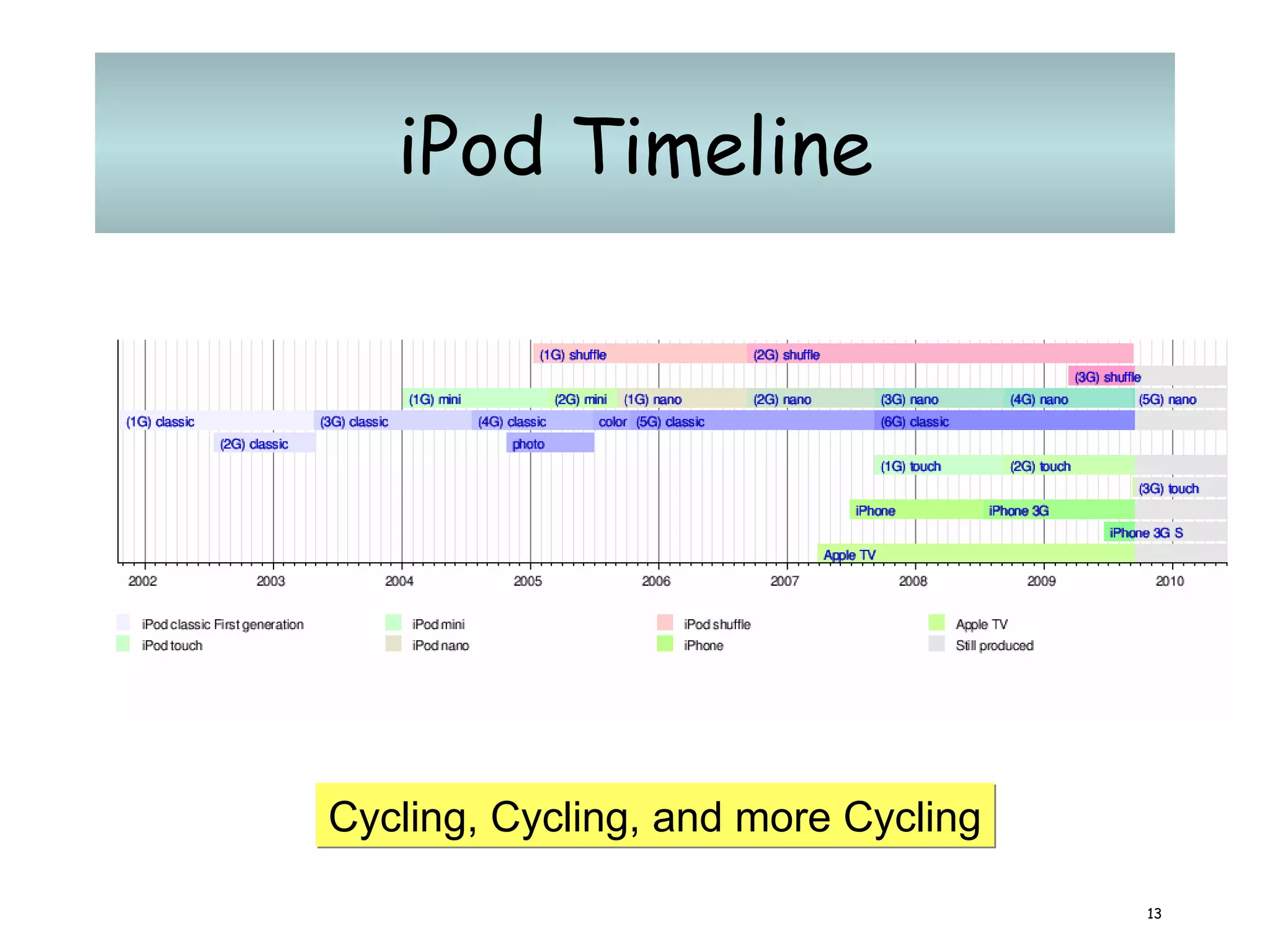
iPod Timeline Cycling, Cycling, and more Cycling
To Create a Customer Drucker says … “ There is only one valid definition of business purpose: …” Page 20 “The Essential Drucker” Aside
* Straight Lines Don’t Happen in Real Life * * Get used to cycling back. * Some people get stuck calling this “failure”. * Don’t let failures define you. * Success will come. Aside
What is Marketing? Drucker says -- There will always, one can assume, be the need for some selling. But  the aim of marketing is to make selling superflous .  The aim of marketing is to know and understand the customer so well that the  product  or service fits him and  sells itself .  Reference: pages 20 & 21 in “Essential Drucker”.
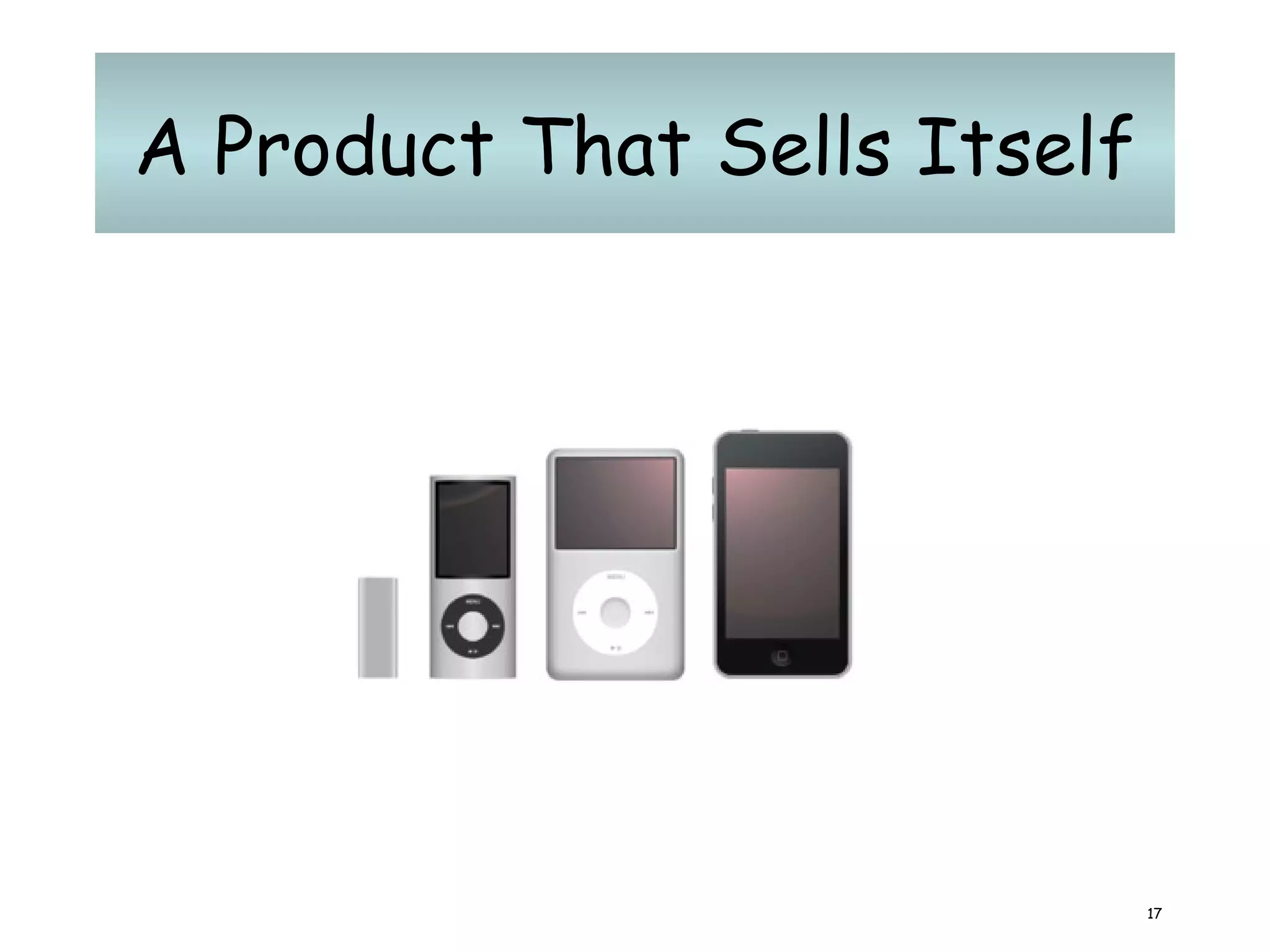
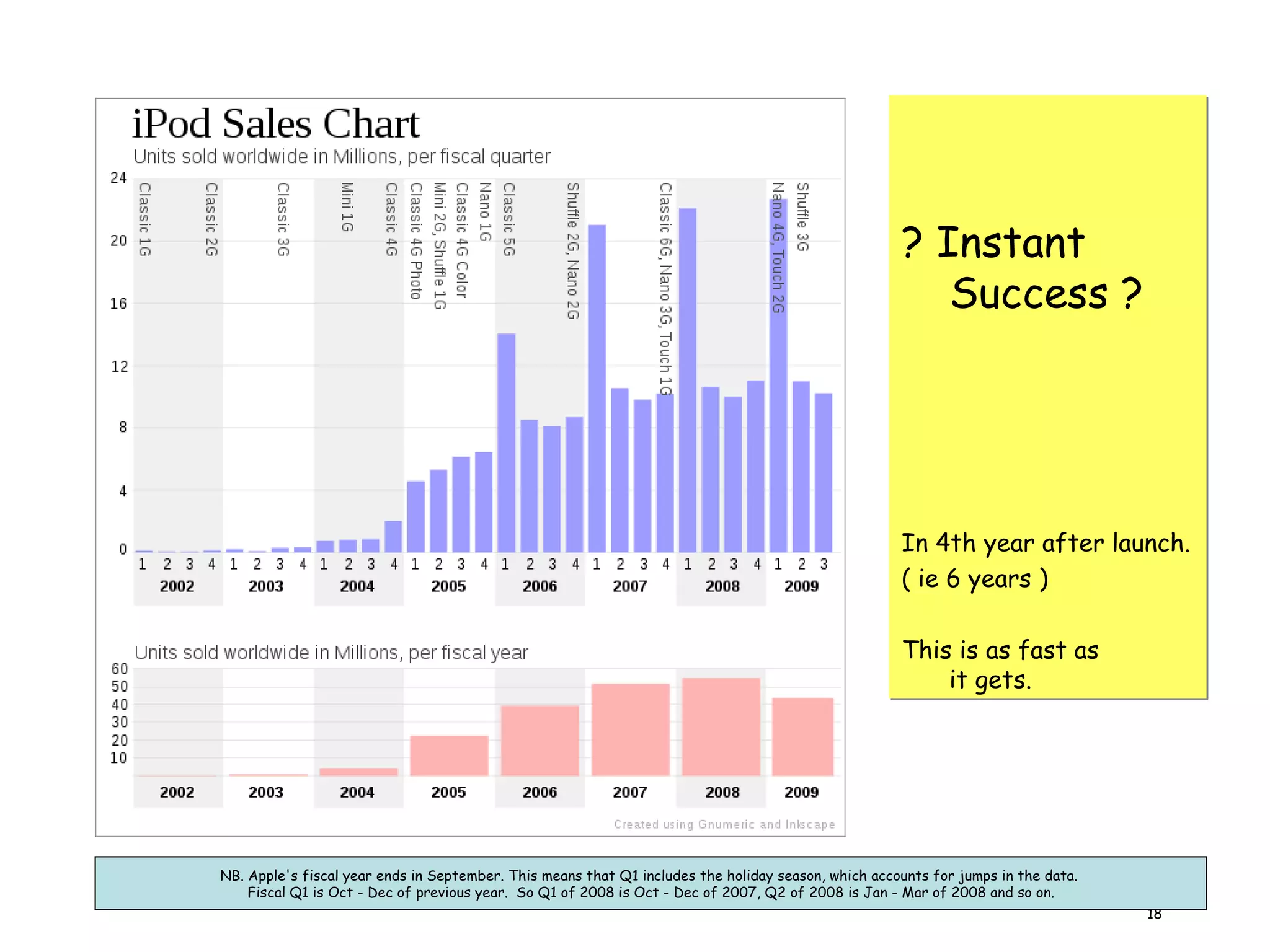
A Product That Sells Itself
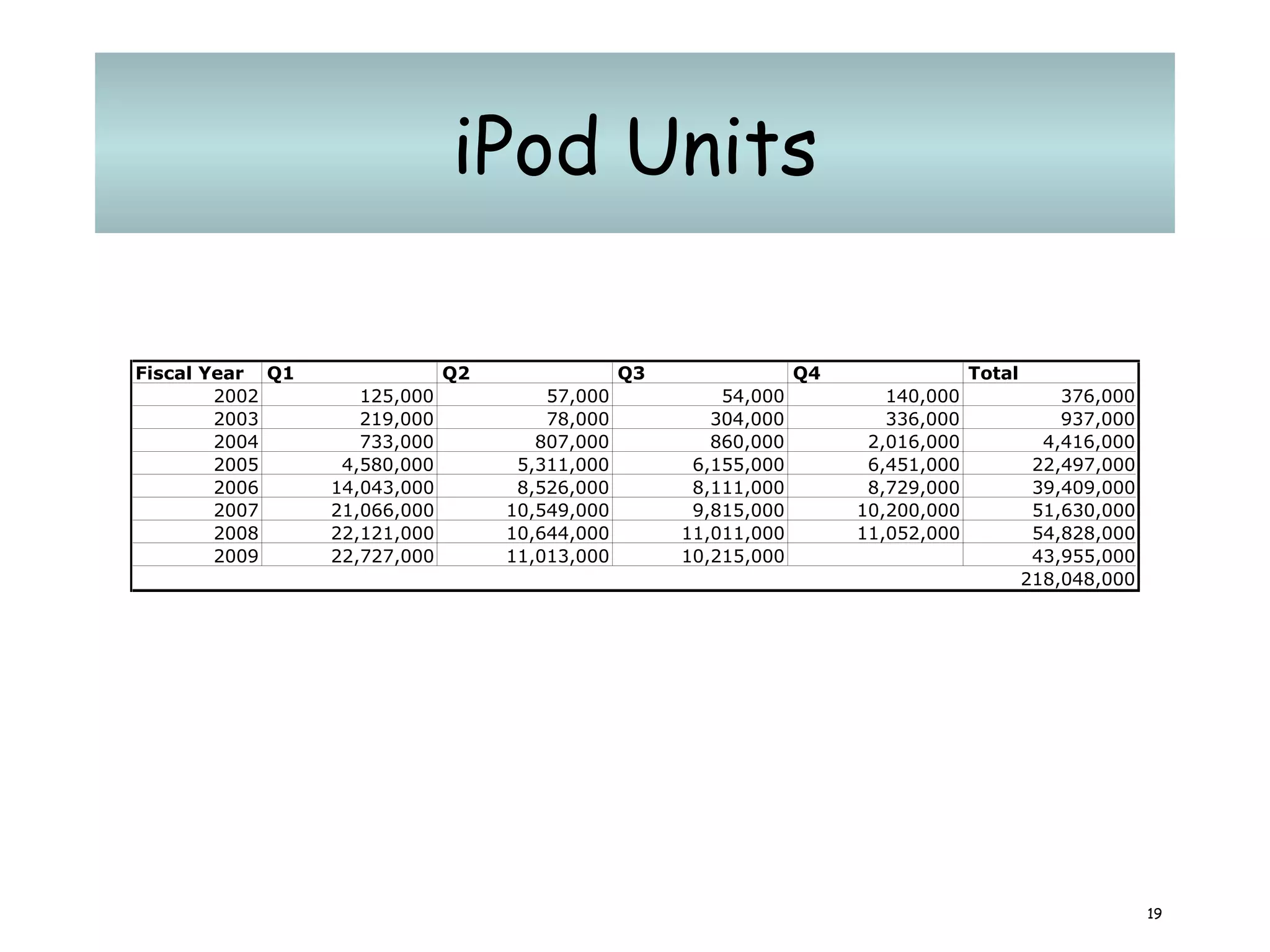
? Instant  Success ? In 4th year after launch. ( ie 6 years ) This is as fast as  it gets. NB. Apple's fiscal year ends in September. This means that Q1 includes the holiday season, which accounts for jumps in the data.  Fiscal Q1 is Oct - Dec of previous year.  So Q1 of 2008 is Oct - Dec of 2007, Q2 of 2008 is Jan - Mar of 2008 and so on.
iPod Units
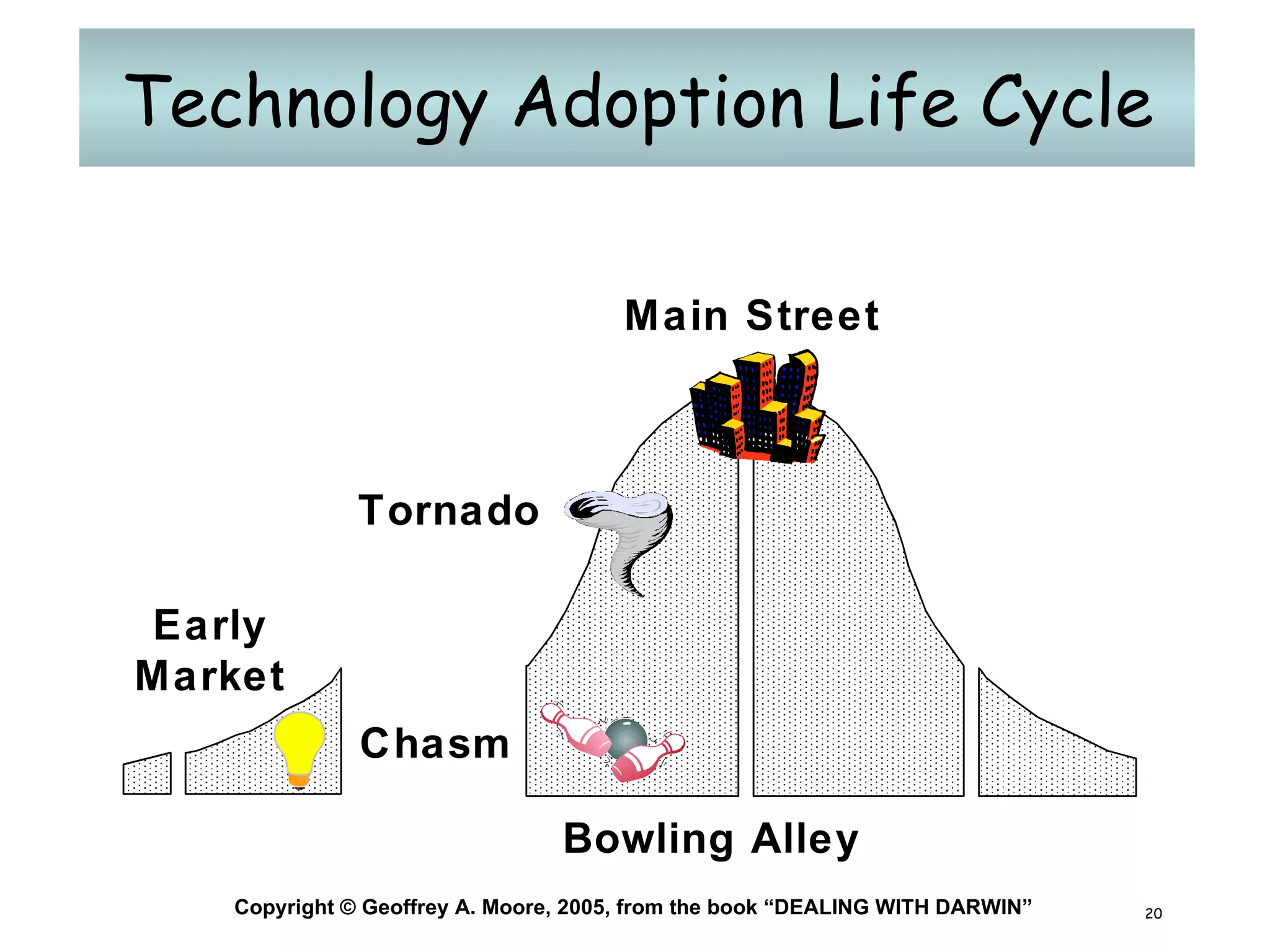
Technology Adoption Life Cycle Chasm Copyright © Geoffrey A. Moore, 2005, from the book “DEALING WITH DARWIN” Early Market Bowling Alley Tornado Main Street
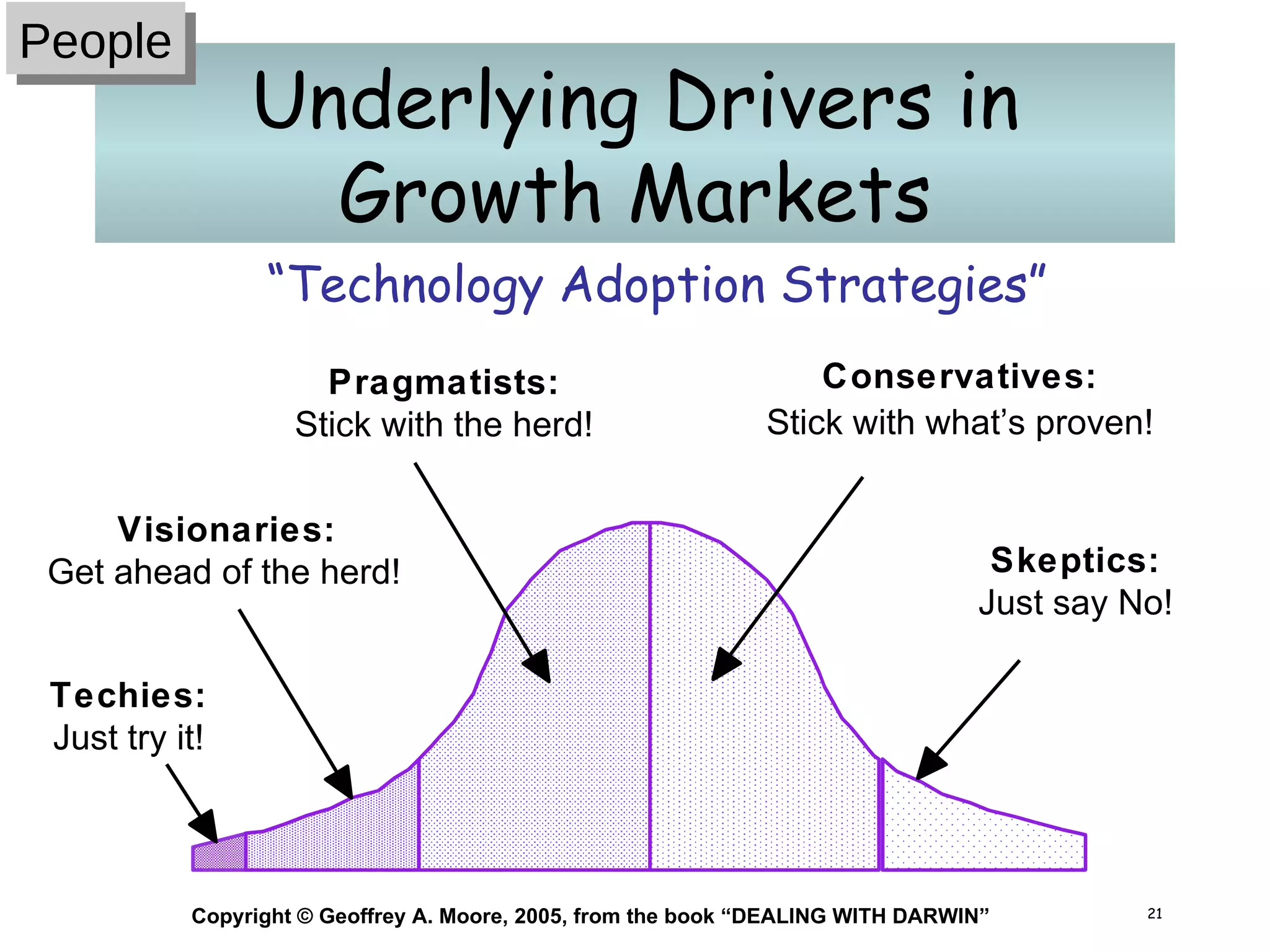
Underlying Drivers in Growth Markets Techies: Just try it! Pragmatists: Stick with the herd! Visionaries: Get ahead of the herd! Copyright © Geoffrey A. Moore, 2005, from the book “DEALING WITH DARWIN” “ Technology Adoption Strategies” People Conservatives: Stick with what’s proven! Skeptics: Just say No!
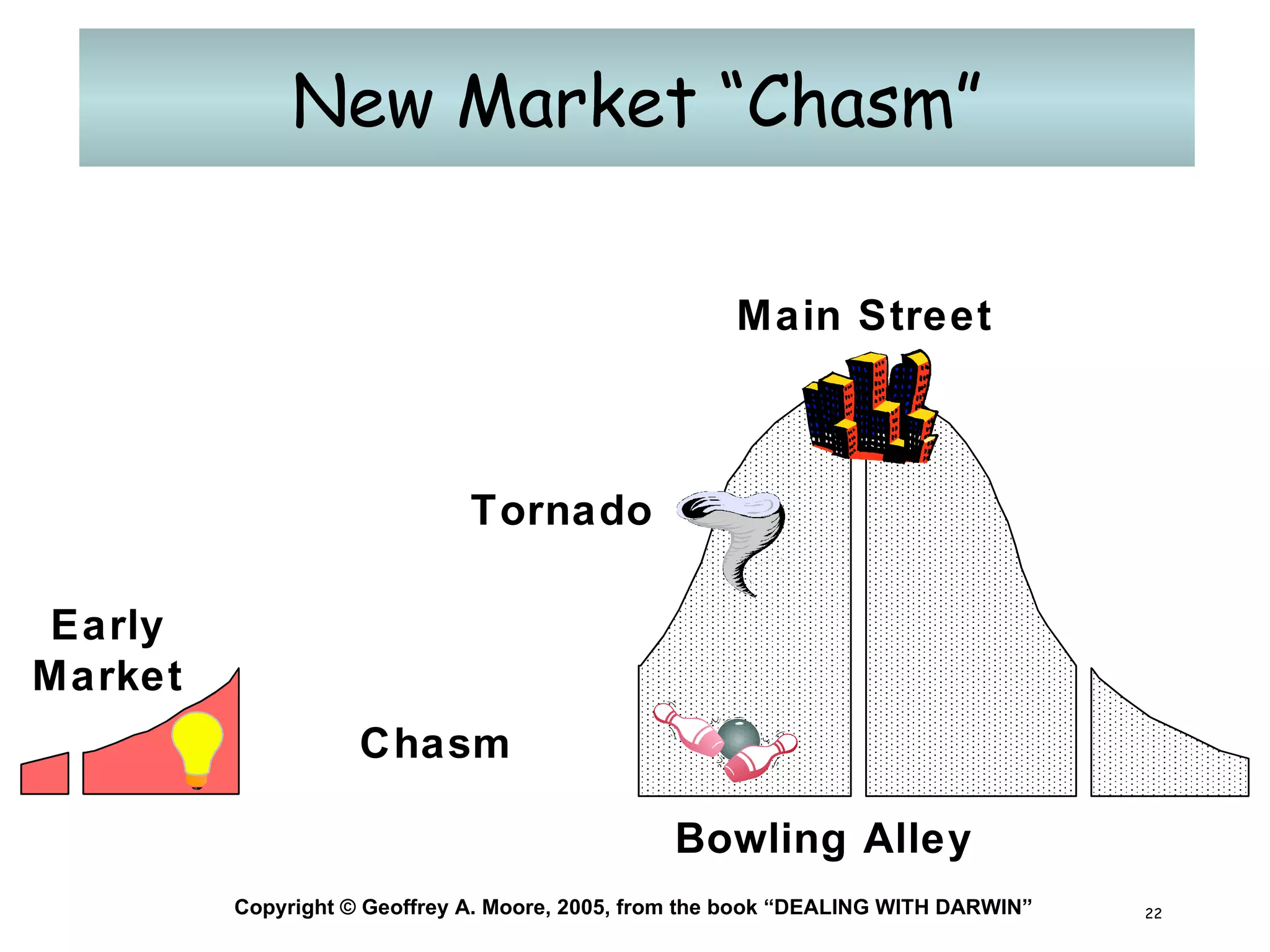
New Market “Chasm” Chasm Copyright © Geoffrey A. Moore, 2005, from the book “DEALING WITH DARWIN” Early Market Bowling Alley Tornado Main Street
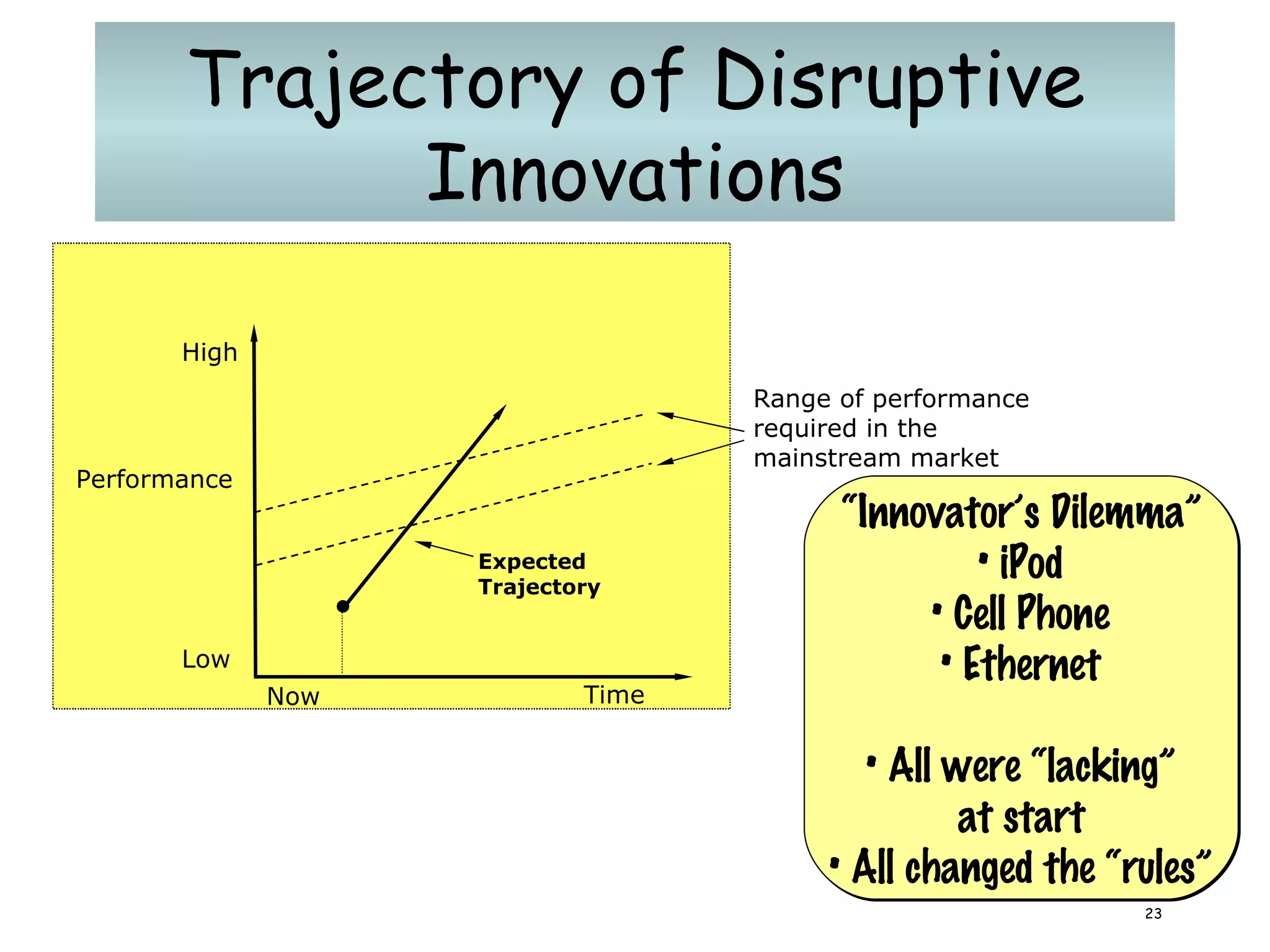
Trajectory of Disruptive Innovations Range of performance required in the mainstream market Expected Trajectory Now Time High Performance Low “ Innovator’s Dilemma” iPod Cell Phone Ethernet All were “lacking” at start All changed the “rules”
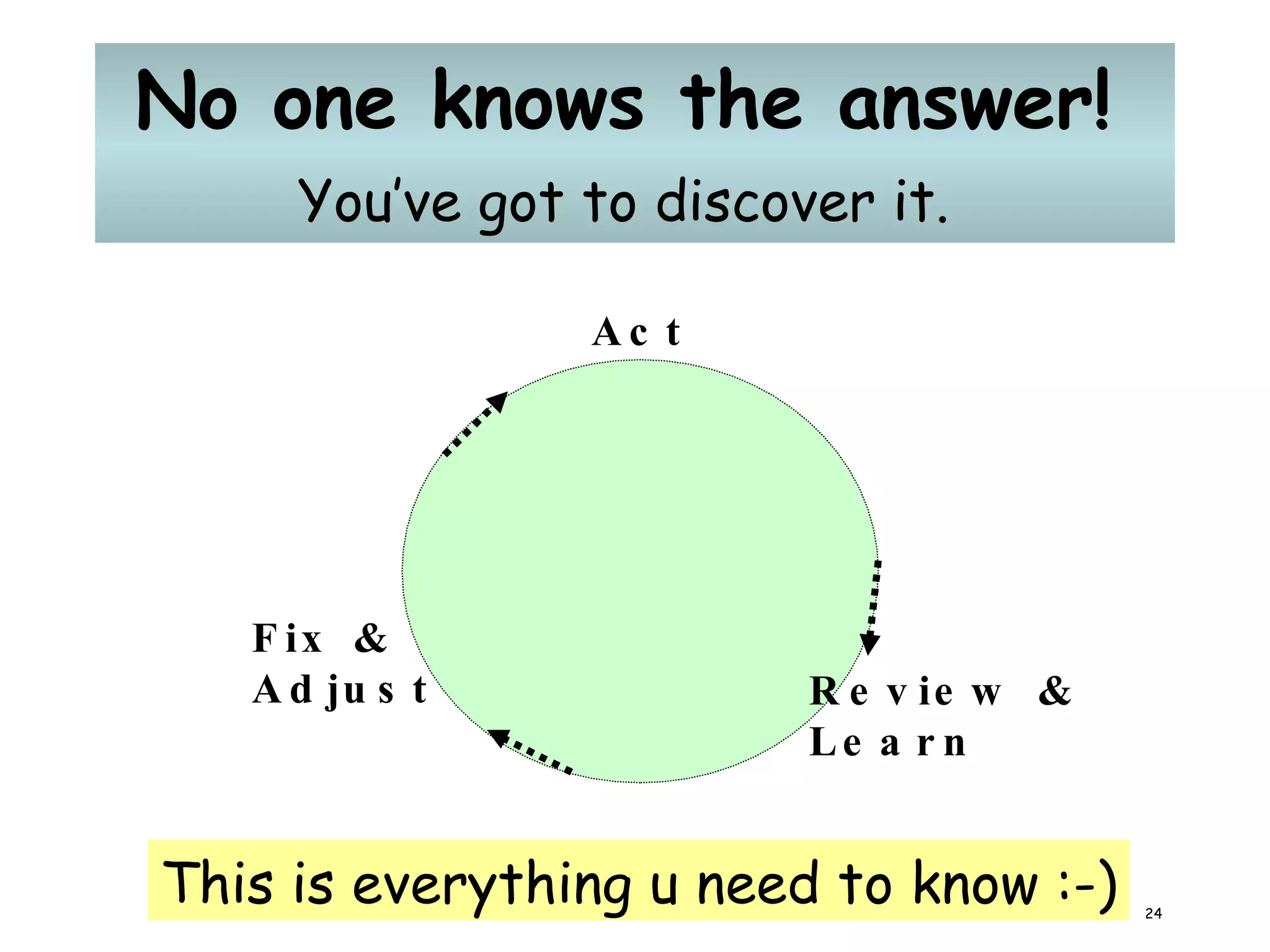
No one knows the answer!   You’ve got to discover it.   Fix &  Adjust Act Review &  Learn This is everything u need to know :-)
! People Skills Rule ! The area with the most room for differentiation is in “People Skills” Yes … ‘cause Engineers suck at this :) Next Week
Reading Material I’ve made a list on-line   http://hnorth.wordpress.com/fizz/

1 Intro 2009 1.0

  • 1.
    Entrepreneurship and YouIain Verigin [email_address] September 2009
  • 2.
    Who Are You?What is your specialization? Mech, EE, Comp Sci, other. Post-Grad - What are you gonna Do? Grad School? Work? Big Company Small Company Start-up? Travel? - Let’s show some hands -
  • 3.
    Who Am I? Education : McGill Physics, UBC Eng Phys EE option, SFU M.Eng EE (Comm’s, Semi’s & Optics ) Work Engineering : PMC-Sierra Marketing : PMC-Sierra & Packet Engines Business Development : PMC-Sierra Hobbies “ Health Issues”, Philanthropy (Eng Phys Professorship), Coaching Hockey & Track, Golf, Blogging, reading, “bad” music.
  • 4.
    Lecture Objectives Understandentrepreneurial leadership and its process in high-technology industries Dispel common myths & misconceptions . Learn skills important for 21st century technology leaders. Stimulate continuous learning and personal reflection regarding entrepreneurship and your future.
  • 5.
    Agenda Introduction -today. Entrepreneurship Skills
  • 6.
    What is Entrepreneurship?A Way of Managing, Leading, and Doing! It Can Be Taught! Fine Print "Entrepreneurship is a management style that involves pursuing opportunity without regard to the resources currently controlled. Entrepreneurs identify opportunity, assemble required resources, implement a practical action plan, and harvest the rewards in a timely, flexible way. A ny attempt at new business or new venture creation, such as self-employment, a new business organization, or the expansion of an existing business, by an individual, a team, or an established business. References: Stanford E145 material (Byers)
  • 7.
    Seven Important Skillsfor Tomorrows Entrepreneurial Leaders Creativity and Opportunity Evaluation Real-time Strategy and Decision Making Comfort with Change and Chaos Teamwork Evangelism, Selling, Negotiation, and Motivation through Influence and Persuasion Oral and Written Communication Basics of Start-Up Finance and Accounting Reference --- Byers - E145 - http://stvp.stanford.edu
  • 8.
    UBC Fizzers HaveRocked 3 of top 4 market cap in BC. Creo MDA - (CEO) Dan Friedman PMC-Sierra - current COO Colin Harris, 1st CEO - Ralph Bennett, Professorship donors ( Curtis Lapadat, Alex Chiu, myself, and CH) There are lots more small companies with Fizz leaders. http://www.bctechnology.com/statics/rankings2.cfm U Can Do it!
  • 9.
    The Biz PlanTechnology Ventures : From Idea to Opportunity Chapter 7: Figure 7.3 Resources Financial Physical Intellectual Deal Reward, Risks Incentives Ownership Harvest People The Team Capabilities Attitude Reputation Opportunity Customers Strategy Business Model The Business Plan
  • 10.
    Study/Plan and ActMarket Analysis Market Pursuit
  • 11.
    It’s The ScientificProcess! Hypothesis Develop Test Observe Analyze Results Re-jig Hypothesis Do it again ( many times … Quickly ) Apply to Customers Product / Market Fit is what you are looking for. Is not obvious
  • 12.
    Six steps toActing as an entrepreneur Chapter 2: Figure 2.1
  • 13.
    iPod Timeline Cycling,Cycling, and more Cycling
  • 14.
    To Create aCustomer Drucker says … “ There is only one valid definition of business purpose: …” Page 20 “The Essential Drucker” Aside
  • 15.
    * Straight LinesDon’t Happen in Real Life * * Get used to cycling back. * Some people get stuck calling this “failure”. * Don’t let failures define you. * Success will come. Aside
  • 16.
    What is Marketing?Drucker says -- There will always, one can assume, be the need for some selling. But the aim of marketing is to make selling superflous . The aim of marketing is to know and understand the customer so well that the product or service fits him and sells itself . Reference: pages 20 & 21 in “Essential Drucker”.
  • 17.
    A Product ThatSells Itself
  • 18.
    ? Instant Success ? In 4th year after launch. ( ie 6 years ) This is as fast as it gets. NB. Apple's fiscal year ends in September. This means that Q1 includes the holiday season, which accounts for jumps in the data. Fiscal Q1 is Oct - Dec of previous year. So Q1 of 2008 is Oct - Dec of 2007, Q2 of 2008 is Jan - Mar of 2008 and so on.
  • 19.
  • 20.
    Technology Adoption LifeCycle Chasm Copyright © Geoffrey A. Moore, 2005, from the book “DEALING WITH DARWIN” Early Market Bowling Alley Tornado Main Street
  • 21.
    Underlying Drivers inGrowth Markets Techies: Just try it! Pragmatists: Stick with the herd! Visionaries: Get ahead of the herd! Copyright © Geoffrey A. Moore, 2005, from the book “DEALING WITH DARWIN” “ Technology Adoption Strategies” People Conservatives: Stick with what’s proven! Skeptics: Just say No!
  • 22.
    New Market “Chasm”Chasm Copyright © Geoffrey A. Moore, 2005, from the book “DEALING WITH DARWIN” Early Market Bowling Alley Tornado Main Street
  • 23.
    Trajectory of DisruptiveInnovations Range of performance required in the mainstream market Expected Trajectory Now Time High Performance Low “ Innovator’s Dilemma” iPod Cell Phone Ethernet All were “lacking” at start All changed the “rules”
  • 24.
    No one knowsthe answer! You’ve got to discover it. Fix & Adjust Act Review & Learn This is everything u need to know :-)
  • 25.
    ! People SkillsRule ! The area with the most room for differentiation is in “People Skills” Yes … ‘cause Engineers suck at this :) Next Week
  • 26.
    Reading Material I’vemade a list on-line http://hnorth.wordpress.com/fizz/