100% LIVE
Enterprise Design
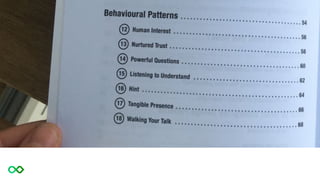
Behavioral Patterns
We help people create better enterprises.
INTERSECTION GROUP
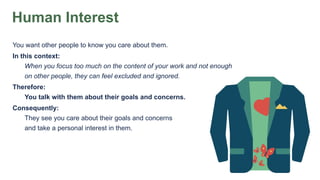
Human Interest
You want other people to know you care about them.
In this context:
When you focus too much on the content of your work and not enough
on other people, they can feel excluded and ignored.
Therefore:
You talk with them about their goals and concerns.
Consequently:
They see you care about their goals and concerns
and take a personal interest in them.
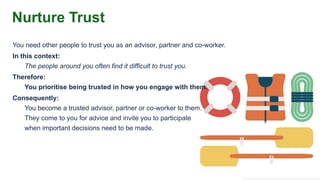
Nurture Trust
You need other people to trust you as an advisor, partner and co-worker.
In this context:
The people around you often find it difficult to trust you.
Therefore:
You prioritise being trusted in how you engage with them.
Consequently:
You become a trusted advisor, partner or co-worker to them.
They come to you for advice and invite you to participate
when important decisions need to be made.
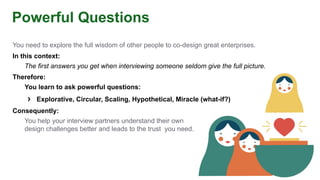
Powerful Questions
You need to explore the full wisdom of other people to co-design great enterprises.
In this context:
The first answers you get when interviewing someone seldom give the full picture.
Therefore:
You learn to ask powerful questions:
› Explorative, Circular, Scaling, Hypothetical, Miracle (what-if?)
Consequently:
You help your interview partners understand their own
design challenges better and leads to the trust you need.
Listen to Understand
You need to explore the wisdom of other people to co-design great enterprises.
In this context:
EDs are often so focused on their design activities they forget to really listen to the
people.
Therefore:
You are aware that successful communication always starts
with excellent listening skills.
Consequently:
You gain knowledge of the bigger picture of the enterprise.
Your deliverables will increase in depth and accuracy.
You are building better relations of trust and coalitions.
Hint
You want other people to actively contribute to the enterprise design work.
In this context:
You run the risk of teaching too much and telling people what to do more often than you
should.
Therefore:
You let people discover what they need to know
and what they should do, rather than telling them.
Consequently:
People have experienced the “aha moment” of connecting
the dots by themselves.
Tangible Presence
You want other people to feel they know you well enough to trust your intentions and actions.
In this context:
You are so busy collecting information and creating things,
you often disappear from their sight for weeks.
Therefore:
You reserve enough time to have regular formal
and informal interactions with them.
Consequently:
Because they regularly interact with you and the work you do,
they feel they know you well enough to trust you,
your intentions and your work.
Walk your talk
You want other people to feel they can predict your actions and trust your promises.
In this context:
It is easy to lose track of what and when you promised to deliver.
Non-reliability leads to a decline of trust.
Therefore:
You stay in regular contact with people about your progress
and possible changes in what you are doing and planning.
Consequently:
Because you do as you promise and keep them informed,
people are confident they can predict your actions.
They feel you are reliable.
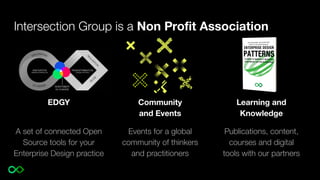
Intersection Group is a Non Profit Association
EDGY
A set of connected Open
Source tools for your
Enterprise Design practice
Community
and Events
Events for a global
community of thinkers
and practitioners
Learning and
Knowledge
Publications, content,
courses and digital
tools with our partners
March 29, 2023
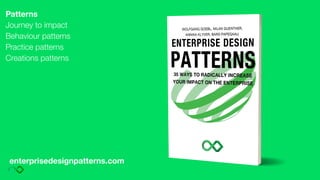
enterprisedesignpatterns.com
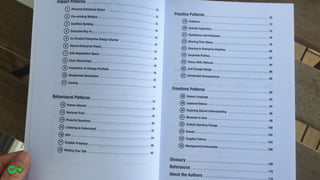
Patterns
Journey to impact
Behaviour patterns
Practice patterns
Creations patterns
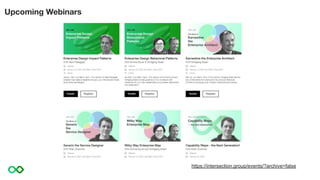
https://intersection.group/events/?archive=false
Upcoming Webinars
Thank you!
Annika Klyver
annika@intersection.group
Wolfgang Göbl
wolfgang@intersection.group
intersection.group

Enterprise Design Behavioral Patterns

  • 1.
  • 2.
    We help peoplecreate better enterprises. INTERSECTION GROUP
  • 4.
    Human Interest You wantother people to know you care about them. In this context: When you focus too much on the content of your work and not enough on other people, they can feel excluded and ignored. Therefore: You talk with them about their goals and concerns. Consequently: They see you care about their goals and concerns and take a personal interest in them.
  • 5.
    Nurture Trust You needother people to trust you as an advisor, partner and co-worker. In this context: The people around you often find it difficult to trust you. Therefore: You prioritise being trusted in how you engage with them. Consequently: You become a trusted advisor, partner or co-worker to them. They come to you for advice and invite you to participate when important decisions need to be made.
  • 6.
    Powerful Questions You needto explore the full wisdom of other people to co-design great enterprises. In this context: The first answers you get when interviewing someone seldom give the full picture. Therefore: You learn to ask powerful questions: › Explorative, Circular, Scaling, Hypothetical, Miracle (what-if?) Consequently: You help your interview partners understand their own design challenges better and leads to the trust you need.
  • 7.
    Listen to Understand Youneed to explore the wisdom of other people to co-design great enterprises. In this context: EDs are often so focused on their design activities they forget to really listen to the people. Therefore: You are aware that successful communication always starts with excellent listening skills. Consequently: You gain knowledge of the bigger picture of the enterprise. Your deliverables will increase in depth and accuracy. You are building better relations of trust and coalitions.
  • 8.
    Hint You want otherpeople to actively contribute to the enterprise design work. In this context: You run the risk of teaching too much and telling people what to do more often than you should. Therefore: You let people discover what they need to know and what they should do, rather than telling them. Consequently: People have experienced the “aha moment” of connecting the dots by themselves.
  • 9.
    Tangible Presence You wantother people to feel they know you well enough to trust your intentions and actions. In this context: You are so busy collecting information and creating things, you often disappear from their sight for weeks. Therefore: You reserve enough time to have regular formal and informal interactions with them. Consequently: Because they regularly interact with you and the work you do, they feel they know you well enough to trust you, your intentions and your work.
  • 10.
    Walk your talk Youwant other people to feel they can predict your actions and trust your promises. In this context: It is easy to lose track of what and when you promised to deliver. Non-reliability leads to a decline of trust. Therefore: You stay in regular contact with people about your progress and possible changes in what you are doing and planning. Consequently: Because you do as you promise and keep them informed, people are confident they can predict your actions. They feel you are reliable.
  • 11.
    Intersection Group isa Non Profit Association EDGY A set of connected Open Source tools for your Enterprise Design practice Community and Events Events for a global community of thinkers and practitioners Learning and Knowledge Publications, content, courses and digital tools with our partners
  • 12.
  • 13.
    enterprisedesignpatterns.com Patterns Journey to impact Behaviourpatterns Practice patterns Creations patterns
  • 15.
  • 17.
    Thank you! Annika Klyver annika@intersection.group WolfgangGöbl wolfgang@intersection.group intersection.group