Download to read offline


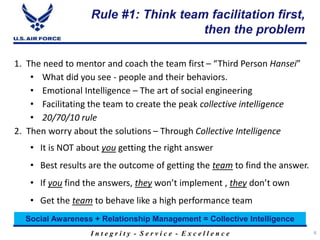
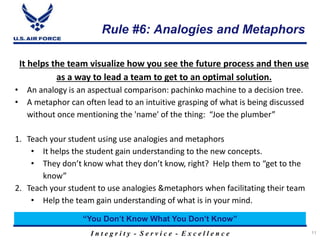
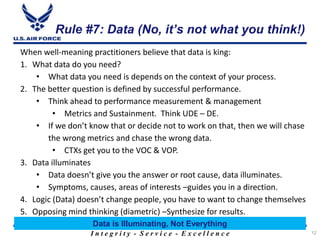
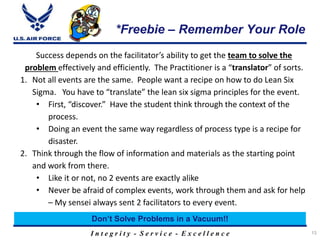


This document outlines seven rules for effective mentoring and coaching. It discusses the importance of focusing first on developing relationships and facilitating teams before solving problems. The rules emphasize hands-on experience to build credibility, continuing personal learning, thinking ahead of students, treating all students equally, using analogies and metaphors, and recognizing that data illuminates rather than dictates solutions. Successful mentoring is defined as transferring knowledge so students can apply it effectively in real-world situations. Success is measured by the mentor becoming invisible as the student demonstrates their learning.


