ENT OSPE
By
Dr. Sajid Ali Talpur
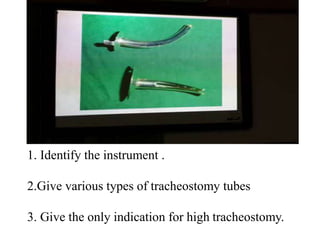
1. Identify the instrument .
2. Give various types of tracheostomy tubes
3. Give the only indication for high tracheostomy.
1. Tracheostomy tube (metallic-cheveleir jackson)
2. 1) Chevalier Jackson or Fuller metallic tracheostomy
tube
2) The soft non metallic Portex and Shilley’s
Tracheostomy tubes availabe with or without inner tube,
with or without cuff, with or without phonation hole
3.Carcinoma of larynx
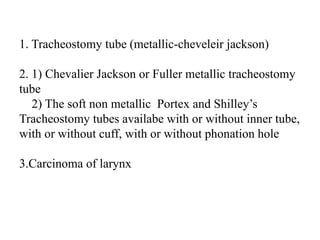
1. Give any four intracranial causes of facial nerve
paralysis
2. What do you mean by neuraprexia?
3. Name various tests to check intactness of the
facial nerve
4. What is the commonest cause of facial nerve
paralysis?
1. 1) Brainstem tumours 2) vascular accidents
3) poliomylittus 4) multiple sclerosis
2. It is physiological block without anatomical
discontinuity of the axon of the facial nerve.
3. 1) Minimal nerve excitablity test
2) maximal nerve stimulatory test
3) electromyography
4) electroneuronography
4. Bell’s palsy
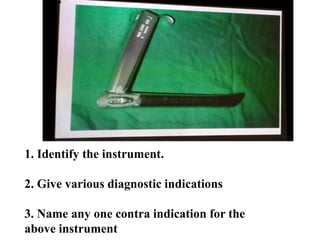
1. Identify the instrument.
2. Give various diagnostic indications
3. Name any one contra indication for the
above instrument
Answer Key
1. Direct laryngoscope
2. 1) when indirect laryngoscopy is not possible
2) when indirect laryngoscopy is unsuccessfull
3) to confirm the findings of indirect laryngoscopy
4) to take biopsy and find the extent of growth
5) to see the hidden areas of larynx and hypopharynx
3. Injury or the diseases of the cervical spine
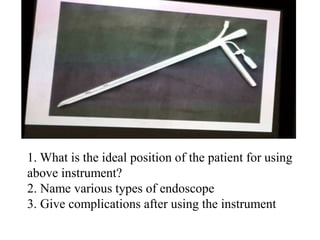
1. What is the ideal position of the patient for using
above instrument?
2. Name various types of endoscope
3. Give complications after using the instrument
1. Barking dog position
2. 1) Rigid endoscope
2) Flexible endoscope
3. 1) injury to teeth, lips
2) laryngeal edema
3) hemorrhage from the biopsy site
4) hypoxia & cardiac arrest
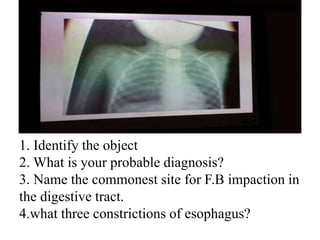
1. Identify the object
2. What is your probable diagnosis?
3. Name the commonest site for F.B impaction in
the digestive tract.
4.what three constrictions of esophagus?
1. Plain X-ray chest (P.A view chest and neck)
2. Foreign body (coin) in the esophagus
3. Cricopharynx
4. 1) cricopharynx
2) at the level of arch of aorta and left bronchus
3) at the level where it pierces diaphragm
DISEASES OF NOSE
1. DIPHTEROID IS THE CAUSATIVE AGENT
FOR?
2. WHICH SOLUTION IS USED TO PREVENT
CRUST
FORMATION AND KILL SAPROPHYTIC
ORGANISMS?
3. HANDKERCHIEF TEST IS PERFORMED IN
CASE OF?
1. Atrophic rhinitis
2. 25% glucose in glycerine
3. CSF rhinorrhea
4. 1) injury to check and swelling
2) injury to orbits
3) injury to pteregopalatine fossa
4) air embolism
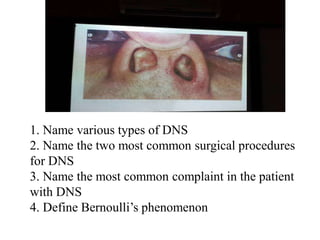
1. Name various types of DNS
2. Name the two most common surgical procedures
for DNS
3. Name the most common complaint in the patient
with DNS
4. Define Bernoulli’s phenomenon
1. 1) simple or C shaped
2) sigmoid or S shaped
3) spur
4) thickening
5) anterior caudal dislocation
2. 1) SMR 2) Septoplasty
3. Nasal obstruction
4. When air passes through a constriction there is
creation of negative pressure distal to constriction,
called Bernoulli’s phenomenon.
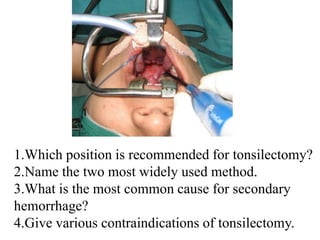
1.Which position is recommended for tonsilectomy?
2.Name the two most widely used method.
3.What is the most common cause for secondary
hemorrhage?
4.Give various contraindications of tonsilectomy.
1. Rose’s position
2. Dissection and Diathermy methods
3.Infection of tonsilar bed with sloughing and opening of
smaller vessels in its bed.
4. 1) child below three years of age
2) during polio epidemics
3) during acute attack or acute R.T.I
4) anemia
5) bleeding disorders
6) uncontrolled systemic diseases like diabetes mellitus,
hypertension
INFLAMMATORY DISEASES OF
PHARYNX
1.Which disease is characterized by bull neck
appearance?
2. Name two diseases caused by Ebstein Bar
virus.
3. Which disease is called Trench mouth?
4.Give clinical types of chronic non specific
pharyngitis.
1.Pharyngeal diphtheria
2. 1) Infectious mononucleosis
2) Burkit lymphoma
3. 1) catarrhal
2) hypertrophic or granular
3) follicular
4) atrophic
4. Vincent’s angina
Nasal Polyp
1.Give three differences b/w ethmoidal and
antroconal type of polyps
2.What are different surgical treatments for
ethmoidal polypi
3.which test is performed to differentiate b/w
polyp and hypertrophied inferior turbinate?
1.1) ethmoidal polypi are different than antroconal type
2) ethmoidal polypi are bilateral while antroconal is
unilateral
3) ethmoidal polypi arise from ethmoidal sinuses while
antroconal type arise from maxillary sinus
2. 1) Endoscopic sinus surgery
2) intra nasal polypectomy
3) ethmoidectomy
3. Probe test
Regarding Answers you may check
from your books, teachers and
internet for confirmation.
Thanks…!

ENT OSPE (1)

  • 1.
  • 2.
    1. Identify theinstrument . 2. Give various types of tracheostomy tubes 3. Give the only indication for high tracheostomy.
  • 3.
    1. Tracheostomy tube(metallic-cheveleir jackson) 2. 1) Chevalier Jackson or Fuller metallic tracheostomy tube 2) The soft non metallic Portex and Shilley’s Tracheostomy tubes availabe with or without inner tube, with or without cuff, with or without phonation hole 3.Carcinoma of larynx
  • 4.
    1. Give anyfour intracranial causes of facial nerve paralysis 2. What do you mean by neuraprexia? 3. Name various tests to check intactness of the facial nerve 4. What is the commonest cause of facial nerve paralysis?
  • 5.
    1. 1) Brainstemtumours 2) vascular accidents 3) poliomylittus 4) multiple sclerosis 2. It is physiological block without anatomical discontinuity of the axon of the facial nerve. 3. 1) Minimal nerve excitablity test 2) maximal nerve stimulatory test 3) electromyography 4) electroneuronography 4. Bell’s palsy
  • 6.
    1. Identify theinstrument. 2. Give various diagnostic indications 3. Name any one contra indication for the above instrument
  • 7.
    Answer Key 1. Directlaryngoscope 2. 1) when indirect laryngoscopy is not possible 2) when indirect laryngoscopy is unsuccessfull 3) to confirm the findings of indirect laryngoscopy 4) to take biopsy and find the extent of growth 5) to see the hidden areas of larynx and hypopharynx 3. Injury or the diseases of the cervical spine
  • 8.
    1. What isthe ideal position of the patient for using above instrument? 2. Name various types of endoscope 3. Give complications after using the instrument
  • 9.
    1. Barking dogposition 2. 1) Rigid endoscope 2) Flexible endoscope 3. 1) injury to teeth, lips 2) laryngeal edema 3) hemorrhage from the biopsy site 4) hypoxia & cardiac arrest
  • 10.
    1. Identify theobject 2. What is your probable diagnosis? 3. Name the commonest site for F.B impaction in the digestive tract. 4.what three constrictions of esophagus?
  • 11.
    1. Plain X-raychest (P.A view chest and neck) 2. Foreign body (coin) in the esophagus 3. Cricopharynx 4. 1) cricopharynx 2) at the level of arch of aorta and left bronchus 3) at the level where it pierces diaphragm
  • 12.
    DISEASES OF NOSE 1.DIPHTEROID IS THE CAUSATIVE AGENT FOR? 2. WHICH SOLUTION IS USED TO PREVENT CRUST FORMATION AND KILL SAPROPHYTIC ORGANISMS? 3. HANDKERCHIEF TEST IS PERFORMED IN CASE OF?
  • 13.
    1. Atrophic rhinitis 2.25% glucose in glycerine 3. CSF rhinorrhea 4. 1) injury to check and swelling 2) injury to orbits 3) injury to pteregopalatine fossa 4) air embolism
  • 14.
    1. Name varioustypes of DNS 2. Name the two most common surgical procedures for DNS 3. Name the most common complaint in the patient with DNS 4. Define Bernoulli’s phenomenon
  • 15.
    1. 1) simpleor C shaped 2) sigmoid or S shaped 3) spur 4) thickening 5) anterior caudal dislocation 2. 1) SMR 2) Septoplasty 3. Nasal obstruction 4. When air passes through a constriction there is creation of negative pressure distal to constriction, called Bernoulli’s phenomenon.
  • 16.
    1.Which position isrecommended for tonsilectomy? 2.Name the two most widely used method. 3.What is the most common cause for secondary hemorrhage? 4.Give various contraindications of tonsilectomy.
  • 17.
    1. Rose’s position 2.Dissection and Diathermy methods 3.Infection of tonsilar bed with sloughing and opening of smaller vessels in its bed. 4. 1) child below three years of age 2) during polio epidemics 3) during acute attack or acute R.T.I 4) anemia 5) bleeding disorders 6) uncontrolled systemic diseases like diabetes mellitus, hypertension
  • 18.
    INFLAMMATORY DISEASES OF PHARYNX 1.Whichdisease is characterized by bull neck appearance? 2. Name two diseases caused by Ebstein Bar virus. 3. Which disease is called Trench mouth? 4.Give clinical types of chronic non specific pharyngitis.
  • 19.
    1.Pharyngeal diphtheria 2. 1)Infectious mononucleosis 2) Burkit lymphoma 3. 1) catarrhal 2) hypertrophic or granular 3) follicular 4) atrophic 4. Vincent’s angina
  • 20.
    Nasal Polyp 1.Give threedifferences b/w ethmoidal and antroconal type of polyps 2.What are different surgical treatments for ethmoidal polypi 3.which test is performed to differentiate b/w polyp and hypertrophied inferior turbinate?
  • 21.
    1.1) ethmoidal polypiare different than antroconal type 2) ethmoidal polypi are bilateral while antroconal is unilateral 3) ethmoidal polypi arise from ethmoidal sinuses while antroconal type arise from maxillary sinus 2. 1) Endoscopic sinus surgery 2) intra nasal polypectomy 3) ethmoidectomy 3. Probe test
  • 22.
    Regarding Answers youmay check from your books, teachers and internet for confirmation. Thanks…!