EngineeringBy Curtis R. Smith
Investigation of How it WorksLawnmowerRyobi Drill/Battery
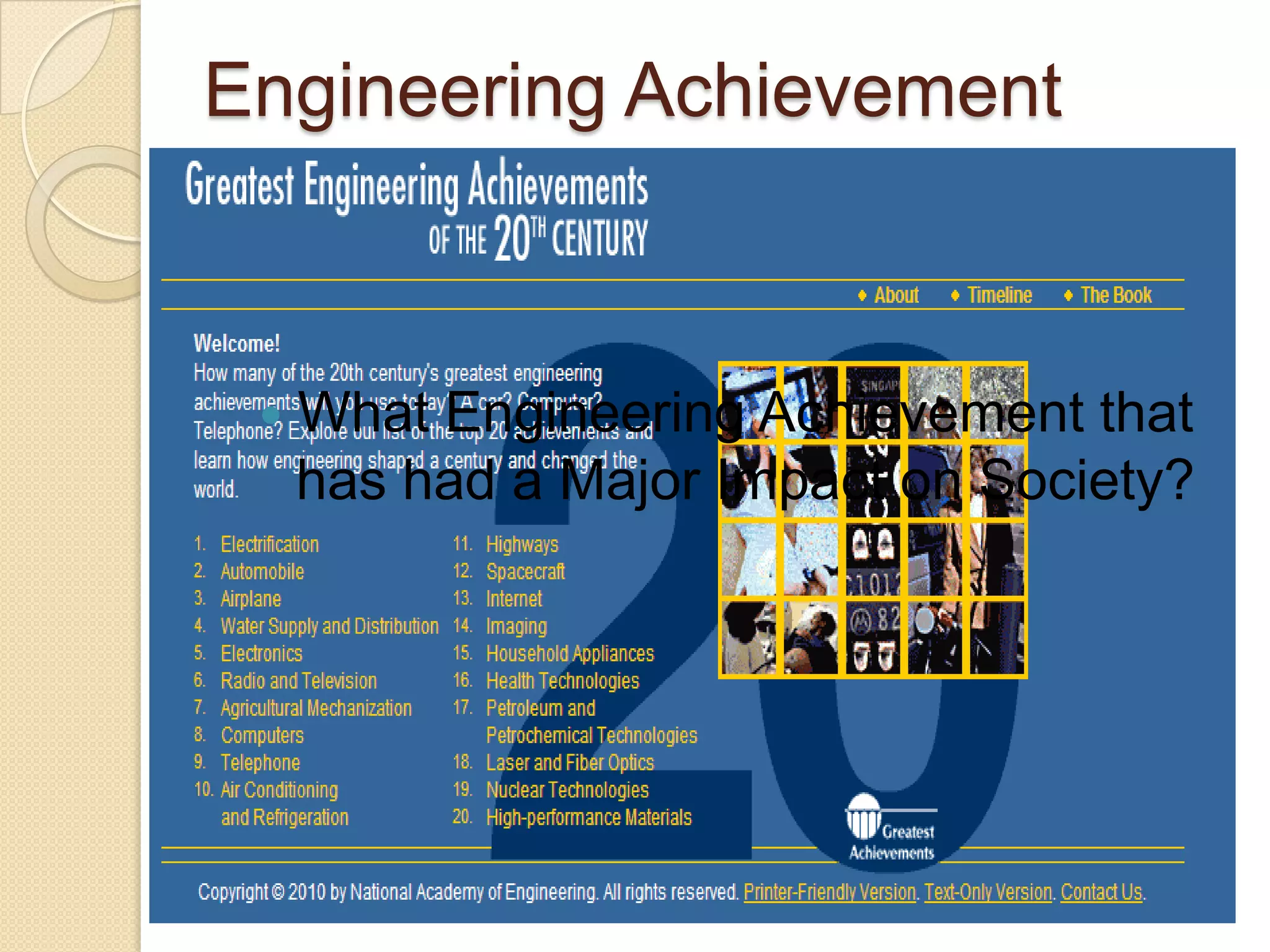
Engineering AchievementWhat Engineering Achievement that has had a Major Impact on Society?
Let’s Go Looking
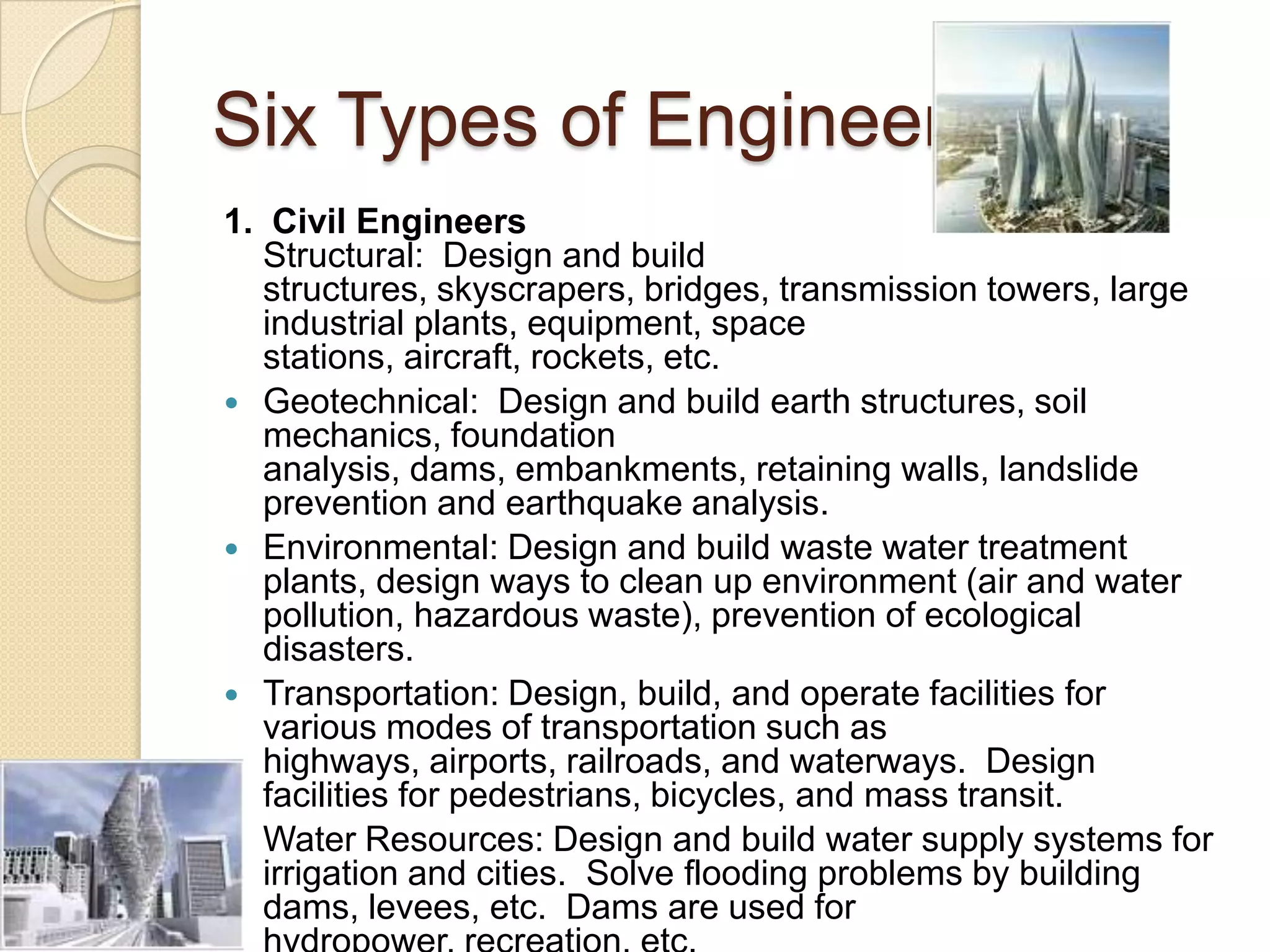
Six Types of Engineers1.  Civil EngineersStructural:  Design and build structures, skyscrapers, bridges, transmission towers, large industrial plants, equipment, space stations, aircraft, rockets, etc.Geotechnical:  Design and build earth structures, soil mechanics, foundation analysis, dams, embankments, retaining walls, landslide prevention and earthquake analysis.Environmental: Design and build waste water treatment plants, design ways to clean up environment (air and water pollution, hazardous waste), prevention of ecological disasters.Transportation: Design, build, and operate facilities for various modes of transportation such as highways, airports, railroads, and waterways.  Design facilities for pedestrians, bicycles, and mass transit.Water Resources: Design and build water supply systems for irrigation and cities.  Solve flooding problems by building dams, levees, etc.  Dams are used for hydropower, recreation, etc. 
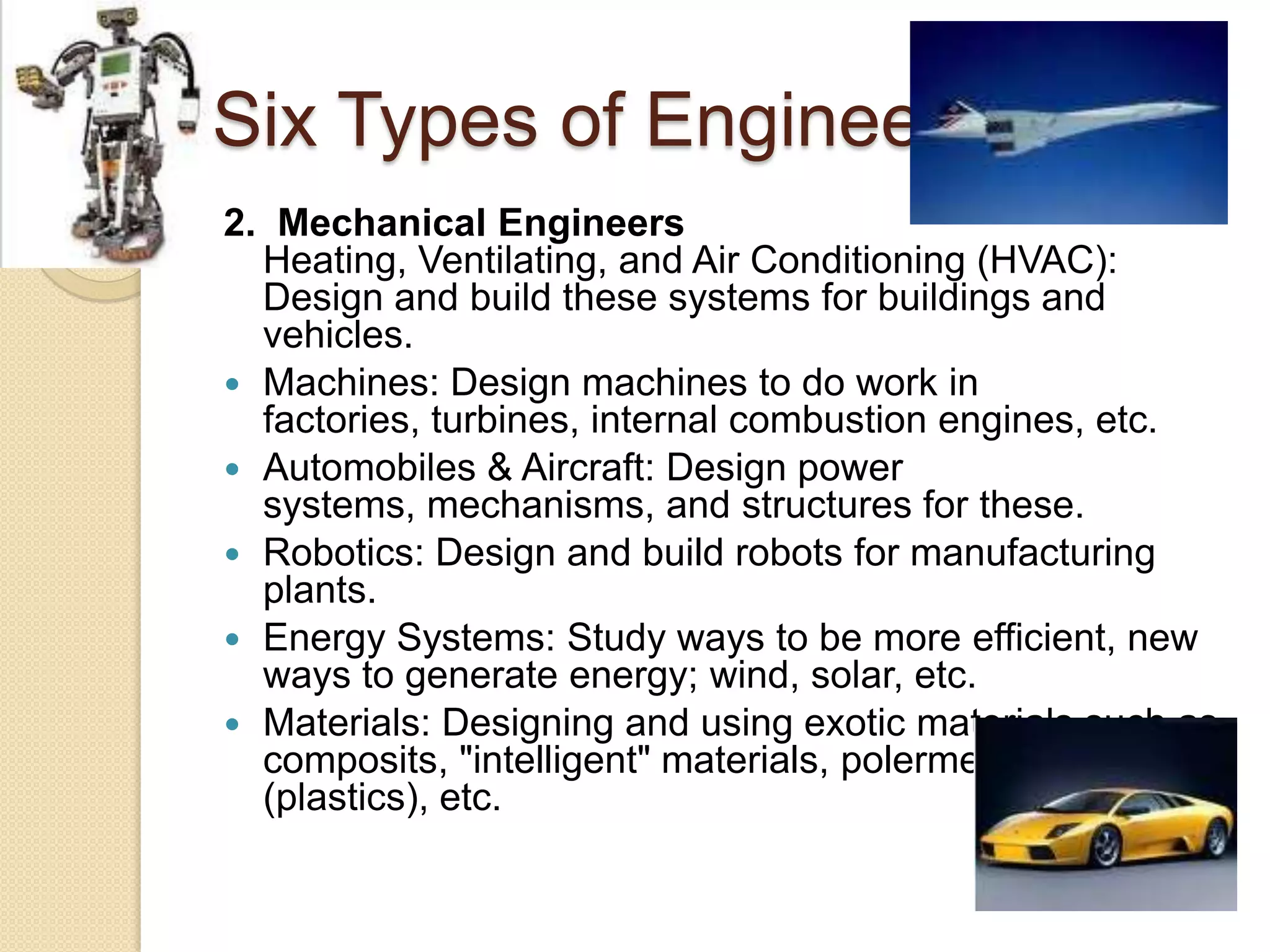
Six Types of Engineers2.  Mechanical EngineersHeating, Ventilating, and Air Conditioning (HVAC): Design and build these systems for buildings and vehicles.Machines: Design machines to do work in factories, turbines, internal combustion engines, etc.Automobiles & Aircraft: Design power systems, mechanisms, and structures for these.Robotics: Design and build robots for manufacturing plants.Energy Systems: Study ways to be more efficient, new ways to generate energy; wind, solar, etc.Materials: Designing and using exotic materials such as composits, "intelligent" materials, polermeric materials (plastics), etc.
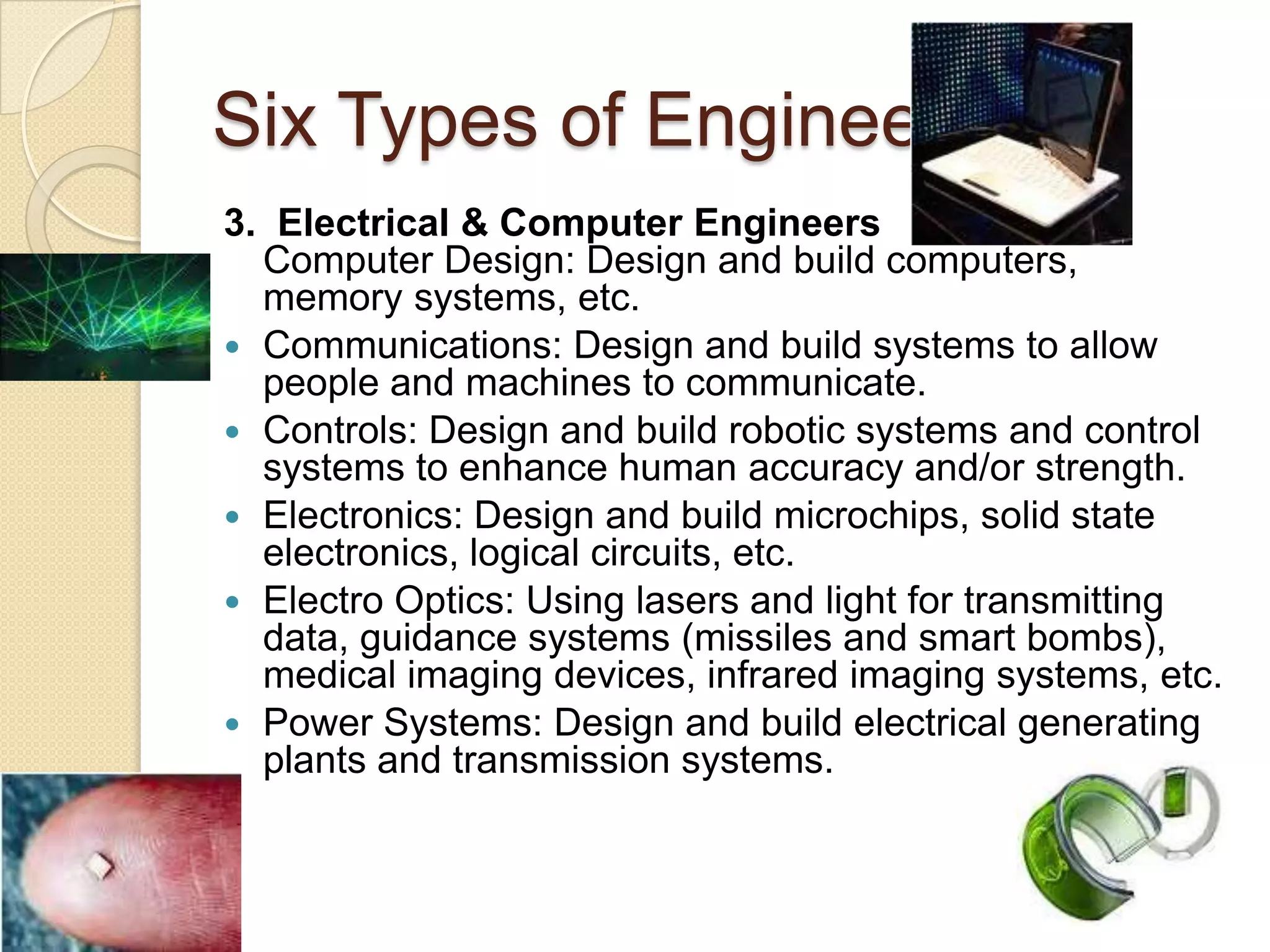
Six Types of Engineers3.  Electrical & Computer EngineersComputer Design: Design and build computers, memory systems, etc.Communications: Design and build systems to allow people and machines to communicate.Controls: Design and build robotic systems and control systems to enhance human accuracy and/or strength.Electronics: Design and build microchips, solid state electronics, logical circuits, etc.Electro Optics: Using lasers and light for transmitting data, guidance systems (missiles and smart bombs), medical imaging devices, infrared imaging systems, etc.Power Systems: Design and build electrical generating plants and transmission systems.
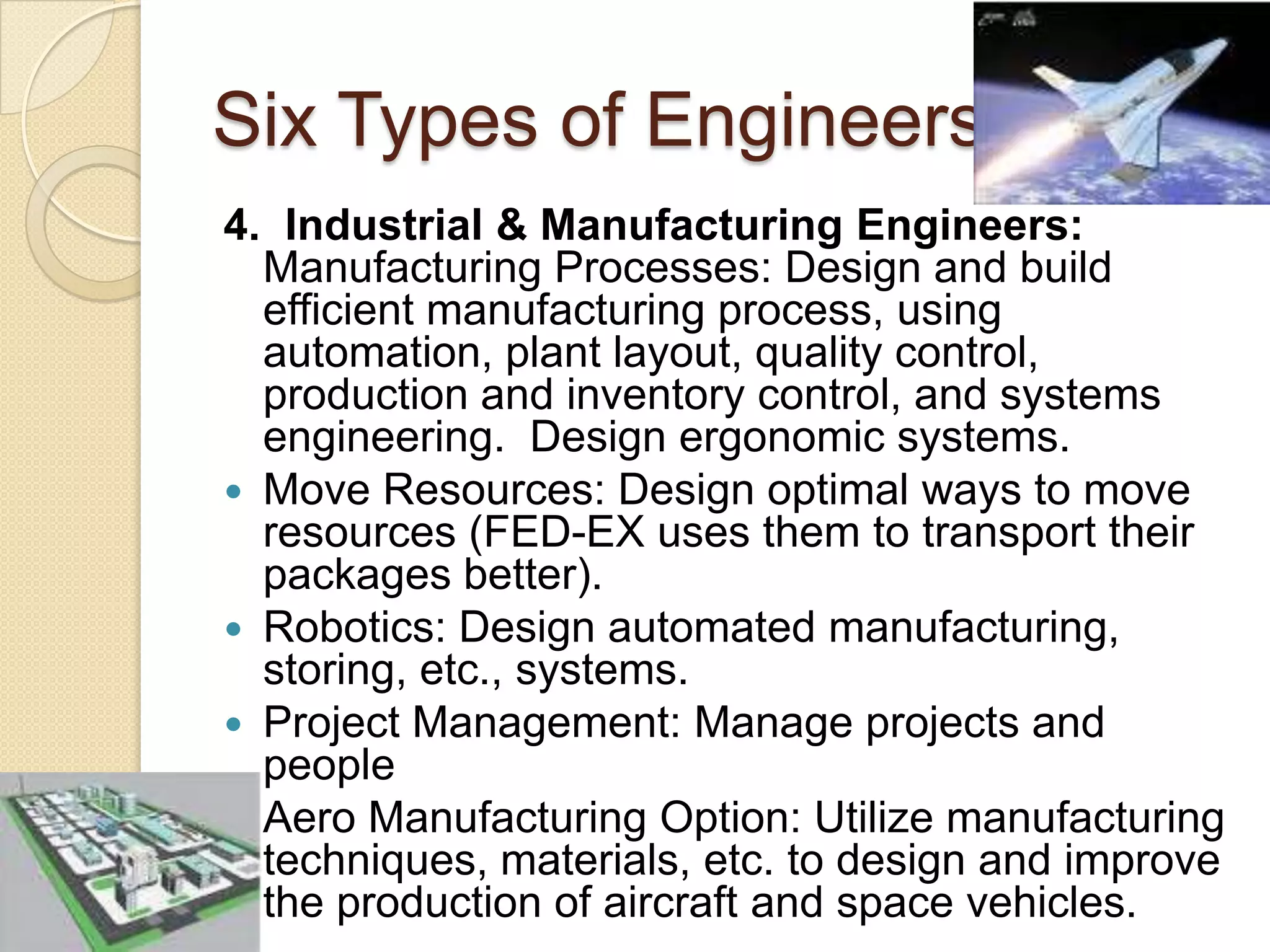
Six Types of Engineers4.  Industrial & Manufacturing Engineers:Manufacturing Processes: Design and build efficient manufacturing process, using automation, plant layout, quality control, production and inventory control, and systems engineering.  Design ergonomic systems.Move Resources: Design optimal ways to move resources (FED-EX uses them to transport their packages better).Robotics: Design automated manufacturing, storing, etc., systems.Project Management: Manage projects and peopleAero Manufacturing Option: Utilize manufacturing techniques, materials, etc. to design and improve the production of aircraft and space vehicles.   
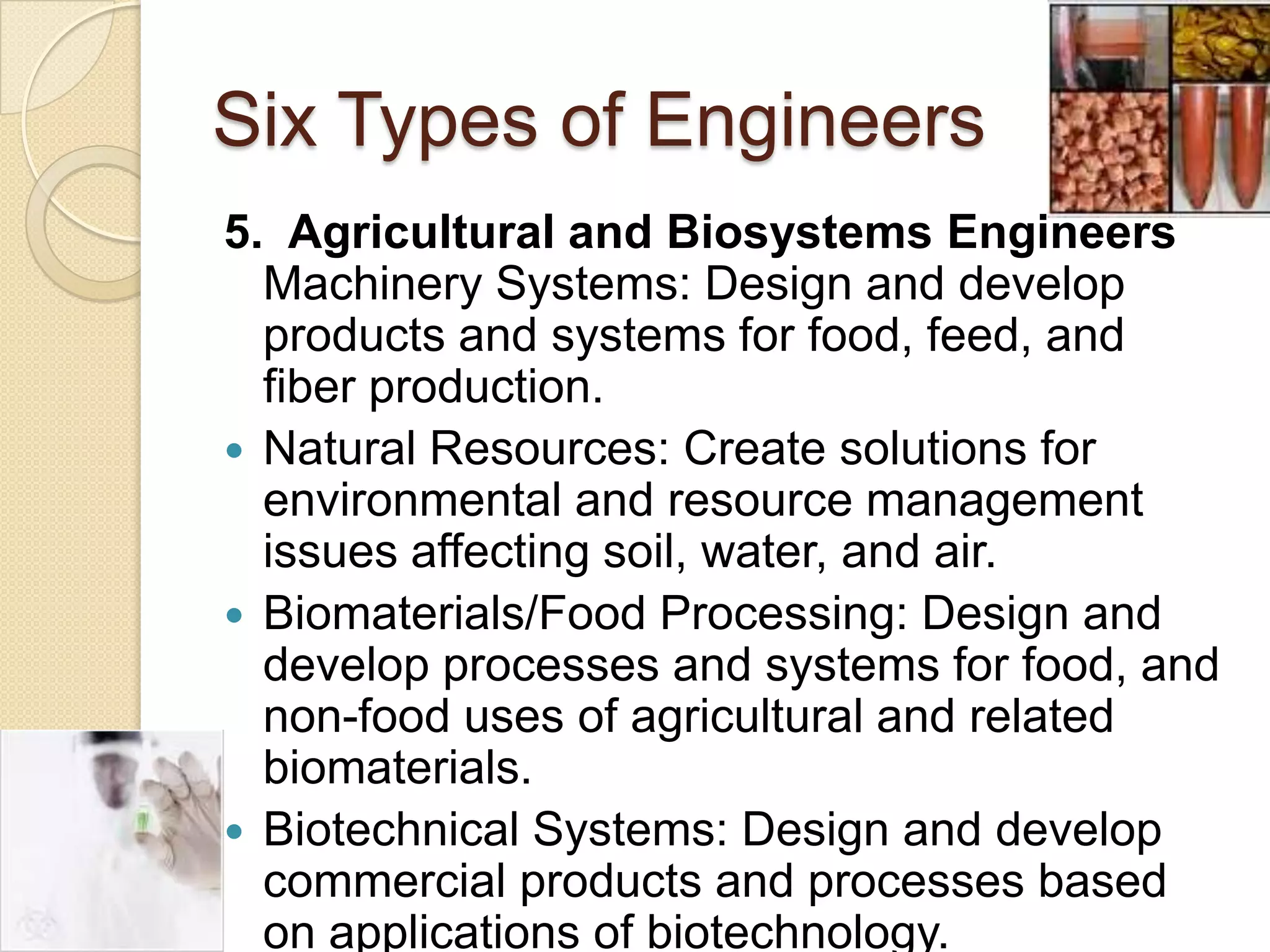
Six Types of Engineers5.  Agricultural and Biosystems EngineersMachinery Systems: Design and develop products and systems for food, feed, and fiber production.Natural Resources: Create solutions for environmental and resource management issues affecting soil, water, and air.Biomaterials/Food Processing: Design and develop processes and systems for food, and non-food uses of agricultural and related biomaterials.Biotechnical Systems: Design and develop commercial products and processes based on applications of biotechnology.
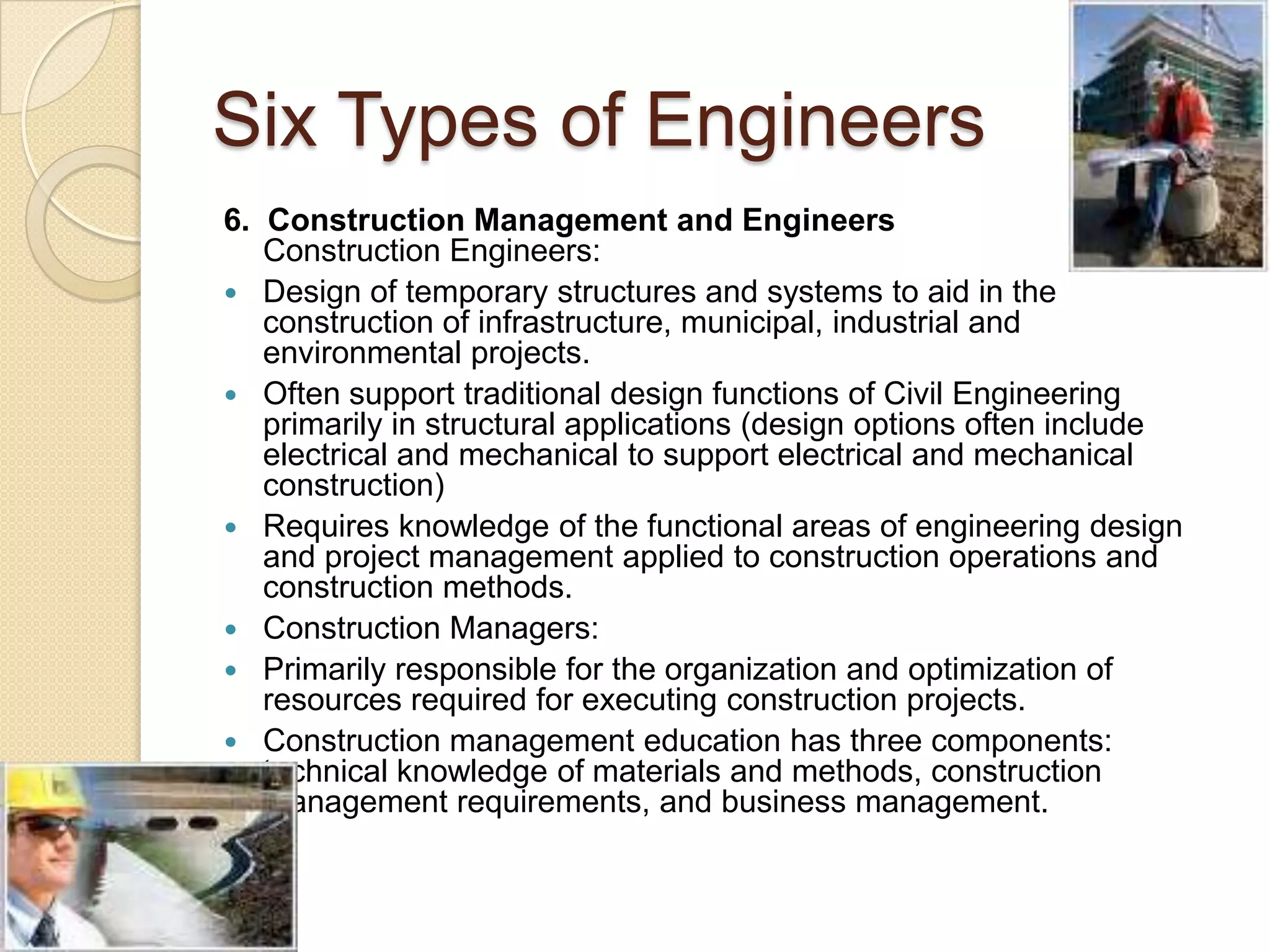
Six Types of Engineers6.  Construction Management and Engineers Construction Engineers: Design of temporary structures and systems to aid in the construction of infrastructure, municipal, industrial and environmental projects.Often support traditional design functions of Civil Engineering primarily in structural applications (design options often include electrical and mechanical to support electrical and mechanical construction)Requires knowledge of the functional areas of engineering design and project management applied to construction operations and construction methods.Construction Managers: Primarily responsible for the organization and optimization of resources required for executing construction projects.Construction management education has three components: technical knowledge of materials and methods, construction management requirements, and business management.
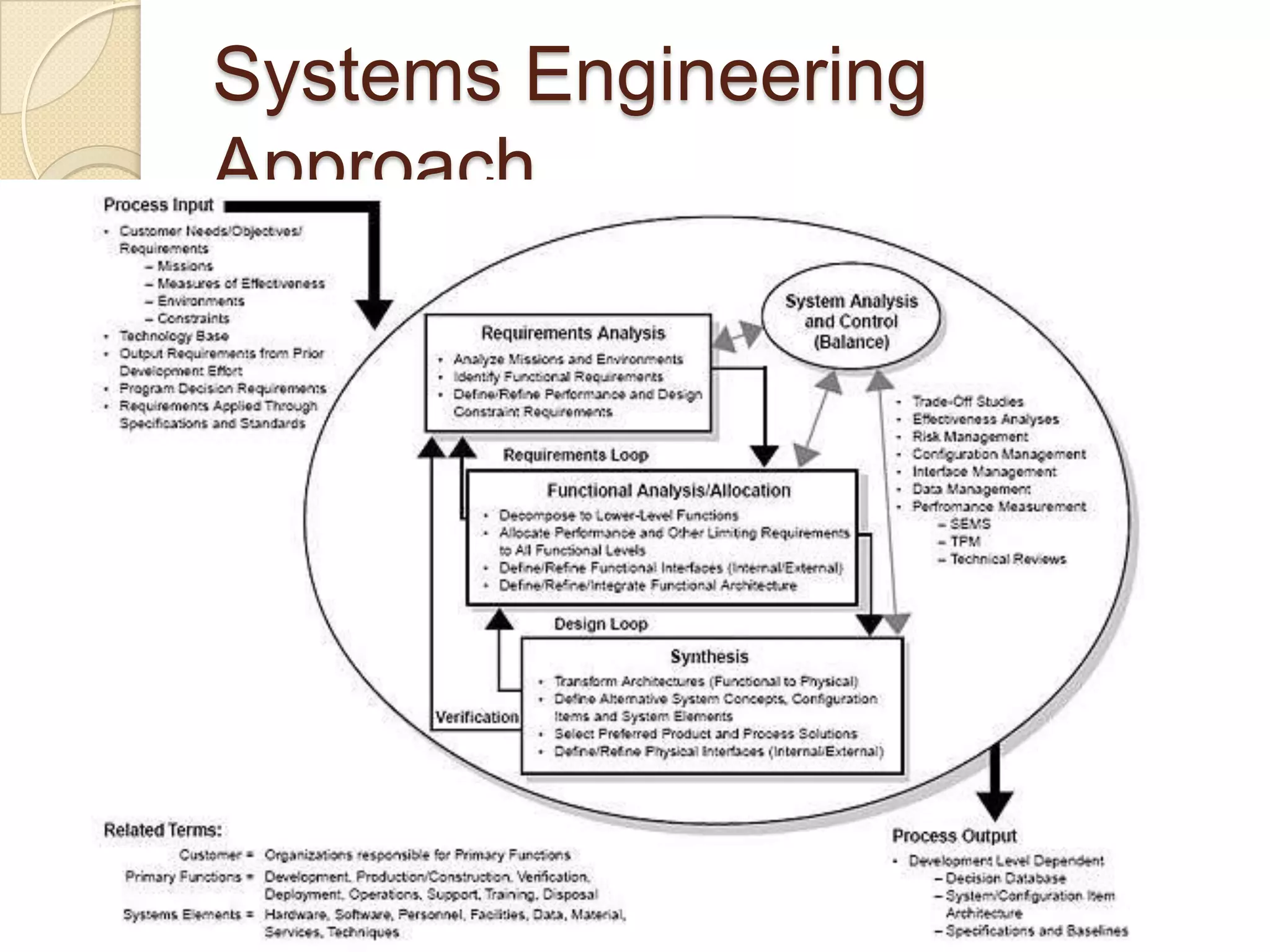
Systems Engineering Approach
Using The Systems Engineering ApproachWhat could have made our last camp out better?What Things Could we Do at our Overnighter at Antelope Island during our next Campout?What kinds of things should we focus on for additional campouts?
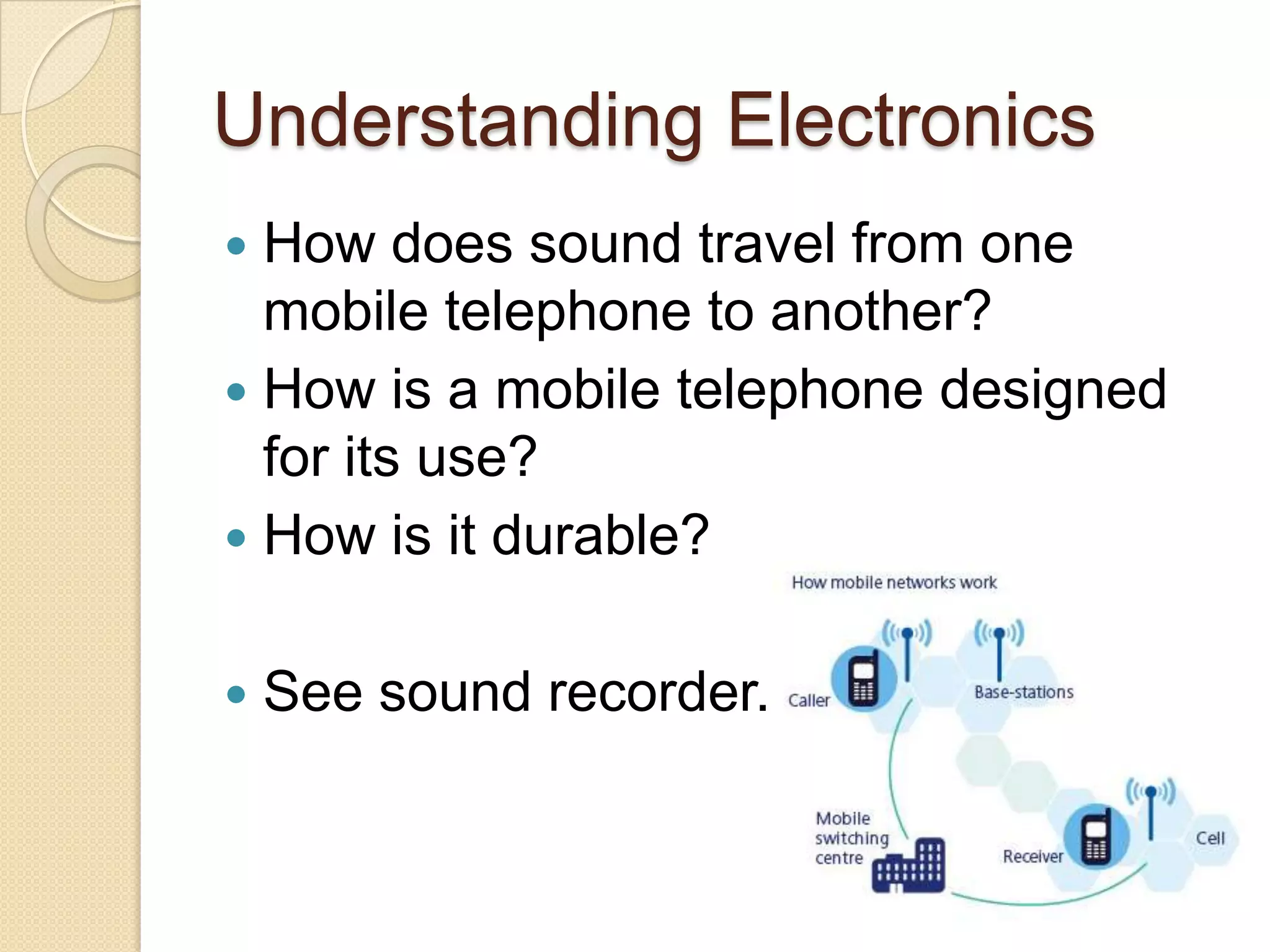
Understanding ElectronicsHow does sound travel from one mobile telephone to another?How is a mobile telephone designed for its use?How is it durable?See sound recorder.
Moving People	How do people in our community get to work?What are the differences between the slow and fast sections in our community?How can it be improved?
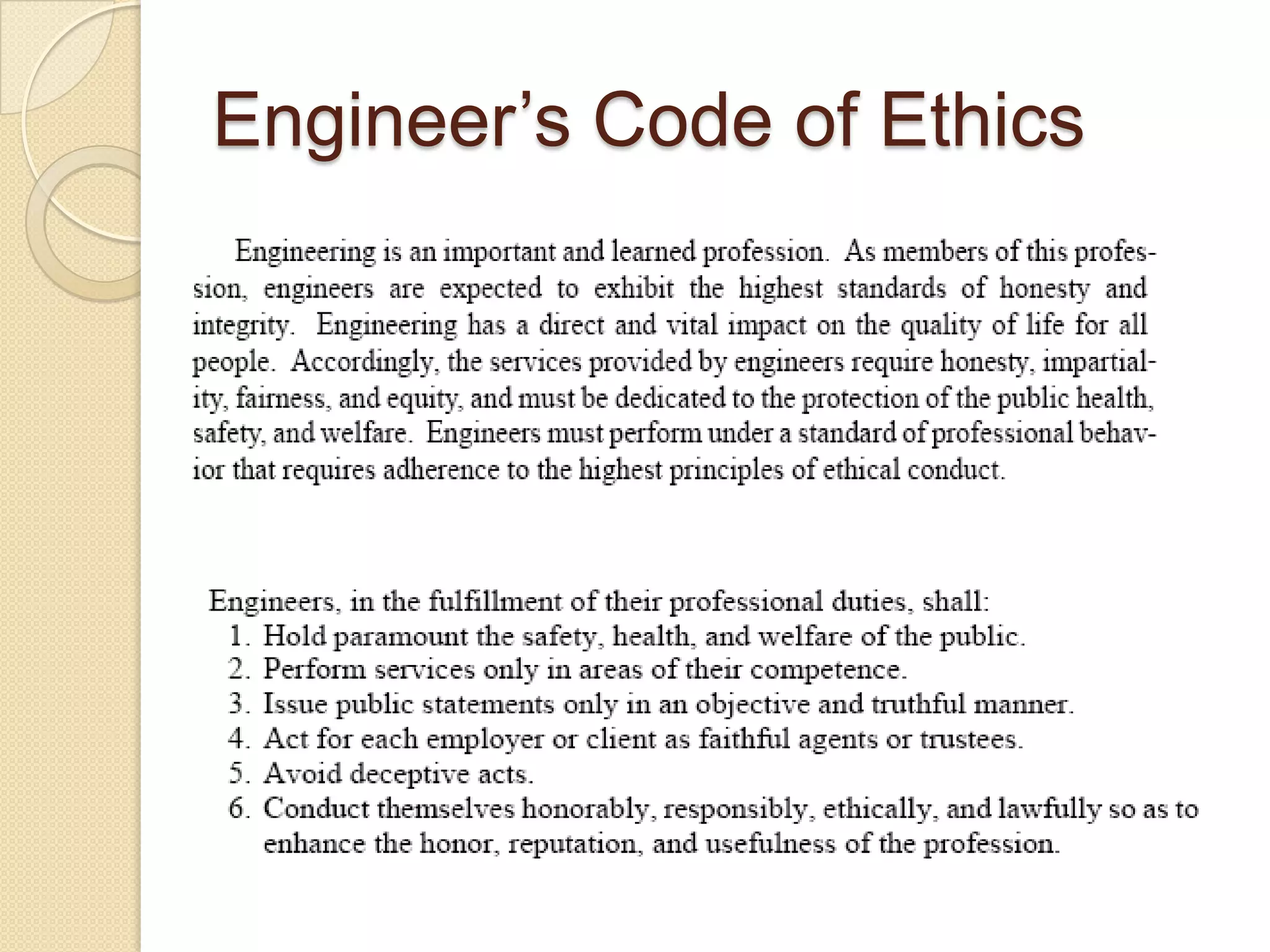
Engineer’s Code of Ethics

Engineering Merit Badge

  • 1.
  • 2.
    Investigation of Howit WorksLawnmowerRyobi Drill/Battery
  • 3.
    Engineering AchievementWhat EngineeringAchievement that has had a Major Impact on Society?
  • 4.
  • 5.
    Six Types ofEngineers1.  Civil EngineersStructural:  Design and build structures, skyscrapers, bridges, transmission towers, large industrial plants, equipment, space stations, aircraft, rockets, etc.Geotechnical:  Design and build earth structures, soil mechanics, foundation analysis, dams, embankments, retaining walls, landslide prevention and earthquake analysis.Environmental: Design and build waste water treatment plants, design ways to clean up environment (air and water pollution, hazardous waste), prevention of ecological disasters.Transportation: Design, build, and operate facilities for various modes of transportation such as highways, airports, railroads, and waterways.  Design facilities for pedestrians, bicycles, and mass transit.Water Resources: Design and build water supply systems for irrigation and cities.  Solve flooding problems by building dams, levees, etc.  Dams are used for hydropower, recreation, etc. 
  • 6.
    Six Types ofEngineers2.  Mechanical EngineersHeating, Ventilating, and Air Conditioning (HVAC): Design and build these systems for buildings and vehicles.Machines: Design machines to do work in factories, turbines, internal combustion engines, etc.Automobiles & Aircraft: Design power systems, mechanisms, and structures for these.Robotics: Design and build robots for manufacturing plants.Energy Systems: Study ways to be more efficient, new ways to generate energy; wind, solar, etc.Materials: Designing and using exotic materials such as composits, "intelligent" materials, polermeric materials (plastics), etc.
  • 7.
    Six Types ofEngineers3.  Electrical & Computer EngineersComputer Design: Design and build computers, memory systems, etc.Communications: Design and build systems to allow people and machines to communicate.Controls: Design and build robotic systems and control systems to enhance human accuracy and/or strength.Electronics: Design and build microchips, solid state electronics, logical circuits, etc.Electro Optics: Using lasers and light for transmitting data, guidance systems (missiles and smart bombs), medical imaging devices, infrared imaging systems, etc.Power Systems: Design and build electrical generating plants and transmission systems.
  • 8.
    Six Types ofEngineers4.  Industrial & Manufacturing Engineers:Manufacturing Processes: Design and build efficient manufacturing process, using automation, plant layout, quality control, production and inventory control, and systems engineering.  Design ergonomic systems.Move Resources: Design optimal ways to move resources (FED-EX uses them to transport their packages better).Robotics: Design automated manufacturing, storing, etc., systems.Project Management: Manage projects and peopleAero Manufacturing Option: Utilize manufacturing techniques, materials, etc. to design and improve the production of aircraft and space vehicles.   
  • 9.
    Six Types ofEngineers5.  Agricultural and Biosystems EngineersMachinery Systems: Design and develop products and systems for food, feed, and fiber production.Natural Resources: Create solutions for environmental and resource management issues affecting soil, water, and air.Biomaterials/Food Processing: Design and develop processes and systems for food, and non-food uses of agricultural and related biomaterials.Biotechnical Systems: Design and develop commercial products and processes based on applications of biotechnology.
  • 10.
    Six Types ofEngineers6.  Construction Management and Engineers Construction Engineers: Design of temporary structures and systems to aid in the construction of infrastructure, municipal, industrial and environmental projects.Often support traditional design functions of Civil Engineering primarily in structural applications (design options often include electrical and mechanical to support electrical and mechanical construction)Requires knowledge of the functional areas of engineering design and project management applied to construction operations and construction methods.Construction Managers: Primarily responsible for the organization and optimization of resources required for executing construction projects.Construction management education has three components: technical knowledge of materials and methods, construction management requirements, and business management.
  • 11.
  • 12.
    Using The SystemsEngineering ApproachWhat could have made our last camp out better?What Things Could we Do at our Overnighter at Antelope Island during our next Campout?What kinds of things should we focus on for additional campouts?
  • 13.
    Understanding ElectronicsHow doessound travel from one mobile telephone to another?How is a mobile telephone designed for its use?How is it durable?See sound recorder.
  • 14.
    Moving People How dopeople in our community get to work?What are the differences between the slow and fast sections in our community?How can it be improved?
  • 15.