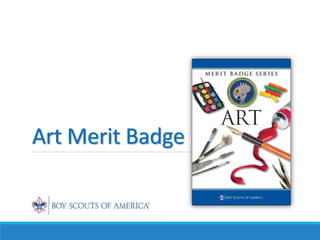
Art Merit Badge
Requirements
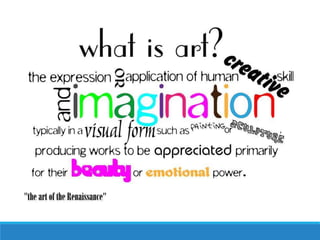
1. What is art? What are some different types of art?
2. The importance of art to humankind.
3. What art means to you and how art makes you feel.
4. Discuss the following terms and elements of art: line, value, shape,
form, space, color, and texture. Show examples of each element.
5. Discuss the six principles of design: rhythm, balance, proportion,
variety, emphasis, and unity.
6. Find out about three career opportunities in art. Pick one and find
out the education, training, and experience required for this
profession. Discuss this with your counselor, and explain why this
profession might interest you.
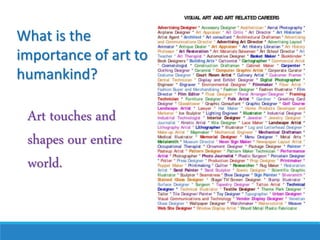
What is the
importance of art to
humankind?
Art touches and
shapes our entire
world.
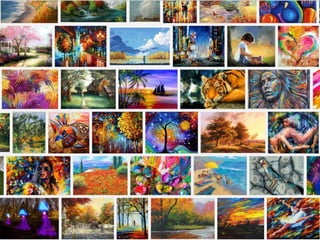
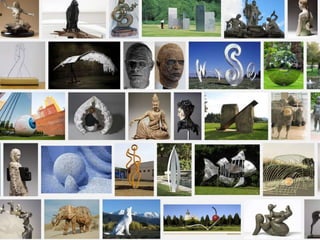
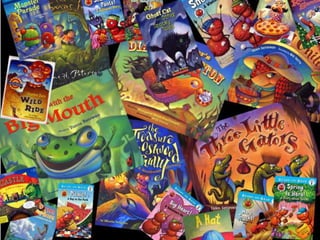
Paintings, Drawings, Illustrations, Sculptures,
Printmaking, Illustrations, etc.
Combining art and technology to
communicate ideas.
Collaterals
Advertorials and Ads
Packaging Design
Web Design
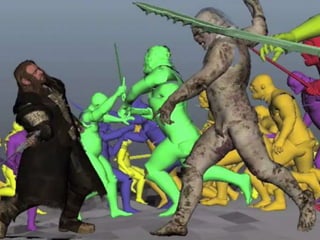
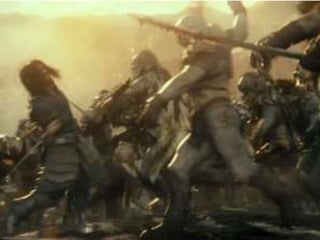
Computer Generated Imagery (CGI)
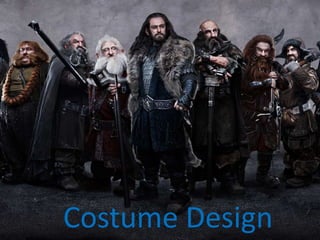
Costume Design
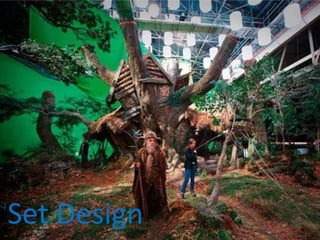
Set Design
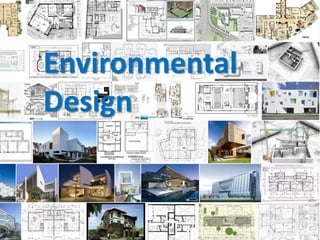
Environmental
Design
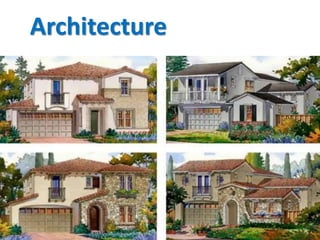
Architecture
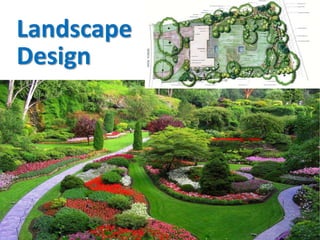
Landscape
Design
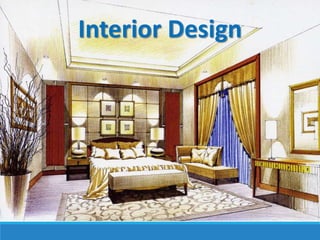
Interior Design
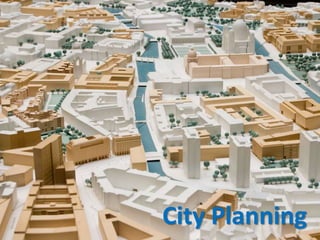
City Planning
San Ramon
City Center
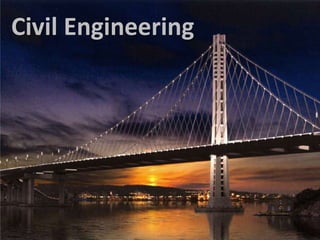
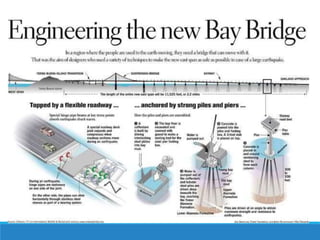
Civil Engineering
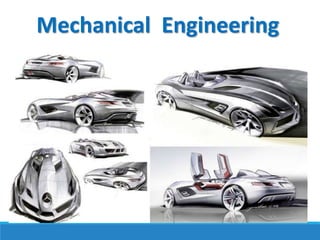
Mechanical Engineering
Product Design
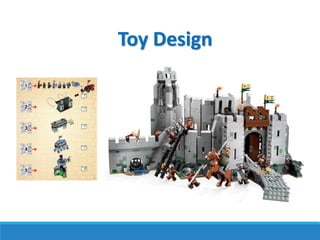
Toy Design
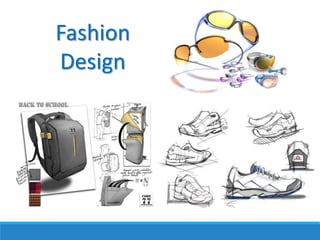
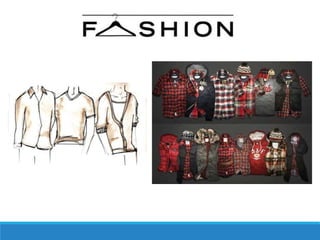
Fashion
Design
What are different forms of Art?
What art means to you and how
art can make you feel
Discuss the following terms
and elements of art
• Line
• Value
• Shape
• Form
• Space
• Color
• Texture
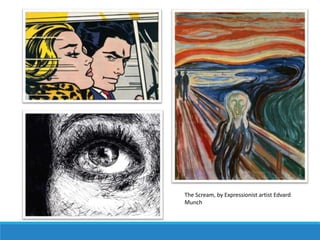
Line
A continuous mark made on the drawing or
painting surface.
Lines outline shapes, divide space, connect
shapes, and indicate movement and
direction.
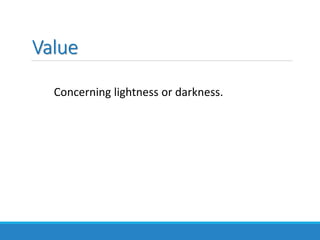
The Scream, by Expressionist artist Edvard
Munch
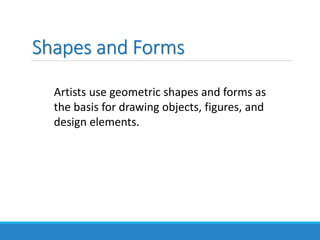
Value
Concerning lightness or darkness.
Using values with shading techniques creates the
illusion of 3D.
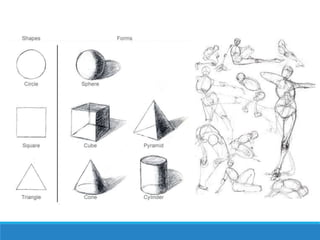
Shapes and Forms
Artists use geometric shapes and forms as
the basis for drawing objects, figures, and
design elements.
Space
In art, space is defined as positive and
negative. Positive space are the shapes and
forms in a drawing or painting. Negative
spaces are the empty areas surrounding the
shapes and forms.
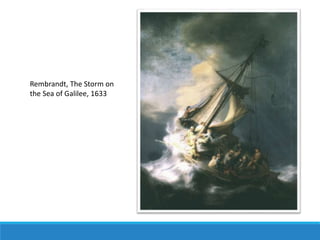
Rembrandt, The Storm on
the Sea of Galilee, 1633
Color
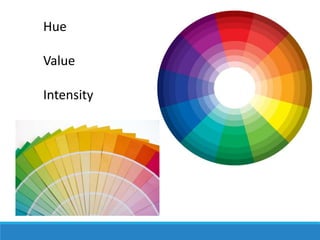
Hue – the name of a spectral color. Primary
hues are red, blue and yellow.
Value – relative lightness or darkness of the
color, from white to black.
Intensity – brightness or dullness of color.
Hue
Value
Intensity
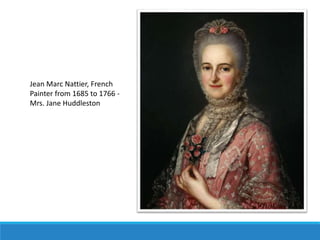
Texture
What a surface feels like or what the subject
appears to feel like.
Jean Marc Nattier, French
Painter from 1685 to 1766 -
Mrs. Jane Huddleston
Discuss the 6 principles of design
• Rhythm
• Balance
• Proportion
• Variety
• Emphasis
• Unity
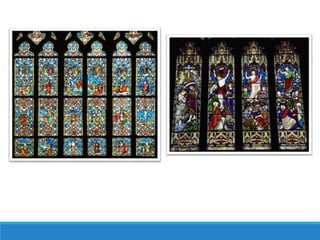
Rhythm
Movement by the repetition of a certain art
element or combination of elements.
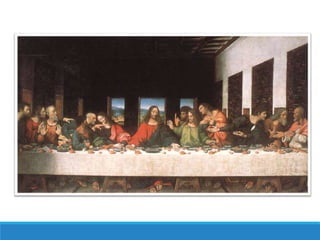
Balance
The artwork feels proportionate and stable.
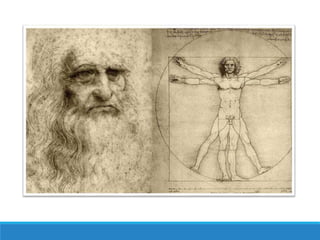
Proportion
Proper size relationship of one part of the
composition to another, and to the whole
work of art.
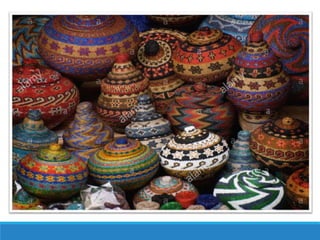
Variety
For art to be interesting, it needs contrast
and variety.
Emphasis
Making one part of the composition
dominant or more important than the
other part.
Unity
Unity is when all elements of a picture
come together to form a complete whole.
Nothing is wasted or unnecessary.
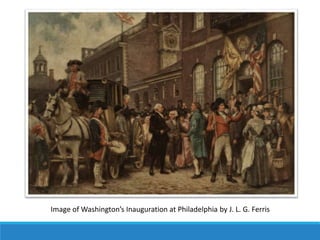
Image of Washington’s Inauguration at Philadelphia by J. L. G. Ferris
Find out about three career opportunities in art.
Pick one and find out the education, training,
and experience required for this profession.
Why does this profession interest you?
Requirements
Pick ONE and we’ll do it together.
a. Design something useful. Make a sketch or model of your design.
With your counselor’s approval, create a promotional piece for the
item using picture(s).
b. Tell a story with picture(s) or using a 3-D rendering.
c. Design a logo. Share your design with your counselor and explain
the significance of the logo. Then, with your parent’s permission and
your counselor’s approval, put your logo on Scout equipment,
furniture, ceramics, or fabric.
Requirements
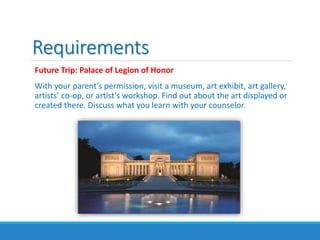
Future Trip: Palace of Legion of Honor
With your parent’s permission, visit a museum, art exhibit, art gallery,
artists’ co-op, or artist’s workshop. Find out about the art displayed or
created there. Discuss what you learn with your counselor.
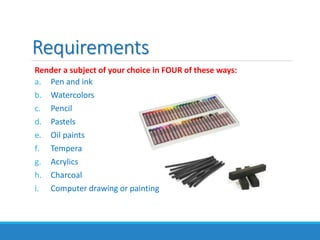
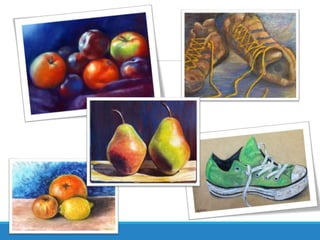
Render a subject of your choice in FOUR of these ways:
a. Pen and ink
b. Watercolors
c. Pencil
d. Pastels
e. Oil paints
f. Tempera
g. Acrylics
h. Charcoal
i. Computer drawing or painting
Requirements
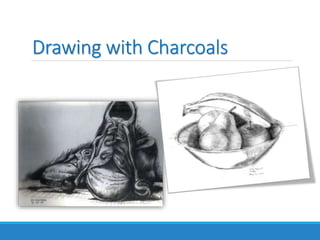
Drawing with Charcoals
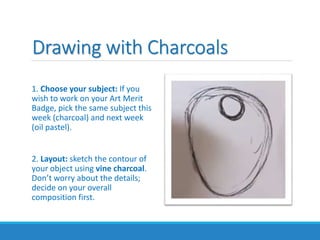
1. Choose your subject: If you
wish to work on your Art Merit
Badge, pick the same subject this
week (charcoal) and next week
(oil pastel).
2. Layout: sketch the contour of
your object using vine charcoal.
Don’t worry about the details;
decide on your overall
composition first.
Drawing with Charcoals
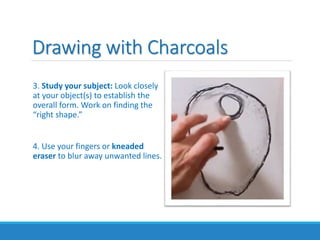
3. Study your subject: Look closely
at your object(s) to establish the
overall form. Work on finding the
“right shape.”
4. Use your fingers or kneaded
eraser to blur away unwanted lines.
Drawing with Charcoals
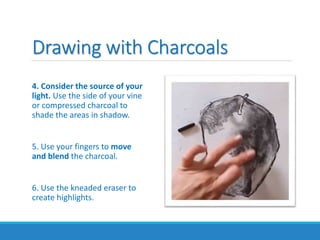
4. Consider the source of your
light. Use the side of your vine
or compressed charcoal to
shade the areas in shadow.
5. Use your fingers to move
and blend the charcoal.
6. Use the kneaded eraser to
create highlights.
Drawing with Charcoals
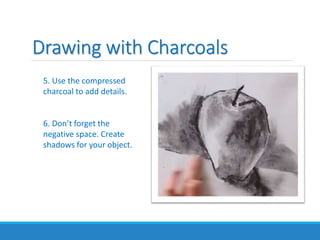
5. Use the compressed
charcoal to add details.
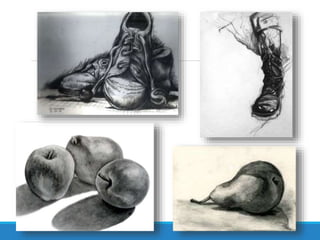
6. Don’t forget the
negative space. Create
shadows for your object.
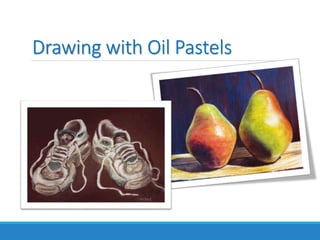
Drawing with Oil Pastels
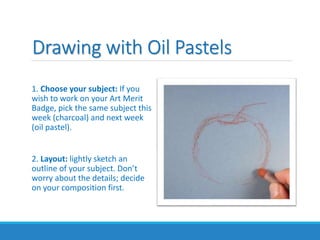
1. Choose your subject: If you
wish to work on your Art Merit
Badge, pick the same subject this
week (charcoal) and next week
(oil pastel).
2. Layout: lightly sketch an
outline of your subject. Don’t
worry about the details; decide
on your composition first.
Drawing with Oil Pastels
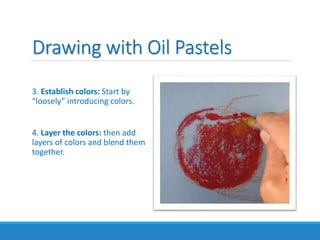
3. Establish colors: Start by
“loosely” introducing colors.
4. Layer the colors: then add
layers of colors and blend them
together.
Drawing with Oil Pastels
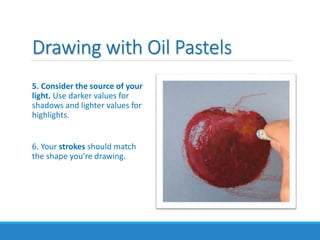
5. Consider the source of your
light. Use darker values for
shadows and lighter values for
highlights.
6. Your strokes should match
the shape you’re drawing.
Drawing with Oil Pastels
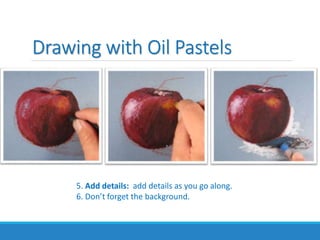
5. Add details: add details as you go along.
6. Don’t forget the background.
Drawing with Oil Pastels
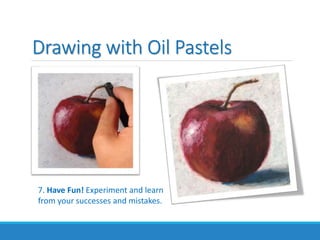
7. Have Fun! Experiment and learn
from your successes and mistakes.
Art Merit Badge

Art Merit Badge

  • 1.
  • 2.
    Requirements 1. What isart? What are some different types of art? 2. The importance of art to humankind. 3. What art means to you and how art makes you feel. 4. Discuss the following terms and elements of art: line, value, shape, form, space, color, and texture. Show examples of each element. 5. Discuss the six principles of design: rhythm, balance, proportion, variety, emphasis, and unity. 6. Find out about three career opportunities in art. Pick one and find out the education, training, and experience required for this profession. Discuss this with your counselor, and explain why this profession might interest you.
  • 3.
    What is the importanceof art to humankind? Art touches and shapes our entire world.
  • 4.
    Paintings, Drawings, Illustrations,Sculptures, Printmaking, Illustrations, etc.
  • 7.
    Combining art andtechnology to communicate ideas.
  • 9.
  • 10.
  • 11.
  • 12.
  • 14.
  • 20.
  • 21.
  • 22.
  • 23.
  • 24.
  • 25.
  • 26.
  • 27.
  • 28.
  • 30.
  • 31.
  • 32.
  • 33.
  • 36.
    What are differentforms of Art?
  • 38.
    What art meansto you and how art can make you feel
  • 39.
    Discuss the followingterms and elements of art • Line • Value • Shape • Form • Space • Color • Texture
  • 40.
    Line A continuous markmade on the drawing or painting surface. Lines outline shapes, divide space, connect shapes, and indicate movement and direction.
  • 41.
    The Scream, byExpressionist artist Edvard Munch
  • 42.
  • 43.
    Using values withshading techniques creates the illusion of 3D.
  • 44.
    Shapes and Forms Artistsuse geometric shapes and forms as the basis for drawing objects, figures, and design elements.
  • 46.
    Space In art, spaceis defined as positive and negative. Positive space are the shapes and forms in a drawing or painting. Negative spaces are the empty areas surrounding the shapes and forms.
  • 47.
    Rembrandt, The Stormon the Sea of Galilee, 1633
  • 48.
    Color Hue – thename of a spectral color. Primary hues are red, blue and yellow. Value – relative lightness or darkness of the color, from white to black. Intensity – brightness or dullness of color.
  • 49.
  • 50.
    Texture What a surfacefeels like or what the subject appears to feel like.
  • 51.
    Jean Marc Nattier,French Painter from 1685 to 1766 - Mrs. Jane Huddleston
  • 52.
    Discuss the 6principles of design • Rhythm • Balance • Proportion • Variety • Emphasis • Unity
  • 53.
    Rhythm Movement by therepetition of a certain art element or combination of elements.
  • 55.
    Balance The artwork feelsproportionate and stable.
  • 57.
    Proportion Proper size relationshipof one part of the composition to another, and to the whole work of art.
  • 59.
    Variety For art tobe interesting, it needs contrast and variety.
  • 61.
    Emphasis Making one partof the composition dominant or more important than the other part.
  • 63.
    Unity Unity is whenall elements of a picture come together to form a complete whole. Nothing is wasted or unnecessary.
  • 64.
    Image of Washington’sInauguration at Philadelphia by J. L. G. Ferris
  • 65.
    Find out aboutthree career opportunities in art. Pick one and find out the education, training, and experience required for this profession. Why does this profession interest you?
  • 67.
    Requirements Pick ONE andwe’ll do it together. a. Design something useful. Make a sketch or model of your design. With your counselor’s approval, create a promotional piece for the item using picture(s). b. Tell a story with picture(s) or using a 3-D rendering. c. Design a logo. Share your design with your counselor and explain the significance of the logo. Then, with your parent’s permission and your counselor’s approval, put your logo on Scout equipment, furniture, ceramics, or fabric.

  • 68.
    Requirements Future Trip: Palaceof Legion of Honor With your parent’s permission, visit a museum, art exhibit, art gallery, artists’ co-op, or artist’s workshop. Find out about the art displayed or created there. Discuss what you learn with your counselor.
  • 69.
    Render a subjectof your choice in FOUR of these ways: a. Pen and ink b. Watercolors c. Pencil d. Pastels e. Oil paints f. Tempera g. Acrylics h. Charcoal i. Computer drawing or painting Requirements
  • 70.
  • 71.
    Drawing with Charcoals 1.Choose your subject: If you wish to work on your Art Merit Badge, pick the same subject this week (charcoal) and next week (oil pastel). 2. Layout: sketch the contour of your object using vine charcoal. Don’t worry about the details; decide on your overall composition first.
  • 72.
    Drawing with Charcoals 3.Study your subject: Look closely at your object(s) to establish the overall form. Work on finding the “right shape.” 4. Use your fingers or kneaded eraser to blur away unwanted lines.
  • 73.
    Drawing with Charcoals 4.Consider the source of your light. Use the side of your vine or compressed charcoal to shade the areas in shadow. 5. Use your fingers to move and blend the charcoal. 6. Use the kneaded eraser to create highlights.
  • 74.
    Drawing with Charcoals 5.Use the compressed charcoal to add details. 6. Don’t forget the negative space. Create shadows for your object.
  • 76.
  • 77.
    Drawing with OilPastels 1. Choose your subject: If you wish to work on your Art Merit Badge, pick the same subject this week (charcoal) and next week (oil pastel). 2. Layout: lightly sketch an outline of your subject. Don’t worry about the details; decide on your composition first.
  • 78.
    Drawing with OilPastels 3. Establish colors: Start by “loosely” introducing colors. 4. Layer the colors: then add layers of colors and blend them together.
  • 79.
    Drawing with OilPastels 5. Consider the source of your light. Use darker values for shadows and lighter values for highlights. 6. Your strokes should match the shape you’re drawing.
  • 80.
    Drawing with OilPastels 5. Add details: add details as you go along. 6. Don’t forget the background.
  • 81.
    Drawing with OilPastels 7. Have Fun! Experiment and learn from your successes and mistakes.