ENGINEERING
MANAGEMEN
T
communicatin
g
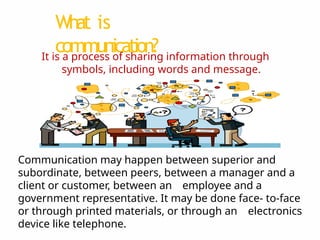
What is
communication?
It is a process of sharing information through
symbols, including words and message.
Communication may happen between superior and
subordinate, between peers, between a manager and a
client or customer, between an employee and a
government representative. It may be done face- to-face
or through printed materials, or through an electronics
device like telephone.
FUNCTIONS OF COMMUNICATION
1. INFORMATION FUNCTION
Information provided through communication m
a
ybe
used for decision-making at various work levels in
the organization.
sample.
A construction work
er m
a
y be given instructions on
proper use of certain equipment. This will later guide him
in deciding which equipment to use in particular
FUNCTIONS OF COMMUNICATION
1.Motivation Function
Communication is also used as a means to motivate
employees to commit themselves to the organization’
s
objectives.
2.Control Function
W
h
en properly communicated, report, policies,
and plans define roles, clarify duties, authorities and
responsibilities.
FUNCTIONS OF COMMUNICATION
4. Emotive Function
W
h
en feelings are repressed in the
organization, employees are affected by anxiety
,
which, in turn, affects performance.
Whatever type of emotions are involved,
whether satisfaction, dissatisfaction, happiness, or
bitterness, communication provide a means to
decrease the internal pressure affecting the
individual
THE COMMUNICATION
PROCESS
THE COMMUNICATION
PROCESS
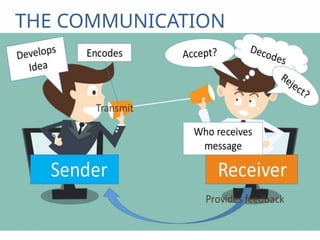
1. DEVELOP AN IDEA
Mos
t important step in effective communication.Idea
mus
t be useful/valuable.
2.ENCODE
encode idea into word, illustration, figures, or other
symbolssuitable for transmission. The method of transmission
should be determinedin advance so that the idea m
a
y be
encoded to conform with the specific requirements of the
identified method.
THE COMMUNICATION
PROCESS
3. TRANSMIT
After encoding, the message is n
o
w ready for
transmission through the use of an appropriate
communication channel. Among the various channels used
include the spoken word, bodymovements, the written word,
television, radio, an artist's paint, electronic mail, etc.
THE COMMUNICA
TION
PROCESS
1.RECEIVER-
The next step is the communication process is
the actual receiving of the messageby theintended
receiver
. The requirement is for the receiver to beready
to receive at the precise m
o
m
e
n
t the message relayed by
the sender
. The message m
a
y be initially received by a
machine or by a person.
2.DECODE-
The next step, decoding , means translating the
message from the sender into a f
orm that will have
THE COMMUNICA
TION PROCESS
1.ACCEPT/REJECT
The next step is for the receiver o accept or reject the
message.
2.USE
If the message provides information of importance to a
relevant activity
, then the receiver could store it and retrieve it
w
h
e
n required.
3.PROVIDE FEEDBACK
to provide feedback to the sender
. Depending on the
perception of the receiver
, however
, this important step m
a
y not be
FORMS OF
COMMUNICAT
I ON
1. VERBAL
are those transmitted trough hearing or sight.
A.ORAL CO
MMUNICA
TION
mostly involves hearing the wor
ds of the sender
, although
sometimes, opportunities are provided for seeing the sender’
s
body movements.
B.
WRITTEN COMMUNICA
TION
where the sender seeks to communicate through the
written word.
It m
a
y prepared as m
e
m
o and sent to the receiver
.
reports, bulletins, job descriptions, employee manuals, and
FORMS OF COMMUNICATI
ON
FORMS OF COMMUNICATI
O
N
2.NON-
VERBAL
–a means of conveying message through body
language, as well as the use of time, space, touch,
clothing, appearance, and aesthetic elements.
NONVERBAL.mp4
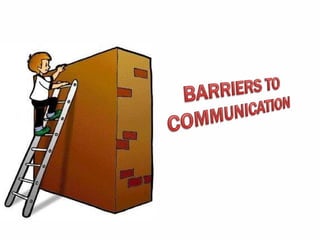
BARRIERS TO
COMMUNICATION
Personal Barriers
These are hindrances to effective
communication arising from a
communicator's characteristics as a
Physical Barriers
These refer to the interference to
effective communication occuring in
the environment where the
communication is undertaken.
Semantic Barriers
It may be defined as an interference
with the reception of a message
that occurs when the message is
misunderstood even though it is
received exactly as transmitted.
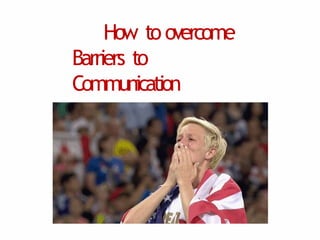
How to overcome
Barriers to
Communication
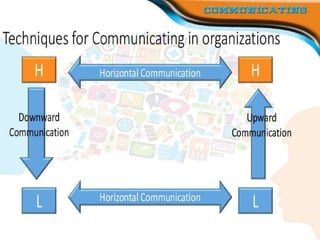
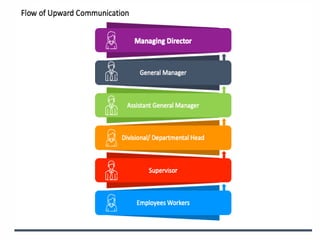
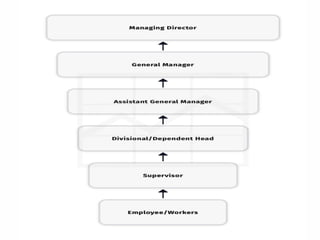
Upward Communication
-Problem and Exception
-Suggestion for improvement
-Performance Report
-Gribances and Disputes
-Financial and accounting Information
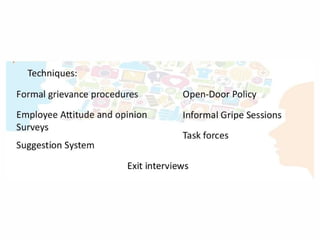
Formal Grievance Procedures
. -Grievances are part of a
normally operating organization. To
effectively deal with them,
organizations provide a system for
employees to air their grievances.
Grievance
It is any employee's concern over a
perceived violation of the labor
agreement that is submitted to the
grievance procedure for eventual
resolution.
Ex:
Open Door Policy
It provides the management with
an opportunity to act on difficulties
before they become full blown
problems.
Informal Gripe Sessions
They can be used
positively if management
knows how to handle
them.
Task Forces
When a specific problem or issue
arises, a _________________ may
be created and assigned to deal
with the problem or issue.
Exit Interviews
It may provide some answers if
there are negative developments
in the organization that
management is not aware of.
Management information system (MIS)
refers to the processing of information through
computers and other intelligent devices to manage
and support managerial decisions within an
organization. The concept may include systems
termed transaction processing system, decision
support system, expert system, or executive
information system.
summar
y
• COMMUNICATING IS A VITAL FUNCTION OF THE ENGINEER
MANAGER. ORGANIZATIONS CANNOT FUNCTION WELL WITHOUT
EFFECTIVE COMMUNICATION.
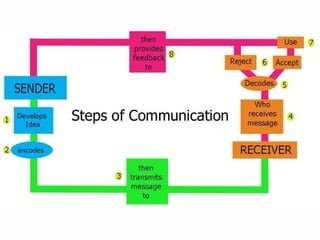
• THE COMMUNICATION PROCESS CONSIST OF VARIOUS STEPS
NAMELY, DEVELOP AN IDEA, ENCODE, TRANSIT, RECEIVE,
DECODE,ACCEPT/REJECT, USE, AND PROVIDE FEEDBACK
• THE FORMS OF COMMUNICATION ARE VERBAL AND NON VERBAL
• THE BARRIERS OF COMMUNICATION MAY BE CLASSIFIED AS
PERSONAL, PHYSICCAL OR SEMANTIC.
• COMMUNICATION FLOWS EITHER DOWNWARD, UPWARD OR
HORIZONTAL
• MANAGEMENT INFORMATION SYSTEMS ARE USEFUL MEANS OF
COMMUNICATION
ACTIVITY
TIME
VERBAL
COMMUNICA
TION
Back-To-Back Drawing
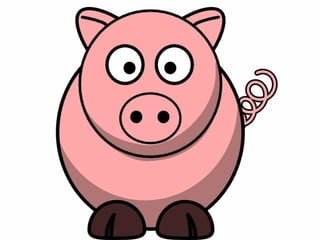
Jaja will choose a pair and seat partners back-to-back. She will give
one person in the pair a drawing of a shape, and give the other
person a clipboard with a piece of blank paper and pencil. The
person with the drawing must give a verbal description of the
picture for his partner to replicate on a piece of paper. Once
completed, pairs should compare the provided shape with the
drawing. Discuss whether or not communication was effective and if
the message was received correctly.
Non verbal
communication
WORDLESS ACTING
Ready?
1.UHAW NA UHAW
2.GINPALAYAS SA BALAY NGA
GAKADLAW
3.NATUYO
4.NAGTAWAG SI CRUSH
5.NALIPONG SA SALOG
"Engineering Management-Elective 1 Computer science

"Engineering Management-Elective 1 Computer science

  • 1.
  • 2.
    What is communication? It isa process of sharing information through symbols, including words and message. Communication may happen between superior and subordinate, between peers, between a manager and a client or customer, between an employee and a government representative. It may be done face- to-face or through printed materials, or through an electronics device like telephone.
  • 3.
    FUNCTIONS OF COMMUNICATION 1.INFORMATION FUNCTION Information provided through communication m a ybe used for decision-making at various work levels in the organization. sample. A construction work er m a y be given instructions on proper use of certain equipment. This will later guide him in deciding which equipment to use in particular
  • 4.
    FUNCTIONS OF COMMUNICATION 1.MotivationFunction Communication is also used as a means to motivate employees to commit themselves to the organization’ s objectives. 2.Control Function W h en properly communicated, report, policies, and plans define roles, clarify duties, authorities and responsibilities.
  • 5.
    FUNCTIONS OF COMMUNICATION 4.Emotive Function W h en feelings are repressed in the organization, employees are affected by anxiety , which, in turn, affects performance. Whatever type of emotions are involved, whether satisfaction, dissatisfaction, happiness, or bitterness, communication provide a means to decrease the internal pressure affecting the individual
  • 6.
  • 8.
    THE COMMUNICATION PROCESS 1. DEVELOPAN IDEA Mos t important step in effective communication.Idea mus t be useful/valuable. 2.ENCODE encode idea into word, illustration, figures, or other symbolssuitable for transmission. The method of transmission should be determinedin advance so that the idea m a y be encoded to conform with the specific requirements of the identified method.
  • 9.
    THE COMMUNICATION PROCESS 3. TRANSMIT Afterencoding, the message is n o w ready for transmission through the use of an appropriate communication channel. Among the various channels used include the spoken word, bodymovements, the written word, television, radio, an artist's paint, electronic mail, etc.
  • 10.
    THE COMMUNICA TION PROCESS 1.RECEIVER- The nextstep is the communication process is the actual receiving of the messageby theintended receiver . The requirement is for the receiver to beready to receive at the precise m o m e n t the message relayed by the sender . The message m a y be initially received by a machine or by a person. 2.DECODE- The next step, decoding , means translating the message from the sender into a f orm that will have
  • 11.
    THE COMMUNICA TION PROCESS 1.ACCEPT/REJECT Thenext step is for the receiver o accept or reject the message. 2.USE If the message provides information of importance to a relevant activity , then the receiver could store it and retrieve it w h e n required. 3.PROVIDE FEEDBACK to provide feedback to the sender . Depending on the perception of the receiver , however , this important step m a y not be
  • 12.
  • 13.
    1. VERBAL are thosetransmitted trough hearing or sight. A.ORAL CO MMUNICA TION mostly involves hearing the wor ds of the sender , although sometimes, opportunities are provided for seeing the sender’ s body movements. B. WRITTEN COMMUNICA TION where the sender seeks to communicate through the written word. It m a y prepared as m e m o and sent to the receiver . reports, bulletins, job descriptions, employee manuals, and FORMS OF COMMUNICATI ON
  • 14.
    FORMS OF COMMUNICATI O N 2.NON- VERBAL –ameans of conveying message through body language, as well as the use of time, space, touch, clothing, appearance, and aesthetic elements. NONVERBAL.mp4
  • 16.
    BARRIERS TO COMMUNICATION Personal Barriers Theseare hindrances to effective communication arising from a communicator's characteristics as a
  • 17.
    Physical Barriers These referto the interference to effective communication occuring in the environment where the communication is undertaken.
  • 18.
    Semantic Barriers It maybe defined as an interference with the reception of a message that occurs when the message is misunderstood even though it is received exactly as transmitted.
  • 19.
    How to overcome Barriersto Communication
  • 30.
    Upward Communication -Problem andException -Suggestion for improvement -Performance Report -Gribances and Disputes -Financial and accounting Information
  • 31.
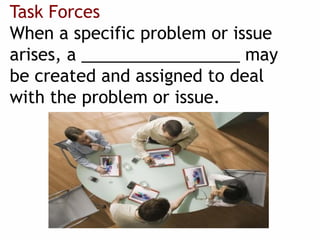
    Formal Grievance Procedures .-Grievances are part of a normally operating organization. To effectively deal with them, organizations provide a system for employees to air their grievances.
  • 32.
    Grievance It is anyemployee's concern over a perceived violation of the labor agreement that is submitted to the grievance procedure for eventual resolution.
  • 33.
  • 34.
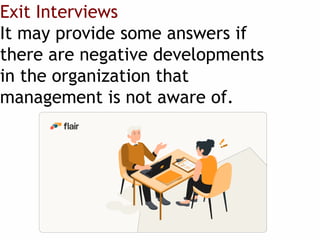
    Open Door Policy Itprovides the management with an opportunity to act on difficulties before they become full blown problems.
  • 35.
    Informal Gripe Sessions Theycan be used positively if management knows how to handle them.
  • 36.
    Task Forces When aspecific problem or issue arises, a _________________ may be created and assigned to deal with the problem or issue.
  • 37.
    Exit Interviews It mayprovide some answers if there are negative developments in the organization that management is not aware of.
  • 40.
    Management information system(MIS) refers to the processing of information through computers and other intelligent devices to manage and support managerial decisions within an organization. The concept may include systems termed transaction processing system, decision support system, expert system, or executive information system.
  • 42.
    summar y • COMMUNICATING ISA VITAL FUNCTION OF THE ENGINEER MANAGER. ORGANIZATIONS CANNOT FUNCTION WELL WITHOUT EFFECTIVE COMMUNICATION. • THE COMMUNICATION PROCESS CONSIST OF VARIOUS STEPS NAMELY, DEVELOP AN IDEA, ENCODE, TRANSIT, RECEIVE, DECODE,ACCEPT/REJECT, USE, AND PROVIDE FEEDBACK • THE FORMS OF COMMUNICATION ARE VERBAL AND NON VERBAL • THE BARRIERS OF COMMUNICATION MAY BE CLASSIFIED AS PERSONAL, PHYSICCAL OR SEMANTIC. • COMMUNICATION FLOWS EITHER DOWNWARD, UPWARD OR HORIZONTAL • MANAGEMENT INFORMATION SYSTEMS ARE USEFUL MEANS OF COMMUNICATION
  • 43.
  • 44.
    VERBAL COMMUNICA TION Back-To-Back Drawing Jaja willchoose a pair and seat partners back-to-back. She will give one person in the pair a drawing of a shape, and give the other person a clipboard with a piece of blank paper and pencil. The person with the drawing must give a verbal description of the picture for his partner to replicate on a piece of paper. Once completed, pairs should compare the provided shape with the drawing. Discuss whether or not communication was effective and if the message was received correctly.
  • 46.
    Non verbal communication WORDLESS ACTING Ready? 1.UHAWNA UHAW 2.GINPALAYAS SA BALAY NGA GAKADLAW 3.NATUYO 4.NAGTAWAG SI CRUSH 5.NALIPONG SA SALOG