Energy efficient house
An energy efficient house is a housewhich is able to generate as muchenery
as it usesover the courseof time.
Energy efficient homes reduceunnecessary energy consumption,greenhouse
gas emissions and demandsfor nonrenewable resources.
Back ground
Electricity is considered to be life line of any economy and mostvital instrument
of socioeconomic development of a country. Electricity is pivotal in running
machinery in factories and industrialunits, for lighting our cities and powering our
vehicles. The challenge of ensuring electricity access for industries and providing
increased access to the poor parts of the population is the key issuefor any
government
according to survey doneby US Energy information administration
electricity and natural gas are the two most used sources of energy.
electricity usage
An application of NAPRA submitted to the Water and Power department of
Pakistan states that the electricity costfor production by coal was Rs 4.49 per
unit, by diesel it was Rs 19.18, by furnaceoil Rs 12.38, Rs 3.57 by gas and Rs 1.18
per unit
by nuclearmeans
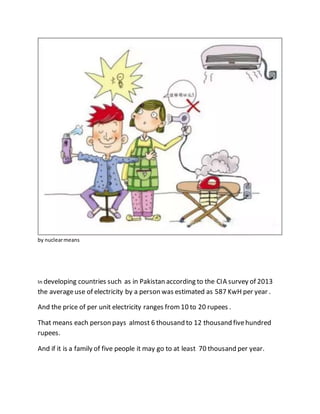
In developing countries such as in Pakistan according to the CIA survey of 2013
the averageuse of electricity by a person was estimated as 587 KwH per year .
And the price of per unit electricity ranges from10 to 20 rupees .
That means each person pays almost 6 thousand to 12 thousand fivehundred
rupees.
And if it is a family of five people it may go to at least 70 thousand per year.
Gas usage
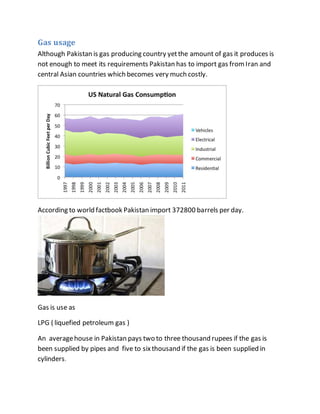
Although Pakistan is gas producing country yetthe amount of gas it produces is
not enough to meet its requirements Pakistan has to import gas fromIran and
central Asian countries which becomes very much costly.
According to world factbook Pakistan import 372800 barrels per day.
Gas is use as
LPG ( liquefied petroleum gas )
An averagehouse in Pakistan pays two to three thousand rupees if the gas is
been supplied by pipes and five to sixthousand if the gas is been supplied in
cylinders.
Usage of petroleum
Pakistan is one of the greatest importer of petroleum .
Most of the petroleum is use as
Petrol , diesel and CNG
An averagecar barrier of Pakistan spends fivethousand to fifteen thousand on
the fuel of his vehical.
Time to think seriously
If an averagePakistaniis spending this much money juston energy then its time
to think about it and come with a better idea.
Solutionis on its way
Energy efficient houses
1. Start withSmart Design
Cost-effectivezero net energy homes begin with smartdesign. Designers and
architects, as well as builders, should be familiar with all the steps involved in
building a net zero home and should design the home so that builders and
subcontractors can implement these steps as cost-effectively as possible. There
are severaldesign parameters to which builders should ask designers to pay
special attention. Detailed communication between the builder and designer will
ensurethat these critical details don’t fall through the cracks
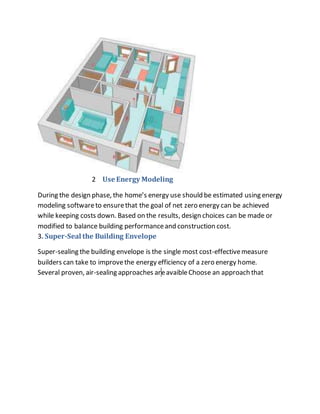
2 Use Energy Modeling
During the design phase, the home’s energy use should be estimated using energy
modeling softwareto ensurethat the goal of net zero energy can be achieved
while keeping costs down. Based on the results, design choices can be made or
modified to balance building performanceand construction cost.
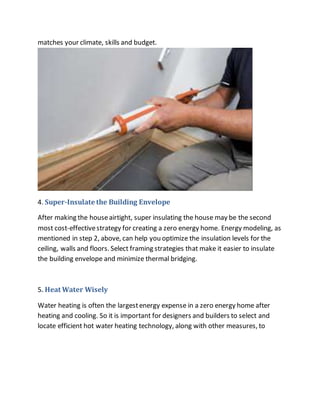
3. Super-Seal the Building Envelope
Super-sealing the building envelope is the single most cost-effectivemeasure
builders can take to improvethe energy efficiency of a zero energy home.
Several proven, air-sealing approaches areavaibleChoose an approach that
matches your climate, skills and budget.
4. Super-Insulate the Building Envelope
After making the houseairtight, super insulating the house may be the second
most cost-effectivestrategy for creating a zero energy home. Energy modeling, as
mentioned in step 2, above, can help you optimize the insulation levels for the
ceiling, walls and floors. Select framing strategies that make it easier to insulate
the building envelope and minimize thermal bridging.
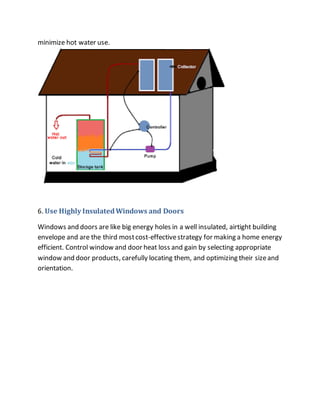
5. Heat Water Wisely
Water heating is often the largestenergy expense in a zero energy home after
heating and cooling. So it is important for designers and builders to select and
locate efficient hot water heating technology, along with other measures, to
minimize hot water use.
6. Use Highly InsulatedWindows and Doors
Windows and doors are like big energy holes in a well insulated, airtight building
envelope and are the third mostcost-effectivestrategy for making a home energy
efficient. Control window and door heat loss and gain by selecting appropriate
window and door products, carefully locating them, and optimizing their sizeand
orientation.
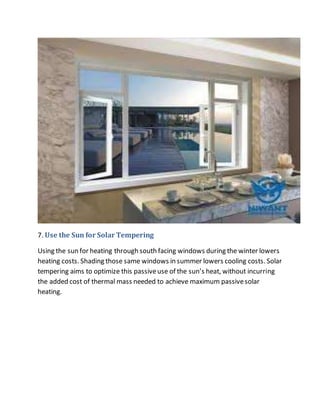
7. Use the Sun for Solar Tempering
Using the sun for heating through south facing windows during the winter lowers
heating costs. Shading those same windows in summer lowers cooling costs. Solar
tempering aims to optimize this passiveuse of the sun’s heat, without incurring
the added cost of thermal mass needed to achieve maximum passivesolar
heating.
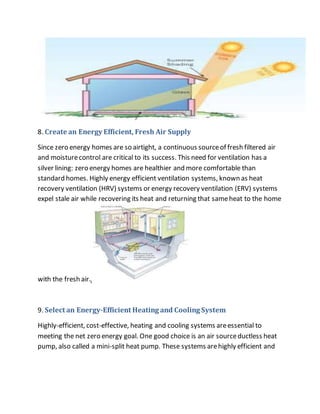
8. Create an Energy Efficient, Fresh Air Supply
Since zero energy homes are so airtight, a continuous sourceof fresh filtered air
and moisturecontrol are critical to its success. This need for ventilation has a
silver lining: zero energy homes are healthier and more comfortable than
standard homes. Highly energy efficient ventilation systems, known as heat
recovery ventilation (HRV) systems or energy recovery ventilation (ERV) systems
expel stale air while recovering its heat and returning that sameheat to the home
with the fresh air.
9. Select an Energy-Efficient Heating and Cooling System
Highly-efficient, cost-effective, heating and cooling systems areessential to
meeting the net zero energy goal. One good choice is an air sourceductless heat
pump, also called a mini-split heat pump. These systems arehighly efficient and
don’t havethe shortcomings of central, forced-air systems or the high costs of
thermal heat
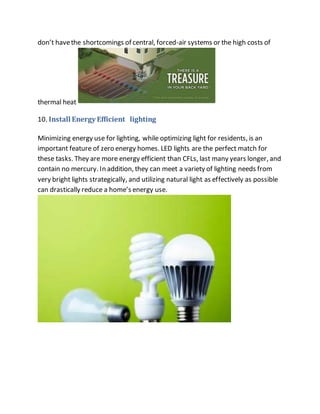
10. Install Energy Efficient lighting MORE
Minimizing energy use for lighting, while optimizing light for residents, is an
important feature of zero energy homes. LED lights are the perfect match for
these tasks. They are more energy efficient than CFLs, last many years longer, and
contain no mercury. In addition, they can meet a variety of lighting needs from
very bright lights strategically, and utilizing natural light as effectively as possible
can drastically reduce a home’s energy use.

energy efficient houses

  • 1.
    Energy efficient house Anenergy efficient house is a housewhich is able to generate as muchenery as it usesover the courseof time. Energy efficient homes reduceunnecessary energy consumption,greenhouse gas emissions and demandsfor nonrenewable resources. Back ground Electricity is considered to be life line of any economy and mostvital instrument of socioeconomic development of a country. Electricity is pivotal in running machinery in factories and industrialunits, for lighting our cities and powering our vehicles. The challenge of ensuring electricity access for industries and providing increased access to the poor parts of the population is the key issuefor any government according to survey doneby US Energy information administration electricity and natural gas are the two most used sources of energy. electricity usage An application of NAPRA submitted to the Water and Power department of Pakistan states that the electricity costfor production by coal was Rs 4.49 per unit, by diesel it was Rs 19.18, by furnaceoil Rs 12.38, Rs 3.57 by gas and Rs 1.18 per unit
  • 2.
    by nuclearmeans In developingcountries such as in Pakistan according to the CIA survey of 2013 the averageuse of electricity by a person was estimated as 587 KwH per year . And the price of per unit electricity ranges from10 to 20 rupees . That means each person pays almost 6 thousand to 12 thousand fivehundred rupees. And if it is a family of five people it may go to at least 70 thousand per year.
  • 3.
    Gas usage Although Pakistanis gas producing country yetthe amount of gas it produces is not enough to meet its requirements Pakistan has to import gas fromIran and central Asian countries which becomes very much costly. According to world factbook Pakistan import 372800 barrels per day. Gas is use as LPG ( liquefied petroleum gas ) An averagehouse in Pakistan pays two to three thousand rupees if the gas is been supplied by pipes and five to sixthousand if the gas is been supplied in cylinders.
  • 4.
    Usage of petroleum Pakistanis one of the greatest importer of petroleum . Most of the petroleum is use as Petrol , diesel and CNG An averagecar barrier of Pakistan spends fivethousand to fifteen thousand on the fuel of his vehical. Time to think seriously If an averagePakistaniis spending this much money juston energy then its time to think about it and come with a better idea.
  • 5.
    Solutionis on itsway Energy efficient houses 1. Start withSmart Design Cost-effectivezero net energy homes begin with smartdesign. Designers and architects, as well as builders, should be familiar with all the steps involved in building a net zero home and should design the home so that builders and subcontractors can implement these steps as cost-effectively as possible. There are severaldesign parameters to which builders should ask designers to pay special attention. Detailed communication between the builder and designer will ensurethat these critical details don’t fall through the cracks
  • 6.
    2 Use EnergyModeling During the design phase, the home’s energy use should be estimated using energy modeling softwareto ensurethat the goal of net zero energy can be achieved while keeping costs down. Based on the results, design choices can be made or modified to balance building performanceand construction cost. 3. Super-Seal the Building Envelope Super-sealing the building envelope is the single most cost-effectivemeasure builders can take to improvethe energy efficiency of a zero energy home. Several proven, air-sealing approaches areavaibleChoose an approach that
  • 7.
    matches your climate,skills and budget. 4. Super-Insulate the Building Envelope After making the houseairtight, super insulating the house may be the second most cost-effectivestrategy for creating a zero energy home. Energy modeling, as mentioned in step 2, above, can help you optimize the insulation levels for the ceiling, walls and floors. Select framing strategies that make it easier to insulate the building envelope and minimize thermal bridging. 5. Heat Water Wisely Water heating is often the largestenergy expense in a zero energy home after heating and cooling. So it is important for designers and builders to select and locate efficient hot water heating technology, along with other measures, to
  • 8.
    minimize hot wateruse. 6. Use Highly InsulatedWindows and Doors Windows and doors are like big energy holes in a well insulated, airtight building envelope and are the third mostcost-effectivestrategy for making a home energy efficient. Control window and door heat loss and gain by selecting appropriate window and door products, carefully locating them, and optimizing their sizeand orientation.
  • 9.
    7. Use theSun for Solar Tempering Using the sun for heating through south facing windows during the winter lowers heating costs. Shading those same windows in summer lowers cooling costs. Solar tempering aims to optimize this passiveuse of the sun’s heat, without incurring the added cost of thermal mass needed to achieve maximum passivesolar heating.
  • 10.
    8. Create anEnergy Efficient, Fresh Air Supply Since zero energy homes are so airtight, a continuous sourceof fresh filtered air and moisturecontrol are critical to its success. This need for ventilation has a silver lining: zero energy homes are healthier and more comfortable than standard homes. Highly energy efficient ventilation systems, known as heat recovery ventilation (HRV) systems or energy recovery ventilation (ERV) systems expel stale air while recovering its heat and returning that sameheat to the home with the fresh air. 9. Select an Energy-Efficient Heating and Cooling System Highly-efficient, cost-effective, heating and cooling systems areessential to meeting the net zero energy goal. One good choice is an air sourceductless heat pump, also called a mini-split heat pump. These systems arehighly efficient and
  • 11.
    don’t havethe shortcomingsof central, forced-air systems or the high costs of thermal heat 10. Install Energy Efficient lighting MORE Minimizing energy use for lighting, while optimizing light for residents, is an important feature of zero energy homes. LED lights are the perfect match for these tasks. They are more energy efficient than CFLs, last many years longer, and contain no mercury. In addition, they can meet a variety of lighting needs from very bright lights strategically, and utilizing natural light as effectively as possible can drastically reduce a home’s energy use.